From desoldered chips written in hex to a flash tool in the diagnostic socket, a tune alters the maps in the engine computer, costs the engine some of its margin, and cheap plug-in gadgets do nothing.
An ECU remap, or chip tuning, rewrites the maps in a car's engine control unit, adjusting ignition timing, fuel delivery and boost for more power, cleaner emissions or better economy. A poor tune can cut performance and damage the engine, and cheap plug-in OBD boxes have been found to do nothing.
Not so long ago, tuning a car's computer meant taking a soldering iron to the circuit board, pulling out a chip and replacing it with one programmed by hand in hexadecimal. Today the same job is done through the diagnostic socket in the footwell, and a cheap plug-in box that promises to do it for you is, according to the people who have taken them apart, little more than a circuit that flashes LEDs. The gap between those two things is the whole story of ECU remapping.
What does the engine control unit do?
The engine control unit (ECU), also called the engine control module, is the device that manages the engine's subsystems, above all the fuel injection and ignition. Its main duties are those two, plus idle speed control and variable valve timing or lift. It takes on secondary jobs too: launch control, the fuel pressure regulator, the rev limiter, wastegate control and anti-lag, and theft prevention by blocking ignition when the immobiliser asks it to. In a modern car the same computer may also handle drive-by-wire throttle control, valve timing, boost control, anti-lock braking, the automatic transmission, a speed governor and electronic stability control.
The idea is older than most people think. The earliest ECUs were mechanical-hydraulic units on aircraft engines in the late 1930s, and in 1939 BMW's Kommandogerat replaced six separate controls with one on the BMW 801 radial engine, although it could cause surging and stalling. Cars followed in the 1970s. Ford's EEC system went into mass production in 1975 using a Toshiba TLCS-12 microprocessor. Bosch's first engine management system, Motronic 1.0, debuted in the 1979 BMW 7 Series (E23), and grew out of Bosch's Jetronic fuel injection with ignition control added on top. Delco Electronics led the market in engine management by 1988, turning out more than 28,000 ECUs daily. Most ECUs of the 21st century run on digital electronics. In aircraft the equivalent is known as FADEC, and it is less common in light piston aircraft, whose carburetted engines with magneto ignition keep running without electrical power, a trait regarded as safer.
A tune uses margin the manufacturer left in, which is why it leaves the car less forgiving of poor fuel and missed services.
What is a remap, and what is chip tuning?
Chip tuning means modifying the memory chip in a car's ECU to improve performance: more power, say, or cleaner emissions, or better economy. A remap is the same idea described by what is actually altered: the maps, the tables of values the computer consults to decide how much fuel to inject and when to fire the spark.
The starting point is the factory map, and the factory map is cautious. Engine makers generally use a conservative map to allow for differences between individual engines, infrequent servicing and poor-quality fuel. A remap can claw some of that margin back, and it is also why a remapped car can be touchier about fuel quality and servicing.
How was chip tuning done, and how is it done now?
It began with the early engine computers of the 1980s and 1990s and was difficult. The tuner had to desolder the original read-only chip from the board and fit an erasable chip written in hexadecimal on a computer. It was slow and only certain people could do it. Software was developed to give tuners a graphical interface for viewing data such as fuel maps before writing them to the chips, which by then were the electrically erasable kind.
Some cars made it easier. The fourth-generation Chevrolet Corvette had a port where the owner could insert a chip, with no desoldering. Pre-programmed chips were sold for particular vehicles, and either plugged into that kind of port or into a socket that had to be soldered on, depending on the maker. The Honda Civic of the 1990s was known as easy to tune for big gains, turbocharged or not, and many were modified this way.
Today the phrase chip tuning can mislead, because people use it for ECU tuning that involves no chip swap at all. A modern ECU can be rewritten over a standard link, the on-board diagnostics port, in a job usually called engine or ECU tuning. The most common route is a specialist tuner with an OBD flash tool that plugs into the diagnostic port, though occasionally the reprogramming happens directly on the circuit board. The tuner supplies the maps.
What does a remap change?
| Setting | Factory approach | What a tune does | What it demands |
|---|---|---|---|
| Ignition timing | Fixed for a specific design | Advances the spark where the engine benefits | High-octane petrol to avoid pinging |
| Fuel map | Optimised for emissions and economy, rich to protect the catalytic converter | Moves toward the stoichiometric ratio | Careful calibration |
| Boost | Conservative requested and allowable levels | Raises both | Most room on a low-pressure turbo |
| Fuel tables after hardware changes | Written for stock airflow | Re-mapped to match new intake or exhaust | Matching tune |
Timing is the classic lever. Performance gains come from adjusting how far ahead of top dead centre the spark fires, because different timing can produce better output. The catch is that an engine run with more advance has to be fed high-octane petrol to avoid pre-ignition, detonation or pinging. Makers design for a specific timing, and that choice can cap the performance.
Fuel mapping works similarly. Most makers tune for optimum emissions and fuel economy, running the mixture rich to protect the catalytic converter, and that limits performance. Changing the fuel maps so they match the stoichiometric ratio for petrol combustion can raise output.
On a turbocharged car, the requested and allowable boost levels can be raised. These changes usually have the biggest effect on a low-pressure turbo, because it leaves the most room for improvement.
There is a fourth reason to remap that has nothing to do with chasing power. Intake, exhaust or engine modifications change the way an engine flows air, and that often changes the air-fuel ratio. Unless the fuel tables are re-mapped, some of the gains from those bolt-on parts may not be realised.
Can remapping damage an engine?
A badly done tune can. A poorly tuned ECU can reduce performance and driveability, and it may even cause engine damage. Because the tune has been moved away from the manufacturer's cautious settings, the car may also respond more sharply to poor fuel and missed services. That is the price of working closer to the limit.
How do you measure what a tune actually delivers?
With a dynamometer, or dyno. It measures an engine's torque and rotational speed at the same moment so the power can be calculated, and the result is usually shown in kilowatts or brake horsepower. Power is not measured directly. It is worked out from torque and angular velocity. In imperial units, horsepower equals torque in pound-feet multiplied by revs per minute, divided by 5252. In metric units, power in watts equals torque in newton-metres multiplied by angular velocity.
Two kinds matter to tuners. An engine dyno is coupled directly to the engine. A chassis dyno measures the torque and power delivered through the drive wheels without removing the engine from the car. Most modern chassis dynos use eddy current absorbers, which offer a fast load change rate for rapid load settling, and use cast iron discs similar to vehicle brake rotors with variable electromagnets to control the braking, normally under computer control. The power the dyno absorbs ends up as heat, which dissipates into the air or into cooling water.
Dynos have a use beyond marketing figures. They serve as test beds for development work, such as calibrating engine management controllers, and they are used in emissions test cycles to simulate road loading. For a tuner, that means a before-and-after run on the same machine is the natural way to see what a map change has done.
Not every dyno loads an engine the same way. Eddy current units dominate modern chassis dynos, but other designs exist. A powder dyno puts a fine magnetic powder in the gap between rotor and coil and creates great torque, though heat limits it to lower revs. A hysteresis unit develops a largely constant torque across its whole speed range, whereas an eddy current brake produces no torque at standstill. Electric motor and generator dynos can also drive the engine, which lets them measure friction and pumping losses, but they are generally more costly and complex. A fan brake is limited by the low viscosity of air in how much torque it can absorb.
Test routines differ as well. In a constant-speed run the dyno varies its braking to hold the engine at one chosen speed. In a constant-force run it applies a set braking load and lets the engine accelerate through the rev range.
Do plug-in OBD chip tuning boxes work?
They do not do what they claim. A wave of plug-in devices has appeared that claim to intercept the OBD protocol and force sensor readings in a way that improves fuel efficiency and performance. That is simply not possible, because each car maps its sensors onto the CAN bus differently, and pushing random data onto the bus causes problems.
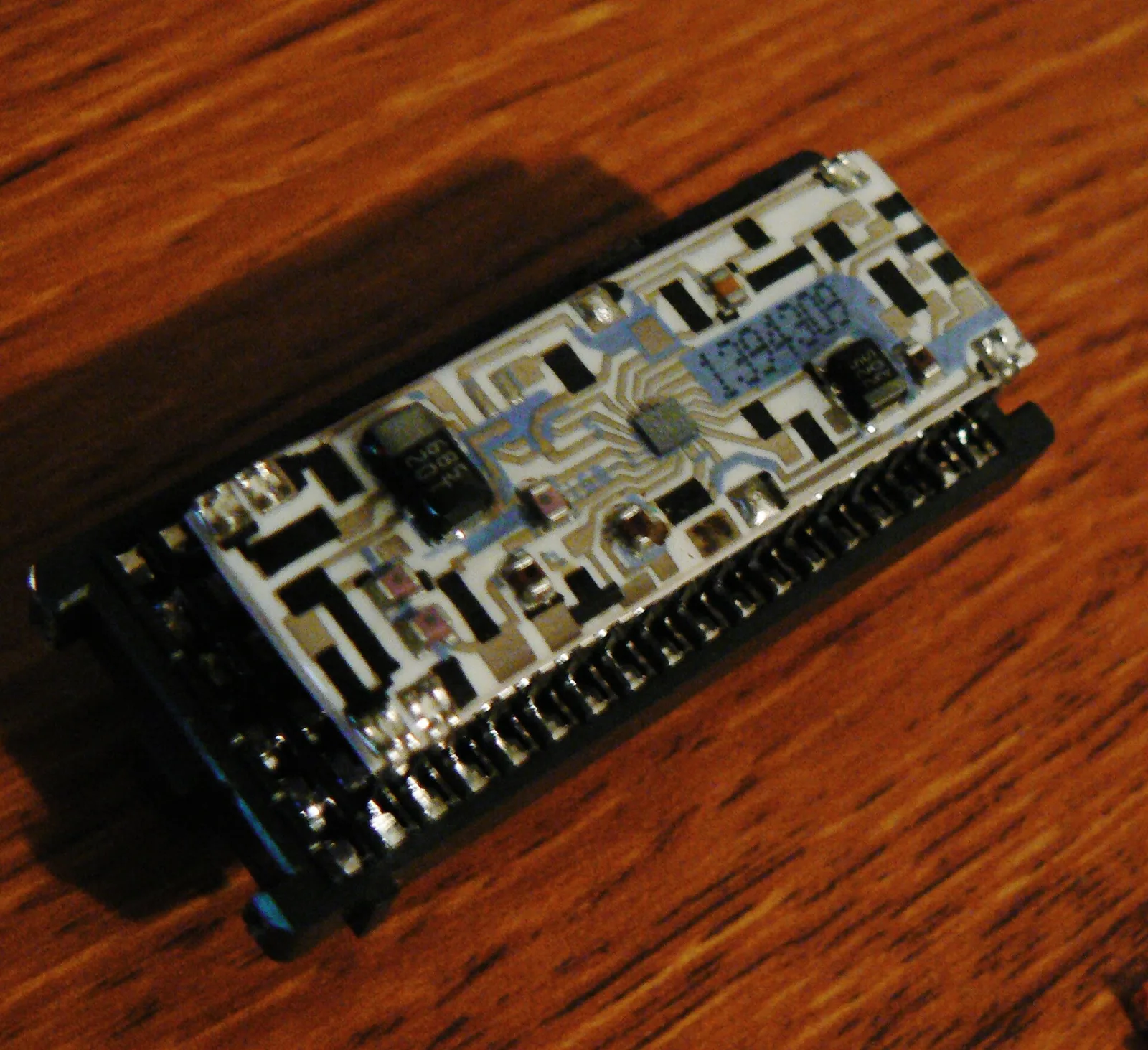
When teardowns open them up, the circuit boards show tracks that seem to begin at the OBD connector and run into the board but are left unconnected or lead to a microcontroller that never uses the pin. The only parts correctly wired are the LEDs, their current-limiting resistors, a voltage regulator and the power and ground connections. The boards look intricate, especially in the two-board versions, but the complexity is described as a smokescreen. The LEDs flash and the buyer sees activity.
These devices rely on the fact that real reprogramming products exist. Those are very expensive, come with data for different cars, and need an involved process to make any noticeable difference to performance or efficiency. They are not plug-in solutions.