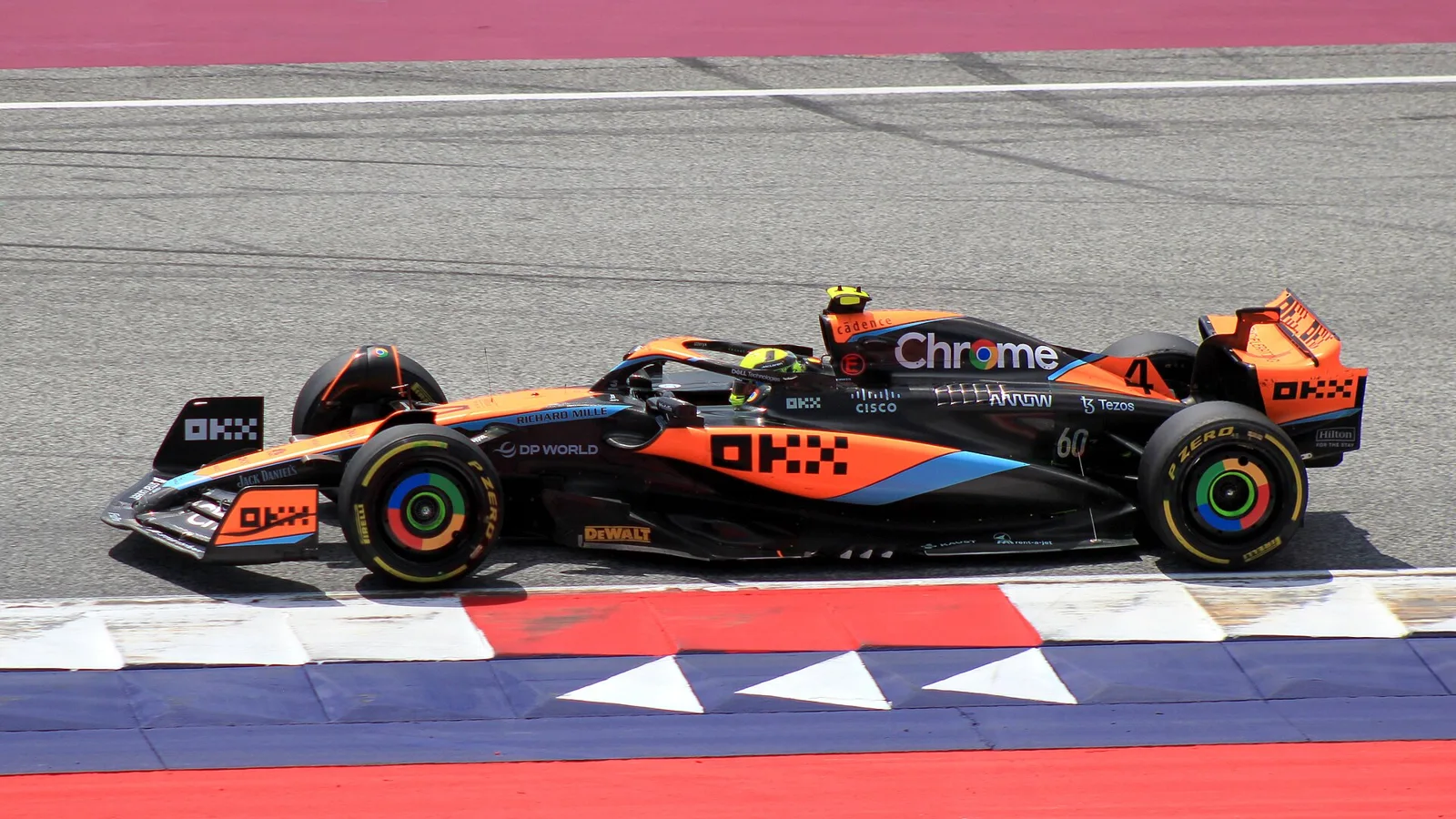
A cartoon racer with seven buttons, a hot dog on wheels that 7,000 graduates applied to drive, and a model series that grew from 40 planned issues to 135.
The Mach Five is the fictional racer from Speed Racer, designed by Mitsuki Nakamura in 1967. The Wienermobile is Oscar Mayer's hot dog-shaped promotional vehicle, first built in 1936. The James Bond Car Collection was a 135-issue series of 1:43 model cars published by Eaglemoss.
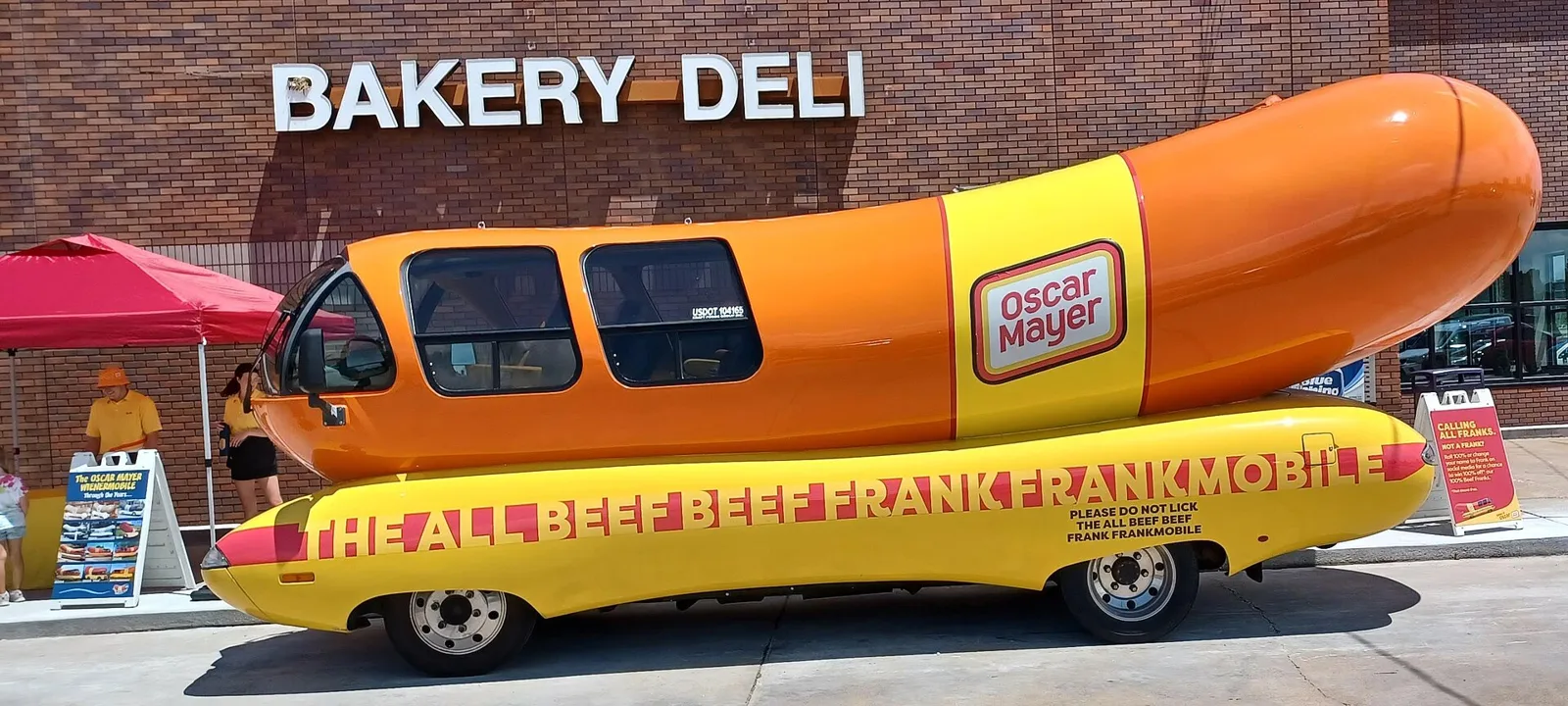
In 2018, 7,000 people applied for a job with just 12 openings a year. The work: driving a hot dog on wheels around the United States for twelve months, answering the same bathroom question over and over. The vehicle is the Oscar Mayer Wienermobile, and it is one of three very different famous cars that began as ideas rather than as ordinary production models.
The other two are a fictional racer from a 1967 Japanese cartoon and a magazine series that put 1:43 models of James Bond's cars on collectors' shelves.
The Wienermobile and how Oscar Mayer built it
The first Wienermobile was made in 1936 by Carl G. Mayer, nephew of Oscar Mayer, to promote the company's products. It weighed 2000 pounds and cost $5000 to build. Finished in Chicago the day before, it made its first public appearance in Janesville, Wisconsin, over 16 and 17 October 1936.
It travelled with a human sidekick. Oscar Mayer's "World's Smallest Chef", billed as 19 years old, 42 inches tall and 45 pounds, appeared with the vehicle. Who played the very first Little Oscar is unknown; Meinhardt Raabe took the role after he was hired in mid-1937 and kept it until at least 1941.
The name came late. The word Wienermobile did not appear in publicity until 1951. Between 1936 and 1941 publicity called the machine a Wiener Truck, an Oscar Mayer Truck or a German Wiener Sound Car, among other labels, and once billed it as the World's Largest Wiener Car.
From scrap metal to fibreglass
That original vehicle did not survive the war. It was scrapped for metal in the 1940s to help the US Army. In the 1950s Oscar Mayer and the Gerstenslager Company built several replacements on a Dodge chassis or a Willys Jeep chassis, and one 1952 model now sits in the Henry Ford Museum in Dearborn, Michigan. From that decade "Little Oscar", played by George Molchan, usually rode in the vehicle and visited stores, schools, orphanages and children's hospitals, as well as parades and festivals.
Industrial designer Brooks Stevens is credited with a new look for the 1950s, taking advantage of moulded fibreglass construction "to put the wiener in the bun" in 1958.
The company built a fleet of six Wienermobiles in 1988 on converted Chevrolet van chassis. By 1995 every one had passed 250,000 miles. A new design that year stretched the vehicle to 27 feet (8.2 m) in length and 11 feet (3.4 m) in height.
In June 2017 the company added several hot dog-themed machines, among them the WienerCycle, WienerRover and WienerDrone. Then, in May 2023, it announced that the Wienermobile would become the Frankmobile, to promote a new all-beef frank recipe, with the suggestion that the change would not last. It did not. The old name returned in September 2023, following popular demand.
A hot dog on wheels drew 7,000 applicants for 12 driving jobs in 2018.
Hotdoggers, the people who drive it
Six Wienermobiles operate across the United States, and each carries two drivers, known as Hotdoggers. That adds up to 12 drivers a year. Their job is to "meat" and greet: posting pictures online, fielding questions about the brand and the machine, and handing out merchandise. The question they hear most is whether there is a bathroom in the back. The stock reply is that it is not a "Weenie-bago".
The post is limited to college seniors about to graduate, preferably with a BA or BS in a field such as journalism, advertising or marketing. Each assignment lasts one year, and recruiters visit campuses alongside the current Hotdoggers. Paul Ryan, the former Speaker of the US House of Representatives, was one while in college.
The Wienie 500
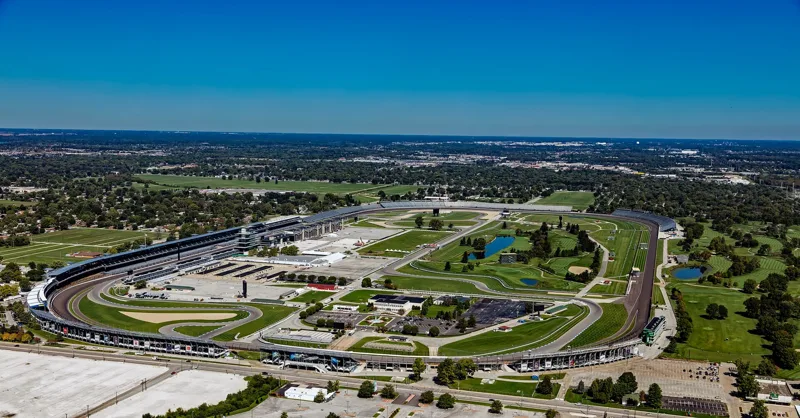
At the Indianapolis 500 in 2025 and 2026, all six Wienermobiles took part in a Carb Day race called the Wienie 500, a two-lap, 5-mile (8.0 km) dash around the Indianapolis Motor Speedway oval. "Slaw Dog" won in 2025, and "New York Dog" won in 2026.
Run-ins with the law
A vehicle this conspicuous attracts police attention. On 5 July 1973 Seattle police recovered an abandoned Wienermobile about ten miles from the Oscar Mayer facility it had been stolen from. On 18 June 2002 a Virginia trooper posted near the Pentagon, whose job was to stop large vehicles that might carry explosives, halted the touring Wienermobile and sent it to an exit that bypassed the building.
The strangest stop came in June 2007. A Wienermobile with the Wisconsin vanity plate YUMMY was pulled over in Arizona after an officer, who had seen it slowing traffic, ran the plate and found it reported stolen from Columbia, Missouri. Oscar Mayer had obtained a duplicate after the original was stolen and had not told police that the plate should count as stolen only when it was not on a Wienermobile. The vehicle was released soon after the error came to light. On 22 July 2024 another Wienermobile was hit by a car on Interstate 294 near Oak Brook, Illinois, and flipped onto its side. No injuries were reported.
The Mach Five from Speed Racer
The Mach Five is a fictional racing car from the anime Speed Racer, known in Japan as Mach Go! Go! Go!, and from its later adaptations. The driver controls its special devices with buttons on the steering wheel.
Mitsuki Nakamura, art director of Tatsunoko Production, designed the car for the 1967 television series. The original plan was to keep the look from the manga, but Tatsunoko decided to redraw it, and Nakamura, a car enthusiast, got the job. He studied photographs and drew on the Porsche, Ferrari and Jaguar race cars of the day. The studio's literary section came up with the gadgets and other settings.
Half a century later the design still looked modern. It passed muster for the Wachowski siblings' live-action film of 2008, with few changes 40 years on.
What the original car could do
In the 1967 series the car is driven by Speed Racer, called Go Mifune in the Japanese version, and was built by his father, Pops Racer, whose Japanese name is Daisuke Mifune. It is a left-hand drive two-seater, and the only mechanical detail given is a V12 engine. The body is white and blue, with a red letter M on the bonnet. Seven special functions are each controlled by a steering wheel button assigned a letter from A to G.
Remakes, sequels and a film
| Production | Year | Made in | Mach Five design |
|---|---|---|---|
| Speed Racer (Mach GoGoGo) | 1967 | Japan | Two-seater, V12, white and blue with red M, seven functions |
| The New Adventures of Speed Racer | 1993 | United States | Design fully redone |
| Mach GoGoGo (Speed Racer Y2K) | 1997 | Japan | Triple nose kept, tail fins, three-seater with centre cockpit |
| Speed Racer: The Next Generation | 2008 | United States | Near-original look, black wheel rims, CGI |
| Speed Racer (film) | 2008 | United States | Near-identical to the anime, real car plus CGI |
The 1997 Japanese remake took the most liberties. It kept the triple front nose of the earlier body but altered the rear with tail fins similar to those of an F-15 and an F22, and turned the car into a three-seater with a central cockpit.
In the film, which Warner Bros. Pictures released, an actual car was built and used in the main races. It was rarely driven on real roads; it was hung from a crane while computer graphics supplied the effects. The story starts the Mach Five as a street-legal family car with a rear compartment, where Spritle and Chim-Chim later stow away. It originally belongs to Speed's older brother Racer X, Rex, who hands it over before leaving home. Later it is modified with gadgets for off-track races such as the Casa Cristo 5000.
The film adds two single-seaters, the Mach 4 and Mach 6, built for stunt races. The Mach 6 is Speed's main car on the WRL track. It is wrecked in a fixed race and rebuilt for the final one. The Mach 4 appears only briefly, as a red companion to the 6.
Real-life Mach Fives
People have been trying to build the car since the 1990s. A 1997 replica to promote the anime remake used Nissan's entry-level race car, the Saurus, with an FRP body. It ran again at the Toyota Automobile Museum in 2010. A prototype with a retractable saw blade was sold at an online charity auction in 2000. In 2002 plans were announced for 100 road-legal replicas, with bodies heavily modified from the 2001 Chevrolet Corvette platform. The Petersen Automotive Museum in Los Angeles holds a mid-engine Mach Five prototype.
After the film's 2008 premiere in Los Angeles, the actual racing car used in it was unveiled. A full-scale replica went on show at the 2009 Tokyo Motor Show, tied to a Tyrol Choco giveaway of miniature Mach Five cars. Road & Track ran an article on 31 March 2008, the day before 1 April, about a "genuine running model" built for the film, complete with performance data. A Speed Racer-themed catamaran built in 2005 was styled after the car, and the Mach Five also appears in a racing scene in the 2018 film Ready Player One.
The James Bond Car Collection
The third subject is a collectors' magazine rather than a vehicle. The James Bond Car Collection, also called Bond in Motion, was a partwork published in the United Kingdom by Eaglemoss Publications. Each issue cost 7.99 pounds (the first was 2.99 pounds) and came with a 1:43 model of a car from a James Bond film, set in a diorama of the scene. Universal Hobbies made the first models; later ones came from Ixo.
A test run in two French regions in late 2005 and January 2006 ended after five issues and used models by Eligor and Norev instead. The series finished once the Rolls-Royce had been distributed, and returned in 2017 as Bond in Motion.
What came in each issue
The release schedule was fortnightly and later monthly. The cars ran from Bond's first, the Sunbeam Alpine, to his newest at the time, the Aston Martin DB10, with the famous and the obscure from more than 50 years of films. Each model was diecast in metal, and some carried gadgets or character figurines on a moulded base. The magazine added interviews with the people who made the films, behind-the-scenes photographs, trivia and a history of the real car. Covers showed the actors from the film in question, and the back cover carried film posters from different countries. The centre spread usually showed the car as the public could buy it, often a maker's publicity picture.
135 issues instead of 40
Only 40 issues were scheduled at the start, but popularity brought repeated extensions. The complete collection ran to 135 issues, with three further models given as gifts to early subscribers, at a total cost of over 1000 pounds. The final issue was the Aston Martin DB10 from Spectre.
The magazine also appeared in France (stopping after issue 84), Finland, Germany, the Netherlands and Brazil, and subscriptions covered a long list of countries from the UK and Ireland to Australia, New Zealand, South Africa, Argentina and Peru. The release order varied by location: the Brazilian MP Lafer arrived as issue 7 there, far earlier than elsewhere.
Mistakes collectors found
With this many models, errors were inevitable, and collectors have logged plenty. Several issues reused the same Bond photograph on the cover, among them issues 4 and 87, and 16 and 95. Issue 6 is the only one without Bond on the cover; the villain Zao appears instead.
The models themselves slip too. Felix Leiter's 1964 Thunderbird in issue 42 carries the taillights of the 1965 model. Issue 64's Bentley is built at about 1:35 rather than 1:43. Issue 70 wrongly supplied the X350 Daimler Super-8 where the film used the X308 Super V8. Issue 88 is a Cadillac hearse converted by Miller-Meteor, whereas the film showed Superior Coach Company work. Issue 102, the Bondola, has a grey base where the rest have black ones, has no figure of Roger Moore, and is made at 1:72. Issue 128's Morris Minor lacks a registration plate, and its folded roof is the wrong colour.
Text errors appear as well. Issue 89's first print run credited the Ford Anglia to From Russia with Love when it came from Dr. No, a mistake corrected in later releases abroad. Issue 99 calls the officer Bond impersonates in Octopussy a general, when the rank was colonel. A German issue 105 gives the Ford Country Squire an engine size of 36,390 cc.