How Paris began in 1898, why Switzerland suited Geneva so well, and what ended the Swiss show after 2024.
Paris, started by Jules-Albert de Dion in 1898, is the older show; Geneva followed in 1905 and staged its final edition in 2024. Geneva's committee then cancelled 2025 and beyond, naming weak manufacturer interest and rival shows. Paris still runs every two years, in October.
The Geneva Motor Show that unveiled the Lamborghini Countach LP400 in 1974 held its last edition in 2024. In May of that year its organising committee cancelled the event for 2025 and beyond, citing weak manufacturer interest and competition from rival shows. Paris, the older of the two, dates to 1898 and still has editions listed up to 2026.
What was the Geneva Motor Show?
An annual event staged every March in the Swiss city of Geneva, it filled the Palexpo, a convention centre beside Geneva Cointrin International Airport. The Organisation Internationale des Constructeurs d'Automobiles, the trade body that also schedules the Paris show, treated it as an important major international exhibition.
The first Geneva show took place in 1905. Over the following decades it is credited with presenting almost every significant internal-combustion model in motoring history, along with steam cars and early benzene-fuelled machines from the opening years of the century. Exotic supercars regularly stole the spotlight at their debuts there, and announcements ranged from prototypes and new equipment to technical breakthroughs, international partnerships and political and social debates.
The setting gave the show a structural advantage. Switzerland had no car industry of its own, so no maker played at home, and the show was seen as an even contest for the world's automakers. Picture a boxing match staged in a neutral country: nobody's supporters fill the hall, and every corner gets the same treatment.
Floor space was divided into areas. There were cars with three, four or more wheels; electric and alternative-powered cars; special bodywork, design and engineering; converted cars from the tuners; accessories and parts; original equipment manufacturers; workshop installations for repair and maintenance; miscellaneous products and services; and a zone for animation and attractions. A separate forum, the International Advanced Mobility Forum, looked at the mobility of the future.
Switzerland had no car industry of its own, so no maker played at home.
Geneva and Paris compared
| Detail | Geneva | Paris |
|---|---|---|
| First held | 1905 | 1898 |
| Month | March | October |
| Rhythm | Annual | Annual until 1976, then every two years |
| Venue | Palexpo, beside Geneva Cointrin International Airport | Paris expo Porte de Versailles |
| Scheduling body | Organisation Internationale des Constructeurs d'Automobiles | Organisation Internationale des Constructeurs d'Automobiles |
| Latest edition | 2024, the last | Editions listed for 2022, 2024 and 2026 |
How did the Paris Motor Show begin?
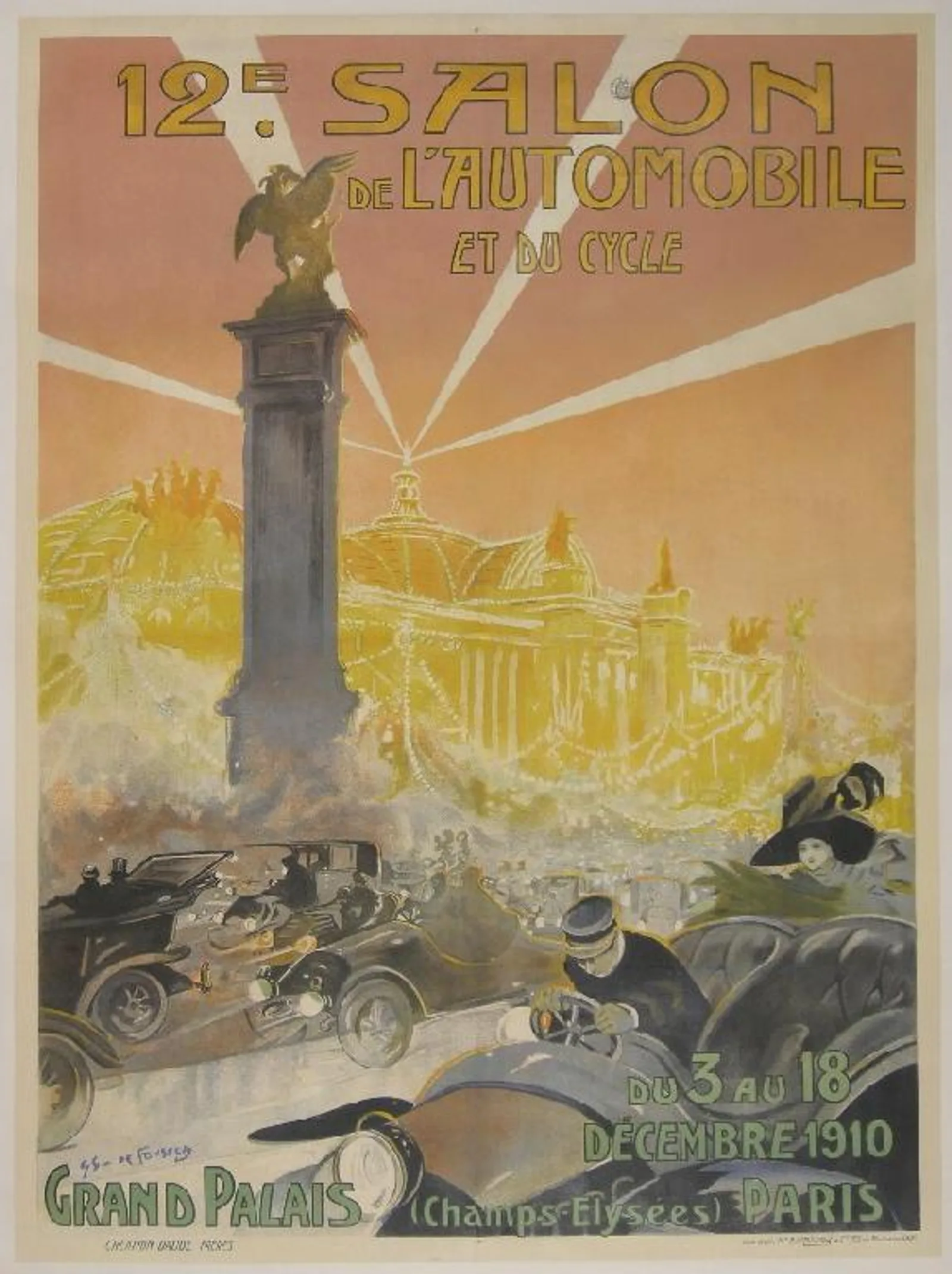
Paris is the elder. The industry pioneer Jules-Albert de Dion launched it in 1898, and it counts as the first motor show anywhere. After 1910 it was held at the Grand Palais on the Champs-Elysees, and by 1913 it had reached its 14th Salon.
War then cut the sequence. The First World War suspended the shows, so the one that opened on 9 October 1919 was only the 15th. In 1925 the venue was given over to an Exhibition of Decorative Arts and the motor show simply did not happen; it came back in October 1926. In 1939 the 33rd Salon was cancelled at short notice as war broke out again, and no shows were held until the 33rd finally opened in October 1946.
What did the early Paris Salons look like?
They were crowded with French badges. The 1919 show carried 65 French car makers, plus 22 French commercial vehicle manufacturers and 31 non-French businesses from the car trade, for at least 118 exhibitors in total. By 1922 the French makers numbered 81 and a handful of coachbuilders had arrived.
| Year | French car makers | Also exhibiting |
|---|---|---|
| 1919 | 65 | 22 French commercial vehicle makers, 31 non-French businesses; at least 118 exhibitors |
| 1922 | 81 | 1 French commercial vehicle maker, 7 coachbuilders, 25 non-French businesses; 113 exhibitors |
| 1924 | 78 | 4 French commercial vehicle makers, 34 non-French businesses; 116 exhibitors |
| 1926 | 81 | 42 non-French businesses; 126 exhibitors |
| 1930 | 46 | 46 non-French makers; 92 exhibitors |
| 1931 | 39 | 37 non-French makers; 79 exhibitors |
| 1961 | 9 | One Jeep maker, one coachbuilder |
| 1965 | 9 | One Jeep maker, one coachbuilder |
| 1967 | 8 | One coachbuilder |
Follow the French count through the decades. Between 1931 and 1937 the French count slid from 39 to 26 in 1933 and 22 in 1937. After the war it hovered between 22 and 27: 27 in 1947, 23 in 1951 and 24 in 1957. By 1961 only 9 French car makers remained, and 1967 brought it to 8. The 1969 show was the last at which Automobiles Hotchkiss exhibited.
How did Paris move to a two-year cycle?
For decades Paris ran every year. That changed in the 1970s. The 63rd Salon in 1976 was known as a Salon de Sobriete. In January 1977 the organisers announced that no show would be held that year because of the current economic situation, while confirming that a 1978 Auto Salon was planned. Since 1976 the show has been held every two years, and it has stayed in October.
The venue has its own history. The 49th Salon in 1962 was the first at the Porte de Versailles on the outskirts of Paris, and the modern buildings of the Parc des Expositions there hosted the 15 October 1978 opening.
The name moved as well. The show was called the Salon de l'Automobile until 1986, took the name Mondial de l'Automobile in 1988, and became the Mondial Paris Motor Show in 2018.
How big is the Paris Motor Show?
Very big. In 2016 it welcomed 1,253,513 visitors, the highest figure for any auto show anywhere, ahead of Tokyo and Frankfurt. Its quoted key figures are 125,000 square metres (1,350,000 sq ft) of exhibition space, 8 pavilions, 260 brands from 18 countries and 65 world premieres. Organisers also cite more than 10 000 test drives for electric and hybrid cars and more than 10 000 journalists from 103 countries.
Which cars were launched at the Paris show?
The list of Paris debuts reads like a tour of French motoring. In 1955 the Citroen DS made its world premiere, and the same year brought the Alfa Romeo Giulietta Spider, the Continental Mark II and the VELAM Isetta. Facel Vega used the show repeatedly: the marque had a world premiere in 1954, the Excellence arrived in 1956 and the Facellia followed in 1959.
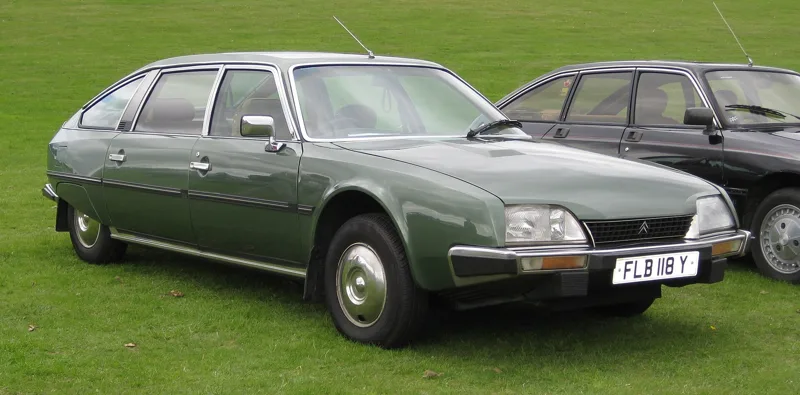
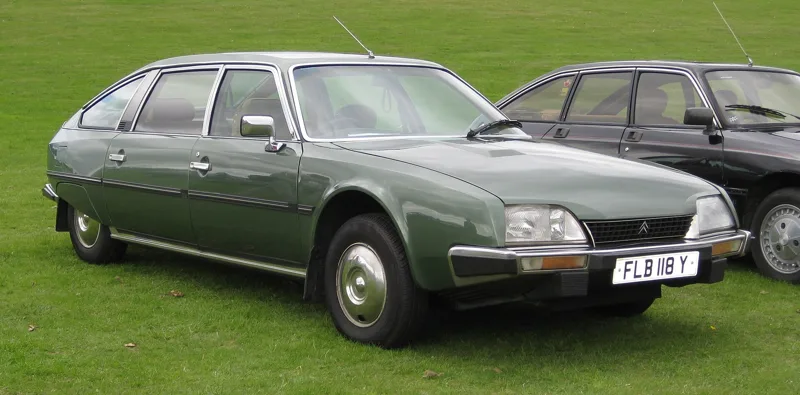
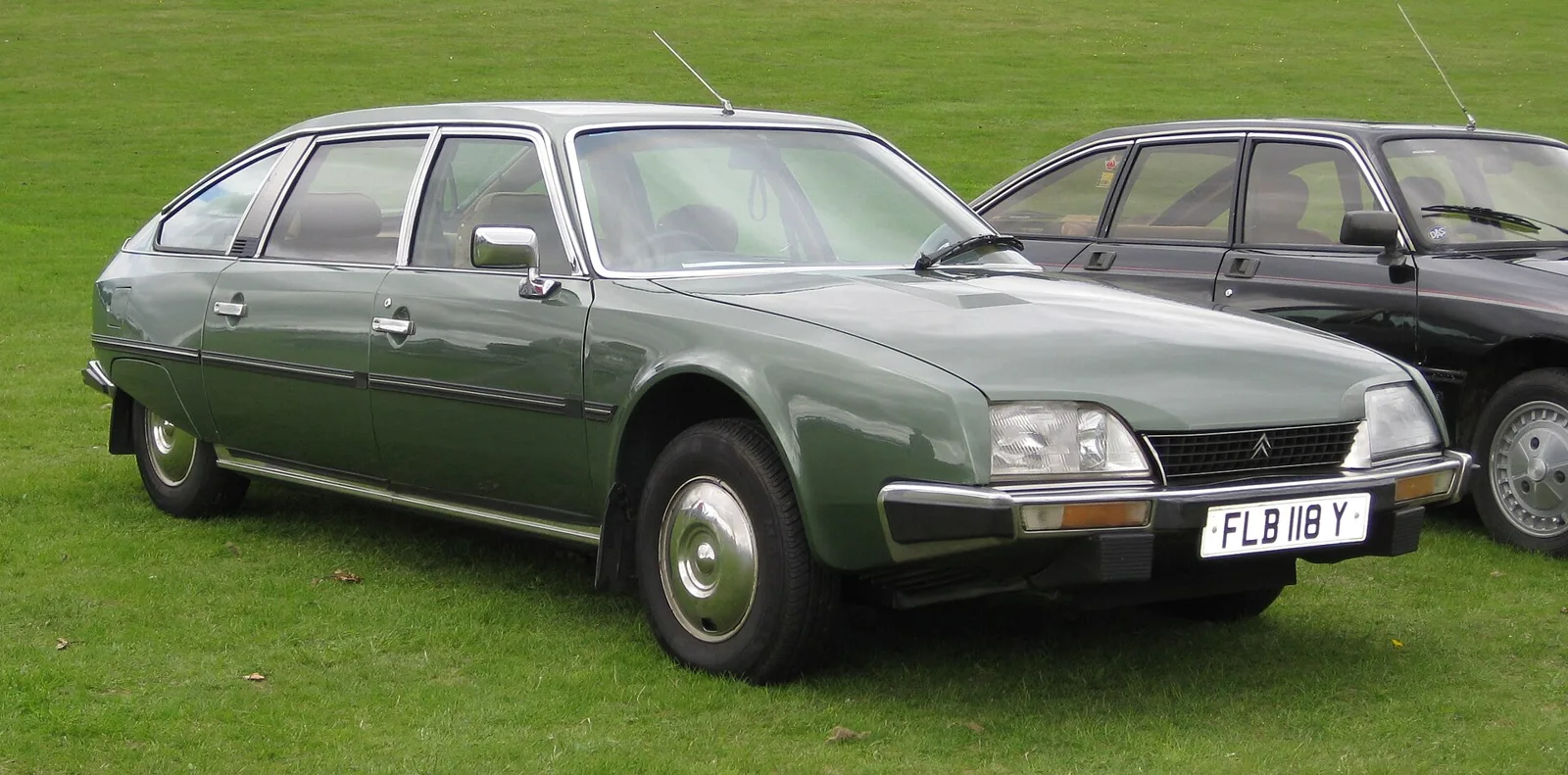
The 1960 show listed the Panhard PL 17 Cabriolet and the Triumph Italia. The Buick Riviera had its world premiere in 1962, the first year at the Porte de Versailles, and the Citroen Dyane followed in 1967. In 1974 the Citroen CX and the Porsche 911 Turbo both had world premieres at the 61st Salon, and Ferrari presented the 400 in 1976.
Later entries are shorter. The Renault Twingo was introduced at the 75th edition in 1992. The 1998 show brought the Audi TT and the Renault Vel Satis concept. The Citroen CX appears in both the Paris and the Geneva lists for 1974, each recording it as that year's introduction.
The great Geneva debuts of the 1970s
Geneva listed Lamborghini's Countach LP400 and the Citroen CX in 1974. A year later the Ferrari 208 GT4, the Ford Capri S, the Lancia Beta HPE, the Maserati Merak SS and the Peugeot 604 all appeared, along with the Monteverdi Palm Beach.
The 1976 show brought the Lamborghini Silhouette, the Lancia Gamma, the Maserati Kyalami and the Alfasud 5m, plus the Alfa Romeo Navajo concept. In 1977 the Porsche 928 arrived next to a Lamborghini Cheetah prototype and a Pininfarina aerodynamic study based on the Ferrari 308 GTB, called the Millechiodi.
Not every name belonged to a household marque. Felber showed machines built on other cars: the Rubis 112 in 1979 was based on the Autobianchi A112, the Illustre in 1980 on the Audi 80 and the Pasha the same year on a Buick Skylark. In 1978 Ford's Mustang III and Megastar II concepts were credited to Ghia, and in 1979 Isuzu's Asso di Fiori concept to Italdesign.
The Geneva debuts of the 1980s
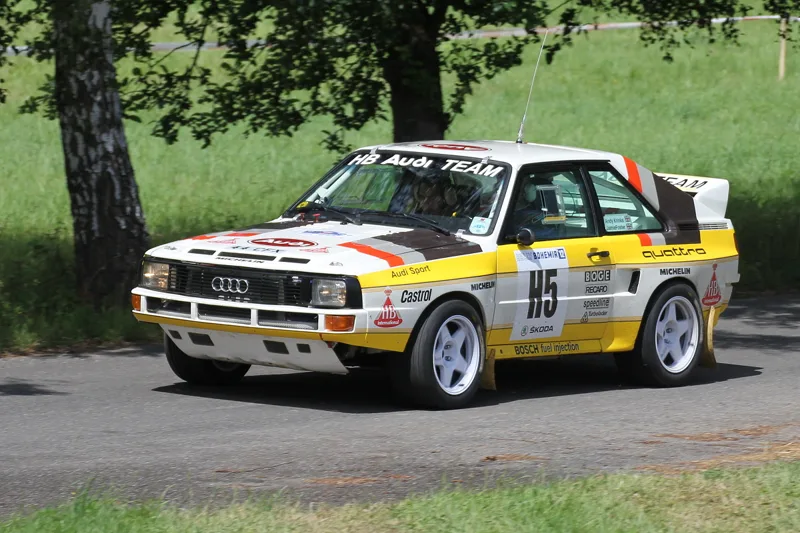
The Audi Quattro and the Fiat Panda both came to Geneva in 1980, together with the Ferrari Mondial 8. A year later the Lamborghini LM001 and Jalpa were shown, and the one-off Lamborghini Miura P400 SVJ Spider. The Bentley Mulsanne Turbo arrived in 1982 beside the first-generation Volkswagen Golf GTD.
Ferrari's 288 GTO made its Geneva appearance in 1984, the year of the Lamborghini Jalpa P350 and the Isdera Imperator 108i. The Lamborghini Countach LP5000 S Quattrovalvole and the Ferrari 412 were there in 1985. In 1986 the Volvo 480, the first front-wheel-drive Volvo, shared the floor with an Aston Martin V8 Zagato coupe and the BMW 524d. The Aston Martin Lagonda Series 4 followed in 1987.
By 1989 the line-up included the Alfa Romeo SZ, originally called the ES 30, the Chevrolet Corvette ZR-1, the Lancia Delta Integrale 16v and the Mercedes-Benz 500SL. The Lotus Carlton, a high-performance version of the Vauxhall Carlton, sat alongside the Alpina B10 Bi-Turbo and the Daihatsu Applause.
Small specialists kept the floor interesting. Sbarro concepts appeared in most years of the decade, from the Super Twelve in 1982 to the Osmos in 1989. Ford sent concepts through Ghia, among them the Trio in 1983, the Saguaro in 1988 and the Via in 1989, and the Peugeot Agades concept of 1989 carried a Heuliez credit.
Geneva and the cars buyers actually drive
It would be easy to think Geneva was only about exotic metal. The lists say otherwise. Everyday cars made their debut there too, including the Fiat Panda, the Volkswagen Golf GTD, the Peugeot 604 and the Ford Capri S. A look at Paris tells the same story, with the Citroen Dyane and the Renault Twingo introduced to the public beside the Buick Riviera and the Porsche 911 Turbo.
By 2007 the Geneva organisers had an alternative-propulsion section. Entries included the Bollore Bluecar, a Fiat Panda running on petrol and natural gas, the Ford Focus Turnier 2.0 and the Honda FCX Clarity. Opel showed a Corsa D with an optimised 100HP 1.6l natural gas engine, with serial production still to be evaluated. The Reva Greeny AC1, sold as the G-Wiz in the United Kingdom, appeared too. The Subaru R1e, a small electric city car, had a battery that could be 80% recharged in just 15 minutes. Elsewhere Subaru presented its new boxer diesel engine and Honda showed its next-generation clean diesel.
Why was the Geneva Motor Show cancelled?
There was no single cause. The COVID-19 pandemic, and its economic impact on the global car industry, meant the Swiss show was not held from 2020 to 2023. The 90th edition was planned for 5 to 15 March 2020, but Switzerland limited gatherings of more than 1,000 people and the show was cancelled, one of the first big automotive events to fall.
In 2021 the organisers reached an agreement with the Qatari government to hold biennial exhibitions in Qatar in the final quarter of the year, alongside annual shows in Switzerland in the first quarter. Then the 2021 and 2022 Swiss shows were cancelled because of continuing pandemic measures, and the global chip shortage was cited as a further factor for 2022. The Qatari show planned for November 2022 was moved to 2023 for the same reason.
For 2023 the organisers pointed to uncertainties in the global economy and geopolitics, and to weaker commitments from manufacturers. That made it the fourth year running without a Swiss edition. The Qatar Motor Show was confirmed for 5 to 14 October 2023.
What happened at the final show in 2024?
In July 2023 the organisers announced plans for a 2024 show, to run from 26 February to 3 March and to be the last event, in a revised format designed to cut costs for exhibitors. The edition exposed serious organisational shortcomings, and some manufacturers took part less or stayed away entirely.
Confirmed participants as of 26 January 2024 included Renault, Dacia, BYD Auto, MG Motor, Lucid Motors and Isuzu, alongside IM Motors, Pininfarina, Microlino, Kimera Automobili, Totem Automobili and Silence Urban Ecomobility. Compare that with the 1974 lists of the Countach and the CX, or with the 2010 edition, when over 80 introductions were expected and the press days opened on 2 March, when most of the major introductions occurred.
Then came the May 2024 decision. The committee called off every show from 2025 onward, saying manufacturers had shown little general interest and that other shows were competing for them. Its focus shifted to the event scheduled for November 2025 in Qatar.
Where this goes next
After the 2024 show the organisers announced the closure of the Geneva event. They continue to run the Qatar Motor Show in Doha.
Paris remains a biennial October show. The list of editions includes 2022, 2024 and 2026, and records that there was no Salon in 2020 because of COVID-19.