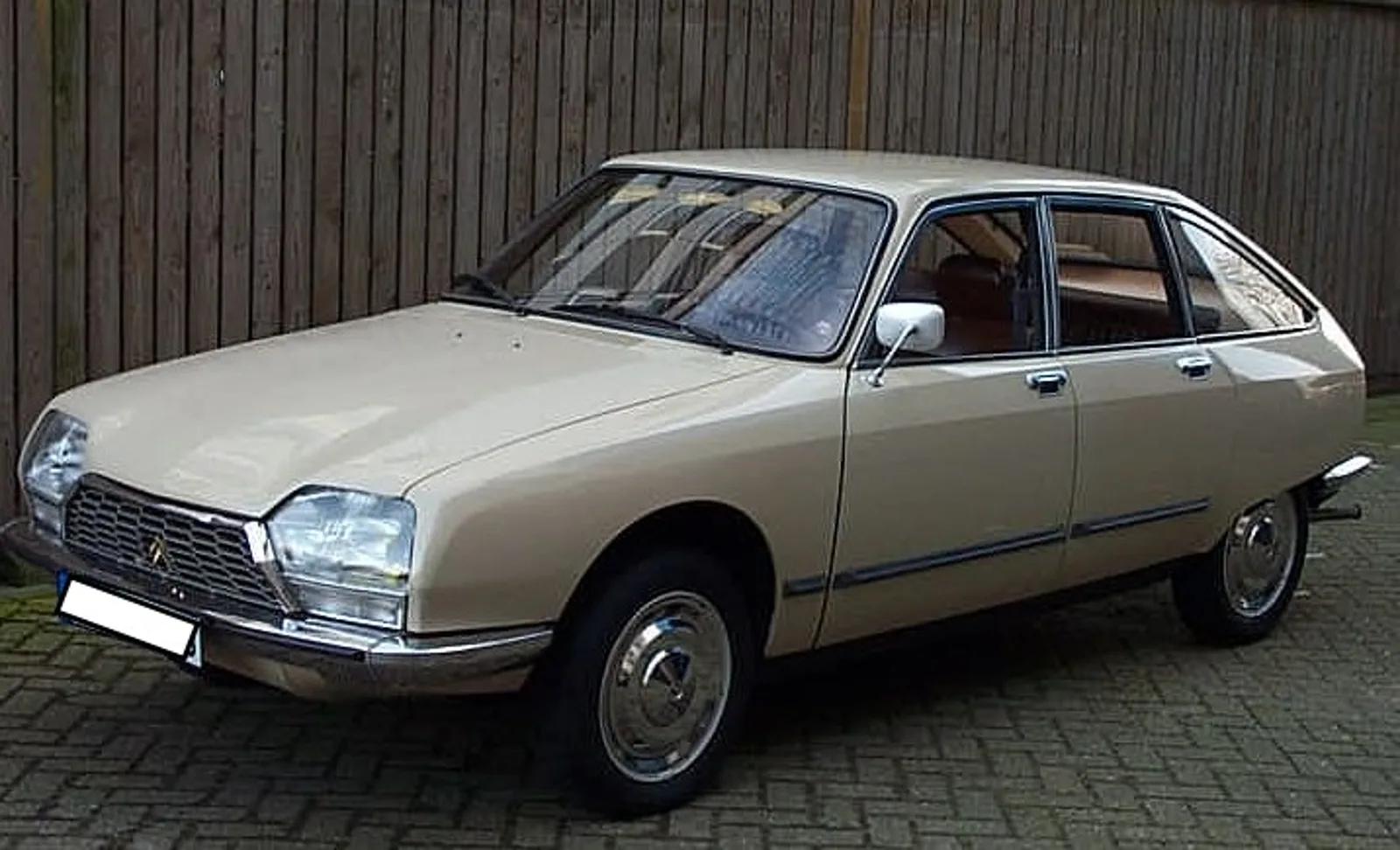
A 1967 hatchback that kept the 2CV's mechanics under new bodywork, with about 1.7 million made and a long life after its intended successor arrived.
The Citroen Dyane was a hatchback built by Citroen from 1967 to 1983 on the 2CV's platform. It came with new, straighter bodywork and engines that grew from 425 cc to 602 cc. About 1.7 million were made, including the Acadiane van.
Built by Citroen between 1967 and 1983, the Dyane took the 2CV's chassis and most of its engineering and wrapped them in a new hatchback body. The company pitched it at buyers who wanted more versatility than the 2CV offered, and the car's total output reached about 1.7 million units. Its mix of familiar mechanics and fresh bodywork explains almost everything about its character.
The Dyane was never intended as a sporting machine. It filled a space between the 2CV and the Ami in the Citroen line-up, and it attracted drivers looking for a hatchback's flexibility at a modest price. Because the older 2CV stayed in production alongside it, the Dyane's history is closely tied to the car it was supposed to succeed.
Where did the Dyane come from?
The Dyane was Citroen's answer to the Renault 4, which launched in 1961 and had hurt 2CV sales. Design work first went to the Panhard team under Louis Bionier. Robert Opron, the company's design chief, found the first proposal controversial, so the car was significantly reworked before launch.
Panhard had been absorbed into Citroen's car business in 1965, which is why its design department was available while Citroen's own team handled updates to the DS and Ami. The Panhard link also shows in the name, because Panhard held rights to Dyane, Dyna, Dynavia and Dynamic.
The Dyane was not a clean-sheet design. Its chassis and suspension carried over from the 2CV, and its launch engine was the 2CV's own 425 cc unit. What changed most was the body, which gave the car straighter lines and a far more practical rear end than its predecessor.
New bodywork over the 2CV's mechanical bones, and a hatchback that sold in large numbers for years.
What did the Dyane look like?
The Dyane kept the 2CV's basic layout but received almost entirely new body panels with straighter, more angular lines. Its most visible changes were a large rear hatch, headlamps integrated into the front wings and stainless steel wheel embellishments fitted as standard. The result looked more modern than the 2CV while keeping its simple character.
The round headlamps sat in the front wings with squared stainless steel trim rings, a clear break from the separate units on the 2CV. The rear hatch made loading easier, and the body was built around that practical shape.
Two trims were offered at launch. The Luxe was the basic car and kept the rustic steering wheel it shared with the 2CV. The Confort added wheel hubcaps, moulded door panels in place of flat hardboard, and a steering wheel that felt less basic. A spare wheel and jack sat in a cradle under the bonnet instead of loose in the boot.
The Confort cost 615 francs more than the Luxe on the 1967 domestic list, a supplement of just over 10%. Buyers could also specify a trafficlutch, a centrifugal clutch intended to help the car avoid stalling in slow city traffic.
How much power did the Dyane make?
The launch Dyane used the 2CV's 425 cc air-cooled engine, claimed at 21 bhp (16 kW; 21 PS) with a top speed of 100 km/h (63 mph). The Dyane 6, announced at the Brussels Motor Show in January 1968, used the Ami's 602 cc engine with a claimed 28 bhp (21 kW; 28 PS).
The Dyane 4 arrived in March 1968 with a 435 cc engine rated at 26 bhp (19 kW; 26 PS), and its claimed top speed rose to 105 km/h (66 mph). The 602 cc car was added to the range rather than replacing the 425 cc model at first, so both were offered for a time.
In September 1968 the 602 cc engine was improved with higher compression, which gave the car slightly more output. The cylinder heads were held down by three studs and no head gasket was fitted, which made the top end simpler to open up when a rebuild was needed.
Spark plugs were a weak point, and they often wore out around 6000 miles. Front hub kingpins needed greasing every 600 miles, and neglecting them was a common route to wear.
How fast was the Dyane 6 in a road test?
The Motor tested a Dyane 6 in July 1969 and recorded a top speed of 68.6 mph (110.4 km/h) and 0-60 mph (97 km/h) in 30.8 seconds. Overall fuel use was 36.0 mpg-imp (7.8 L/100 km; 30.0 mpg-US), while gentle driving reached 51.0 mpg-imp (5.54 L/100 km; 42.5 mpg-US).
Reviewers commended the car's versatility, spaciousness and comfort. They also found the road holding and fuel economy good when the car was driven gently, but acceleration and top speed fell short of the class average.
The journal's UK rivals included the Mini, the Hillman Imp, the Reliant Rebel and the Renault 4. The test car was priced at GBP 648 including taxes, the same figure BMC set for its Mini 1000 Super, which put the Dyane directly against a famous small car.
How many Dyanes were built?
Nearly 1.45 million Dyanes were built, along with around 250,000 Acadiane vans, for a combined total of about 1.7 million. In the first full year of production the Dyane outsold the 2CV, with 98,769 cars against 57,473, and its early lead was the strongest it would enjoy.
In 1969 the Dyane again outsold the older car, 95,434 to 72,044. The 2CV then came back in front with 121,096 units in 1970, and the Dyane's annual volumes never again beat those of the 2CV.
The figures show that the Dyane never took over from the 2CV, even though it sold strongly for years. The older car's continued success kept the entry-level place in the Citroen range filled, and the Dyane sat alongside it rather than above it.
The Acadiane panel van added a second body style to the family, and its volume is part of the combined figure of about 1.7 million. Its place in the totals means the car's reach was wider than the passenger model alone.
Where else was the Dyane built?
The Dyane was assembled outside France in Yugoslavia and Iran. Tomos began assembling Citroens from kits at Koper in 1959, and the locally built Dyane was called the Diana. SAIPA built the car in Iran from 1968 to 1980 under the name Jyane.
In 1972 Tomos, Iskra and Citroen formed a joint venture called Cimos. Cimos built cars from kits at Koper, and it also produced the Dak and Geri, utility vehicles based on the Dyane. Every car assembled there after 1972 was made from kits and carried the Citroen badge.
The Persian word for the Iranian name means fierce or ferocious. SAIPA built 120,000 Jyane models, and unique van and pick-up versions were also manufactured there, separate from the French range.
Did the Dyane compete in rallies?
Yes, although the results were modest. A Dyane driven by Michel Peyret and Jean-Jacques Cornelli entered the 44th Monte Carlo Rally in 1976 as number 102. It finished 80th out of 84 classified competitors, from 148 starters, which placed it in the lower part of the classification.
The Monte Carlo entry gave the Dyane a motorsport footnote rather than a competitive record. The result reflects a car designed around economy and practicality rather than outright performance, which matches the road test figures for speed and acceleration.
Why did the 2CV outlive the Dyane?
The 2CV remained on sale as a cheaper, entry-level model after the Dyane arrived. Its production continued past the point at which the Dyane was expected to take over, so the 2CV outlived the car that was supposed to replace it. The Dyane itself was retired after a run of well over a decade.
Production figures reinforce the point. The 2CV pulled ahead again in 1970 and stayed ahead of the Dyane's annual volumes in the years that followed, which left the Dyane as a successful sibling rather than a replacement. That is how the Citroen range ended up with two cars sharing one platform for much of their working lives.
What are the Citroen Dyane specifications?
The table gathers the main figures for the Dyane across its launch engine, its later engine options, its road test results and its production totals. Imperial figures appear in brackets alongside metric ones wherever the original data gives both. Each entry matches the figures set out earlier.
| Specification | Detail |
|---|---|
| Production years | 1967 to 1983 |
| Launch engine | 425 cc, 21 bhp (16 kW; 21 PS) |
| Dyane 4 engine | 435 cc, 26 bhp (19 kW; 26 PS) |
| Dyane 6 engine | 602 cc, 28 bhp (21 kW; 28 PS) |
| Claimed top speed at launch | 100 km/h (63 mph) |
| Claimed top speed, Dyane 6 | 115 km/h (71 mph) |
| UK test top speed | 68.6 mph (110.4 km/h) |
| UK test 0-60 mph | 30.8 seconds to 60 mph (97 km/h) |
| UK fuel use, overall | 36.0 mpg-imp (7.8 L/100 km; 30.0 mpg-US) |
| UK fuel use, gentle driving | 51.0 mpg-imp (5.54 L/100 km; 42.5 mpg-US) |
| UK price | GBP 648 including taxes |
| Total output | about 1.7 million |
The table shows a car that gained power through 1968. The UK test results back up its reputation for economy, while the top speed figures show it was never built as a fast car.
What is the legacy of the Dyane?
The Dyane's legacy is a simple one: a new body on a proven platform could still reach about 1.7 million buyers. Its production spread from France to Yugoslavia and Iran, and it remained in production until 1983 after a long run that matched its practical brief.
Within Citroen's range, the Dyane showed that a hatchback variant of the 2CV could hold its own. Trim choice at launch and several engine options in the early years gave buyers a real choice between economy and a little more performance.
The wider story is one of shared engineering. Local partners such as Tomos, SAIPA and Cimos turned kits into cars on their own soil, and the Iranian Jyane shows how far a French design could travel once partners took on local assembly.
Frequently asked questions
What was the Citroen Dyane's top speed?
Launch claims were 100 km/h (63 mph) for the 425 cc car and 115 km/h (71 mph) for the Dyane 6. A UK test of the Dyane 6 measured 68.6 mph (110.4 km/h), which fell between those two claims.
What is the Acadiane?
The Acadiane was a panel van version derived from the Dyane, giving the range a working vehicle alongside the passenger cars. Around 250,000 were made. Those vans are included in the overall count, so the family's output is larger than the passenger car figures alone suggest.
Was the Dyane built outside France?
Yes. Tomos assembled the Dyane in Yugoslavia under the Diana name, and later Cimos produced Dyane-based utility vehicles there. In Iran, SAIPA built the Jyane from 1968 to 1980, and that programme produced 120,000 cars.
What is a trafficlutch?
A trafficlutch was an optional centrifugal clutch that helped the Dyane avoid stalling in slow moving urban traffic. It was offered as an alternative to the standard arrangement rather than fitted as standard equipment.
How did the Dyane's suspension work?
The Dyane used the 2CV's interconnected suspension, shared with the 2CV platform beneath it. The kingpins needed greasing every 600 miles, and they were prone to wear when that job was overlooked.