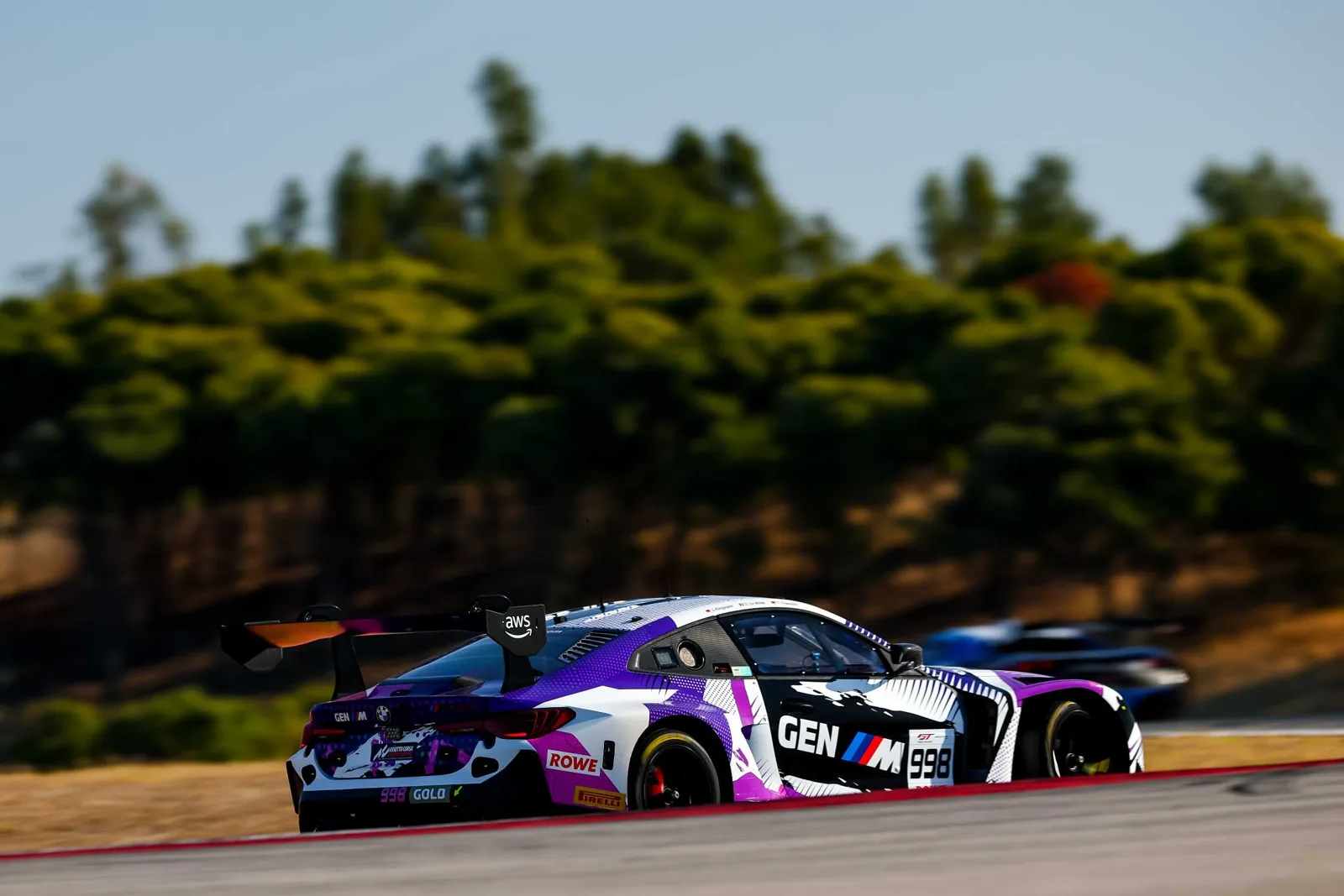
How GT World Challenge Europe, its Australian counterpart and the Porsche Supercup put production-based cars on track, and why a Bronze driver's cheque matters as much as a Platinum driver's pace.
GT3 racing uses production-based grand-touring cars under FIA rules. GT World Challenge Europe, run by SRO, splits into Sprint and Endurance Cups, with drivers graded Platinum to Bronze. The Porsche Supercup uses identical 911 GT3 Cup cars, while GT World Challenge Australia has run annually since 2005.
The drivers who keep GT World Challenge Europe alive are not always the fastest ones. Grids include Formula One names such as Giancarlo Fisichella and Max Verstappen, and Le Mans winners, yet Bronze-graded drivers generally supply the financial backing that makes the championship possible. It is a racing series built on a deal between the drivers who bring the money and the ones who bring the headlines.
That arrangement runs through GT3 racing in Europe, Australia and, in a different form, the Porsche Supercup. The same ideas keep returning: road-based cars, rules that rank drivers by ability, and tight regulation to keep one maker from running away.
What is GT World Challenge Europe?
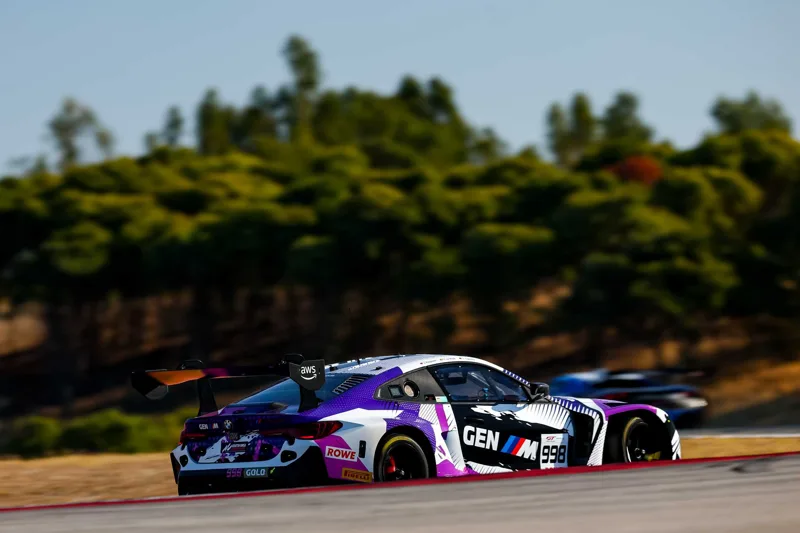
GT World Challenge Europe is a sports car series organised by SRO Motorsports Group. Its cars are grand-touring machines based on production road cars and built to the FIA's GT3 regulations. For sponsorship reasons its full name has carried the words Powered by AWS since 2020, and it ran under the Blancpain name until 2019.
The series is really two championships under one roof: the Sprint Cup and the Endurance Cup, each with five weekends. Every meeting belongs to one or the other, and points from both go towards the overall title. To keep rival makers close, the series uses a Balance of Performance system. Think of it as a handicap: the aim is that a Ferrari, a Mercedes-AMG and an Audi can all expect to win.
Pro drivers bring the attention, but Bronze drivers bring the money that keeps the grid full.
How the classes work
The grid is divided into four classes, Pro, Gold, Silver and Bronze, and the class a car sits in depends on who is driving. The FIA grades drivers from Platinum down to Bronze. Pro cars have no driver restrictions and compete only for the overall drivers' and teams' titles. At the 24 Hours of Spa they are limited to three drivers.
Gold Cup entries pair Gold drivers with one Silver. Silver Cup cars carry only Silver drivers. Bronze Cup entries run at most a Platinum and a Bronze driver in the Sprint rounds, and in Endurance rounds extra Silver drivers may join. The effect is that professionals and amateurs can share a car within clear limits.
Sprint versus Endurance
The Sprint Cup weekend consists of two one-hour races. Cars are shared by two drivers and must make a driver change inside a set window, so races are fast and tense. The Endurance Cup is slower in tempo but larger in scale. Races typically last 3 or 6 hours, with three drivers per car, and the high point is the 24 Hours of Spa, a single race that hands out the most points of the season. Cars outside the Pro class may use a fourth driver there. Strategy leans on consistency, careful management of drivers and well-planned pit stops.
Qualifying has been three segments since 2018, one per driver, with the aggregate time deciding the grid. As grids swelled, the format changed: split sessions arrived for the Sprint Cup in 2025 and the Endurance Cup in 2026. Silver and Bronze cars form group A and Pro and Gold cars group B, each with 10 minutes, run back to back with a five-minute break between rounds. From 2026 a second free practice session replaces Pre-Qualifying, to give teams more room to set up their cars. At Endurance rounds both practice sessions last 90 minutes.
A short history of the series
The series began in 2011 as the Blancpain Endurance Series, built around the 24 Hours of Spa and quickly filled with professional and amateur crews alike. A sprint series arrived in 2014, and Laurens Vanthoor became the first champion of the combined title. In 2016 the two strands were folded into the Blancpain GT Series, with Pro-Am and Am Cups added. The Silver Cup followed in 2018 for young, silver-rated drivers.
When the Blancpain sponsorship ended in 2019, the series was renamed GT World Challenge Europe, to match new sister championships in Asia and America and so form a global platform where manufacturers can collect points in different regions. Amazon Web Services became presenter in 2020 and Fanatec joined as title sponsor in 2021, and the name carried it until 2024. By 2023 the series offered five titles, with Gold and Bronze Cups joining the overall, Silver and Pro-Am awards. Alex Malykhin took the first Bronze Cup.
The Bronze Cup carries a prize that explains why teams chase it. It was announced in 2023 that the winner receives an automatic invitation to the LMGT3 class at the 24 Hours of Le Mans, provided the team contests all 10 rounds. Pure Rxcing won in the first year and so earned a place at the 2024 Le Mans race. In 2026 the Sprint Cup drew a record 45 cars.
Who wins GT World Challenge Europe?
Team WRT has taken six of the twelve overall championships, four with Audi and two with BMW. Akkodis ASP is the only other team with more than one, three titles all with Mercedes-AMG. AF Corse has contested every year with Ferrari, and Winward Racing took the 2024 and 2026 drivers' titles with Lucas Auer and Maro Engel. Among drivers, Raffaele Marciello leads with three overall titles for Mercedes-AMG. In 2025 South Africa's Kelvin van der Linde became the first non-European overall champion.
Driving duties are unusually loose. Some drivers are contracted to a manufacturer yet can race for several teams. In 2014 Audi works driver Stephane Ortelli drove for three different squads in a single year, and in 2026 Nicolas Baert appeared in a Porsche, a Ford and an Aston Martin. Teams, too, can enter anything from one car to six, and Max Verstappen's own car, run by 2 Seas Motorsport as of 2026, shows how far the field reaches. Valentino Rossi, a seven-time MotoGP champion, made his sports car debut in the series in 2022.
The Porsche Supercup and its one-make cars
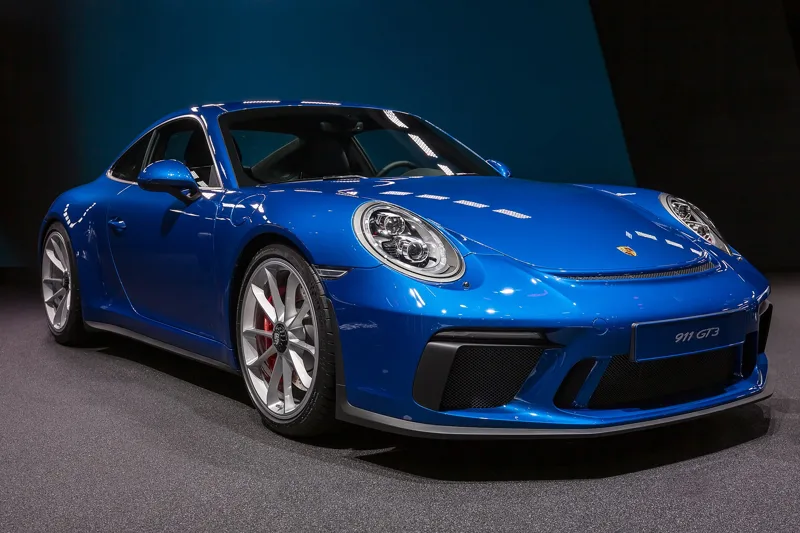
The Porsche Supercup takes the opposite approach. Everyone drives the same car, a Porsche 911 GT3 Cup, so there is no Balance of Performance to argue over. The championship is organised by Porsche Motorsport and has supported Formula One since 1993, having earlier been the Porsche Carrera Cup. On average 24 cars start each race. Most venues are European, though the calendar has included Bahrain, the United Arab Emirates, the United States and Mexico.
The races themselves are tightly controlled. Two sets of slick tyres are allowed per weekend, wet tyres are unlimited, and tyres cannot be pre-warmed or chemically treated. Pit stops are optional and refuelling is banned. Each car is rear-engined and rear-wheel drive, with a carbon-fibre space frame roll cage under a sheet metal body. Aerodynamics are limited to a front splitter, rear wing and side skirts, and rear diffusers, vortex generators, canards, vents and undertrays are all banned. Teams are free to buy cars and engines from one another. Pirelli supplied the tyres until 2001, and Michelin has done so since 2002.
The number of races a season has changed with the times, from nine at the start to 13 in 2006, then 11 in 2017 and eight in 2020.
How the Cup car grew, generation by generation
| Seasons | Car | Engine | Power |
|---|---|---|---|
| 1993 | 964 Cup | 3,600 cc flat-six | 275 PS (202 kW; 271 hp) |
| 1994-1997 | 993 Cup 3.8 | 3,746 cc flat-six | 315 PS (232 kW; 311 hp) by 1996 |
| 1998-2001 | 996 GT3 Cup | 3,600 cc flat-six | 370 PS (272 kW) from 1999 |
| 2005-2009 | 997 GT3 Cup | 3,598 cc flat-six | 400 PS (294 kW) |
| 2010-2012 | 997 II GT3 Cup 3.8 | 3,797 cc flat-six | 450 PS (331 kW) |
| 2013-2016 | 991 GT3 Cup | 3,800 cc flat-six | 460 PS (338 kW) |
| 2017-2020 | 991 II GT3 Cup | 3,996 cc flat-six | 485 PS (357 kW) |
| 2021 onwards | 992 GT3 Cup | Same engine as 991 II | 510 bhp (380 kW; 517 PS) |
| 2026 | 911 Cup 992.2 | Same engine as 992 | 520 bhp (388 kW; 527 PS) |
The weight story is quieter. The 1993 car weighed 1,120 kg, and the 2013 to 2016 car 1,200 kg. Gearboxes changed more dramatically. From 1993 to 2012 every car had a sequential manual, then in 2013 Porsche introduced paddle-shifters for the 991. For 2026 the newest car drops GT3 from its name, to avoid confusion with the FIA's GT3 class. The 997 II car, unveiled at the 2009 Frankfurt Motor Show, was priced at 149,850 euros before tax, and the 991 II at 189,900 euros excluding taxes.
Safety kit has advanced alongside: the HANS device, which reduces the risk of head and neck injuries, has been compulsory for all drivers since 2006.
GT World Challenge Australia
Australia's version is a Motorsport Australia-sanctioned national title, formerly called the Australian GT Championship. It was held annually from 1960 to 1963, again from 1982 to 1985, and every year from 2005. Up to 1963 the title was decided in a single race. As of 2026 the series uses the international GT3 rules, and its categories have often served as a refuge for cars left homeless when other series collapsed or changed regulations.
The first era ran to CAMS Appendix K, which covered closed-roof cars: modified production grand tourers such as the Lotus Elite, sports cars like the Jaguar D-Type fitted with roofs, and one-off specials. Numbers fell away, and the championship stopped at the end of 1963.
The 1980s hybrid
Revived in 1982 to house Group D sports cars and Group B Sports Sedans, the 1980s championship was an odd mix of European racers, American IMSA machines and Australian sedans. Sports Sedans were limited to 10 inch wheels while GT cars could run up to 18 inches of rubber, so the GT cars put power down better and went faster through corners. Porsche 935s dominated early. Alan Jones, the 1980 Formula One world champion, won in 1982 in a car backed by Porsche Cars Australia, and Rusty French won in 1983 in the same car. Allan Grice and Bryan Thomson then won in 1984 and 1985 in an ex-Bob Jane Chevrolet Monza with a 6.0 litre V8 reported at 600 bhp (447 kW; 608 PS). Thomson also ran a twin-turbo, V8-powered Mercedes-Benz 450 SLC alleged to make over 1,000 bhp (746 kW), which was arguably the most powerful race car in Australia. Reliability, usually the turbo, stopped it showing its potential. Sports Sedans left in 1986.
The GT3 revival
The championship returned in 2005 after the Australian Nations Cup Championship disbanded. The FIA GT3 rules were its core, and early fields featured Porsches, Ferraris, Lamborghinis and the Mosler. The regulations usually asked that cars be two to three years old to hold costs down. The controversial Holden Monaro 427C, winner of the Bathurst 24 Hour races in 2002 and 2003, was excluded because its 7.0 litre V8 was not what the road-going 5.7 litre Monaro offered. Drivers are seeded and penalised so the series is not flooded with professionals, and the emphasis has moved to longer races, sometimes with more than one driver per car.
Growth was helped by the Bathurst 12 Hour's switch from a production car race to a GT race. The series diversified well beyond its Porsche base, and long-distance events followed, including the Phillip Island 101 and New Zealand's Highlands 101. The Australian GT Trophy Series arrived in 2016 as a support series for older cars, and GT4 cars joined the main championship in 2018.
In 2020 Australian Racing Group and SRO Motorsports Group took over the category jointly and renamed it GT World Challenge Australia, in line with SRO's other GT3 series worldwide. SRO became sole organiser for 2024, when the main category became exclusively SRO GT3 spec and GT4 moved to its own races as GT4 Australia. Since 2025, with the end of the SpeedSeries, SRO runs its own event weekends, with GT4 Australia and Radical Cup Australia in support.
Where this goes next
The 2026 Australian calendar covers Phillip Island, The Bend, Queensland Raceway, Hidden Valley, Sydney Motorsport Park and the Adelaide Street Circuit. Mount Panorama, a venue in 2019 to 2024, is listed again for 2027. In Europe, the 2026 season has already brought the extra practice session and a record Sprint Cup entry, and the Bronze Cup winner's Le Mans invitation remains part of the structure. Porsche's current Cup car is expected to race for the next few seasons.
What it means for someone who wants to race one
For a driver the practical lessons are in the classification. In Europe a Bronze driver is welcome, valued even, because of the financial support such entries provide, and a team that wins the Bronze Cup over all 10 rounds earns a Le Mans place. In Australia the seeding and penalty system is designed to keep professionals from swamping the field. In the Supercup the cost of a new car is public: the 991 II was priced at 189,900 euros excluding taxes, and every competitor drives the same machine.