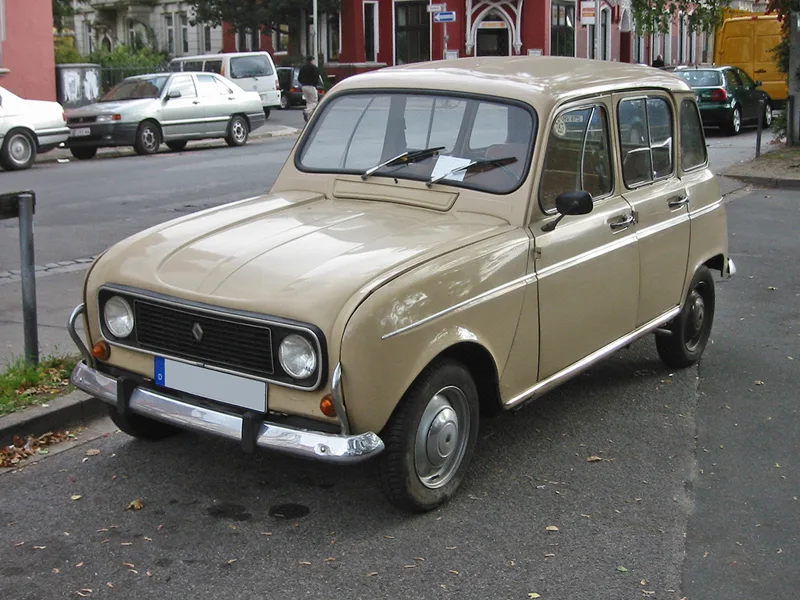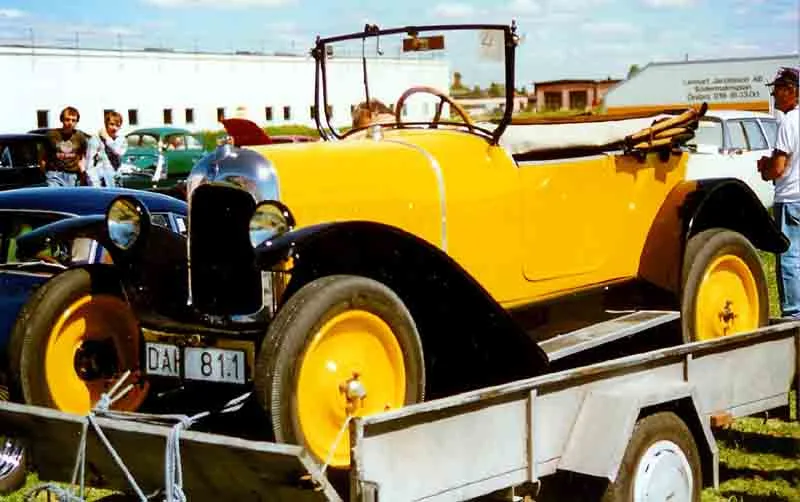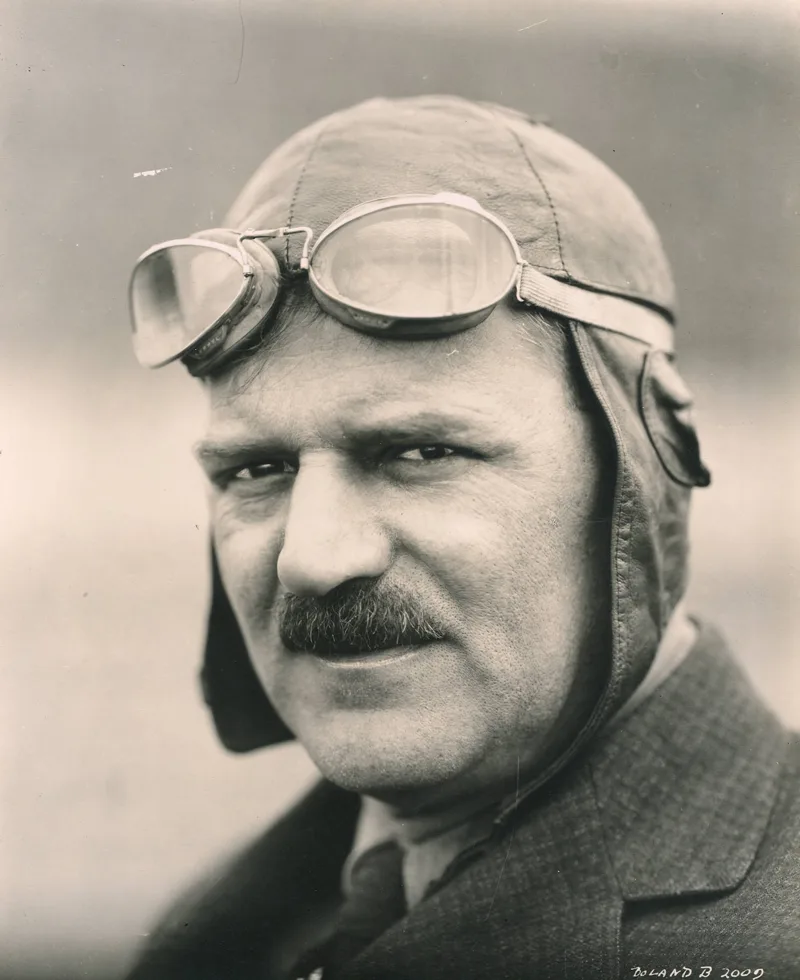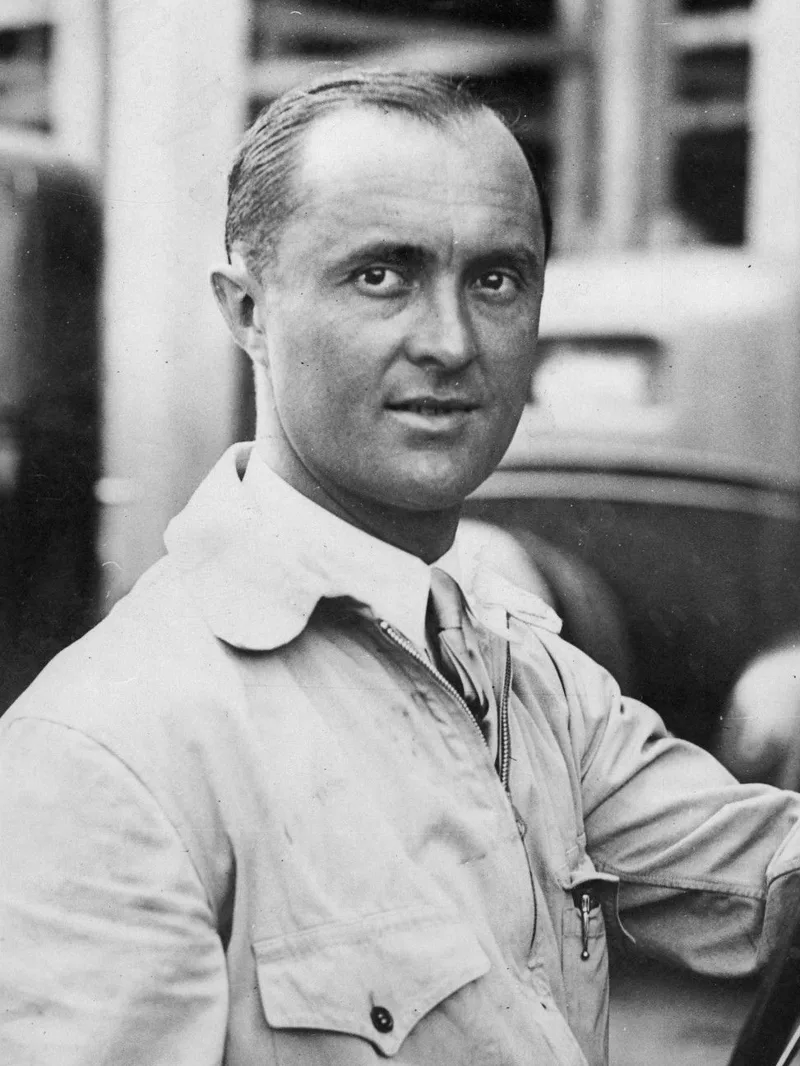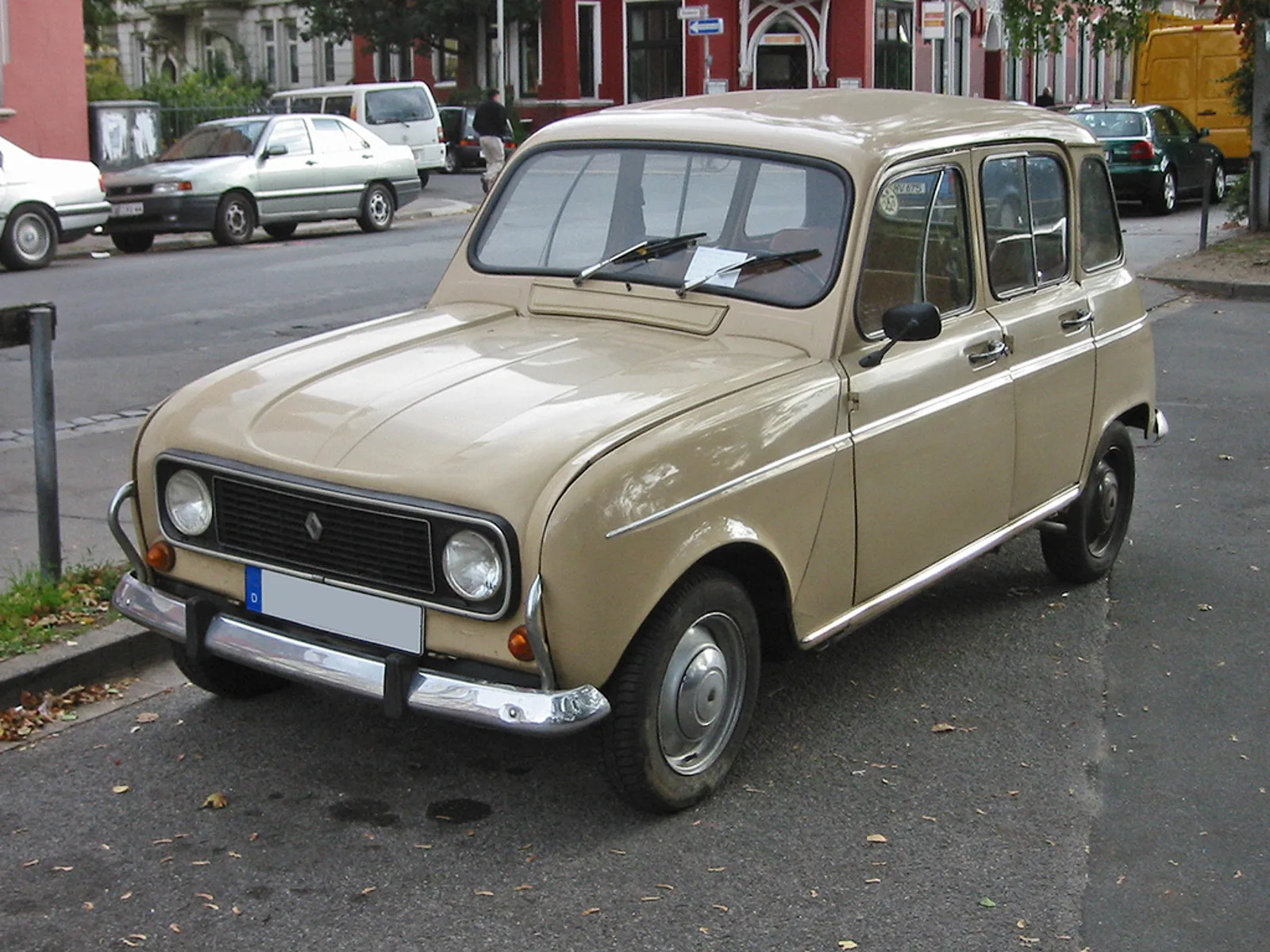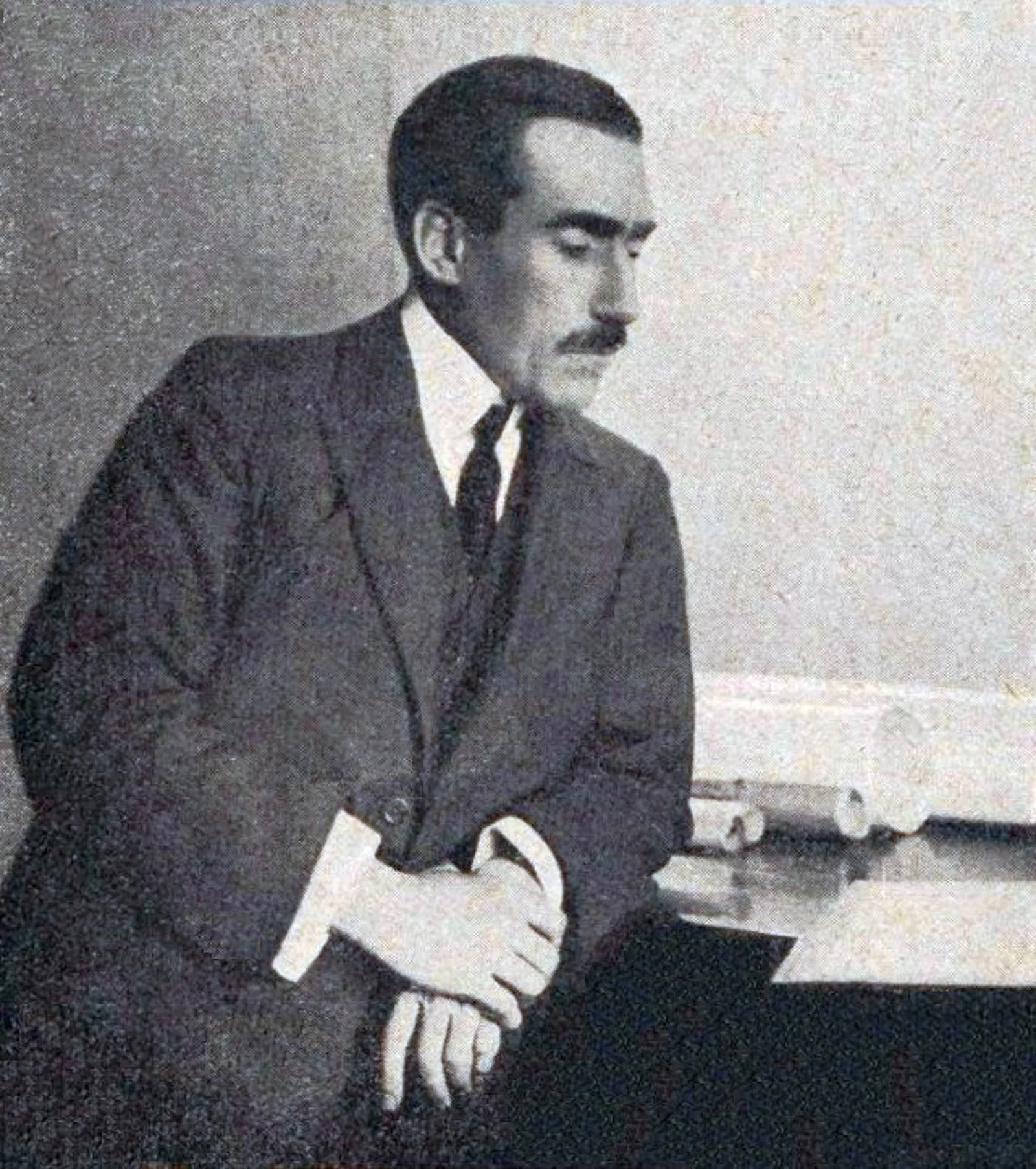
One founder began with a modified cycle engine and a bet on a Montmartre hill, the other with a savings pot, ten prototypes and a risky contract. Their companies, and their endings, could hardly differ more.
Louis Renault founded Renault Freres with his brothers in 1899 and led the company until the war, after which it was nationalised. Assar Gabrielsson, an SKF sales manager, co-founded Volvo with engineer Gustaf Larson, launching the first series car in 1927 and running the company until 1956.
The company Louis Renault built was nationalised on 1 January 1945, after his death in October 1944, even though he had never stood trial. His factories were the only ones the French government permanently expropriated.
Assar Gabrielsson's route into the car business could hardly have been more different. He built Volvo's first ten cars with his own money, and his engineer agreed to be paid only if the project worked and at least 100 cars were made before 1 January 1928. These two founders, one French and one Swedish, started with a risk and a prototype, and the way Renault's story closed still divides opinion.
Louis Renault: from a tool shed to Renault Freres
Louis Renault was born on 12 February 1877, the fourth of six children in a bourgeois Parisian family. He attended the Lycee Condorcet, but his real education came in a steam-car workshop and in the tool shed at the family's Billancourt house, where he spent hours taking old Panhard engines apart.
His first car came in 1898. He hired a pair of workmen to rework a secondhand De Dion-Bouton cycle rated at three-quarters of a horsepower, adding a driveshaft with universal joints and a three-speed gearbox that had a reverse and a direct-drive top gear, a layout he patented the following year. The result was the Voiturette. On 24 December 1898 he wagered friends that it could climb Rue Lepic in Montmartre faster than a car with bicycle-style chain drive. He won the bet and collected 13 firm orders.
Sensing a business, he enlisted his older brothers Marcel and Fernand, who knew commerce from the family's button and textile trade. Renault Freres was formed on 25 February 1899, with the two elder brothers running the office and Louis devoted to engineering and the workshop. Marcel died in the 1903 Paris-Madrid race. When poor health forced Fernand to retire in 1908, Louis took full charge; Fernand died the next year.
Both men started with a car and a risk, but only one saw his company survive him on his own terms.
The First World War, the FT tank and the interwar years
In August 1914, with artillery shells in short supply, Renault proposed that car factories could make 75 mm shells with hydraulic presses instead of the slower, costlier lathe operations. Andre Citroen used the same methods. The shells helped relieve the shortage, but they were made in two pieces and so were weak at the base, which sometimes let hot gases detonate the explosive inside. In 1915 premature explosions wrecked over 600 French 75 mm guns.
His largest wartime contribution was the Renault FT, the first tank of modern configuration, which he designed personally with Rodolphe Ernst-Metzmaier and which his factories mass-produced in 1918. The Grand Cross of the Legion of Honour was awarded to him after the war. In September 1918 he married Christiane Boullaire, who was 21 to his 40, and they had a son. They kept a Paris home on the Avenue Foch and the Chateau Herqueville, an estate of 4,000 hectares fronting more than 3 km of the Seine, where at his request and expense the small town hall was moved.
Between the wars he stayed in full control of the company until 1942 while it expanded rapidly, and he designed inventions that remain in use, among them the hydraulic shock absorber, the drum brake in its modern form and ignition by compressed gas. His right-wing views were well known and brought bouts of labour unrest at the Boulogne Billancourt plant. He competed fiercely with Citroen, whom he insulted in antisemitic terms, and he grew more paranoid and reclusive, worried about Communism and trade unions, retreating to his estate near Rouen. Time magazine later portrayed him as brilliant and domineering, a terror to associates, and said French workers knew him as the ogre of Billancourt.
Louis Renault in the Second World War: collaboration, arrest and death
Renault visited Adolf Hitler in 1938, and by 1939 he was an important supplier to the French army. When Germany invaded in 1940 he was in the United States, sent by his government to request tanks. On his return the armistice was in place, and he faced a hard choice: cooperate with the Germans, and risk being accused of collaboration, or resist and see his factory and equipment taken to Germany. He placed his plants at Vichy's disposal, and that led many to see him as helping the Nazis too. Over four years Renault built 34,232 vehicles for the Germans, and he argued that continuing operations had saved thousands of workers from deportation. In 1942 Life magazine nonetheless called him a notorious Paris collaborationist.
During the occupation, people from Daimler-Benz held key positions at the company, and the Renault works on the Ile Seguin in Billancourt, a top target for Royal Air Force bombers, were severely damaged on 3 March 1942. His health declined, with badly impaired kidneys, and by late 1942 aphasia had left him unable to speak or write.
Renault turned himself in three weeks after the liberation, on the understanding that he would stay free until formally charged. He was nevertheless arrested outside Paris on 22 September 1944, accused of industrial collaboration with Nazi Germany. He rejected the claim that his firm had been paid $120,000,000 for war materials, and said he had kept the big, heavily bombed plant running at Vichy's request so that the Nazis would not get its machinery or deport its workforce. Gravely ill, he was held in Fresnes Prison and on 5 October was transferred to a psychiatric hospital in Neuilly-sur-Marne. By 9 October he had slipped into a coma and was taken, at his family's request, to a private clinic on the Rue Oudinot in Paris. He died there on 24 October 1944, four weeks after his imprisonment began, without having been tried.
The cause of death remains unclear
No autopsy was done at the time, and an official report gave uremia as the cause. In 1956 his wife claimed he had died from beatings and torture by prison guards and sought to show he was one of the more than 9,000 Frenchmen listed as killed in post-Liberation irregular executions. His body was exhumed for an autopsy. As evidence she pointed to a report that put his urea level in the normal range a week before he died, and to an X-ray that showed a broken vertebra. A 2005 Daily Telegraph report relayed eyewitness and family claims that he had been beaten, and that a nun at Fresnes saw a jailer strike him on the head. He is buried at Chateau Herqueville.
Expropriation and the argument over his guilt
In October 1944 the provisional government took over the company, with Henri Teitgen, the Minister of Information, saying that this was not a confiscation but a way to get industry producing again, and that a commission would later examine the books, confiscate war profits and bring charges. A decree on 1 January 1945 from General Charles de Gaulle's provisional administration dissolved the old company and nationalised it under a new name, Regie Nationale des Usines Renault. Posthumously, Renault was accused of profiting unlawfully from work done for the enemy.
His will, opened after his death, left the company to his 40,000 employees. When it was nationalised his wife and son held 95 per cent of the stock and received nothing, while other shareholders were compensated. By 1956 Renault was France's largest nationalised company, with 51,000 employees, 200,000 cars a year and a profit of $11 million. In 1949 the plant's wartime director won a judgment clearing himself and the plant of collaboration. On 29 July 1967 an heir received minor compensation, only for personal, non-industrial losses.
Historians still disagree. A 2005 Daily Telegraph article put the case for the defence: Renault believed he had to protect France's industrial base, and when military and Daimler-Benz officials turned up at the Billancourt gates to judge whether the factory and its workers could be moved to Germany, he fended them off by agreeing to build vehicles for the Wehrmacht. His biographer Anthony Rhodes reports him as saying it was better to give the Germans the butter than let them take the cows. Later studies concluded that he had collaborated but also diverted strategic materials and sabotaged trucks, for example by marking dipsticks low so that engines ran dry and seized, though others counter that workers rather than management organised the production slowdowns.
In 2011 the business historian Patrick Fridenson said it was extremely difficult to judge how far Renault was a collaborator, since resisting risked complete dispossession. The scholar Monika Ostler Riess, who studied French and German records, found no evidence he collaborated more than his peers. The Berliet truck factory in Lyon stayed with its founder's family despite building 2,330 trucks for the Germans, and Robert Paxton suggested in 1972 that Renault's factory might have been returned to the family had he lived longer. The 2005 article also suggested the company could legally be described as having been obtained by theft, and that admitting Renault got rough justice would open the door to huge compensation claims.
Who founded Volvo? Assar Gabrielsson and Gustaf Larson
Assar Gabrielsson was born on 13 August 1891 in Korsberga in Skaraborg County, Sweden, to a family in which the father managed a brickworks. He graduated from the Stockholm School of Economics in 1911, worked as a stenographer in the Swedish parliament and then, from 1916, in sales at the ball-bearing maker SKF in Gothenburg, hired by Bjorn Prytz. He was named sales manager of the whole group on 20 June 1922, after a spell running SKF's French subsidiary in Paris in 1921 and 1922.
It was in Paris that he saw rival bearing makers investing heavily in car companies to secure their sales to key customers. His idea was for SKF to start a car business of its own, which would help it develop bearings for the industry and sell more of them. The SKF board was not convinced, since its model was making bearings and it had no room for a car company. So Gabrielsson decided to fund a test series of ten vehicles himself, partly because suppliers would not quote on smaller quantities of engines, gearboxes and chassis parts, and partly because he was sure SKF would come round. Prytz backed him as long as the private project did not interfere with his day job.
The contract, the ten prototypes and the first series car
In June 1924 Gabrielsson sat down in Stockholm with an old friend, Gustaf Larson, and revealed his plan for a new Swedish car. They agreed terms in August 1924 at the Sturehof restaurant and signed a contract on 16 December 1925. Larson would do the engineering and plan a factory, but would be paid only if the project succeeded, at least 100 cars were built and that happened before 1 January 1928. Gabrielsson carried the financial risk himself, mostly with extra sales commissions he had saved from his Paris year. Larson would still have his salary from his employer, AB Galco.
AB Galco in Stockholm was where the ten OV 4 pre-series cars were designed and put together. The design office was a single room in Larson's apartment at Radmansgatan 59, work began in autumn 1924, and invoices went to Gabrielsson's private address in Gothenburg. The first prototype was ready in June 1926, and the two men drove it, over bumpy roads, to show the SKF board in Gothenburg their final investment plan.
On 10 August 1926 the board, meeting in Hofors, decided to use an old subsidiary, Volvo AB, for the project. The company had been registered in 1915 on Prytz's initiative for a special series of bearings for the American market, but never really used. A contract of 12 August 1926 handed all ten prototypes and the drawings to Volvo AB in return for refunding most of Gabrielsson's private outlay. He became president and managing director on 1 January 1927, with Larson as vice president and technical manager. The first series-produced OV 4 left the new factory on Hisingen in Gothenburg at about 10 pm on 14 April 1927.
How Volvo survived and succeeded
Volvo made no profit for its first couple of years, and SKF kept it running with a large amount of capital. Trucks, built from the OV 4's basic chassis components, started in 1928 and were successful from the beginning. Late in 1929 SKF came close to selling the company to Charles Nash, who headed Nash Motors in America. Prytz and Gabrielsson persuaded the SKF board to call off the deal one day before Nash arrived by boat in Gothenburg, and the two men became good friends during his visit. AB Volvo reported its first small profit at the close of 1930, and in 1935 SKF floated it on the Stockholm stock exchange and could return to its core business of bearings.
When Gabrielsson turned 50 in 1941 the 50,000th Volvo car was delivered. The first 25,000 cars had taken ten years and the next 25,000 only four. In 1944-45 came the PV444, a modern family car with an entirely new design, which was an immediate sales success. He remained managing director until 1956, when he became chairman of the board of the Volvo group, a post he held until his death in 1962. His honours included the Royal Institute of Technology's Great Prize in 1955 and an honorary doctorate in economics from the Stockholm School of Economics in 1959.
Renault and Gabrielsson side by side
| Detail | Louis Renault | Assar Gabrielsson |
|---|---|---|
| Life | 12 February 1877 - 24 October 1944 | 13 August 1891 - 28 May 1962 |
| Company | Renault Freres, formed 25 February 1899 | AB Volvo, project adopted August 1926, president from 1 January 1927 |
| Early product | The Voiturette of 1898 | Ten OV 4 prototypes, series car 14 April 1927 |
| Partners | Brothers Marcel and Fernand | Gustaf Larson, with SKF behind the company |
| Wartime | Built 34,232 vehicles for Germany; accused of collaboration | Led Volvo through the Second World War; PV444 launched 1944-45 |
| Final years | In control until 1942; arrested 1944, died untried | Managing director to 1956, chairman until 1962 |
| Fate of the company | Nationalised 1 January 1945 | Listed on the Stockholm stock exchange in 1935 |
What the two stories mean for someone buying or driving
The Renault name still sits on one of France's largest car makers, built by a man whose inventions, including shock absorbers and the drum brake, are in use today. Volvo, first conceived as a way to sell more bearings, began as a private gamble in which the people behind it staked their own money, and its trucks were a success from the start before the PV444 family car followed.