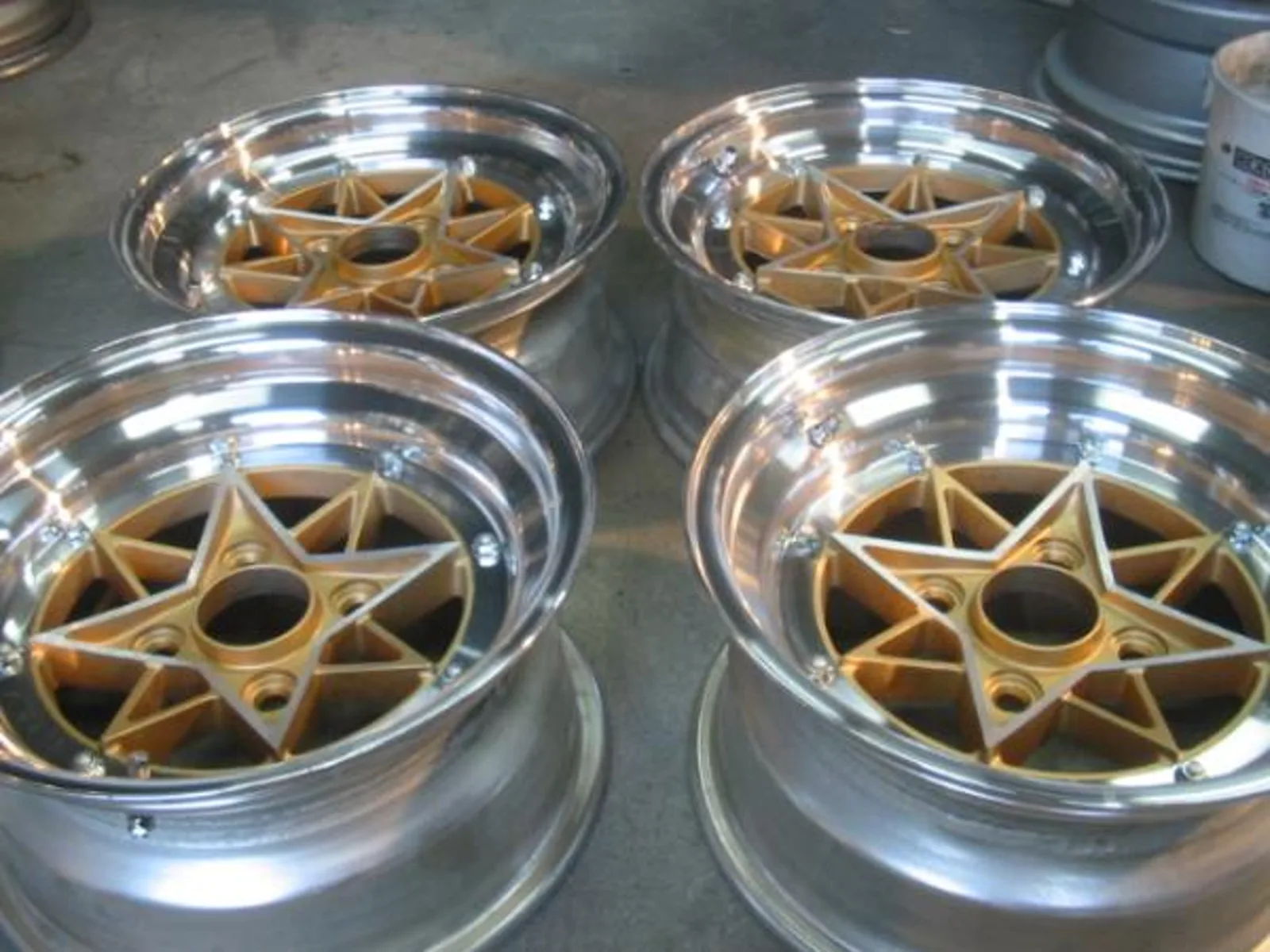
Four enthusiast brands, one set of tangled histories: a coachbuilder turned seat maker, two wheel pioneers and a suspension specialist.
Recaro makes seats, BBS and SSR make wheels, and KW makes suspension. Recaro began in 1906 as a Porsche body builder, BBS started in 1970 and has belonged to KW since 2021, KW was founded in 1992, and SSR launched its three-piece wheel in 1971.
The 10,000th Porsche body left a Stuttgart coachbuilder's factory in 1956. Seven years later Porsche bought that factory, and what remained of the business took a new name, Recaro, and turned to making seats. It is one of four stories here. The others belong to BBS, KW and SSR, whose wheels and suspension sit alongside Recaro seats on enthusiasts' cars, and whose histories turn out to be more tangled than their catalogues suggest.
Recaro seats began with a folding roof and a Porsche contract
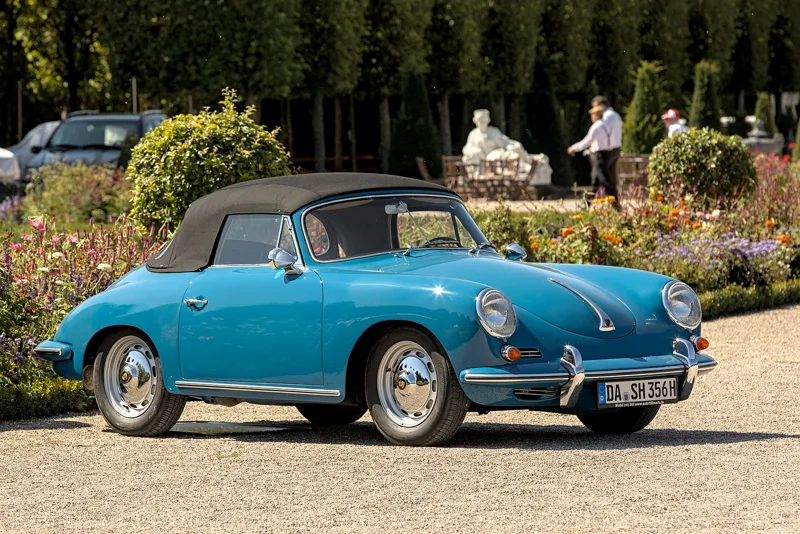
Wilhelm Reutter founded the company on 1 October 1906 as Stuttgarter Carosserie und Radfabrik. His brother Albert joined in 1909, and that July the firm filed a patent for a folding roof with canopy, a "reform body" that was an early forerunner of the convertible. Bodies and interior fittings followed for almost every well-known maker of the day, notably Daimler-Benz and Wanderer-Werke. In the 1920s the company was known for limousine bodies. In 1930 it partnered with the Porsche design office, and from 1931 it built the first bodies for several Porsche types.
Growth brought a second plant at Zuffenhausen in 1936 and, in 1937, an order for the Volkswagen prototype pre-series VW 303. By 1939 there were around 900 employees. An air raid in 1944 damaged the main factory so badly that the workforce fell to 94. After the war Porsche asked the firm to build 356 bodies from 1949, and the 5,000th was completed in 1954. The 10,000th Porsche body followed in 1956, the year of the company's 50th anniversary.
Four brands, one tangled web: BBS now sits inside KW, and Recaro was a coachbuilder first.
The Reutter seat fitting and the birth of the name
A 1953 patent, for a hinge fitting for upholstered seats with an adjustable backrest, was the first sign of what the company would become. Porsche acquired the car body factory in 1963. What remained was renamed Recaro, from REutter-CAROsserie, and its focus shifted to high-end seats. It supplied Porsche with seats and also began selling a separate aftermarket line. In 1965 it presented its first sports seat at the Frankfurt Motor Show, and in 1974 its first motorsport seat appeared, based on the professional full shell seat.
Ownership then changed repeatedly. The Reutter family sold up in 1969 to three companies, Keiper, Huber and Wagner, and Metzeler, and Keiper bought all the shares in 1983. After a restructuring in 1997 Recaro became independent again. In 2011 the car seat business was sold to Johnson Controls, which gained the exclusive right to market Recaro seats for cars and commercial vehicles as a licensee. A spin-off in 2016 passed it to Adient, and in 2020 Adient sold it to Raven Acquisitions, headquartered in Clinton Township, Michigan.
News reports in July 2024 said that Recaro Automotive GmbH in Germany had filed for bankruptcy and been approved for self-administration by a German court. The proceedings affected that company alone. They did not touch Recaro Automotive North America, Recaro Automotive Japan, the joint ventures in China, or the aircraft, train and gaming chair divisions.
Recaro beyond the car
The brand has spread into aeroplanes, children's seats and gaming chairs. Aircraft seats started in 1971 under licence from the American maker Hardman Aerospace, and the Recaro 2020 was sold to Lufthansa among others. All production has been in Schwabisch Hall since 1983. The CL3710 long-haul economy seat, launched in 2014 with KLM on the Boeing 777-300ER, weighs under 12 kg and is used by more than 50 airlines. Its successor, the R3, is 10 per cent or 1.9 kg lighter, and Iberia launched it on the A321XLR on 6 November 2024. A gaming seat prototype appeared at Gamescom 2018, and gaming seats went on sale in 2019.
BBS wheels started with plastic body parts in Schiltach
Heinrich Baumgartner and Klaus Brand founded BBS in 1970 in Schiltach, Germany, as a plant for plastic auto body parts. The letters stand for Baumgartner, Brand and Schiltach. In 1972, a year after SSR introduced its MK1 three-piece wheel, BBS produced its own three-piece racing wheel with Mahle, the BBS Mahle. By 1975 it had the popular cross-spoke pattern and a process called counter pressure. BBS is often credited as a pioneer of the three-piece wheel, a credit SSR also receives, and the two firms' dates, 1971 and 1972, show how close the claims run.
The BBS RS, a three-piece design released in 1977, became one of the best-known wheels from the maker and was often copied by other manufacturers. Its cross-spoke look, which resembles a wire wheel, appeared on many European sports cars from the 1980s to the early 1990s and was noticeably lighter than many other styles of the time. The one-piece forged RG followed in 1987, the first two-piece wheel, the RSII, in 1992, the Le Mans-inspired LM in 1994 and, in 2011, the RI-D, the first wheel made of duralumin.
How BBS forges a wheel
A forged wheel starts as a blank of metal that is squeezed rather than poured. BBS uses a multi-stage process with pressure of 8,000 to 10,000 tons, heating the blank to over 400 degrees C (750 degrees F) between steps. The squeezing packs the metal tightly, which gives a strong, dense structure and lets the maker mill the wheel thin and light.
Weight savings have been a theme throughout. In 1994 BBS made a magnesium forged wheel for motorsport, notably Formula One, more than 20 per cent lighter than ordinary cast aluminium. In 1995 it produced the first one-piece flow-formed cast wheel, and in 2000 the first hollow-spoke wheel, in collaboration with Porsche and Kuka. Air Inside Technology, from 2002, builds hollow chambers into the wheel to make up for the small air volume in ultra-low-profile tyres, cutting unsprung weight. It won the Automechanika Innovation Award in 2006. In January 2023, at the Tokyo Auto Salon, BBS unveiled Fortega wheels in a new aluminium alloy that took 10 years to develop. The company says it is stronger and stiffer and 10 per cent lighter than conventional alloys, which matters for heavy electric cars.
BBS in motorsport and on the road
BBS has supplied wheels to Formula One, the 24 Hours of Le Mans, IndyCar, DTM, NASCAR and touring car series since 1972. It is the largest wheel supplier in the IndyCar Series, the main supplier for Formula One teams, and has supplied the NASCAR Cup Series since the Next Gen car arrived in 2022. The racing division became independent under Japan's Ono Group in 2012 and moved to Haslach, and forged racing wheels are still made in Japan.
On the road, OEM customers include BMW, Porsche, Mercedes-Benz, Audi, Ferrari, Maserati, Bentley, Rolls-Royce, Lexus, Subaru, Volkswagen and Volvo. Specially made BBS wheels feature on the top versions of the Ferrari 360 Challenge Stradale, Lexus LFA Nurburgring Edition, Porsche 918 Spyder Weissach Package and Ford GT Heritage Edition. In 1983 the company began selling worldwide, founding BBS of America, BBS France and BBS Japan. Today its aftermarket range comes in three lines: the Forged Line of one-, two- and three-piece die-forged wheels, the Performance Line of flow-formed one-piece wheels, and the Design Line of one-piece cast wheels.
How BBS ended up inside KW
BBS went public in May 1987 and remains listed in Frankfurt, but its finances turned turbulent. In 2007 unrest in Guinea, its main source of aluminium, sent prices soaring, and the damage led to bankruptcy and a takeover by the Belgian firm Punch International. In July 2015 South Korea's Nice Corp became the majority owner. BBS Automotive filed for insolvency in 2020, and in March 2021 KW Automotive acquired it. Together they launched BBS Unlimited, which lets buyers order wheels in custom configurations, in place of model-specific offerings.
KW suspension grew from a 75 square metre shop in Murrhardt
Klaus Wohlfarth founded KW Tuning in 1992, selling parts from a 75 square metre retail building in Murrhardt. In 1995 he and his brother Jurgen introduced the company's first coilover suspension, approved by the TUV and presented at the Essen Motor Show. By 1996 KW had moved fully into suspension, as KW Coilover Suspensions, in a 150 square metre building. In 1998 it moved to a 1,000 square metre facility in Fichtenberg and became KW Automotive GmbH.
It tried other things too. KW made alloy road wheels from 1997 to 2001 and launched aftermarket scissor doors in 2003. In 2006 its yellow and purple colour scheme was registered as a trademark across Europe. Dynamic Level Control, the first aftermarket control for factory air suspension, arrived in 2012, and in 2013 KW worked with Polyphony Digital on the vehicle dynamics in Gran Turismo 6. Solid piston technology was launched in 2019.
| Brand | Makes | Started | Based in | Known for |
|---|---|---|---|---|
| Recaro | Seats | 1906 (as Reutter); Recaro name from 1963 | Stuttgart | Sports and motorsport seats, aircraft seats |
| BBS | Wheels | 1970 | Schiltach | Forged and cross-spoke wheels, owned by KW since 2021 |
| KW | Suspension | 1992 | Fichtenberg | Coilovers, 26,000 aftermarket applications |
| SSR | Wheels | 1971 | Osaka | Three-piece and semi-solid forged wheels |
What KW suspensions are fitted to
KW says it has the largest aftermarket suspension range in the industry, with more than 26,000 individual applications. The company employs about 1,202 people at 13 locations, and its headquarters in Fichtenberg houses research and production. On the factory side, KW developed suspension for the Mercedes SLK 55 AMG Black Series, CLK 63 AMG Black Series, SL 65 AMG Black Series and C 63 AMG Coupe Black Series, as well as the Dodge Viper SRT-10 ACR-X and BMW M4 GTS. It also makes the John Cooper Works Pro Suspension kit that Mini sells as an official accessory.
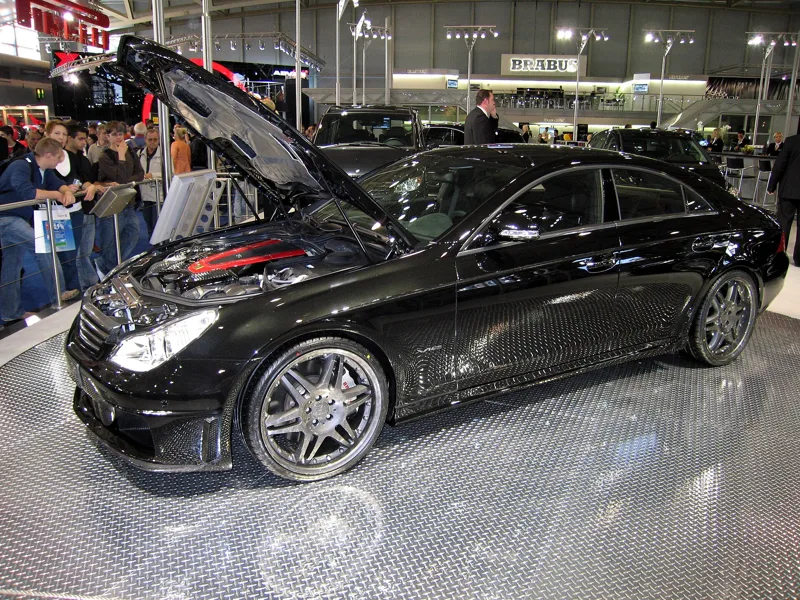
Its engineering list includes stainless-steel struts, height-adjustable rear springs, the hydraulic lift system, and Dynamic Damping Control for cars with factory semi-active suspension. It uses a 7-post drive dynamics test stand of the sort used in Formula One development, which is rare among aftermarket suppliers. Since 2023 KW has been an official technology partner of Brabus and technical partner of Lamborghini Squadra Corse, whose SC63 is running KW dampers in 2024.
KW's other brands include BBS Automotive, ST Suspensions, Reiger Suspension, Belltech, AL-KO and the RaceRoom sim racing game. In motorsport its dampers appear in the FIA GT Championship, the Nurburgring 24 Hours, Formula Drift and the Bathurst 12 Hour, and are homologated on cars including the BMW M4 GT3, Porsche 911 GT3 R and Toyota GR Supra GT4.
SSR wheels and the claim to the first three-piece wheel
SSR, short for Speed Star Racing, launched in 1971 in Osaka to make three-piece wheels. Its MK-I of that year is often credited as the first three-piece wheel ever built, which sets it against the same credit given to BBS. The company later added two-piece, cast and forged wheels. It helped inspire Japan's JWL wheel standard in 1973 and the VIA certification body in 1981, to certify quality in wheel manufacturing. An overseas sales office opened in Los Angeles in 1985.
The technical highlight came in 1991, when SSR became the first and only alloy wheel maker at the time to use semi-solid forging, a process it later patented. A factory in Nara opened in 1993, the SSR Type-C of 2000 was the lightest wheel of its size at the time, and in 2002 the firm invented a two-piece hybrid wheel using semi-solid forging and heat treatment. Tanabe acquired the company in 2005. Current ranges include GT, Professor, Reiner, Minerva, Formula and Speed Star.
SSR racing: a BMW M1, a Honda NSX and Formula D
SSR ran its own team and supplied factory squads from Honda, Toyota and Nissan. In 1977 its Speed Star Racing team took Kunimitsu Takahashi to the runner-up spot in the All-Japan Formula 2000 championship, with three race wins. It supplied wheels to the Leyton House March 881 in Formula One in 1988.
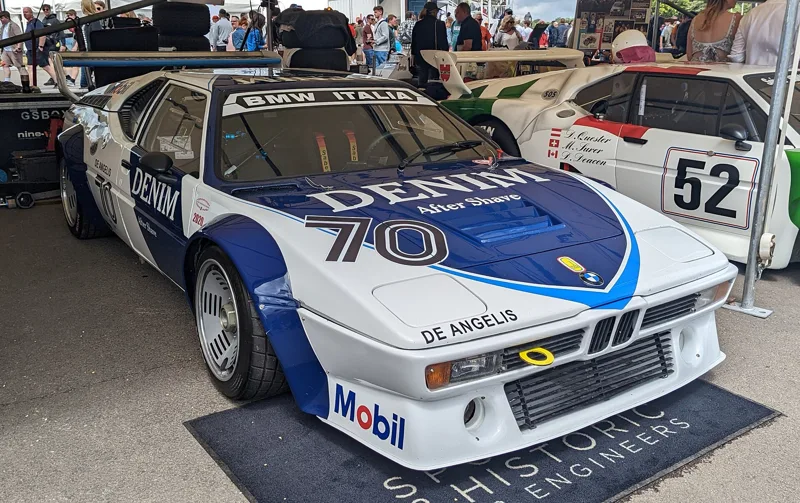
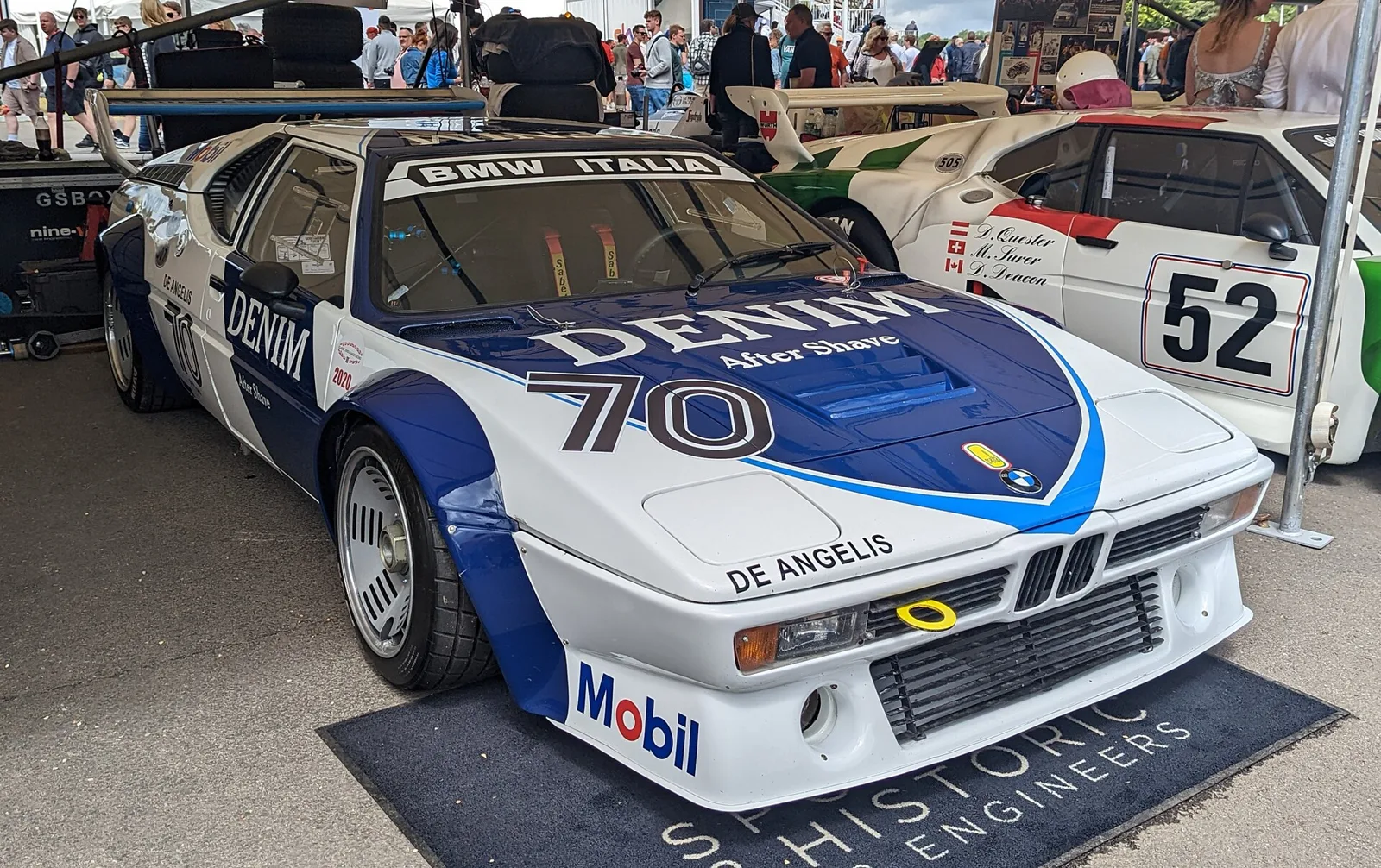
A BMW M1, chassis 1077, was sold by Ron Dennis and Project Four Racing in 1979 and became the team's endurance car. It won the 1979 Group C Suzuka 500 mile race and the Japanese Endurance Championship in 1980 and 1982, and it retired in 1984. At Le Mans in 1996 an SSR-sponsored Honda NSX finished third in its class and 16th overall. Hasemi Motorsport's SSR-equipped Nissan Skyline GT-R won the Japanese Touring Car Championship in 1989, 1991 and 1992. In Super GT, Team Mugen won the GT300 title in 2013 and Team Kunimitsu took the GT500 title in 2018 and 2020. From 2006 to 2021 SSR sponsored Chris Forsberg in Formula D.
Recaro's R4 aircraft seat and KW's Lamborghini link
Recaro's R4 premium economy aircraft seat is due to launch with All Nippon Airways on its latest batch of Boeing 787-9 aircraft in 2026. KW's partnership with Lamborghini Squadra Corse put its dampers on the SC63 in 2024.