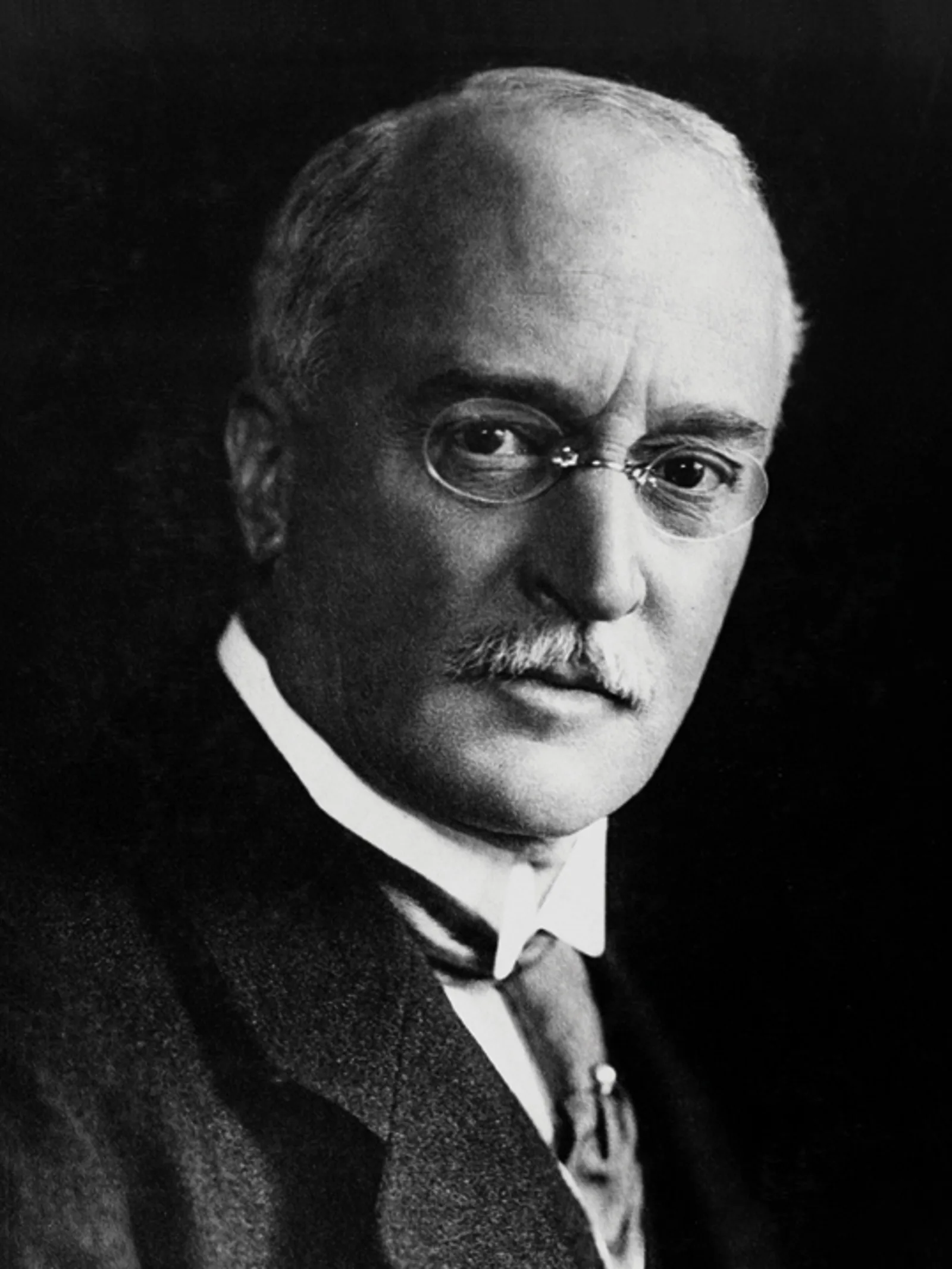
A Paris-born engineer who vanished from a steamer in 1913 and a self-taught inventor who conceived the rotary engine in 1924, and what each engine became.
Rudolf Diesel invented the diesel engine, patenting it in 1892 and seeing the first successful engine tested in 1897. Felix Wankel conceived the rotary engine in 1924, and NSU ran his first prototype in 1957. Diesel vanished from a steamer in 1913.
On the evening of 29 September 1913, Rudolf Diesel boarded a steamer at Antwerp, ate dinner, went to his cabin and was never seen alive again. The man who gave his name to the diesel engine vanished at sea just as his invention was about to take over the world.
Felix Wankel, whose name sits on the rotary engine, had a quieter end but a far stranger path. Between them the two Germans produced engines unlike any others fitted to cars: a compression-ignition design that now powers trucks, ships and modern automobiles, and a rotary-piston design that Mazda carried from 1967 to 2012. Their lives could hardly be less alike.
Who invented the diesel engine?
Rudolf Diesel, a German mechanical engineer born in Paris in 1858, invented the diesel engine. He patented the idea in 1892, corrected his theory in 1893 and saw the first successful engine tested in 1897. Both the engine and its fuel carry his name.
His beginnings were hard. His parents were Bavarian immigrants in Paris, his father a bookbinder who became a leather goods manufacturer, and money was short enough that young Rudolf worked in the family workshop and delivered orders by barrow. When the Franco-Prussian War broke out in 1870 the family was deported to England. His mother then sent the 12-year-old to relatives in Augsburg so that he could learn German properly.
He made the most of it. At 14 he wrote to his parents that he meant to become an engineer, in 1873 he finished his basic schooling at the top of his class, and two years later he won a merit scholarship to the Royal Bavarian Polytechnic of Munich. His parents wanted him earning a wage instead. He went anyway.
In Munich one of his professors was Carl von Linde, a pioneer of refrigeration. Typhoid fever kept Diesel from graduating with his class in July 1879, so he spent the wait at the Sulzer Brothers works in Winterthur, Switzerland. He graduated in January 1880 with the highest honours, then returned to Paris to help Linde build a refrigeration and ice plant, and within a year he was running it. In early 1890 he moved to Berlin to manage Linde's research and development department.
Squeeze air hard enough and it gets hot enough to light the fuel by itself.
How did Rudolf Diesel arrive at compression ignition?
Diesel started from a single goal: an internal combustion engine that came close to the maximum thermal efficiency allowed by the Carnot cycle, the theoretical ceiling for any heat engine. He had held that goal since Linde's lectures. By his own reckoning a steam engine wasted as much as 90 per cent of the energy in its fuel.
Linde's employment terms stopped him using the patents he had developed on the payroll for his own ends, so Diesel looked beyond refrigeration. His first attempt was a steam engine running on ammonia vapour. It exploded during testing and almost killed him. Experiments with very high cylinder pressures went the same way when a cylinder head burst. He spent many months in hospital, with health and eyesight problems afterwards, and it was in that same year that the idea of the diesel engine took shape in his mind.
The principle is easy to describe and hard to build. Squeeze air hard enough and it gets hot, as anyone who has pumped up a bicycle tyre knows. Diesel compressed air inside the cylinder until it was hot enough to light fuel by itself, then injected fuel at the very end of the compression stroke. No spark plug was needed, and the finished engine came out smaller and lighter than the steam engines of the day.
Paperwork came first. In 1892 Diesel considered his theory complete, and the same year he received German patent DRP 67207. A treatise followed in 1893, proposing a new heat engine to supplant steam. By that summer he had realised that his first theory was wrong, and he filed a second patent application for the corrected version.
From workshop to the Motor 250/400
Theory alone would not have produced an engine. Between 1893 and 1897 Maschinenfabrik Augsburg, under its director Heinrich von Buz, let Diesel test and develop his ideas, and the Krupp firm backed him as well. The first successful engine, the Motor 250/400, was officially tested in 1897: a four-stroke with one upright cylinder, rated at 25 horsepower. The royalties made Diesel wealthy, and the engine itself now sits in the German Technical Museum in Munich.
Diesel took out patents beyond Germany, including in the United States. He was also open-minded about what the engine might burn. He tested a wide range of liquid fuels, mostly coal distillates and petroleum products, considered coal dust, and demonstrated vegetable oil. In 1900 a small engine shown by the Otto company ran on peanut oil, at the suggestion of the French Government, with no modification, and Diesel later wrote that very few people noticed.
What happened to Rudolf Diesel on the night he vanished?
Nobody knows. Diesel was travelling on the SS Dresden to a meeting of the Consolidated Diesel Manufacturing company in London. He retired to his cabin around 10 p.m. and asked to be called at 6:15 the next morning. By then the cabin was empty and the bed unslept in, with his nightshirt laid out and his watch left where it could be seen from the pillow. His hat and neatly folded overcoat lay beneath the afterdeck railing.
Odd details piled up afterwards. Soon after the disappearance his wife Martha opened a bag he had given her just before the voyage, with instructions to leave it shut until the following week. It held 20,000 German marks in cash (US$120,000 in present-day terms) and financial statements showing that the family's bank balances were close to empty. A diary he had carried on the ship had a cross drawn against 29 September 1913.
Ten days on, the crew of the Dutch pilot boat Coertsen found a body floating in the Eastern Scheldt. It was too decomposed to recognise, and with heavy weather running they did not keep it aboard. They took a pill case, wallet, identity card, pocketknife and eyeglass case from the clothing and returned the body to the sea. On 13 October Diesel's son Eugen identified the items as his father's.
Theories followed. Biographers Grosser and Sittauer, both writing in 1978, argued that Diesel died by suicide. Others point to murder, noting his refusal to grant German forces exclusive rights to his invention and the fact that he was bound for talks with Royal Navy representatives about diesel-powered submarines. A third theory holds that the death was staged by the British government to cover a defection, with Diesel going on to Canada and the Vickers shipyard in Montreal. Given the thin evidence, the disappearance remains unsolved.
A memorial came late. In 1950 Magokichi Yamaoka, founder of the Japanese diesel maker Yanmar, visited West Germany and learned that Diesel had no tomb or monument. In 1957, a century after the inventor's birth, he dedicated a memorial garden in Wittelsbacher Park in Augsburg, where Diesel had received his early technical education.
What did the diesel engine become?
After Diesel's death the engine was developed further and became a major replacement for the steam piston engine. It uses a higher compression ratio than a petrol engine, which means higher pressures in the cylinder during combustion and a long expansion stroke. Together those give it high thermal efficiency, the quality Diesel had chased from the start.
It spread through stationary engines, farm machinery and off-highway equipment, then into submarines and ships, and much later into locomotives, trucks and modern automobiles. Aviation was the exception. The high compression ratio demands a heavier build than a petrol engine, which limited its use in the air.
Recognition accumulated. The American Society of Mechanical Engineers made Diesel an honorary member in 1912, a medal bearing his name appeared in 1953, and an annual motor journalists' award for vehicle safety, the diesel ring, has run since 1955. The Automotive Hall of Fame inducted him in 1978. An asteroid, 10093 Diesel, also carries his name.
Who was the Wankel engine inventor?
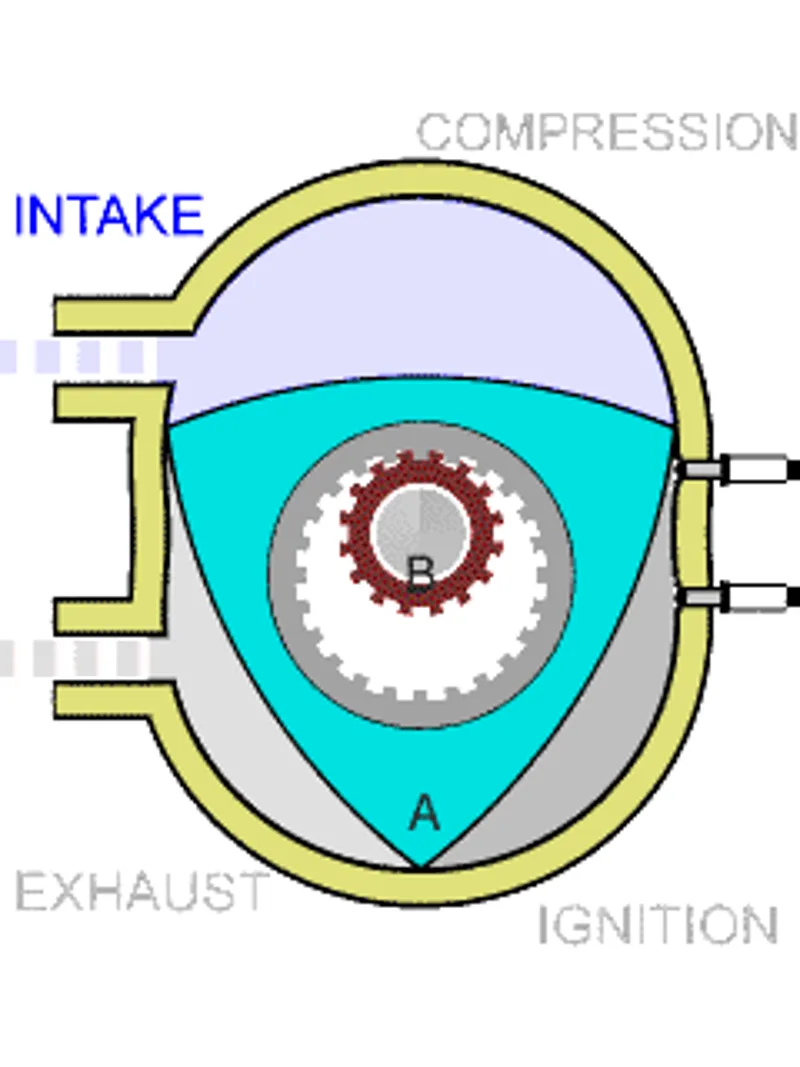
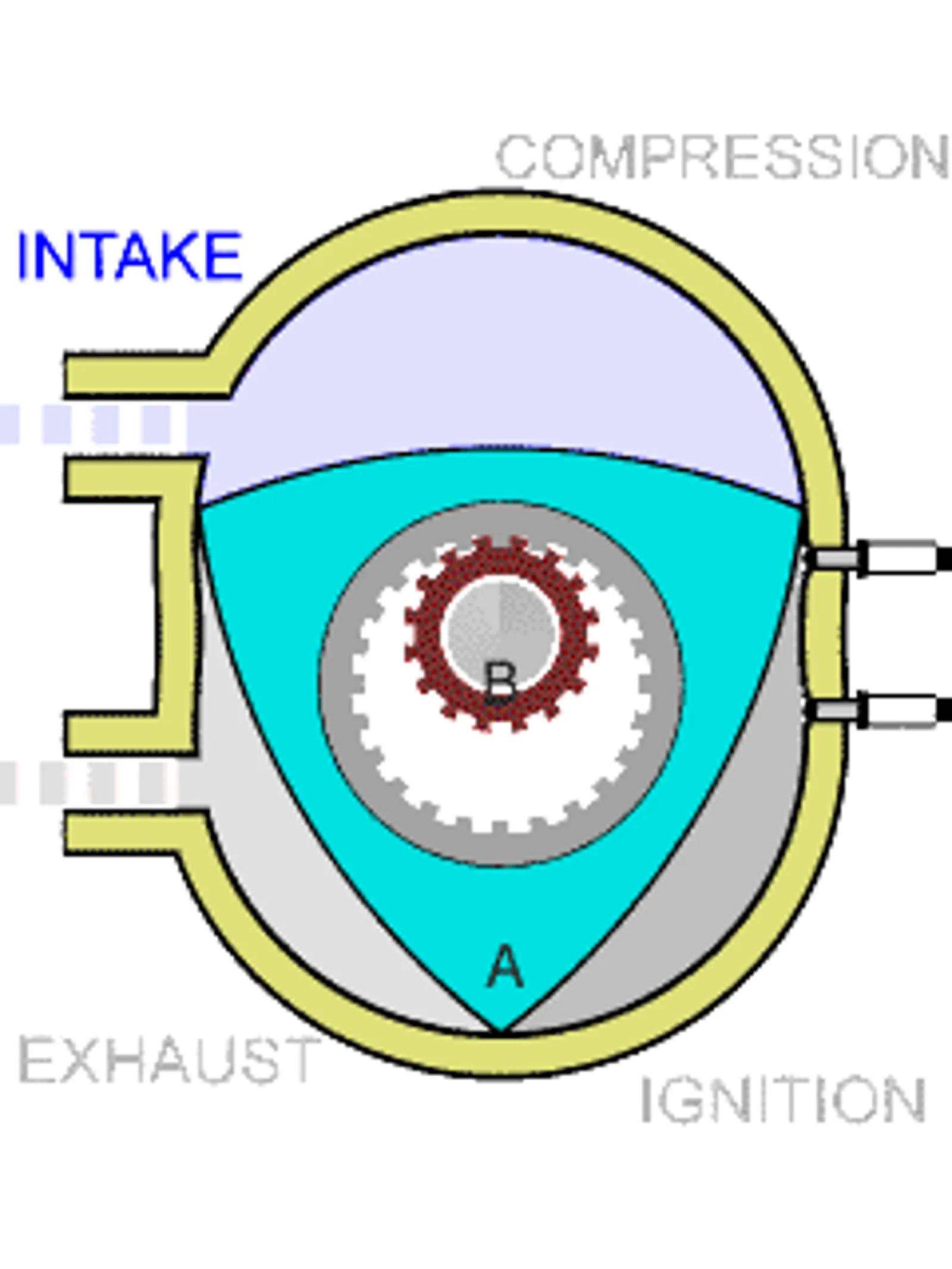
Felix Wankel, a German engineer and self-taught inventor born in 1902, conceived the Wankel engine in 1924 and won his first patent for it in 1929. The design pairs a rotary piston with a stationary housing. It reached production in 1964 with the NSU Wankel-Spider.
Wankel was born in Lahr, in the Grand Duchy of Baden, the only son of a forest assessor who died in the First World War. The family moved to Heidelberg and he left school in 1921 without the Abitur. He learned the trade of purchaser at a Heidelberg publishing house, working there until June 1926. Since 1924 he had been running an unofficial machine shop with friends in a backyard shed, which in 1927 became an official garage for DKW and Cleveland motorcycles.
With his mother widowed, university and even an apprenticeship were out of reach, so he taught himself. He had an unusual spatial imagination and a fascination with combustion engines. At 17, he later said, he told friends he had dreamed of a car with a new type of engine, half turbine and half reciprocating. By 1924 he had conceived it.
The politics behind the inventor
His politics cannot be left out. In the early 1920s he belonged to radical antisemitic organisations, joining a Heidelberg branch of one in 1921 and the Nazi Party (NSDAP) in 1922, shortly before it was banned. He founded and led youth groups tied to a party front organisation, running paramilitary training and night walks, and in 1928 he was given the chance to speak to Adolf Hitler and other leading National Socialists about technology and education.
His career in the party was turbulent. In 1931 the regional leader Robert Heinrich Wagner put him in charge of the Hitler Youth in Baden, but the two fell out. Wankel publicly accused Wagner of corruption, was stripped of his office by early 1932 and expelled from the party that October. He then founded his own splinter group in Lahr. After the Nazi seizure of power in January 1933, Wagner had him arrested, and he stayed in the Lahr jail from March until September 1933, when Wilhelm Keppler and Hitler himself intervened.
Keppler, a fellow native of Baden, had backed Wankel's technical work since 1927. He now helped him win state contracts and a private experimental workshop in Lindau. Wankel tried to rejoin the party in 1937 and was turned down, but with Keppler's help he was admitted to the SS in 1940. His membership was revoked two years later, for reasons that are unknown. During the Second World War he developed seals and rotary valves for German air force aircraft and navy torpedoes, and for companies including BMW and Daimler-Benz.
How did the Wankel engine get from idea to showroom?
The war cost him his laboratory. French authorities imprisoned Wankel for several months in 1945, closed the workshop, confiscated his work and banned him from further research. By 1951 he had funding from the Goetze company to equip a new Technical Development Center in his own house in Lindau on Lake Constance, and he began developing the engine with NSU Motorenwerke.
The first running prototype turned over on 1 February 1957. It made 21 horsepower and, unlike later Wankel engines, had both the rotor and the housing rotating. The design was first licensed to Curtiss-Wright in New Jersey. On 19 January 1960 the rotary engine was shown to specialists and the press at the Deutsches Museum in Munich, and the same year the KKM 250 appeared, the first practical rotary engine, in a converted NSU Prinz. The name changed along the way. What had been the Motor nach System NSU/Wankel became simply the Wankel engine.
NSU unveiled the Wankel-Spider at the 1963 Frankfurt show, the first consumer vehicle with a rotary engine, and it entered production in 1964. In August 1967 came the NSU Ro 80, a very modern saloon with a two-rotor, 115-horsepower engine. It became the first German car named Car of the Year, in 1968.
The word rotary misleads a little. In a Wankel engine only the rotary piston turns, while the engine as a whole is a stationary assembly. That sets it apart from the rotary aircraft engines of the First World War, where the entire engine spun around a fixed crankshaft.
Who else built Wankel engines?
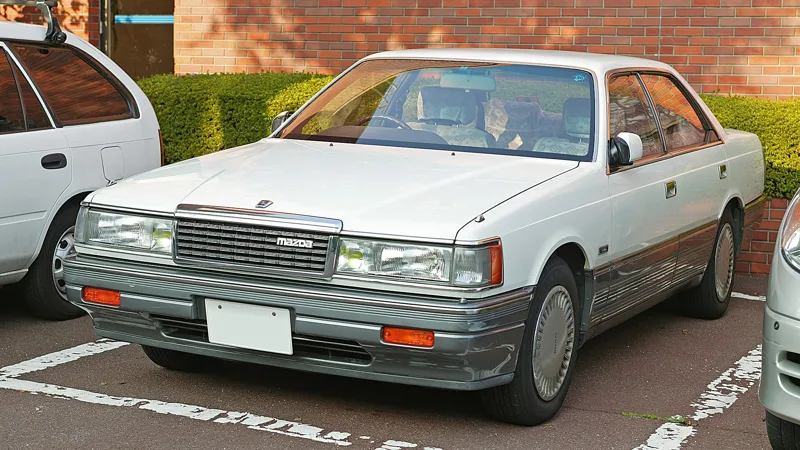
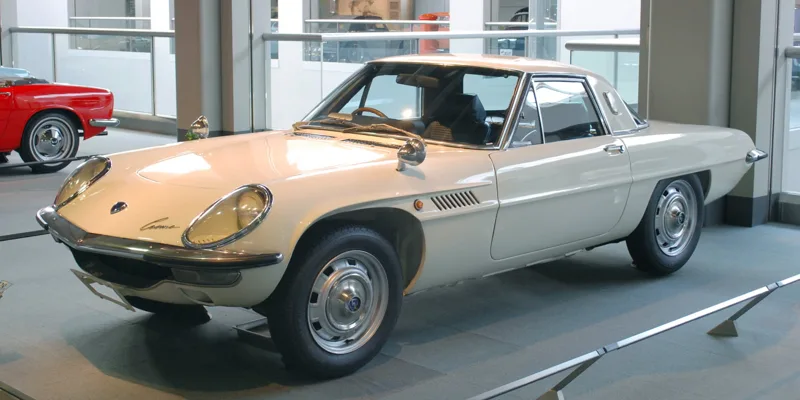
Mazda licensed the design and worked through the chatter marks that had troubled early engines. It used the rotary in several generations of coupes and saloons: the Cosmo in 1967, the R100 in 1968, the RX-7 from 1978 to 2002 and the RX-8 from 2003 to 2012. Mazda planned to bring the engine back as a range extender in the MX-30 R-EV in 2023.
Mercedes-Benz fitted a three-rotor Wankel to one of its C111 experimental cars in 1969. The next model, in 1970, had four rotors and could reach 290 km/h, but it never reached production. Other licensees included Daimler-Benz from 1961, General Motors from 1970 and Toyota from 1971, while a state-owned engineering firm in East Germany paid higher fees for its rights.
Two inventors side by side
| Rudolf Diesel | Felix Wankel | |
|---|---|---|
| Born | 18 March 1858, Paris | 13 August 1902, Lahr |
| Died | Disappeared at sea, 29 September 1913 | Heidelberg, 9 October 1988 |
| Core idea | Ignite fuel by compressing air | Rotary piston in a stationary housing |
| Key patent | DRP 67207, 1892 | First patent, 1929 |
| Industrial backer | Maschinenfabrik Augsburg | NSU Motorenwerke |
| First working engine | Motor 250/400, 1897, 25 hp | Prototype of 1 February 1957, 21 hp |
| First road use | Modern automobiles, much later | NSU Wankel-Spider, production 1964 |
What Wankel earned, and what became of it
Wankel proved a better businessman than most inventors. His company, Wankel GmbH, founded with partners by 1958, took a share of licensing profits, and royalties to his company were 40 per cent at first, later falling to 36 per cent. In 1971 he sold his share to the English conglomerate Lonrho for 50 million Deutschmarks. A year later the Fraunhofer Society returned his Technical Development Center. From 1986 his institute worked with Daimler Benz, which paid its running costs in return for research rights, and it was eventually sold to the company for 100 million Deutschmarks.
Wankel married Emma Kirn in 1936, and they had no children before she died in 1975. He never held a driving licence because he was extremely short-sighted, though he owned an NSU Ro 80 that was driven for him by a chauffeur.
Honours came in his later years: a doctorate from the Technical University of Munich in 1969, the Grand Federal Service Cross in 1970, the John Price Wetherill Medal in 1971 and the Soichiro Honda Medal in 1987. He died in Heidelberg in October 1988, aged 86. His papers are kept at the Technoseum in Mannheim, and an exhibition in Altlussheim displays more than 80 rotary engines.
Where this goes next
Diesel's engine needs no forecast, because it is already at work in trucks, ships and modern automobiles. For the rotary, the most recent plan on record is Mazda's: a rotary range extender in the MX-30 R-EV, planned for 2023, which would put Wankel's piston back in a Mazda road car after the RX-8 ended in 2012. Anyone shopping for the older rotary models will find that the RX-7 and RX-8 are the cars that carried the design through to 2012.