A horse-drawn carriage for shooting parties became a coachbuilt Aston Martin, a four-door Mercedes and a word nobody can pin down.
A shooting brake is a car body style that mixes coupe and estate elements, though the term has never been clearly defined. It began in the 1890s as a horse-drawn wagon for shooting parties, was applied to motor cars from the early 1900s, and returned as a marketing label in the early 2010s.
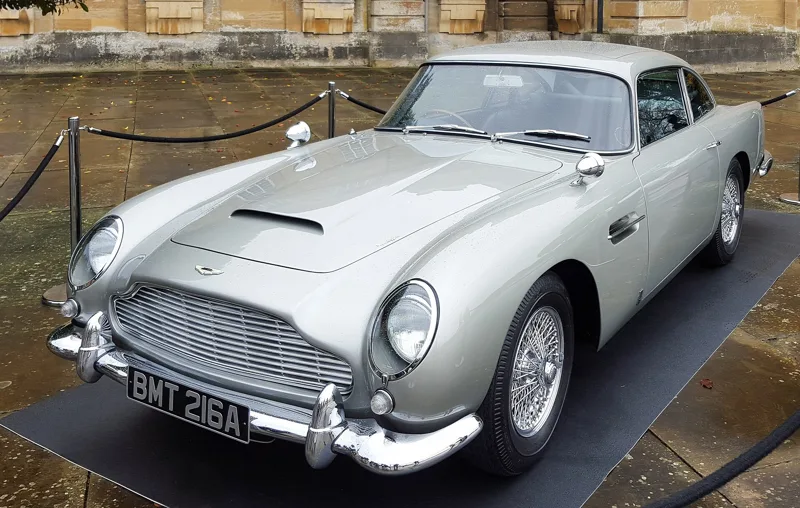
In August 2019, an Aston Martin DB5 changed hands for $1.765m (1.456m pounds), a record for any shooting brake sold at auction. Yet the term has no settled meaning. It began as the name of a horse-drawn wagon in the 1890s and has since been stretched over sports cars, estates and four-door saloons.
What is a shooting brake?
A shooting brake, also spelled shooting break, is a car body style that usually combines elements of a coupe and a station wagon. It is used widely, but it has never been clearly defined. Descriptions range from a sleek two-door wagon to a luxury coupe whose rear end is cut square.
The most common idea is a more practical version of a less practical car. That is the picture most people hold in their heads. Others use the phrase as a plain synonym for estate car, and in France a station wagon is sold as a break.
A shooting brake is a car body style that is in use today but has never been clearly defined.
Where does the name shooting brake come from?
The word comes before the car. Through the 1800s and into the early 1900s, a brake, or break, meant a heavy open carriage perched on a tall driving seat, built to help train young horses. The name refers to breaking in horses.
Over time the rough training frame turned into something far more genteel. It became a carriage driven by gentlemen and a favourite for shooting parties, borrowing its layout from a sporting carriage that was loaded from the back. That is the shooting brake in its first form, from the 1890s: a wagon for carrying a shooting party, its equipment and the game back home.
The French term break de chasse, meaning hunting break, grew from the English shooting break and in French the plain word break now means a station wagon.
How did the shooting brake become a car?
British vehicle makers and coachbuilders were building motorised versions in the early 1900s. Scottish firm Albion Motors was one of them, and a contemporary report in The Commercial Motor described seats for eight people besides the driver, with space for four guns, plenty of cartridges, hampers of food and a healthy bag of game.
The label was applied loosely. The 1912 Hudson Model 33 was called a shooting brake in England because it carried beaters to and from the shoot and brought the game back afterwards. Early motorised safari vehicles also got the name, with no windows or doors and canvas curtains that buttoned to the roof when the weather turned. Nobody was allowed to shoot from them, so passengers could leave quickly and quietly.
In the 1920s and 1930s shooting brakes were popular in England, built as such at the factory or converted by coachbuilders. Then the work changed. Owners began using the vehicles to ferry guests and luggage to railway stations, and the term estate car crept in beside the older name. During those two decades the two were interchangeable. In British English the phrase gradually faded, while in French break became the ordinary word for a station wagon.
How do you tell a shooting brake from an estate?
The descriptions in circulation fall into roughly three camps. The first treats the phrase as another word for estate car or station wagon, which is how it was used in 1920s and 1930s England and how the French use break. The second wants a two-door wagon, a sporty shape with the practicality of an estate. The third pictures a luxury coupe with the back end cut square.
All three agree on one thing: the shooting brake is a variation on something less practical, made more useful. Where they split is door count, and the market has voted with its products. Recent models carrying the name have four or five doors, which sits awkwardly with the old two-door picture.
Why did the label come back in the 1960s?
By the 1960s the original carriage-for-hunters meaning had mostly gone, and the name was free to be reused. Several high-end European makers began applying it to sporty, two-door, wagon-like versions of their sports cars. The definition has stayed open to interpretation ever since.
Coachbuilt classics
The 1960s cars were small in number and rich in character. The Sunbeam Alpine Shooting Brake was a limited-production three-door version of the two-door open sports car, with a leather interior and walnut trim, priced at double the open model. It is dated to both 1960 and 1966.
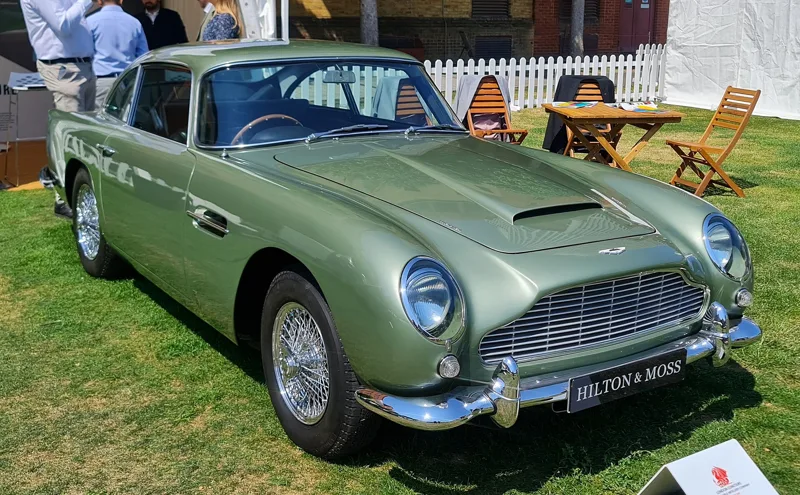
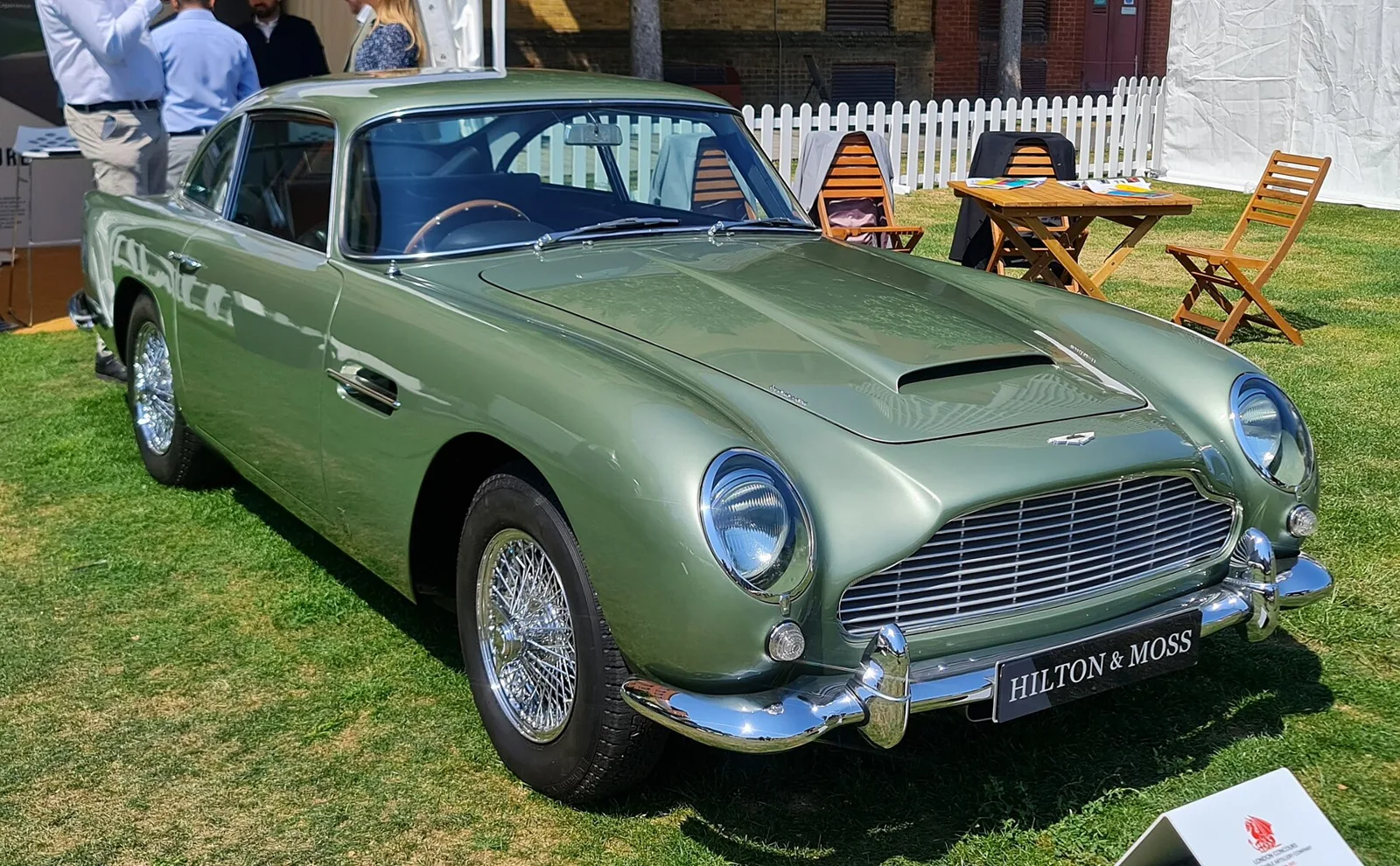
Coachbuilder Harold Radford made the Aston Martin DB5, DB6 and DBS versions to order between 1965 and 1967. Aston Martin's own factory built a DB5 prototype for David Brown, a man who loved hunting and kept dogs, and Radford then converted a further 11 or 12 coupes for the company.
Aston Martin returned to the idea in 1992, building a short run of shooting brakes on the Virage and Vantage at its own works. One of them had four doors.
Almost shooting brakes
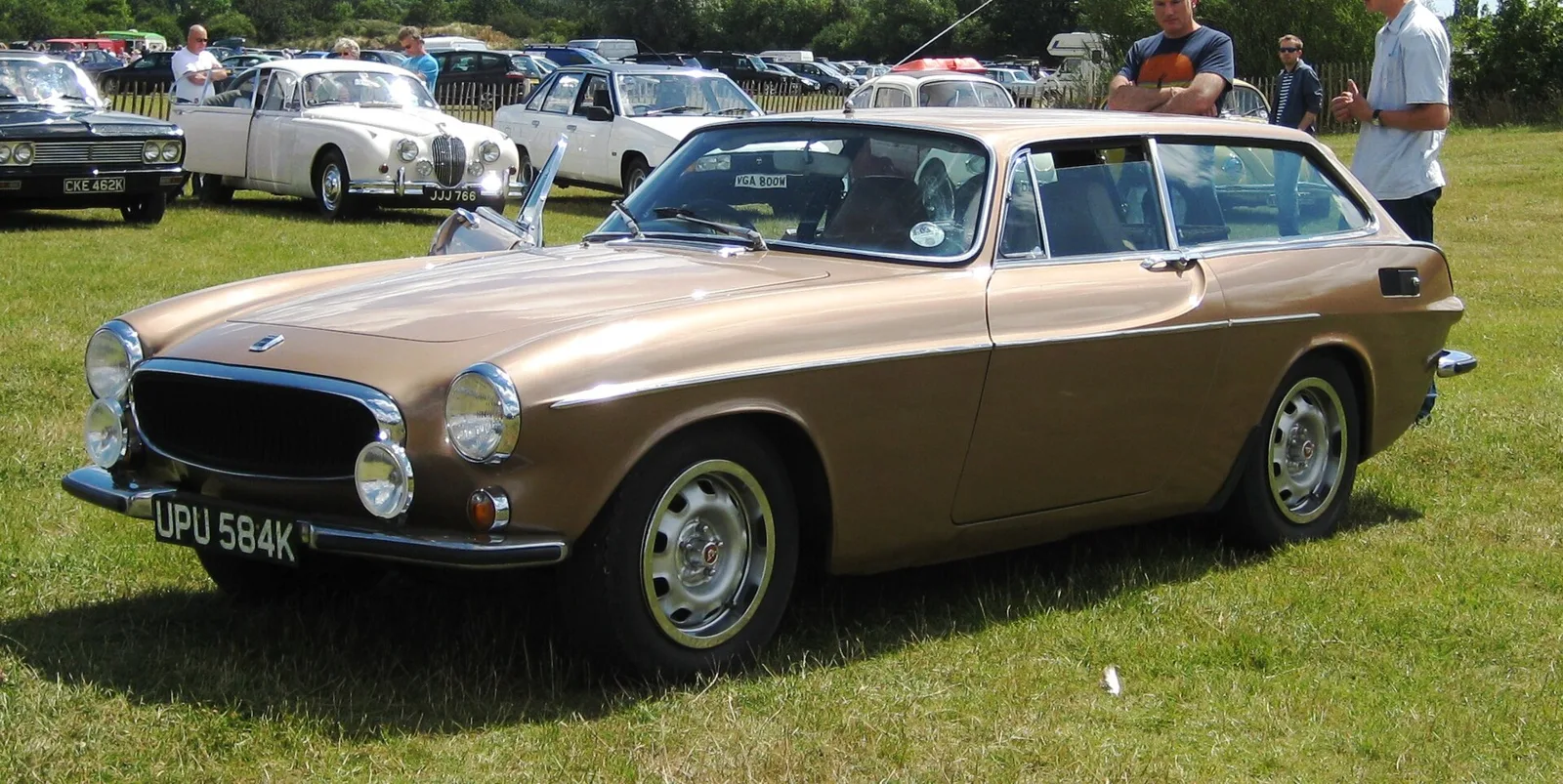
Some cars combined wagon and coupe elements without ever carrying the name in the showroom. The Reliant Scimitar GTE (1968 to 1975), the Volvo P1800 ES (1972 to 1973) and the later Volvo 480 (1986 to 1995) all fit the description. The 480 was sold as a coupe, with a sporty low nose and pop-up headlights, yet its rear body was distinctly estate-like. The 1998 BMW Z3 Coupe, along with its M Coupe sibling, is commonly called one as well.
Which cars have been called shooting brakes?
| Car | Year | Notes |
|---|---|---|
| Albion Motors shooting brakes | Early 1900s | Seats for eight persons plus the driver, with room for four guns |
| Hudson Model 33 | 1912 | Called a shooting brake in England |
| Sunbeam Alpine Shooting Brake | 1960 or 1966 | Three-door, leather and walnut, double the price of the open car |
| Aston Martin DB5, DB6 and DBS | 1965 to 1967 | Custom bodies by Harold Radford |
| Volvo P1800 ES | 1972 to 1973 | Wagon-and-coupe shape, not marketed as a shooting brake |
| BMW Z3 Coupe | 1998 | Typically referred to as a shooting brake |
| Mercedes-Benz CLS Shooting Brake | 2012 | First 21st-century production model sold under the name; four passenger doors |
| Mercedes-Benz CLA Shooting Brake | 2015 | Smaller four-door addition |
| Porsche Panamera Sport Turismo | 2018 | Described by its maker as a shooting brake |
What happened after the mid-1970s?
The term went quiet. It was dormant from the mid-1970s until 2004, when the label was attached to the Chevrolet Nomad concept car. The Audi Shooting Brake concept appeared at the Tokyo Motor Show the following year.
After that the floodgates opened, and many of the cars wearing the label had four or five doors. Marketers and journalists applied it to the 2005 Dodge Magnum station wagon, the 2006 Renault Altica concept, the 2008 Mini Clubman, the 2011 Fisker Surf concept and the 2011 Ferrari FF.
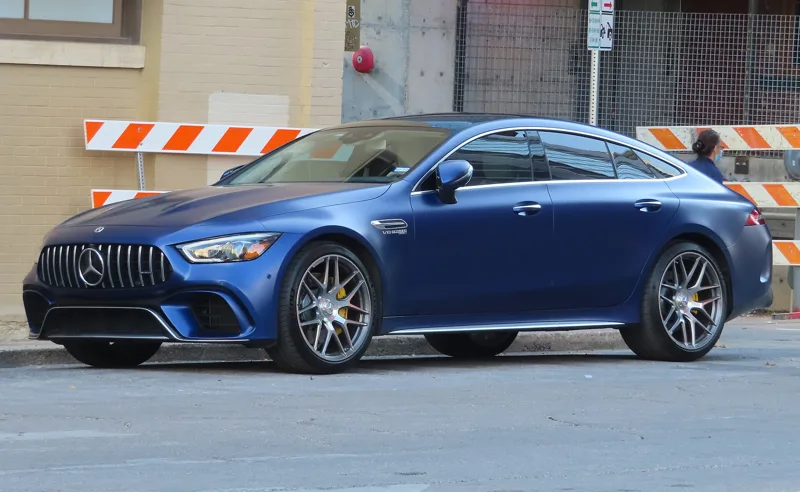
Production cars took longer. The 2012 Mercedes-Benz CLS Shooting Brake (X218), previewed as a concept at Auto China, was the century's first to be sold under the name. It has four passenger doors, which clashes with those definitions that insist on two. A smaller four-door, the CLA-Class version, joined the Mercedes-Benz range in 2015.
Porsche and Volkswagen followed. Both the 2018 Porsche Panamera Sport Turismo and the Volkswagen Arteon, which has five doors, are described by their makers as shooting brakes.
Why do car makers keep inventing body-style names?
Body styles differ by what the car is for, where it sits in the market, where it is sold and when it was built, so the vocabulary keeps shifting. Books have been written to catalogue it: a dictionary of automobile terms appeared as long ago as 1913, and an illustrated dictionary of body styles was published in 2003.
Modern shooting brakes show the motive. The trend is to link the body style with performance while promising more practicality than a coupe. Marketing descriptions have blurred further with names such as sports tourer and sportback, which help separate a car from SUVs and give an ordinary body style a fresh position. One description ties the style's image to aristocrats, fox hunts and baying hounds.
Where does the shooting brake go next?
BMW's Z4-based Concept Touring Coupe appeared at the 2023 Concorso d'Eleganza Villa d'Este. It is a concept car, and the label remains as flexible as ever, with two-door, four-door and five-door cars all sold under the same name.