How slotted sleeves and spinning barrels let a cylinder breathe, why luxury makers and aircraft designers adopted them, and what finally ended their run.
Sleeve valves slide slotted tubes around the piston so ports line up at the right moment, while rotary valves spin a drilled barrel above it. Both offered large openings and high engine speeds, but poppet valves won through better sealing, lower oil use and sodium-cooled exhaust valves.
Carbon build-up inside an engine is normally a sign of trouble. In the Knight sleeve-valve engine it was said to help: the deposits improved the seal, and the engines were reputed to get better with use. That one claim sums up why sleeve valves had such devoted champions in luxury cars before the Second World War, and why they eventually lost anyway.
There are two ways to let a cylinder breathe without the familiar mushroom-shaped poppet valve: the sleeve valve, which slides a slotted tube around the piston, and the rotary valve, which spins a drilled barrel above it.
What is a sleeve valve engine?
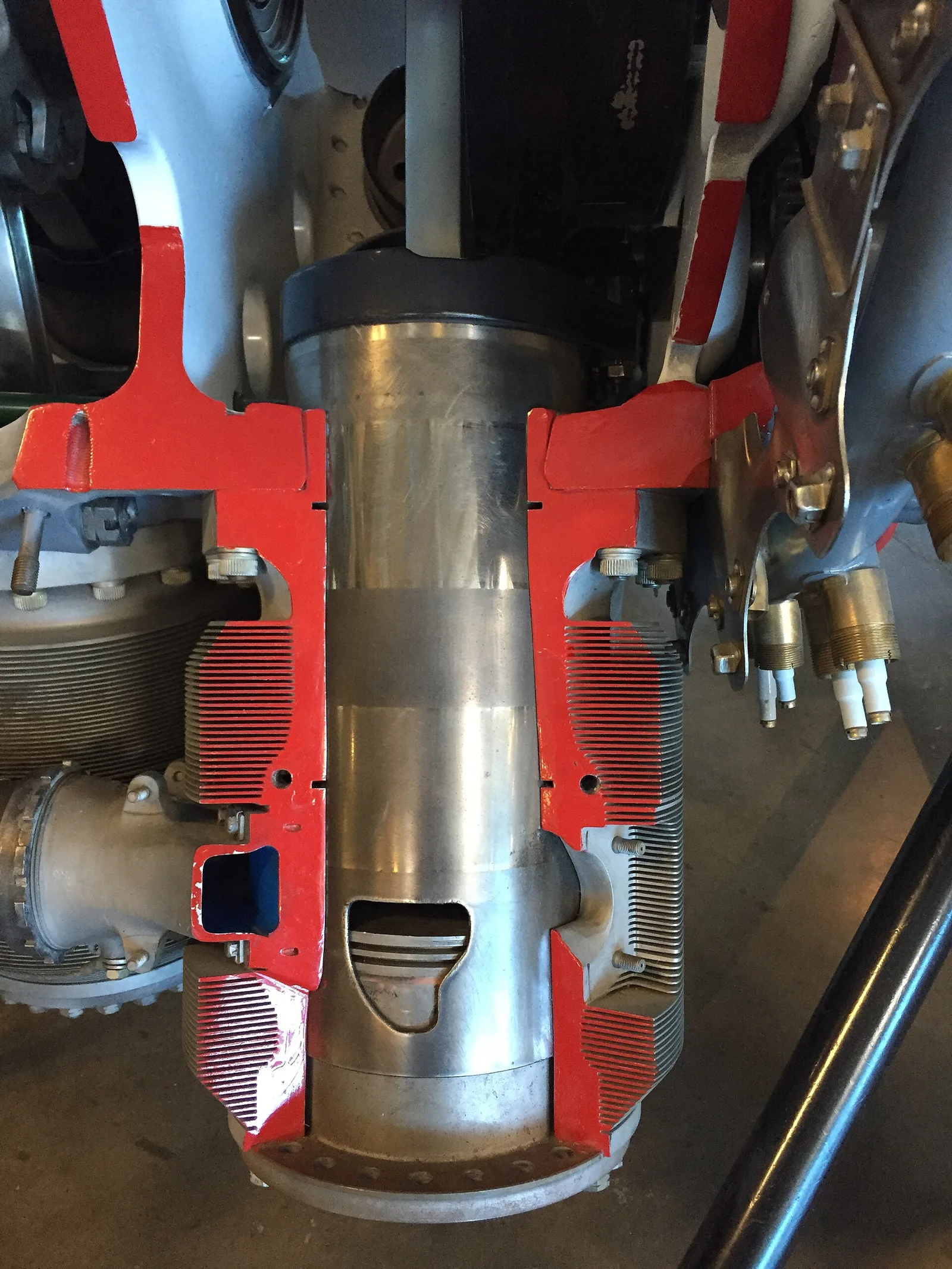
A conventional engine opens and shuts its cylinder with poppet valves, small plugs that lift off a seat and drop back onto it, pushed by a camshaft and returned by springs. A sleeve valve engine has none of that in the cylinder head. Instead one machined cylinder (two, in the double-sleeve version) sits in the gap between piston and engine block. The piston slides inside the sleeve, and the sleeve slides inside the block.
Cut slots, called ports, through the wall of the sleeve and through the wall of the block. When the moving sleeve brings the two sets of slots into line at the right moment in the cycle, gas flows in or out. When it moves on, the solid part of the sleeve covers the opening. The idea is borrowed from the two-stroke engine, which uses the piston itself to uncover ports in the cylinder wall; the sleeve simply does the job independently and on a timetable.
A good everyday comparison is a pair of slatted blinds, one sliding behind the other. Light gets through only when the slats overlap, and a small movement opens or closes the whole window at once. That is why the sleeve design could offer such large openings: the whole circumference of the cylinder is available for ports, rather than a couple of small discs in the roof.
In the Knight engine, carbon build-up actually helped to seal the sleeves, and the engines were said to improve with use.
The Knight engine and the luxury car makers
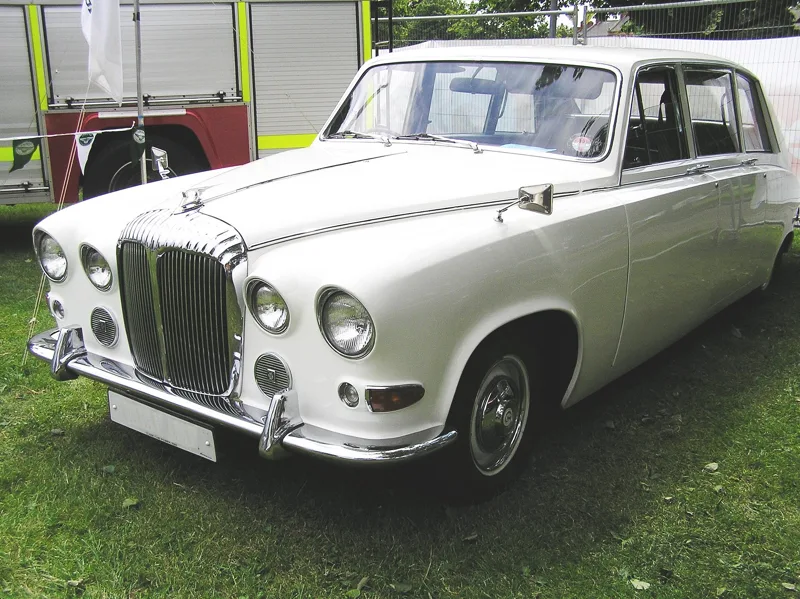
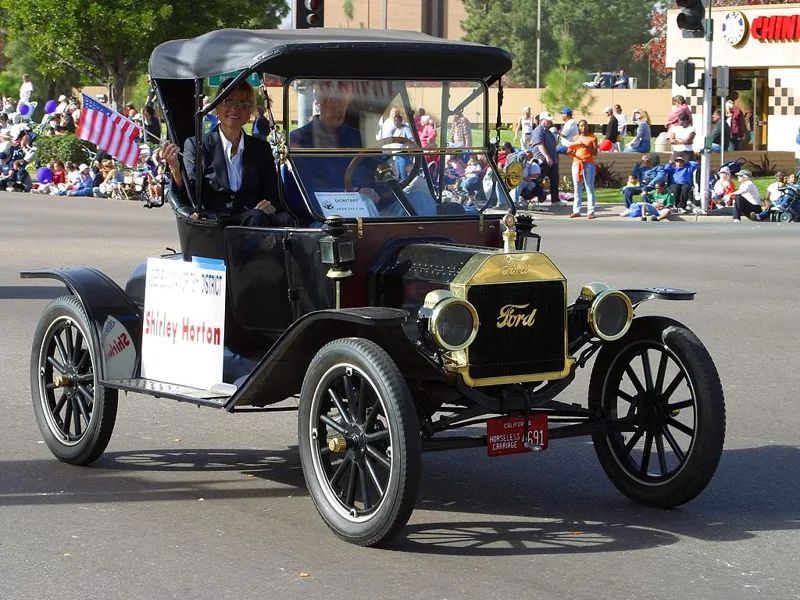
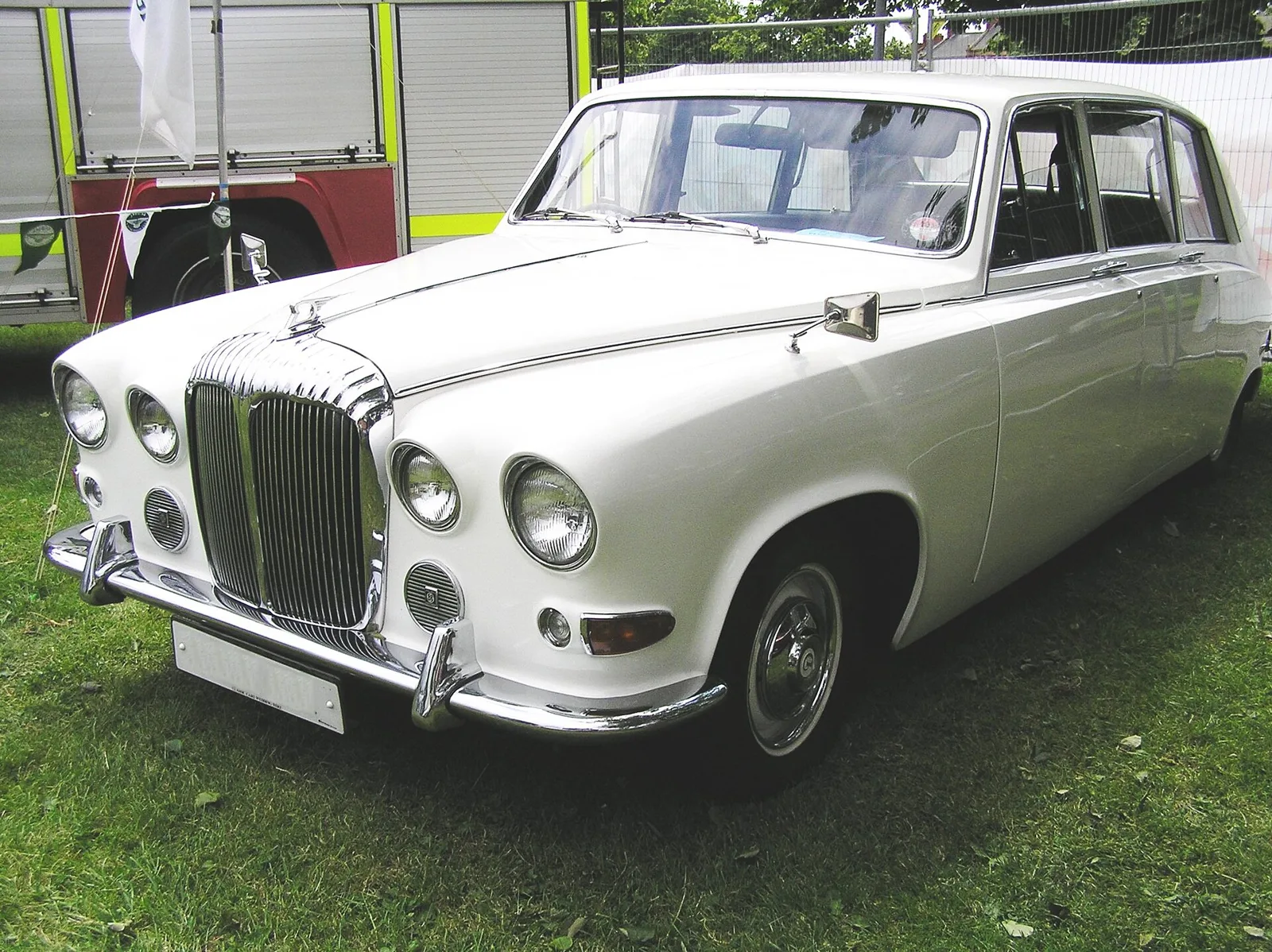
Charles Yale Knight patented the first sleeve valve that worked well, with two reciprocating sleeves round each cylinder. Luxury marques took it up in numbers. Daimler, Mercedes-Benz, Panhard and Peugeot fitted it, as did Willys, Stearns, Minerva and Avions Voisin, while Mors bought in double-sleeve engines built by Minerva. In the United States the Willys-Knight carried the system into ordinary cars and light trucks.
Their reasons were practical. The Knight engine drank more oil than a poppet engine, but the penalty was far outweighed by how quietly the engine ran and by the very high mileages it could cover without servicing. Early poppet-valve engines needed decarbonising after very few miles and suffered broken valve springs until spring design improved. Before leaded petrol, a poppet engine typically needed its valves and seats ground after 32,000 to 48,000 km (20,000 to 30,000 miles). Sleeves had no valve slamming onto a seat, so they escaped that wear, and because they had more metal in contact with their surroundings they also ran less hot than a poppet valve.
Then there was the engine that improved with use. In the Knight, carbon build-up actually helped to seal the sleeves, while a poppet engine loses compression and power as its valves, stems and guides wear.
Burt-McCollum and the single sleeve valve
The Knight system had a weakness: it burned a lot of lubricating oil, or seized if it did not get enough. The answer was the single-sleeve design named for its two inventors, Burt and McCollum, who applied for similar patents within weeks of each other. The Burt version used an open sleeve driven from the crankshaft end, while the McCollum layout put its sleeve in the head and the top of the bore, with more complicated ports. The version that reached production was more Burt than McCollum.
It used one sleeve, moved by an eccentric on a timing shaft set at right angles to the cylinder, so the sleeve both slid and turned. It was mechanically simpler and tougher, it used less oil than the other sleeve designs, and it kept the big, uncluttered ports and combustion chambers of the Knight system. The Scottish company Argyll fitted it to its cars. Bristol later adopted it for radial aircraft engines, as did the Halford-designed Napier Sabre.
Some designers tried a compromise, a short "cuff" sleeve that lived in the head rather than around the piston. It looked more like a traditional layout and kept the piston out of the sleeve, but it capped port size at the dimensions of the head, whereas a sleeve around the piston could have much larger ports.
What sleeve valves did better than poppets
Harry Ricardo, probably the sleeve valve's greatest advocate, and engineers such as Roy Fedden and Niven established most of the benefits during the 1920s. The list is long.
- Volumetric efficiency was high because the port openings were so large. Ricardo also showed gains in mechanical and thermal efficiency.
- Port size could be tuned. The speed at which gas must move through a duct rises with the cube of engine speed, so a high-revving engine wants bigger ports open for a larger share of the cycle. That is easy with sleeves and difficult with poppets.
- With no valves in the head, designers had freedom over combustion chamber shape. Ricardo found the swirl this allowed let an engine take one extra point of compression ratio, at least, before detonation set in.
- There were no valve springs, so the power needed to work the valves stayed largely constant with engine speed.
- Camshafts, push-rods and rockers could be dropped, because a single gear from the crankshaft drove the sleeves. In an aircraft engine that meant less weight and fewer parts.
Springs are the heart of it. A poppet valve is a heavy little object that must be accelerated open, stopped, reversed and stopped again, thousands of times a minute. As engine speed climbs, the spring may be unable to shut the valve before the next opening, which is valve float or valve bounce, and the valve can end up struck by the rising piston. Vibration at certain speeds can also set the spring resonating, which saps its strength. A dual spring can counter that. A sleeve engine simply does not have the problem.
Where sleeve valves fell short
Sealing was the persistent difficulty. In a poppet engine the piston rings and the cylinder bore bed in together: each wears the other into shape. That cannot happen in a sleeve engine, because the piston and the sleeve travel in different directions, and some even turn against each other, so a flaw in the piston never meets the same spot on the sleeve.
Oil consumption in the Argyll engines shows the scale of the problem. One four-cylinder 1,491 cc (91 cu in) unit built between 1922 and 1928 was credited with one gallon of oil for every 1,945 miles, and a 2,610 cc (159 cu in) four-cylinder with 1,000 miles per gallon. Remedies included an extra ring at the foot of the sleeve and a Dykes ring on the "junk head", the cap closing the top of the sleeve. Models with a junk head also needed a non-return purging valve, because liquid oil cannot be compressed and any left in the head space causes trouble.
The single sleeve did fix much of the Knight's smokiness, and it helped wear: because the sleeve turns relative to the piston at top dead centre, the ridge wear that plagues piston rings at the ends of their travel does not form. Even so, the Bristol Hercules was rated at 3,000 hours between overhauls, a fine figure for an aircraft engine and a poor one for a road car, and sleeve wear concentrated in the upper part inside the junk head. Max Bentele, an engineer who examined a British sleeve-valve aero engine, complained that it needed more than 100 gearwheels.
There was also a flow problem built into the geometry. The piston passes in front of the ports as it travels, which partly obscures them and makes it hard for gas to move during the overlap between intake and exhaust timing that modern engines rely on.
Rotary valve engines: a spinning barrel instead of a sliding tube
The rotary valve is an older and much broader idea. The simplest example is a stopcock: turn a plug with a passage through it and the flow starts or stops. Rotary valves control the pitch of brass instruments, the ports of the Corliss steam engine and the samples loaded on chromatography columns. They are also in most hydraulic power steering control valves, so a modern car may already contain one.
Putting one in the cylinder head is another matter. A poppet valve gets a helping hand from the combustion chamber itself, because rising pressure pushes it harder onto its seat. A rotary valve has to turn freely, which means it must be lubricated with oil and cannot be clamped tight. Yet it must hold pressures reaching 100 bar in heat of 1000 degrees Celsius, and the barrel and seals expand at different rates as the engine warms up. Press the seals harder to compensate and you get friction, power loss and wear. That sealing problem is what stopped rotary valves from being adopted generally in place of poppets.
The prize for solving it is attractive. Advocates point to higher compression ratios and engine speeds, a compact and lightweight cylinder head, and fewer parts. Because inlet and exhaust usually share the valve, cooling needs special care to avoid knock. Rotary valves turn at half engine speed or even a quarter, and they lack the inertia forces of reciprocating valves, so they suit high-revving racing engines in which springs fail through float and resonance. Estimates run to approximately 10 per cent more power.
Who has tried the rotary valve
- R.A. Reynolds took out a US patent in 1911 for a disc rotary valve in a four-stroke engine. Felix Wankel later revisited the concept for the Torpedo engine Jumo KM-8.
- The National Engine Company advertised a rotary valve engine for early aeroplanes, when poppet valves had a habit of sticking or burning.
- Frank Aspin developed a design at the end of the 1930s with the valve turning about the cylinder's own axis, with limited success.
- In Formula One, the 1980s MGN W12 carried rotary valves yet never raced. The Australian developer Bishop Innovation worked with Mercedes-Ilmor from 2002 to 2004 on rotary-valve tests for a V10.
- BRV, which bought the Bishop patent, built a Honda CRF 450 with torque up 17 per cent at low engine speeds and 9 per cent at high speeds, and up to around 30 per cent more power at working speeds. The engine was also smaller and lighter.
- Ralph Ogden Watson of Auckland developed an automotive rotary valve engine in 1989, and the car that carries it is reported to have run a great many miles without trouble and is still in use.
Not every effort survived its backers. Roton Engine Developments ran a two-rotor single-cylinder Husaberg motorcycle engine in 2006, but MG Rover, which had been supporting it, went bust and Roton could not continue. The designs resurfaced in Australia with Engine Developments Australia, which cast a prototype in 2013 on a Kawasaki Ninja 300 twin.
Rotary valves that did reach production
On two-strokes the rotary valve has been a regular fixture. A flat disc valve on a two-stroke motorcycle engine helps stop the mixture flowing back into the intake port during compression. Rotax fitted rotary intake valves to its 64 hp (48 kW) 532 and kept them for the 582 that replaced it. The Suzuki RG500 Gamma took the idea to the road: a 498 cc square four with twin cranks, two-stroke power and rotary valve induction, making 93.7 bhp (69.9 kW) at 9,500 rpm.
Four ways to open and close a cylinder
| System | How it works | Main strength | Main weakness |
|---|---|---|---|
| Poppet valve | Plug lifted off a seat by a cam, closed by a spring | Seal improves as cylinder pressure rises | Valve float and spring resonance at high revs |
| Knight double sleeve | Two sliding slotted tubes between piston and block | Quiet running and very high mileages without servicing | High oil consumption, or seizure from lack of oil |
| Burt-McCollum single sleeve | One sleeve moved by an eccentric, turning and sliding | Simpler and more rugged, with less oil use | Hard to seal; piston partly obscures the ports |
| Rotary valve | Spinning barrel or disc with a passage through it | Compact head; suits very high engine speeds | Sealing at 100 bar and 1000 degrees Celsius |
Why poppet valves won
No single flaw killed the sleeve valve. The poppet valve closed the gap from the other side. The Knight double sleeve was undone by its appetite for oil and its habit of seizing without it, while poppet-valve technology improved with sodium cooling and better springs. Ricardo himself conceded that many of the sleeve valve's advantages were worn away as fuels got better through the war years and as sodium-cooled exhaust valves arrived in high-output aircraft engines.
The American firm Continental researched single sleeve engines at length and concluded they would eventually be cheaper and easier to build. Its poppet engines, however, soon matched their performance with sodium-cooled valves, and the cost of the research, together with the October 1929 crisis, meant the single-sleeve engines never entered mass production. General Motors tested them and rejected the layout, and according to M. Hewland, writing in Car & Driver in July 1974, Ford did the same around 1959. In the 1940s the poppet valve stems of the day leaked appreciably more than they do now, which had masked part of the sleeve engine's oil problem.
The aircraft story ended differently, but just as decisively. The single-sleeve engines found their greatest use in British aircraft of the 1940s, in the Napier Sabre, Bristol Hercules and Centaurus, and in the Rolls-Royce Crecy, promising but never built in numbers. Then jet engines supplanted them.
Where this goes next
Nobody is selling sleeve valve cars, but the rotary valve has a handful of developers still working on it. Engine Developments Australia says its design is still in development, and claims a new cooling method for the combustion chamber that would allow far higher compression ratios and the elimination of the throttle altogether. Those are claims, not results.
The American company VAZTEC says it has solved the friction and sealing problems with a compliant seal. It has built ten prototype engines, from a 5.3L V-8 down to a 28cc handheld four-stroke, and a diesel that contained a 20:1 compression ratio and combustion pressure of 100 bar. According to the company, it is working with several original equipment manufacturers to bring the design to market. In Britain, RCV Engines uses a rotating cylinder liner as a form of rotary valve in its small four-stroke engines, including a 125cc scooter engine developed with PGO of Taiwan.
What it means for a buyer or a driver
If you drive a modern car, the valves in your engine are poppets, and the sleeve valve belongs to pre-war luxury cars such as the Willys-Knight, where quiet running and a thirst for oil came as a package. A rotary valve may still be in your car, though, in the power steering control valve.