In 1902 steamers were more than half of new US registrations. Doble then built a car that started in 30 seconds and reached 90 mph, and it still lost.
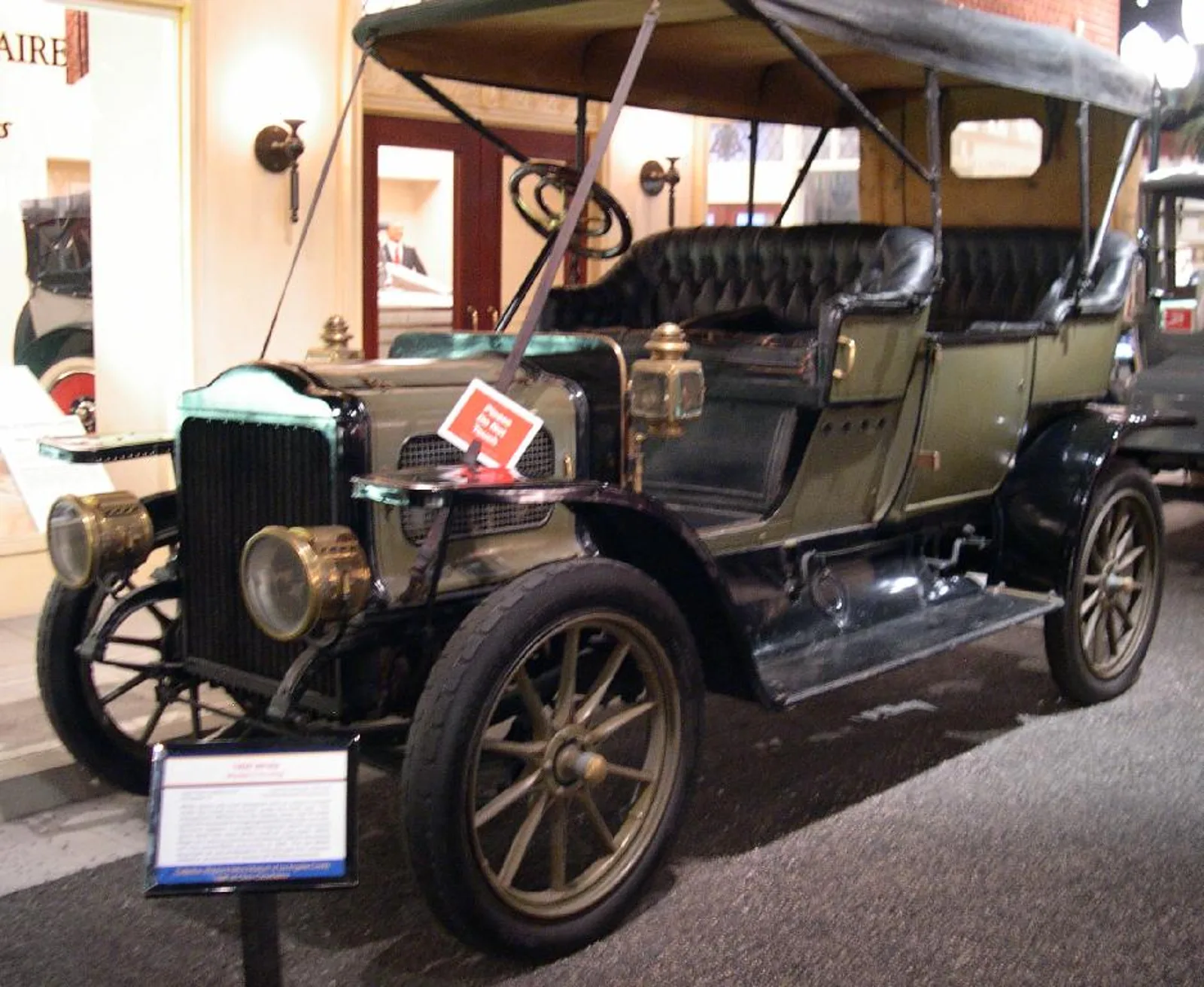
A steam car burns fuel to boil water in a boiler and uses the steam to push pistons. Makers such as Stanley and Doble built fast, quiet examples, but the boiler's weight, the electric starter, the Model T and a more efficient petrol engine ended steam as a commercial rival by around 1930.
In 1902, steam cars accounted for 485 of the 909 new car registrations in the United States, more than half of the market. Within three decades the last steam car maker had shut its doors, and the engine that had led the field was a hobby for enthusiasts. The story of how that happened involves a boiler, a hand crank and an engineer named Abner Doble.
How does a steam car work?
A steam car runs on a steam engine, which burns its fuel outside the cylinders, a layout engineers call external combustion. The burning fuel heats water in a boiler, and the resulting steam pushes pistons. Petrol and diesel engines, which eventually became standard, burn their fuel inside the cylinders instead.
Picture a pressure cooker connected to a piston. The steam pressure shoves the piston back and forth in a cylinder, and a connecting rod and crank turn that motion into rotation at the wheels. Because the working fluid never mixes with the combustion products, the burner can be tuned to keep exhaust emissions very low, including carbon monoxide, nitrogen oxides and unburned carbon.
The price was efficiency. A petrol car's operational thermal efficiency runs from 15 percent to 30 percent, while early automotive steam units managed only about half that.
The boiler problem
The boiler is where the engineering pain lived. It makes up much of the vehicle's mass, it demands attention from the driver, and it must be fed with water. A car either carries that water and refills it often, or it carries a condenser, which adds weight and bother. Cars of 1900 already carried a fair amount of automation to cope with the demands.
Starting was the other headache. Once working pressure was reached, an early steam car could pull away at once with strong acceleration, but getting there from cold took several minutes, plus time for the burner to reach temperature. Flash boilers, which heat a far smaller quantity of water, were the fix, and Doble pushed further with spark-ignition kerosene burners.
What steam did better
Remove the boiler and the engine itself is smaller and lighter than a petrol unit. It also suits the speed and torque needs of an axle, so a steam car skips the heavy, complicated transmission a petrol car needs. And it is quieter, even without a silencer.
Steam and electric cars outsold petrol cars in the United States until the electric starter arrived.
Where did steam cars begin?
Ferdinand Verbiest, a Flemish Jesuit in China, supposedly built a steam-powered toy for the Chinese Emperor in 1679. Nicolas-Joseph Cugnot, a French inventor, built the first working self-propelled land vehicle in 1769 and again in 1771 for the French Army. William Murdoch built a model steam carriage in 1784 and a larger one in 1791, which he abandoned to do other work.
The turning point came around 1800, when Richard Trevithick developed high-pressure steam. Such engines were far more powerful for their cylinder size and small enough for transport, and suddenly mobile steam became practical. Trevithick's London Steam Carriage ran successfully in 1803, although it failed to attract interest. Oliver Evans built an amphibious steam car in 1805, and Josef Bozek made the earliest documented steam car for personal use in 1815.
More than thirty years then passed before a flurry of builders appeared from the 1850s, in the United States, Canada, England, Italy, France, Switzerland and Germany. The UK Locomotive Acts of the 1860s worked against them. From 1878 the first larger manufacturers appeared, led by France: Bollee in 1878 and De Dion-Bouton in 1883, followed by Whitney, Olds, Serpollet and Peugeot by 1889.
How big did steam get before 1910?
The 1890s were dominated by new car companies. Internal combustion was in its infancy, steam was well established, and electric cars could not travel far. Most steam makers of the decade were American, among them Clark (1895 to 1909), Locomobile (1899 to 1903, after which it moved to petrol) and Stanley (1897 to 1924).
Between 1898 and 1905 a large number of new companies formed, and among the very earliest cars, steam was the most common form of power. From 1899 the Mobile company ran ten branches and 58 dealers across the United States. The centre of American steamer production was New England, home to 38 of the 84 manufacturers. By 1903, 43 of those firms were gone.
The attrition continued. Only four makers from the 1890s still built steam cars after 1910, and among the firms founded in the 1900s, White lasted to 1911, Conrad to 1924 and Doble to 1930.
| Maker | Country | Built steam cars until |
|---|---|---|
| Stanley | United States | 1924 |
| Waverley | United States | 1916 |
| Buard | France | 1914 |
| Miesse | Belgium | 1926 |
| White | United States | 1911 |
| Conrad | United States | 1924 |
| Doble | United States | 1930 |
Why did petrol win?
Petrol won through a chain of events rather than one blow. The first link was the starter. Steam and electric cars outsold petrol cars in the United States before the electric starter existed, because a petrol engine had to be started with a hand crank. That was hard work and sometimes dangerous, since improper cranking could cause a backfire strong enough to break the operator's arm. Electric cars offered little range and no way to recharge en route.
The electric starter changed the maths. Once cranking was gone, the internal combustion engine became the popular choice, although it was not necessarily better in performance, range, fuel economy or emissions. Some steam enthusiasts still feel steam has not had its fair share of attention in the field of efficiency.
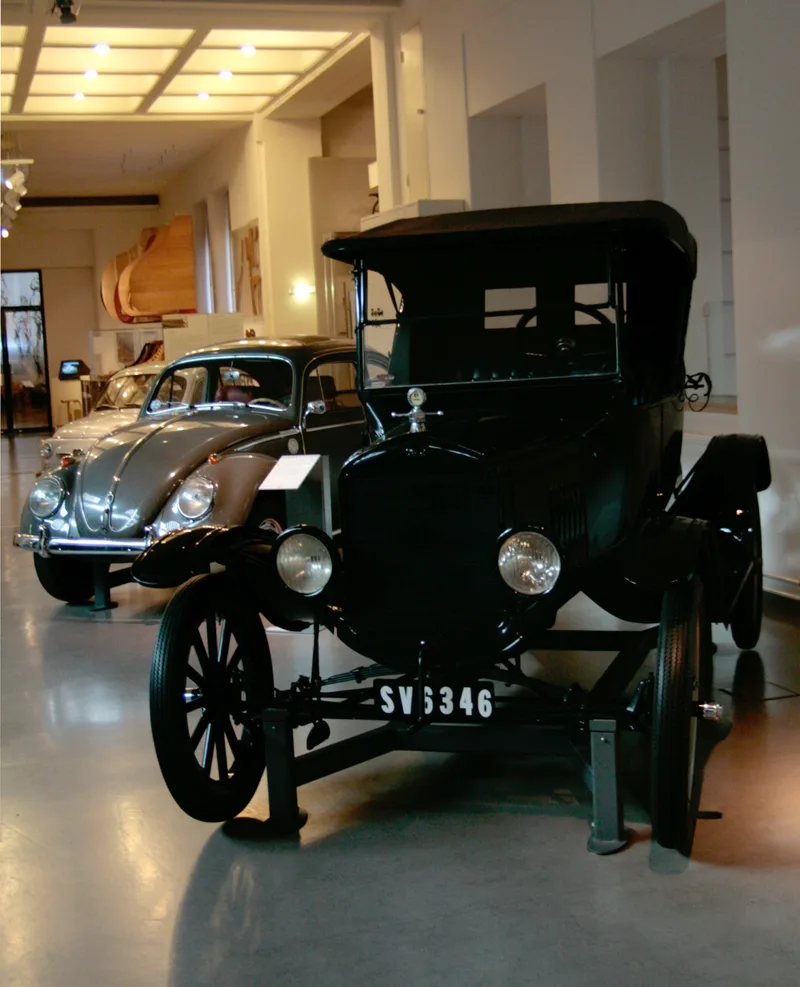
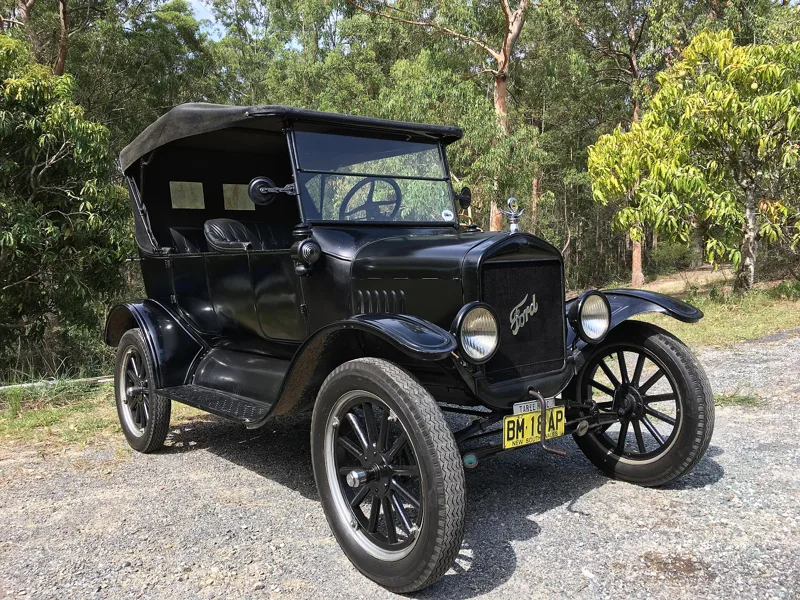
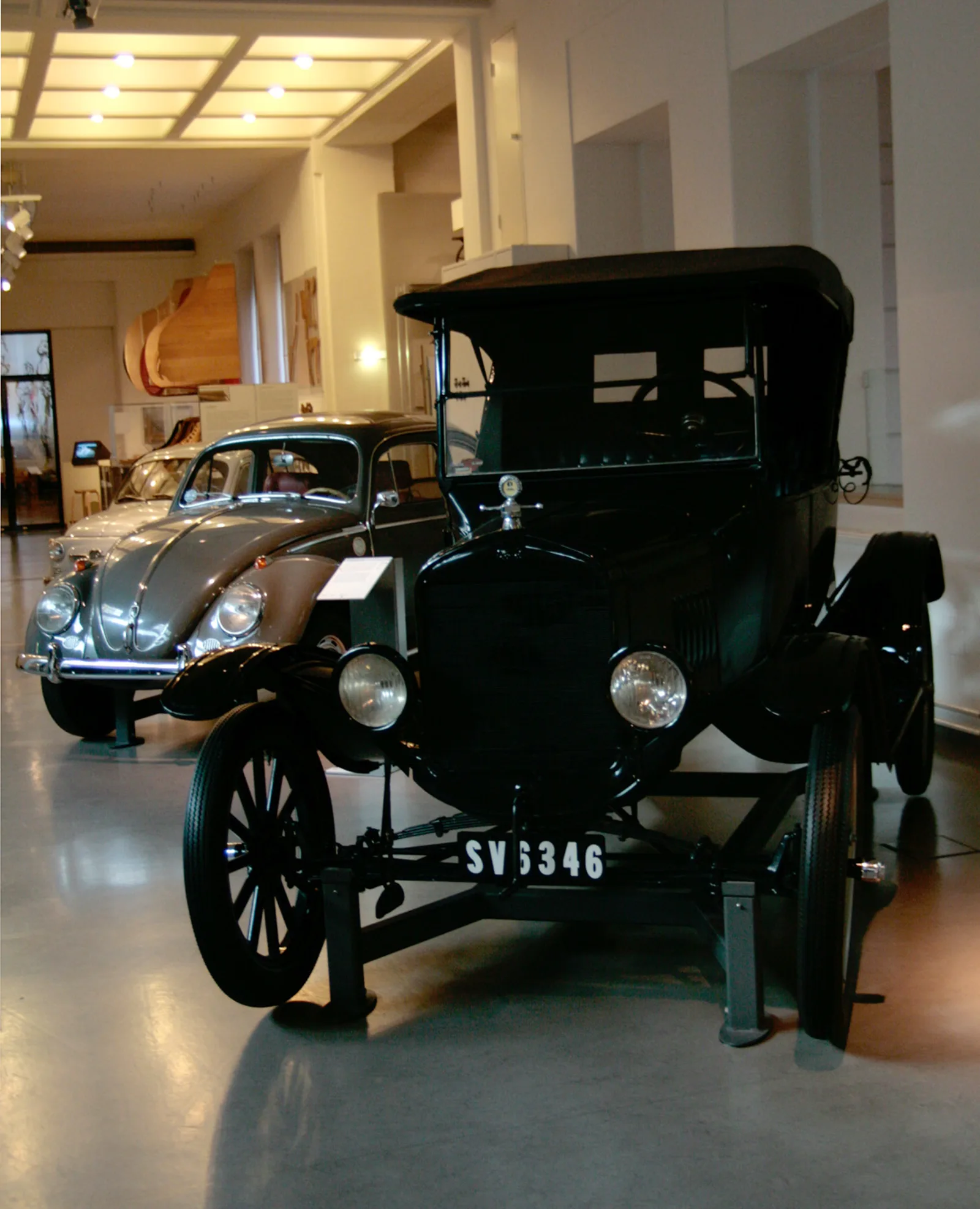
Henry Ford supplied the second link. His assembly line dramatically cut the cost of owning a conventional automobile, and the Model T was cheap and dependable. A third link was technical. Through steam's heyday the internal combustion engine made steady gains, matching and then passing the efficiency of a steam engine once the weight of a boiler was counted.
Legislation and the pace of petrol development did the rest. By the Second World War relatively few steam vehicles remained on the road, and many were acquired by enthusiasts to be preserved.
Why was the Doble steam car so advanced?
Doble was an American steam car maker, active from 1909 to 1931 by one count and until it ceased business in 1930 by another. Its late models, with a quick-firing boiler and electric starting, were seen as the high point of steam car development.
The Doble Detroit
The Doble Detroit introduced key ignition, which removed the need to light the boiler by hand. John Doble built a flash boiler in which atomised kerosene was lit by a spark plug in a venturi, with forced draft from an electric fan. Operation was automated by a tray of quartz rods: as the boiler heated up, the tray expanded and pushed the rods forward to shut off the burner, and as it cooled, they receded and the burner lit again.
A two-cylinder double-acting uniflow engine sat under the floor and drove the rear axle. The driver had just four controls: a wheel, a brake pedal, a foot throttle and a trip pedal that varied the steam cut-off and selected reverse. The boiler sat under the bonnet at the front, with engine and rear axle forming one unit, and the even weight distribution and low centre of gravity helped ride and handling.
Model D and Model E
The uniflow engine was seen as the root of the Detroit's troubles, so the 1922 Model D replaced it with a two-cylinder compound and a coiled monotube boiler with the burner at the top. No more than five Model Ds appear to have been built.
The Model E, which had been developed by 1922, became the classic Doble and the version with the most survivors. Its boiler made steam at 750 psi (52 bar) and 750 F (400 C), from cold-drawn steel tubing, 575 ft 9 in (175 m) in total length. The boiler was tested with cold water to 7,000 psi (480 bar). Two two-cylinder compound blocks sat back to back to form a four-cylinder unit.
Like every steam vehicle, the E could run on many liquid fuels with little modification, and its fuel burned at high temperature and low pressure, giving very low pollution. Prices in 1923 ranged from $8,800 to $11,200. Twenty-four Es were made from 1922 to 1925, in bodies from roadsters to limousines. Howard Hughes and the Maharajah of Bharatpur were among the owners.
How good was a Doble to drive?
A 1924 Series E could cover 1,500 miles (2,400 km) on one 24-gallon tank of water. Cold starts were quick: the car could be on the move within 30 seconds, even when the weather was freezing, and fully warmed it could exceed 90 mph (140 km/h). Modern runs have taken Dobles close to 120 mph (190 km/h) without any streamlining, and a stripped-down Series E accelerated from rest to 75 mph (121 km/h) in 10 seconds.
Fuel consumption, often on kerosene, was competitive with contemporary cars, and the car ran in near silence apart from wind noise. At 70 mph (110 km/h) there was little vibration, with the engine turning at about 900 rpm.
Doble reliability came from taking things away. The cars did without a clutch, a gearbox, a distributor or contact points, and later examples often covered several hundred thousand miles before a major mechanical service. The weak spot was braking, which was imperfect, as it was on cars of every type before 1930.
Two caveats appear in the record. Advertising praised the lightness of the engine, but in a steam car that word refers only to the expander unit, not the full power plant with boiler, and a Series E still weighed in excess of 5,000 pounds. Doble cars were also hindered by cost, being expensive to the point of luxury, and by Abner Doble's habit of tinkering with designs.
What happened to Doble after the cars?
The engines found work elsewhere. During the First World War, Doble Detroit motors powered two prototype tanks, including a 50-ton Corps of Engineers machine with two Doble engines. Larger Model G and H units were tried in buses from 1926, and at least one Detroit double-decker covered about 32,000 miles. In 1929 a Model H went into a Yellow Coach for General Motors.
George and William Besler of Davenport, Iowa, acquired much of the Doble plant and patents. They built a railcar, an interurban car and a steam aeroplane, a Travel Air 2000 biplane that flew successfully on 12 April 1933 at Oakland. In 1969, General Motors introduced two experimental steam cars. The SE 124, a converted Chevrolet Chevelle, used a 50 bhp (37 kW) Besler engine built on the 1920 Doble patents, and the SE 101 was based on a Pontiac Grand Prix.
Abner Doble spent his later years as a consultant. He worked from 1931 to 1935 with Sentinel Waggon Works of Shrewsbury, and his warning in a 1937 Autocar article was blunt: any new steam car would need to be superlatively good if it was to take on petrol rivals. His last project was the Paxton Phoenix, powered by the Ultimax engine with 120 bhp (89 kW) of sustained power. The project was dropped in 1954.
Did steam ever come back?
Enthusiasts kept building steam cars from the 1940s onwards. Charles Keen began in 1940, fitting a Stanley engine to a Plymouth Coupe, and in 1948 and 1949 hired Abner Doble to create a V4 for a sports car. Williams Engine Company began offering steam conversions in 1957.
Government interest followed. California created its Air Resources Board in 1967, and the state's air pollution problems in the mid-1960s encouraged investigation of steam cars. In 1969 the California Highway Patrol began a project to test steam-engined patrol cars, and the National Air Pollution Control Administration invited bids for a contract to design a practical steam passenger-car engine, which drew five firms. More work followed the fuel crises of the early 1970s. None of it produced a renewed steam car industry.
Where does steam go next?
Steam cars are now mostly left to enthusiasts, the odd manufacturer experiment and anyone chasing steam-powered land speed records. The search for renewable energy has sparked occasional bursts of interest in steam for road vehicles, but apart from replicas and experimental technology, no steam vehicle is currently being built. Large reciprocating steam engines are still manufactured in Germany as of 2026.
Which Doble steam cars still exist?
Model E cars 9, 10, 11, 13, 14, 17, 18, 19, 20, 22 and 23 are known to survive, in places that include a Ford museum, the UK, Australia and New Zealand. Jay Leno owns two of them. Cars 4, 5, 7, 15 and 16 are known to have been scrapped. Two Model Fs, the F30 and the F34, also survive.