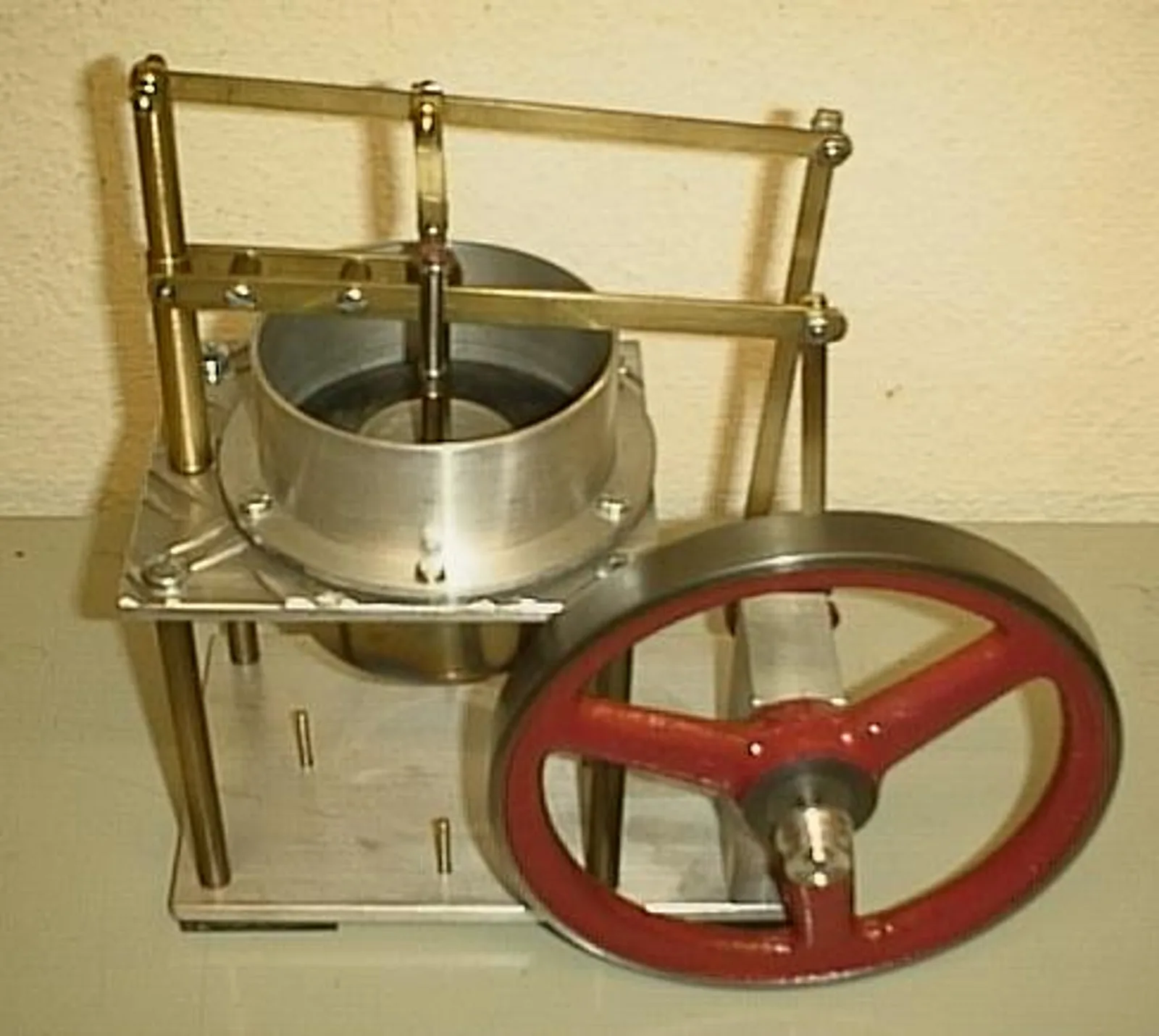
An engine that burns nothing inside its cylinders reached 38.5% peak efficiency in a car, then lost out to cost and warm-up time.
A Stirling engine is a closed-cycle heat engine that repeatedly heats and cools sealed gas from outside. Robert Stirling patented it in 1816. It has been used in submarines, micro combined heat and power units, solar dishes and test cars, but not in production road vehicles.
A Chevrolet Celebrity built in the mid-1980s carried an engine that topped out at 38.5% thermal efficiency while taking its heat from outside the cylinders. A modern petrol engine, by comparison, peaks at 20 to 25%. NASA's MOD II Stirling engine lifted the car's highway economy from 40 to 58 mpg-US (from 5.9 to 4.1 L/100 km) with no change in vehicle weight. And then nobody built one for the road.
The Stirling engine has been solving problems and failing to find buyers for more than two centuries. It has pumped water from a quarry, fed air to church organs, powered radio sets, driven submarines for weeks beneath the surface and focused sunlight into electricity.
How a Stirling engine works
A Stirling engine turns heat into motion by warming and cooling the same sealed charge of gas, over and over. It is a closed-cycle regenerative design: the gas, known as the working fluid, never leaves the engine, and a component called the regenerator saves heat that would otherwise be thrown away. Without the regenerator, strictly speaking, it would be just another hot-air engine.
Think of it as a sealed room with a hot end and a cold end. Heat enters from outside the cylinder, so the gas expands and pushes a piston, which extracts work. A second part, the displacer, then shifts the gas to the cold end. As the gas cools it contracts, which lowers the pressure at the working cylinder and yields a second burst of work. The displacer carries the cooled gas back to the hot end and the cycle begins again. The regenerator works like a sponge in the middle: it soaks up heat as the gas passes one way and gives it back on the return trip, so the engine keeps its warmth instead of dumping it into the heat sink. That saving is what raises efficiency.
Several practical qualities follow. Because the heat comes from outside, the hot end can be warmed by anything: burning fuel, sunlight, nuclear heat or waste heat. The cold end can sit in running water or a stream of air. The gas is sealed in for good, so makers can choose one with the best properties, with helium and hydrogen the favourites. Nothing is drawn in and nothing is exhausted, so the machine is close to silent. The cycle is also reversible. Turn the shaft with an outside power source and a temperature difference develops across the machine, so it acts as a heat pump or refrigerator.
The engine reached 38.5% efficiency in a family car, yet carmakers were not interested.
How efficient is a Stirling engine?
In theory, a Stirling engine matches the Carnot cycle, the highest efficiency any heat engine can reach. Real engines fall well short of that. Heat transfer and friction cost efficiency, and materials impose limits through creep, tensile strength and melting point. Professor C. J. Rallis argued that the engine's expansion and compression spaces behave much more like adiabatic than isothermal ones, which led him to an alternative ideal cycle that does not predict Carnot efficiency and finds its maximum at lower compression ratios, as real machines do.
Two further limits matter in practice. Efficiency is higher in cool weather, which makes the engine less attractive in warm climates. And the engine has a low power-to-weight ratio, so it suits static installations where weight and space are not at a premium far better than it suits vehicles.
A short history of the Stirling engine
Robert Stirling, a Scottish clergyman, patented his air engine in 1816. The patent also described a heat exchanger he called an economiser, the component later renamed the regenerator. An engine built to his design pumped water at a quarry in Ayrshire in 1818. Robert and his brother James developed improved versions, including a pressurised working gas to lift power output.
By the early 1840s James had built a bigger engine for a Dundee foundry and described it to the Institution of Civil Engineers in 1845. It showed that the design could supply industrial-scale power, but repeated failures of parts exposed to high temperatures contributed to its replacement by a steam engine. From about the 1860s smaller hot-air engines were produced for jobs such as pumping water and supplying air to church organs. Their simple operation was an advantage where the constant supervision steam engines needed was unwelcome. Early in the twentieth century electric motors and compact internal combustion engines were taking over most of that work.
The revival began at Philips in the late 1930s, when engineers at the Eindhoven laboratory looked for a small generator to power radio equipment in places without reliable electricity. They chose the Stirling engine partly for its quietness and its ability to use several heat sources. By 1951 the company had built the MP1002CA generator set, known as the Bungalow set, which produced about 180 to 200 watts. Around 150 units were made. Falling power demands from transistor radios and the cost of the generator limited its commercial future. Philips adopted the name Stirling engine in 1945, and its later work fed into modern Stirling technology, with Stirling cryocoolers becoming a commercially important product.
The Stirling engine car
The idea of a Stirling engine car belongs mostly to the 1970s and 1980s. From 1978 NASA ran a programme paid for by the US Department of Energy and aimed at an unusual car engine that would use less fuel than a conventional one. It went through two main designs, the Mod I and Mod II. Earlier work by Ford used engines provided by Philips, and American Motors Corporation tested several cars using engines from Sweden's United Stirling, made under a Philips licence.
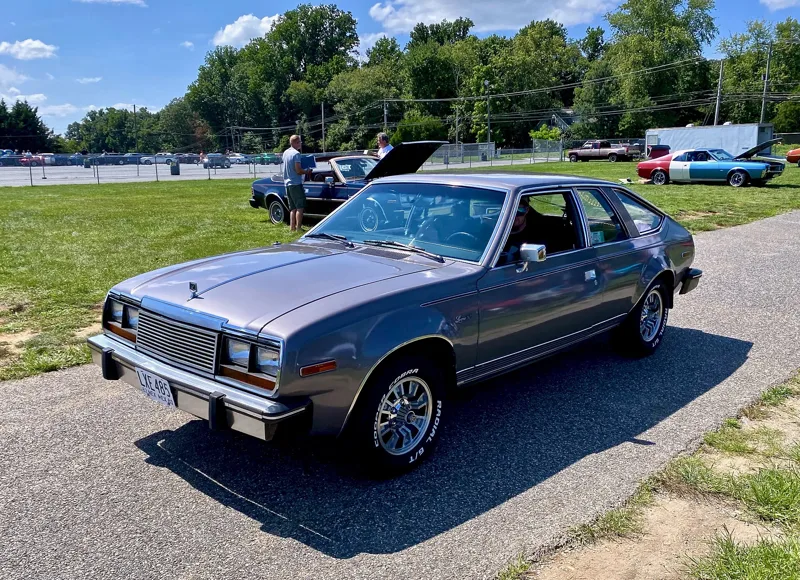
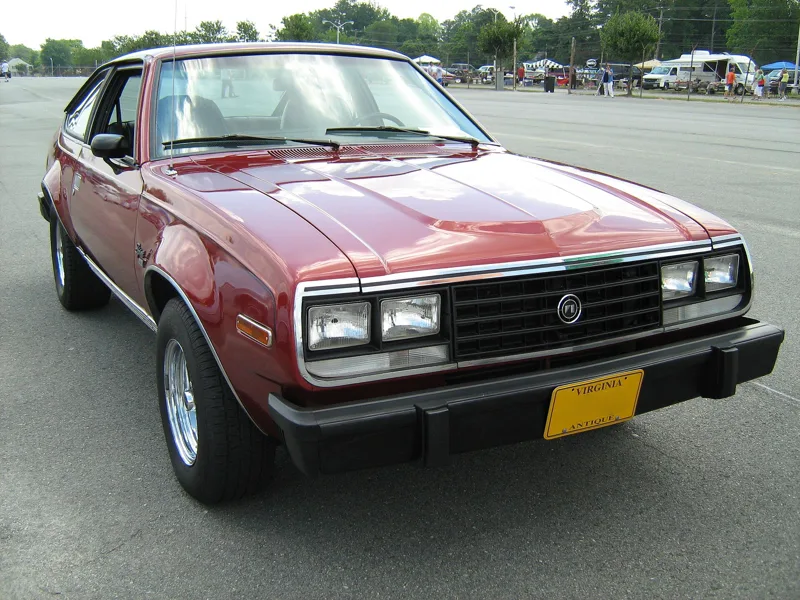
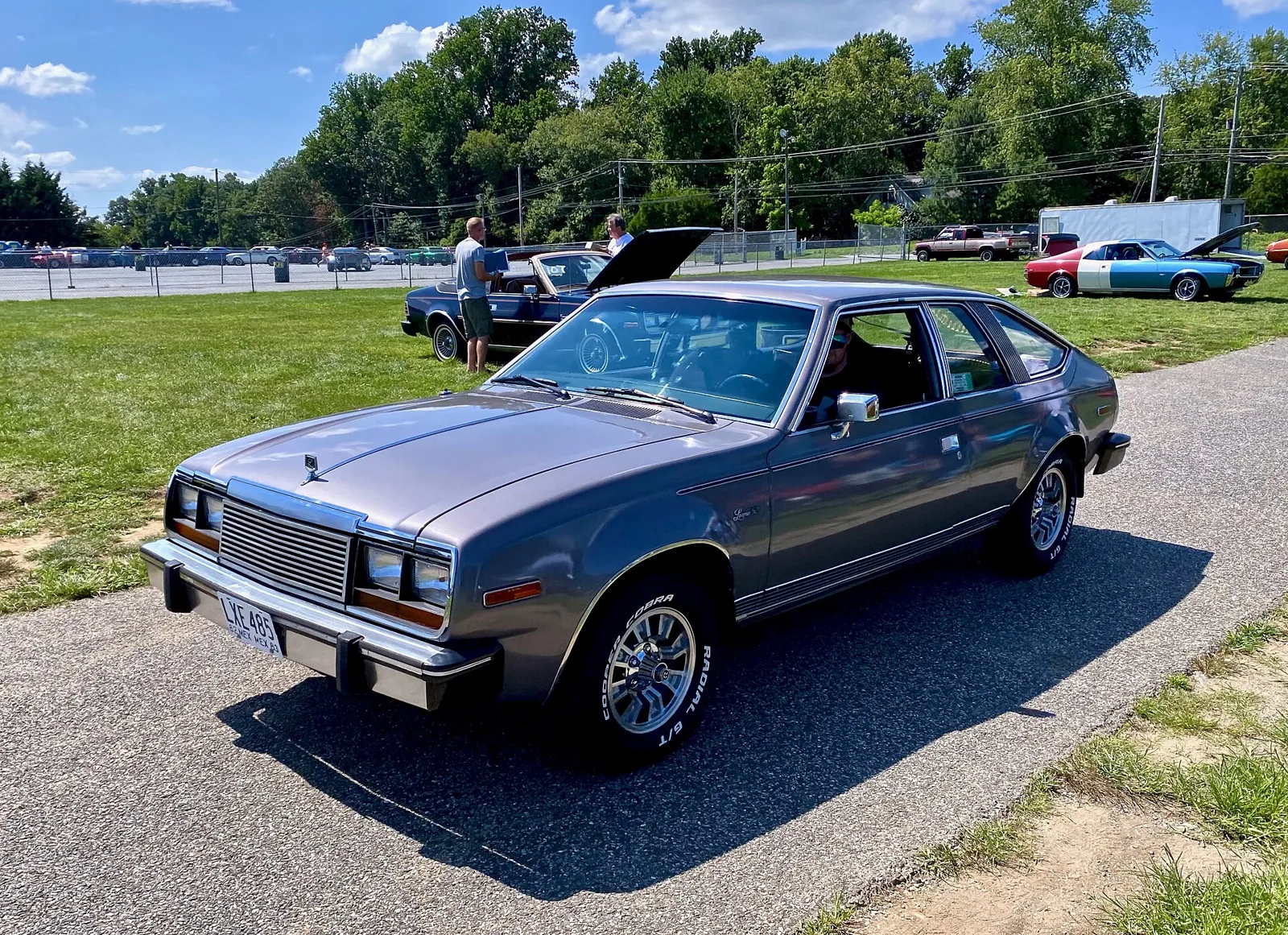
The MOD I vehicles were built by AMC's AM General for the Department of Energy and NASA. An AMC Spirit with a United Stirling P-40 engine was tested for more than 50,000 miles (80,467 km) and averaged up to 8.3 L/100 km (28.5 mpg-US). A 1980 VAM Lerma liftback was also converted to P-40 power to promote the government's alternative engine programme. Testing of a 1979 AMC Spirit, a 1977 Opel and a 1980 AMC Concord suggested that a Stirling engine could become a passenger-car powertrain.
The MOD II engine went into a 1985 Chevrolet Celebrity. Fuel economy improved by 32% over the factory Celebrity and by about 50% over the average car of the day. NASA's 1986 design report gives highway economy rising from 40 to 58 mpg-US and urban figures of 26 to 33 mpg-US (9.0 to 7.1 L/100 km). Start-up in the NASA car took 30 seconds at most, whereas Ford's research car used an electric heater inside the engine and could start in a few seconds. The engine's strong torque at low speed also removed the need for a torque converter, which saved weight and transmission losses.
Why the Stirling engine never reached the showroom
Stirlings are commonly said to weigh too much for their output, cost too much and take too long to get going. The heat exchangers are complex and expensive. The cooler has to shed double the heat of a petrol or diesel radiator. The heater needs stainless steel, an exotic alloy or ceramic to withstand the heat that high power density demands and to contain the hydrogen often used to boost output. The hard problems are getting going, responding to the throttle, shutting down and carrying the weight.
The 1970s and 1980s test programme ran into more. Spark-ignition engines of equal power improved from 1977, US fuel-economy rules were getting tighter, and the Stirling kept falling short on efficiency. Consumers would also dislike the wait to warm up and the difficulty of changing engine speed, which limits flexibility in traffic. Carmakers would have had to convert factories and tooling for a wholly new type of powerplant. Funding cuts and a lack of interest from the manufacturers ended any chance of commercialising the Automotive Stirling Engine Program, even though the MOD I and MOD II phases were counted a success.
The experiments pointed to a different job for the engine: running as a generator in an extended-range series hybrid, supplying electricity to the traction motors and a buffer battery, free of any direct mechanical link to the wheels. A petro-hydraulic hybrid could use the same approach with a pump charging a hydraulic tank. In November 2007 Sweden's Precer project unveiled a hybrid prototype that ran on solid biofuel feeding a Stirling engine. Dean Kamen developed the DEKA Revolt, a series plug-in hybrid based on a Ford Think that can travel about 97 km (60 miles) on its lithium battery.
Stirling engines in submarines
The Stirling engine's quietness and its ability to burn fuel without air made it a natural fit for submarines. In the late 1980s the Swedish Navy started trials at sea of a Stirling air-independent propulsion system on the submarine Nacken, and the Gotland class was delivered in 1995 and 1996 with it installed from the outset. The engines burn fuel with liquid oxygen, so combustion needs no outside air, and the boats can stay submerged for long periods.
Swedish shipbuilder Kockums has built eight Stirling-powered submarines since the late 1980s, including the Gotland and Sodermanland classes. They were the first to carry Stirling air-independent propulsion, which stretches the time a boat can stay under from days to weeks, something only nuclear power had offered before. Singapore's Archer class uses the technology, and Japan's Soryu-class submarines were built with Kawasaki Kockums Stirling engines. Kawasaki has said the system increased their underwater endurance.
Stirling engines for heat and power
Combined heat and power is where the Stirling engine has found its most active market. The engine produces electricity while the heat it rejects warms a building or heats water. Inspirit Energy of the UK offered a gas-fired unit, the Inspirit Charger, from 2016, generating 3 kW of electricity and 15 kW of heat. New Zealand's WhisperGen developed a gas-fired micro-CHP boiler that sells unused electricity back to the grid; in 2004 it announced production of 80,000 units for UK homes, and a trial of 20 units ran in Germany in 2006. A Canadian home trial put a natural-gas unit through the winter and spring of 2003.
Solar power offered a bigger prize. In a dish system, a mirror focuses sunlight on a receiver that heats the engine. On 11 August 2005 Southern California Edison said it had agreed with Stirling Energy Systems to buy power from over 30,000 solar Stirling engines across twenty years, enough for 850 MW, on an 8,000-acre (19 sq km) farm. In January 2010 the 1.5 MW Maricopa Solar plant at Peoria, Arizona, was completed, made up of 60 SunCatcher dishes of 25 kW each. There were disputes over effects on local animals, and the Maricopa plant has closed.
Other uses at a glance
| Use | Example | Key figure |
|---|---|---|
| Power for radios | Philips MP1002CA Bungalow set, 1951 | 180 to 200 watts; about 150 built |
| Cars | NASA MOD II in a 1985 Chevrolet Celebrity | 38.5% peak thermal efficiency |
| Submarines | Gotland class, delivered 1995 to 1996 | Endurance from days to weeks |
| Micro-CHP | Inspirit Charger, on sale in 2016 | 3 kW electricity, 15 kW heat |
| Solar dish | Maricopa Solar, Arizona, 2010 | 1.5 MW from 60 dishes |
| Pumps | Stirling Technology ST-5 | 5 horsepower (3.7 kW) |
| Model aircraft | Robert McConaghy, 1986 | 20 watts, 6 minutes aloft |
Cooling, pumping and flying
Run backwards, the engine becomes a refrigerator. A free-piston design can be sealed completely, removing friction losses and refrigerant leakage, which makes free-piston Stirling coolers suitable for high-efficiency portable refrigerators and freezers. Stirling Technology's ST-5 delivers 5 horsepower (3.7 kW) and can drive either a 3 kW generator or a water pump. In August 1986 Robert McConaghy flew the first Stirling-powered aircraft, a radio-controlled glider of 1 kg fitted with a 360 g engine that made 20 watts. The best flight lasted six minutes with barely enough power to turn gently and hold altitude.
What new work is being done on Stirling engines in solar and space power?
Interest in renewable energy has revived work on concentrated solar power and heat pumps. NASA has looked at Stirling engines warmed by radioactive decay for extended missions to the outer solar system, and in 2018 NASA and the US Department of Energy announced a successful test of KRUSTY, the Kilopower Reactor Using Stirling TechnologY, designed to power deep-space probes and encampments on other worlds. In nuclear power stations, replacing steam turbines with Stirling engines might simplify the plant and, because a Stirling needs no water, help dry regions. A 2013 study of miniaturised free-piston engines derived scaling laws from six dimensionless groups. In 2025 researchers Tristan J. Deppe and Jeremy N. Munday ran a Stirling engine from the temperature gap created by radiative cooling to the sky, and got enough airflow for greenhouse circulation and building ventilation.