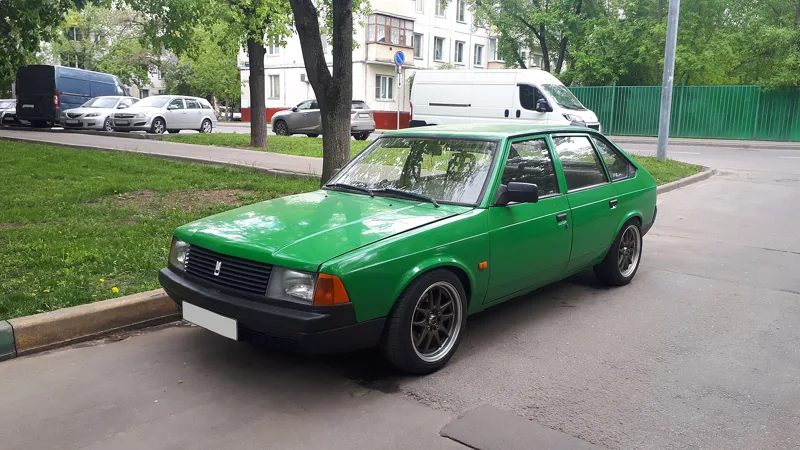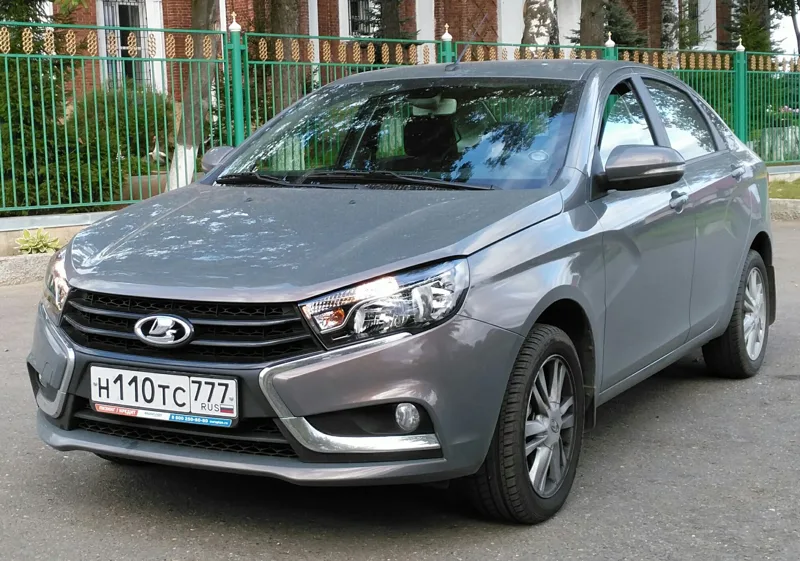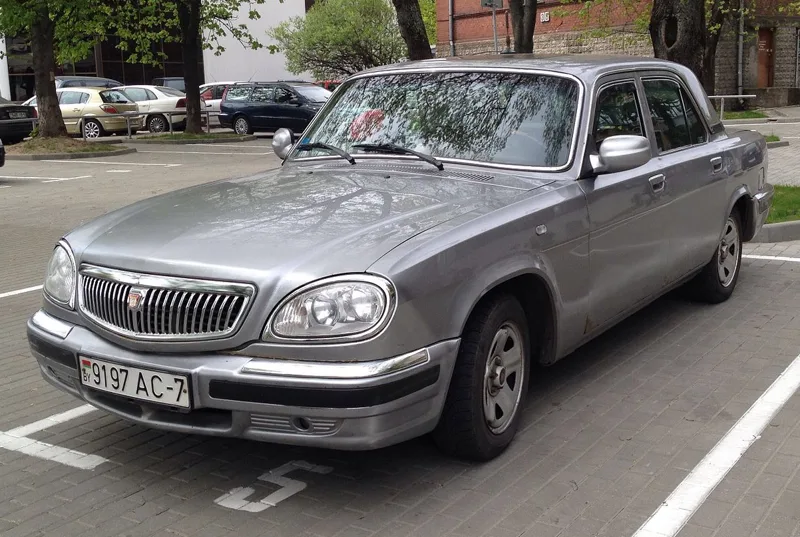
A body-on-frame SUV from Ulyanovsk, the light commercial vehicle that filled a post-Soviet gap and a crossover built in a former Renault plant.
The UAZ Patriot is a body-on-frame SUV built in Ulyanovsk since 2005, the GAZelle a light commercial vehicle family built since 1994, and the Moskvitch 3 a rebadged JAC Sehol X4 assembled in Moscow since November 2022 from semi knock-down kits.
In April 2023 Moscow's city Duma proposed selling its fleet of Toyota Camrys and replacing them with the Moskvitch 3, a crossover that is a locally assembled copy of a Chinese car. The plant that builds it was Renault's until 2022. The Moskvitch 3 is one of three Russian-market vehicles that explain how the country's car industry works today, alongside the UAZ Patriot, an affordable off-roader introduced in 2005, and the GAZelle, which together with the lighter Sobol makes up most of Russia's van and light truck market.
Moskvitch 3: a revived name on a rebadged Chinese crossover
The Moskvitch 3 is a compact crossover SUV produced in Russia since 2022. It is a rebadged JAC Sehol X4, assembled locally from semi knock-down kits in cooperation with the truck and engine maker Kamaz. It is the first vehicle from the revived JSC Moscow Automobile Plant Moskvitch, and it has little in common with the saloons and hatchbacks the company made in its Soviet-era form.
Moskvitch's return is one strand of a broader Russian government effort to support home-built cars while sanctions bite and several foreign brands have left. Renault Russia divested its Moscow plant in 2022, a site formerly called Avtoframos that has no link to the bankrupt AZLK. The Government of Moscow took it over and renamed it JSC Automobile Factory Moskvitch. Production of the Moskvitch 3 started in November 2022.
Official support followed. In April 2023 the Moscow City Duma proposed replacing its Toyota Camry fleet with the Moskvitch 3. Three months later, State Duma chairman Vyacheslav Volodin proposed concentrating on Russian-built cars, naming Lada and Moskvitch, and Finance Minister Anton Siluanov backed the idea by promising assistance.
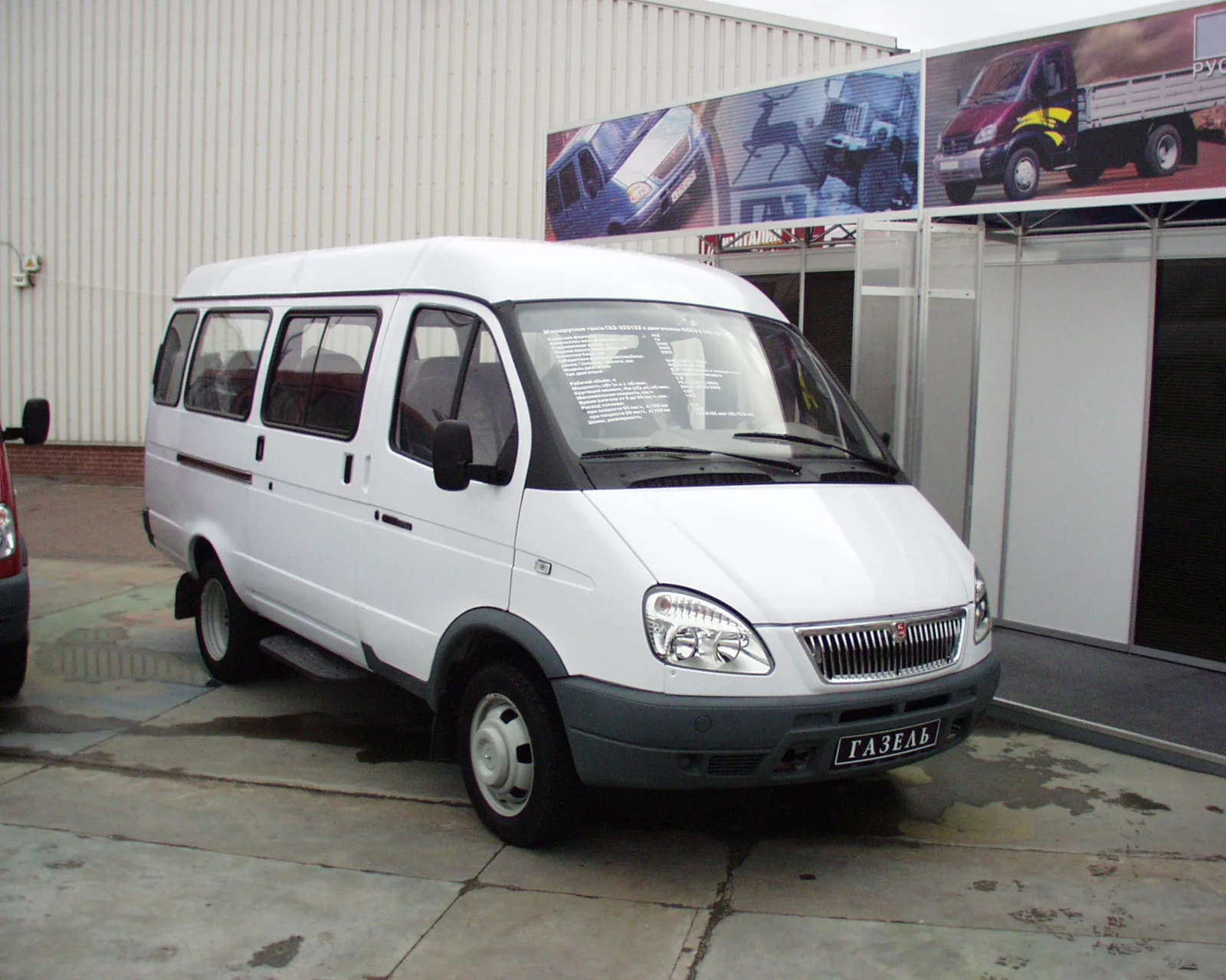
One million GAZelles by 2005, built to fill a gap the Soviet collapse left open.
How the Moskvitch 3 is built
Output is planned in three stages. At the start, in November 2022, cars were put together from semi knock-down kits with help from Kamaz and from JAC Motors. A second stage, planned to begin in 2024, would raise localisation by bringing in Russian suppliers for items such as body panels and control systems. A third stage, in the near future, anticipates near full local production.
In mid-July 2023 the company reported that it had built more than 11,000 vehicles. It then stopped production from the 22nd of July until the 6th of August, citing the wellbeing of its workers.
Moskvitch 3, 3e and Comfort
The standard Moskvitch 3 comes with a 1.5-litre engine and either a six-speed manual or a CVT. The 3e swaps the engine for a 193 hp electric motor with 340 N m of torque and a battery rated at 410 km. In April 2023 Moskvitch announced the higher-spec Moskvitch 3 Comfort, available only with the 1.5-litre engine and CVT. It adds full LED lighting, a digital gauge cluster, automatic folding mirrors, cameras covering several directions, forward collision warning, high beam control, lane departure warning and blind spot monitoring. Side airbags and curtains come with it, since the original model had only front driver and passenger airbags. Every model comes in white, silver, black, red or blue.
The car is sold beyond Russia in Belarus, Kazakhstan and Abkhazia. State operators include the Main Directorate for Traffic Safety, the Ministry of Health, the National Guard and the Police, as well as Moscow's technical inspection and construction supervision bodies. Taxi and shared-mobility fleets use it too.
UAZ Patriot: the budget off-roader from Ulyanovsk
The UAZ Patriot is a mid-size body-on-frame SUV built by the UAZ division of Sollers in Ulyanovsk and introduced in 2005 to replace the older UAZ Simbir. The pitch combined modern components, generous load capacity, off-road ability and a price below US$5,000, and 12,011 were sold in 2007. It seats five adults.
A limited edition marked the plant's 70th anniversary in October 2011. In May 2012 a restyled model lost the front passenger's grab handle and gained a safer four-spoke Takata-Petri steering wheel, a 2DIN media player and a USB port. August 2013 brought a new electronically controlled Dymos transfer case. The 2014 facelift added new bumpers, headlights and seats, an optional multimedia system with navigation, a rear camera, chassis improvements, a new diesel turbocharger and switchgear from the Astra J and Astra K.
The Patriot 4x4 and a pickup were due to reach the United States in 2022 as the Bremach 4x4 SUV and Bremach Brio. Bremach cancelled the plan, ceased operations and refunded deposits after the Russian invasion of Ukraine.
UAZ Patriot diesel, pickup, Sport and Profi versions
The Patriot Diesel, originally the UAZ-31631 and now the 31638, takes the 2.3-litre IVECO F1A turbodiesel from the Fiat Ducato, rated at 116 hp. It meets Euro-3 emissions rules and tops out at 145 km/h (90 mph), at a consumption of 9.5 L/100 km (25 mpg-US). Since 2012 the 31638 has used the Russian-made ZMZ-51432 turbodiesel, which meets Euro-4.
The UAZ Cargo (UAZ-23602-050), available since 2008, is a commercial pickup on a 3,000 mm (120 in) wheelbase with a two-person cab. The UAZ Pickup (UAZ-23632) arrived in August 2008 as a four-door, five-seat truck on the same wheelbase, with a payload of 725 kg (1,598 lb). The UAZ Profi stretched the wheelbase to 3,500 mm (140 in), with a short two-seat cab or a four-door five-seat cab, rear or all-wheel drive and a ZMZ-409 051 engine of 147 hp; series production began in August 2017.
The Patriot Sport (UAZ-3164) was a shorter version for what developers called young and active people. Its wheelbase was 360 mm (14 in) shorter, at 2,400 mm (94 in), its length 4,287 mm (168.8 in) and its luggage volume 960 litres (34 cubic feet). Rear door openings were narrower, and shorter overhangs improved manoeuvrability. Two 2.7-litre petrol engines were fitted: the ZMZ-40904 with 128 hp in the Limited Edition and the ZMZ-4091 with 112 hp in the Classic and Comfort, with a five-speed Dymos manual. Production started on 1 July 2010 and was temporarily halted on 1 December 2010.
UAZ Patriot specifications and users
The standard Patriot is a four-wheel-drive five-seater (nine in some versions) measuring 4,647 mm by 2,080 mm by 1,900 mm (183.0 in by 81.9 in by 74.8 in). Ground clearance is 210 mm (8.27 in). It weighs 2,070 kg (4,560 lb) equipped, with a full weight of 2,670 kg (5,890 lb) and cargo capacity of 800 kg (1,800 lb). Top speed is 150 km/h (93 mph), and fuel use at 90 km/h is 14 L/100 km (17 mpg-US) in the city, 10.4 L/100 km (23 mpg-US) out of town and 13.2 L/100 km (17.8 mpg-US) mixed.
The ZMZ-409.10 inline-four runs on A-92 petrol, with a bore and stroke of 95.5 mm by 94 mm (3.76 in by 3.70 in) and a displacement of 2,693 cc (164.3 cu in). It makes 135 PS (133 bhp; 99 kW) at 4600 rpm and 217 N m (160 lbf ft) at 3900 rpm through a five-speed manual and a two-stage transfer gearbox. The front brakes are ventilated discs with floating calipers, the rears are drums, and the tyres are 225/75R16 or 245/70R16.
State and military users include the armed forces of Belarus and Serbia (64 vehicles), Nicaragua, the police and border troops of Russia and Ukraine, and the Russian Ground Forces. Russian police have 28 armoured Patriots, 1,500 cars were bought by the Russian government in 2023, and at the end of 2017 there were 90 pickups with the 30th Motorized Brigade near Samara.
GAZelle: the Russian van that filled a gap
The GAZelle is a series of light commercial vehicles made by GAZ: pickups, vans and minibuses. When the Soviet Union dissolved and the economy opened up, Russia had no equivalent of the Ford Transit or VW T4. Riga Autobus Factory, which had built minibuses for the whole USSR, was now in Latvia and wanted hard currency from its now-foreign customer. GAZ moved quickly to develop its own vehicle, and the name is a pun on the animal. With the lighter Sobol, the GAZelle accounts for most of the Russian market for vans and light trucks, holds strong positions elsewhere in the CIS and is GAZ's most popular product.
It looks a little like the 1986 Ford Transit, although the two share nothing. It does share many parts with GAZ passenger cars, especially the GAZ-31029: models built until 1998 had the same grille, and Volga engines were used until 2010.
GAZelle history from 1993 to the NEXT
Development goes back to Soviet designs of the 1980s, meant for a plant at Kirovabad in Azerbaijan that was never commissioned, together with unofficial work at GAZ. The project could only proceed after the Soviet collapse. The GAZelle was presented at a Moscow motor show in August 1993, and production began in Nizhny Novgorod in mid or late 1994. It uses only Russian engines and several manual gearboxes, with no automatic option, and its ground clearance is higher to suit Russian roads.
All-terrain 4x4 versions built from heavier-class parts appeared in 1999, with an optional rear differential lock for about US$500. By 2005 GAZ had built a million GAZelles, and exports reach the CIS, Central and Eastern Europe, Asia and Africa, including Morocco and the Philippines. A serious upgrade in 2010-2011 changed 20 main units and systems and renamed the family GAZelle Business, and in 2013 the new-generation GAZelle NEXT entered serial production in box van, van, minibus and other forms.
GAZelle models, Sobol, Valdai and options
The range covers the GAZ-3302 dropside truck with a three-seat cab and its improved 33021, the all-wheel-drive 33023, the six-seat King Cab 33027 and the extended-cab all-wheel-drive 330237. Minibuses include the 8-seat GAZ-3221 and 13-seat 32213 and 322132, the last built as a marshrutka for shuttle services. Panel vans start with the GAZ-2705, with an ambulance, the 27051, and Combi versions, the 27052 and the all-wheel-drive 27057.
The GAZ Sobol, introduced in 1998, is a lighter version on a shorter wheelbase. The heavier Valdai, on a longer wheelbase, ran from 2003 to 2015. The cabin also appears on the tracked carrier GAZ-3409 Bobr (Beaver). Before GAZ had its own minibus, smaller Russian factories converted panel vans such as the Pskova-2214 and STG-01, and Russian and Ukrainian firms still build custom buses and ambulances on Business and NEXT bases.
Before the 2010 upgrade buyers could not pick options. On the GAZelle Business buyers can specify ABS, a rear differential lock and a de luxe instrument panel, as well as a Package of fog lights, electroproof mirrors, front electric windows, central locking for the front doors and a dashboard with steering wheel radio buttons and an audio package. The NEXT has its own schedule of trims and options.
UAZ Patriot, GAZelle and Moskvitch 3 side by side
| Detail | UAZ Patriot | GAZelle | Moskvitch 3 |
|---|---|---|---|
| Type | Mid-size body-on-frame SUV | Light commercial vehicles: pickups, vans, minibuses | Compact crossover SUV |
| Maker | UAZ (Sollers), Ulyanovsk | GAZ, Nizhny Novgorod | Moskvitch, Moscow |
| Origin | Replaced the Simbir in 2005 | Presented August 1993 | Rebadged JAC Sehol X4, since 2022 |
| Engine | 2.7-litre petrol, 135 PS; 2.3-litre diesel | Russian engines, Volga units to 2010 | 1.5-litre engine, or 193 hp electric (3e) |
| Milestone | 12,011 sold in 2007 | One million built by 2005 | More than 11,000 built by mid-July 2023 |