Sixteen cylinders were rare in cars: Cadillac's V-16 lost money, its V12 outsold it, and BRM's supercharged racer helped end a formula.
A V16 is a sixteen-cylinder engine with two banks of eight. The first production car to use one was the Cadillac V-16 in January 1930, of which 4,076 were built. Cadillac also made a cheaper V12, while BRM's supercharged 1.5-litre V16 was raced in Formula One between 1950 and 1955.
Cadillac later worked out that it lost money on every V-16 it sold. It launched the car in January 1930 anyway, months after the Wall Street crash. Sixteen cylinders is a rare number in cars, and the few makers who tried it, from Cadillac and Marmon to the BRM Grand Prix team, tell very different stories.
What is a V16 engine?
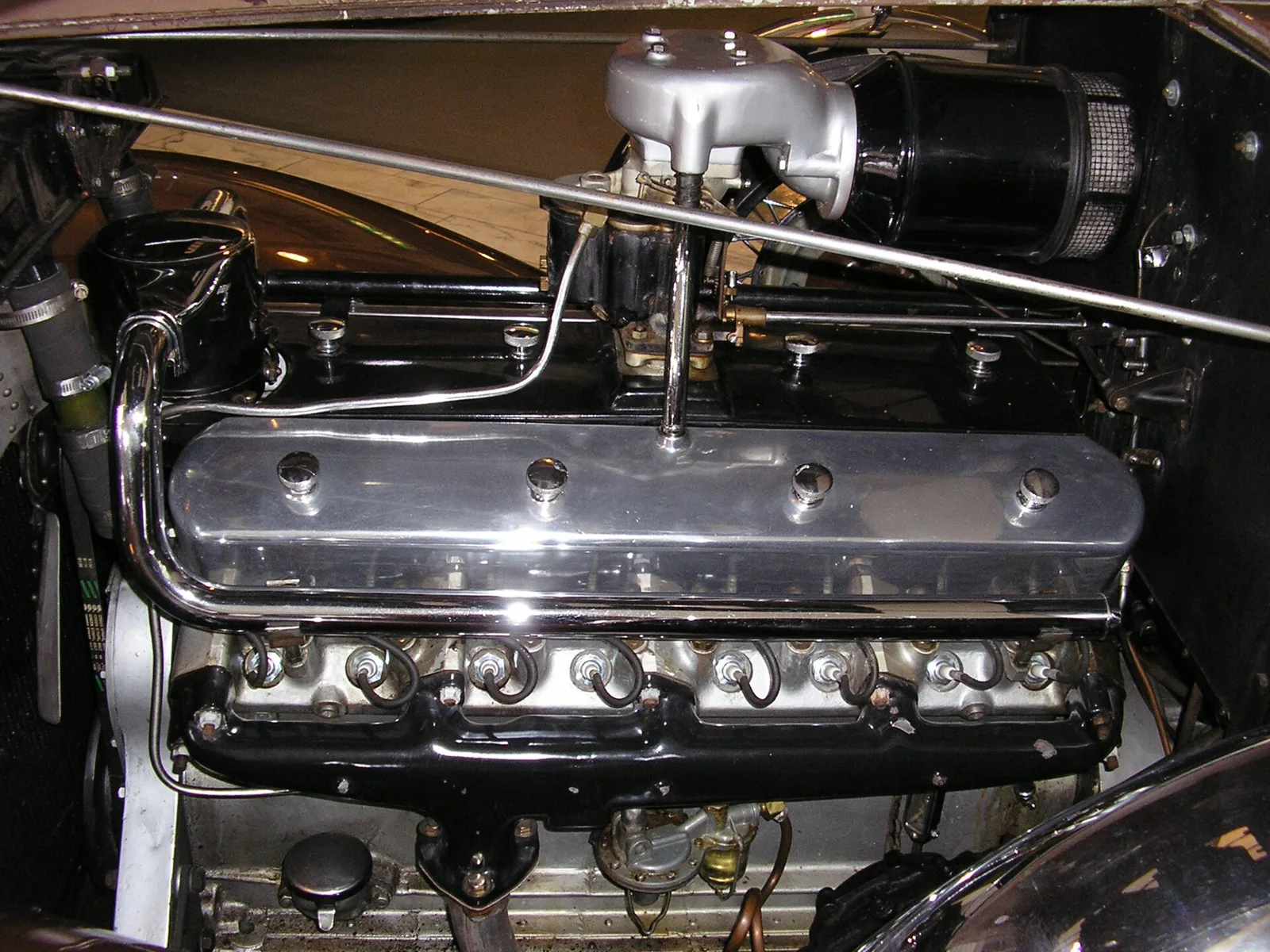
A V16 is a sixteen-cylinder piston engine with two banks of eight cylinders set in a V around one crankshaft. Each bank is, in effect, a straight-eight, a layout that balances itself well, and most V16s use a 45-degree angle between the banks.
The first V16 flew before it drove: it went into the experimental Antoinette VII aircraft in 1910, and cars followed in the 1930s. Today the layout lives mainly in locomotives, ships and stationary generators.
More cylinders promised more smoothness, but the market for them lasted only a few years.
Why did a few car makers build a V16?
In the late 1920s luxury makers started chasing engines with more cylinders than the straight-eight and V8 then at the top of the market, because more cylinders meant more power delivered more smoothly. Cadillac wanted an engine that would top all of them, and began work on a V-16 in 1926.
The work was done in great secrecy over several years. Prototype cars were built and tested while Cadillac chief Larry Fisher and General Motors stylist Harley Earl toured Europe, studying the continent's best coachbuilders. Unlike many luxury makers, GM had bought coachbuilders Fleetwood Metal Body and Fisher Body, so the whole car could be made in-house.
How did the Cadillac V-16 do at launch?
The V-16 Series 452 was shown at the New York automobile show on 4 January 1930. Cadillac later said the launch exceeded its fondest hopes, despite the timing and the price. January production averaged a couple of cars a day, then climbed to twenty-two. By April, 1,000 had been built and by June, 2,000.
Buyers could pick from a long list of bodies. Fleetwood's 1930 catalogue had 10 basic styles plus an envelope of some 30 extra designs, and a club's research puts the number of different job and style numbers at 70. In June 1930 five new V-16s set off on a promotional tour of European cities, winning prizes in Vienna.
The engine itself
The Series 452 engine was a narrow 45-degree overhead-valve V16 displacing 452 cubic inches (7.4 litres), producing 175 hp in its original form and 185 hp (138 kW) in later versions. It was the first V16 in a production car, and it was a first in the United States too: expensive, exclusive and finished to order.
Why did Cadillac lose money on every V-16?
Orders peaked in mid-1930 and then collapsed. In October 1930 only 54 cars were built, and the lows were seven in August 1931 and six in November 1931. Figures for the year show the slide: 2,500 in 1930, 750 in 1931 and 300 in 1932. Through the middle of the decade output sat at about 50 a year, and 1940 managed 51. In all, 4,076 were built over 11 years, most of them in the first year.
A 1930 Town Brougham carried a list price of US$9,200, which is $177,311 in 2025 dollars. The cars were enormous. A wheelbase of 154.0 inches (3,912 mm) and a kerb weight of up to 6,600 pounds (3,000 kg) made them arguably the largest standard production cars in the United States.
The body was redesigned as the 452C in 1933, the 452D in 1934 and the 452E in 1935, with the all-steel Fisher Turret Top arriving in 1934. Combined output for 1934 and 1935 was 150. Cadillac renamed it the Series 90 in 1936, selling just fifty-two, almost half of them limousines, and added hydraulic brakes for 1937, when 50 were built.
What was different about the 1938 Cadillac V-16?
For 1938 Cadillac replaced the engine with an L-head design of 431 cubic inches (7.1 litres). It used a wider 135-degree angle between the banks, partly to lower the cowl height, and had double the carburettors, fuel pumps, distributors and water pumps, with a nine-bearing crankshaft in place of the old five-bearing one.
The new engine made the same 185 hp as the later versions of the old one, but it was far simpler, nearly silent at idle and unusually smooth. An oil filter mounted outside the engine was a rarity then, whatever the price. The wheelbase shrank to 141.0 inches (3,581 mm). Sales were 315 in the first year and 138 in the second, and the last 1940 models were built by December 1939.
The Classic Car Club of America rates every V-16 as a Full Classic, a status reserved for the finest cars built between 1925 and 1948.
What was the Cadillac V12?
The Cadillac V12 was built from 1930 to 1937 and sat just below the V-16 in the range, with similar custom bodies in smaller numbers. A total of 10,903 were made in seven model years, mostly in the first. It was Cadillac's first and so far only standard production V-12.
Owen Nacker designed both. The V12 was essentially a truncated V-16, keeping the 4-inch stroke but opening the bore from 3 inches to 3.125 inches. The 45-degree bank angle was less ideal for a twelve than the 60 degrees normally used, and the engine made 135 hp against 175 for the sixteen. Fisher even leaked V12 details to the press, hoping to keep the V-16 secret.
How to tell them apart
The 1931 Model 370A arrived in October 1930, and a roadster served as the Indianapolis 500 pace car. Its wheelbase was 140 or 143 inches against the V-16's 148, the hood was shorter by four inches (102 mm), and it carried smaller headlights and horns. The only badge giving it away was a "12" on the headlight tie bar.
The V12 cost about $2,000 less per body style, starting at $3,795, and it promptly outsold its bigger sibling: 5,733 in the 1931 model year against 363 V-16s. That put Cadillac in select company among 1930s multicylinder cars, alongside Rolls-Royce, Packard, Maybach, Hispano-Suiza, Lagonda and Marmon, among others.
The Great Depression ate into sales. The 1932 Series 370B sold 1740, the 1933 370C sold 953, and the 1934 and 1935 models together managed only 1098. The 1934 370D had a new chassis, dual X-frame construction, "Knee-Action" front coil springs and Hotchkiss steering, and the 1935 370E added the Turret Top and raised power to 150 hp. Renamed Series 80 and 85 in 1936, the V12 sold 901 that year; the Series 85 alone sold 478 in 1937 and ended there.
Did anyone else build a V16 car engine?
Marmon began its own V16 in 1927, before Cadillac, but development ran longer and the Marmon Sixteen did not appear until 1931. It had a 45-degree angle, pressed steel cylinder liners and a mostly aluminium construction. Only 400 were made between 1931 and 1933.
Peerless built a single prototype in the early 1930s before car production stopped and the factory became a brewery after Prohibition. The Cizeta-Moroder V16T of 1991 put into production two transverse V8s in a single block, geared to one output, and perhaps 9 to 11 cars were made before the company closed.
BMW's Goldfish V16 of the late 1980s, 6.7 litres and based on its new V12, went into a long-wheelbase 7 Series and then a Bentley Mulsanne. Concept cars followed: the 2003 Cadillac Sixteen with a 13.6-litre V16 making 1,000 bhp (746 kW; 1,014 PS), the Rolls-Royce 100EX of 2004 with 9.0 litres, and the 2017 Devel Sixteen, a quad-turbo 12.3-litre.
The most recent is Bugatti's Tourbillon, unveiled in June 2024. Its naturally aspirated V16, 506 cubic inches in size and developed with Cosworth, weighs 252 kg (556 lb) and saves weight with titanium connecting rods and an inlet plenum made of carbon fibre. Working with three electric motors, it delivers a combined 1,800 PS (1,324 kW; 1,775 hp), and Bugatti claims 0-100 km/h in under 2.0 seconds.
What is the BRM V16?
The BRM V16 was a supercharged engine of 1.5 litres (90.8 cubic inches) for Formula One. Designed in 1947, it ran in races until 1954-55. One published figure is 600 bhp (450 kW) at 12,000 rpm, while another quotes an official 410 kW (550 hp) with the true figure nearer 450 kW (600 hp). Rolls-Royce tests suggested it could be taken to higher speeds still.
Conceptually it was two 750 cc V8s joined end to end, with the cam drives and gears at its centre. The design team was Peter Berthon, with Harry Mundy, Eric Richter and Frank May, and around 350 companies helped build it, including Rolls-Royce, which made the two-stage centrifugal supercharger and the flame traps that stop the compressed mixture from exploding in a backfire.
The car around the engine
The Type 15 car had a Rubery Owen chassis, a gearbox designed by Mundy from a 1939 Mercedes-Benz W165 unit, Girling three-leading-shoe drum brakes and Lockheed air struts, and bodywork by Walter Belgrove. Many parts were donated, which cut costs but meant they arrived late; some did not reach BRM until May 1949.
The completed car was first run at RAF Folkingham in December 1949 by Raymond Mays. Cracking cylinders, buckling rods and piston failures meant it could only be displayed at Silverstone in 1950. At the August 1950 Daily Express race, Raymond Sommer lurched forward and stopped at the start when a universal joint failed.
Was the BRM V16 successful?
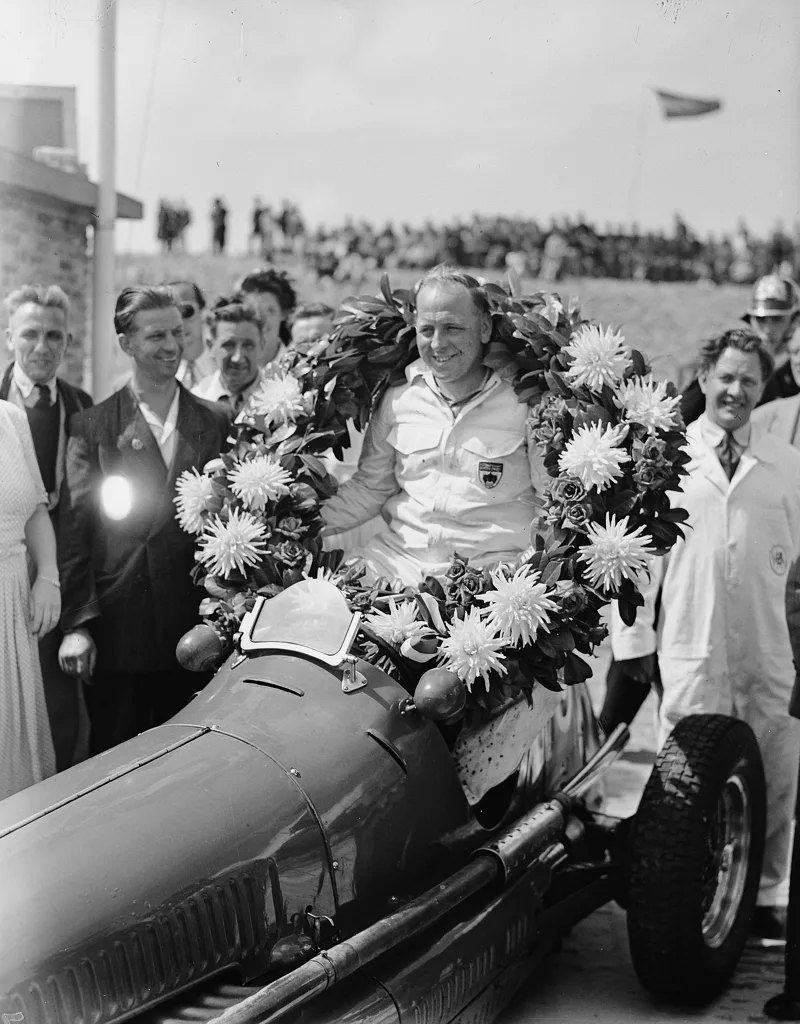
Not at first. A month later at Goodwood, Reg Parnell won two races, proving the car's speed. At the 1951 British Grand Prix Parnell finished fifth and Peter Walker seventh, despite cockpit heat so bad the drivers wrapped burn dressings around their legs and the engine had to be held back to cope with the heat. The car also pioneered disc brakes in Grand Prix racing.
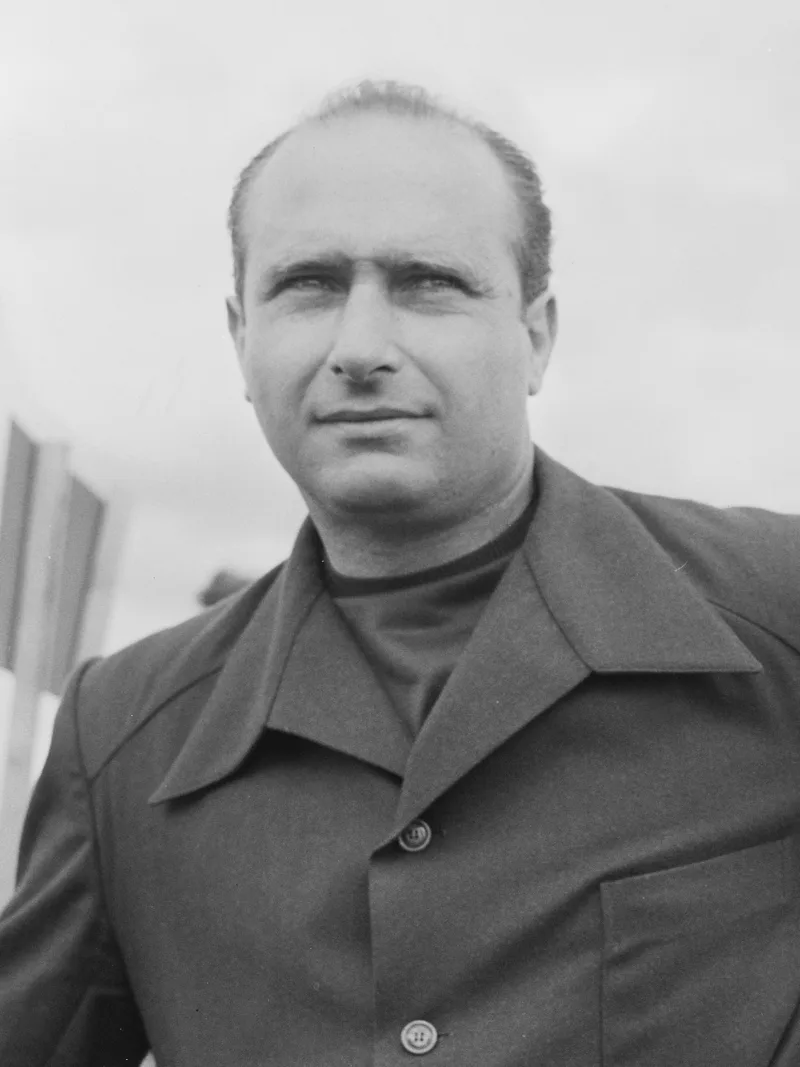
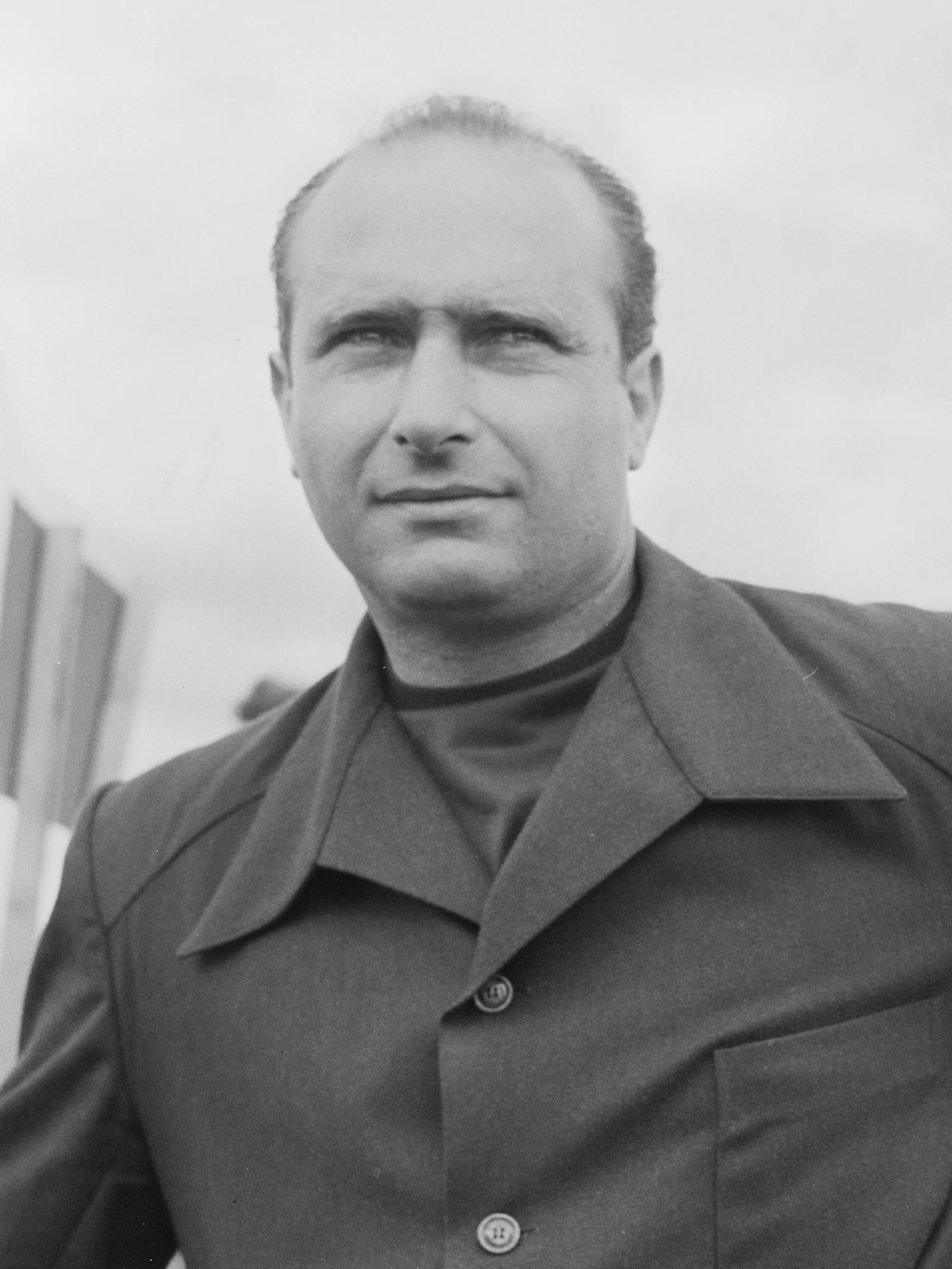
The 1952 season changed things. With Alfa Romeo stepping back, the organisers asked BRM to field cars. The team prepared two for a race in Turin, then spent time recruiting Juan Manuel Fangio, and missed it. Ferrari finished in the first six places, and the organisers ran the remaining races as Formula Two events. In effect, BRM's absence helped bring down the very formula its car was built for.
Fangio later called it the most formidable car he had ever driven. Power was above 500 hp and touching 600 hp, but with a very peaky curve. Mike Hawthorn complained that below 8,000 rpm the power vanished and then arrived all at once. At Albi in 1953 Fangio's engine ran at a claimed 72 psi of boost (4.9 ata) and 585 bhp (436 kW) at 11,800 rpm, and the car reached 186 mph (300 km/h). Rolls-Royce told BRM the engine could deliver far more with all the right parts, and more again on sprint fuel, but the record attempt was never made.
The Rubery Owen Group, led by Alfred Owen, bought BRM's assets. The V16 cars kept racing through 1954 and 1955, as BRM turned to a new 2.5-litre unsupercharged design for the next formula.
Which other racing cars used a V16?
The Maserati Tipo V4 debuted at Monza in 1929 and took a world speed record at Cremona, at 245.9 km/h (152.8 mph). A Miller V16 of 300 hp was originally intended for a Cord, and in the 1931 Indianapolis 500 a Cord driven by Shorty Cantlon went from 26th on the grid to 3rd before reliability, and the chore of changing all sixteen spark plugs, slowed it.
Auto Union's Type A, B and C Grand Prix cars from 1933 to 1938 used supercharged 4.4-litre V16s, replaced by a V12 in the Type D after a rule change. Alfa Romeo's Tipo 316 ran a 60-degree V16 in the 1938 Tripoli Grand Prix, and the 1939 Tipo 162 had an unusual 135-degree V16. The BRM remains the only known V16 in post-war racing.
How do the Cadillac V-16, V12 and BRM V16 compare?
| Engine | Years | Layout | Output |
|---|---|---|---|
| Cadillac V-16 Series 452 | 1930 to 1937 | 452 cu in, 45 degrees, overhead valve | 175 hp, later 185 hp |
| Cadillac V-16 L-head | 1938 to 1940 | 431 cu in, 135 degrees, flathead | 185 hp (138 kW) |
| Cadillac V-12 | 1930 to 1937 | 45 degrees, overhead valve, truncated V-16 | 135 hp, 150 hp in 1935 |
| BRM V16 | 1950 to 1955 | 1.5 litres, supercharged | 600 bhp (450 kW) at 12,000 rpm |
Where this goes next
Cadillac's V-12 and V-16 stories have a coda in concepts. A V-Future overhead-cam V-12 was slated for the late 1960s and survived only as a fibreglass Eldorado mockup, hidden until 1984. The 1989 Solitaire concept used a Lotus-designed 6.6-litre V-12, and the 2003 Sixteen concept, an aluminium pushrod V-16 built on GM small-block architecture, was planned for production with a V8 base and optional V12. It was never approved and was shelved around 2008.
Bugatti's Tourbillon, unveiled in 2024, is the current claim on the layout.