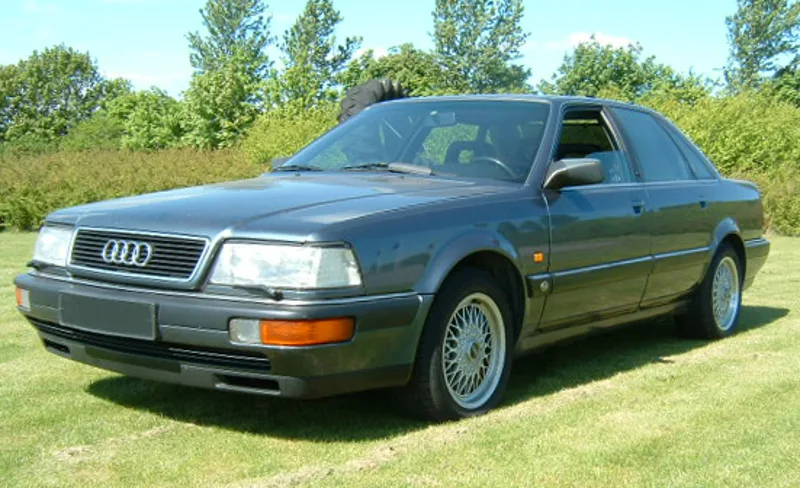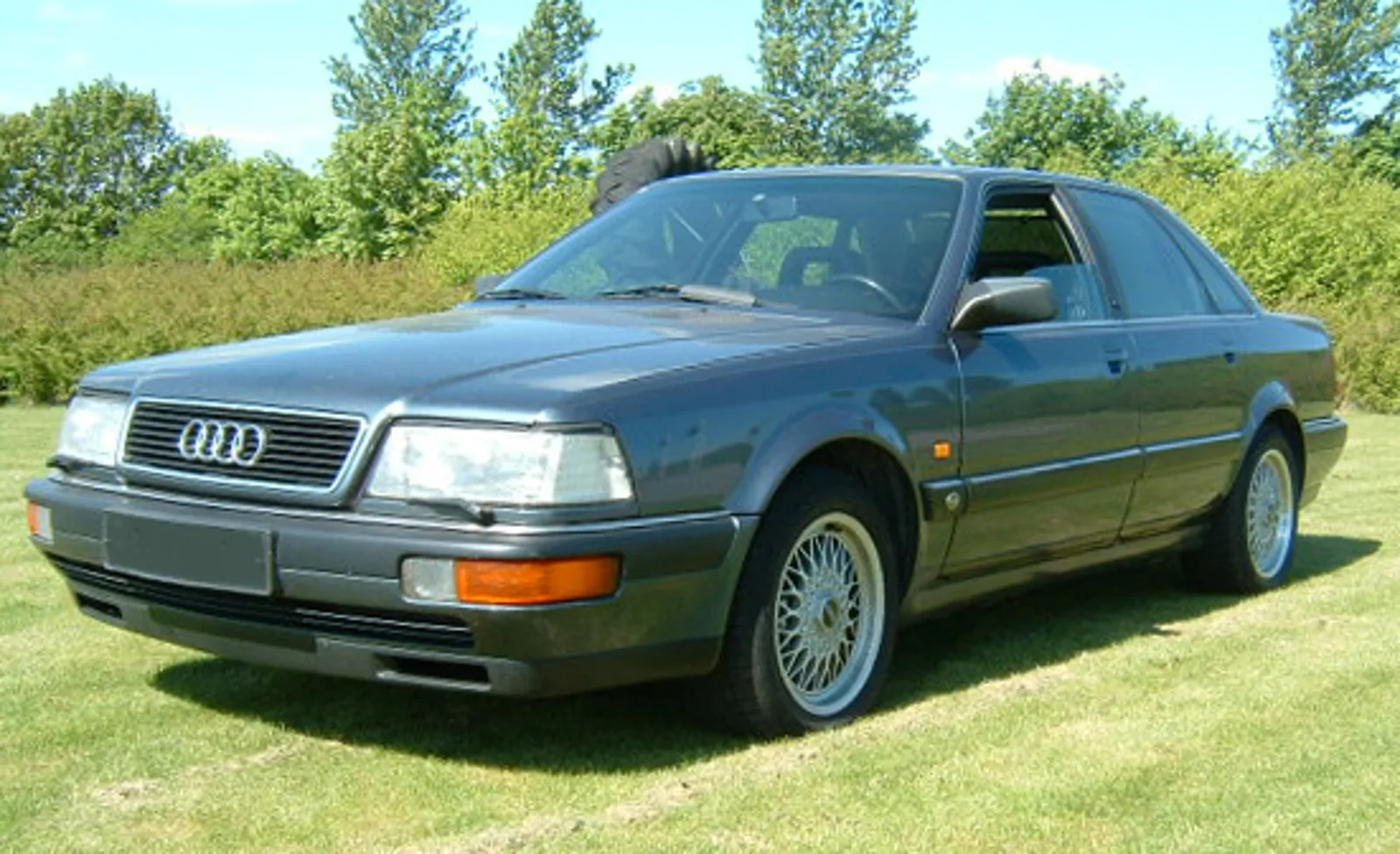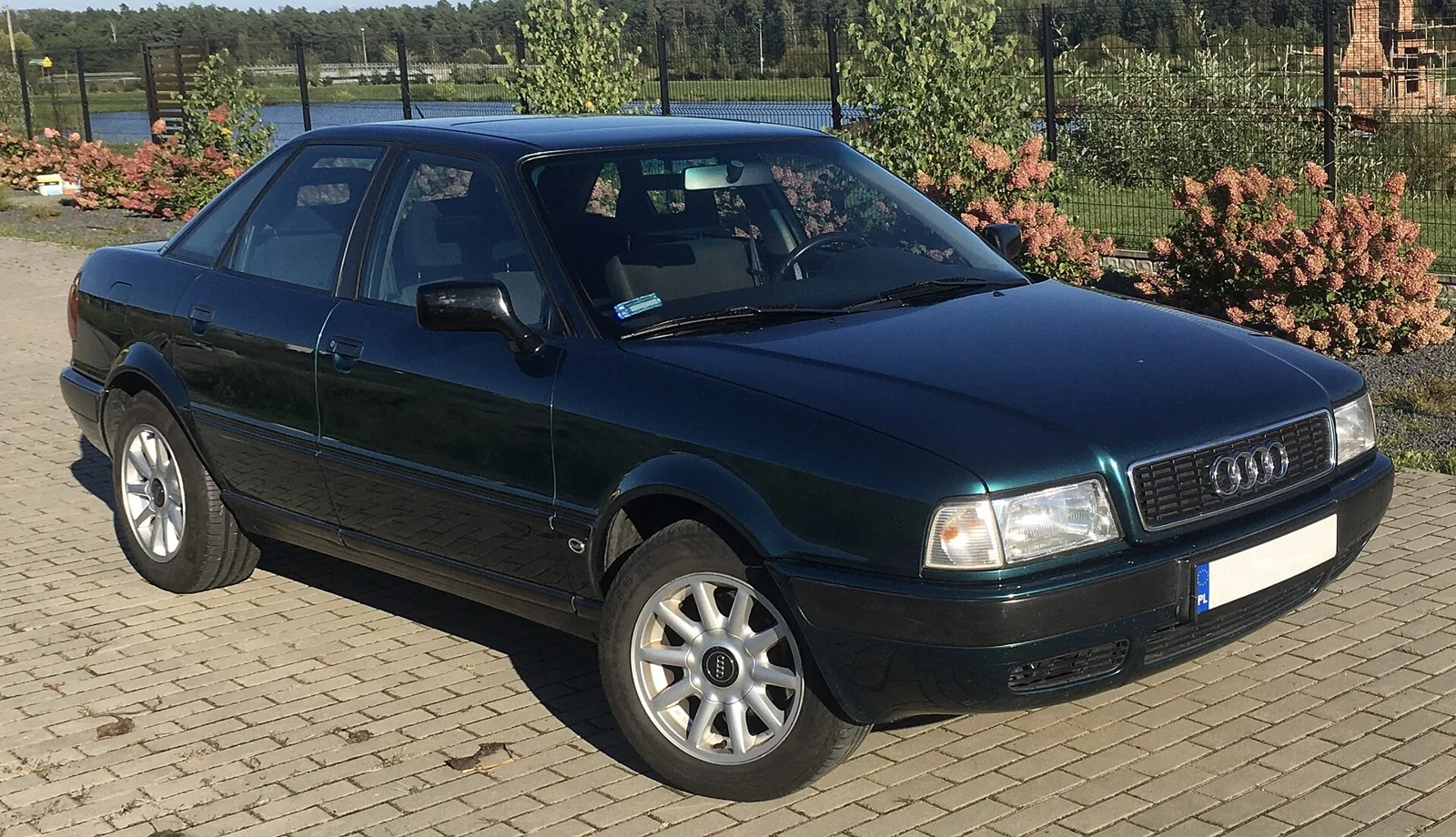
Four generations of the compact executive car, from its 1973 European Car of the Year win to the RS2 Avant super-estate, shaped Audi's line-up before the A4 took over.
The Audi 80 was a compact executive car built by Audi in four generations from 1966 to 1996. It shared a platform with the Volkswagen Passat from 1973 to 1986, and it was named 1973 European Car of the Year. Audi effectively replaced it with the A4 in 1994.
Audi's executive compact arrived in 1972 and reached its final form in 1996, after four generations that began in the F103 era. It shared its underpinnings with the Volkswagen Passat for more than a decade, won the 1973 European Car of the Year award and was effectively replaced by the Audi A4 in 1994. Its story runs through engine upgrades, quattro models and a motorsport record that outlived its production run.
Where did the Audi 80 come from?
The Audi 80 was developed under Volkswagen ownership and replaced several discontinued models, including the F103 series. Its first generation, the B1, debuted in Europe in 1972 and reached North America in 1973 as the Fox. It was a clean break from the Auto Union era.
The F103 range had used Auto Union-derived bodies and Mercedes-Benz engines, so the new car needed its own identity. The B1 was the second modern-era Audi product developed entirely under Volkswagen ownership, and it gave the company a fresh start in the compact class.
Rivals included the Opel Ascona, the Ford Taunus, the Alfa Romeo Alfetta and the Triumph Dolomite. The 80 took the 1973 European Car of the Year title ahead of the Renault 5 and the Alfetta, a result that confirmed Audi's European ambitions.
A compact executive car that shared a platform with the Passat, won European Car of the Year and ended as the A4.
What engines did the B1 Audi 80 use?
The B1 used new 1.3-litre and 1.5-litre SOHC inline-four engines, the first appearance of the EA827 family that VW Group cars still use. The 1.3-litre ZA made 55 PS (40 kW; 54 bhp), the ZF made 60 PS (44 kW; 59 bhp), and the 1.5-litre ZB and ZC made 75 PS and 85 PS.
The sporty 80 GT arrived in September 1973 with a 1.6-litre carburettor engine rated at 100 PS (74 kW; 99 bhp). The 1976 facelift brought square headlights in the style of the Audi 100 C2, and the 80 GTE used a fuel-injected 1.6-litre rated at 110 PS (81 kW; 108 bhp).
The Fox began with a 1.5-litre rated at 55 hp (41 kW; 56 PS) and a four-speed manual. Later cars moved to a 1.6-litre with 83 hp (62 kW; 84 PS), but tightening emissions rules reduced the figure to 78 hp (58 kW; 79 PS) by 1978.
How was the first-generation Audi 80 suspended?
The B1 used a MacPherson strut front suspension, which was typical of the period's compact cars and kept the engine bay simple. At the rear it used a C-section beam axle, located by trailing arms and a Panhard rod, with coil springs and telescopic dampers.
That layout gave the car a balanced ride for a family saloon, and it was a clear step forward from the older Auto Union-era designs that the F103 had used.
The 1976 facelift brought a revised front end modelled on the Audi 100 C2, with square headlights in place of round ones. Engine capacity moved from 1.5 to 1.6 litres, while the power outputs stayed at 75 and 85 PS.
What changed with the B2 Audi 80?
The B2, codenamed Typ 81, was presented in September 1978 and was styled by Giorgetto Giugiaro. It moved the 80 upmarket from the mid-sized family segment into a compact executive role aimed at the BMW 3 Series, and it effectively replaced the NSU Ro 80.
Deliveries of the fuel-injected GLE and the two-door followed in early 1979. The car reached North America in 1979 as a 1980 model, where Audi badged it the 4000. The US 4000 came with a 1588 cc inline-four rated at 76 hp (57 kW), which was criticised as buzzy and underpowered for its price.
In 1983 Audi offered the 80 with four-wheel drive, a saloon version of the Ur-Quattro without its turbocharger. It weighed more than a front-drive 100 CD sharing the same 2144 cc engine, rated at 136 PS (100 kW; 134 hp), and it was slower than the larger 100, with top speeds of 187 km/h (116 mph) and 199 km/h (124 mph) respectively.
How did the 1984 facelift and the Audi 90 change the range?
After a 1984 facelift, the Audi 90 was launched as a larger-engined version of the 80 in Europe. The range offered a 1.6-litre turbodiesel rated at 70 PS (51 kW; 69 bhp), two five-cylinder petrol engines and quattro models, with the 2.2-litre later enlarged into a 2.3-litre.
The 80 Sport arrived in the UK in 1983, based on the GTE, with quattro-style alloy wheels, a rubber rear spoiler and a striped charcoal Recaro interior. The Audi 90 was the upmarket model, and it differed from the 80 with its fuller equipment and more options.
The 4000 quattro debuted in 1984 in North America and came in four colours, with a five-speed manual, brown velour interior and automatic windows up front. Its mounting for the US safety bumpers intruded into the luggage floor, which made the boot less useful.
What was the Audi 5+5?
The Audi 5+5 name was used in Australia for a four-door Audi 80 fitted with the five-cylinder engine. It was marketed there from October 1981 through to 1983, and it was offered with a manual gearbox and an automatic option.
The five-cylinder unit was the 2144 cc engine that also powered the 100 CD, which gave the 5+5 a smoother and more capable character than the four-cylinder cars.
The name reflected the five cylinders and the car's distinct positioning, and it shows how Audi used the same bodywork to offer more performance in different markets.
What did the B3 Audi 80 introduce?
The B3 arrived in September 1986 and broke the platform link with the Passat. It was marketed worldwide only as the Audi 80 or Audi 90, and it introduced a new aerodynamic look and a fully galvanised bodyshell.
Its safety highlight was procon-ten, a system of hidden steel cables routed behind the gearbox. In a frontal impact the engine and gearbox moved rearward, pulling the steering wheel toward the dashboard and tightening the front belts. The system became standard from 1991 and was a precursor to the airbag, which Mercedes-Benz patented in 1982.
From 1989 to 1991 the 90 offered a 20-valve 2.3-litre engine producing 170 PS (125 kW; 168 bhp), the first 20-valve engine from Audi since the Sport Quattro. The non-quattro 20V models were 120 kg lighter than their four-wheel drive siblings.
Audi 80 engines at a glance
The table lists representative engines and performance figures across the four generations. Each row shows the generation and the model variant it belongs to, so the figures stay separate.
| Generation and engine | Output or performance |
|---|---|
| B1 1.3-litre ZA | 55 PS (40 kW; 54 bhp) |
| B1 1.5-litre ZC | 85 PS (63 kW; 84 bhp) |
| B1 80 GTE 1.6-litre (1976) | 110 PS (81 kW; 108 bhp), fuel-injected |
| B2 2.2-litre | 136 PS (100 kW; 134 hp) |
| B2 quattro (1983) | Top speed 187 km/h (116 mph) |
| B3 2.3-litre 20-valve | 170 PS (125 kW; 168 bhp) |
| B4 2.0 E 16v | 103 kW (140 PS; 138 bhp) |
| B4 2.8 E V6 | 128 kW (174 PS; 172 bhp) |
| B4 RS2 Avant | 232 kW (315 PS; 311 bhp), 0-100 km/h in 4.8 seconds |
What did the B4 Audi 80 change?
The B4, or Typ 8C, received a major facelift in the autumn of 1991, with a longer wheelbase, 15-inch wheels and a larger boot. Its front grille merged into the bonnet, and the new look gave the car a bolder presence on the road.
The B4 marked Audi's move into the German luxury mid-sized segment, a market that had been dominated by Mercedes-Benz and BMW. It was highly successful in Germany and across Europe, and it was offered with a wide range of inline-four, five-cylinder and V6 engines.
The United States requires its own safety rules, so the North American B4 needed a specially redesigned front. Its bumper absorbers and single-reflector headlamps were made for American rules, and the 2.8-litre V6 was the engine offered there.
What was the Quattro Competition?
The Quattro Competition was a street-legal homologation model for the German and European markets, with about 2,500 units built. It was based on the B4-based Super Tourenwagen Cup race car, a saloon with four-wheel drive.
It used a modified two-litre, 16-valve petrol engine with 140 PS (138 hp; 103 kW), a development of the inline fours that most European Audi 80s used at the time. On the outside it took the S2's bumpers, the V6 headlights and a rear wing on the bootlid.
The Quattro Competition shows how Audi used motorsport to sell its road cars. Its race roots gave it credibility with buyers who wanted a sporting saloon.
How did the Audi 80 perform in motorsport?
The Audi 90 was best known for its dominance in the IMSA GT Championship's GTO category and in the Trans Am Series in the late 1980s. Audi came close to entering the 1993 DTM but withdrew before the season, leaving just one DTM car built.
Frank Biela competed in the 1993 French Supertouring Championship, and the 80 was used in the 1994 German Super Tourenwagen Cup before the A4 took over the role.
The RS2 Avant was the super-sports estate of the range, built on the B4 S2 Avant with help from Porsche. It produced 232 kW (315 PS; 311 bhp) and ran 0-100 km/h in 4.8 seconds, with a top speed of 262 km/h (163 mph).
What was the Audi Coupe S2?
The Audi Coupe S2 was a sports version of the coupe, introduced to replace the famous Audi Quattro. It was capable of 150 mph, which made it one of the quickest Audi road cars of its time.
The S2 later received cosmetic updates, including new alloy wheels, projector headlamps and clear front indicator lenses. A limited run of 306 four-door S2 saloons was also built, alongside the five-door S2 Avant.
The S2 saloon and Avant shared rear axle support features with the later A4 quattro, which showed how the B4 platform fed into the next generation of Audi cars.
How did the Audi 80 end its run?
The B4 saloon was discontinued at the end of 1994, and the Avant was axed in 1995. The Coupe followed in 1996, while the Cabriolet, introduced in May 1991, continued in production until 2000. Each body style left the range on its own timetable, which kept the 80 name in Audi's catalogue for several years after the saloon had gone.
The A4 that followed took over the executive role in Audi's line-up, and it carried the brand's mid-sized ambitions forward.
Frequently asked questions
Was the Audi 80 a rebadged Passat?
Not quite. The two cars shared a platform from 1973 to 1986, but the B3 broke that link, and the Passat moved to a different layout.
What was the Audi Fox?
The Fox was the North American and Australian name for the B1 Audi 80 from 1973 to 1979.
Did the Audi 80 win any awards?
Yes. It was named 1973 European Car of the Year, beating the Renault 5 and the Alfa Romeo Alfetta.
Did the Audi 80 have four-wheel drive?
Yes. Four-wheel drive arrived in 1983, based on the Ur-Quattro without its turbocharger, and it was offered in the 80 quattro.