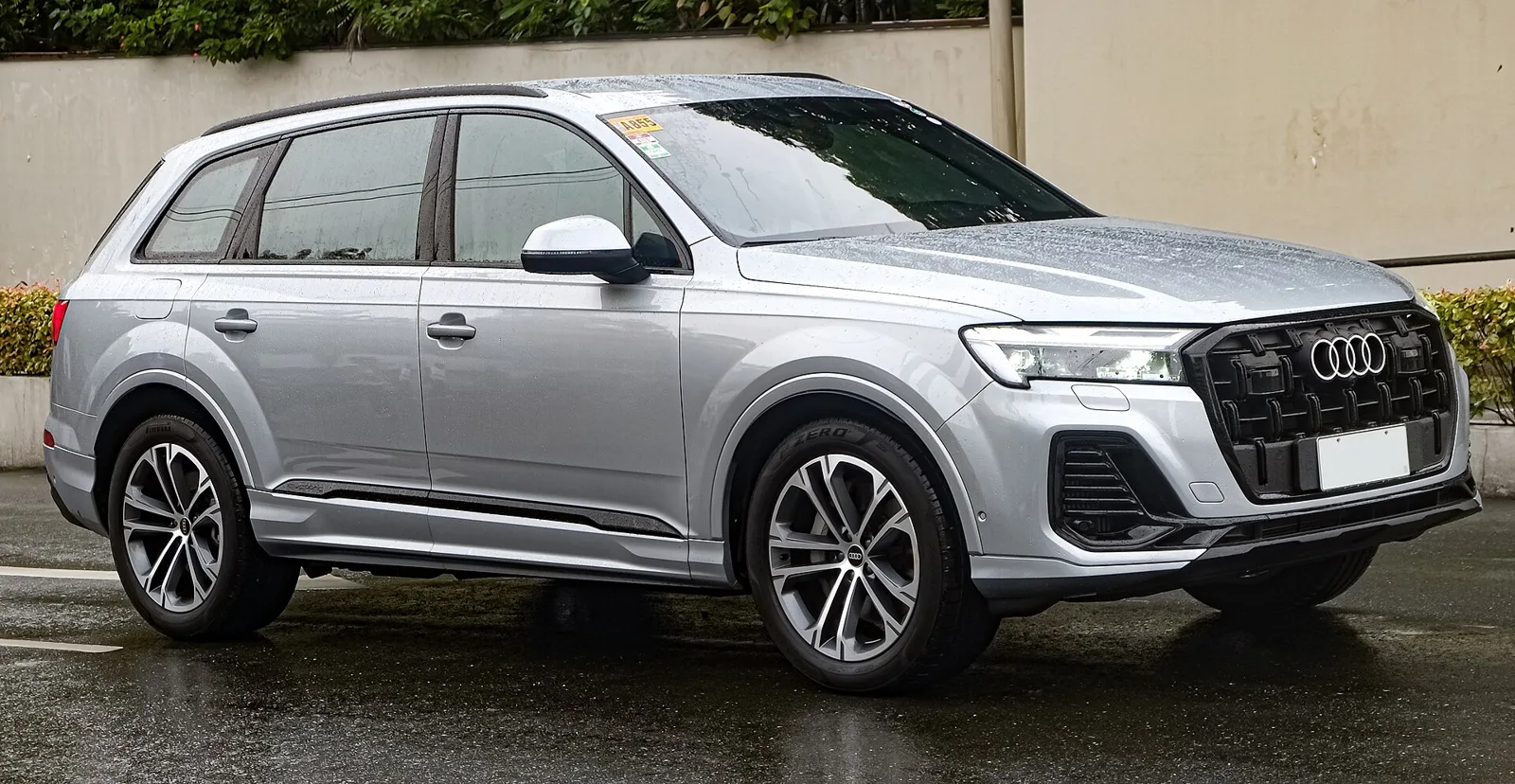
Audi's first SUV, a 2005 two- and three-row flagship that carried a twelve-cylinder diesel, a plug-in hybrid and a third generation revealed in 2026.
Introduced in 2005 as Audi's first SUV, the Q7 has spanned three generations. It has used a V12 TDI, a plug-in hybrid e-tron and mild-hybrid V6 engines, and the newest version was unveiled in mid-2026 after a gap of more than eleven years.
The Audi Q7 is a two- and three-row E-segment SUV that Audi has built since 2005, when it was unveiled at the Frankfurt Motor Show. It was the first SUV the company sold, and it has carried a twelve-cylinder diesel, a plug-in hybrid and now a third generation revealed in June 2026.
This profile covers the car's launch, the reception of the first generation, its engines and safety record, the hybrid and diesel variants, the second generation and its plug-in, and the third generation. Metric figures come first, with imperial values in brackets.
How did the Q7 start?
The Q7 was unveiled in September 2005 at the Frankfurt Motor Show and went into production that November at the Volkswagen Bratislava plant in Slovakia. It was the first SUV Audi sold, reaching showrooms in 2006, and the Q5 followed as a 2009 model.
The car was previewed by the Pikes Peak quattro concept. Development began in 2002 under the code AU 716, and the concept's design was frozen in July 2002 for its debut at the North American International Auto Show in January 2003.
The production design was frozen in late 2003, prototypes went into testing in 2004, and development concluded in the first half of 2005. The Q7 was built on a modified Volkswagen Group PL71 platform, and it was designed for on-road use rather than serious off-road work.
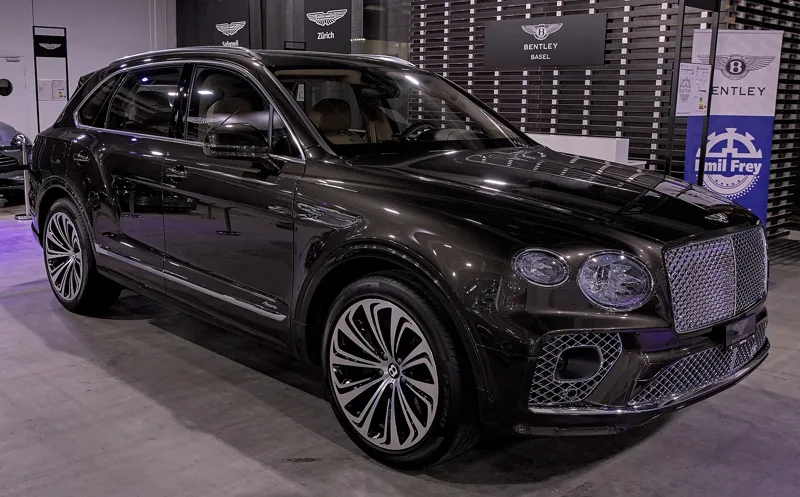
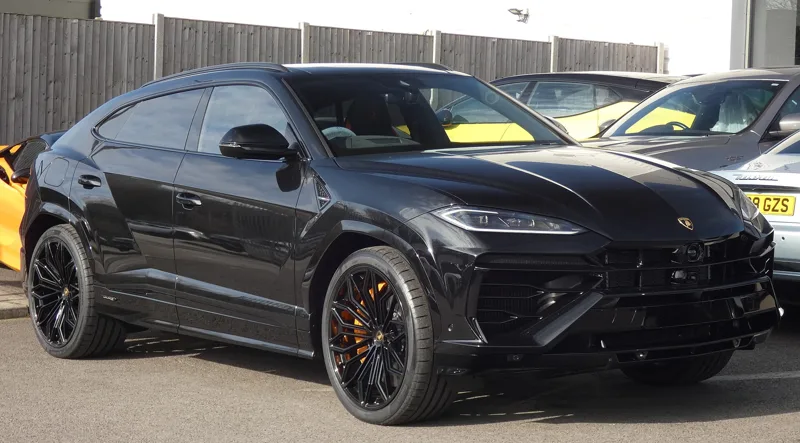
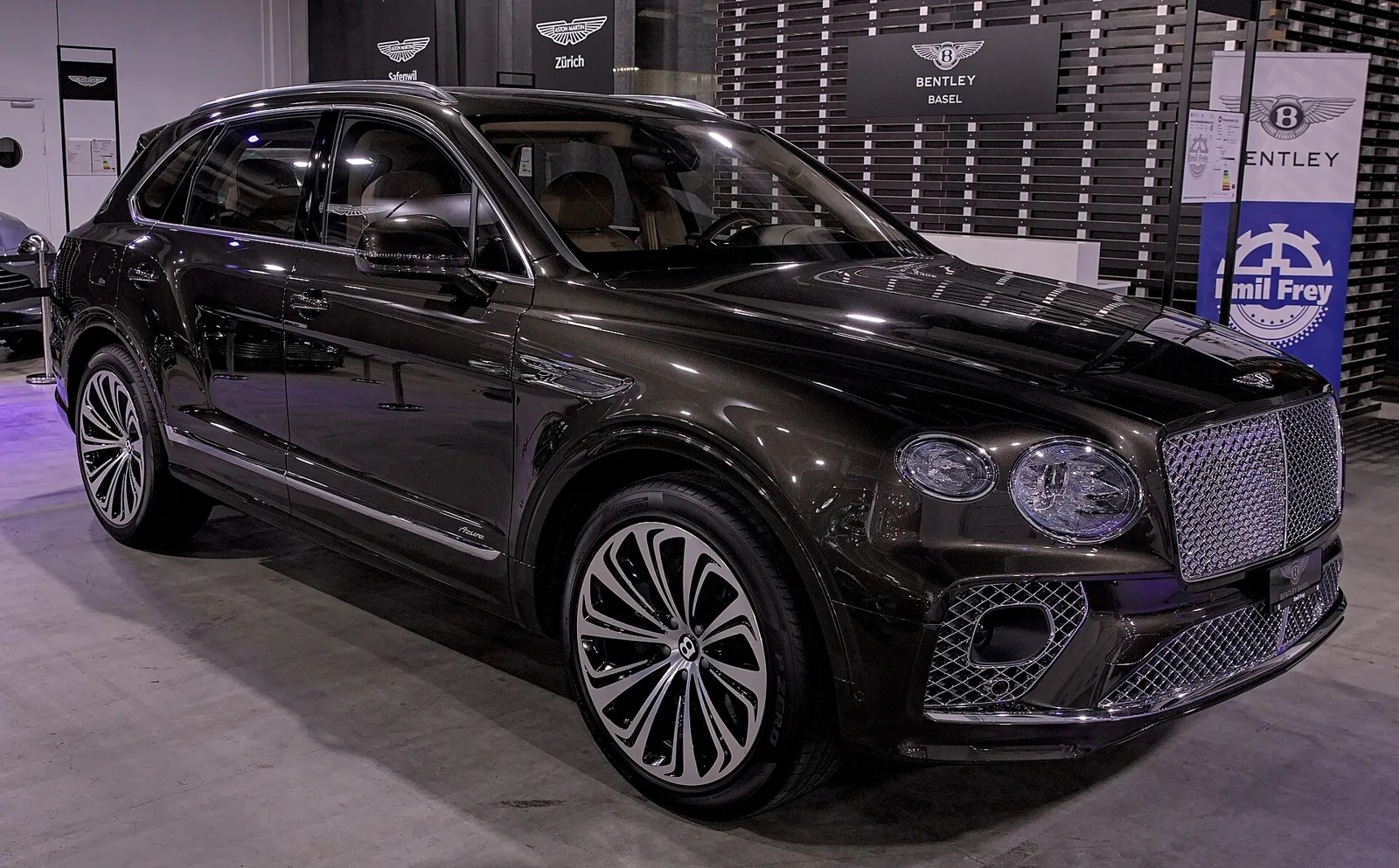
The Q7 rides on a base that is also used by the Bentley Bentayga, Lamborghini Urus, Porsche Cayenne and Volkswagen Touareg, making it part of a family of luxury SUVs. For years it was Audi's flagship, until the lower-roofed Q8 joined the range in 2018.
The SUV that Audi built first, then carried a twelve-cylinder diesel, a plug-in hybrid and a third generation.
How did critics react to the first-generation Q7?
Critics were divided. Giles Smith of the Guardian described the car as an SUV that dwarfed everybody else's, while Martin Love of the Observer admired the interior's luxury but called the car bloated and questioned how little its buyers cared about fuel use.
Gavin Conway of the Sunday Times called the car vast and intimidating, yet praised the cabin materials. He also noted that the third row was tighter than the seating in comparable cars from other manufacturers, which was a practical weakness.
In an off-road test through the Australian outback, the car fared well for a soft roader. It lacked a low-range transfer case, so its serious off-road credentials stayed limited.
What engines did the first Q7 offer?
The first generation was offered with a 3.6-litre VR6 FSI, a 4.2-litre V8 FSI and a 5.9-litre V12 TDI diesel. Their 0-100 km/h times were 8.5 seconds, 7.4 seconds and 5.5 seconds respectively.
Output stood at 500 PS (368 kW; 493 hp), while torque reached 1,000 N m (738 lb ft). It was the only twelve-cylinder diesel fitted to a passenger car. Audi said it was the best-handling Q7 thanks to a revised suspension, tyres and brakes.
The V12 drew its diesel technology from the Audi R10 TDI race car, though the two engines were largely unrelated in their block dimensions and components. The Quattro system used a Torsen centre differential with a 42/58 front-to-rear torque split.
Adaptive air suspension with Continuous Damping Control was also available, and it helped in off-road situations where the car was pushed beyond its normal role.
How safe was the Q7?
The first Q7 earned four stars out of five from Euro NCAP for adult occupants, a result Audi blamed on a design error that it said had since been fixed. In the United States the NHTSA gave five stars for front and side impacts, and the IIHS awarded the car its Top Safety Pick 2009.
The Guardian noted that the car's size and wadded insulation gave its driver a strong sense of security, while pointing out that SUVs are more likely to be involved in crashes, especially rollovers. The 2015 Q7 carried a rollover risk of 18.5%.
The first generation was also part of the Volkswagen emissions scandal, with the company ordered to buy back some affected cars built between 2009 and 2012. The car's software had allowed it to cheat emissions tests, which hid far more nitrogen oxide than the official figures showed.
What did the Q7 hybrid and diesel variants offer?
Audi showed a Q7 hybrid concept at the 2005 Frankfurt show, with an electric motor adding 200 N m (148 lb ft) of torque. Its 0-100 km/h time was 6.8 seconds, and it weighed 2,410 kg (5,313 lb), which was 140 kg (309 lb) heavier than the petrol version.
The hybrid never reached the US market, because the low dollar led Audi to drop the plan there. The concept appeared in the same year as the production car, which showed that Audi was testing efficiency ideas from the start. Limited numbers were offered to the commercial market, and Audi later said the hybrid work would focus on a lithium-ion system for the Q5.
The 3.0 TDI clean diesel used selective catalytic reduction to cut emissions. The 3.0-litre TDI S line accelerated from 0-97 km/h (0-60 mph) in 8.4 seconds, with a top speed of 216 km/h (134 mph). US Premium models sold from 2009 to 2015 with a base price of $50,900 before charges.
How did the 2011 facelift change the engines?
For 2011 Audi replaced the 3.6 and 4.2-litre naturally aspirated petrol engines with 3.0-litre supercharged V6s. The base unit produced 272 hp (203 kW), and the S-line version reached 333 hp (248 kW), with 325 lb ft (441 N m) of torque.
The facelift also brought optional LED headlights, an eight-speed transmission, stop-start technology and a CO2 rating reduced to 195 g/km. Certain models achieved upwards of 37 mpg-imp. The S-line Prestige used the more powerful supercharged unit, which also appeared in the Audi S4 and S5 Cabrio.
Audi Connect was added to the MMI system in 2012, adding online points-of-interest search, local fuel prices and in-car Wi-Fi for up to 8 devices. That same year marked the last model year for the V12, which had been offered for several seasons.
What did the second-generation Q7 bring?
The second generation was unveiled in January 2015 at the Detroit show. Diesel and petrol versions reached retail in 2015, followed by a diesel plug-in hybrid sold in Europe but not in Canada. Every version used the ZF 8HP eight-speed automatic.
Quattro permanent all-wheel drive with a self-locking centre differential gave a default 40:60 front-to-rear split. Depending on traction, up to 70% of power could go to the front axle, or up to 85% to the rear, without ESP intervention.
In 2016 the BBC noted that the Q7 was one of several models too large to fit in a standard parking space.
How does the Q7 e-tron plug-in hybrid perform?
The Q7 e-tron TDI Quattro combined a 3.0-litre TDI V6 with an electric motor-generator in the eight-speed gearbox, for 190 kW (255 hp) and 600 N m (443 lb ft). Its 17.3 kWh battery gave an all-electric range of 54 to 56 km (34 to 35 mi).
Official figures claimed CO2 emissions of 50 to 48 g/km and fuel use of 1.8 to 1.9 L/100 km, but the Irish Independent found those claims unrealistic. The paper's own driving returned 7.1 to 5.6 L/100 km (33 to 42 mpg-US), which it considered strong for a large SUV.
The Q7 e-tron reached 100 km/h in 6.2 seconds in hybrid mode, and its hybrid top speed was 230 km/h (143 mph). In electric mode the top speed fell to 135 km/h (84 mph).
For Asian markets Audi announced the Q7 e-tron TFSI at the 2015 Shanghai Auto Show, with a 2.0 TFSI and electric motor producing 270 kW (362 hp). It reached 100 km/h in 5.9 seconds and topped out at 220 km/h (137 mph).
Environmental Action Germany nominated the plug-in model for its Goldener Geier 2020 award, citing the car's size and environmental record. Audi's marketing of the model drew accusations of greenwashing.
What changed with the 2020 facelift?
The 2020 facelift brought a redesigned grille, new bumpers and a dual-touchscreen infotainment system, plus a range of mild-hybrid 3.0-litre V6 engines. Matrix LED headlights became an option, and laser high beams were said to double the range of the full beam.
Audi also widened the options list with an active roll-stabilisation system, which uses a 48-volt electric motor to adjust the anti-roll bars to the driving style and the road.
The table compares the main 2020-facelift engines with the SQ7 and the third-generation launch figures. Where no sprint time has been published for a version, the cell is marked as not given, so the table does not overstate the figures.
| Version | Engine | Power | Torque | 0-100 km/h |
|---|---|---|---|---|
| 45 TDI | 3.0-litre mild-hybrid V6 diesel | 228 bhp (170 kW; 231 PS) | 500 N m (369 lb ft) | 7.1 seconds |
| 50 TDI | 3.0-litre mild-hybrid V6 diesel | 282 bhp (210 kW; 286 PS) | 600 N m (443 lb ft) | 6.3 seconds |
| 55 TFSI | 3.0-litre mild-hybrid V6 petrol | 335 bhp (250 kW; 340 PS) | 500 N m (369 lb ft) | 5.6 seconds |
| SQ7 TFSI | 4.0-litre twin-turbo V8 petrol | 500 bhp (370 kW; 510 PS) | 770 N m (568 lb ft) | 4.3 seconds |
| Third generation V6 | 2.9-litre twin-turbo V6 | 429 hp (320 kW; 435 PS) | 599 N m (442 lb ft) | Not given |
What is the third-generation Q7?
The third generation was revealed on 9 June 2026, more than 11 years after its predecessor. It is built on the Premium Platform Combustion, and it will be offered with a 2.9-litre twin-turbo V6 producing 429 hp (320 kW; 435 PS).
The SQ7 pairs a 4.0-litre twin-turbo V8 with 591 hp (441 kW; 599 PS), and its torque figure is 800 N m (590 lb ft). Australia will get a 3.0-litre turbo-diesel V6 instead.
Frequently asked questions
Was the Q7 ever available with a manual gearbox?
Yes, but only in Europe, and only on the first generation fitted with the 3.6-litre engine. Automatic transmissions became the norm for the rest of the range.
Did the Q7 use a Toyota-linked gearbox?
Yes. The 8-speed automatic from Aisin, developed with Toyota, became standard from 2010 in Europe and from the 2011 model year in the United States.
Is the Q7 larger than the Q5?
Yes. The Q7 sits above the Q5 in the range, but the Q6 has been bigger than the Q7 since 2022, and the Q9 now takes the top spot as the largest Audi flagship SUV.
Did the V12 Q7 reach the US?
No. The V12 diesel was never offered in the United States, and Audi dropped plans to bring it there, partly because of the 2008 financial crisis.
What was the Q7 coastline?
The coastline was a concept version of the V12 Q7, shown at the 2008 Geneva Motor Show. It had a white interior with wood trim, and its design theme drew on luxury yachts.
.jpg)