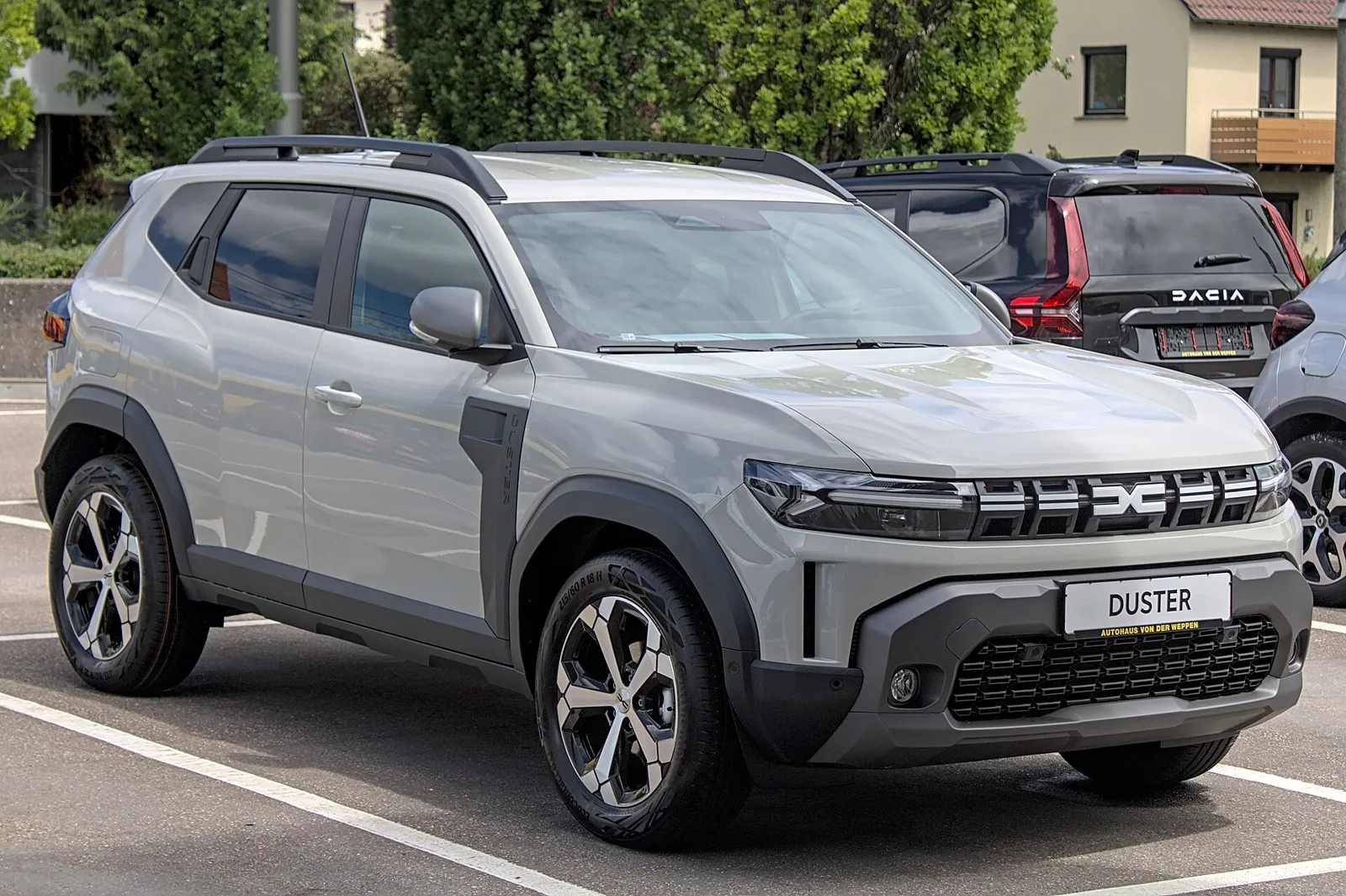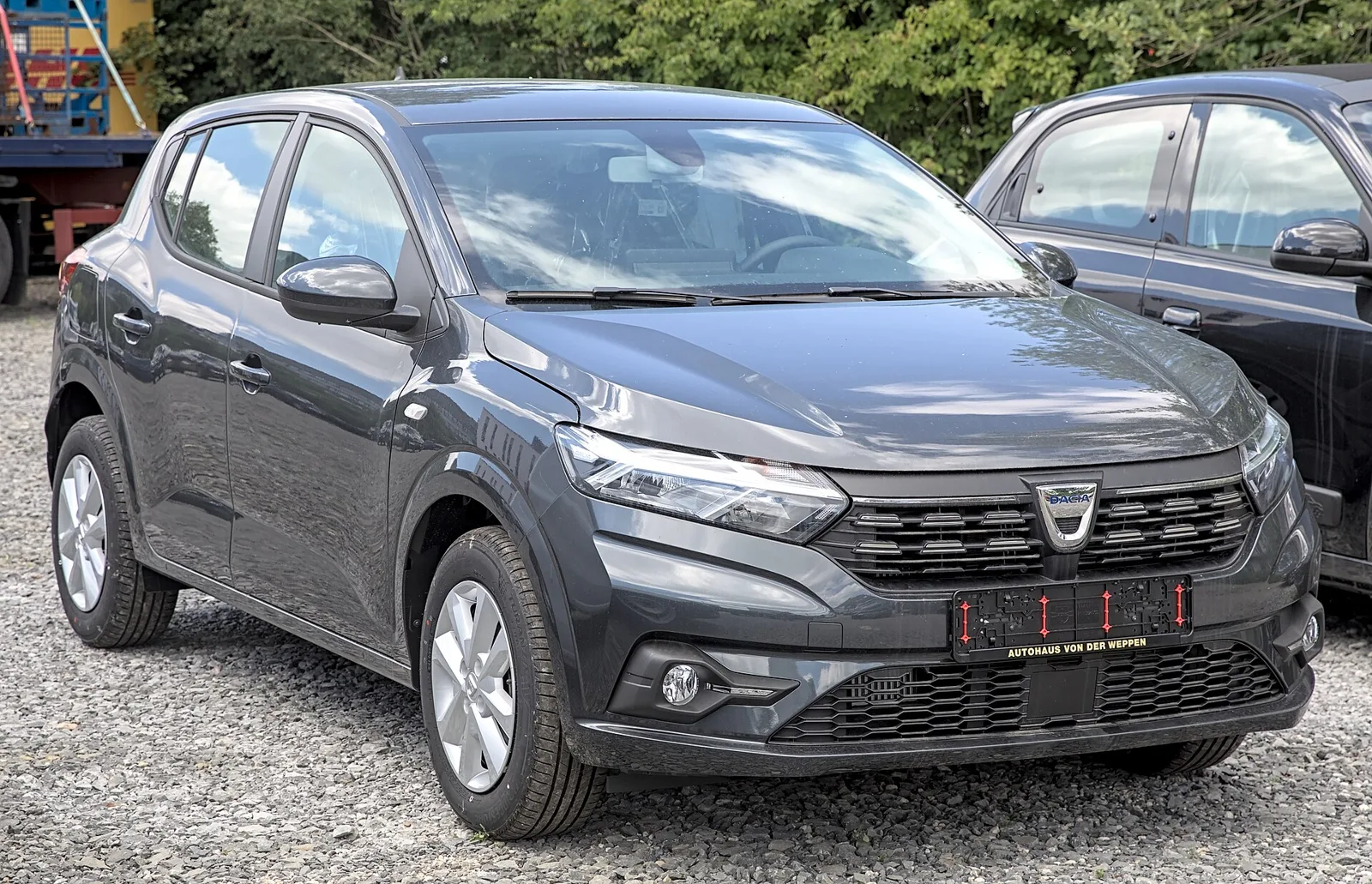
Sold as the Renault Sandero in several markets, the Sandero has grown through three generations, a sporty RS and a long-running Top Gear joke.
The Dacia Sandero is a subcompact B-segment car built by Renault and Dacia since 2007, and it has been sold as the Renault Sandero in several markets. It has been Europe's best-selling car in several years and is now in its third generation.
The Sandero has spent years near the top of European sales charts, a remarkable run for a budget hatchback. It was built on the Logan saloon's underpinnings, with a slightly shorter wheelbase, and it has been sold under both the Dacia and Renault badges.
How did the Sandero begin?
The Sandero was developed at Renault's Technocentre near Paris, working with regional engineering centres in Brazil and Romania. It was revealed at the 2007 Frankfurt show, and Renault then launched it in Brazil in December 2007, ahead of any European sale.
The Brazil debut was significant because it was Renault's first model to launch outside Europe. The Dacia version followed at the Geneva Motor Show in March 2008, which is when the car reached European buyers under the budget brand.
Production began in South Africa in February 2009 and in Russia in December 2009. A Renault version was also built in Colombia, for the home market and for export to countries including Chile.
The facelift for the Brazilian market came in May 2011, with a new face and a revised interior. Colombia received its own revised versions in early 2012, with differences in door locks and passenger airbag arrangements.
A budget supermini that outsold its rivals, collected a loyal following and still gets the last laugh on Top Gear.
What changed in the second generation?
The second-generation Sandero was revealed at the 2012 Paris Motor Show, with an exterior theme similar to the new Logan and a dashboard inspired by the Lodgy. Official photos were released on 17 September 2012.
Romania took orders from 1 October 2012, and the UK received the car from 2013, where it joined the Duster in dealerships and was positioned as a very affordable offering in a crowded market.
Renault launched the Sandero in Brazil in June 2014, and Russian sales began in September 2014 with local assembly at the AvtoVAZ plant. The export markets grew steadily as the model's reputation for value spread.
Colombian-built cars differed from their European counterparts in details such as the position of the door locks and the passenger airbag. Those local adaptations showed how far the range was shaped by the markets it served.
Production for right-hand drive markets moved to Mioveni in Romania, near Pitesti, while Algeria began building the Stepway locally in 2016.
What did the 2016 and 2019 facelifts bring?
The 2016 facelift added LED daytime running lights and restyled taillights. Dacia also updated its engine range with a 1.0-litre three-cylinder petrol unit for the entry-level trims, replacing the older 1.2-litre engine.
The 2019 facelift applied only to the Renault-badged car built in Brazil. It brought a slightly revised front end and a more significantly redesigned rear, with the tail lights extending to the tailgate in the style of the Talisman.
That Brazilian update was not sold in Mexico, where the car had been replaced by the Kwid hatchback. Only the Stepway and RS versions remained on sale there, which kept the range focused on sportier models.
How did the Stepway and RS versions develop?
The Stepway is a crossover-look version with raised ride height, grey plastic side skirts and overfenders. Renault do Brasil released the first Stepway in October 2008, and the European version appeared at the Barcelona International Motor Show in May 2009.
The Brazilian Stepway had a 1.6-litre 112 hp (82 kW) Hi-Flex engine that could run on bio-ethanol, and it was sold in Brazil, Colombia, Argentina and Mexico. Its raised ride gave it a practical edge on rougher roads.
From 2020 the Stepway became a separate model from the Sandero in Latin America, which marked a step towards its own identity in the region.
The European Stepway used a 1.6-litre 90 hp (66 kW) petrol engine or a 1.5 dCi 70 hp (51 kW) diesel. Its front-wheel drive layout was the only one offered on sale, and a 4WD prototype built in 2010 by the University of Pitesti never reached production.
The European Stepway reached most markets from September 2009 and was sold under the Dacia brand.
The RS version used a 2.0-litre 16v F4R engine with 150 hp (110 kW). Renault Sport chief Patrice Ratti confirmed the project in 2014, and the RS became the first Renault Sport vehicle built outside France.
The RS accelerated from 0 to 100 km/h in 8.0 seconds, a strong figure for a small family hatchback. It had three ECU modes, four disc brakes with ABS, and a six-speed manual, before it was discontinued at the end of 2021 because of tighter Brazilian emissions standards.
What was the third generation like?
The third generation, launched on 29 September 2020 with the Logan III, uses the low-spec version of the CMF-B platform and is exclusively available with three-cylinder engines. The entry model is a naturally aspirated 1.0-litre with 65 hp (48 kW) and a five-speed manual.
The top trims received a turbocharged 1.0-litre with 90 hp (66 kW), with a choice of six-speed manual or CVT. The more powerful ECO-G 100 Bi-Fuel gave 100 hp (74 kW) and came with the six-speed manual only.
Equipment on the upper trims included an 8-inch touchscreen with Android Auto and Apple CarPlay, heated front seats and automatic air conditioning. Lower trims used a modular Media Control system with removable smartphone support.
Safety features included emergency brake assist, blind-spot warning and park assist with front and rear sensors, along with a rearview camera and hill start assist as standard or optional equipment by market.
Electric power steering, LED headlights and keyless entry were part of the package, with heated seats and automatic air conditioning appearing higher up the range. Specification varied by market, so buyers needed to check exactly what their car included.
What were the 2022 and 2025 refreshes?
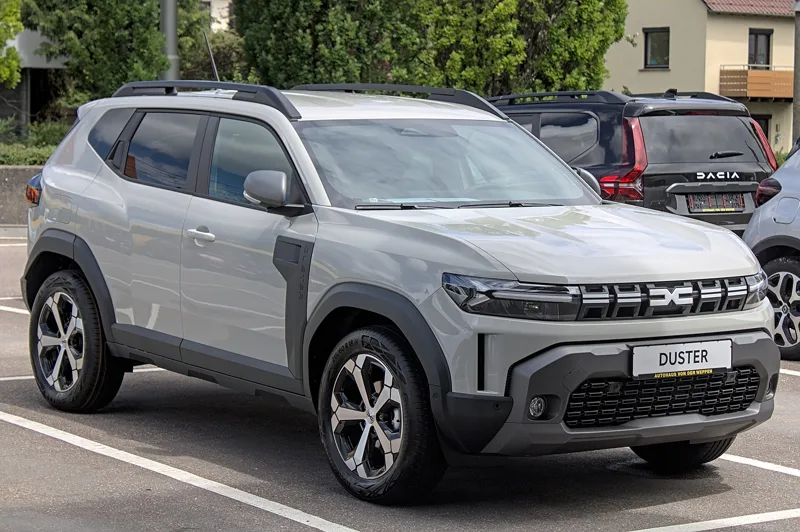
The 2022 restyle added the brand's new logo, with a redesigned grille and a slightly modified steering wheel. The 6 October 2025 facelift brought a new front fascia, new headlights, fog lights, alloy wheels and new infotainment.
The 2025 update also introduced a 1.2-litre direct-injection turbo engine, available in a bi-fuel petrol and LPG configuration and marketed as ECO-G 120. It can be paired with a six-speed manual or a six-speed wet-clutch EDC.
The same engine appears in the Renault Clio VI of the same year, which shows how closely the two brands now share components. Buyers get the benefit of that shared development at a budget price.
Why did the Sandero become a running joke on Top Gear?
Top Gear's presenters turned the car into a running gag after Dacia sent the show a press kit. James May would announce Good News about the Sandero, and Jeremy Clarkson would reply Great! before changing the subject.
The joke ran through Series 11 and Series 12, and it later featured in The Big Book of Top Gear, which carried a page declaring that the Sandero was in the book. In Series 12 the presenters swapped roles, with Clarkson bringing the car up and May shrugging it off.
In Series 14, Clarkson bought May a used Sandero during a visit to Romania. A lorry reversed into it after May had parked the car behind it, and the gag continued in Series 15 with the Duster instead.
Series 21 used the second-generation Sandero in a three-cylinder challenge against the Ford Fiesta and Volkswagen Up!, and the Sandero was the only car to complete all the challenges and make it back out.
May has said he has a genuine affinity for the Sandero, and in 2021 he filmed a favourable review of it for a video channel after leaving the programme.
The gag's longevity is part of the car's folklore. It kept the Sandero in the public conversation for years after its launch, long before many of its rivals had earned a similar place in British motoring culture.
How did the press rate the Sandero?
What Car? gave the second-generation Sandero its supermini award in January 2013, and Auto Express rated the Stepway 4 out of 5. The reviews focused on interior space and the value of the price tag, which made the car easy to recommend.
What Car? said the second generation offered something genuinely new, with real space at bargain prices. The magazine kept the Sandero on its list in 2014 and 2015, a sign of consistent praise over several years.
Motoring writers generally treated the Sandero as a sensible rather than exciting car, and that honest positioning helped it win over buyers who cared most about running costs and value.
How safe is the Sandero?
Depending on equipment, the Sandero offers up to four airbags. The basic first-generation car scored three stars for adults in Euro NCAP testing in 2008, while the version with the safety pack reached four stars for adults and children.
The second generation achieved a four-star Euro NCAP overall rating in May 2013, improving on the basic first-generation score. It gained five stars for adult and child occupant protection, with four stars for pedestrians and safety assist.
Latin NCAP results were weaker for the most basic Latin American specifications. A 2012 test gave one star for adults, and a 2024 Latin NCAP 3.0 test returned zero stars for the basic version.
Global NCAP's 2017 test of the African version awarded three stars for adults and four stars for toddlers, which was a more encouraging result for the markets it was built for.
What are the Dacia Sandero specifications?
The table covers the main engines, performance figures and equipment across the generations. Metric values come first, with imperial figures in brackets, and each row names the generation or version where a figure applies to one model only.
| Specification | Detail |
|---|---|
| Segment | B-segment supermini |
| Platform (third generation) | CMF-B, low-spec version |
| First-generation petrol | 1.6-litre, 90 hp (66 kW) |
| Diesel option | 1.5 dCi, 70 hp (51 kW) |
| Brazil Stepway | 1.6-litre, 112 hp (82 kW) Hi-Flex |
| RS | 2.0-litre 16v F4R, 150 hp (110 kW) |
| RS 0-100 km/h | 8.0 seconds |
| Third-generation base | 1.0-litre three-cylinder, 65 hp (48 kW), five-speed manual |
| Third-generation top | 1.0-litre turbo, 90 hp (66 kW) |
| ECO-G 100 Bi-Fuel | 100 hp (74 kW), six-speed manual |
| 2025 engine | 1.2-litre turbo, ECO-G 120 bi-fuel |
| Touchscreen | 8-inch with Android Auto and Apple CarPlay |
| Euro NCAP, second generation | Four stars overall, May 2013 |
Frequently asked questions
Was the Sandero ever offered with four-wheel drive?
No production Sandero offered four-wheel drive. Front-wheel drive was the standard arrangement across the range, and the 4WD experiment remained a prototype.
Is the Sandero built in Russia?
Local assembly for Russia started at AvtoVAZ in September 2014. A planned 2022 Russian launch was never completed because of the invasion of Ukraine, although camouflaged prototypes were later photographed at the former Renault factory in Moscow.
What did What Car? make of the Sandero?
What Car? awarded the second-generation Sandero its Best supermini under GBP 12,000 in January 2013. The magazine repeated the award in 2014 and 2015 for offering genuinely different space at a bargain price.
How is the Sandero related to the Logan?
The Sandero shares its origins with the Dacia Logan saloon, and the third generation launched alongside the Logan III in September 2020. The two cars sit on related platforms and share much of their engineering.