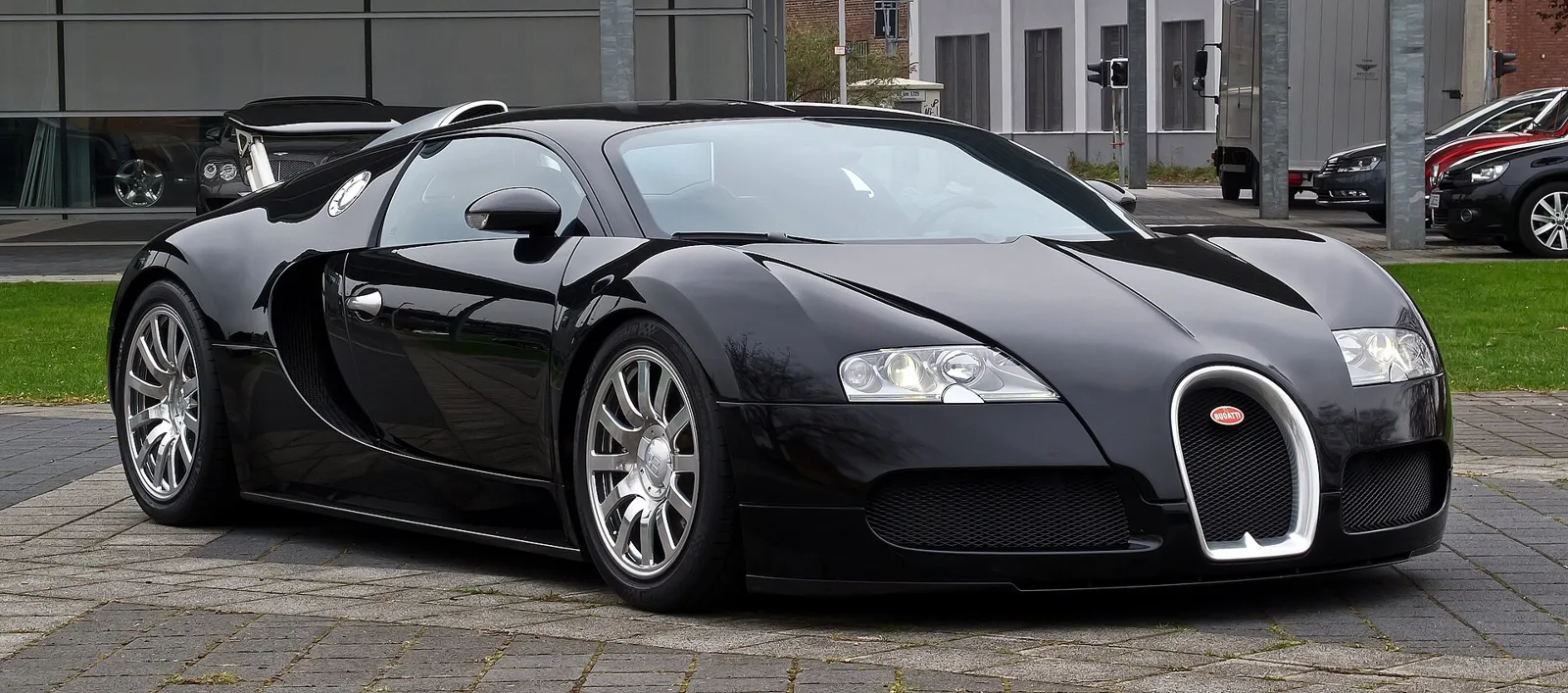
A 5.0-litre twin-turbo V8, a carbon chassis and a run of Agera variants that ended with the production speed record of 2017.
The Koenigsegg Agera was a mid-engined sports car from Sweden, produced until July 2018 and succeeded by the Jesko. Its 5.0-litre twin-turbo V8 gave up to 706 kW (960 PS; 947 hp) in production form, and the Agera RS set a production car speed record in 2017 of 447.2 km/h (277.9 mph) average.
Few production cars have chased speed records as openly as the Koenigsegg Agera. Koenigsegg, a small Swedish maker, used the car to build a reputation for outright performance, from the track-focused One:1 to the 2017 run that set a production car benchmark on paper.
Where did the Koenigsegg Agera come from?
The Agera succeeded the CCX and CCXR as Koenigsegg's mid-engined flagship. Its name comes from the Swedish verb 'agera', meaning to act, and Top Gear named it Hypercar of the Year in 2010. Production ended in July 2018, and the Jesko replaced it in 2019.
Development began with a 4.7-litre V8 fitted with fixed-vane twin turbochargers. Koenigsegg later replaced that unit with its own 5.0-litre twin-turbo V8, and that engine became the basis for the whole Agera family, including the One:1.
A 5.0-litre twin-turbo V8 in a carbon chassis, built to chase speed records before the Jesko took over.
How much power did the Agera's V8 make?
The 5.0-litre twin-turbo V8 produced 706 kW (960 PS; 947 hp) at 6,900 rpm and 1,100 N m (811 lbf ft) of torque at 4,000 rpm in production form. Weighing 197 kg (434 lb), the engine relied on a carbon fibre inlet manifold and aluminium construction.
Gear changes came from a CIMA 7-speed dual-clutch unit with paddle shifters, built specially for the car. It was the first dual-clutch unit to use a single input shaft, and a second clutch slowed that shaft during upshifts so the next gear could engage more quickly.
The gearbox itself weighed 81 kg (179 lb).
How fast was the Koenigsegg Agera?
Koenigsegg claimed 0-100 km/h in 2.8 seconds and 0-200 km/h in 8.0 seconds for the production model, with a top speed of 400 km/h (249 mph). These were brand claims rather than independent test figures, and they shaped the car's reputation from the start.
The chassis was carbon fibre with an aluminium honeycomb structure, and it carried integrated fuel tanks to help weight distribution and safety. The body used impregnated carbon fibre and Kevlar with lightweight reinforcements, and the hardtop roof stowed under the front hood lid.
Centre-locking forged wheels measured 19 inches at the front and 20 inches at the rear, and they were fitted with Michelin Super Sport tyres rated for up to 420 km/h (260 mph). The rear wing could be set to automatic or manual control, to trade downforce against drag.
Inside, the Ghost light system used carbon nanotubes to glow through the aluminium buttons, and the blue hood stripes carried through the cabin. The doors used Koenigsegg's dihedral-synchro-helix-actuation design.
How did the Agera R differ from the base car?
The Agera R, which ran from 2011 to 2014, had a drag coefficient of 0.37 and an adaptive rear wing that dropped the figure to 0.33 at high speed. The 2013 update added carbon fibre wheels, while the Agera S was tuned for low-octane petrol.
The Agera R debuted at the March 2011 Geneva Motor Show in a Speed Racer livery, with special Michelin tyres. It produced 300 kg (660 lb) of downforce at 250 km/h (155 mph), and the pylons holding the rear wing also helped extract hot air from the engine bay.
The 2013 version premiered at the 2012 Geneva show. On E85 biofuel its twin-turbo V8 could make 1,140 PS (1,124 hp; 838 kW) at 7,100 rpm, while a Flex Fuel Sensor reduced power to 960 PS (706 kW; 947 hp) on standard low-octane fuel.
The Agera S, presented in 2013, was built for markets without E85 and produced 1,030 PS (758 kW; 1,016 hp) on low-octane petrol. That same year the 100th Koenigsegg was marked with a special car named Hundra, which carried gold leaf inlays.
What made the One:1 different?
The One:1 was a track-focused Agera variant with 1,360 PS (1,000 kW; 1,341 hp) at 7,500 rpm, a power-to-weight ratio of 1 PS per kilogram and a 7-speed dual-clutch gearbox. Koenigsegg built six cars beyond the show car, and all of them were already sold.
The name came from the ratio of 1,360 PS to 1,360 kg. Koenigsegg said that 1,360 PS equalled one megawatt, and it described the car as the world's first megacar. The engine was a variant of the same 5.0-litre twin-turbo unit used in the other Agera variants.
Track focus brought trade-offs. Boot space was limited, and the One:1 was built as a machine for circuits rather than a grand tourer for everyday use. Two cars went to the 2014 Goodwood Festival of Speed, where they stood beside the McLaren P1, LaFerrari, Porsche 918 Spyder and Pagani Huayra.
Why did the Agera RS matter?
The Agera RS, unveiled at Geneva in 2015, produced 1,176 PS (865 kW; 1,160 hp) on pump fuel and offered an optional 1-megawatt package for 1,360 PS (1,000 kW; 1,341 hp). Only 27 were built, and the last rolled off the line on 4 April 2018.
Koenigsegg billed the RS as 'the ultimate track tool', and it carried 450 kg of downforce at 250 km/h. It used features from the One:1 and combined elements of the Agera R and Agera S.
The RS was originally due to be limited to 25 units, but two extra cars were built. One was a factory development car, and the other replaced a customer car that was damaged during shakedown testing. That replacement was named Phoenix, after the Gryphon car that crashed.
Koenigsegg listed the RS at 21 L/100 km (11 mpg-US) around town, easing to 13 L/100 km (18 mpg-US) for open road running, and 18 L/100 km (13 mpg-US) as an average. The figures show the cost of running a 1,000 PS road car.
What were the Agera Final Edition cars?
The Final Edition programme was a three-car series announced at Geneva in 2016 as the last models to wear the Agera badge. The first, called One of One, came in orange with bare carbon and blue accents, and the other two were unveiled online in July 2018.
One of One carried a large adjustable rear wing like the One:1, triple front canards and a large front splitter. Its bare carbon finish set off the orange paint, and its exterior was among the most aggressive of the Agera range.
The Thor car wore a two-tone black paint finish made from crushed diamonds with white accents. It had a large rear wing, a different set of front canards, a splitter and a Le Mans-style central fin for extra downforce. Vader used the same crushed diamond paint with a bare carbon centre and the Thor rear wing, but it had no central fin. Both cars appeared at the 2018 Goodwood Festival of Speed.
What records did the Agera set?
On 1 October 2017 an Agera RS covered 0-400-0 km/h in 36.44 seconds at a former Danish airbase, 5.56 seconds quicker than the Bugatti Chiron. A second run on 4 November 2017 averaged 447.2 km/h (277.9 mph), which Koenigsegg presented as the production car speed record.
The Vandel run was driven by test driver Niklas Lilja. The car reached 400 km/h in 26.88 seconds over 1,958 metres, then slowed in 9.56 seconds over 483 metres, for a total distance of 2,441 metres. Koenigsegg's November run beat its own previous 0-400-0 time by 2.57 seconds.
The November speed run used an 18 km (11-mile) stretch of Nevada State Route 160 between Las Vegas and Pahrump, which was closed for the attempt. The car hit 457 km/h (284 mph) northbound and 436 km/h (271 mph) southbound, and the record was still awaiting official confirmation from Guinness World Records at the time of reporting.
The 0-400-0 record did not last. A Koenigsegg Regera completed the run in 31.49 seconds on 23 September 2019, so the Agera's time was overtaken by its own maker.
What replaced the Agera?
The Jesko succeeded the Agera and was unveiled at the 2019 Geneva Motor Show. Koenigsegg showed the car to prospective buyers in VR at an event held in Australia before the unveiling.
The Agera's production run had closed in July 2018 with the unveiling of two final edition cars at Goodwood.
What are the Koenigsegg Agera specifications?
The Agera used a 5.0-litre twin-turbo V8 and a 7-speed dual-clutch gearbox across its variants. The table sets out production figures, the One:1 and RS outputs, and the key record numbers for the Agera family.
| Specification | Detail |
|---|---|
| Production | 2011 to 2018; Agera R 2011 to 2014, RS 2015 to 2018 |
| Engine | 5.0-litre twin-turbo V8 |
| Production output | 706 kW (960 PS; 947 hp) at 6,900 rpm |
| Torque | 1,100 N m (811 lbf ft) at 4,000 rpm |
| Gearbox | CIMA 7-speed dual-clutch, 81 kg (179 lb) |
| 0-100 km/h | 2.8 seconds (claimed) |
| 0-200 km/h | 8.0 seconds (claimed) |
| Top speed | 400 km/h (249 mph) claimed |
| Agera R on E85 | 1,140 PS (1,124 hp; 838 kW) at 7,100 rpm |
| Agera S, low-octane | 1,030 PS (758 kW; 1,016 hp) |
| One:1 | 1,360 PS (1,000 kW; 1,341 hp) at 7,500 rpm |
| Agera RS | 1,176 PS (865 kW; 1,160 hp) on pump fuel; 27 built |
| Production speed record | 447.2 km/h (277.9 mph) average, 2017 |
| 0-400-0 km/h record | 36.44 seconds, 1 October 2017 |
What did the Agera R's rear wing do?
The Agera R's adaptive rear wing was lighter than conventional hydraulic or electric systems, and it generated 300 kg (660 lb) of downforce when running at speed. It also compensated for headwinds and tailwinds thanks to its spring-loaded design, which helped the car hold its balance on fast roads.
Lateral grip was equally strong. Koenigsegg quoted cornering forces of 1.60 G, which it credited to mechanical balance and the specially developed Michelin Supersport tyres.
Stability was demonstrated during the 2011 tests, when a Koenigsegg test driver braked from 300 km/h to a standstill without holding the steering wheel.
How did the One:1 engine's output compare?
The One:1 used a variant of the 5.0-litre twin-turbo V8 whose torque peaked at 1,371 N m (1,011 lb ft) at 6,000 rpm. Its gearbox was the same 7-speed dual-clutch paddle unit used across the Agera family, which kept the drivetrain familiar even in the most extreme version.
Its output was so large that Koenigsegg framed the car as a megacar rather than a conventional supercar, which marked the One:1 out from the rest of the family.
Frequently asked questions
How many Koenigsegg Agera RS cars were built?
Koenigsegg built 27 Agera RS cars. The original plan was for 25, but a factory development car and a replacement for a damaged customer car took the total to 27.
What does the name Agera mean?
The name comes from the Swedish verb 'agera', which means to act. It was chosen for the car that followed the CCX and CCXR.
Why was the One:1 called a megacar?
Koenigsegg said the One:1's 1,360 PS equalled one megawatt, and its 1 PS per kilogram ratio led the company to call it the world's first megacar.
How thirsty was the Agera RS?
The RS was rated at roughly 21 litres per 100 km in town and 13 on the motorway, and the maker put the overall average at 18 litres per 100 km.