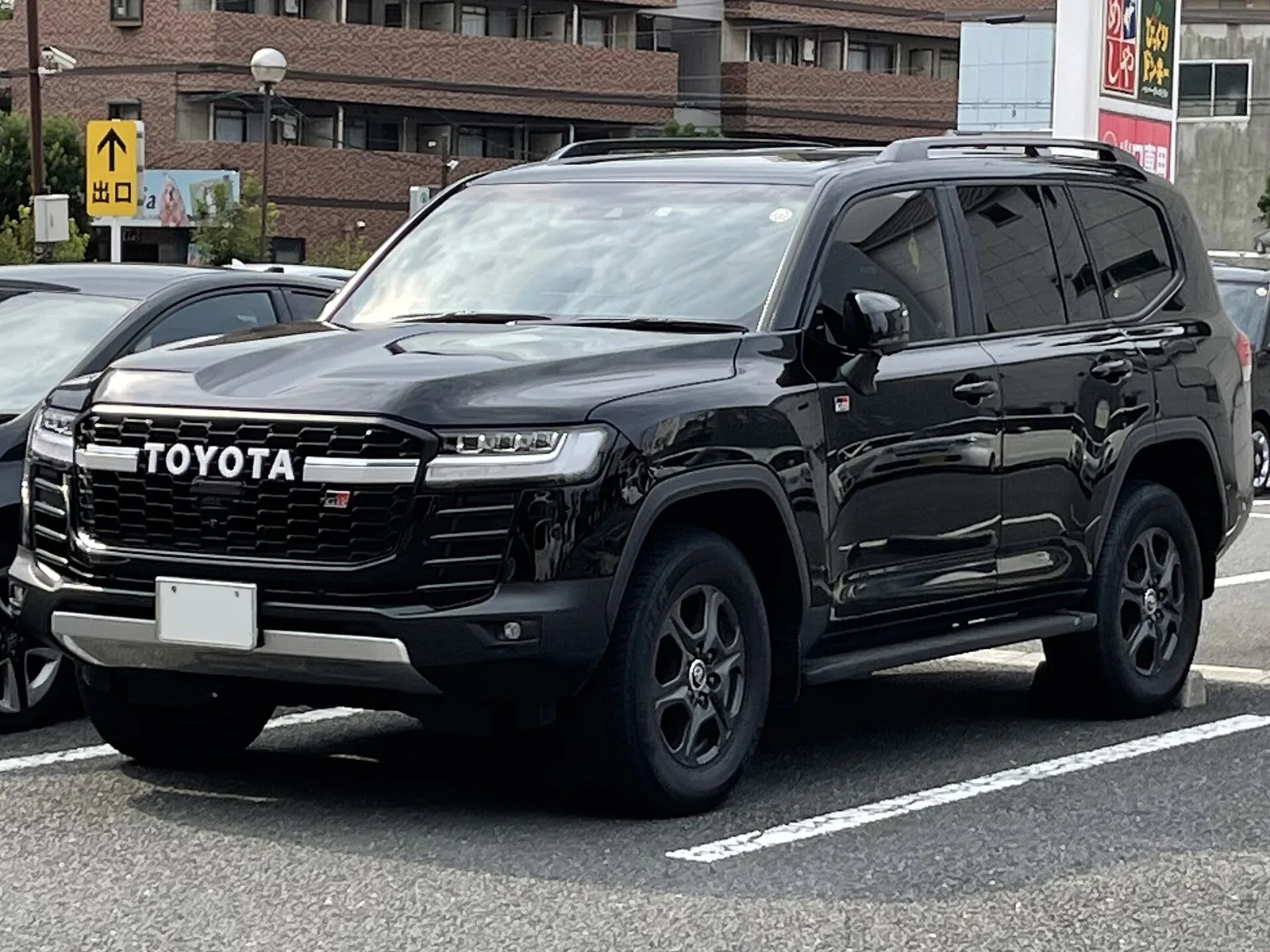
From a 1951 military prototype to a global symbol of unstoppable reliability, the Toyota Land Cruiser has spent seven decades conquering everything from battlefields to bulldust.
The Toyota Land Cruiser began in 1951 as the Jeep BJ, a military-inspired 4x4 built for the Korean War effort. Renamed in 1954, it evolved through 20, 40, 70 and Prado generations into Toyota's longest-running model line, celebrated worldwide for mechanical toughness.
The Toyota Land Cruiser is a four-wheel drive vehicle that has been in production since 1951, making it Toyota's longest-running series of models. Born as the Jeep BJ to meet military demand during the Korean War, it was renamed Land Cruiser in 1954 and has since been built as a convertible, hardtop, station wagon and cab chassis for markets around the world.
Very few vehicles can claim to have shaped the identity of an entire manufacturer. The Land Cruiser did exactly that for Toyota, proving that a Japanese company could build a machine tough enough for the harshest terrain on earth. Its story begins not with a clean sheet of paper, but with a wartime request and a captured American jeep.
Where did the Toyota Land Cruiser come from?
Toyota's famous off-roader can trace its lineage to 1936, the year the Kurogane Type 95 reconnaissance car entered service with the Imperial Japanese Army. Come 1941, Tokyo's authorities approached Toyota about building a military light truck, and examples of the Bantam GP and Willys MB were captured and sent to Japan so engineers could examine them closely.
From that assessment came the Model AK prototype, the precursor to the Type 4 compact cargo truck. The AK10's styling included a vertical front grille, wheel arches at the front that were flat and swept downward and rearward, lamps positioned above those arches next to the radiator, and a windshield that could be folded. Power came from a 2,259 cc Type C four-cylinder unit taken from the Model AE saloon, driving through a manual gearbox with three speeds and a transfer case with two speeds.
With the outbreak of the Korean War in 1950, the need for a light military utility vehicle grew sharply. A request for 100 such vehicles, built to Willys specifications, was placed with Toyota by the United States. Rather than produce those, Toyota created its own design, the Jeep BJ, in January 1951. The BJ bore no mechanical resemblance to the AK10 and shared no components with it, yet the experience gained from the earlier truck informed its development at every stage.
Demand for the BJ mirrored the clamour surrounding the British Land Rover Series 1, which had arrived in 1948. Production of the first-generation Land Cruiser began in 1951.
A Land Cruiser is not a car you simply drive; it is a machine you trust.
Why is it called a Land Cruiser?
The Land Cruiser name arrived in 1954, when Toyota executive Hanji Umehara renamed the BJ after Willys lodged a trademark claim over the Jeep name. The new badge signalled Toyota's ambition to build a vehicle capable of cruising across any landscape.
It was a shrewd piece of positioning. The BJ had already proven its mettle, and the new name gave Toyota a distinct identity in a market where Willys and Land Rover were the established players. The Land Cruiser was no longer a jeep by another name; it was a Toyota.
How did the Land Cruiser evolve through the 20 and 40 Series?
The 20 Series, introduced in the mid-1950s, was designed for export and aimed squarely at civilian buyers. It wore more stylish bodywork than the utilitarian BJ, gained longer four-plate leaf springs from the Toyota Light Truck, and moved its engine 120 mm forward to free up interior space. Synchromesh arrived on third and fourth gears, though a low-range transfer case was still absent.
The J40 family, which followed, is the model most enthusiasts picture when they hear the name Land Cruiser. It finally received low-range gearing while continuing with a three-speed main gearbox, and it introduced the 3.9-litre F engine producing 93 kW (126 PS; 125 hp). In 1975, that petrol unit was replaced by the 4.2-litre 2F. Diesel options included the 3.6-litre H in the HJ45, the 4.0-litre 2H in the HJ47 from 1980, and the 3.4-litre 3B from 1981.
The J30, built in the late 1950s, deserves attention on its own terms. This four-door wagon was manufactured by Gifu Auto Body Co. and could seat five occupants. It drew power from the Toyota F engine, matched to a four-speed manual gearbox and selectable four-wheel drive. Around 60 units were produced, and none are known to survive.
A visual update arrived in 1979, when the FJ40 gained a wider square headlight bezel, sharpening its face for the final years of production.
What makes the 70 Series so revered?
Launched in the 1980s, the 70 Series split into three distinct strands. The heavy-duty models prioritised function, durability and off-road capability over comfort, with flat steel panels and a near-vertical greenhouse. The station wagon series leaned towards interior space and comfort, while the light-duty line used coil spring suspension and a smaller, more affordable package.
The 70 Series was powered initially by the 4.0-litre 3F petrol engine, while the light-duty variant, known as the 70 Light, offered a 22R 2.4-litre petrol plus 2L and 2L-T 2.4-litre diesels. It was the first Japanese four-wheel drive to offer an automatic transmission, the A440F.
1990 brought a pair of diesels that would become legendary: the 3.4-litre five-cylinder SOHC naturally aspirated 1PZ and the 4.2-litre six-cylinder SOHC naturally aspirated 1HZ. Three years later, the 4.5-litre 24-valve six-cylinder 1FZ-FE petrol arrived.
1999 brought a major chassis update for the 70 Series. Coil springs replaced the leaf-sprung solid front axle, while the rear leaves grew longer to improve both comfort and wheel articulation. Five-bolt wheels took the place of six-bolt versions, and changes to the drivetrain boosted longevity. The Troop Carrier and the pickup, in long-wheelbase form, became the 78 and 79 respectively. In 2007 a medium-wheelbase four-door variant arrived, the 76, and 2012 saw the 79 Double Cab reach both South Africa and Australia.
How has the Land Cruiser been sold around the world?
The model entered production in 1951, although during its first two years cars were made only in response to individual orders, and only in modest numbers. From 1953 onwards, output became routine at the Toyota Honsya Plant: chassis were put together there while Arakawa Bankin Kogyo KK, a firm that would in time take the name ARACO, handled body construction and painting.
Toyota's first manufacturing site beyond Japan was in Brazil, where assembly began with the FJ25 in 1958. The Toyota Bandeirante name was applied to Brazilian-built examples from 1962, and the range carried designations such as FJ25L, FJ151L, TB25L, TB41L, TB51L, TB51L3, OJ32L, OJ31L and TB81L. Output in Brazil stood at 961 vehicles by 1965.
Australia received its first Land Cruiser in 1959, imported by B&D Motors, making it the first Japanese vehicle regularly exported there. Global production passed 50,000 in 1965, the 100,000th example was sold in 1968, the 200,000th in 1972 and the 300,000th in 1973. West Germany saw its first official sales in 1978 with the BJ40 and FJ40/55. The final FJ40s reached the United States in 1983, around 300 units, and in 1984 North American availability was limited to Canada with the BJ42, priced at roughly CA$14,000.
What is the Land Cruiser like to live with?
A Land Cruiser is not a car you simply drive; it is a machine you trust. The heavy-duty models ride with a firmness that reminds you of their commercial roots, but they shrug off corrugations and rocky trails that would rattle lesser vehicles apart. The station wagon variants soften the edges with more space and comfort, while the light-duty models feel almost nimble by comparison.
Inside, early models are spartan to the point of austerity. Later generations add sound deadening, better seats and more sophisticated four-wheel drive systems, but the ethos remains constant: controls you can operate with gloves on, switchgear built to survive decades, and a driving position that gives a clear view over the bonnet. It is a vehicle designed for the toughest operating environments in temperature and terrain, and it shows in every weld.
How did the Land Cruiser perform in motorsport and military service?
Competition and military use have long been part of the Land Cruiser story. The BJ was offered in touring, radio and cowl-chassis forms, with the BJ-T, BJ-R and BJ-J designations respectively. The FJ-J cowl-chassis, intended for fire-engine conversion, arrived with the 3.9-litre Type F engine.
The Irish Army became a customer in 1977, taking delivery of 77 FJ45s. Ireland's damp conditions caused the trucks to corrode badly, however. A number of them received a fresh coat of gloss olive green paint and remain in use as ceremonial gun tractors, an odd second life for a group of vehicles that could not cope with the country's moist air.
What is the Land Cruiser's legacy?
Dependability and a long service life made the Land Cruiser famous around the world. No other Toyota line has been produced for as many years, and what people believe about it rests on what farmers, aid workers, miners and soldiers reported after demanding the impossible of it and discovering that it complied, rather than on advertising.
Owners' passion for the vehicle also has a formal side. In 1976, a club for Land Cruiser enthusiasts took shape in California, linking drivers across generations and continents.
Toyota launched the Land Cruiser Prado in 1990, a compact alternative that grew out of the 70 Light, previously marketed under the Bundera or Landcruiser II names. With the J90 generation, the Prado became a distinct model line, expanding the range while keeping its central character intact.
Anniversary editions have marked the milestones. The 30th Anniversary Series 70 was sold in Japan between 2014 and 2015, and in 2023 the 70 Series was re-introduced to the Japanese market with the 1GD engine, proving that even a design rooted in the 1980s still has a place in showrooms.
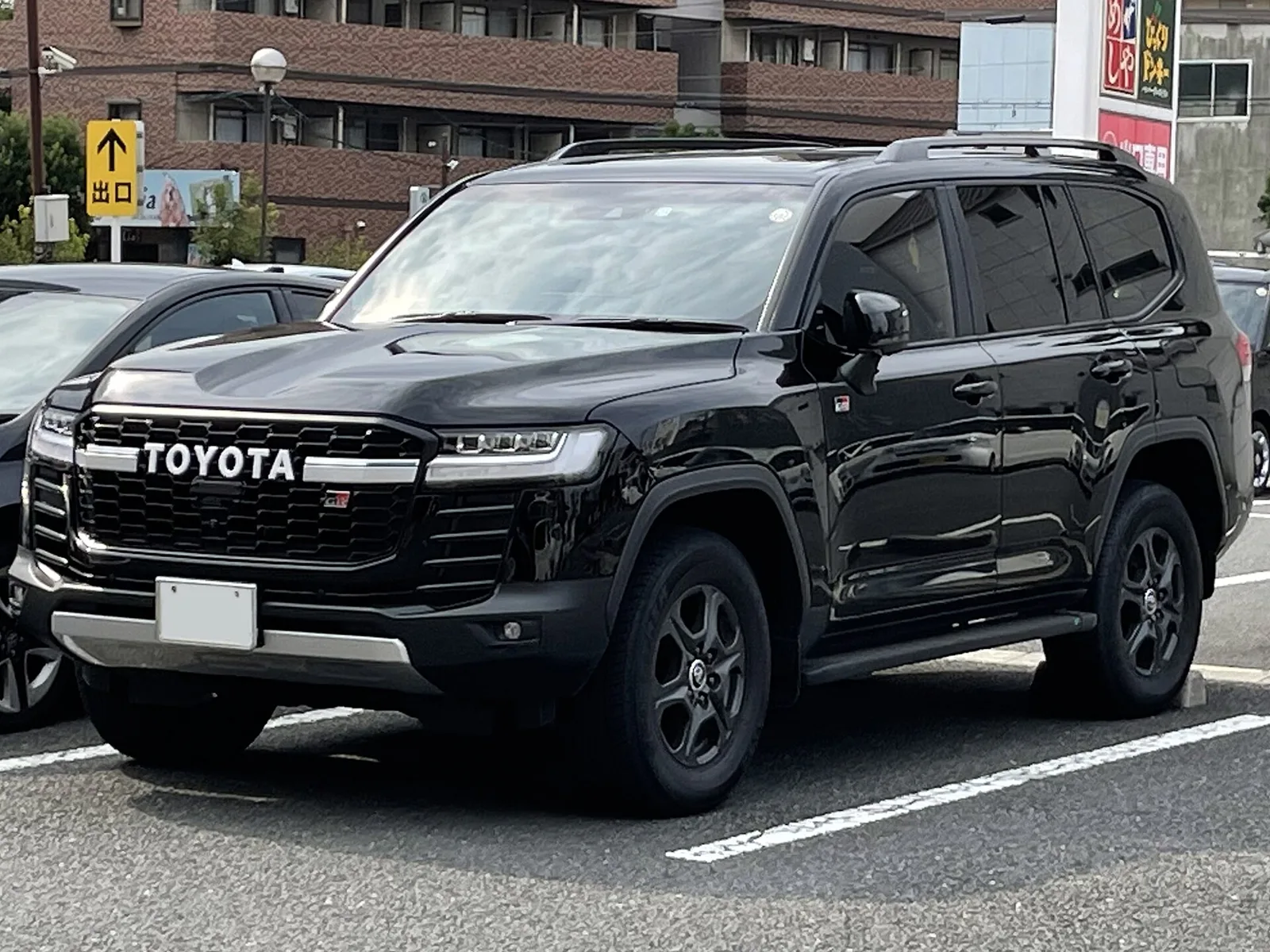
The Land Cruiser FJ arrived in 2025, using the IMV architecture that also underpins the Hilux. Smaller and cheaper, it represents a fresh take on the nameplate, yet the badge continues into a new chapter.
What are the key specifications of the Land Cruiser's early generations?
| Model | Engine | Power | Torque | Transmission |
|---|---|---|---|---|
| AK10 | 2,259 cc Type C four-cylinder | 3-speed manual, 2-speed transfer | ||
| Jeep BJ | 3.4 L Type B six-cylinder OHV | 63 kW (84 hp; 85 PS) at 3,600 rpm | 215 Nm (159 lb-ft) at 1,600 rpm | 3-speed manual |
| J40 (FJ40) | 3.9 L F six-cylinder | 93 kW (126 PS; 125 hp) | 3-speed manual, low-range | |
| J40 (HJ45) | 3.6 L H diesel | manual | ||
| J40 (HJ47) | 4.0 L 2H diesel | manual | ||
| J40 (BJ42) | 3.4 L 3B diesel | manual | ||
| 70 Series | 4.0 L 3F petrol | manual or automatic | ||
| 70 Light | 2.4 L 22R petrol / 2.4 L 2L and 2L-T diesel | manual | ||
| 70 Series (1990) | 3.4 L 1PZ five-cylinder diesel | manual | ||
| 70 Series (1990) | 4.2 L 1HZ six-cylinder diesel | manual | ||
| 70 Series (1993) | 4.5 L 1FZ-FE 24-valve petrol | manual or automatic |
Which Land Cruiser variants should enthusiasts know?
Few people appreciate just how wide the line-up has been. Alongside the well-known soft-top, hard-top and station wagon versions, Toyota has also produced the 70 Series as an FRP-topped model, a utility, a cab-chassis and a Troop Carrier. In Brazil, the Bandeirante range brought its own set of designations, shaped by the country's own development work and the demands of its market.
For collectors, the early cowl-chassis models are the most obscure. The BJ-J and FJ-J were sold as bare chassis for specialist bodywork, most commonly fire engines. The J30 wagon, with its Gifu Auto Body coachwork and tiny production run, is the rarest of all, a ghost that survives only in photographs and records.
What ties every variant together is a design philosophy that has barely shifted in more than seventy years. Whether it is a stripped-out pickup bouncing across a mine site or a leather-lined station wagon collecting children from school, the Land Cruiser exists to keep going. That is why it remains Toyota's longest-running series, and why the name still commands respect the moment it appears on a tailgate.
_front.jpg)