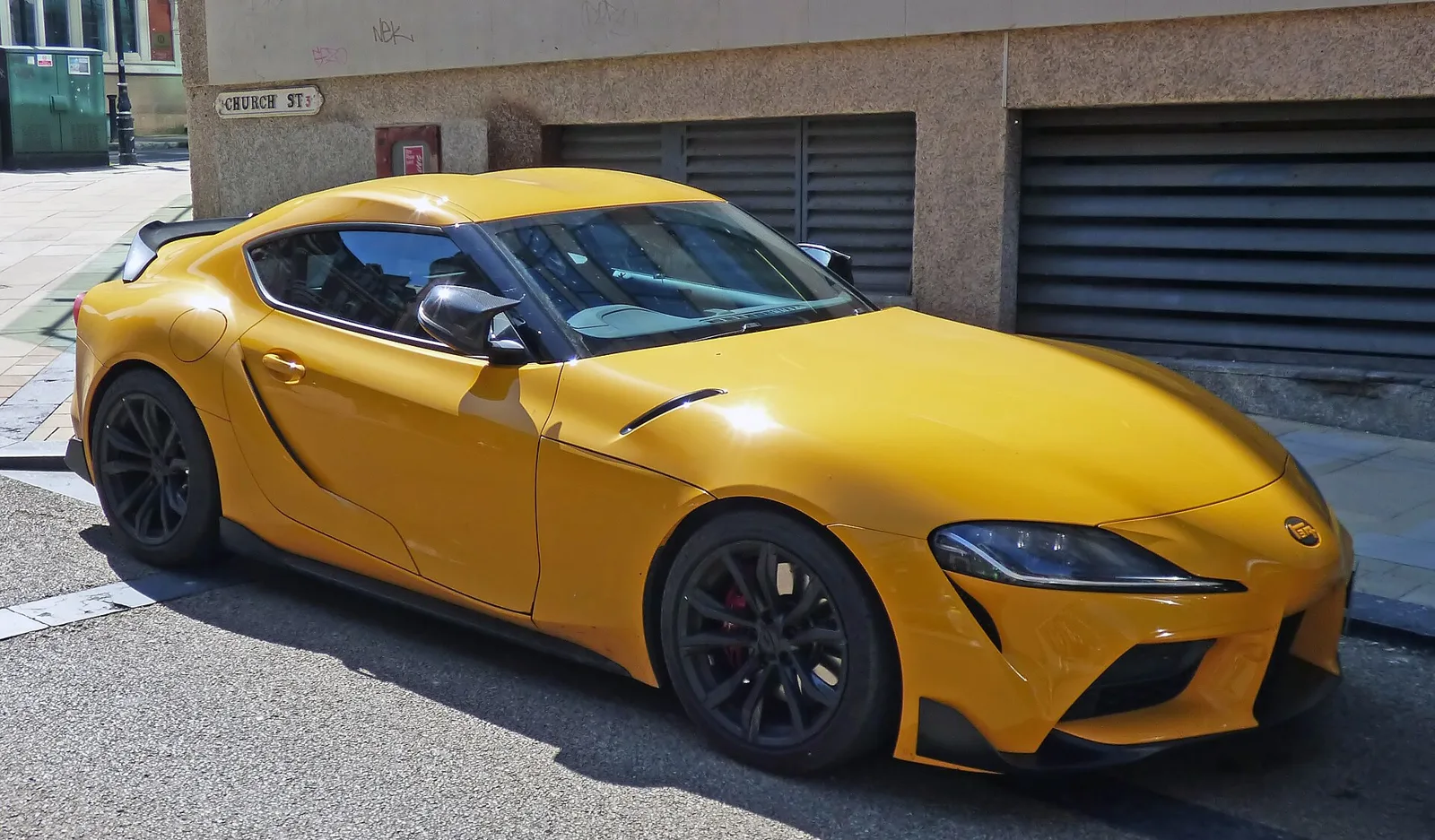
Inline-six engines, a twin-turbo icon of the early nineties and a final run that ended in March 2026 on a BMW-built platform.
Toyota's Supra began in 1978 as a Celica-based car for North America and ran through five generations. The final GR Supra left production in March 2026. The fourth generation's twin-turbo engine is the most celebrated, while the fifth generation shared its platform with the BMW Z4.
Few Toyotas have a longer or more varied story than the Supra. Built across five generations from 1978, it started as a Celica variant and ended as a BMW-linked GR model that left production in March 2026.
This guide follows the car through each generation, then covers its racing record, awards, production figures and a specification table. Metric figures come first with imperial values in brackets, and export ratings are given where they differ from Japanese ones.
Where did the Toyota Supra come from?
The Supra began in 1978 as a Celica-based liftback for North America, after dealers there asked Toyota for a rival to the Datsun 280Z. Its longer front end housed an inline-six where the Celica had a four-cylinder. In Japan the first car was sold as the Celica XX, and the Supra name stood alone from 1986.
The first four generations ran from 1978 to 2002 in total. Toyota's early car shared its doors and rear section with the Celica, but it measured 129.5 mm (5.10 in) longer to make room for the engine. Japanese buyers could choose a 2.0 L or a larger 2.6 L unit, and the bigger engine brought a higher annual road tax.
Export cars were fitted with the 2.6 L engine, which made 82 kW (110 hp; 111 PS) in its first form. Transmissions were a five-speed manual or a four-speed automatic, and four-wheel disc brakes were standard. A four-link rear suspension with coil springs carried the power to the road.
A Celica-derived coupe that grew into a turbocharged icon and ended its run on a BMW-built platform.
What changed in the second generation?
The second generation arrived in 1982 with fully retractable pop-up headlights and a larger body. The North American car used a 2,759 cc 5M-GE engine rated at 145 hp (108 kW; 147 PS). By 1985 the power had risen to 161 hp (120 kW; 163 PS), and the car ran 0-97 km/h (0-60 mph) in 8.4 seconds.
Five-speed cars reached 160 hp (119 kW; 162 PS) in 1984, and the second generation kept its styling family until the third generation's launch in 1986.
Why did the Supra split from the Celica in 1986?
In 1986 the link between the two cars was cut. The Celica became a front-wheel-drive coupe, while the Supra kept rear-wheel drive and gained a 3.0 L inline-six. Turbocharging arrived in 1987, making the third generation Toyota's showcase for new technology.
The naturally aspirated 7M-GE produced 149 kW (200 hp; 203 PS) at 6,000 rpm. The turbocharged 7M-GTE used a CT26 turbocharger and produced 172 kW (231 hp; 234 PS) at 5,600 rpm, with 240 lb ft (325 N m) of torque in its launch year. The engine used coil packs and a cam position sensor, which made it one of the first distributor-less engines sold in the United States.
Other third-generation features included electronically controlled suspension, a targa top offered in every model year and double wishbones at both ends. Production of the whole line was estimated at 241,471 units, for a single generation.
What made the fourth-generation Supra different?
The fourth generation, known as the A80, shared its subframe, suspension and drivetrain with the Soarer coupe, which Lexus sold in North America as the SC. Its twin-turbo 2JZ-GTE made 206 kW (276 hp; 280 PS) in Japan, while export cars made 239 kW (321 hp; 325 PS). Toyota placed far more emphasis on a serious performance car this time.
Toyota worked hard on weight. Aluminium went into the bonnet, front crossmember and oil pans, and the steering wheel was magnesium. The base manual weighed 1,456 kg (3,210 lb), which was 91 kg (200 lb) less than the car it replaced, even though the new model added dual airbags, traction control and larger brakes.
Sequential twin turbos were the headline engineering. The first turbo worked alone to keep lag low, giving 300 lb ft (407 N m) of torque by 1,800 rpm. Around 4,000 rpm the second turbo joined in to add high-rpm boost, and export torque reached 315 lb ft (427 N m) at 4,000 rpm.
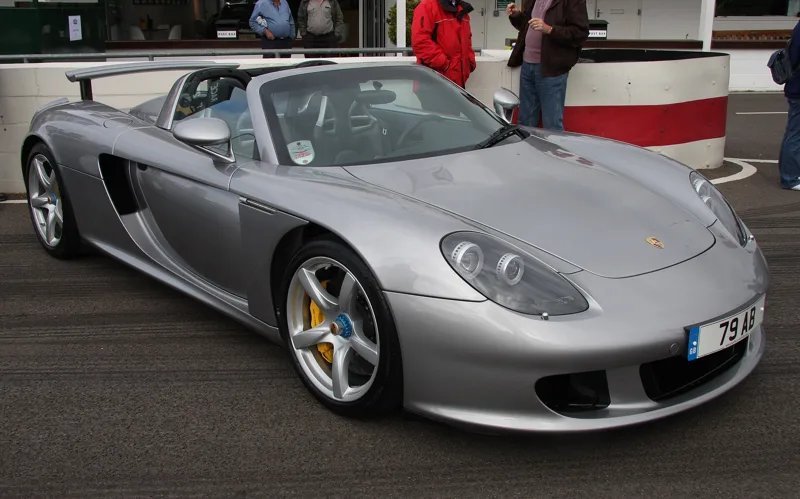
Brakes were a four-sensor ABS with yaw control, and the turbo stopped from 113 km/h (70 mph) in 45 m (149 ft). Porsche's Carrera GT beat that in 2004 with 44 m (145 ft).
How quick was the turbo Supra?
The turbo model reached 97 km/h (60 mph) in as little as 4.6 seconds in a published test. It covered the quarter mile in 13.1 seconds at 175 km/h (109 mph), and its tested top speed was 257 km/h (160 mph).
Top speed was also limited by market. Export cars were governed to 250 km/h (155 mph), and Japanese cars to 180 km/h (112 mph). Drag coefficient was Cd=0.31 for the naturally aspirated models and 0.32 for the turbo versions.
Did the Supra race?
Yes. Toyota built the Turbo-A as a homologation car for Group A touring car racing, and only eleven MA70 Group A cars were built by TRD Japan. Fitzgerald Racing won the 1991 Bathurst 12 Hour, and privateer teams kept the Supra on the grid after Toyota's own programme moved on.
The Turbo-A ran for two months from September to October 1988, and the minimum homologation run was 500 units. TOM'S won on its Japanese touring car debut in 1987, but the team later left the category. The Australian debut ended with a retirement in the first race, against rivals from Ford, Nissan and BMW.
Toyota moved to the Corolla Levin in 1991, while privateers kept racing the Supra until Group A ended in 1993. The fourth generation also did well on the road-racing circuit, with several top 20 and top 10 One Lap of America finishes. Its 1994 skidpad readings of 0.95 g (200 ft) and 0.98 g (300 ft) were strong for a production car.
The MA70 also appeared in rallying and endurance events, but touring car racing was its main stage. Those efforts show how far a homologation car could be stretched beyond the road, even when results fell short of what Toyota had hoped.
Why did sales of the Supra fall in North America?
By the end of the nineties sales of sports coupes were falling in North America, and a stronger yen pushed prices up in markets outside Japan. The Supra left Canada in 1996 and the US in 1998, while Japan remained its main home until production ended in August 2002.
The turbo was not offered in California Air Resources Board states in 1998, and that year marked the end of Supra sales in the US. Canadian sales had stopped two years before the US market closed, so the car's North American story ended in stages rather than all at once.
Production in Japan carried on through the decade, with the RZ trim standing as the car's halo version. Japanese output then continued until August 2002, when the fourth generation finally closed.
Which awards did the Supra win?
The A60 won Motor Trend's Import Car of the Year award and appeared on Car and Driver's Ten Best lists for 1983 and 1984. The A80 took Popular Mechanics design and engineering awards in 1994. The GR Supra was named Esquire's Car of the Year in 2019 and Sport Compact of the Year by SEMA in 2021.
The fifth-generation GR Supra made Car and Driver's 10Best list for 2020, 2021 and 2023, and the awards came from magazines and industry bodies alike.
What did the fifth generation add?
The fifth generation was unveiled in January 2019 and built at Magna Steyr in Graz, Austria, alongside the BMW Z4. It kept rear-wheel drive from the earlier cars, and Toyota added a manual transmission and a Hairpin+ driving mode in 2023.
Its engines are BMW-derived turbocharged fours and sixes, which sets it apart from the inline-six heritage of the earlier models. Hairpin+ allows extra wheel spin on one rear tyre, which helps the car rotate around very tight bends. Those additions came several years after launch, and they gave the car a new way to tackle tight corners.
What were the Toyota Supra specifications by generation?
The table below lists the main engine, output and body facts for each generation. Figures are the standard export or Japanese ratings where those differ, and the fifth generation is shown with its BMW-derived engines rather than one single output figure.
| Generation | Engine | Top output | Notes |
|---|---|---|---|
| First | 2.0 L or 2.6 L inline-six | 2.0 L 125 PS (92 kW; 123 hp); 2.6 L 82 kW (110 hp; 111 PS) | Celica-based liftback |
| Second | 2,759 cc 5M-GE | 145 hp (108 kW; 147 PS) in North America; 161 hp (120 kW; 163 PS) by 1985 | Pop-up headlights |
| Third | 3.0 L 7M-GE and 7M-GTE | 149 kW (200 hp; 203 PS); turbo 172 kW (231 hp; 234 PS) | Separate model from 1986 |
| Fourth | 2,997 cc 2JZ-GE and 2JZ-GTE | 164 kW (220 hp; 223 PS); export turbo 239 kW (321 hp; 325 PS) | Sequential twin turbos |
| Fifth | BMW-derived turbocharged fours and sixes | Not summarised as a single figure | Built at Magna Steyr in Graz |
Two engine stories define the car: the third generation's turbo output and the fourth generation's sequential twin turbos. The fifth generation brought the nameplate back on a platform shared with the BMW Z4.
Why did Toyota end production of the GR Supra?
Toyota announced the end of production in advance, and the GR Supra stopped in March 2026. The fifth generation had been unveiled in January 2019 and sold on the BMW Z4 platform for its whole life. The end date marked the close of Toyota's performance Supra line.
Two final editions closed the run. The A90 Final Edition was offered in Japan and Europe, and the MkV Final Edition was sold in the United States. The fourth generation had also stopped in Japan in August 2002 because of restrictive emissions standards, so emissions rules had ended an earlier run too.
Frequently asked questions
Was a manual gearbox available?
Yes. Naturally aspirated fourth-generation cars used a five-speed W58 manual, while turbo models used a six-speed Getrag V160. A four-speed automatic with a manual shift mode was offered as well, so buyers had a choice across the range.
Did the Supra have a removable roof?
Yes. Third-generation cars offered a targa top in every model year, and the fourth generation sold an Aero Top targa on GZ and SZ models.
How many Supras were built?
Third-generation production was estimated at 241,471 units. In its final Japanese years, from 1998 to 2002, about 653 units were sold in Japan, so late Japanese cars are scarce today.
What does the fifth generation share with the BMW Z4?
The fifth generation shares its platform and many parts with the BMW Z4 G29, and both cars are built at Magna Steyr in Graz, Austria. The Supra kept rear-wheel drive and uses BMW-derived turbocharged fours and sixes.
Which final editions were built?
Toyota released the A90 for Japan and Europe and the MkV for the US. Both marked the end of GR Supra production in March 2026, closing a nameplate that began as a Celica spin-off in 1978.
.jpg)