From a P2-based sports saloon of 2000 to a US-built third generation, the S60 kept Volvo's safety focus while chasing performance on road and track.
The Volvo S60 is a compact executive car that Volvo Cars has built since 2000 in three generations. It succeeded the S70 and was first sold as a 2001 model year car on the P2 platform. Production of the third generation ended in June 2024, after a run at a South Carolina plant.
Volvo's S60 started life as a sports saloon aimed at the BMW 3 Series, the Mercedes-Benz C-Class and the Alfa Romeo 156. It went on to span three generations, from a P2-based first car to a third generation built in the United States. Along the way it carried Volvo's safety reputation into a more performance-minded market.
Its story covers a safety-led first generation, a 2010 redesign built in Ghent and a third generation that Volvo produced in South Carolina before production ended in 2024. Each stage reflects how the company balanced comfort, safety and driving pleasure.
Where did the S60 come from?
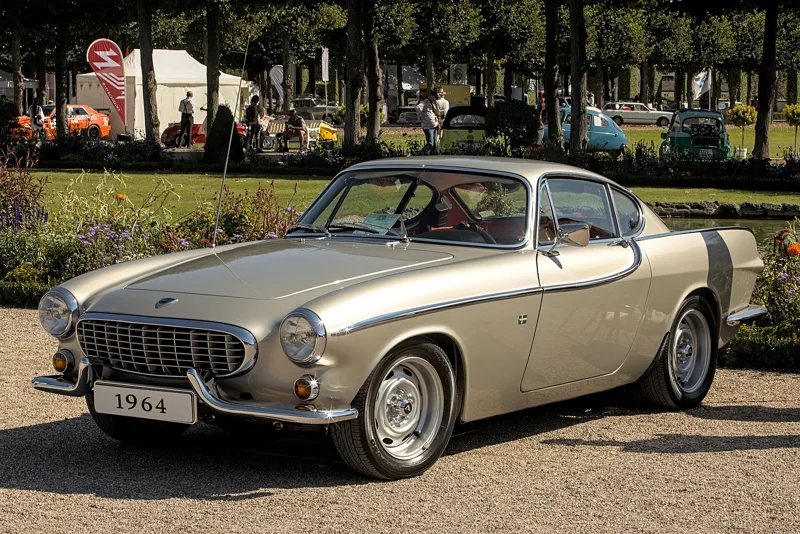
The S60 succeeded the S70 and was built on Volvo's P2 platform, which also underpinned the S80, V70, XC70 and XC90. Its styling drew cues from the ECC concept car and the S80, and the estate counterpart was the V70.
Volvo pitched the car at the European market, where its rivals were the 156 from Alfa Romeo, the W203 C-Class from Mercedes-Benz and BMW's E46 3 Series. It stayed in production for nine years with facelifts, which gave the first generation a long working life.
A P2-based sports saloon that became a US-built third generation, with safety at the centre of every version.
What made the first-generation S60 a safety car?
Volvo fitted integrated front and rear crumple zones, dual threshold airbags and a three-stage collapsible steering column. Side curtain airbags, anti-submarine seats and the Whiplash Protection System were also part of the package, along with automatic seatbelt pretensioners.
PremAir arrived as standard in 2004, turning as much as 75 percent of the ozone in the radiator's intake air into oxygen. An Interior Air Quality System detected pollutants and recirculated air automatically, which added to the sense of a car built around the occupants.
How did the first-generation engines and gearboxes evolve?
In 2004 the T5 was enlarged from 2.3 to 2.4 litres, with continuously variable valve timing and 10 hp (7 kW) more power. The D5 diesel's maximum claimed output rose from 163 PS to 185 PS in the same update, and the 2.5-litre engine gained ULEV certification.
Three transmissions were offered. The Geartronic five-speed automatic had an Auto-Stick manual mode, a second five-speed automatic had no manual mode, and a traditional five-speed manual completed the range. The Haldex all-wheel-drive system was optional with the 2.5-litre engine.
What was the S60 R?
The S60 R, introduced in 2004, paired a Haldex all-wheel-drive system with a 300 PS (221 kW; 296 hp) inline-five producing 400 Nm (300 lbf ft). It sent 95 percent of the torque to the front under normal driving, and up to 30 percent to the rear when needed.
The R also brought large Brembo four-piston brakes, blue-faced R gauges and HID headlights. The 2004 and 2005 cars came with a six-speed manual or a five-speed automatic that was torque-restricted in first and second. Volvo's R tradition began in 1995 with the 850 T-5 R.
How did the Four-C suspension work?
Four-C, short for Continuously Controlled Chassis Concept, offered Comfort, Sport and Advanced modes. Comfort softened the car over bumps, while Advanced firmed the suspension and sharpened throttle response. The shock absorbers adjusted themselves 500 times a second.
The system used a drive-by-wire throttle, so the same pedal travel produced different responses in each mode. Volvo worked with Ohlins Racing AB and Monroe on the self-adjusting shock absorbers, a sign of how serious the chassis work was.
How did the S60 R's aerodynamics differ?
The small trunk-lid spoiler on the S60 R created about 20 percent more rear downforce at high speed than the standard car. Its drag coefficient was 0.29 against 0.28 for the regular S60, because of a larger lower front bumper that fed a secondary intercooler.
A factory body kit with front splitters, side skirts and a rear valance was also available on the R, though only in certain colours and markets. The kit was colour-matched to the body.
What changed with the second generation?
Production of the second-generation car started in Ghent, Belgium, on 17 May 2010, and the plant was planned to output 90,000 vehicles a year. Volvo unveiled it at the Geneva Motor Show in March 2010, and it debuted as a 2011 model in North America.
The car used the fifth-generation Haldex AWD system and a design language shared with the XC60 concept. City Safety applied the brakes below 19 mph (31 km/h), and Pedestrian Detection was added to the list of features.
What engines did the second generation offer?
The S60 and V60 offered petrol engines in the T3, T4, T5 and T6 range, along with diesels. In 2013 the T5 was revamped before the Drive-E arrival, and compression rose to 9.5:1 from 9.0. Output stayed at 250 bhp (186 kW; 253 PS), with overboost lifting torque to 295 lb ft (400 N m).
The T5 all-wheel-drive car reached 0-60 mph in 6.6 seconds, while the front-drive version was 0.2 seconds quicker.
How did the Polestar models come about?
Polestar took the S60 into performance territory with a 2012 concept, which made 508 PS (374 kW; 501 hp) from an inline six. Production-based Polestar models followed, starting with an Australian run in 2013 and a wider offer in 2014 in Canada, Japan, Sweden and the US.
The 2013 Australian car was limited to 50 units and produced 346 hp (258 kW; 351 PS). By 2015 the Polestar's 3.0-litre inline six made 350 PS (257 kW; 345 hp), and Volvo quoted 0-60 mph in 4.7 seconds for that car.
The 2015 Polestar's electronic limiter capped it at 250 km/h (155 mph), a step up from the earlier 210 km/h (130 mph) ceiling. The revised calibration, Haldex tuning and larger brakes made the car a clear step beyond the standard S60.
What was the S60L?
The S60L, also sold as the S60 Inscription, was lengthened by 80 mm (3.1 in) for extra rear legroom. It was built in Chengdu, China, from October 2014, and it became the first Chinese-built car sold in the United States.
A plug-in hybrid S60L followed, with a 2.0-litre petrol engine, a 50 kW electric motor and an 11.2 kWh battery giving up to 50 km (31 mi) of electric range. Its Power mode reached 0-100 km/h in 5.5 seconds.
How did the third generation change the S60?
The third generation launched in 2018 on the Scalable Product Architecture, and sales began in October 2018. It was the first Volvo built in the United States, at a plant in Ridgeville, South Carolina.
The Ridgeville plant covers 2.3 million square feet (210,000 m2) and was built for 60,000 vehicles a year, with capacity up to 100,000 if demand required it. The plant employed nearly 1,500 people as of 2022.
Production ended in June 2024 as sedan sales lost ground to SUVs. Production continued in China for Asian markets, where traditional sedans still found buyers.
What engines does the third generation offer?
The third generation offered the T5 with 252 hp (188 kW; 255 PS) and the T6 with 316 hp (236 kW; 320 PS). The T8 plug-in hybrid combined a four-cylinder with an electric motor for 400 hp (298 kW; 406 PS), sent to all four wheels.
The T8 battery was 11.6 kWh and gave 22 miles (35 km) of electric range. A 2022 update removed the supercharger, raised output to 455 horsepower (339 kW; 461 PS) and increased the pack to 18.8 kWh for 41 miles (66 km) of range.
How did the S60 perform on record runs?
On 14 and 15 October 2000 a first-generation S60 T5 set 18 British land speed records for production cars in class D. The run included the highest average speed over 24 hours, at 135.10 mph (217.42 km/h), at Millbrook Proving Ground in Bedfordshire.
The record run was a Volvo and Prodrive project. Drivers included BTCC racers and Channel 4's Mike Brewer.
How did the S60 race in Europe?
Volvo raced the S60 in the Swedish Touring Car Championship, finishing second in the drivers' title twice and winning the manufacturers' title once. From 2002 to 2007 a one-make S60 Challenge Cup ran as a support series with 26 factory-modified cars.
Thed Bjork won three consecutive titles from 2013 to 2015 in the Scandinavian Touring Car Championship, and Rikard Goransson took the 2016 title in a Polestar Racing car. The S60 returned to the World Touring Car Championship in 2016 with Polestar Cyan Racing.
Did the S60 compete in V8 Supercars?
Yes. Volvo ran two rear-wheel drive V8 S60s in the Australian V8 Supercars Championship from 2014 to 2016 with Garry Rogers Motorsport. The team took a second-place finish at the Adelaide 500 on debut, which was a strong start for the programme.
The car also raced in North America, where it debuted in the Speed World Challenge GT class from 2006. In 2010 Randy Pobst won the SCCA drivers' title in the GT class, a result that reflected the car's competitiveness on track.
How did the S60 score in safety tests?
The S60 made the IIHS Top Safety Picks list in 2020, then took the Pick+ rating in 2021 and 2022. Standard City Safety was improved to help with evasive manoeuvres and to detect oncoming vehicles at junctions.
The second generation had introduced Pedestrian Detection, and the third generation carried that approach forward. Safety remained the thread that connected all three generations of the car.
Specifications at a glance
The table below lists the key figures for the main versions across the three generations. Where a value belongs to one version only, the table names it so the figures do not blend together.
| Version | Key figures |
|---|---|
| S60 R (first generation) | 300 PS (221 kW; 296 hp); 400 Nm (300 lbf ft); 95 percent front torque in normal driving |
| T5 (second generation, 2013) | 250 bhp (186 kW; 253 PS); 266 lb ft (361 N m), overboost to 295 lb ft (400 N m) |
| Polestar (2015) | 350 PS (257 kW; 345 hp); 0-60 mph in 4.7 seconds; 250 km/h (155 mph) limited |
| S60L PHEV | 50 kW motor; 11.2 kWh battery; 50 km (31 mi) electric range; 0-100 km/h in 5.5 seconds in Power mode |
| T5 (third generation) | 252 hp (188 kW; 255 PS) |
| T6 (third generation) | 316 hp (236 kW; 320 PS) |
| T8 (2022 update) | 455 horsepower (339 kW; 461 PS); 18.8 kWh battery; 41 miles (66 km) electric range |
Frequently asked questions
How much longer is the S60L?
Extra rear legroom came from an 80 mm (3.1 in) stretch over the standard car. The long-wheelbase model was produced at Chengdu in China, starting in October 2014, and it was marketed in some markets as the S60 Inscription.
What was the S60 Cross Country?
The Cross Country was a raised version of the S60 sedan, and only about 500 cars were made from 2016 to 2017. It was offered in the US as a limited production model.
How much power did the T8 make in total?
The T8 plug-in hybrid produced a combined 400 hp (298 kW; 406 PS) at launch, with power sent to all four wheels. The 2022 update removed the supercharger and lifted that figure to 455 horsepower (339 kW; 461 PS), while the battery grew to 18.8 kWh.
Which IIHS awards did the S60 win?
The S60 won the IIHS Top Safety Pick in 2020 and then the Top Safety Pick+ rating for 2021 and 2022. Those honours reflected its standard safety equipment, including improved City Safety that helps with evasive manoeuvres.