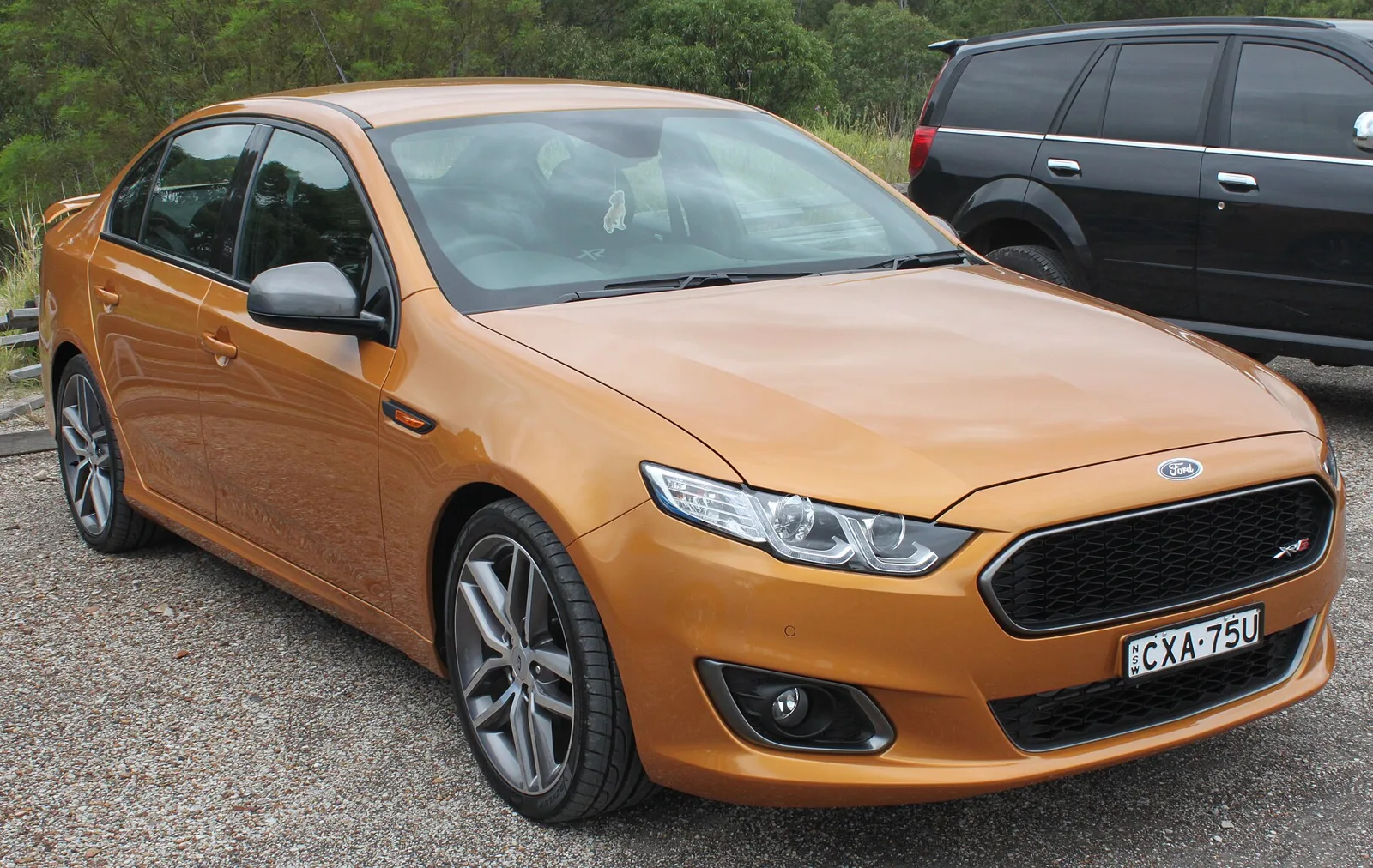
From a rebadged American sedan to a fully home-grown muscle car and fleet favourite, the Ford Falcon spent 1960 to 2016 locked in battle with the Holden Commodore.
Ford Australia built the Falcon as a full-size family car for 56 years, starting as an adapted American design and ending as a locally engineered nameplate with over 3 million sales. It stood as Holden's chief rival in local showrooms, fleets and police garages until local manufacturing ended.
Ford Australia built the Falcon from 1960 to 2016, across seven generations and over 3 million cars, turning an imported American sedan into a locally engineered rival that fought the Holden Commodore for dominance of taxi, police and company fleets.
What is the Ford Falcon (Australia)?
It is a full-size family car that Ford Australia built continuously from 1960 all the way through to 2016. From the 1972 XA series onward every Falcon was designed, developed and built locally, replacing the earlier US-influenced cars that had merely been re-engineered for Australian roads.
That one-word distinction, re-engineered rather than designed, mattered a great deal more than it might first sound. The XK through XY cars of 1960 to 1971 looked American because they largely were, adapted rather than designed from scratch for local conditions. Only once Ford fully committed to a genuinely Australian body, starting with the XA, did the Falcon finally stop being an import wearing local badges and start being a car engineered specifically for Australian roads, climate and buyer habits from the ground up.
Only once Ford committed to a genuinely Australian body did the Falcon stop being an import wearing local badges and start being a car built specifically for Australian roads.
Why did Ford build an Australian Falcon at all?
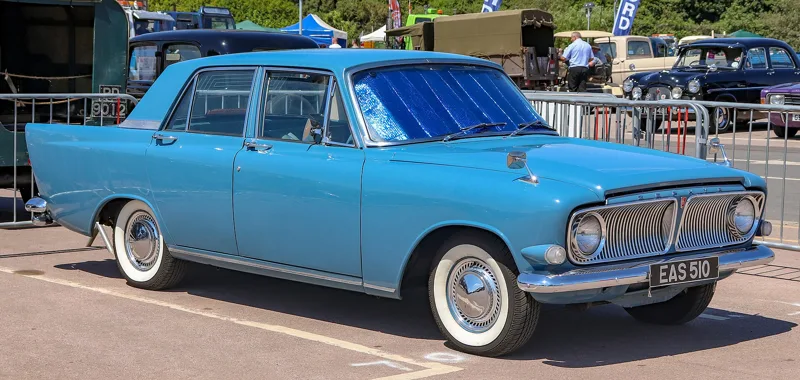
Ford's 1950s Australian sales were struggling against Holden, which had no real local rival. Ford had, for years, been assembling the British-designed Zephyr, Consul and Zodiac locally, genuinely decent cars that nonetheless kept losing out on price once the import tariffs on their parts were fully factored into the showroom sticker.
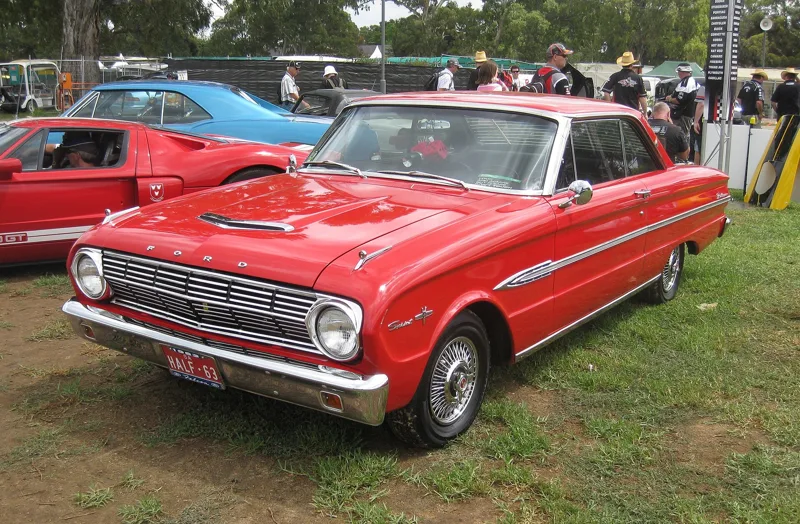
Canadian-sourced Ford V8s sat in an even higher price bracket, out of reach for most buyers, so Ford Australia initially planned to tool up for the Zephyr range using expensive dies bought from Ford of Britain. A 1958 visit to Ford's Detroit headquarters changed everything: executives saw the new American Falcon being readied for its US launch and were struck by how closely it matched Holden's size while looking lower, longer, wider and far more modern, with room for six and an optional two-speed automatic. To build it on home soil, Ford put up a brand-new factory at Campbellfield, near Melbourne, in 1959, known as the Broadmeadows Assembly Plant, complete with a roof originally drawn up in Canada for snow loads, which turned out to cope just as well with Australian hail.
How did the first Falcons perform on Australian roads?
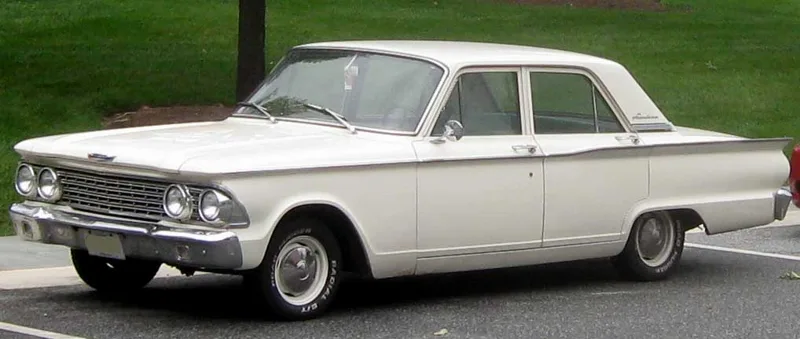
The original XK, launched September 1960 as a four-door sedan, took the American car and simply switched the driver to the right-hand side, offered with a 144 cu in (2.4 L) six across four engine and transmission combinations, undercutting the Holden FB's single manual-only 138 cu in (2.3 L) unit. Rural dealerships often fitted their own heavy-duty touches too, including tyres sized up to 6.40 by 13 in (16 by 33 cm) for the rougher roads many buyers actually drove on.
Early success soon ran into durability complaints on rough outback roads, chiefly collapsing front ball joints and suspension shims that dropped out and induced severe front camber, problems severe enough to earn the car the nicknames 'foul can' and 'fault can'. Ford kept refining the car rather than retreating: the 1962 XL borrowed heavier suspension from the Fairlane, and the 1964 XM went further still, upgrading the steering linkage to 9/16 in tie rods from the US car's 1/2 in items and lowering the upper control arms specifically to cut the bump steer both the Falcon and the early Mustang had inherited from the same basic platform.
When did the Falcon become a genuinely Australian design?
The 1964 XM broke new ground as the first Falcon to wear bodywork actually designed in Australia, raising the taillights and fitting a full-wrap chrome grille to suit local taste, while the 1969 XW pushed further with raised front-guard ridges and a buttressed C-pillar that made the car look noticeably larger than the XR and XT it replaced.
The XW also brought a new dashboard, fresh trim options and, for the first time, factory-integrated air conditioning as a genuine factory option rather than an aftermarket fit. None of this happened in isolation from the car's market position: the 1965 XP had already been described internally as 'make or break' for Ford's future in Australia, and its success, proven partly through a brutal 70,000 mi (110,000 km) endurance run at over 70 mph (110 km/h) around Ford's You-Yangs proving ground, devised by deputy managing director Bill Bourke, won the Falcon a Wheels Car of the Year award and bought the local design program the credibility it needed to keep evolving.
Ford Falcon generations and engines at a glance
Engines grew steadily, almost relentlessly, across the Falcon's first decade, climbing from a modest launch six to a genuine muscle-car V8 in under ten years, and this snapshot of the early generations shows just how quickly that whole climb actually happened.
| Series | Year | Key engine | Output |
|---|---|---|---|
| XK | 1960 | 144 cu in (2.4 L) six | four engine/gearbox combinations |
| XR | 1966 | 289 cu in (4.7 L) Windsor V8 | 200 bhp (150 kW) |
| XR GT | 1967 | 289 cu in (4.7 L) Windsor V8 | 225 bhp (168 kW) |
| XT | 1968 | 302 cu in (4.9 L) V8 | replaced the 289 unit |
| XW GT | 1969 | 351 cu in (5.8 L) Windsor V8 | 291 hp (217 kW) |
The base six-cylinder range moved too: the XR dropped the original 144 cu in (2.4 L) unit in favour of a 170 cu in (2.8 L) base engine with a 200 cu in (3.3 L) six optional, and the 1968 XT gave buyers a straight choice of two sixes on top of its revised V8: either 188 cu in (3.1 L) or, stepping up, 221 cu in (3.6 L).
What made the Falcon GT and GT-HO special?
The 1967 Falcon GT is widely considered the starting point of the Australian muscle car, built around a 225 bhp (168 kW) version of the 289 cu in (4.7 L) Windsor V8 sourced directly from the Ford Mustang, deliberately leaning on the Mustang's design cachet to sell the idea.
Ford kept pushing the formula: the 1969 XW GT stepped up to a 351 cu in (5.8 L) Canadian-built Windsor V8 making 291 hp (217 kW), and that same year Ford introduced the GT-HO specification, a homologation special built specifically for racing. Despite looking almost indistinguishable from a standard GT from the outside, the GT-HO carried a higher-performance engine, firmer suspension and larger Holley carburettors, all packaged under a name, Handling Option, that undersold just how serious a performance model it actually was.
What colours and details mark a genuine Falcon GT?
Most genuine XR GT Falcons left the factory finished in a shade simply called GT Gold. A small handful escaped the factory in other colours instead, and those non-gold survivors are now considered rarer and more collectible than the gold cars that defined the model.
The following year's XT facelift sharpened the GT look further, swapping in a divided grille and inset driving lights specific to the performance model while leaving the rest of the sheet metal untouched. The underlying platform proved remarkably elastic across the whole range: the two-door Landau coupe and the long-wheelbase Fairlane and LTD all grew from the same basic Falcon underpinnings, each aimed at a completely different kind of buyer. One small badging quirk is worth knowing for anyone hunting an original early car: the first Fairmont, introduced partway through the XP model run, carried both Falcon and Fairmont badges at once on the same car, a dual identity that later Fairmont generations simply dropped.
How did the Falcon range grow beyond the basic sedan?
Luxury followed performance just as naturally as performance had followed the base sedan. The Fairmont joined as the upmarket model from 1965, and Ford stretched the same underlying platform further still with the long-wheelbase Fairlane in 1967 and the even grander LTD in 1973, both of which stayed in production for decades, right through to 2007.
The ordinary model range diversified just as quickly. The XL added the range-topping Futura sedan and a woodgrain-trimmed Squire wagon, the XM introduced a two-door hardtop body style in Deluxe and Futura trim, and the XR line-up eventually spread across nine distinct models covering sedans, wagons, utilities and a van, with the Falcon 500 name replacing the old Falcon Deluxe trim badge. Ford New Zealand even built its own short-lived Falcon 600 variant at Seaview, Lower Hutt, aimed at buyers wanting extra standard equipment such as a heater. A handful of early XP Falcons were privately modified by Bill Warner with 260 or 289 cu in V8s, and those cars are now regarded as direct precursors of the GT Falcon that followed a year later, rather than mere one-off curiosities with no bearing on what came next.
Why did Ford end the Falcon?
Ford Australia announced the end of local Falcon production in May 2013, confirming well in advance that manufacturing would stop by October 2016, as part of the company's wider 2008 'One Ford' plan to rationalise its global model range rather than keep building region-specific cars for smaller markets.
Under that plan, the Falcon's indirect successors became the European-built Mondeo and the North American Mustang, the latter chosen specifically to keep some link to Ford Australia's V8 performance heritage alive even without a locally built car to carry it. The very last Falcon, a blue XR6, rolled off the line on 7 October 2016, closing out 56 years during which the nameplate had grown from a rebadged American sedan into one half of the defining rivalry in Australian motoring, against the similarly locally built Holden Commodore.
What should buyers know about the Falcon's legacy today?
Over 3 million Falcons and derivatives were built across seven generations, sold almost exclusively in Australia and New Zealand with smaller runs reaching South Africa and some right-hand-drive Asian markets, so survivors span everything from humble fleet sedans to genuine muscle-car icons.
Body styles thinned out as the decades passed: the hardtop coupe disappeared after 1978, the panel van after 1999, and the station wagon after 2010, leaving the final FG X generation offering only sedan and utility forms, with the long-standing Fairmont and Fairmont Ghia names retired in favour of the G6, G6 E and G6 E Turbo badges. For a buyer today, that history matters: an early XK or XL demands real scrutiny of its front suspension given the model's well-documented durability issues, while a genuine XW GT or GT-HO sits at the complete opposite end of the market, prized specifically for the racing homologation and V8 muscle that made 1969 such a pivotal year for the nameplate. Whichever end of that range a buyer is drawn to, the Falcon's near six-decade production run, spread across Australia, New Zealand, South Africa and parts of right-hand-drive Asia, means parts, knowledge and surviving examples remain far easier to track down than the badge's eventual 2016 retirement might suggest.
_XR6_Turbo_sedan_(23382738252).jpg)