How car stereos moved from a single AM set to cassettes, CDs and smartphone-linked screens, and why some engineers now use speakers to cancel engine noise.
Vehicle audio, or car multimedia, began with simple AM radios in the 1920s and 1930s. It later added FM, cassettes, CDs and streaming, and today's head units link smartphones through CarPlay and Android Auto. Some systems use speakers for active noise control, cancelling unwanted engine and road sound.
Vehicle audio, also called car multimedia, is the equipment in a car that provides entertainment and information to its occupants. Such systems are popularly known as car stereos. They began as a single AM radio, and today they combine navigation, telephone calls, streaming and smartphone apps in one unit.
How did the car radio begin?
In 1904, before mobile radio was commercially practical, the American inventor Lee de Forest showed off a car set at the Louisiana Purchase Exposition in St. Louis. He called himself the Father of Radio. The idea had to wait for technology that could run on a car's electrical system.
Around 1920, vacuum tube technology had matured to the point where radio receivers could make broadcasting worthwhile. The problem was power. The tubes needed between 50 and 250 volts of direct current, but a car battery ran at 6 volts, so early radios required their own separate battery. The solution was a vibrator that produced pulsing direct current, which a transformer, rectifier and filter could raise to the required voltage.
Guglielmo Marconi demonstrated a car wireless receiver in Chelmsford, Essex, in 1920, using an experimental longwave transmitter. In 1924, Kelly's Motors in New South Wales installed its first car radio.
The car radio began as a single AM set, and the speakers now cancel the noise that the engine makes.
When did car radios become affordable?
Early car radios were expensive relative to the vehicle itself. In 1930, the American firm Galvin Manufacturing marketed a Motorola-branded receiver for $130, when a Ford Model A cost about $540. A Plymouth sedan wired for a Philco Transitone radio was advertised as a no-extra-cost option in 1931.
In Germany in 1932, the Blaupunkt AS 5 was sold for 465 Reichsmark, about one-third of the price of a small car. It took nearly 10 litres of space, so it could not sit near the driver and was operated by a steering wheel remote control. In 1933, Crossley Motors sold a factory-fitted car radio for 35 pounds.
By the late 1930s, push button AM radios were considered standard. By 1946, there were an estimated 9 million AM car radios in use.
How did FM and transistors change the car radio?
An FM receiver was offered by Blaupunkt in 1952, and in 1953 Becker introduced the AM/FM Becker Mexico, which had a Variometer tuner with a station-search function. In April 1955, the Chrysler Corporation announced an all-transistor Philco car radio as a $150 option for its 1956 Chrysler and Imperial models.
Chrysler dropped that option at the end of 1956 because it was too expensive, and it replaced it with a hybrid radio that used transistors and low-voltage vacuum tubes for 1957. Becker's 1963 Monte Carlo was a solid-state set that used no vacuum tubes.
Traffic information arrived through a broadcast system called the Autofahrer-Rundfunk-Informationssystem, or ARI. The German ARD network used it from 1974 to 2005. Developed by the Institut fuer Rundfunktechnik and Blaupunkt, it signalled traffic announcements through a 57 kHz subcarrier on the FM signal. ARI was replaced by the Radio Data System.
Which physical media did drivers use?
Mobile players were built for vinyl records, 8-track tapes, cassette tapes, compact discs and later MP3s. Each format brought its own design problems, from skipping to theft. Vinyl came first. Chrysler offered a record player as an option on its 1956 cars, developed by CBS Labs.
It used specially provided 7-inch discs at 16 2/3 rpm, and it was expensive, so it was dropped after two years. Less expensive options used standard 45 rpm records from RCA Victor, which offered one only in 1961, and from Norelco. All of these players needed extra pressure on the needle to stop it skipping, which wore records out faster.
| Format | Introduced in cars | Notable detail |
|---|---|---|
| Vinyl record player | 1956 | Chrysler option built by CBS Labs, dropped after two years |
| 4-track cartridge | 1962 | Muntz Wayfarer, with celebrity customers |
| 8-track tape | 1965 | Ford and Motorola option for 1966 Fords |
| Cassette | 1968 | Philips dashboard radio, popular through the 1970s and 1980s |
| Compact disc | 1984 | Pioneer CDX-1, the first car CD player |
In 1962, Muntz introduced the Wayfarer 4-track cartridge player, which Frank Sinatra and other celebrities had installed in their cars. In 1965 Ford and Motorola introduced the in-car 8-track tape player as an option for 1966 Fords, and in 1968 Philips introduced a dashboard radio with a built-in cassette player. Cassettes later added longer play times, better tape quality, auto-reverse and Dolby noise reduction.
When did CDs take over from cassettes?
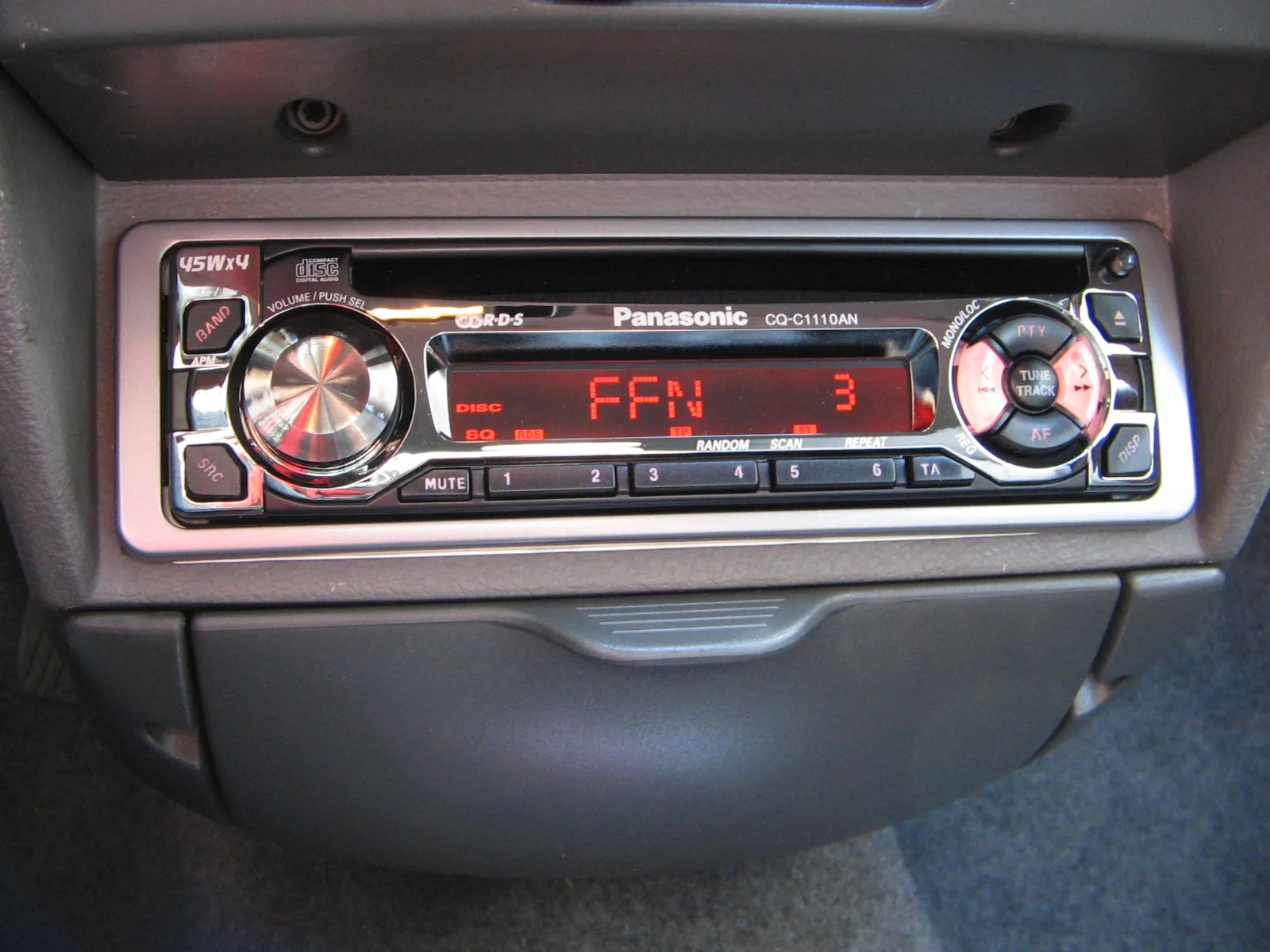
Pioneer introduced the CDX-1 in 1984, the first car CD player. It offered better sound quality, instant track skipping and greater durability than cassette tapes. CD changers gained popularity in the late 1980s and through the 1990s, first in the boot and later in the head unit, some holding six to ten discs.
Mercedes was the first automaker to offer a CD player from the factory. The unit was a Becker Mexico radio with a built-in CD player, sold as an option on most models from 1985 or 1986. Lincoln followed in the 1987 Lincoln Town Car with an OEM CD player built with JBL.
In 2014, 83% of new cars sold in North America had CD players, but that figure dropped to 76% a year later. Research firm IHS Automotive projected that 46% of cars would be without CD players by 2021. Only nine new US models launched with CD players in 2024, four in 2025 and one in 2026, the Subaru WRX.
Is the AM radio band disappearing?
Internet radio, satellite radio, streaming and podcasts all competed with AM and FM radio through the 2010s, and by then some models had 5.1 surround sound. In 2023, several makers, including Ford, announced plans to stop offering the AM band in new vehicles from the 2024 model year.
Ford later reversed that announcement, with its chief executive citing the importance of AM for the emergency alert system. Audi, BMW, Volvo and Tesla had already stopped offering the band on some of their electric vehicles. Lawmakers responded with bipartisan legislation requiring carmakers to keep the AM band on their audio systems.
How has the head unit changed?
In the early 21st century, compact digital storage, including Bluetooth devices, thumb drives, memory cards and dedicated hard drives, was accommodated by vehicle audio systems. Auxiliary input jacks and USB ports were added so that MP3 players could feed the car's speakers. Minivans and three-row SUVs gained optional rear entertainment systems with DVD players.
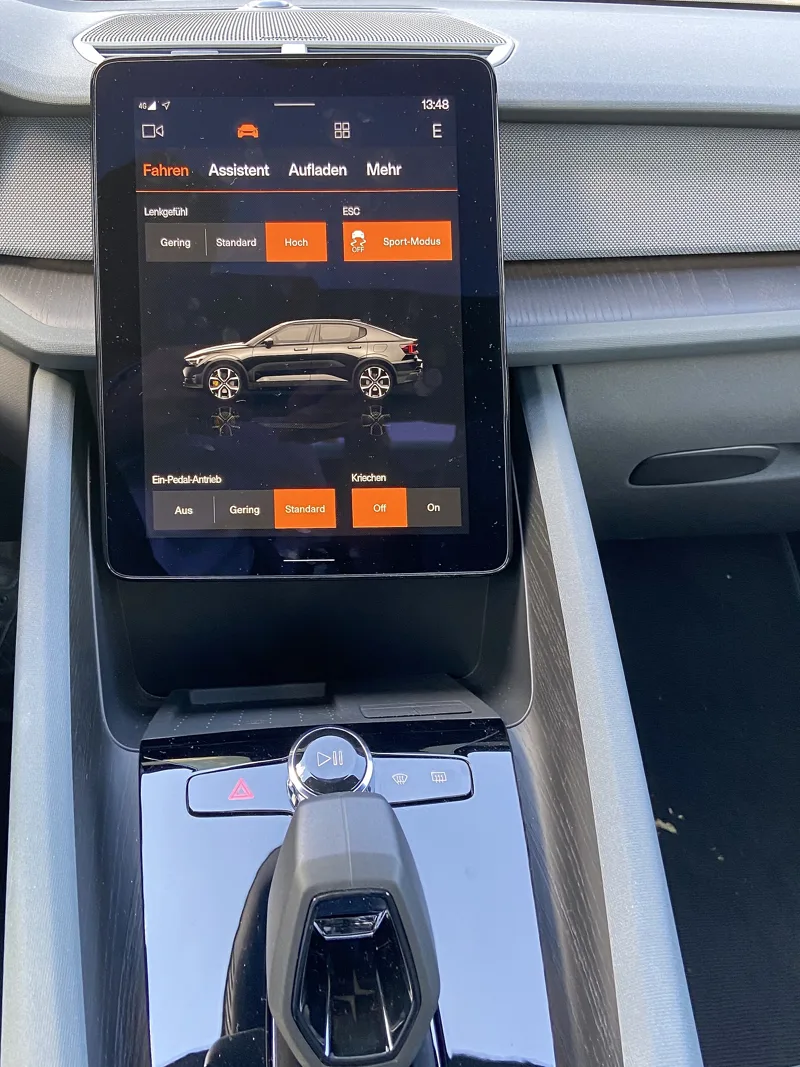
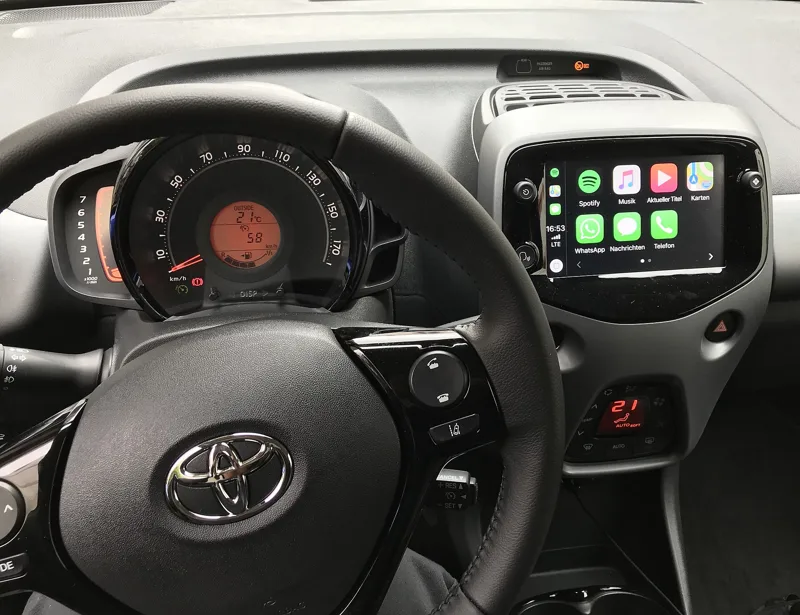
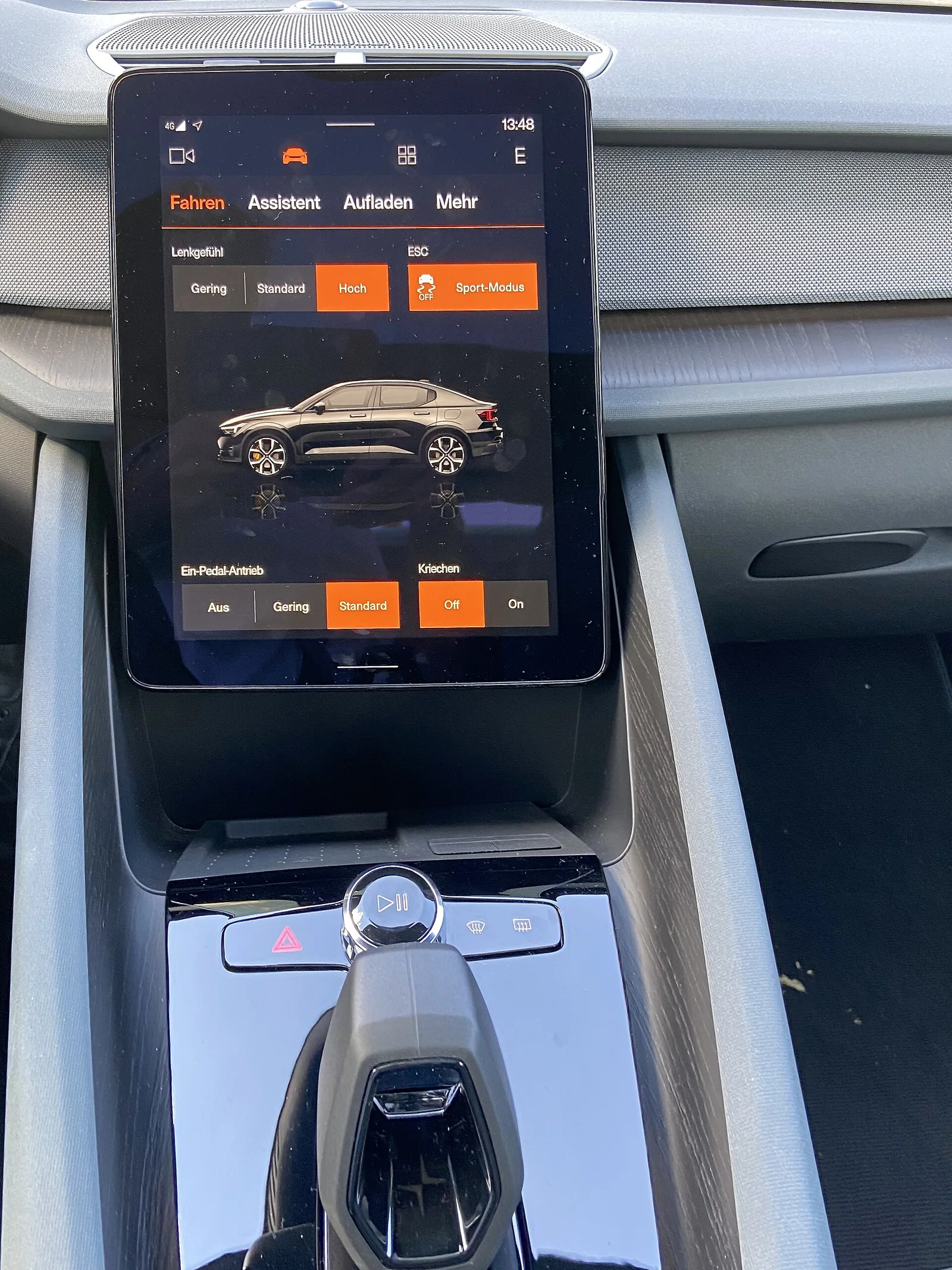
The head unit has since become the centre of the car's digital life. It houses front and backup dashcams, navigation and operating systems such as Android Auto, CarPlay and MirrorLink, which let a smartphone's music library and navigation apps run through the vehicle's infotainment system. Newer units add Bluetooth and HDMI connections, and double DIN screens range from 5 to 7 inches (130 to 180 mm).
How does active noise control work?
The car's sound system can also reduce noise. Active noise control uses microphones placed near the engine, underside and exhaust to pick up unwanted sound. A digital signal processor then sends a processed signal through the loudspeakers, so that the sound inside the cabin is reduced or cancelled out.
The first such system focused only on engine noise, and it was developed by Lotus and licensed for the 1992 Nissan Bluebird sold in Japan. Lotus later teamed up with Harman in 2009 to develop a fuller system covering road and tyre noise, along with chassis vibration. Other operating data, such as engine speed and highway speed, can also feed into the processor.
Active noise control has practical benefits. The car can weigh less because less sound-deadening material is needed, and it can run without a heavy balance shaft in the engine. Removing that shaft also improves fuel efficiency. The 2013 Honda Accord used the technology, as did the 2013 Lincoln luxury line and the Ford C-Max and Fusion. Systems with several noise sources can remove up to 80% of it.
Can a car stereo make the engine sound louder?
The same speakers can be used to synthesise or augment engine sound, making a small engine sound more powerful to the driver. Ford's Active Noise Control feature on the 2015 Mustang EcoBoost Fastback and Premium models amplifies the engine note through the speakers, and a comparable setup appears in the F-150 pickup.
Other makers take different routes. Volkswagen uses a Soundaktor, a special speaker that plays sounds in cars such as the Golf GTi and the Beetle Turbo. BMW plays a recorded sample of its engines through the car speakers, choosing different samples according to the engine's load and power.
What are the main components of a car stereo?
The stock system is the audio fitted by the manufacturer when the car was built, and aftermarket components can replace it. The head unit contains the screen and buttons and is usually made in DIN form, which refers to the ISO 7736 standard.
Head units come as single DIN or double DIN, and their connectors can use the ISO 10487 harness adapter.
Speakers come in several types. Coaxial speakers are the most common, with a woofer and tweeter on the same axis. Component speakers use separate woofers, tweeters and crossovers, which allows finer tuning. Subwoofers reproduce low-frequency bass, midrange speakers handle vocals and instruments such as guitars and pianos, and tweeters handle high-pitched sounds such as cymbals.
Amplifiers increase the power of audio signals, and some head units have built-in stereo amplifiers while others need a stand-alone unit. Sound-deadening material in the door cavities and the boot dampens panel vibration caused by loud bass. Digital sound processors can enhance or alter the signal being reproduced.
Are loud car stereos legal?
Loud car stereos can break the law. According to the non-profit Noise Free America, excessively loud systems violate municipal noise ordinances, and some cities have outlawed them. In 2002, the US Department of Justice issued a guide to police officers on dealing with problems caused by loud car audio.