From 525 vehicles in 1961 to 1.98 million in 2017: how three Southeast Asian car industries grew, stalled or started over.
Thailand is Southeast Asia's largest car producer, building about 1.98 million vehicles in 2017, many of them pickups. The Philippines mostly sells foreign brands, with imports outnumbering local assembly since 2008. Vietnam assembles foreign models from kits and has its own brand, VinFast.
In 1961 Thailand assembled 525 vehicles. By 2017 it was making about 1.98 million. That jump, from a few hundred vehicles in a tiny market to one of the largest car industries on earth, is the clearest sign of how far one country in Southeast Asia has come. Thailand became the region's biggest maker, the Philippines slipped from regional pioneer to a country that imports more cars than it assembles, and Vietnam is trying to create a home-grown brand. Most of what they build was designed somewhere else.
The Thailand car industry started with 525 vehicles in 1961
The first car in Thailand arrived around 1900, brought in by the royal family. The industry proper began in 1960, when the government adopted an import substitution policy. A year later local assembly began at the Anglo-Thai Motor Company, which paired Ford of Britain with Ford's existing Thai importer. The market was tiny: 3,232 passenger cars were sold in 1961, and only 525 vehicles, 310 cars and 215 trucks, were put together in the country. FSO, Fiat's partner Karnasuta General Assembly and a tie-up of Siam Motors and Nissan followed quickly.
By 1970 local assembly had reached 10,667 units, but a policy review in 1969 had found that the tax breaks were increasing the trade deficit instead of reducing it. An Automobile Development Committee was set up with manufacturers to deal with this. In 1971 the Thai-assembled share was still about half the market.
Thailand builds the cars, the Philippines imports them and Vietnam assembles them from kits, and almost none are designed at home.
Tariffs, local content and the big squeeze
From 1971 the government and industry groups pushed harder on localisation. The proliferation of models made economies of scale impossible, so tariffs on completely built-up (CBU) vehicles were raised, and the local-parts requirement was stepped up to 25 per cent in 1975. A freeze on new assemblers was imposed too, and limits on model numbers were dropped before they could bite, because makers found ways round them. The trade deficit in vehicles rose more than sixfold from 1972 to 1977, with plants running at about a sixth of capacity. After CBU tariffs reached 150 per cent, imports of built-up cars were banned in 1978. The local-parts target was meant to reach 50 per cent by 1983, but lobbying by manufacturers and Japan's chamber of commerce held it at 45 per cent.
The rules forced out smaller names such as Dodge, Hillman, Holden and Simca, while GM, Ford and Fiat withdrew in the late 1970s. In 1985 imports with engines larger than 2.3 litres (140 cu in) were allowed back, with a 300 per cent import duty. The Plaza Accord that year brought more Japanese investment, and in 1987 Mitsubishi Thailand sent the first Thai-built exports, 488 passenger cars and 40 buses, to Canada.
How Thailand opened up, crashed and became an exporter
Restrictions were eased in 1991. The ban on cars with engines under 2.3 litres was dropped, tariffs were lightened and a flood of South Korean cars arrived. Japanese makers responded with low-priced cars made for the market, the Honda City and Toyota Soluna. Growth averaged 12 per cent a year from 1992 to 1996. Then the Asian crisis hit, and 1998 sales were less than a quarter of the record 1996 total.
The pre-crash investment left Thailand with capacity of 1.2 million cars and trucks in a market that seldom reached 700,000. The industry therefore turned to exports, and in 1998, a dark year for sales, Thailand became a net exporter of cars for the first time. A 1992 scheme let parts makers in Malaysia and Thailand trade freely, which helped them reach scale. In November 1997 duties on fully built-up vehicles were raised to a flat 80 per cent. The government then dropped the local-parts requirement on 1 January 2003 and signed bilateral deals with Australia, China and India. Production clustered in eastern Bangkok, Rayong, Chachoengsao, Chonburi and Ayutthaya.
Who actually makes the decisions in Thailand
The Board of Industries has called Thailand the "Detroit of the East", and by a large margin it is the biggest vehicle producer in the ASEAN area. Yet nearly all production is by subsidiaries of foreign conglomerates, so the decisions that matter are made in Tokyo and Detroit. Most vehicles are developed and licensed by Japanese, American and Chinese firms, with BMW and Mercedes among those assembling from kits. Thailand uses the ASEAN Free Trade Area as an outlet for its output and applies an 80 per cent tariff to imports from outside ASEAN. As of 2019 it was the biggest in Southeast Asia and tenth in the world, with annual output above two million cars and pickup trucks.
Why Thailand builds so many pickup trucks
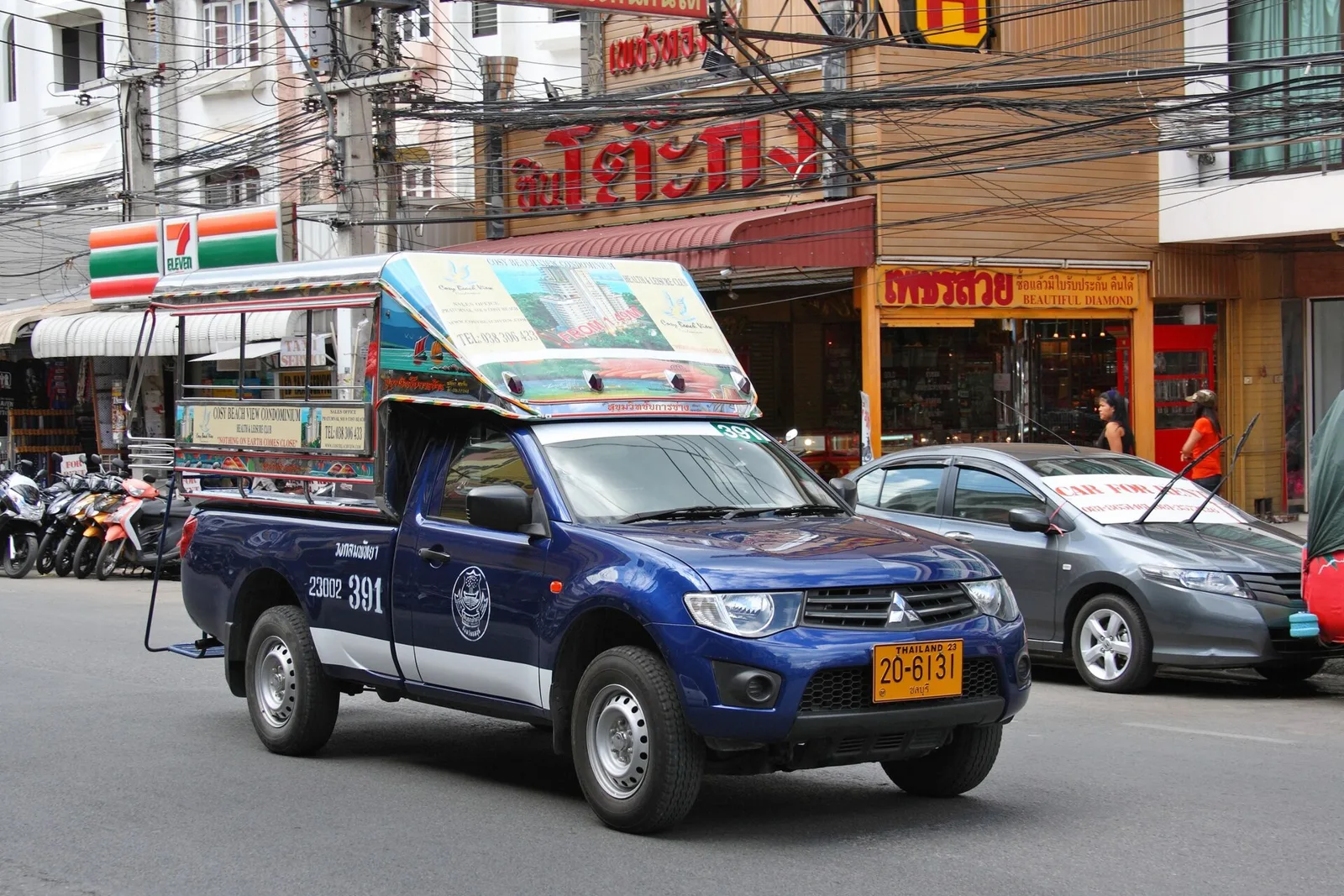
Pickups hold more than half the Thai market, making it the world's second-largest market for them after the United States. Their popularity is attributed to government tax policy and a need for multi-purpose vehicles, and the downside is diesel exhaust, which is blamed in part for Bangkok's air pollution. In 2017 one-ton pickups made up nearly 50 per cent of domestic sales and an equal share of exports. Of about 1.98 million vehicles built that year, 871,650 were sold at home, up 13 per cent, and the rest were exported, earning around US$28 billion, or 12 per cent of the country's US$236 billion in exports.
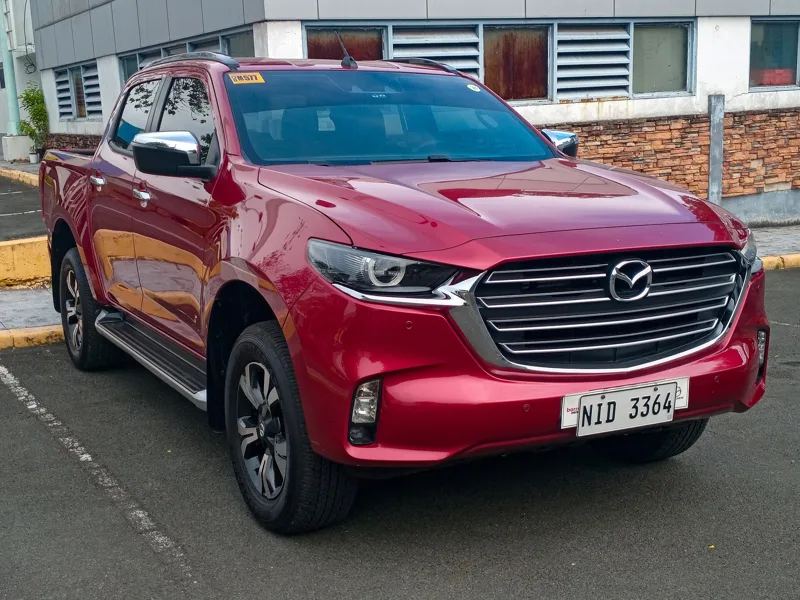
Ford, Isuzu, Mazda and Mitsubishi all made Thailand their global base for pickups, exporting to Europe, Japan and beyond. The trucks do not go to North America, where bigger trucks are preferred and a 25 per cent duty applies. Thailand overtook the United States as the biggest maker of one-ton pickups in 2005, and by 2007 it was second to the US in both production and exports of pickups of all sizes.
Eco-cars, carbon tax and Japanese dominance
In 2007 Thailand introduced tax incentives for eco-cars, small-engined models that sip fuel and meet European carbon standards. Nine multinational producers joined, including Toyota, Honda, Nissan, Mitsubishi and Suzuki, and each had to build 100,000 eco-cars within five years to qualify. The scheme was a success. A 2016 tax moved from engine size to emissions: cars emitting under 150 grammes per kilometre face a 30 per cent excise tax, those at 150-200g/km 35 per cent and those above 200g/km 40 per cent. Cars that can run on E85 pay under 5 per cent at each level, and eco-cars emitting under 100g/km pay 12 to 14 per cent, down from 17 per cent.
Japanese brands have long held the market. They took 91 per cent in 1978 and 90 per cent in 1982, and still had 88.5 per cent in 2006 even after Ford, General Motors, Volkswagen and BMW arrived late.
| Country | Scale | What it mostly does | Policy lever | Home-grown brand |
|---|---|---|---|---|
| Thailand | About 1.98 million vehicles built in 2017 | Builds foreign designs, led by pickups, for home and export | Eco-car tax incentives, dropped local-parts rule in 2003 | Foreign subsidiaries make nearly all output |
| Philippines | About 441.4 thousand sold in 2023 | Imports more than it assembles | PCMP, CDP, CARS | Mostly foreign brands; small jeepney builders |
| Vietnam | 85 per cent of car sales from local kits (April 2018) | Assembles imported kits for the home market | High import taxes, special consumption tax | VinFast |
Thailand's electric vehicle plans and the 2020 shock
The Thai Energy Ministry's planning office expects electric vehicle purchases to climb from 9,000 in 2018 to 406,000 in 2028 and 1.2 million in 2036. State help comes as cheap import tariffs for importers and tax exemptions for manufacturers, with little for consumers. Hybrids have been assembled locally since 2009, beginning with three models: the Camry, the Accord and the X-Trail. Toyota builds 7,000 hybrids a year and 70,000 EV batteries. The Electric Vehicle Association of Thailand thinks take-up is too slow: at the end of 2019 there were 2,854 electric vehicle registrations, up 380 per cent on the 325 of 2018, and 153,184 hybrids and plug-in hybrids.
BMW built its Rayong plant in 2000, at a cost above 2.6 billion baht, and exported 9,449 completely built-up cars in 2016, mostly to China. The pandemic hit hard. The Federation of Thai Industries forecast that output would fall 37 per cent to 1.33 million in 2020, perhaps to one million, and the manufacturing index in April 2020 dropped about 82 per cent year on year, the lowest since 1987.
The Philippines car industry: from regional pioneer to importer
The Philippine story starts under American rule. The US Army Signal Corps brought Woods electric cars into the country in December 1900 for military use, and Dr Juan Miciano bought a French Richard-Brasier in 1901, according to a 1910 directory. Shipping a car from Europe or the United States took at least three months. American marques such as Buick, Chevrolet, Ford and Dodge dominated from the 1920s to the early 1970s, and the country pioneered car assembly in Southeast Asia. Japanese cars arrived in the 1960s, and from the mid-1960s buyers who wanted economy and practicality increasingly turned to them.
Local production began in 1975. In the 1973 oil crisis Ferdinand Marcos, then president, urged Filipinos towards smaller four-cylinder cars, and the appetite for American full-size sedans faded. Today the market is mostly Japanese brands. About 441.4 thousand vehicles were sold in 2023, and the country has an assembly sector and a parts sector. Small firms also assemble jeepneys using surplus engines and drivetrains, mostly from Japan.
The Progressive Car Manufacturing Program that never made a Filipino car
In 1973 Marcos signed the Progressive Car Manufacturing Program, with scheduled increases in local parts content. Four makers were chosen at first, but Ford argued itself in with an 11-hour proposal that promised a stamping plant, making five: Delta Motors for Toyota, General Motors Pilipinas, Ford Philippines, DMG for Volkswagen, and PAMCOR, the Chrysler and Mitsubishi venture. Each was urged to build an affordable Asian utility vehicle from local materials, with flat-stamped body panels and no compound curves to ease tooling and repair. The Toyota Tamaraw and Ford Fiera were the most successful. When Ford left in 1984, Nissan bought the design of the fourth-generation Fiera and sold it as the Bida.
The programme was deemed a failure. Prime Minister Cesar Virata conceded that, since 1975, none of the five had built a car that could be called made in the Philippines: the Fiera was assembled in Taiwan, and the Tamaraw came from Indonesia. After the early-1980s financial collapse three members withdrew, leaving Nissan and Mitsubishi.
Car Development Program, crisis and the CARS programme
The Car Development Program replaced it in 1987 with lower local-content demands, with Mitsubishi, Nissan and Toyota as the first members. The People's Car Program added Honda, Kia, Fiat and later Proton in 1990, and a Luxury Car Program in 1992 brought in Volvo and BMW and brought back Mercedes-Benz. After the 1986 People Power Revolution, the original makers returned in 1988, and as many as 13 manufacturers competed for a market of around 100,000 cars a year. In 1996 local makers built 138,000 units, 85 per cent of domestic sales.
The 1997 Asian financial crisis changed that. Several makers withdrew and became importers of finished cars. A 2002 tax reform cut sales taxes on the cheapest microcars, mostly imported from ASEAN neighbours or China, and raised them on popular locally assembled utility vehicles. Sales reached 144,435 in 2007, but since 2008 imports of built-up cars have outnumbered locally assembled ones. In 2019 a car imported from Indonesia was 24 per cent cheaper than a local equivalent, and completely built-up cars from South Korea were also 24 per cent cheaper, with Thai ones 18 per cent cheaper.
The Comprehensive Automotive Resurgence Strategy was meant to change this. Only Mitsubishi, approved in 2016 to build the Mirage, and Toyota, which has made the Vios since 2007, took part, each targeting 200,000 vehicles in six years. It was considered unsuccessful, because most manufacturers prefer Thailand, Indonesia, Malaysia, Vietnam or China for lower taxes, costs and wages. A Public Utility Vehicle Modernization Program launched in 2017 aims to phase out jeepneys, buses and other vehicles at least 15 years old.
The Vietnam car industry: kits, taxes and a small market
Vietnam's industry is fast-growing and mostly serves home buyers. Every model made there is designed abroad, and many are built from knock-down kits. The government protects domestic assembly with high import taxes of 83 per cent, and a separate 30 per cent import tax was discontinued from 1 January 2018 under ASEAN agreements. The industry is not considered competitive enough for exports, and in April 2018 some 85 per cent of car sales were of cars assembled locally from kits.
Before the Doi Moi reforms, car ownership was limited. The first car factories opened in 1995, assembling kits for Mitsubishi, Toyota and Isuzu. Between 2003 and 2006 the sales tax rose from 5 per cent to 50 per cent. A Special Consumption Tax adds 35 per cent for small cars of up to 1.5 litres, rising to 150 per cent for engines of 6 litres or more, and value-added tax is normally 10 per cent, currently 8 per cent.
Vietnam's parts gap
Vietnam exported US$4.4 billion of car parts, a surplus of US$900 million, mostly from foreign-owned firms. It had 226 parts suppliers in 2018, but the locally made share of parts in vehicles was only 10 per cent, against as much as 80 per cent in Thailand and Indonesia. Because most advanced parts must be imported, vehicles built in Vietnam tend to cost more than imports.
Who builds what in Vietnam
Toyota Motor Vietnam builds the Vios, Avanza, Veloz, Fortuner and Innova from kits and produced 41,000 vehicles in 2017; Toyota held 23 per cent of passenger car sales that year. The Vios has been the best-selling car since 2013, followed by the Hyundai Accent and Grand i10. Mercedes-Benz assembled its first E-Class in Ho Chi Minh City in 1996 and built 6,000 vehicles in 2017. THACO builds Kia models at Chu Lai, Mazda 2 cars at Nui Thanh, in a plant that can make 10,000 a year with 300 workers, and Peugeot models since 2019. In March 2025 Skoda partnered with Thanh Cong to begin local assembly of the Slavia and Kushaq in Quang Ninh province, using kits from India.
Electric forecasts, jeepney replacement and Vietnamese plant plans
Thailand's Energy Planning and Policy Office forecasts 406,000 electric vehicle purchases in 2028 and 1.2 million in 2036. In the Philippines the Public Utility Vehicle Modernization Program set a goal of an efficient, environmentally friendly transport system by 2020, with the replacement of old jeepneys planned over three years from 2017. Hyundai reportedly strongly considered a plant in Ninh Binh, Vietnam, for the Grand i10, and VinFast planned a plant in Haiphong.
VinFast and the Vietnamese cars that came before
VinFast is described as Vietnam's first successful passenger vehicle brand. In August 2018 it took over General Motors' Vietnamese operations, gaining rights to distribute GM models and the Hanoi plant, and it also planned a plant in Haiphong. Its chief executive is Pham Nhat Vuong, the founder of Vingroup. The range includes the VF 3 mini car, the VF 5, and the VF 6, VF 7, VF 8 and VF 9 SUVs, along with taxi-oriented Green models and city buses from 6 to 12 metres.
Earlier attempts struggled. Vinaxuki, which made light commercial vehicles and planned Vietnam's first domestically developed passenger car, went bankrupt in 2015, and efforts to revive it have so far failed. Before that, La Dalat, a car based on the Citroen 2CV, was the first car produced in Vietnam, with 5,000 built between 1969 and 1975.