What separates the names, how soft tops, detachable and retractable hardtops and targa panels trade stiffness, noise and cost, and where each design came from.
A convertible is any car that can run with or without a roof, a roadster is an open two-seater with sporting character, and a targa has a removable roof panel with a roll bar behind the seats. Soft tops are light, detachable and retractable hardtops are stiffer and quieter, but cost more or need storage.
Removable roof panels became popular in the 1960s and 1970s because carmakers feared the government would ban convertibles. Worry that the US Department of Transportation would act over what happens to occupants when an open car overturns pushed manufacturers towards targa tops and T-tops. By 1976 the open Cadillac Eldorado, about 14,000 of them that year, was the last convertible an American factory built, and for a time every convertible sold in the United States was imported.
What is the difference between a convertible and a roadster?
A convertible, or cabriolet, is a passenger car built to run either roofed or open. The word cabriolet comes from a small carriage with two wheels, one horse and a folding hood. Cabrio, drop-top, ragtop, soft-top, spider and spyder are all in use, and in Britain the historical term for a two-door was the drophead coupe, while a four-door was an all-weather tourer. Makers have long used these labels interchangeably depending on market and period, so consistency is rare.
A roadster is narrower in meaning: an open two-seat car with an emphasis on sporting appearance or character. It began as an American term for a two-seater with no weather protection. In 1916 the US Society of Automobile Engineers defined it as an open car for two or three people. British buyers preferred open two-seater or two-seat tourer, and used roadster increasingly from the 1950s. Today the word has spread internationally and covers two-seat convertibles. In practical terms, then, every roadster is open, not every convertible is a roadster, and a four-seat Morgan variant is not technically a roadster at all.
The spider has a stranger story. It is said to come from 19th-century lightweight horse-drawn phaetons with small bodies and large wooden wheels with thin spokes, nicknamed spiders for their look. The nickname moved over to sports cars even though they looked nothing alike. In 1962 Chevrolet applied it to the Monza Spyder, a turbocharged Corvair offered as a convertible or coupe.
Removable roof panels became popular because carmakers feared the US government would ban convertibles.
What is a targa top, and how is it different from a T-top?
A targa is a semi-convertible with a lift-out roof section and a roll bar spanning the full width of the car behind the seats. Porsche AG holds the name as a registered trademark. The back window is normally fixed, although a few targas have a plastic one that folds away.
The T-top is a different arrangement. A solid bar that stays in place joins the top of the windscreen to the rear roll bar, and two roof panels sit over the seats on either side of that central T.
Porsche took the name from the Targa Florio, a road race in Sicily at which the company did very well. In Italian, targa means plate or placard. Accounts differ on the date: one gives the 1966 Porsche 911 Targa as the first use, another the 1965 car, and a third refers to the 1967 model. Porsche was not the first to use a removable panel. The Hispano-Suiza H6B Dubonnet Xenia had one in the 1930s at the latest. After the war the earliest known case is the limited-run 1957 Fiat 1200 Wonderful, bodied by Vignale to a Giovanni Michelotti design. Michelotti also drew the 1961 Triumph TR4, whose version Triumph called a surrey top, and the Saab Catherina prototype of 1964 and the Toyota Sports 800 of 1965 followed with similar roofs.
Because Porsche trademarked the name, other makers looked for alternatives. Targa and T-top numbers have slowly fallen. Makers turned instead to full convertibles with folding metal roofs, the Mercedes-Benz SLK among them, and to better structural design, including roll-over bars that pop up behind the seats and others built into the windscreen frame.
How did the Porsche targa roof develop?
The 1996 Porsche 993 Targa introduced a retractable glass roof that slid under the rear window, with a shade to stop the greenhouse effect. It meant the car kept nearly the same side profile as other 911 Carrera variants and removed the chore of storing a removed roof. The 996 and 997 Targas continued the idea, with a lifting glass hatch at the back.
The latest generations, the Types 991 and 992 of 2013 and 2019, return to the earliest Targa roots with a solid roof panel over the front seats. Where older 911s had panels you lifted out by hand, the panel is motorised and slides away under a rear glass roof that itself lifts out of the way. The 991 also revived the targa bar, but in sections, with the horizontal member lifting off its vertical supports to let the panel through. Ferrari tried a hybrid in the 2005 Superamerica, designed by Leonardo Fioravanti, with a roof that rotated through 180 degrees. He had previewed it on the 2000 Alfa Romeo Vola concept, and Renault used the idea in the 2010 Wind.
What is a soft top made of?
Most convertible roofs fold, and the top itself is cloth or another fabric. Early tops used cotton canvas woven so tightly it was waterproof. By 1955 the favourites were latex and butyl rubber fabrics, at around 35% of a top's weight each, followed by vinyl at 12% and jute at 8%, with rayon and acrylic fibres at about 1% each. PVC was widely used too, laid as an upper PVC skin over a fabric layer that was usually cotton.
The folded mechanism with its top is called the stack. A design that folds down to a lower stack height gives a smoother silhouette with the top down, and concealed side rails can free up room for three in the back seat, as on the 1967 Rambler Rebel convertible. Rear windows were traditionally plastic, though some convertibles now use glass.
Soft tops have small vulnerabilities. Folding fabric tops often fail to hide the internal mechanism fully, and their underside can be exposed to sun and fade. A tonneau cover provides a solution. And noise is a perennial complaint. A windblocker, or wind deflector, keeps rushing air away from the occupants. The engineer behind the 2008 Chrysler Sebring put the reduction in wind noise from its windblocker at approximately 11 to 12 dB. Some convertibles also blow warm air at the occupants' necks through ducts in the seat, a feature called the Air Scarf, as on the Mercedes-Benz SLK-Class and SL-Class and the Audi A5/S5.
Detachable hardtops: stiffer, quieter, but where do you put them?
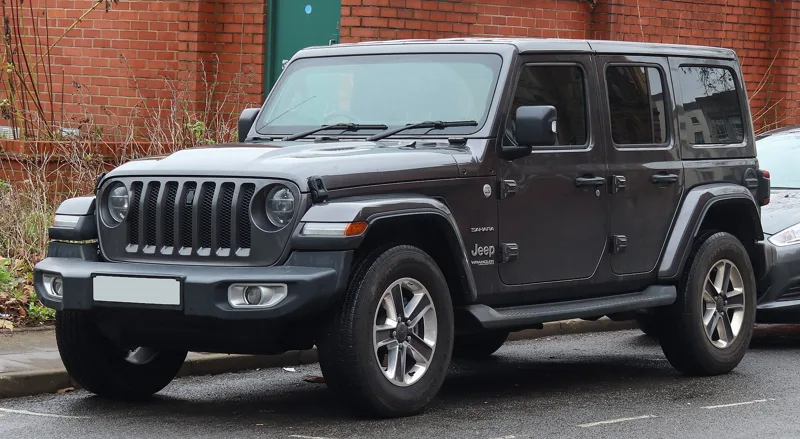
Rigid removable roofs, many of them stored in the boot, have been available since at least the 1950s. They usually provide greater weatherproofing, soundproofing and durability than fabric tops, and some come with integrated rear-window defrosters. The Ford Thunderbird, Mercedes SL, Porsche Boxster, Jeep Wrangler and Mazda MX-5 are among those that have offered them.
The catch is storage. A detachable roof cannot be kept inside the car when it is not in use, so you need a garage or other space, and some need more than one person to fit or remove. Improvements in canvas tops have made the type less common. Because a folding mechanism is itself expensive, the hardtop was customarily an extra-cost option. Early Thunderbird and Corvette buyers (the Corvette up to 1967) could pick a hardtop or a canvas top without paying extra, but wanting both cost more. The Mazda MX-5 still lists a hardtop as an option, and some racing series insist on it. The Carson top, a metal-framed roof popular on custom 1930s Ford convertibles, turned them into an almost instant hardtop with a lower, more rakish profile than a folding one.
Are retractable hardtops worth it?
A retractable hardtop, or coupe convertible, is an automatically operated, self-storing hardtop, built from between two and five metal or plastic sections. In exchange for better climate control and security, the owner accepts more mechanical complexity, higher cost, extra weight and, often, less luggage room.
| Roof | What it offers | What it costs |
|---|---|---|
| Soft top | Lighter, simpler, folds into a low stack | Less secure and weatherly, noise, sun exposure of the fabric |
| Detachable hardtop | More weatherproofing, soundproofing and durability | Must be stored outside the car; may need several people to fit |
| Retractable hardtop | More weatherly, more secure, increased rigidity | Higher cost, weight and centre of gravity; less passenger and boot space |
| Targa | Open roof section with a roll bar behind the seats | Roof panel to store; some models fully motorised |
| Cabrio coach | Fabric roof with more of the original structure, higher rigidity or lower weight | Less open than a full convertible |
Compared with a soft top, the retractable hardtop is more weatherly with the roof up, more secure, and adds structural rigidity. It can also simplify a model line. BMW sold the Z4 (E89) solely as a coupe-convertible, whereas the E85 before it came as separate coupe and soft-top models. Against that, it costs more at the outset, adds mechanical complexity, may take away passenger and boot space, and has more weight and a higher centre of gravity, which can hurt handling. It may also need extra clearance while it operates: the Volvo C70 needs 6.5 feet (2 m) of height, the Cadillac XLR 6 ft 10 1/2 in (2 m), and the boot lid of the Mercedes SLK extends rearward as the top moves.
Numbers from the third-generation Mazda MX-5 show the cost can be modest. Its optional power hardtop weighed 77 lb (35 kg) more than the soft top and did not reduce cargo capacity. The Chrysler Sebring offered a retractable roof alongside a soft top in an identical body, and the retractable version had an underbody cross-brace the soft-top did not.
The idea is older than most people think. Ben P. Ellerbeck was granted a patent in 1921 and in 1922 fitted a manually operated flip-top to a Hudson Super Six roadster, but it never went into production. Georges Paulin patented his Eclipse roof in France in 1932, and a Peugeot 401D carried it in 1934. Peugeot bought the patent and in 1935 launched the first factory-built, power-operated retractable hardtop, the 402BL Eclipse Decapotable, about 470 of which were built.
The most ambitious early attempt was Ford's. The 1957 to 1959 Fairlane 500 Skyliner was a halo car priced at double a baseline Ford sedan, and 48,394 were built. Development had cost an estimated US$18 million, after an earlier Continental Mark II proposal was rejected for cost and marketing reasons. The roof raised or lowered in about 40 seconds, through a mechanism of ten power relays and ten limit switches, four lock motors, three drive motors and eight circuit breakers, wired with 610 feet (190 m) of cable. The Toyota Soarer Aerocabin of 1989 revived the idea in a run of 500, and the Mercedes-Benz SLK of 1996 and the Peugeot 206 CC of 2001 popularised it. In 2006 the New York Times suggested the retractable hardtop could signal the end of the cloth-roofed convertible, and in 2007 the Wall Street Journal wrote that convertibles were increasingly choosing sophisticated folding metal roofs, which made them usable in every climate and season.
Which roof suits strong sun and wet weather?
The weak points differ by roof. A fabric top is exposed to sun and fading and needs a tonneau cover to protect it. A detachable or retractable hardtop is more weatherproof and more secure, and the Porsche glass targa roof carried a shade to counter the greenhouse effect with the roof closed. The cabrio coach is an in-between answer: it retains the bodywork up to the tops of the door frames and swaps only the roof skin for a retractable fabric panel, so it is stiffer or lighter than a traditional cabriolet. An example is the Citroen C3 Pluriel of 2003 to 2010, which had a roof with five possible configurations.
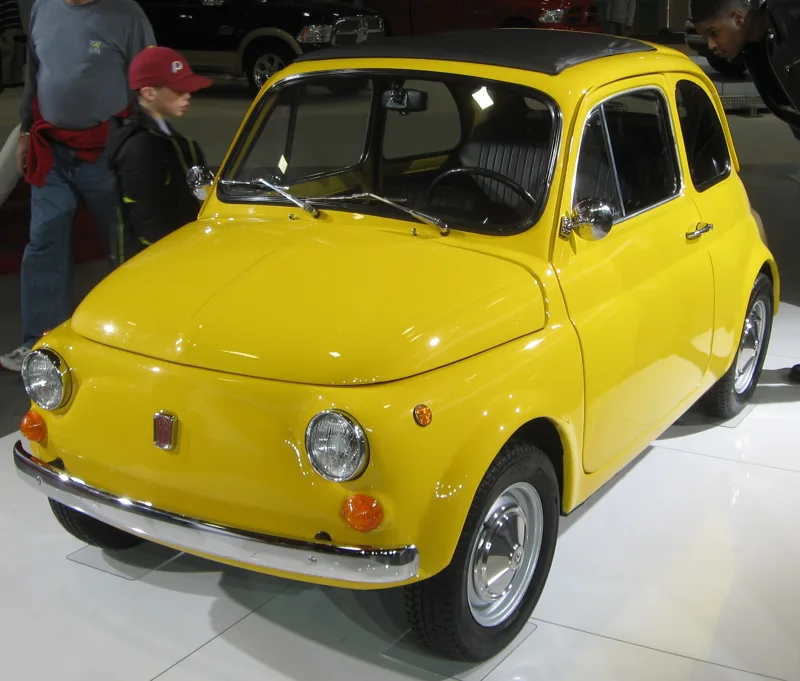
Fixed-profile convertibles take a different route, keeping the doors, side pillars and roof sides and sliding only a central fabric section back. The 1948 Citroen 2CV did it, as did the 1957 Fiat 500 and its 2007 successor, the Nissan Figaro of 1991 and the Jaguar XJ-SC of 1983, along with the Microlino Spiaginno of 2024.
How did the convertible nearly vanish?
Most early cars were open, with no roof or sides. Towards the end of the 19th century, as engines gained power, folding textile or leather roofs of the sort used on carriages began to appear. In the 1920s steel bodies began to be mass-produced and closed cars reached the average buyer, so fully open cars disappeared from the mainstream. By the mid-1930s the few convertibles left were expensive luxury models. In 1939 Plymouth brought out the first convertible roof worked by machinery, using a pair of vacuum cylinders.
Demand came back after World War II, when American soldiers in France and Britain got to know small roadsters such as the MG Midget and Triumph Roadster, which were not available at home. Hudson put the convertible into a mass-market unibody in 1948. Through the 1950s and 1960s American makers offered a wide range of convertibles, from the Rambler American and Studebaker Lark to the Packard Caribbean, Oldsmobile 98 and Imperial.
US sales peaked around 1965 and fell away over the following five years. Air conditioning became popular, sunroofs and T-tops were available, and fabric tops brought noise, leaks and repairs. Faster roads meant more wind and noise, and more comprehensive crash safety standards arrived. The convertible's market share dropped to two or three percent. AMC gave up after the 1968 model year, Chrysler after 1971 and Ford after 1973. Most General Motors divisions followed after 1975, and Cadillac held on until 1976. The very last Eldorado was offered to the Smithsonian Institution, whose trustees declined it. Building convertibles on the assembly line was expensive and time-consuming.
The comeback began in the early 1980s. The American Sunroof Company converted a Buick Riviera into a full convertible, and General Motors marketed it in 1982. Chrysler introduced the LeBaron and Dodge 400 convertibles on the K-Car platform that year, Ford reintroduced a Mustang convertible for 1983, and AMC added one to the Renault Alliance in 1984. Then in 1989 Mazda launched the first MX-5, known in North America as the Miata. It went on to become the best-selling convertible, with over 1 million sold.
What makes an open car safe?
A convertible's potential drawback is reduced structural rigidity, so it needs significant engineering to make up for losing most of the roof. Modern safety features designed for convertibles include rollover protection structures whose roll hoops, charged with pyrotechnics, hide behind the rear seats, boron steel reinforced A-pillars, a safety cage, a horseshoe-like structure round the passenger compartment, a heated rear window for better visibility, and a door-mounted side-impact airbag that inflates upward to give head protection even with the window open.