From the gearbox to the tyre, power crosses a shaft, a handful of joints and a rubber boot. What each does and which parts wear.
Power reaches a wheel through a drive shaft, joints and an axle. Universal joints let the output speed fluctuate at an angle, so constant-velocity joints keep both shafts at the same speed while the wheel steers and bounces. Torn CV boots let dirt in, and clicking, clunking or vibration are warning signs.
On a front-wheel-drive car the drive to a steered wheel can bend through 45 to 48 degrees in a typical Rzeppa joint, and 54 degrees in some, yet the wheel keeps turning at the same speed as the shaft that feeds it. A plain universal joint cannot do that. The constant-velocity joint is the link that solves this, and it sits in a chain of shafts, axles and joints that carries power from the gearbox to the wheel.
What does a driveshaft do?
A drive shaft carries power, torque and rotation between parts of a drivetrain that cannot be bolted together directly, either because of the distance between them or because they have to move relative to one another. It goes by many names: driveshaft, propeller shaft or prop shaft, Cardan shaft, and in Australian English the tailshaft.
Its working life is spent under torsion and shear, the stress equal to the gap between the torque going in and the load coming out. It has to be strong enough to take that, but without much extra weight, since added mass means added inertia. Because alignment and spacing between the driving and driven parts vary, shafts often carry universal joints, jaw couplings or rag joints, plus now and then a splined or prismatic joint.
One name, different meanings
Terminology shifts with the market. In British English, drive shaft is limited to a transverse shaft that sends power to the wheels, especially the front ones, while the shaft linking a gearbox to a rear differential is the propeller shaft. A prop-shaft assembly is made up of the shaft, a slip joint and at least one universal joint. Where engine and axles sit apart, as in rear-wheel-drive and four-wheel-drive cars, the propeller shaft delivers the engine's force to the axles.
The word is not especially old. It first turned up in the mid-19th century in patents for machines, and by the 1890s it was used in something close to the modern sense. The 1898 Renault Voiturette was the first petrol car with a drive shaft. The first American maker to fit one to a petrol car was Autocar, whose 1901 vehicle now sits in the collection of the Smithsonian Institution. Before that, early automobiles often relied on chain or belt drive, and some used electrical generators and motors to get power to the wheels.
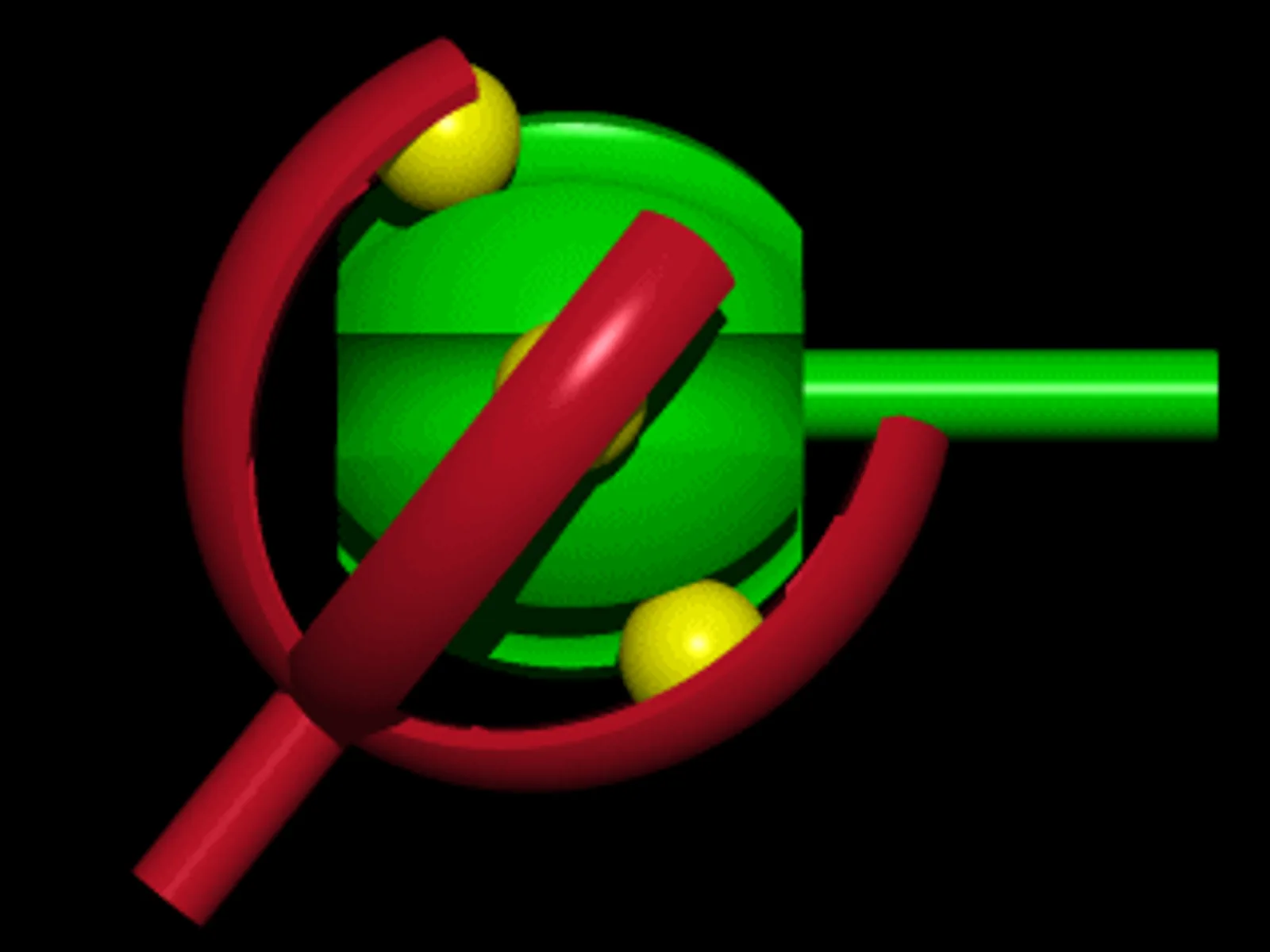
A universal joint lets the output speed wobble. A constant-velocity joint does not, however far the wheel is steered.
How is the shaft laid out in different cars?
A front-engine, rear-wheel-drive car needs a shaft that runs the whole length of the vehicle. It comes in two main forms: the torque tube, which has one universal joint, and the Hotchkiss drive, which has two or more and is the more common. The arrangement became known as Systeme Panhard after Panhard et Levassor, the company that patented it. With clutch and gearbox bolted to the engine, the shaft stands still when the car does.
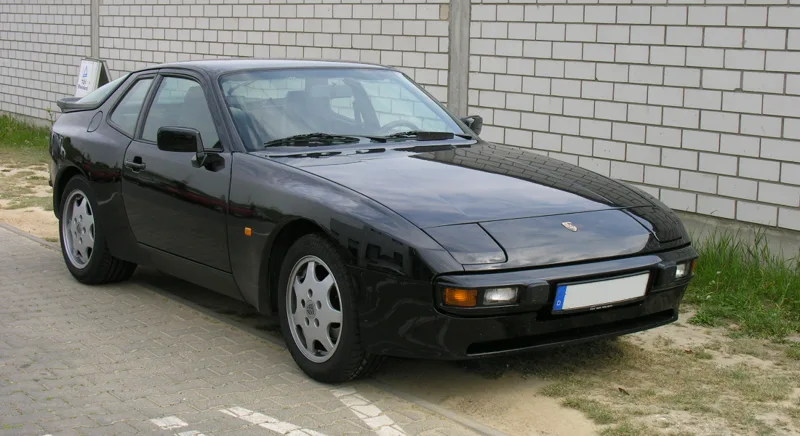
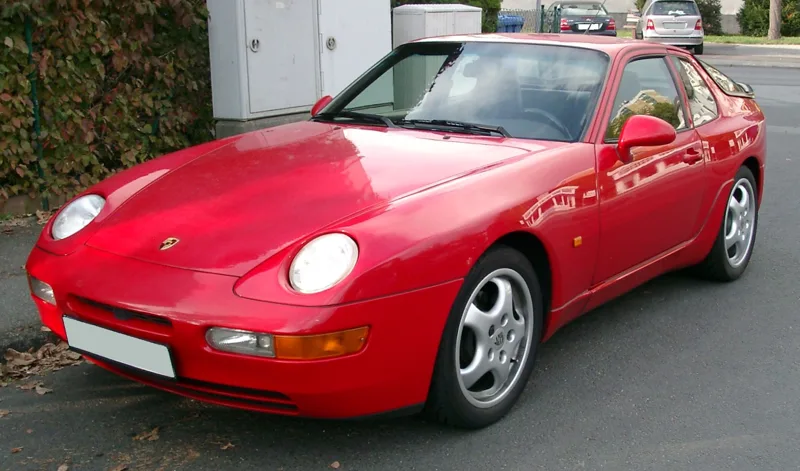
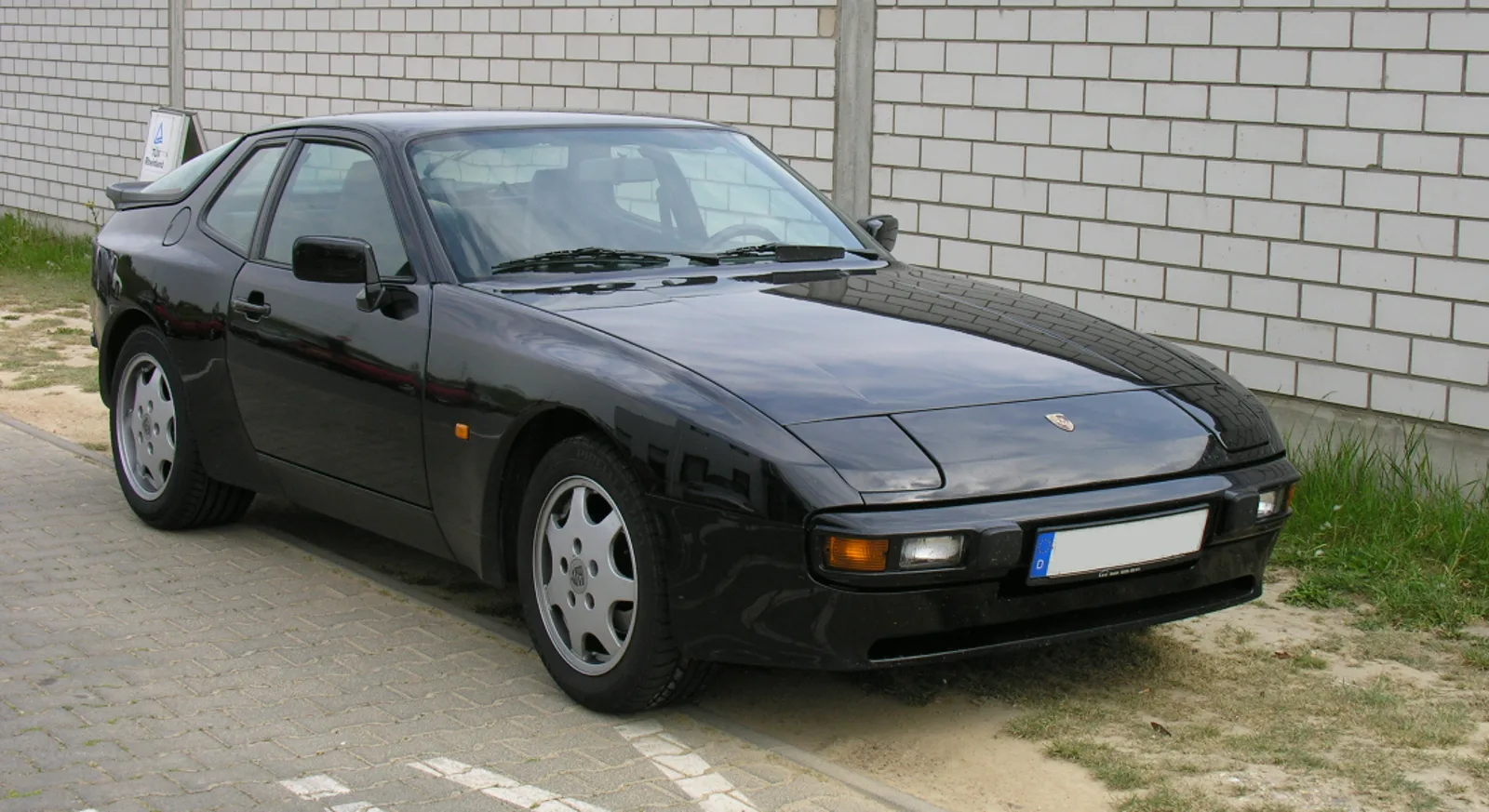
Some sports cars chase better front-to-rear weight balance by putting a transaxle at the back. The Chevrolet Corvette C5, C6 and C7, the Alfa Romeo Alfetta and the Porsche 924, 944 and 928 are examples. In the non-Porsche cars the clutch and gearbox sit at the rear, so the shaft between engine and gearbox turns for as long as the engine runs, even with the car at rest and out of gear. Porsche did it differently. Its clutch stays bolted to the rear of the engine inside the bell housing, and the shaft leaves the clutch inside a hollow torque tube on its way to the transaxle, so it turns only when the rear wheels do. When the driver blips the throttle during a brisk manual shift, the engine revs freely because it is not burdened with the shaft's inertia. The torque tube is bolted solidly to both the bell housing and the transaxle case, which fixes the length and alignment between them.
Four-wheel drive evolved from the front-engine, rear-drive layout. A transfer case, placed between the transmission and the final drives, splits the power to the two axles, and at least two shafts run from it. On something the size of a Land Rover, the front shaft is noticeably shorter and sits at a steeper angle than the rear one, which makes building a reliable shaft harder and may call for a more sophisticated universal joint. Lighter all-wheel-drive cars, Audi models and the Fiat Panda among them, can look more like a front-wheel-drive layout instead, with transmission and front final drive in one housing beside the engine and a single shaft running back to the rear axle. That layout suits cars with torque biased to the front for car-like handling, or makers who want to build front-drive and four-wheel-drive versions from shared components.
What problem does a CV joint solve?
A constant-velocity joint (CV joint, or homokinetic joint) couples two rotating shafts so that they spin at one speed even though they are angled to each other. Within its working range of angles it manages this without any appreciable rise in friction or backlash. Front-wheel-drive cars are the classic home for it: the joints pass the engine's power to wheels that must also steer.
The older answer was the universal joint, also called the Cardan joint, which Gerolamo Cardano invented in the 16th century. It is simple to make and can withstand large forces, but it has a flaw. Even when the input shaft turns at a steady speed, the speed of the output shaft fluctuates, and the fluctuation causes vibration that grows as the angle between the shafts increases. Universal joints also often become notchy and hard to turn at larger angles.
The first constant-velocity design was the double Hooke's joint, or double Cardan joint, devised by Robert Hooke in the 17th century. It links two universal joints with a shaft and sets them 90 degrees apart, so the speed variations of each cancel the other. Many more designs have followed.
When CV joints arrived in cars
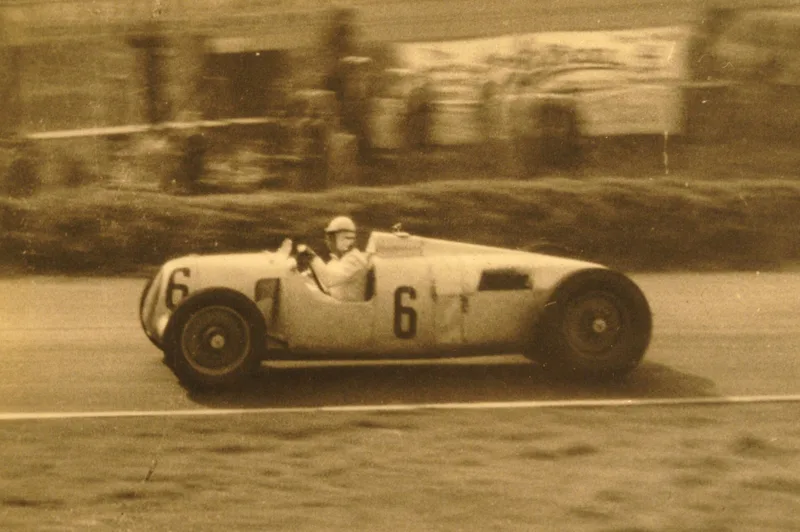
Universal joints, not CV joints, did the work in early front-wheel-drive cars such as the Citroen Traction Avant of the 1930s, and at the front of off-road four-wheel-drive vehicles. The Tracta of 1926, the DKW F1 of 1931 and the Adler Trumpf of 1932 were among the first cars with CV joints. Each was front-wheel drive, and all of them used the Tracta design under licence. Power could now flow smoothly across a wider spread of angles, for instance when cornering force or a bump squashes the suspension.
Which types of CV joint are there?
| Joint | Origin | Where it fits | Notable limit or feature |
|---|---|---|---|
| Double Cardan | Developed from Hooke's double joint | Steering columns; rugged four-wheel-drive driveshafts and halfshafts | Needs a centering element, which adds some vibration at higher speeds |
| Tracta | Used in the 1926 Tracta and under licence in other early cars | Early front-wheel-drive cars | Only four individual parts |
| Rzeppa | Alfred H. Rzeppa, 1926 | Front wheels that steer | Typically 45 to 48 degrees of articulation, up to 54 in some |
| Birfield | Birfield Industries, from the Rzeppa design | Outboard driveshaft joints on modern cars | Elliptical tracks improve efficiency |
| Tripod | Michel Orain, Glaenzer Spicer, Poissy, France | Inboard end of driveshafts; rear-wheel-drive layouts | Up to 50 mm of plunge and 26 degrees of articulation |
| Weiss | Carl W Weiss, US patent 1677311 | Ball-based joints, including Kurt Enke's six-ball star joint | Two ball yokes held by four balls and a centre ball |
| Thompson | Two cardan joints nested within each other | Shafts that need no intermediate shaft | Needs a minimum 2 degree offset to limit wear |
Inside a Rzeppa joint
Inside, a Rzeppa joint is a ball-and-groove design. A spherical inner shell with 6 grooves sits within a matching outer shell, and each groove steers one ball. The input shaft ends in a big, steel, star-shaped gear that nests in a cage, a sphere with open ends and six windows around it. Cage and gear lie in a grooved cup attached to a splined, threaded shaft. Six large steel balls sit in the cup's grooves, pass through the cage windows and rest in the star gear's grooves. From the cup, the output shaft passes through the wheel bearing and is held by the axle nut.
This layout copes with the big changes of angle as steering turns the front wheels. At the outboard end, the driveshaft is splined, slides into the outer joint and is normally retained by a circlip.
Birfield and tripod joints
The Birfield joint starts from the Rzeppa and confines the six balls to elliptical tracks. It is more efficient and widely used on modern cars for the outboard joints. Birfield Industries developed it, and it came into widespread use with front-drive cars like the Mini.
At the inboard end, next to the differential, car makers use the tripod joint. A three-pointed yoke on the shaft carries barrel-shaped roller bearings at its tips, and these slot into three matching grooves in a cup on the differential. Because significant movement happens in only one axis, the simple arrangement works well. The shaft can also plunge in and out, so rocking of the engine and the like never puts a preload on the bearings. A typical tripod joint offers up to 50 mm of plunge and 26 degrees of articulation. That is less angle than other types give, but the joint tends to cost less and run more efficiently, which is why it is typically used on rear-wheel-drive layouts and at the inboard side of front-drive cars, which ask for less movement.
Other designs
Double Cardan joints put two Hooke joints back to back by cutting the intermediate shaft down to just the yokes. They suit steering columns, where the end joints need no careful phasing, and they stand in for Rzeppa joints on tough four-wheel-drive driveshafts and halfshafts that see large articulation angles or sudden torque loads. To be constant-velocity in the strict sense they need a centering element holding the two angles equal, and that part takes extra torque to get moving and adds some vibration at speed.
The Tracta joint, built on a double tongue and groove, has just four parts: two forks and two semi-spherical sliding pieces that interlock. The Weiss joint, covered by US patent 1677311 in the name of Carl W Weiss, joins two identical ball yokes with four balls, two of which carry the torque while the other pair keep the joint preloaded, so reversing the load causes no backlash. Kurt Enke's six-ball star joint is the most advanced plunging joint on the Weiss principle. The Thompson coupling nests two cardan joints inside each other, removing the intermediate shaft, and a control yoke keeps the input and output shafts aligned. Used dead straight, at zero degrees, it wears badly, so the shafts need at least 2 degrees of offset.
How do axles fit into the chain?
An axle is the shaft at the centre of a turning wheel or gear. Strictly, a shaft that turns with the wheel, bolted or splined to it, is the axle or axle shaft, but in looser use the word covers the whole assembly, housing included. In a solid live-axle system the rotating cores transmit driving torque while a rigid outer tube holds the wheels at fixed angles and bears the weight of the vehicle and its cargo.
Most newer cars, and even SUVs, have independent suspension, and there the axles serve only to deliver torque. Wheel hub position and angle are left to the suspension. The differential may be fixed to the frame or body, or combined with the gearbox in a transaxle, and half-shafts then carry the drive to the wheels, usually through constant-velocity joints. Like the shafts of a full-floating axle, the drive shafts of a front-wheel-drive independent system do not support any weight of the vehicle.
Modern front-wheel-drive cars typically merge gearbox, differential and front axle into a single transaxle. The drive axle is split, with a differential joining the two half axles, and each half axle connects to its wheel through a CV joint, which lets the wheel assembly move freely up and down as well as pivot when turning. Behind a rear-wheel-drive car or truck, a driveshaft (propeller shaft, or tailshaft) carries the engine's rotation to a drive axle at the back. Most modern ones use a split axle and differential, so two half-shafts plus the differential constitute the rear axle. A half-shaft, then, is simply the shaft from differential to one wheel.
Split axles bring a benefit beyond packaging. They permit a differential, so the left and right drive wheels can turn at different speeds in a corner, which improves traction and extends tyre life. In some designs the split also allows independent suspension and a smoother ride. Straight axles, a single rigid shaft between the wheels on both sides, keep wheel positions steady under heavy stress and are used on trains, the rear axles of commercial trucks and heavy-duty off-road vehicles.
Full-floating and semi-floating
Among rear drive axles, there is one distinction worth knowing. In a full-floating axle the casing, not the half-shafts, bears the vehicle's weight, and the shafts only transmit torque. A benefit is that if a shaft breaks, the wheel will not come off. A semi-floating axle puts the load on the shaft itself, running through one bearing at the end of the housing; if that shaft snaps, the wheel will most likely leave the car. Full-floating designs are typical of three-quarter-ton and one-ton light trucks and heavier ones, while the semi-floating setup is found under most half-ton and lighter trucks, in SUVs and in rear-wheel-drive passenger cars, usually the smaller or less expensive models.
What wears out, and what are the warning signs?
The CV joint depends on its boot. A separate flexible cover, usually rubber and called a CV boot or gaiter, keeps foreign particles out and holds the lubricating grease in. Cracks and splits let contaminants in, and the joint then wears quickly or fails completely. In harsh environments where rubber can suffer physical or chemical damage, an all-metal joint inside a solid housing may be the better choice, and metal armour or tough sleeves can shield rubber boots. The joint is usually lubricated with molybdenum disulfide grease, and an anti-fall gate holds the six spheres in place when the shafts are perfectly aligned.
A driveshaft will typically see out around 120,000 km (75,000 miles). Certain signs mean it should be checked as soon as possible:
- A clicking, squeaking or grinding noise from underneath the car while driving.
- Clunking when turning, accelerating or putting the car into reverse.
- Vibration from underneath, an early and common symptom, which worn couplings, universal joints or bearings may cause.
- Problems turning the car, at slow or high speed.
Where this goes next
The direction of travel is already visible in layouts. Where a rear-wheel-drive car has independent rear suspension, CV joints now usually sit at each end of the half-shafts, and they are being used more and more on the tailshaft as well, so the joint is spreading beyond its front-wheel-drive home. A newer type of shaft, the slip-in-tube or collapsible driveshaft, can be compressed to absorb energy in a crash, which improves safety.