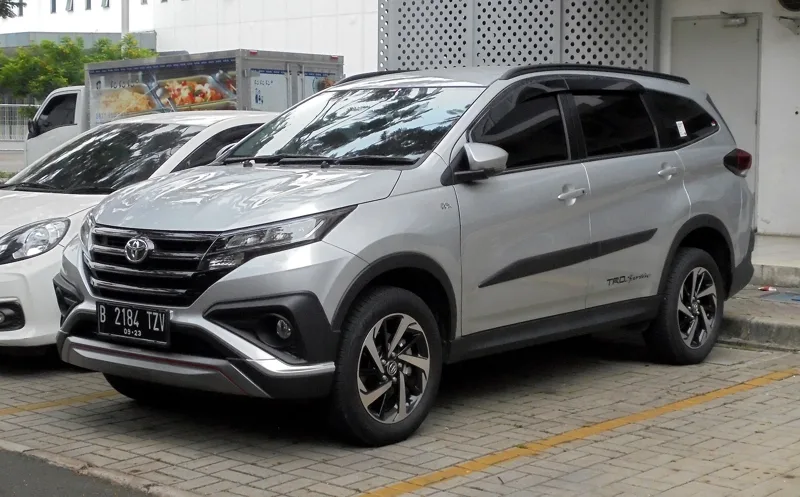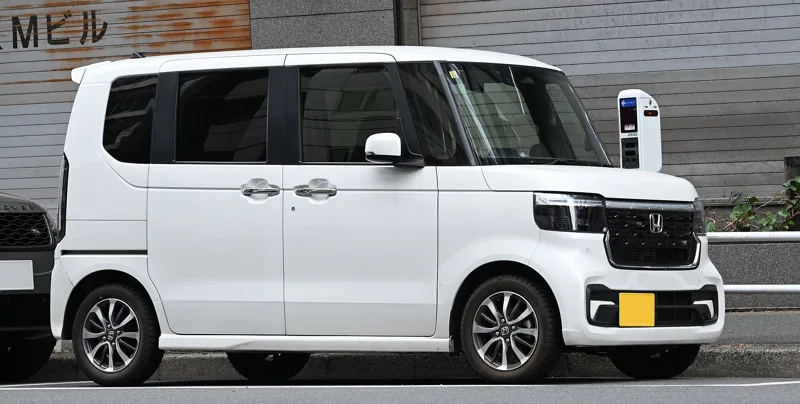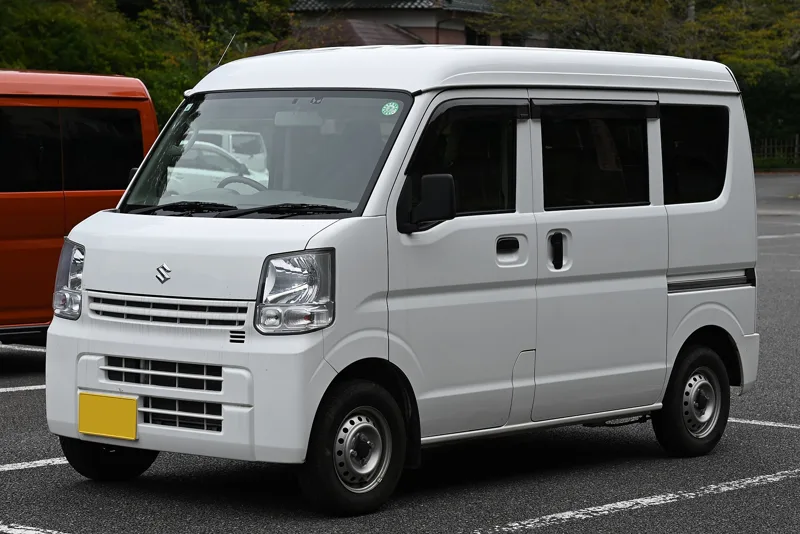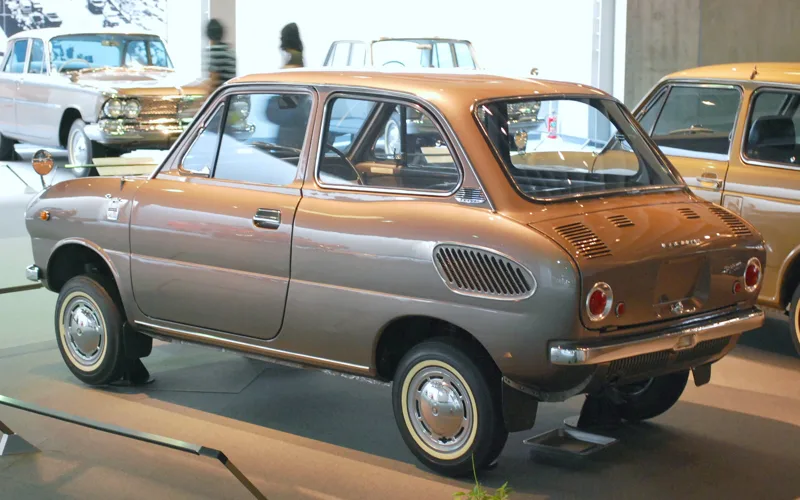
A two-stroke twin that won its class at the first Japanese Grand Prix, a Kei three-cylinder, a Ford-shared four and a turbodiesel for pickups.
The Suzuki FB was a two-stroke Kei engine made from 1961 to 1987. Daihatsu's E-series three-cylinders began in 1985. Mazda's L-series four, shared with Ford, arrived in 2001, and Nissan's YD is a 2.2 or 2.5 litre turbodiesel used in the X-Trail, Navara and NV350.
In May 1963 two Suzuki Frontes took first and second place in Class C1, for engines under 400 cc, at the first Japanese Grand Prix. Osamu Mochizuki beat his teammate Haruhisa Fujita to the line, and both were a clear minute in front of the Subaru 360 in third. Under the bonnets were two-stroke twins from the same family as the little FB engine in the 1961 Carry. That family is one of four Japanese engine lines that tell different stories about how small and mid-size engines get built, shared and retired.
Suzuki FB engine: two-strokes for Kei cars
The Suzuki FB engine is a family of two- and three-cylinder two-strokes that Suzuki built from October 1961 to November 1987 for Kei cars and light trucks. It began as an air-cooled 359 cc straight-twin and ended as the water-cooled three-cylinder LJ50. Engine names often followed the chassis code of the car, until Suzuki changed its naming system in the first half of the 1970s.
The FB first appeared in the 1961 Suzulight Carry FB. Its alloy block and head reflected Suzuki's motorcycle past, and it had three main bearings and a bore and stroke of 61 by 61.5 mm. It made 21 PS. A modernised Carry of June 1965 got the LC10 engine with Selmix automatic lubrication acting at the crank, later replaced by Suzuki's self-lubricating CCI (Cylinder Crank Injection). The cabover L30 Carry of 1966 had a horizontally mounted engine with the starter and generator combined at the front of the crankshaft.
A reed-valve FB with 25 PS at 6000 rpm arrived in the L40 Carry in 1969, and it also powered the new LJ10 Jimny off-roader. In January 1971 a 27 PS version with improved CCIS lubrication appeared, weighing 50 kg (110 lb) without the gearbox. As water-cooled engines grew popular in the Kei segment, the air-cooled FB was dropped in August 1972.
Two Suzuki Frontes with two-stroke engines finished first and second in class at the first Japanese Grand Prix.
Suzuki FE, L50 and the three-cylinder LJ50
Suzuki built the FE in 1963 for the Suzulight 360 Van, which drove its front wheels. Its big step forward was the patented Selmix system, which delivered oil at the inlet and removed the need to mix it with petrol, making the engine more convenient, economical and reliable. In February 1966 the CCI system, which added oil at both cylinder and crankshaft, replaced it, giving the FE2 and FEA2. A three-cylinder Fronte 360 replaced the FEA in 1967, and the last two-stroke twin van, the FE3, ended in January 1969.
The water-cooled L50 followed in March 1972, first in the LJ20 Jimny, with the same 359 cc but 28 PS at 5500 rpm. It went only into commercial vehicles, since Suzuki's passenger cars had moved to a three-cylinder engine. In December 1974 an emissions-cleaned version dropped to 26 PS, in time for unleaded petrol, which Japan introduced on 1 February 1975. Kei rules changed in 1976 to permit engines of up to 550 cc, and the L50 responded by adding a cylinder and taking a new name. An export-only L60, with 446 cc and 29 PS, went to markets without engine size limits.
The LJ50, a 539 cc straight-three, stayed a two-stroke and was largely an L50 with an extra cylinder. It debuted in September 1975 in export Jimnys, and the Japanese market saw it in June 1976 in the Jimny 55. It powered several Carry generations until July 1986, and the Jimny 550 SJ30 until November 1987. The T5 series appeared for passenger cars under the new January 1976 rules. The T5A met the tighter emissions standard with a Twin Catalyst system called TC53, and it powered the Fronte 7-S and the Cervo microcoupe. The T5B followed in 1979 for the front-drive Alto and Fronte hatchback and was dropped in 1981.
Daihatsu E-series engine: Kei three-cylinders
Daihatsu's E-series is a range of compact three-cylinder petrol engines with iron blocks and aluminium heads. It was first shown in summer 1985 as the EB, replacing the two-cylinder AB in Kei cars. The EB-10 was light at 60 to 63 kg (132 to 139 lb). Four-valve and turbo versions followed later.
The 547 cc EB was built in Osaka from mid-1985 with a bore of 62 mm and a stroke of 60.5 mm. Output ranged from 32 to 64 PS, and 64 PS was the ceiling set by the Gentlemen's Agreement between manufacturers. Daihatsu was late to multi-valve technology for its Kei range, so the EB only ever had two valves per cylinder and a single overhead cam. Even so, with an IHI turbocharger and intercooler it remains the only Kei engine to reach 64 PS with two valves per cylinder. A rare supercharged Hijet version gave extra low-down torque so the air conditioning could run under heavy load. The EB also powered the Daihatsu Mira and Cuore, the Leeza, the Hijet and Atrai, plus a cheaper variant of Italy's Innocenti Mini.
ED, EF and EJ: bigger and smaller E engines
The 847 cc ED was meant for export versions of the Cuore and Mira and was never sold in Japan. Fuel-injected DOHC versions, the ED-DE and then, from 1994, the ED-20 with indirect multipoint injection, extended its life. Production later passed to Malaysia's Perodua, where the ED-VE with variable valve timing ran until 2014 in the Viva, after earlier use in the Kancil and Kelisa. A special 796 cc ED-10A, with a bore reduced to 64.6 mm, suited Swiss cantons that taxed cars under 800 cc more lightly.
The 659 cc EF replaced the EB when Kei rules changed in 1990 and made its debut in the Mira facelift of March 1990. It had a wider 68 mm bore. Production ended in December 2007 when the new KF took over. A 2004 EF-SE weighed 68 kg (150 lb) despite its emissions equipment.
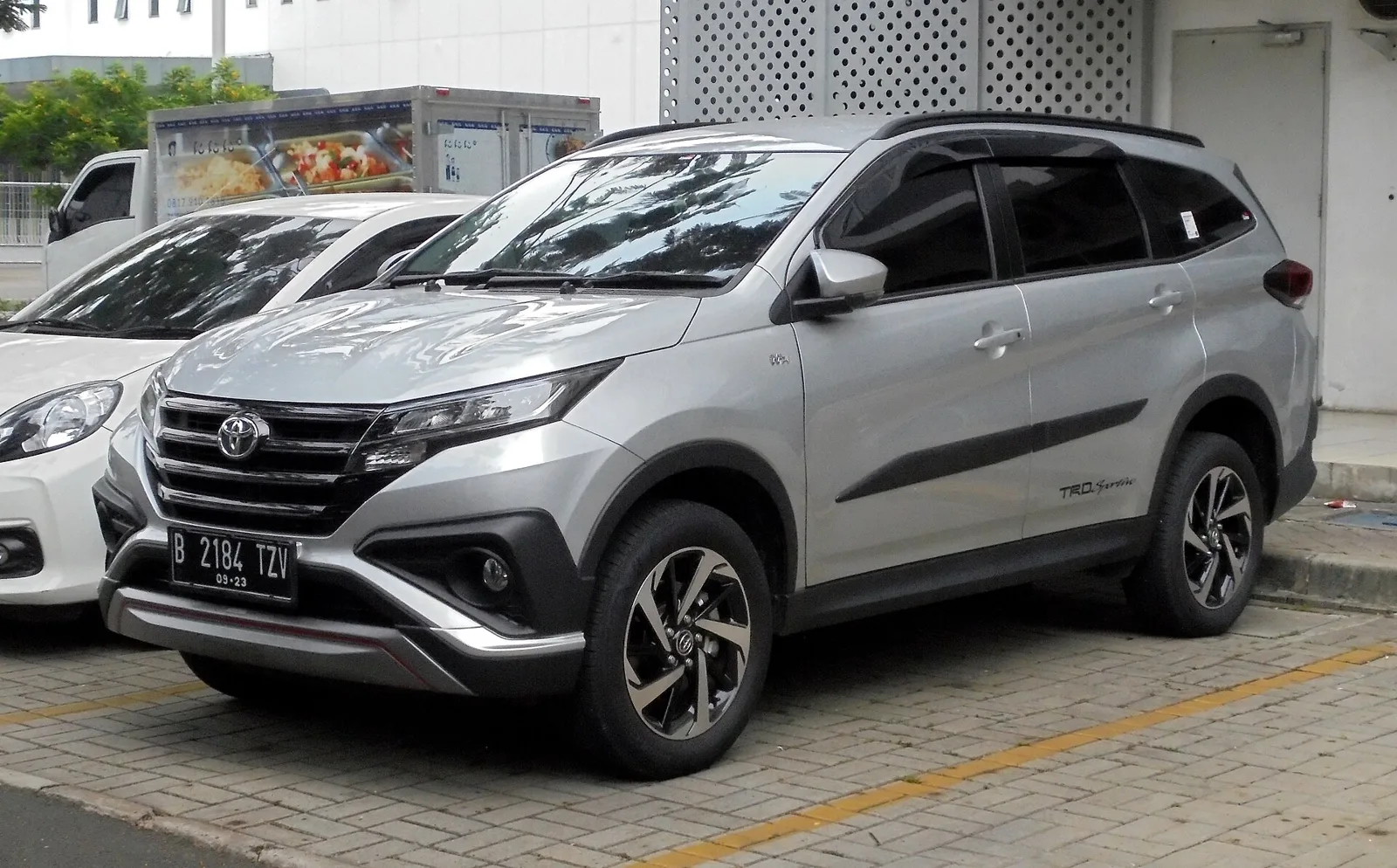
The 989 cc EJ appeared in February 1998, a DOHC 12-valve three-cylinder with a 72.0 mm bore and 81.0 mm stroke. The EJ-VE, with variable valve timing, followed in 2007 for fuel efficiency and Euro standards, and fitted the Perodua Viva and the first-generation Myvi. After the Viva ended in 2014 and the Indonesian Daihatsu Xenia dropped its 1.0 litre EJ-VE in August 2016, the engine left car use and Toyota's KR, built by Daihatsu, took over in the Sigra. The EJ-VE is still made for industrial applications.
Mazda L engine: a shared four
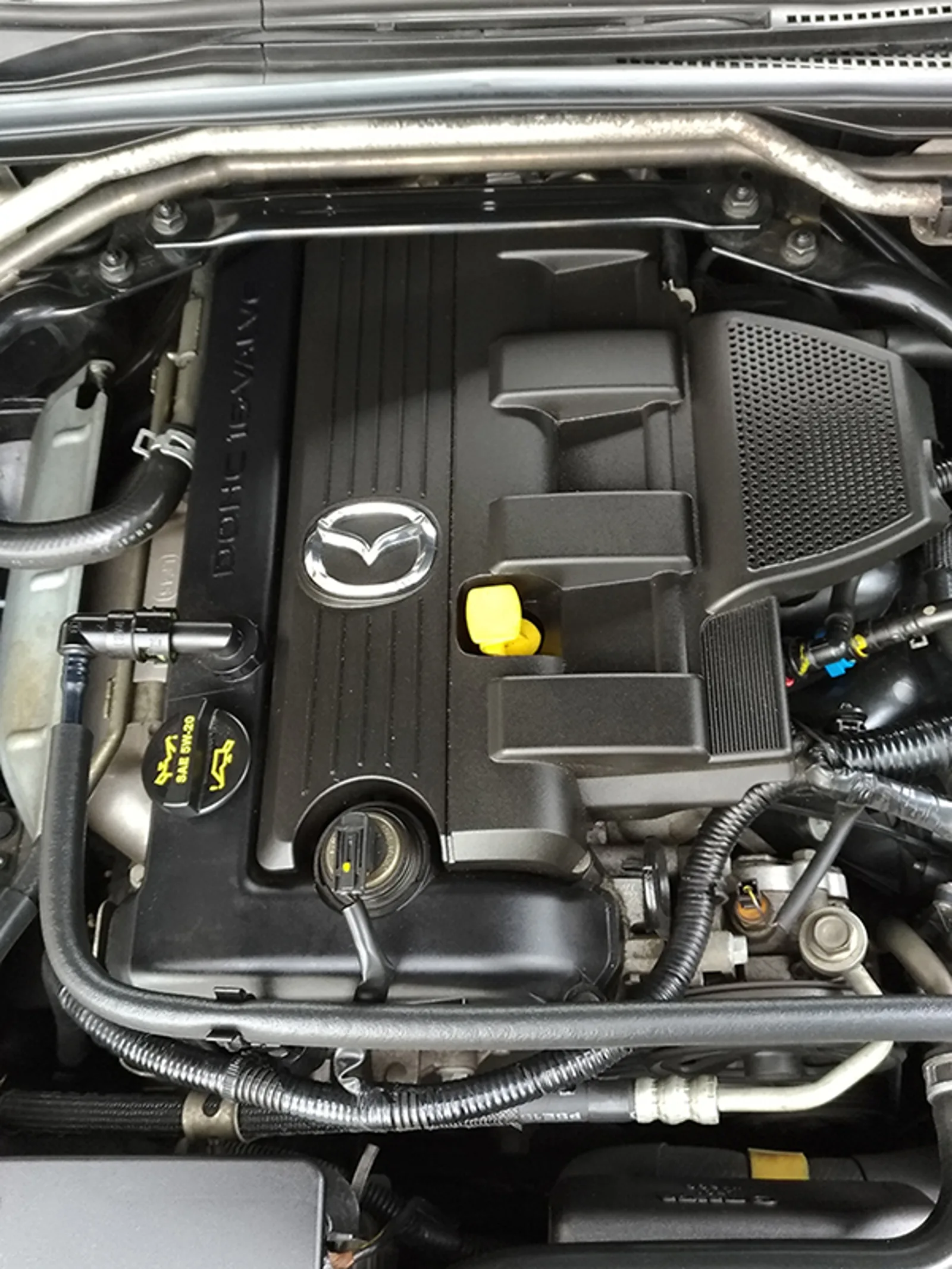
The Mazda L-series is a mid-size inline-four from 1.8 to 2.5 litres, introduced in 2001 as an evolution of the cast-iron F engine and part of the MZR family. Ford, then holding a controlling stake in Mazda, co-developed it, uses it as its Duratec world engine and holds a licence to develop engines from it in perpetuity.
The L has a chain-driven DOHC, 16-valve valvetrain, an all-aluminium block with cast-iron liners, forged powder-metal connecting rods that are fracture-split, and a crankshaft cast in one piece. Intake cam-phasing VVT is fitted, as are a stainless steel 4:1 exhaust manifold and a cage under the main bearings to stiffen the block. Its bucket lifters operate without hydraulic lash adjusters, so valve clearances need adjusting mechanically at regular service intervals. A die-cast aluminium alloy oil pan bolts to both block and transmission bellhousing, adding rigidity and cutting noise and vibration.
Direct injection came on the 2.0 litre LF-VD and the turbocharged L3-VDT built for the Mazdaspeed range. In 2010 Ford introduced a 2.0 litre turbocharged direct-injection variant as the EcoBoost, with its own manifold and engine controls. In 2011 Mazda stopped developing the L and replaced it with the SkyActiv-G, an extensive evolution of the design, and Ford was left as the only company still using the L engine.
The L engine by size
The 1.8 litre, 1,798 cc, has a nearly square 83 mm bore and 83.1 mm stroke, and makes 125 hp (92 kW) at 6000 rpm. Ford's 1.8 SCi was the first European Ford engine with direct injection, built in Valencia and used in the Mondeo from 2003 to 2007. It is the only engine in the range that cannot run on E10 fuel. A flex-fuel Duratec FFV runs on E85.
The 2.0 litre, 1,999 cc, adds a bore of 87.5 mm and shares the 1.8's stroke. Ford rates it at 107 kW (143 hp), and Volvo used it as the B4204S3. In 2011 the North American Focus got direct injection and Ti-VCT variable timing, with a compression ratio of 12.1:1 and 119 kW (160 hp). Mazda's own LF-VD DISI makes 110 kW (148 hp) at 6500 rpm. The 2.3 litre, 2,261 cc, keeps the 87.5 mm bore but has a 94 mm stroke and makes around 122 kW (164 hp). Chihuahua, Mexico, built the 23EW, a transverse unit for front-drive cars up to the 2009 model year, while the 23NS, made in Dearborn, Michigan, went longitudinally into the Ford Ranger and Mazda B-Series for the 2001 to 2011 model years. A Cosworth-tuned version in the BAC Mono makes 209 kW (280 hp), the most powerful version of this engine.
The turbocharged L3-VDT arrived in 2005 with the Mazdaspeed6 and develops 263 hp and 380 N-m. In the Mazdaspeed3 that is enough to reach 60 mph (97 km/h) from rest in 5.6 seconds. L3 engines built before 2010 are notorious for a timing chain that loses tension, which throws off valve timing and can bring pistons into contact with valves. A 2010 revision reworked the cylinder head, speeded up the engine control unit, cured the chain problem and updated the turbo seals. Ford's EcoBoost engines share the block with the L3-VDT but little else, having different turbochargers, Ford-designed heads and Ford's Ti-VCT timing in place of Mazda's S-VT.
The 2.5 litre L5-VE, 2,488 cc, bored and stroked from the 2.3, reached non-North American markets for model year 2008 and North America for 2009. It has an 89 mm bore and 100 mm stroke, and the longer stroke allows a taller final-drive ratio for lower cruising revs and better economy. It makes 170 bhp (127 kW) at 6000 rpm. Ford built an Atkinson-cycle variant for the Fusion Hybrid, Escape Hybrid and Maverick Hybrid, and Ward's named the engine one of its 10 Best Engines for 2010. In late 2006 Mazda also announced the MZR-R, a 2.0 litre racing turbo built with Advanced Engine Research for the American Le Mans Series.
Nissan YD engine: a turbodiesel for work
Nissan's YD is an inline-four diesel in 2.2 and 2.5 litre sizes (2,184 and 2,488 cc), with an iron block, an aluminium head and twin overhead camshafts driven by chain. Much of its architecture is common with the QR petrol engine.
The YD22 comes in three main forms. The YD22DD, sold as the NEO Di, won the FY 1998 Sho-Ene Taisho energy conservation prize and went into the Nissan AD Van and Expert. The turbocharged YD22DDT, with the VP44 electronic rotary injection pump, powered the X-Trail and N16 Almera, and a flat acoustic cover marks it out. The YD22DDTi, introduced in 2001, brought common rail injection and an intercooled variable-vane turbo, with the most power of any YD22. It arrived with the first minor facelift of the P12 Primera, N16 Almera and V10 Almera Tino. Four injector bumps on its acoustic cover identify it.
YD25 and High Power versions
The YD25DDTi with the VP44 pump is turbocharged and intercooled. In the Presage and Bassara it sits sideways with a variable-vane Garrett GT1749V and torque is limited to about 280 N-m to protect the four-speed automatic. In the D22 Navara, Kingcab and Frontier, the engine is mounted longitudinally with a wastegated IHI RHF4 turbo and a stronger gearbox allows more torque. A version tuned for lower power, economy and cleaner emissions came for commercial vehicles in 2012 in the NV350 Caravan, replacing the 3-litre ZD30DDTi, with an EGR cooler and a bypass valve.
The YD25DDTi High Power, sold in Europe as the DCi, was developed in 2005 for the Navara D40 and Pathfinder R51. It started at 128 kW (174 PS) at 4,000 rpm and 403 N-m. In 2010 Nissan fitted a BV45 turbo, raising output to 140 kW (190 PS) and 450 N-m. The Murano took the updated engine in 2011. The engine is also listed in the NP300 Navara and Terra, and, from 2026, in the Mitsubishi Versa Van.
The four engine families compared
| Family | Maker | Type | Sizes | Years |
|---|---|---|---|---|
| FB and relatives | Suzuki | Two-stroke twins and threes | 359 to 539 cc | 1961 to 1987 |
| E-series | Daihatsu | Four-stroke three-cylinder petrol | 547 to 989 cc | 1985 to 2016 |
| L-series | Mazda, with Ford | Inline-four petrol, DOHC 16-valve | 1.8 to 2.5 litres | 2001 onward |
| YD | Nissan | Inline-four turbodiesel | 2.2 and 2.5 litres | 1998 onward |
Which of the four engine families is still being built?
Mazda stopped developing the L engine in 2011, leaving Ford as the only company using the design. Ford expects to carry the design far into the future across its EcoBoost and Duratec four-cylinder generations. The Mitsubishi Versa Van is listed with the YD25 from 2026. The Suzuki FB line ended in 1987, and the Daihatsu E-series survives only as the EJ-VE built for industrial use.