Why the strut is cheap, compact and everywhere, what a wishbone buys in geometry, and where multi-link sits between them.
A MacPherson strut uses the top of the damper as the steering pivot, which makes it cheap, compact and simple but limits camber control. A double wishbone uses two arms for fine geometry control at the cost of complexity and weight. Multi-link adds more links for good ride and handling, but costs more.
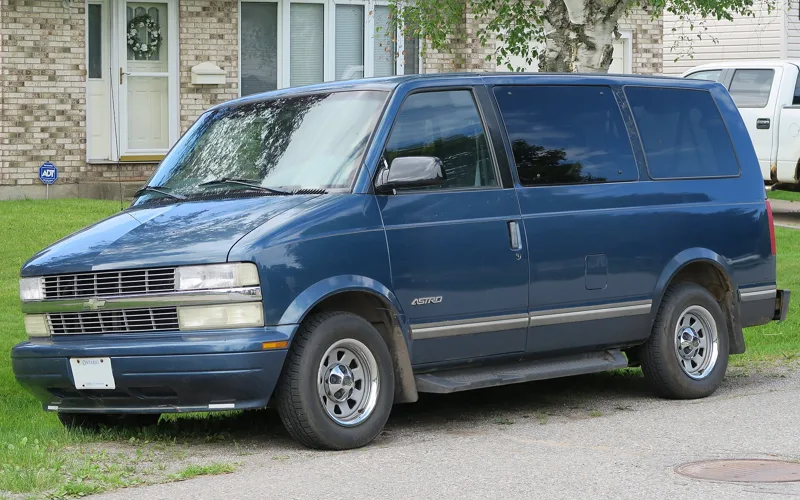
The strut that sits under the front of most modern cars was born in a Chevrolet that never went on sale. Earle S. MacPherson developed it for the Chevrolet Cadet, a small post-war car cancelled in 1947 over doubts about its profit margins, and he then left General Motors for Ford. The design that GM walked away from has become close to universal among low-cost makers.
What is a MacPherson strut and how does it work?
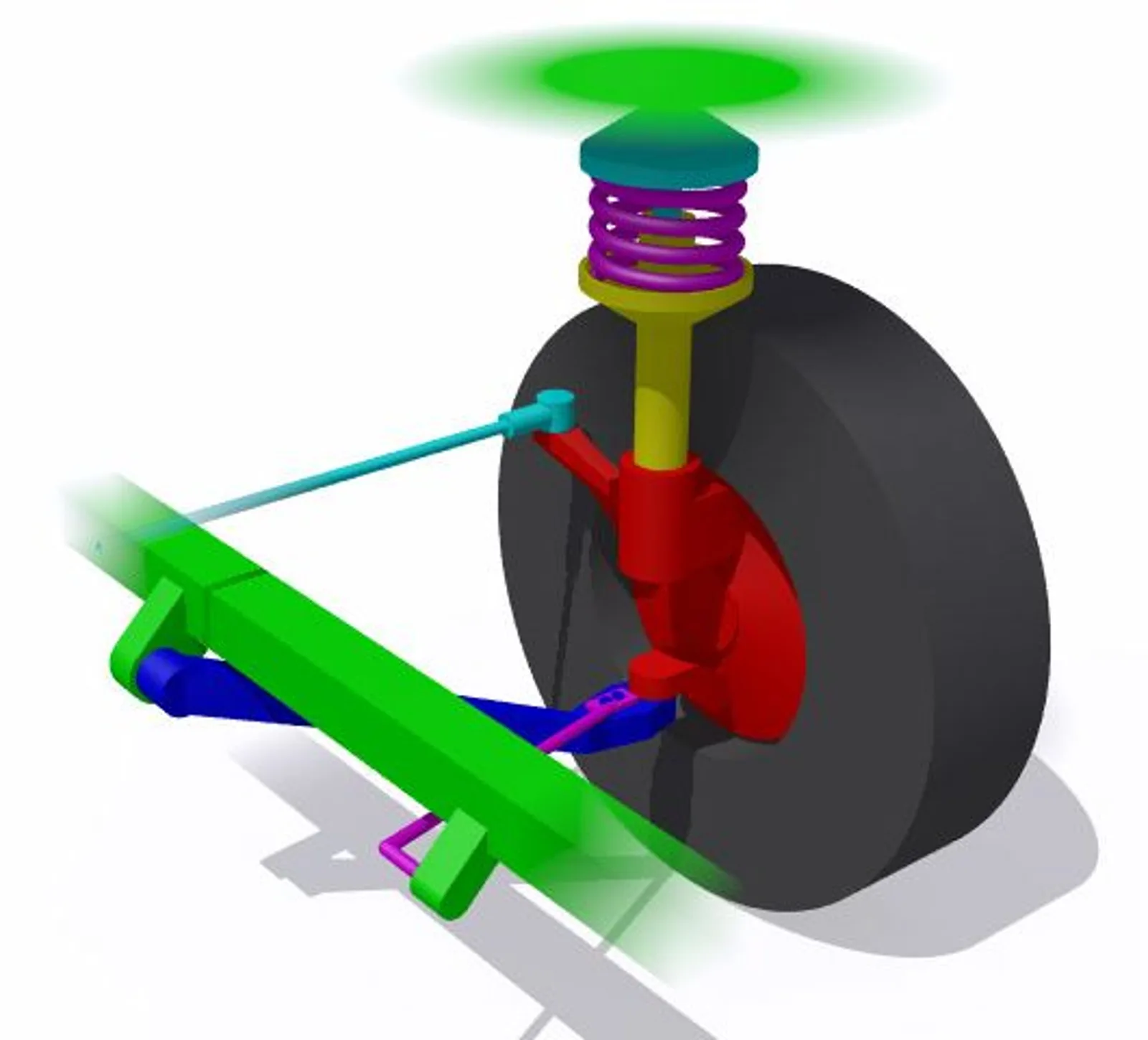
A MacPherson strut turns the upper end of a telescopic damper into the top steering pivot. That sentence carries most of the idea. Where other designs need an upper arm to hold the top of the wheel, the strut does the job with the damper itself.
The hub carrier bolts rigidly to the lower, outer section of the strut. That section slides over the inner section, and the inner section climbs to a mounting point in the car's body shell. At the bottom, a wishbone or a substantial compression link, stabilised by a second link, locates the wheel both sideways and fore and aft. The strut normally carries both the coil spring and the shock absorber, the latter built as a cartridge inside it. The line from the top mount to the bottom ball joint gives the steering axis, and the strut is often tilted inwards at its base to clear the tyre, so the lower end swings through an arc as you steer.
Its great virtue is simplicity. The whole assembly can be built up as a single unit, and with no upper control arm there is more width in the engine bay, which helps small cars with transverse engines, such as most front-wheel-drive cars. It also gives engineers an easy way to set suspension geometry. The design needs plenty of vertical height and a strong top mount, which is why it benefited from the arrival of unibody construction.
The design GM walked away from has become close to universal among low-cost makers.
Where did the MacPherson strut come from?
In 1945 MacPherson was made chief engineer on the Light Car project at Chevrolet, whose brief was a smaller car for the market just after the war. By 1946 three Cadet prototypes had been built, and one of their innovations was the independent suspension that carries his name. The car was to be the first production vehicle with struts, but GM cancelled it in 1947, and a disgruntled MacPherson moved to Ford. Patents followed in 1947 for GM and 1949 for Ford, the latter citing designs by Guido Fornaca of FIAT from the mid-1920s.
He had company in the ideas. The pre-war Stout Scarab had a strut suspension that may have influenced him, aircraft landing gear already used long-travel struts, and the French Cottin-Desgouttes had a similar layout with simpler leaf springs, itself inspired by a design from 1904 by the American engineer J. Walter Christie.
The design was drawn up by MacPherson for all four wheels, though it is normally used only at the front, where it serves as both steering pivot and wheel mounting.
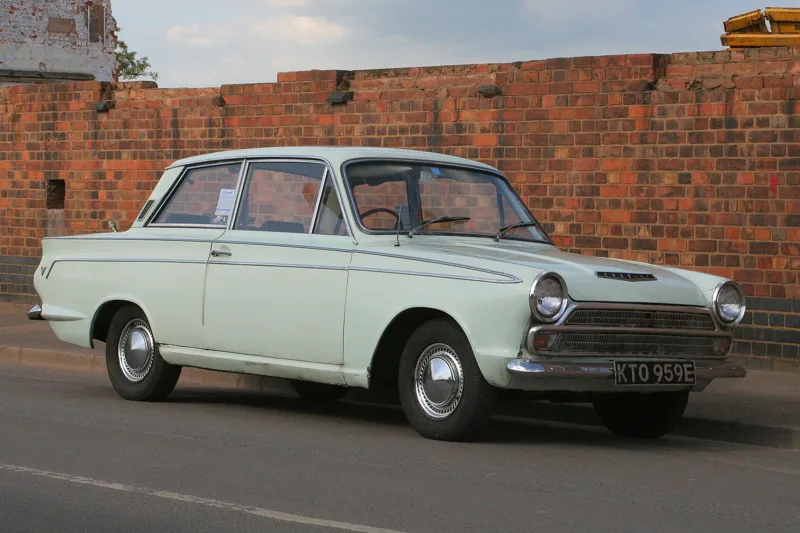
Which car came first is a minor argument. The 1949 Ford Vedette is often named in error: it predates MacPherson's work and used wishbones with an upper coil spring, switching to front struts only in 1954 after Simca bought the factory. The British-built Ford Consul of 1950, followed by the Zephyr, was the first production car to use the strut. Some histories put Ford's decision to use the strut on small production cars in 1951, a year later.
How does double wishbone suspension work?
Picture a wheel carried on two arms held out one above the other, like someone steadying a tray with both hands. In a double wishbone layout, two wishbone-shaped arms position the wheel. Every arm bolts to the chassis at two points and meets the knuckle at one joint, while the coil spring and shock absorber attach to the wishbones to manage vertical movement.
The payoff is control. Double wishbones let the engineer shape how the wheel moves throughout its travel, tuning camber angle, caster angle, toe pattern, roll centre height, scrub radius and scuff, which is the mechanical abrasion of the tyre. Because the geometry is a four-bar link, it is straightforward to calculate what moving each joint will do, and the loads on each part are easy to work out, so lightweight parts can be designed with confidence.
The commonest layout is the short long arm suspension, or SLA, where the upper arm is shorter than the lower. As the wheel rises the shorter upper arm induces negative camber. In a corner, body roll gives the lightly loaded inside wheel positive camber while the heavily loaded outside wheel gains negative camber. The four-bar movement changes the camber as the car rolls, which helps keep the contact patch square to the ground, raises the ultimate cornering capacity and reduces wear on the outer edge of the tyre.
Details matter on passenger cars. Designers generally prefer an L-shaped arm because it makes a better balance between handling and comfort possible. The bushing that lines up with the wheel stays stiff against cornering forces, and the bushing set off to one side is softer, so the wheel can move back on impact. Many racing cars put the springs and dampers inside the bodywork and operate them through a push rod or pull rod. That adds a little to the total mass of the suspension but cuts unsprung mass and gives designers room to shape the layout aerodynamically.
Strut versus wishbone: what each gives and takes away
| Type | Strengths | Weaknesses |
|---|---|---|
| MacPherson strut | Simple, compact, low cost, fits crash structure, fewer joints to wear | Less freedom over camber change and roll centre, poorer ride, torque steer with positive scrub |
| Double wishbone | Many design choices, easy to tune, negative camber gain all through jounce | Complex, harder to package, heavier, longer to service, often dearer |
| Multi-link | Good ride and handling together, each setting adjustable on its own | Costly and complex, hard to tune without full 3D analysis |
Why is the strut cheap, compact and common?
For a car maker the case is nearly self-evident. The strut has fewer parts and arrives as a pre-assembled unit. It packages efficiently, which frees up a good deal of front luggage room in rear- and mid-engined cars, among them the Porsche 911 and Boxster. Because it brings a big structural member into the front crash structure, it is easier to engineer a car to pass stricter small-overlap crash tests with struts than with double wishbones. The Honda Accord and Civic and the Mercedes E-Class all adopted struts to improve crash performance. And with fewer joints to wear, handling and steering feel decline less as a car ages.
Struts can also be stiff. Inverted monotube struts add rigidity to the front suspension on the Porsche 911 GT3 and Cayman GT4 and on the Subaru Impreza WRX STI.
What are the drawbacks of strut suspension?
Geometry is the problem. The assembly cannot let the wheel move vertically without some change in camber angle, some sideways movement, or both. It is not usually rated as highly for handling as a double wishbone or multi-link layout, because engineers have less say over how camber changes and where the roll centre sits. For the same reason, cars with cockpit-adjustable ride height generally cannot use struts, since the camber changes are unavoidable.
Ride suffers too. The damper moves through almost the same distance as the wheel, so there is little leverage to break the stiction in its seals. A standard single-pivot strut also tends towards positive scrub: the centre of the steering axis sits away from the centre of the front tyre, and that produces torque steer.
Camber behaviour separates the two designs most clearly. A double wishbone provides increasing negative camber gain right up to full jounce travel. A strut gives negative camber gain only early in the bump stroke, and swings back to positive camber gain when the wheel is pushed far up.
Even so, some high-performance cars still use struts, since they tend to have short suspension travel and so sidestep the kinematic problems. The Porsche 911 is a case in point. Up to the 1989 model year (964) it used a similar strut layout without coil springs, relying on torsion bars. From then on every 911 has run front MacPherson struts, bar one: the 992-based 911 GT3, which has double wishbones.
What does a double wishbone buy, and what does it cost?
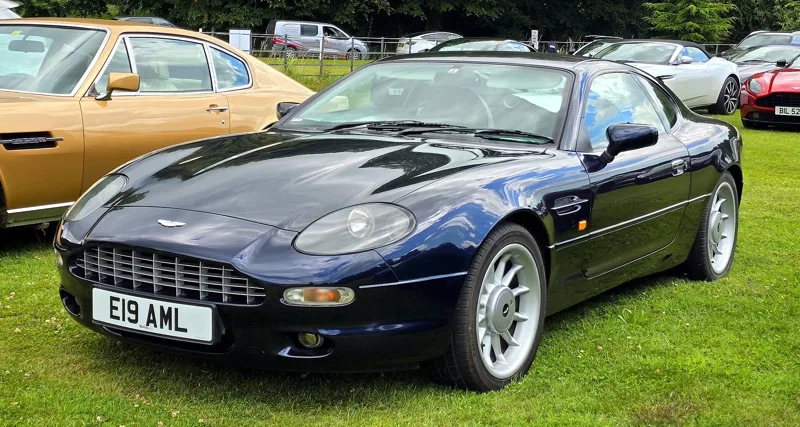
Tradition rates the double wishbone higher for dynamics and load handling, which is why sports cars and racing cars so often use it. Among the cars that use it are the Aston Martin DB7, the Mazda MX-5 and Honda Accords of the third to eighth generations. The SLA form is widespread at the front of bigger cars, including the Peugeot 407, the Citroen C5 and early Mazda6 models, the first two generations.
The design is not new. It arrived in the 1930s, with Citroen using it on the 1934 Rosalie and Traction Avant, and Packard fitting it to the One-Twenty from 1935 and advertising it as a safety feature. At that point the strut still belonged to aviation.
The costs are familiar. Double wishbones are more complex, impose harder packaging constraints and are often more expensive than a strut. With more components they take longer to service and weigh more than an equivalent strut. SLAs add their own quirks: short-spindle versions tend to need stiffer body bushings and have poorer kingpin geometry, while long-spindle versions restrict oversized tyres or snow chains. Bump steer needs care in setup, as it is easy to end up with too much of it or with curved response.
Where does multi-link suspension sit between them?
A multi-link suspension has three or more control links per wheel. They can differ in length and may point away from the direction you would expect. Mercedes-Benz introduced the idea in the late 1960s on the experimental C111 and it reached production cars in the early 1980s, on the W201 sedan and then the W124 series. Each link ends in a ball joint or rubber bushing at both ends, so it takes load along its own length, as tension or compression, and never as bending.
Engineers picture the job in three views. From above, the arms must control toe and lateral compliance, which takes a pair of arms separated along the length of the car. From the front, they control camber as the wheel rises into bump and falls into rebound. From the side, they carry traction and braking loads and control caster.
The big advantage is that one car can have both a good ride and good handling. In its simplest form a multi-link layout is orthogonal, meaning one parameter can be altered without changing anything else. In a double wishbone, by contrast, moving a hardpoint or changing a bushing's compliance affects two or more parameters at once. Triangulated arrangements do not need a Panhard rod, which brings more articulation and potentially easier installation.
The price is cost and complexity. Tuning the geometry is difficult without a full 3D computer-aided design study, and flex under load matters enough that it has to be checked in multibody simulation software. The categories blur at the edges: an SLA whose lower link is a pair of tension and compression arms may be called multi-link, or dual ball joint.
How has strut design been evolving?
Makers have been modifying the basic strut to claw back some of the wishbone's advantages. General Motors introduced the Hi-Per Strut and Ford the Revoknuckle, each dividing the strut in two, so that one part deals with up-and-down movement and the other with steering. The gains are greater surface contact and less torque steer. The drawbacks are extra weight and cost, though it still costs less than either a double wishbone or a multi-link layout. Honda introduced a variation called dual-axis, used in the Civic Type-R. Another variant, the double pivot front suspension, splits the lower wishbone in two while keeping the standard strut upright, which improves control of steering geometry and scrub radius and makes space for a larger brake assembly.