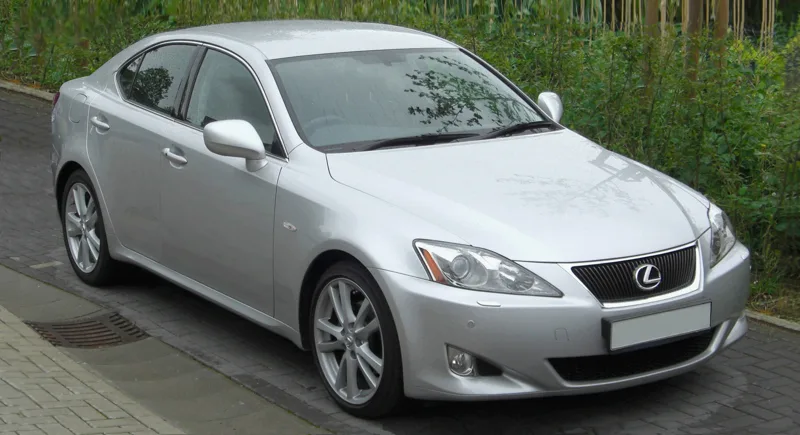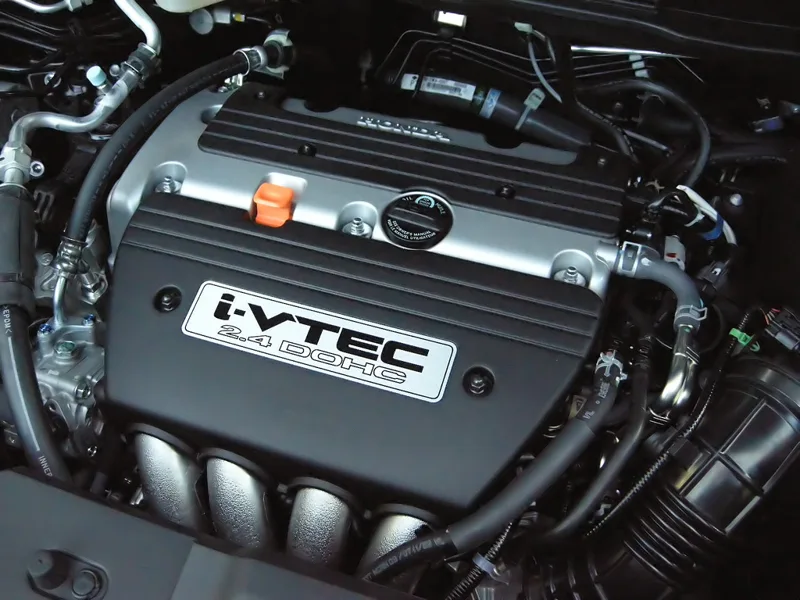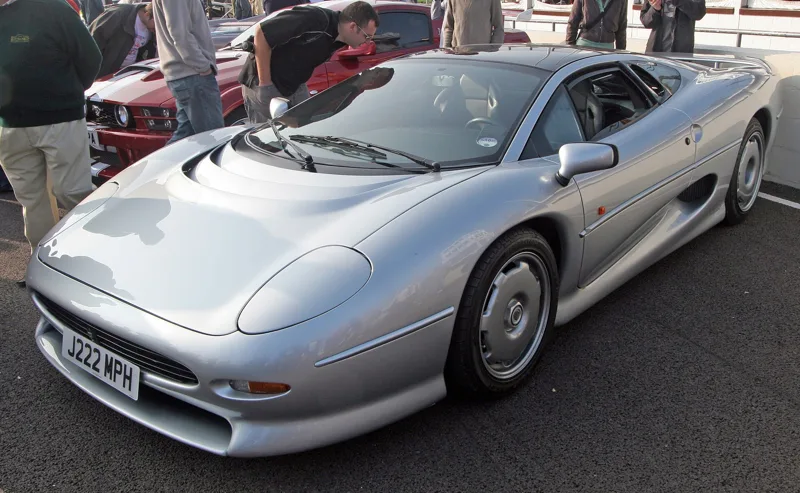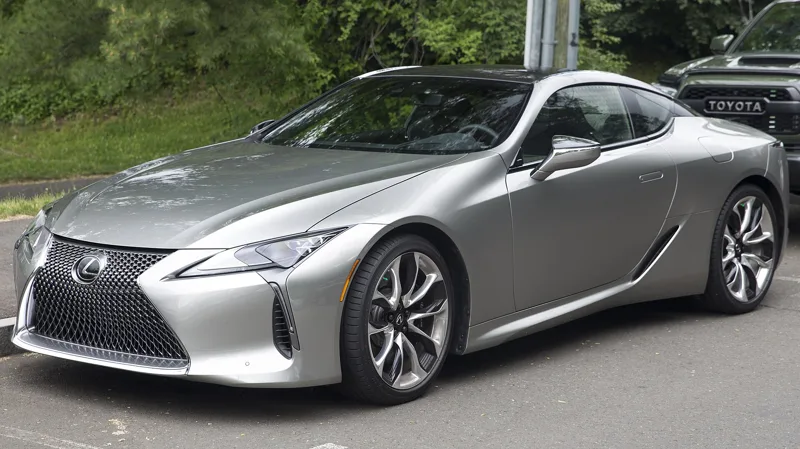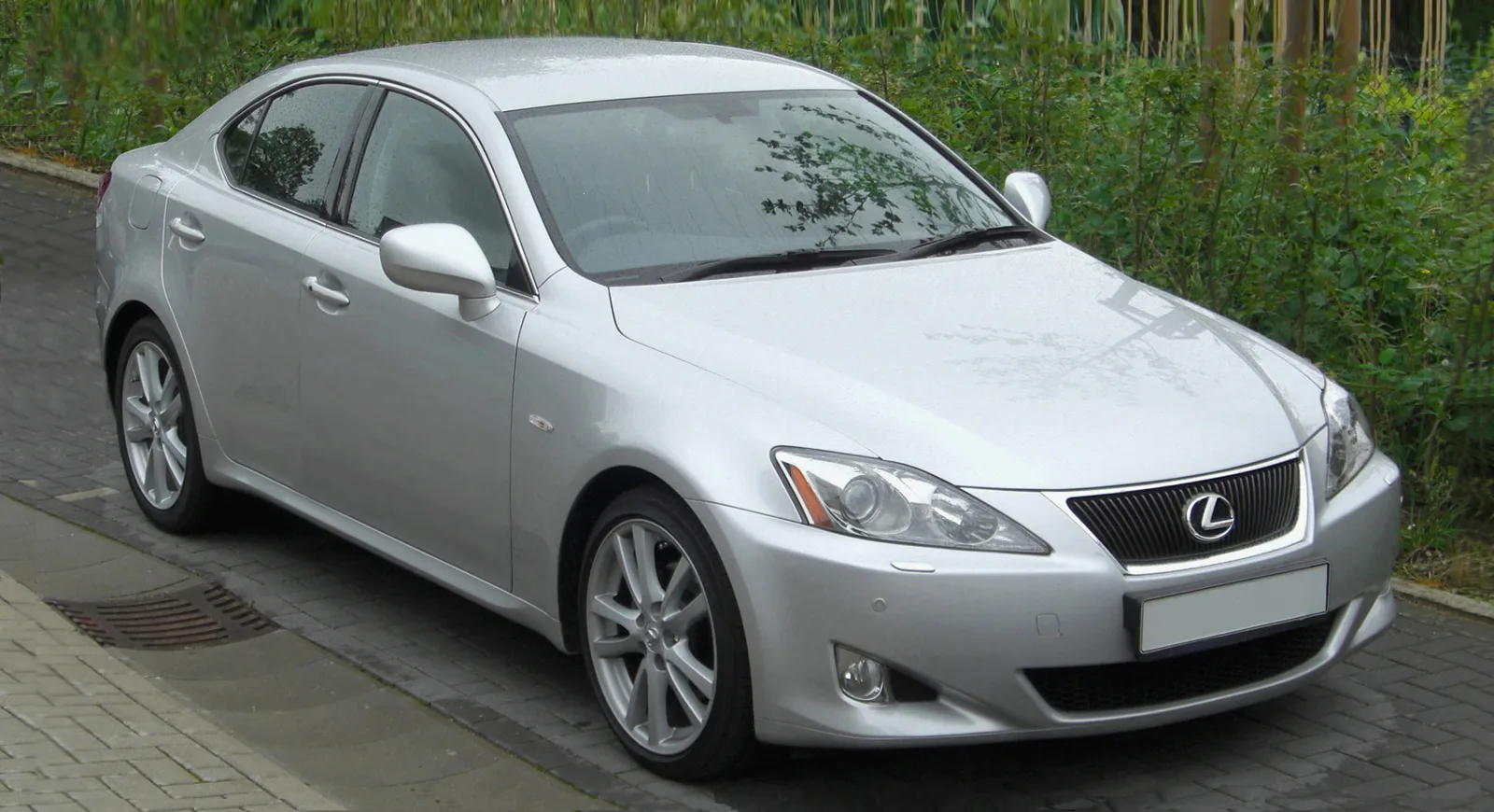
A Lexus F that stands for flagship and Fuji Speedway, a Volvo estate tuned with Porsche, an Acura Integra on the Civic Type R platform and an Opel division giving way to GSe.
Lexus F began with the IS F in 2007, Acura Type-S with the 2001 CL and Volvo R with the 850 T-5R in 1995. Opel Performance Center was set up in 1997 and is being replaced by GSe, short for Grand Sport electric.
In late 2006 Lexus filed trademark applications for an "F" emblem, and the guessing began. Did F mean Fast? Flagship? Later reports pointed to Fuji Speedway, where the first corner, 27R, was said to have shaped the letter's outline. The F was in fact an old letter: Lexus had used it in 1989 as an internal code while developing its first flagship, the LS.
Lexus F, Acura Type S, Volvo R and the Opel Performance Center all took ordinary showroom cars and gave them an extra performance tier.
Lexus F and F Sport
The Lexus F marque is the high-performance division of Lexus, and the F stands for flagship and for Fuji Speedway, the chief test site for its performance development in Oyama, Shizuoka Prefecture. Before it, Lexus had tried an in-house tuning effort, the TRD-based L-Tuned, which offered performance packages on the IS 300 and GS 400 in the early 2000s. Company representatives had also spoken of a performance brand to take on Mercedes' AMG, Audi's S and RS cars, Cadillac's V-series and BMW's M division.
The IS F, LFA and RC F
In September 2006 Lexus announced that the first F car, the IS F sedan, would premiere at the North American International Auto Show in January 2007. It was marketed as the work of a skunkworks team led by Yukihiko Yaguchi, who had earlier worked on the Toyota Supra. The IS F debuted in Detroit on 8 January 2007 with a 5.0 L direct-injected V8, 416 SAE hp (423 PS, 311 kW) at 6,600 rpm and 371 ft lbf (503 N m) of torque at 5,200 rpm, a two-stage intake system, oil and transmission coolers, and an oil pump built for hard cornering. The IS 350 beside it made 306 hp (228 kW) from a V6. The IS F reached Japan in late 2007, the United States in early 2008 and Europe in 2008.
The Lexus LFA, a two-seat coupe, was first shown as an F concept at the 2007 Detroit show. The concept had a 4.8 L V10 with an estimated 552 horsepower (411 kW) and a claimed top speed of about 200 mph (320 km/h). Prototypes were spotted at the Nurburgring, and on 10 May 2008 one won the SP8 class of the four-hour VLN endurance race there. In the 24 Hours Nurburgring it qualified 27th among 223 cars and finished 7th in SP8. An LF-A won the SP8 class again at the ADAC-Westfalenfahrt VLN race on 4 April 2009. The production LFA was launched on 21 October 2009 at the Tokyo Motor Show, limited to 500 hand-built units with a base price estimated at $375,000, and a circuit-ready Nurburgring Edition was announced for 2012.
The RC F introduced a new 32-valve 5.0 L V8 rated at 467 bhp (473 PS; 348 kW) and 389 lb ft (527 N m), the most powerful V8 Lexus had built for a production car, with a specially calibrated eight-speed transmission. The GS F, shown at the 2016 Detroit show, took the same engine.
Where F Sport fits
F Sport is the step below. Announced at the SEMA show in 2007, it started as accessories for the IS 250 and IS 350, grew in early 2009 to the IS C models and the whole GS range, and became a factory option for 2010 globally outside the US and for 2011 in the US. Factory F Sport cars carry their own badging, a mesh grille and a spoiler, and the parts, developed with Toyota Racing Development, include brake upgrades, stabilizer bars, lowering springs, Bilstein shocks, a clutch, carbon fibre engine covers and chassis braces. F Sport has since spread to the LS, CT, GS, RX, NX, ES and UX.
In 2021 Lexus added F Sport Performance with the IS 500, which sits above F Sport but below a full F car. It gets the 4,969 cc 2UR-GSE V8 also used in the IS F, RC F, GS F and LC 500, in a standard-width IS body with a raised bonnet bulge and stacked quad exhaust tips, plus Yamaha rear dampers and two-piece aluminium brake rotors measuring 14.0 inches at the front and 12.7 at the rear. It lacks the wider body, sport bucket seats and extensively upgraded brakes, suspension and chassis of an F model.
On track, Lexus F models have been the brand's main racing entrants. An IS F took a class win in a VLN four-hour race in 2010, and that year two LFAs ran the 24 Hours Nurburgring in the SP8 class, where the number 50 car won. The IS F has also run in the Superstars touring car series, and Lexus currently runs the RC F in IMSA.
Volvo built a second run of the 850 T-5R in 1996 after the 1995 original sold so well, with Porsche helping on the engine tuning.
Acura Type S and A-Spec
Acura's performance divisions are Type-S and A-Spec. The first Type-S was the 2001 CL, and the first A-Spec was the 2003 TL in Canada and the 2002 RSX in the US.
The Type-S line
The TL Type-S arrived in 2001 for the 2002 model year with a 3.2 L SOHC VTEC V6, 35 hp (26 kW) more than the base car for a total of 260 hp (194 kW), plus 17-inch wheels and firmer seats and suspension. It returned for 2007 and 2008 with the RL's 3.5 L V6 tuned to 286 horsepower (213 kW), a choice of five-speed automatic with paddle shifters or six-speed manual with a limited-slip differential, quad exhausts, Brembo brakes, a black chrome grille and a new colour, Kinetic Blue Pearl.
The RSX Type-S had 200 hp (150 kW) from the K20A2 engine, or 210 hp (160 kW) from the K20Z1 in 2005 and 2006, with a close-ratio six-speed manual and no automatic option, 11.8-inch ventilated front discs and a Bose seven-speaker audio system. Six automotive magazines modified RSX Type-S cars in the 2005 RSX Challenge. The CL Type-S added a close-ratio six-speed manual and a helical limited-slip differential for 2003, though the manual cars dropped VSA and traction control.
Canada alone got the CSX Type-S, which debuted as a 2007 model and was the last Type-S when it was discontinued in 2011. Its 2.0 L i-VTEC made 197 horsepower (147 kW), 42 hp (31 kW) more than the base CSX.
The badge came back across the range. At the 2018 Detroit show Acura announced it would apply the Type-S treatment to multiple models, with the TLX Type-S going on sale on 23 June 2021. The second-generation TLX launched on 28 May 2020 as the first with a 3.0 L turbocharged V6. On 11 April 2023 Acura unveiled the Integra Type S, which shares a platform with the Honda Civic Type R, using the same six-speed manual, limited-slip differential and K20C1 turbo engine rated at 320 hp (239 kW). It is 2.8 inches (71 mm) wider than a standard Integra.
A-Spec
A-Spec is the lighter option, offered on most Acuras with sportier styling and a firmer suspension. The RSX Type-S had a dealer-installed A-Spec package, and Canada received a TL A-Spec special edition in 2003 with blue-painted headlight housings and blue leather. In 2004 came a factory-sanctioned tuner package for the third-generation TL, with a suspension tuned by Makoto Tamamura, 18-inch wheels and a four-year, 50,000-mile (80,000 km) warranty when fitted at purchase. The RL got a dealer-installed A-Spec package for 2005 to 2008, first shown at the SEMA show in late 2004.
Volvo R and R-Design
The first Volvo R car was the 850 T-5R of 1995, renamed 850 R in 1996, followed by the S70 R and V70 R in 1998. Volvo describes R as its most performance-oriented trim; the letter itself refers to an unknown adjective.
The 850 T-5R sleeper
The T-5R was a limited edition, a commercial success so large that Volvo built a second run in 1996. It was first to be called the 850 Plus 5. Based on the 850 Turbo, it used a special engine computer that added 2 psi (0.1 bar) of boost for 18 more hp, 243 hp (181 kW) in total and 250 lb ft (340 N m) of torque, with a four-speed automatic or a five-speed manual that was not sold in the United States. Despite its boxy, understated look it had a drag coefficient of 0.29, a 0 to 60 mph (97 km/h) time of 6.8 to 7.0 seconds, and a top speed electronically limited to 152.2 mph (244.9 km/h). Porsche helped co-develop the engine tuning and aided with interior details such as the Alcantara seat inserts.
The S70, S60 and V70 R cars
The S70 R, introduced for the 1998 model year, made 250 metric horsepower (184 kW; 247 hp) and 350 newton-metres (258 lbf ft) with the manual gearbox and limited-slip differential, or 240 metric horsepower with the automatic. It was front-wheel drive only and sold in Europe and a few other countries. The V70 R, unveiled in May 1997, had a leather and Alcantara interior with diamond stitching, blue gauge faces and a special front bumper.
The second wave used all-wheel drive. The V70 R AWD, based on the 2001 PCC2 concept, was unveiled at the 2002 Paris Motor Show on 26 September and released in 2003 with a Haldex system and a 2.5L turbocharged five-cylinder that produced 300 PS (221 kW) and 400 N m. It reached 60 mph in 5.9 seconds, was limited to 250 kilometres per hour (155 mph), and carried Brembo brakes and a 4C multi-mode suspension developed with Ohlins, with three driver settings. The S60 R of 2004 used the same 300 PS five-cylinder and Haldex drive, with a six-speed manual or a five-speed automatic that restricted torque in first and second gears. In 2006 and 2007 the automatic was a six-speed without that limit.
R-Design arrived in 2008 on most Volvo models, with sportier styling, slightly more horsepower and a firmer suspension, marked by a badge on the right of the grille and silver or black mirror caps. Volvo's high-performance cars are now developed by Polestar.
Opel Performance Center
Opel Performance Center GmbH was set up as a subsidiary in 1997, and its first car was an Astra G launched in 1999. Its job was to develop performance versions of the Opel range, such as the Corsa OPC and Astra OPC hot hatches. Volker Strycek, a former DTM racer, is managing director. In the UK, where Opel cars are sold as Vauxhalls, the same cars wear the VXR badge.
From GSi to OPC
Before OPC, hot Opels carried a GSi tag, short for Grand Sport Injection, from the mid-1980s into the late 1990s, such as the Manta B GSi, Kadett E GSi and Astra F GSi. The last car to carry the GSi tag in that era was the Corsa C GSi, offered until 2004, and Opel brought the name back for the Corsa D in 2007. OPC cars are usually painted a bright shade called Arden Blue, and their European rivals include Ford's ST models and Volkswagen's GTI and R range.
The Astra G OPC, built from 1999 to 2004, had a 2.0 litre turbo engine with 147 kW (197 hp; 200 PS). The Zafira A OPC of 2001 to 2006 made 141 kW (189 hp; 192 PS), as did the Corsa D OPC of 2007 to 2014 from a 1.6 litre turbo. The Insignia OPC, built from 2009 to 2017, had a 2.8 litre V6 turbo with 239 kW (321 hp; 325 PS) and standard all-wheel drive, and the Astra J OPC of 2012 to 2015 made 206 kW (276 hp; 280 PS).
OPC also showed concepts over its first fifteen years, including the 2001 Astra Coupe OPC X-Treme based on the DTM V8 car, a 2002 Corsa OPC that never reached production, and the 2014 Astra J OPC EXTREME. In November 2012 Opel announced the Astra OPC Cup for the 2013 VLN, in which the racing Astra made 300 hp (224 kW; 304 PS) and 400 N m (295 lb ft). The tagline was "OPC. Pure Passion".
The four badges compared
| Maker | Model | Introduced | Power |
|---|---|---|---|
| Lexus | IS F | 2007 | 423 PS (416 SAE hp), 5.0 L V8 |
| Acura | TL Type-S | 2001 (2002 model year) | 260 hp, 3.2 L V6 |
| Acura | Integra Type S | 2023 | 320 hp, K20C1 turbo |
| Volvo | 850 T-5R | 1995 | 243 hp, turbo engine |
| Volvo | S60 R | 2004 | 300 PS, turbo five |
| Opel | Astra G OPC | 1999 | 200 PS, 2.0 L turbo |
| Opel | Insignia OPC | 2009 | 325 PS, 2.8 L V6 turbo |
What replaces OPC, and what do F, Type S and R do now?
Opel has said GSe, short for Grand Sport electric, takes over from OPC now that the Insignia B OPC Line ended in 2022. Volvo hands its high-performance work to Polestar. Acura now applies Type-S across its range, and Lexus has added the F Sport Performance line above F Sport.