Who owns the chargers, how pricing and reliability differ, and what roaming, Plug & Charge and megawatt hardware change for drivers in the US and Europe.
Electrify America is a Volkswagen subsidiary that grew out of the diesel emissions settlement and now reports over 5,600 US fast-charging connectors. Ionity is a European joint venture of major carmakers with 4,359 charging points in 24 countries, and both support Plug & Charge.
A US fast-charging network with more than 5,600 connectors exists because of an emissions scandal. In 2015 the US Environmental Protection Agency accused Volkswagen of using defeat devices in its diesels, and the settlement that followed committed the company to US$2 billion of spending to promote electric vehicles, with a public charging network among the pledges. That network is Electrify America. Its European counterpart, Ionity, has a very different parentage: rival manufacturers clubbing together. For a long stretch it had almost nothing to show for it, and by the end of 2017 it had opened no stations at all.
Electrify America: a penalty turned into a network
Volkswagen Group of America set up Electrify America in late 2016, and it remains a subsidiary. Under the 2016 consent decree, Volkswagen agreed to US$2 billion of actions over 10 years to promote electric vehicle use and make up for the extra air pollution its diesels had caused. The brand was unveiled in January 2017, and the first station, in Chicopee, Massachusetts, opened in May 2018.
The first outside investor arrived in June 2022. Siemens bought a minority stake for $450 million, a deal that valued Electrify America at $2.45 billion. As of August 2026 the network counts upwards of 1,080 stations carrying more than 5,600 DC fast-charging connectors.
The sites are a clue to the strategy. Chargers cluster at big-box retailers and malls, in their car parks and garages, with Walmart, Target, Simon Property Group and others as landlords. Each stall is rated from a minimum of 50 kW up to 350 kW, although what a car actually receives depends on several factors, including its own charging capability.
In 2020 the same kilowatt-hour on Ionity cost 0.79 euros without a contract and 0.29 euros for Mercedes me Charge users.
Ionity: a carmakers' joint venture with a very slow start
Ionity is a high-power charging network across 24 European countries, owned jointly by BMW, Ford, Hyundai, Mercedes-Benz and the Volkswagen Group (Audi and Porsche sit inside the VW Group), with financial backing from BlackRock's Climate Infrastructure Platform. Its headquarters is in Munich, with further offices in Dortmund, near Oslo and in Paris. Hyundai Motor Group formally joined in November 2020, having announced in September 2019 that it would bring the Hyundai and Kia brands on board.
The early years were bumpy. In 2017 the company planned about 400 fast-charging stations on major European routes by 2020, and promised 20 open stations through deals with the operators Tank & Rast, Circle K and OMV. None was open to the public by the close of the year. It did win EU funding to help build across 13 member states. Progress, once it started, looked like this:
- 24 April 2018: the first station opens at Brohltal-Ost, beside the A61 in Rhineland-Palatinate.
- End of 2018: 47 stations open and 45 more shown as under construction.
- 27 May 2019: the 100th station opens in Rygge, Norway. The 200th is completed on 20 December 2019.
- End of Q1 2021: 336 stations with just over 1,000 stalls, set against Tesla's 600 European stations with 6,000 stalls.
- End of 2022: 453 stations and 2,068 charging points.
- End of 2023: 594 stations and 3,306 charging points.
- October 2024: 684 stations and 4,359 charging points in 24 countries.
The company's stated goal is 1,000 stations with 9,000 charging points by 2027.
Electrify America vs Ionity side by side
| Electrify America | Ionity | |
|---|---|---|
| Region | United States | 24 European countries |
| Backing | Volkswagen Group of America; Siemens minority stake since June 2022 | Mercedes-Benz, BMW, Ford, Hyundai and Volkswagen Group, plus BlackRock as investor |
| Size | Upwards of 1,080 stations, 5,600-plus connectors (August 2026) | 684 stations and 4,359 charging points (October 2024) |
| Connectors | CCS and CHAdeMO, with plans to add NACS | CCS |
| Power | 50 kW to 350 kW per stall | Up to 400 kW per point |
| Typical sites | Car parks of big-box stores and malls | Major European highways |
| Pricing | Mostly per kWh; by time in some states; idle fees at select sites | Flat session fee in 2018; 0.79 euros per kWh without a contract from 2020; cheaper through a subscription or member brand |
| Plug & Charge | Supported | Offered for selected vehicles |
How fast chargers work, and why the connector matters
A car battery can only be filled with direct current, while the grid delivers alternating current. Most EVs therefore carry an onboard converter, and plugging into an ordinary AC point simply hands the conversion job to the car. Think of the onboard converter as a small kitchen carried in the car; a DC fast charger is a commercial kitchen at the roadside, with far more capacity than any car could haul around. The converter lives in the station, outside the car's weight and cost budget, and finished power goes straight to the battery.
That is how fast chargers reach their headline ratings. The SAE standard used in North America defines two DC levels, a maximum of 80 kW and a maximum of 400 kW, while AC charging at the top of its range delivers 19.2 kW.
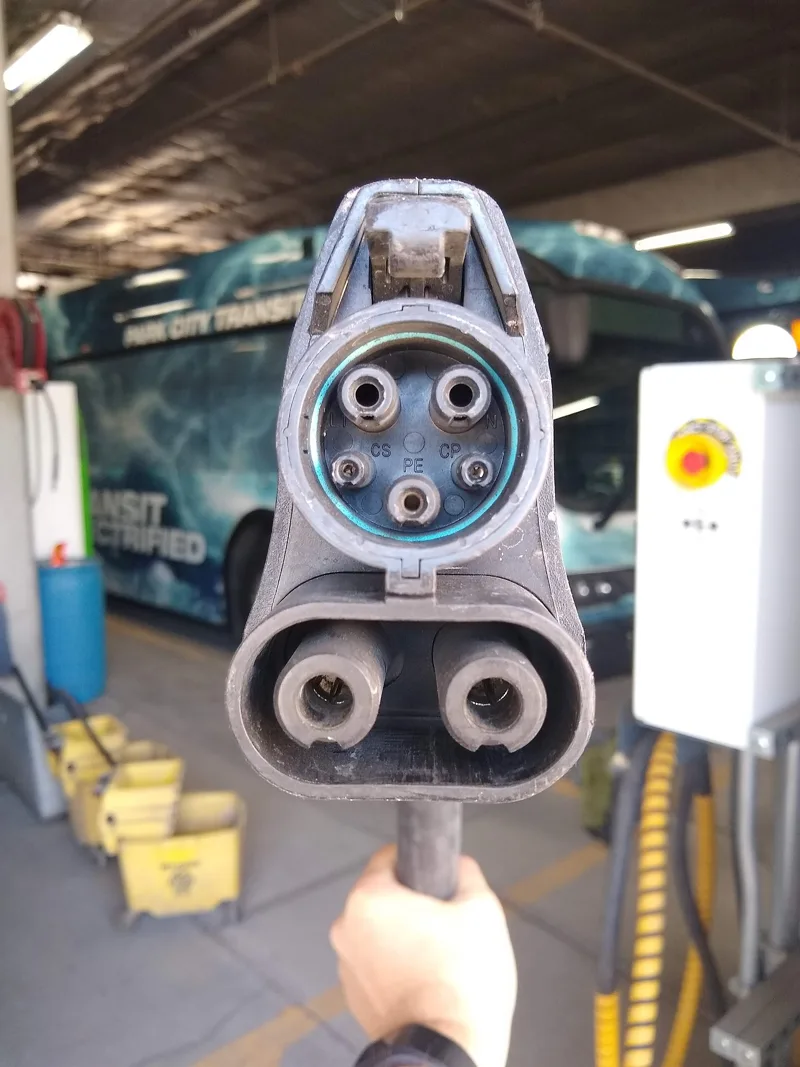
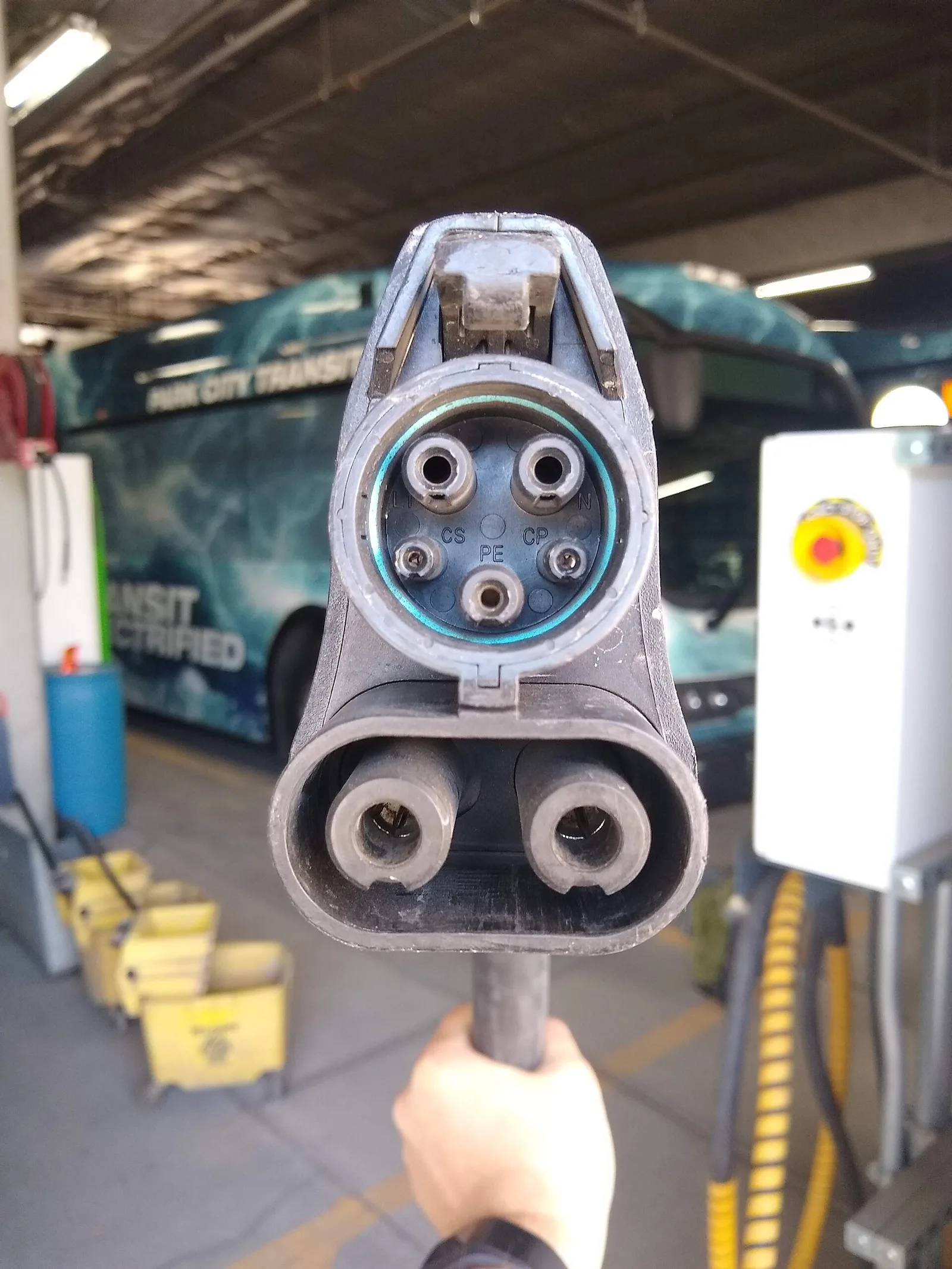
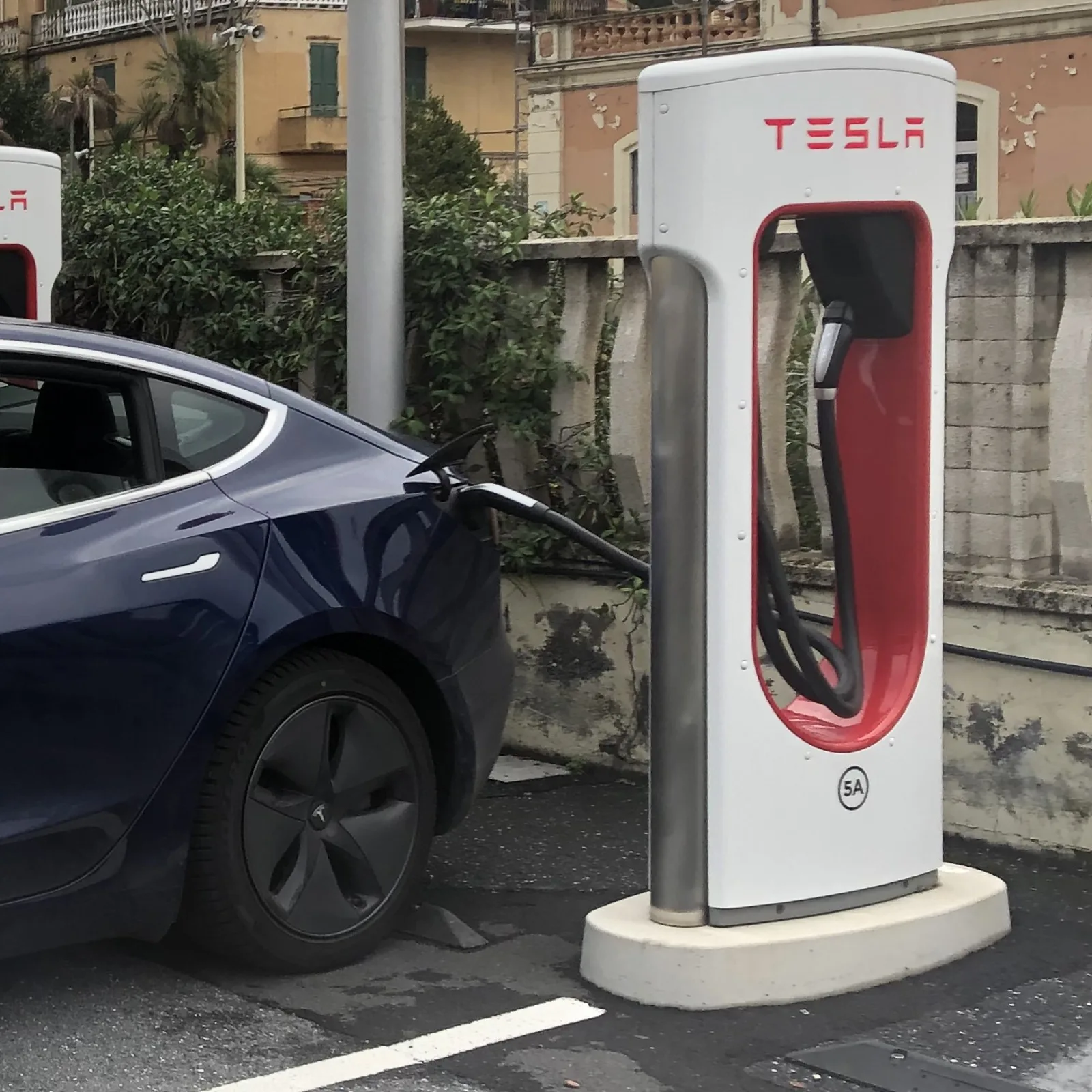
Connectors are the other half of the puzzle. CCS adds two extra pins below an AC plug to carry DC. North America generally uses the Combo 1 style; elsewhere Combo 2 is the norm. CHAdeMO, favoured by Nissan, Mitsubishi and Toyota, charges to 80% in about 20 minutes, as does CCS, but the two are not compatible. Tesla developed its own connector, the North American Charging Standard, and published its specification in 2022. It is physically smaller than CCS and uses the same pins for AC and DC. Tesla cars sold in the EU carry a CCS Combo 2 port.
Pricing, apps and Plug & Charge
Electrify America prices electricity by the kilowatt-hour in most states. In some, including Montana and Wyoming, drivers pay by the minute plugged in, usually because state rules let only electric utilities charge by the amount of electricity used. At select sites an idle fee applies once a car has finished charging.
Ionity's pricing history is more turbulent. For the rest of 2018 it charged a flat fee of 8 euros (or the pound or Swiss franc equivalent) per session, with no limit on power or time. In January 2020 it moved to 0.79 euros per kWh for customers without a contract, which critics described as a 500% increase for drivers with no subscription. German manufacturers negotiated cheaper rates for their own customers: Mercedes-Benz announced 0.29 euros per kWh for users of its Mercedes me Charge service. The lesson for a European driver is that the tariff you pay depends heavily on which app or card you charge with.
That is where roaming comes in. Ionity accepts roaming from electromobility service providers, including the member brands and others such as Greenflux, Paua and Izivia, and it sells subscription offers of its own. Both networks support Plug & Charge, the feature that lets a compatible car authenticate and pay on plugging in. Ionity offers it for selected vehicles, and Electrify America says its chargers support it.
Reliability: where each network has been criticised
Electrify America has taken the harder knocks, particularly when set against the Tesla Supercharger network. Reports describe dispensers that go dead, or give out only part of their power, sometimes for months. Drivers cite broken screens, faulty payment systems and chargers that fall short of their rated speed. One claim holds that Electrify America and every other US network except Tesla has put more effort into opening stations than into keeping them running.
The company has responded with money. In December 2023 it announced $172 million to upgrade or replace 600 stalls in California, aimed at equipment from its first two expansion waves, built in 2018. In its August 2024 update for the California Air Resources Board it said 6 existing stations had been rebuilt with 32 next-generation chargers in the second quarter of 2024, and that 32 proposed stations were somewhere between design, permitting, construction and energization.
Ionity has had its own critics. In August 2021 Volkswagen's chief executive, Herbert Diess, wrote on LinkedIn that the service was not good enough, citing too few stations and stalls, a lack of toilets and refreshments, and charging points out of service. By 2024 the verdicts had turned. According to the elvah market report for Germany, Ionity was the most efficient high-power network, with stations about every 120 km across Europe. Auto Bild and eMobility Excellence recognised it for the highest charging point quality, and a report by Auto Club Europa placed it first among the fast-charging providers tested.
Which is the best EV charging network?
These two operate on different continents, so a straight winner does not exist. What the record does show is a contrast. Electrify America reports more connectors, though its count and Ionity's date from different years, and it is the one criticised for downtime. Ionity has fewer, faster points and collected top rankings in 2024. Tesla's Superchargers set the benchmark that critics use against Electrify America, and in Europe Tesla was running 600 stations with 6,000 stalls when Ionity had 336 stations and just over 1,000.
Research on driver experience points the same way. A review published in 2024 sorted the driver's experience into how reliable chargers are, how payment works, how easy they are to use and whether they can be reached. It found links between that experience and the intention to buy or buy again, though it found nothing showing that one causes the other.
What this means when you drive
- Check the connector. A CCS car and a CHAdeMO car cannot share a plug, and North American and European CCS inlets differ.
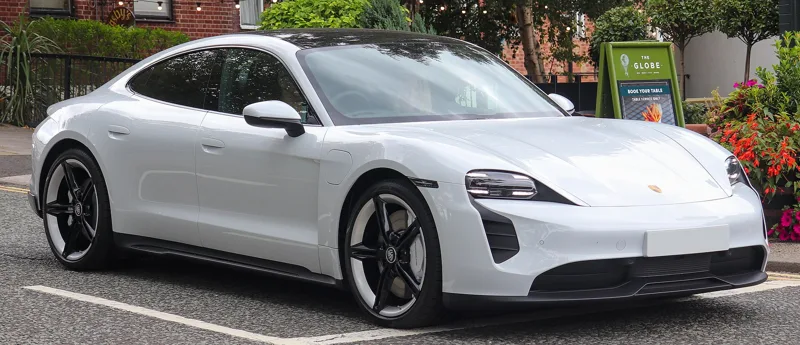
- Treat the rated power as a ceiling. Output depends on what the vehicle can accept. Ionity's 80% in 18 minutes headline applies to cars such as the Porsche Taycan, Hyundai Ioniq 5 and Kia EV6 in ideal conditions.
- Know how you will be billed. By energy in most Electrify America states, by time in a few, with idle fees at select sites. On Ionity, the account you use can matter more than the sticker price.
- Expect Ionity sites to be built for load. Each location has a grid connection sized so that every point can deliver its maximum even when all are in use. Stations range from 2 to 24 plugs, averaging 6.44 per station as of December 2024.
Where this goes next
Electrify America says it plans to add NACS connectors from 2025, in line with the wave of manufacturers that had committed to the standard by November 2023, among them Ford, General Motors, Mercedes-Benz, Hyundai, BMW and Toyota. In California, the 600-stall upgrade targets its earliest sites.
Ionity is aiming at power. The first Alpitronic HYC1000 megawatt units are due in the latter part of 2025, with the goal of a network capable of 600 kW charging, backed by an additional loan of 600 million euros. Each HYC1000 cabinet delivers up to 1,000 kW to as many as four stalls, with at least one outlet guaranteed 600 kW of continuous power. The cabinet was built with the Megawatt Charging System in mind, a standard first drawn up for heavy commercial vehicles that has a theoretical ceiling of 4.5 megawatts.