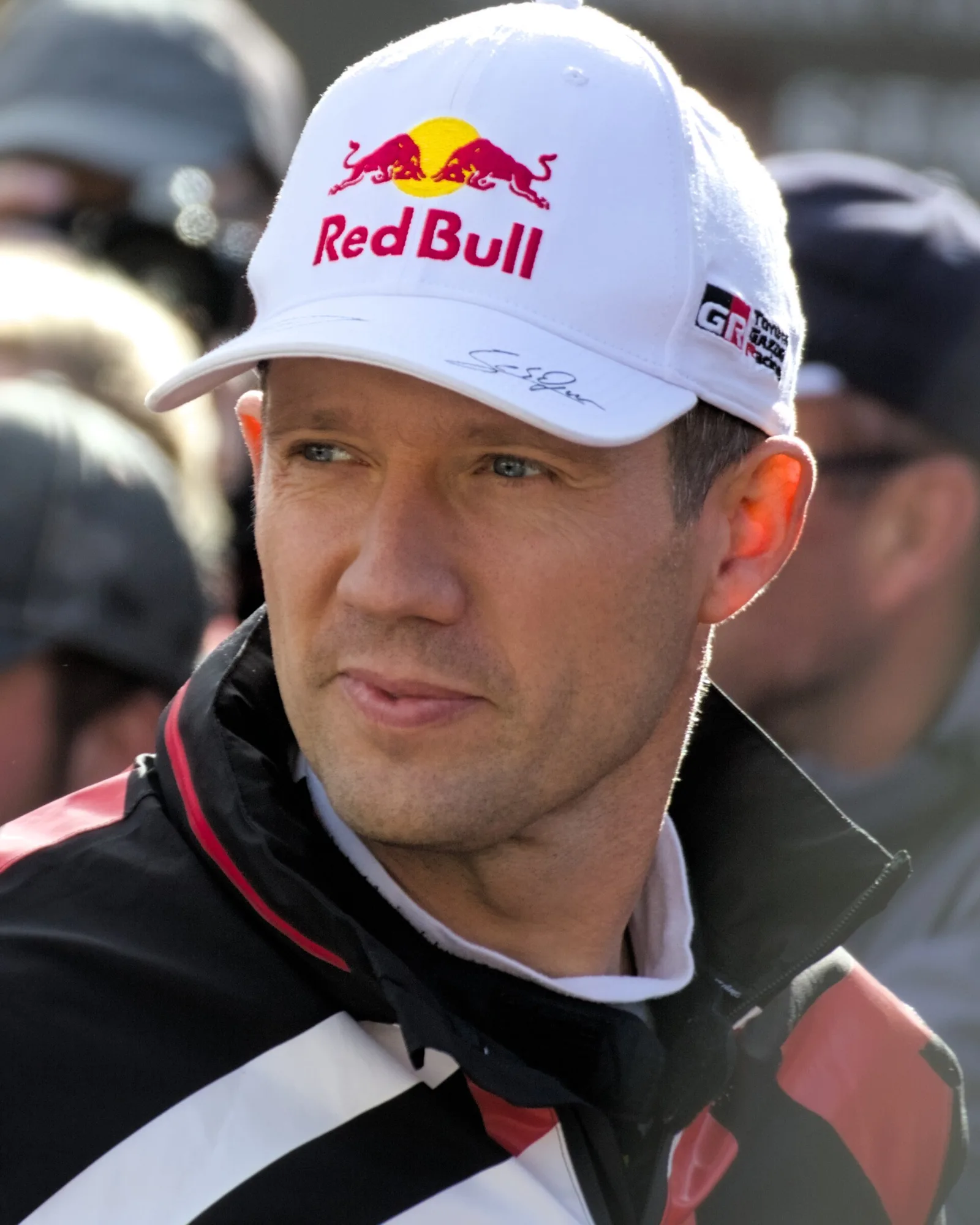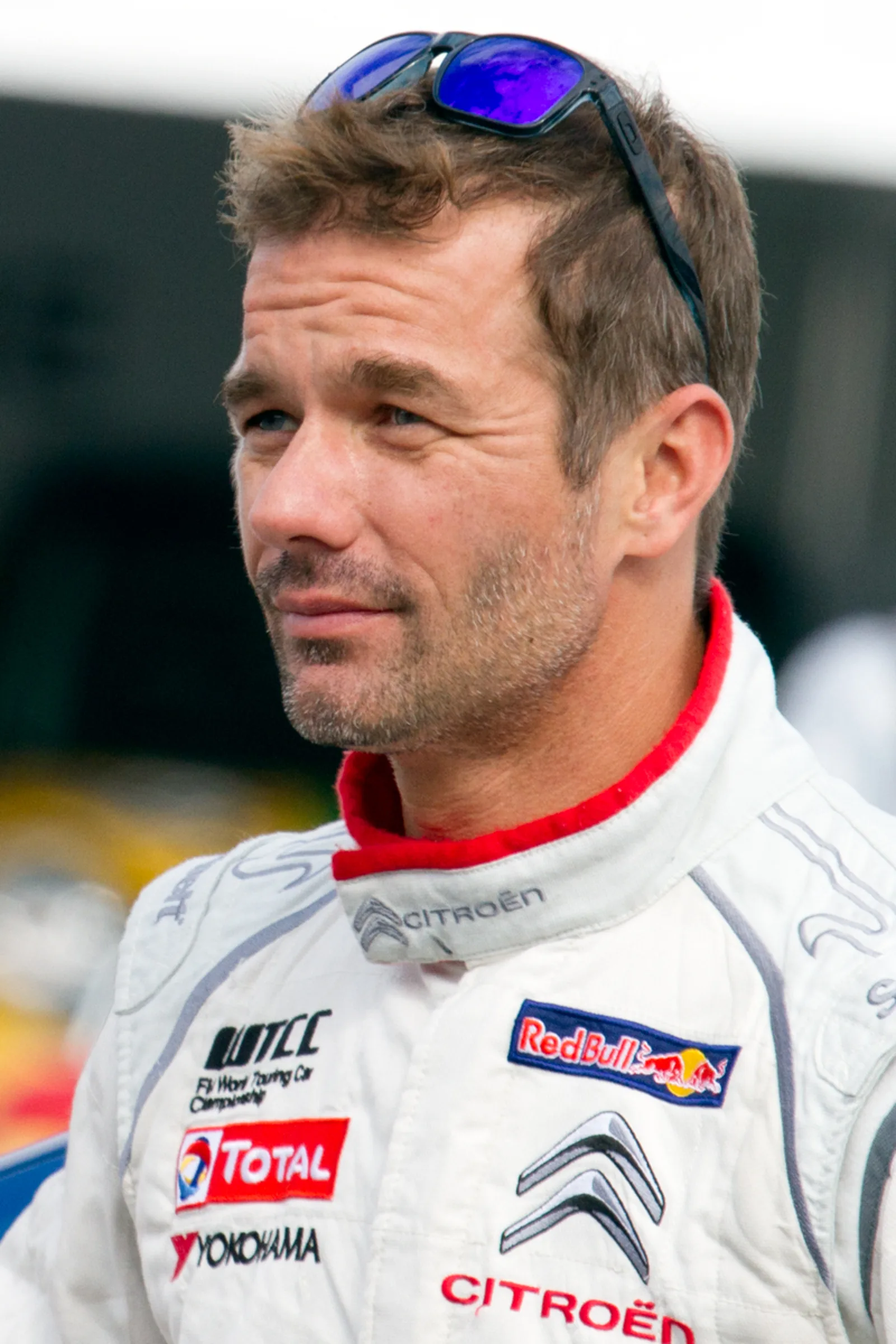
From an electrician's apprenticeship to a record that stood unmatched until 2025, then on to Dakar, Le Mans and the Race of Champions.
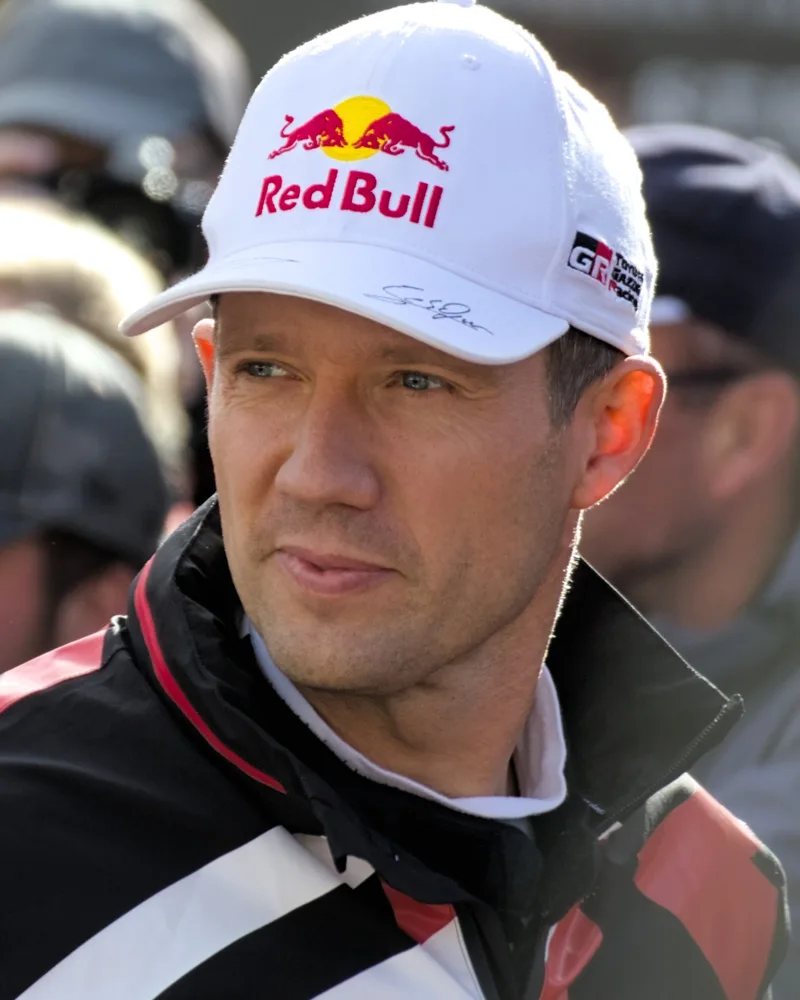
Sebastien Loeb, a former gymnast from Alsace, won nine consecutive World Rally Championship drivers' titles with Citroen from 2004 to 2012, a record Sebastien Ogier equalled in 2025. He also holds WRC records for event wins, podiums and stage wins, and has since raced Dakar, Le Mans and rallycross.
It took until 2025 for anyone to match Sebastien Loeb's nine World Rally Championship titles, and Loeb's nine came back to back. Sebastien Ogier finally equalled the record that year. Loeb's nine came one after another, all in a Citroen, between 2004 and 2012.
Sebastien Loeb: from gymnast to electrician to rally driver
Loeb was not a child of rallying. He competed as a gymnast, became a four-time champion of Alsace, won the French Grand East title once and finished fifth in the French championship. He left school in 1992, went back to classes in 1994 to train in electrical engineering, and on 12 September that year started work at Socalec, near Haguenau Airport, as an electrician. He was the oldest apprentice there and already known for a daring, even reckless, driving style. His boss, himself fascinated by speed, owned a Ferrari Testarossa 512 TR and was understanding about it.
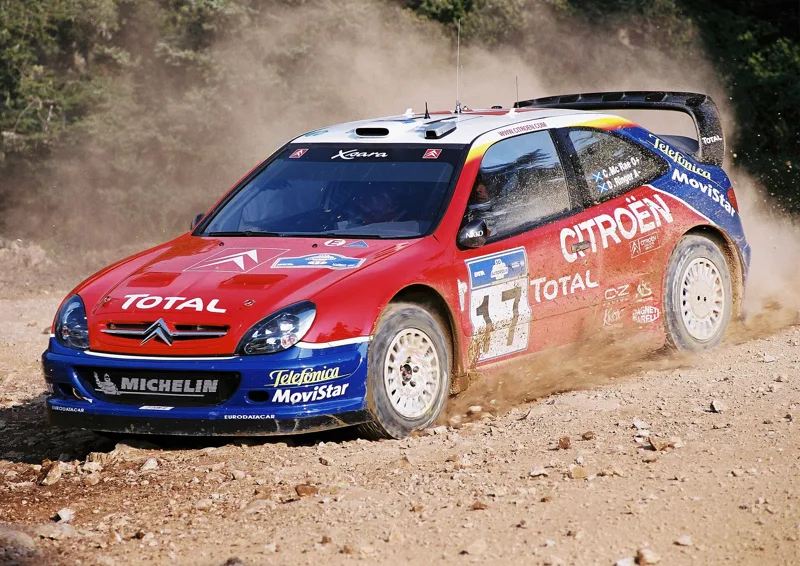
In 1995, aged 21, Loeb quit his job and his classes to concentrate on racing. In 1998 he began entering the French Citroen Saxo Trophy and won the title in 1999. Guy Frequelin, the Citroen Sport team principal, became his mentor as Loeb moved into the Junior World Rally Championship in 2001. He won five of the six rounds and so became the first champion the series ever had. The one he missed was Rallye Sanremo, because he had been chosen to drive a Citroen Xsara WRC in the main championship there.
It was only his third rally in a World Rally Car, yet he chased Peugeot's tarmac specialist Gilles Panizzi all the way to the flag and took second place. He had also taken the French rally title that year in a Citroen Xsara Kit Car, so the company had already noticed.
Loeb is the only racing driver to win an event in four different FIA-affiliated world championships.
What is the World Rally Championship?
The FIA owns and governs the WRC, which began in 1973. Only karting and Formula One have older FIA world championships. A season fills one calendar year with typically 13 rallies, each taking three to four days, over gravel, tarmac, snow and ice.
Each rally breaks into 15 to 25 special stages, timed individually, covering as much as 350 kilometres (220 mi) of closed road. Drivers, co-drivers and manufacturers each get their own title. The first drivers' title was not awarded until 1979, when Bjorn Waldegard edged Hannu Mikkola by one point.
The records Loeb broke were set by serious names. Carlos Sainz and Didier Auriol both held marks he passed, and the 1990s had belonged to Japanese manufacturers and drivers such as Kankkunen, who won a record fourth title in 1993, and Tommi Makinen, who won four in a row from 1996 to 1999. Colin McRae took the 1995 title. Marcus Gronholm won the drivers' championship in his first complete season, and Richard Burns won in 2001 with a Subaru Impreza WRC.
How did Loeb start winning? 2002 to 2004
Loeb's first season with the Citroen Total World Rally Team was 2002, though the team only contested part of the season as it built towards a full entry. The parent company, PSA, would not let Citroen enter the manufacturers' championship because it would be facing its other marque, Peugeot.
At Monte Carlo, the opening round, he crossed the line as provisional winner. A two-minute penalty for an illegal tyre change on the second day left him racing under appeal. Citroen thought the punishment too harsh but eventually withdrew the appeal, and Subaru's Tommi Makinen inherited the win, his fourth in a row at Monte Carlo, a record. Loeb's first official victory came later that year at Rallye Deutschland in Germany, with co-driver Daniel Elena, where he edged out Peugeot's Richard Burns.
In 2003, the first full season, he won three events: Monte Carlo, Germany and Sanremo. Citroen had signed former world champions Colin McRae and Carlos Sainz to join him, and at Monte Carlo the team finished 1-2-3 with Loeb ahead of McRae and Sainz. His reputation grew as he beat his more illustrious teammates through the year. Then came the Wales Rally Great Britain, where Petter Solberg beat him, and with it the championship, by one point. His team had told him not to go after Solberg at any price, to keep Citroen's constructors' lead safe. Citroen took that title.
The title he missed became the first of nine. In 2004 Loeb dominated, in the same way that Michael Schumacher dominated Formula One that year. He won six events and took six runner-up spots, finishing 36 points clear of Solberg. Six wins tied the one-season record that fellow Frenchman Didier Auriol set in 1992, and Citroen collected a second manufacturers' title in a row.
Loeb had been billed as a tarmac specialist, and 2004 was when he showed otherwise. He won the snow-covered Swedish Rally, the first non-Nordic driver to do so, and took gravel victories in Cyprus, Turkey and Australia on top of his tarmac wins in Monte Carlo and Germany.
Loeb nine world titles: season by season
| Season | What defined it |
|---|---|
| 2004 | First title; six wins, 36 points clear of Solberg |
| 2005 | First driver to win seven rallies in a season; ten wins and a 56-point margin |
| 2006 | Title won by one point after a broken arm kept him out of the last four rallies |
| 2007 | Fourth straight title, secured only at the final event, Rally GB |
| 2008 | Eleven wins in one season, taking his career total to 47 |
| 2009 | Won the opening five events, fell behind, then won the last two to take the title by one point |
| 2010 | Seventh title in a row |
| 2011 | Eighth consecutive title; five wins each for Loeb and new teammate Ogier |
| 2012 | Ninth consecutive title, then retirement from the full WRC schedule |
The numbers were stacking up quickly. In 2005 Loeb won in Argentina to string together six wins in a row, passing Timo Salonen's mark of four, set in 1985. Because he had also opened the season at Monte Carlo, he was the first driver with seven wins in one season, surpassing his own and Auriol's six. He finished the year with ten wins and a title margin of 56 points, breaking a record that had stood for 25 years: Walter Rohrl's 54-point margin over Hannu Mikkola in 1980.
At the Tour de Corse he won all twelve stages, the first time any driver had swept every stage of a WRC rally. His runs of twelve podiums and thirteen scoring finishes without a break set records too. And at Wales Rally Great Britain, while leading and in position to clinch the title, he deliberately took a two-minute penalty. The last two stages had been abandoned after Markko Martin's co-driver Michael Park died in an accident, and Loeb dropped to third rather than take the championship in those circumstances. He secured it at the next rally, in Japan, by finishing second to Peugeot's Marcus Gronholm.
At the close of 2005 PSA withdrew both of its marques from the series, with Citroen intending to come back in 2007 using the C4 WRC. Loeb, guaranteed the leading role when it did, spent 2006 in what amounted to a gap year with the Citroen-backed Kronos Racing team. The championship, though, did not wait for him. Gronholm beat him in the Monte Carlo and Swedish rounds, and Loeb began to look like a bridesmaid. Victory in Mexico began a run of five straight wins that put him ahead for good. His fifth in a row, in Germany, tied Sainz's record of 26 victories. His win in Japan made 27 the new world record.
Then a mountain-bike crash near his Swiss home broke his right humerus, and he missed the last four rallies: Turkey, Australia, New Zealand and Wales. His lead was so large that Gronholm needed a podium in Australia to keep the battle alive, and when Gronholm failed to finish third or better, Loeb had the title by one point. He received the news over an internet video link to the rally headquarters. With the time difference, he had early morning coffee rather than the customary champagne and called the whole experience "strange". In 2022, on a podcast, he revealed that he had even considered co-driving for Colin McRae to score points for himself, a plan made redundant by Gronholm's crash.
In 2007 the all-new C4 WRC won its first race, the Monte Carlo Rally. It was not easy. At Rally Norway Loeb lost eight minutes in one stage and nine in the next, and finished 14th. He fought off Gronholm all year and clinched his record-equalling fourth straight title only at the final event, Rally GB. He won in Monte Carlo and Mexico, then Portugal and Argentina, and later in Germany, Spain, France and Ireland.
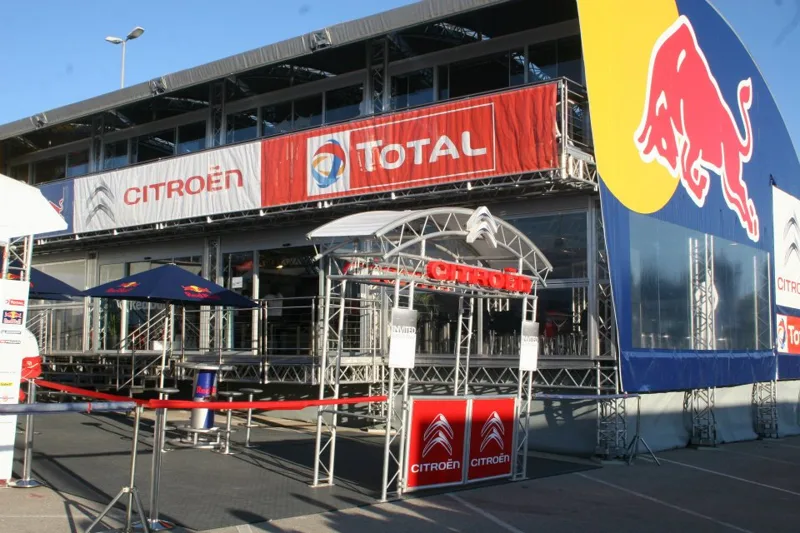
The 2008 season, with Red Bull as main sponsor and Gronholm retired, was typically dominant. Eleven wins broke his 2005 record of ten. In 2009 he won the first five events, slumped and fell behind Mikko Hirvonen, then won the last two rounds to take the title by one point. Citroen took yet another manufacturers' title in 2010 as Loeb's wins came in Mexico and Jordan, then Turkey and Bulgaria, for the seventh crown in a row. The following year Sebastien Ogier, a Citroen protege, joined him permanently in the new DS3 WRC. Each man won five rallies, and Loeb was champion for the eighth consecutive time, with Ogier third.
Ogier left for Volkswagen before 2012, and Hirvonen arrived to take the other seat. Loeb took his first win of the season at the 80th Monte Carlo Rally, added Mexico, Argentina and Greece, and secured a record ninth consecutive title. At the end of the year he retired from full-time WRC participation.
Loeb WRC wins and records
He was the most successful driver in WRC history, and he holds the all-time marks for event wins, podiums and stage wins. He is also a tarmac expert: from 2005 to 2013 he won every WRC tarmac rally he started except three.
His 80th WRC win arrived on the 2022 Monte Carlo Rally, scarcely seven days after taking second place on the Dakar. Back in 2008 his career total had stood at 47.
His farewell was a patchwork. In 2013 he contested only four rallies, in a campaign that was supposed to be his last. He won Monte Carlo, narrowly missed another win in Sweden when Ogier beat him in a Volkswagen Polo R WRC, skipped Mexico, and came back to take a commanding victory in Argentina. Rallye de France-Alsace was meant to be his last event, but his car rolled into the trees during the final morning.
What has Loeb done since leaving full-time rallying?
Almost everything else. He made his Dakar Rally debut in 2016 and has taken part every year since except 2020, finishing second in 2017, 2022 and 2023. At the Race of Champions he has won five times, collecting the Henri Toivonen Memorial Trophy and the Champion of Champions crown in 2003, 2005, 2008, 2022 and 2025. In 2004 he and Jean Alesi took the Nations' Cup for France, and Victor Martins joined him for another in 2025.
In 2006 he finished second at the 24 Hours of Le Mans. France named him Sportsman of the Year in 2007 and 2009, and in 2009 he was made a knight of the Legion of Honour. His first X Games outing, XVIII in 2012, brought victory in the rallycross final, and he founded his own team, Sebastien Loeb Racing, the same year.
Loeb Racing entered him in the FIA GT Series in 2013, where four wins left him fourth overall. The next two seasons took him into touring cars, in the World Touring Car Championship, where he won six races across 2014 and 2015 and ended third overall both times. Rallycross followed from 2016 to 2018, in the FIA World Rallycross Championship: two victories, and fourth overall at best.
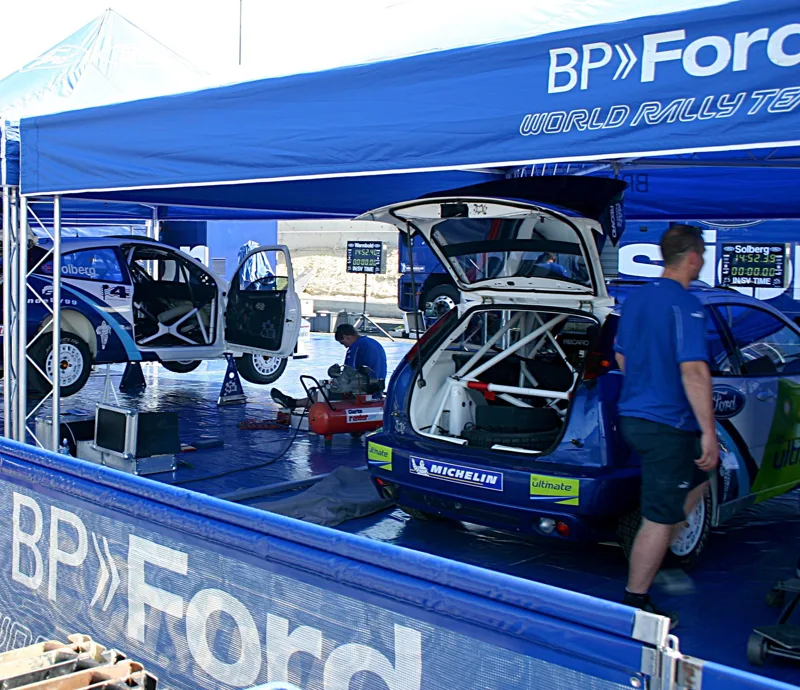
The WRC itself kept calling. In 2018 he won the Spanish round of the championship, a rare entry six years after retiring from full-time rallying. Through 2021 he ran several tests in the Ford Puma Rally1, then joined M-Sport Ford for a part-time 2022 WRC programme. That season he took the Extreme E title too, sharing the car with Cristina Gutierrez for Lewis Hamilton's Team X44, and victory at the Andalucia Rally meant no other racing driver has won events in four separate FIA-affiliated world championships.
What happened to the Citroen team Loeb built?
Loeb's nine titles were also the heart of Citroen's WRC era, which began with the Xsara Kit Car in 1998 and the Xsara WRC after it. The team scored its first full-season manufacturers' title in 2003 and collected more through the Loeb years.
It did not last. Red Bull's sponsorship moved to Volkswagen Motorsport in 2013, and in 2014 Citroen Racing finished second in the championship with eight podiums but it was the team's first year without a victory following 13 winning seasons on the trot. Kris Meeke's victory in Argentina in 2015 was the team's best result that season. Afterwards Citroen announced it would withdraw from the 2016 championship to concentrate on developing its 2017 car, the C3 WRC. At the end of 2019 Ogier left the team under a performance clause in his contract, and Citroen announced it was leaving the series because no top-level drivers were available.
Where this goes next
Loeb still takes part in the WRC on a part-time basis with M-Sport Ford, and in the World Rally-Raid Championship he is a full-time entrant for Bahrain Raid Xtreme.