From the Soviet secret police to the Shifters car club to the NHRA gas classes, three ways to modify a car, and what each one is trying to say.
A sleeper hides high performance in a plain-looking car, a rat rod is a custom with a deliberately worn, unfinished look, and a gasser is a raised-nose hot rod built for drag racing between the late 1950s and early 1970s.
The first Q-car, it is said, was built by the Soviet secret police. In 1938 the NKVD took imported Ford flathead V8 engines and fitted them to GAZ-M1 saloons, and it set the pattern for a long line of modified cars: look like one thing, behave like another.
Three types of modified car carry that idea in different directions. A sleeper hides its performance behind an ordinary body. A rat rod wears its rust and primer as a badge. A gasser is raised at the nose to win drag races. All three start from a plain or old car, but they disagree about what the builder should show the world.
What is a sleeper car?
A sleeper, called a Q-car in British English, is a car with high performance and an unassuming exterior. Most are developed from a non-athletic platform, often an economy car. The American name comes from the sleeper agent, the spy who blends in, while the British one comes from the Q-ships of the Royal Navy.
Britons have used the word since the years after World War II. Writing in Motor Sport in February 1963, Bill Boddy judged that Lotus had made its Cortina the perfect Q car. The word appears earlier still, in the 1956 film The Long Arm, called The Third Key in America, for unmarked police cars on night patrol in London. In July 1964 the editor Bill Lawless told readers that a green Austin A40 Farina and a black Daimler SP250 were serving as unmarked police Q-cars on the A20 from London to Maidstone.
Some aftermarket sleepers go a step further and play the beater: a car that looks neglected and in poor condition on purpose, while the engine and chassis have been reworked to a competitive level. The phrase for it is "all go and no show".
American sleepers
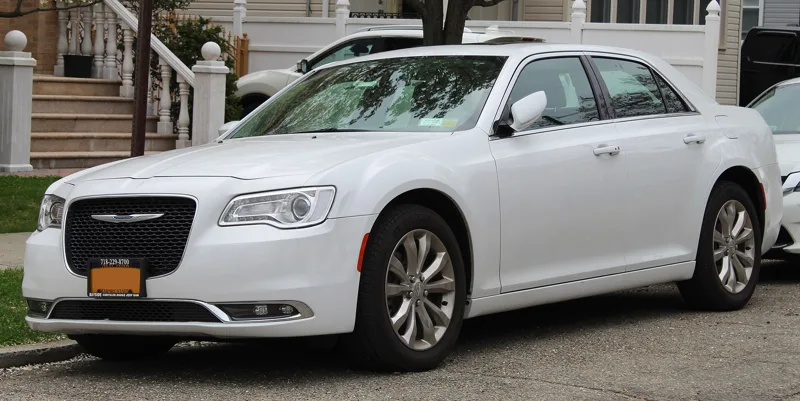
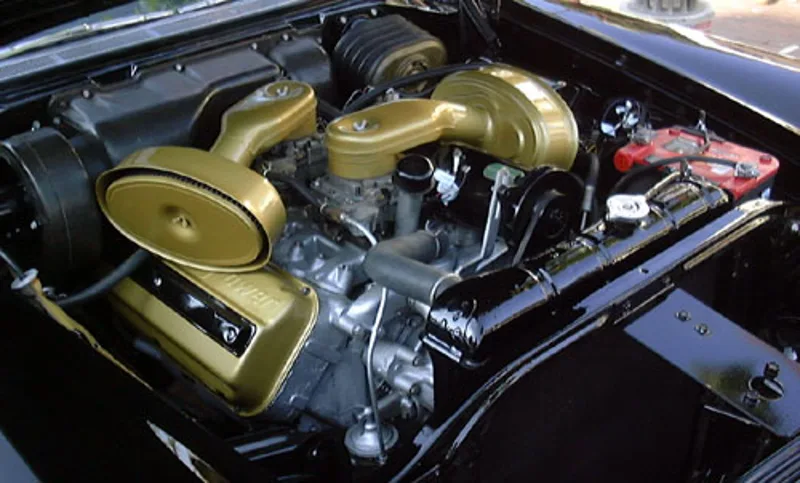
Chrysler's letter series began in 1955 with the C-300, powered by a 331 cubic inch (5.4 L) FirePower V8 and the first production passenger-car engine rated at 300 hp (220 kW). By 1957 the 300C offered 375 hp (280 kW). The cars were sold as luxury models from a traditional luxury marque but carried a homologation racing engine, which makes them among the first sleepers. Their sleeper value has faded, both because they are rare and expensive and because of Carl Kiekhaefer's well-publicised NASCAR wins in 1955 and 1956. The model is still counted as an important forerunner of the muscle car.
The Ford Taurus SHO arrived in 1989. Outside it differed from a regular Taurus by a Mercury Sable bonnet, other bumpers, side cladding and fog lamps. Under the bonnet was a Yamaha-built V6 that redlined at 7,000 rpm and made 220 hp (160 kW), just 5 hp short of the 4.9 L Mustang V8 of the day and more than double the 90 hp (67 kW) of the base Taurus's 2.5-litre four. That was competitive with sports cars such as the Pontiac Fiero and Toyota MR2, and it made the SHO a defining sleeper of the 1990s.
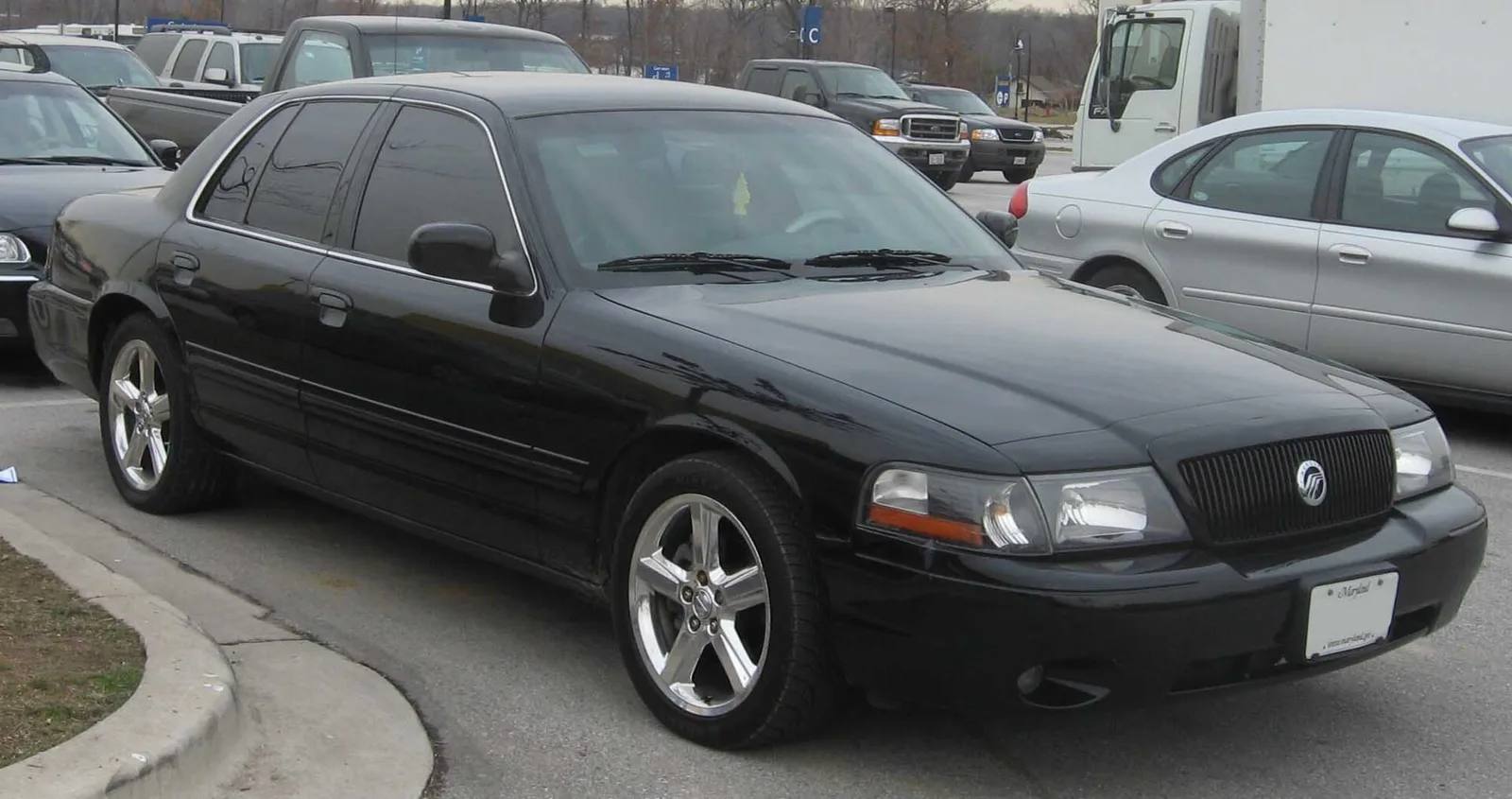
The third-generation Mercury Marauder took the full-size Grand Marquis on the Ford Panther platform and made it nearly monochrome, most of them black. Chrome survived only on the window trim, wheels and Mercury emblems. Power came from a 4.6-litre twin-cam V8 rated at 302 hp (225 kW), related to the Lincoln Mark VIII engine and paired with a four-speed automatic.
European sleepers
Mercedes-Benz set an early pattern with the 1968 300SEL 6.3, a powerful saloon in a subdued suit, and Mercedes-AMG and Brabus have followed it on unassuming saloons. The 1986 Lancia Thema 8.32 may be the oddest of the group. Its 2,927 cc Tipo F105L Ferrari V8 made 212 hp (158 kW) and was based on the engine in the Ferrari 308 GTB and Mondial Quattrovalvole, with some components assembled by Ducati. Road & Track called it one of the weirder sleepers of the 1980s.
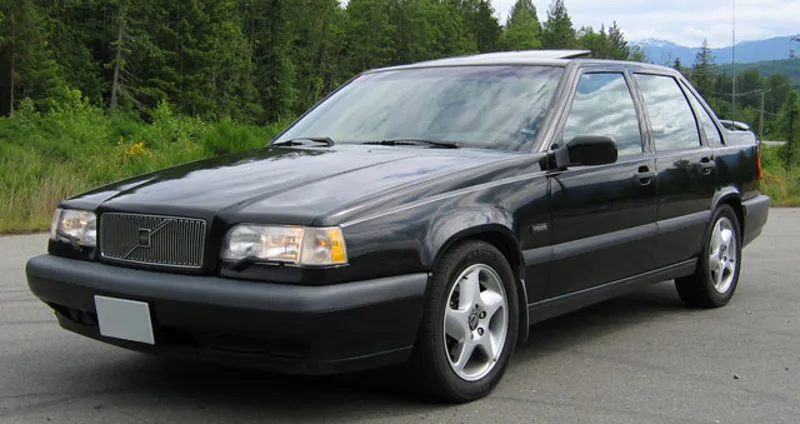
The 1990 Lotus Omega, developed from the Opel Omega and Vauxhall Carlton, is often named as a leading figure in Europe's 1990s Q-car wave. The 2001 Volkswagen Passat W8 hid a W8 engine in a body with little to separate it from the four-cylinder versions, and the 1996 Volvo 850 and 2003 V70R put powerful five-cylinder engines in family wagons.
The Soviet Q-cars
After the Second World War the NKVD's cars gave way to GAZ M-20G models with a powertrain adapted from the GAZ-12 ZIM. Black ones, sometimes in road police livery, served the KGB's 9th Directorate security details, while ordinary colours went to the surveillance teams of the 7th Directorate.
When the M-20 was dropped, 603 GAZ-23 cars were built from 1962 to 1970, pairing a modified GAZ-21 body with the GAZ-13 drivetrain, plus better brakes and KGB equipment. GAZ-24 versions followed, more than 2000 mostly from the 1970s and 1980s, and about 300 black GAZ-31012 and 31013 cars were made from 1985. After the Soviet Union ended the practice stopped, and the special services bought imported cars.
How owners build a sleeper
Owners drop in more powerful engines or add a supercharger or turbocharger while leaving the outside as the factory made it. Clues give the game away: wider tyres, a lower stance, a bumper cut to fit an intercooler, or an exhaust note that does not suit the badge. Gauges are kept to a minimum. Some owners also strip weight, removing the rear seats, trim, spare tyre, air conditioning, power steering and heater, and fitting lighter bumpers and headlights.
A sleeper hides its speed, a rat rod flaunts its wear, and a gasser stands high at the drag strip.
Rat rod vs hot rod: what makes a rat rod
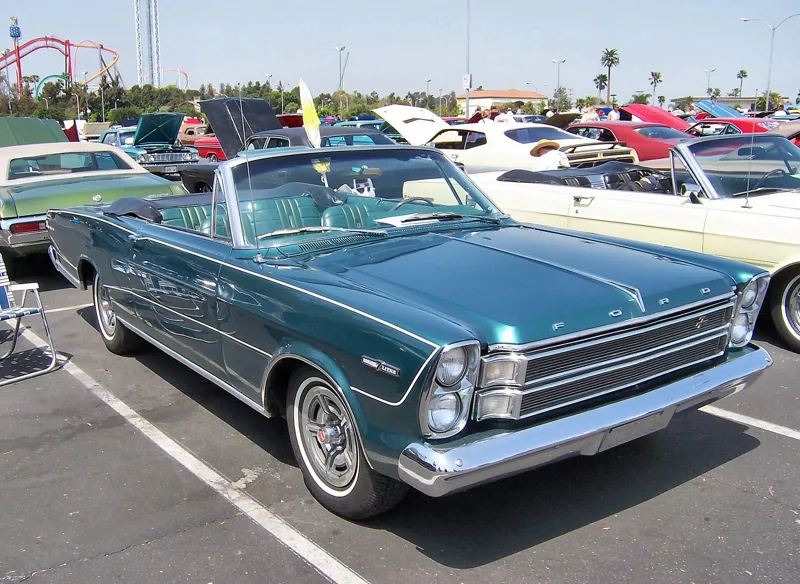
Today a rat rod means a custom car that is meant to look worn and unfinished, with little or no paint, visible rust and cheap or cast-off parts. Some of the parts are not automotive at all. Builders have used a rifle as a gear shifter, wrenches as door handles and hand saws as sun visors.
The term is also stretched to cover hot rods that copy or exaggerate the look of the earliest ones. A "traditional" hot rod, by contrast, was built back then or is a close re-creation of one.
The movement began as a counter-reaction to expensive customs and to hot rods that were rarely driven and mostly for show. Rat rods looked back to the early days of hot rodding, when cars were built to the owner's abilities and meant to be driven. Biker, greaser, rockabilly, psychobilly and punk subcultures are all cited as influences.
Where the name came from
In December 1972 Rod & Custom magazine devoted an issue to the beater, a low-budget alternative to slick, customised early cars. With its cheap upholstery, primer instead of paint and lack of chrome, the beater is considered a forerunner of the rat rod.
The origin of the name itself is disputed. One version credits Anthony Casteneda of the Shifters So. Cal. car club, who in the early 1990s came up with it when the club was interviewed by Rod & Custom. To him, the club's traditional hot rods lacked paint or upholstery and resembled the rat bikes of their day. Young fans of rockabilly music and 1950s greaser style were building period-correct pre-war hot rods, and after magazine coverage the trend spread to cities across the country.
Others point to a 1998 Hot Rod article by the journalist Gray Baskerville about cars still in primer, or to the artist Robert Williams, who owned a '32 Ford Roadster painted in primer. It is believed the term started as an insult, and some in the hot rod community still use it that way, while others have taken it up with pride.
The hot rod writer Pat Ganahl described two of the elements he saw in the scene. The first is the traditional rod and custom built as in the 1930s to early 1950s, low-budget and home-built, with period parts from flathead engines to wide whitewall tyres. The second is what he calls Rat Rods in a positive sense: artistic reinterpretations of late-1940s and early-1950s hot rodding as a culture of music, clothing, hairstyles and tattoos. Those cars are low, loud and chopped, with giant rear tyres, lots of carburettors, open pipes and tall gearshifts.
How a rat rod is put together
A typical rat rod is a late-1920s to late-1950s coupe or roadster, occasionally a truck or sedan. Bodies are often channeled over the frame and sectioned, or the roof is chopped, to sit lower. The owner usually does most or all of the work. Frames from old cars or light trucks are preferred as a sturdy base, and some builders put a compact pick-up chassis, from a Chevy S-10 or Dodge Dakota, under an old body to get a classic look with modern reliability.
The finish is the point. Primer is the most that many get, satin or matte black is common, and "natural patina" means leaving the original paint with its rust and blemishes, sometimes even bullet holes. Some are bare metal, rusty or oiled. Owners of these cars prize the rust, in line with the anti-restoration saying that a car is only original once, and many add free-hand pinstriping. Early low-budget hot rods were often works in progress with the final finish waiting in the future, and the rat rod copies that look.
Interiors run from spartan to fully finished and are usually the last job. Mexican blankets and bomber seats are common, as are repurposed road signs, licence plates and bike chains.
Most rat rods use a V8, with Ford flatheads, early Chrysler Hemis and small-block V8s from any maker (Chevrolet is a favourite) the usual picks. Straight-eights, sixes, fours and V6s turn up too, and an occasional diesel, rarely with emission controls. Most are rear-wheel drive with an open driveline and passenger-car axles and gearboxes.
Up front, a beam axle is the usual choice because it looks right on a car without fenders, typically a Ford I-beam from 1928 to 1948 on a transverse leaf spring. Ford rear ends have long been favoured because spares are easy to find. Many cars have airbag suspension so that the driver can raise and lower the car, which helps given the very low ground clearance.
Rat rod critics and fans
Rat rods enjoyed a resurgence from the 1990s, and since the early 2000s enthusiasts outside organised motorsport have mixed their working principles with the look of amateur racing: missing or battered body panels, improvised repairs and mismatched parts.
Not everyone approves. Traditional hot rodders and restorers often call the trend cheap and talentless. Hot rodder and journalist Brad Ocock draws a line between the rat rod and the beater: a beater has potential, while a rat rod is something thrown together to make a statement, and the statement is that the builder cannot weld. Journalist and builder Jim Aust splits the worst of it into young-guy and old-guy bad style, and objects to add-ons such as spikes, grenades and plastic rats. He adds that many newcomers learn the history, then outgrow the look. Writers at Lateral-g see the DIY builds as a good starting project for newcomers, even if some die-hards take offence.
Even so, rat rods have gained ground at car shows over the last decade or so. Many events now set aside a section for them or are devoted to them.
What is a gasser car?
A gasser is a hot rod originally built for drag racing, which appeared in the United States in the late 1950s and lasted into the early 1970s. Before Pro Stock arrived, the A/Gas cars were the quickest racers that still looked like showroom models.
Builders started with closed-body production cars from the 1930s to the mid-1960s, stripped out unneeded weight and jacked up the front on a beam or tubular axle to improve weight distribution under acceleration. A beam axle is also lighter than independent front suspension, although a raised stock suspension was common too. Fibreglass body panels, stripped interiors and Lexan windows saved weight.
The name comes from the class itself, which ran on gasoline rather than methanol or nitromethane.
The gasser look
Form followed function, and the result is often top heavy and ungainly, with the nose raised higher than stock to help weight transfer. Exhaust pipes commonly leave through the front fender well, and the bodies wear metalflake, pearl and candy paint with lettering in wild fonts. Most gassers had ladder bars.
Engines were swapped for larger ones or heavily modified. A Roots supercharger adapted from a General Motors two-cycle diesel truck engine was a common fitting, as was mechanical fuel injection from Algon, Hilborn or Crower.
Gasser heroes
The 1933 to 1936 Willys coupes and pickups were popular, above all the 1933 Willys 77. It was neither cheap nor plentiful, but it was light, competitive and satisfied the era's ladder-frame rule. At least one team put a Willys frame under a Ford body to please its sponsor. Keith Ferrell's Dogcatcher, a 1936 delivery van, used a fuel-injected small-block Chevrolet.
Later prewar Willys models returned to favour. Ollie Olsen's 1940 coupe, Wil-A-Meaner, took the A/G title at the 1961 Nationals with Bob "Rapid" Dwyer driving. The Hassel and Vogelsong 1940 coupe won the 1963 and 1964 Nationals and set a national record of 11.34 in 1964, while the Hrudka Brothers' 1933 panel delivery became a favourite wheelstander in 1967.
In 1963 NHRA licensed its first women drivers in the gas classes, and Roberta Leighton, in an injected El Camino, was the first admitted. The Stickle and Riffle Anglia, driven by Bob Riffle, was a frequent winner through the 1960s, with national titles in B/G in 1967 and C/G in 1968; his quickest B/Gas pass took 10.54 seconds, at a speed of 128.20 mph (206.32 km/h). At the 1965 Nationals, Doug Cook beat Dick Bourgeous in A/GS, covering the distance in 14.20 seconds at 116.53 mph (187.54 km/h).
The end of the gas classes
Newer cars were allowed into the gas classes for the first time in 1967, the season Stone-Woods-Cook swapped A/GS for Top Fuel Funny Car. Big John Mazmanian left for fuel funny car in 1968, and NHRA eliminated the gas classes in 1972.
NHRA still lists gassers in its sportsman categories, where cars can run on gasoline or alcohol, the latter safer in a fire. Its Super Gas class today bars dragsters and requires full-bodied cars.
Sleeper, rat rod and gasser side by side
| Type | Look | Purpose | Typical base |
|---|---|---|---|
| Sleeper | Ordinary and unassuming | High performance on the road | An economy car or saloon, built by a maker or an owner |
| Rat rod | Rusty, primed, unfinished | Cheap, home-built driving fun | Late-1920s to late-1950s coupe, roadster, truck or sedan |
| Gasser | Raised nose, bright paint, lettering | Drag racing in a gasoline class | Closed-body car from the 1930s to mid-1960s |
Two lessons for buyers and builders
Two lessons run through these cars. A sleeper depends on staying quiet: the Chrysler C-300 lost much of its sleeper value as it became rare, expensive and famous. And "rat rod" is a contested label, with some in the hobby saying it is wrongly used for any vehicle that looks unfinished or is simply built to be driven.
Where each style stands today
Rat rods keep a place at shows, many of which now give them their own sections. NHRA has kept gassers in sportsman racing since it ended the gas classes in 1972. Soviet Q-cars ended with the Soviet era, while owner-built sleepers continue wherever someone swaps an engine and leaves the badge alone.