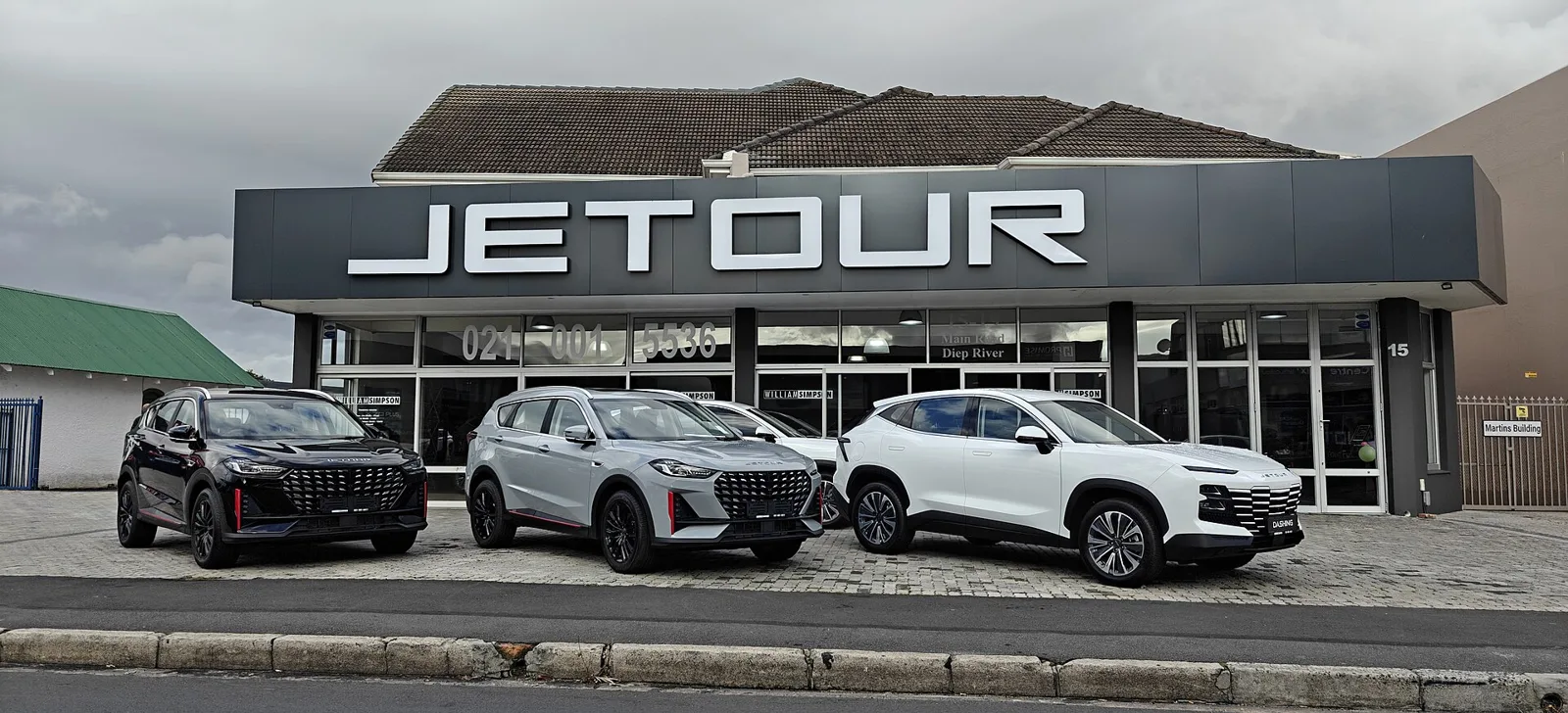
South Africa has built more than half a million cars a year since 2007, while Morocco's Tangier plant, Egypt's strategy and Nigeria's assemblers show how the rest of the continent is following.
South Africa is Africa's car-making leader, with a 2015 peak of 616,000 vehicles and a target of 1.4 million under its Master Plan 2035. Egypt, Nigeria and Morocco are newer: Egypt targets 400,000 to 500,000 by 2030, Nigeria assembles kits, and Morocco builds Renault-Nissan export cars at Tangier.
A Dacia Sandero built in Morocco sells for about $11,000, and one factory near Tangier has turned that small car into an export engine that, by figures reported at the time, outearned the country's phosphates. South Africa, meanwhile, still dwarfs every other African producer, and Egypt and Nigeria are working to catch up.
Four countries anchor the story of African car making, each with a different history and a different bet on the future.
Which African countries build cars?
South Africa is the continent's leader by production volume, building above half a million vehicles annually. Egypt, Nigeria and Morocco are smaller but moving. Egypt targets large growth by 2030, Nigeria assembles from kits, and Morocco has become an export base for Renault-Nissan and PSA.
One pattern holds across all four: the cars are mostly built under licence from foreign brands, often from imported kits, rather than designed at home.
In Morocco, vehicles and parts earned 35 billion dirhams in exports against 34 billion for phosphates.
How large is South Africa's car industry?
It has been producing more than half a million vehicles a year since 2007, with a peak of 616,000 in 2015. That put South Africa 22nd in the world, out of global production near 100 million, but first in Africa by a wide margin. In 2004 it made 84% of all vehicles built on the continent.
As of mid-2026, seven major companies build significant passenger vehicle volumes there: Toyota, Volkswagen, Ford, BMW, Mercedes-Benz, Isuzu and Chery. BAIC Motor builds at smaller scale. Most vehicles are built under licence, though trucks and military vehicles also see domestic development. A particular strength is the pickup, known locally as the bakkie, which is popular at home and exported abroad.
The industry's weight in the economy has shifted with the years. In 2004 it contributed 6.7% of GDP, and 110,000 vehicles were exported, 100,000 of them passenger cars, to 53 countries including Japan, the United States, Britain, Australia and Germany. In the peak period it made up 7.5% of GDP and about 10% of manufacturing exports. More recently, in 2025, it employed 115,000 people, 80,000 of them in component manufacturing, and accounted for 22.6% of manufacturing output and 5.2% of GDP. Component exports were worth R62.5 billion in 2024.
How did South Africa's car industry begin?
A Benz Velo was imported in 1896 and demonstrated in Pretoria on 4 January 1897 before President Paul Kruger. Real industry came with the Americans. Henry Ford visited Port Elizabeth in 1922, and by 1923 Ford had opened the first assembly plant there. General Motors followed soon afterwards.
By the mid-1960s Ford and GM still held more than 60% of the car market, though German and British small cars had started to bite from the mid-1950s. In the early 1960s Studebaker became VW. Toyota, Datsun and Mercedes were all setting up factories before the 1960s ended, and British makers were being pushed out. A planned merger of Sigma Motors with British Leyland failed in the late 1970s, forcing Leyland to build a dealer network from scratch in a month, and its South African presence never recovered.
Apartheid politics ran through the plants. The government asked Ford and GM for advice on developing a local component industry. Their engineers asked that black South Africans be included in the effort, and that request was refused. Yet between them Ford (about 28% of the market), GM (about 32%) and VW (about 15%) pushed local component development so fast that by 1968 job reservation in the car industry had been broken, allowing black workers into factories once reserved for whites.
The fuel crisis changed the cars. Big American models sold far less afterwards, and the decade closed with the Mazda 323 and Volkswagen Golf selling best. Australian Fords and Holdens filled the demand for large saloons for a while. In 1976 sales hit their worst level since 1972, and Chrysler SA, whose Valiant had been the most-sold passenger car in 1966, 1967 and 1968, merged with Illings (Mazda) to form Sigma.
What are South Africans buying now, and who is building it?
Toyota is the top-selling new passenger vehicle brand as of 2025, with local production behind its best seller, the Corolla Cross compact SUV. It sells nearly double the monthly units of runner-up Suzuki, whose best seller is the Swift hatchback. Crossovers were the most popular segment in April 2026, at 36.9% of sales.
Price matters. The average new passenger vehicle cost around R400,000 in 2024, and of about 1,500 models for sale, 1,082 cost more than half a million rand. New vehicle prices rose by an average of 4.7% in the first quarter of 2024, steepest in hatchbacks and crossovers. More than 500,000 new and over 120,000 preowned passenger vehicles change hands every year.
China is the new force. As of 2025 there were 16 Chinese brands on sale in South Africa, a third of the total, with 9 more on the way. October 2025 was described as a historic month: Foton rolled out its first vehicle, a pre-production Tunland G7 pickup, at the BAIC plant inside the Coega Special Economic Zone close to Gqeberha. No Chinese commercial-vehicle company had run full-scale vehicle manufacturing in the country before. GWM said it was considering jointly making pickups locally, Chery was on track to double its sales in 2025, and Stellantis said it was progressing with a knock-down facility, with production scheduled for the second half of 2027.
Electric cars are spreading too. The local EV industry was worth around R3 billion in 2025. In October 2025 BYD announced a rollout of 200 to 300 ultra-fast chargers for 2026 with a maximum output of 1,360 kW, which the company says adds 2 km of range per second and 400 km in 5 minutes. A local news outlet calculated that electricity from the grid cost R0.64 to R0.80 per kilometre, against R1.53 to R1.60 for petrol.
What is Egypt doing to catch up?
Egypt has treated car making as a state priority since the late 1950s. Its first domestically made car, the Ramses, was launched by the state-owned Egyptian Automotive Company in Helwan in the early 1960s, and as of 2024 some 15 manufacturers assemble vehicles locally, with domestic content above 45%.
The Ramses was based on the German NSU Prinz and built through public investment and consumer pre-orders. Demand was high, but output was an estimated five to six units a day, and quality suffered for lack of automated equipment such as body presses. Come the early 1970s, imports beat it on price and reliability. In 1972 the company, by then called El Nasr, turned to a partnership with Fiat to assemble licensed models, and later added vehicles from Zastava, Daimler, Kia and Peugeot, including the Jeep Cherokee and the Peugeot 405. Its own Nasr 128 GLS became one of Egypt's best sellers.
The Open Door Policy of 1974 brought foreign money. In 1985 General Motors set up a joint venture with the local distributor Mansour, and 1990s reforms invited more multinationals in. Manufacturing Commercial Vehicles, founded in 1994 with Mercedes-Benz, now employs around 2,500 at El Salheya. Output peaked at 116,683 vehicles in 2010, then the 2011 revolution caused Nissan and Toyota to suspend operations and production fell by 30%, to 36,640 by 2017.
The recovery rests on the National Automotive Industry Strategy, launched in 2022. It targets annual output of 400,000 to 500,000 vehicles by 2030, with 25% exported, worth an anticipated $4 billion a year. Ezz Elarab Group and El Sewedy Electric have teamed up with Proton, Nissan is expanding capacity, and Exeed assembles at 6th of October. Egypt aims for EV production from 2025, starting with e-taxis built with Chinese firms and Nasr.
Money is arriving. In May 2025 Jetour and El Kasrawy Group committed $123 million to an assembly plant, and Geely launched its first factory in the region in Egypt. In November 2025 Mansour Group began building a $150 million plant, MAC Automotive, aiming at 100,000 units a year within five years. Volkswagen followed in December 2025 with a $240 million programme to expand EV production, starting in Egyptian-German Automotive's facilities.
The market itself is smaller than the ambition. Sales hit 349,100 in 2015 but were 102,200 in 2024, up 13.16% on the year, and car ownership stood at 35 vehicles per 1,000 inhabitants, against 130 in Algeria. The devaluation of the Egyptian pound has pushed up the cost of imported parts. Researchers at the German University in Cairo, in a 2023 study, identified skills mismatches as a major constraint.
What happened to Nigeria's car plants?
Nigeria sells about 720,000 cars a year, but only roughly a fifth are built domestically. Local assembly began in the 1950s with Bedford trucks and Peugeot 404 pickups, expanded in the oil-boom 1970s, and then withered through the 1980s.
In 1969 the government issued a request for proposals, and about 20 manufacturers answered. It chose Peugeot and Volkswagen for passenger cars and hoped locally sourced inputs would reach 100% by 1990. The Volkswagen plant on the Lagos-Badagry expressway started production in 1975, owned 40% by Volkswagen, 35% by the Nigerian government and the rest by German institutions, Lagos State and distributors. Peugeot Automobile of Nigeria also began in 1975, in Kaduna, and its output climbed from 2,259 in 1975 to 48,235 in 1980.
The trucks followed. ANAMCO, a partnership with Daimler-Benz, started production at Enugu in 1980 with a capacity of 7,500, while Leyland Nigeria in Ibadan built trucks and vans for the military, customs and police.
Then the money ran out. A fall in oil prices by 1981 brought foreign exchange controls that made it hard to import kits, and by 1985 all the truck plants were running below 30% of capacity. Demand for commercial vehicles fell from 36,000 in 1977 to 14,440 in 1981. Late-1980s liberalisation let more imports in, and Volkswagen's output dropped from 29,300 in 1981 to under 1,000 in 1989. Local content targets were never met, and an unstable electricity supply made locally built cars dearer than imports. By 2000 used foreign cars dominated sales.
Since 1999 the government has sold its stakes. Volkswagen's plant went to Stallion Group in 2005, and ASD Motors bought the Peugeot stake. The local brand Innoson was commissioned in 2010 with a capacity of 10,000 vehicles a year. In April 2022 Aliko Dangote took over Peugeot's Nigerian shares, creating DPAN, which plans to assemble Chery and Higer vehicles at 120 cars a day on a new line. Stallion was the most productive assembler in 2022, building 45,000 Volkswagens a year. Smaller makers include Proforce, which builds armoured vehicles exported to Chad, Rwanda, Ghana and Niger, and firms building solar-powered and electric vehicles.
Why has Morocco become a car export base?
Morocco's industry is led by investment from Renault-Nissan and PSA, with BYD leading Chinese investment. The government removes certain taxes during an automaker's first five years. Fiat withdrew in 2003, selling its stake in the SOMACA plant to Renault.
The SOMACA plant in Casablanca dates from 1959 and is today 80% Renault Group and 20% PSA. Its products are the Kangoo from Renault and the Logan and Sandero from Dacia, and it can build almost 80,000 vehicles a year with a staff of 1,307. The newer plant at Tangier opened in 2012, making the Dacia Lodgy and Dokker, with an initial capacity of 170,000 on one line and 5,086 staff.
The Tangier plant outran its own forecasts. Renault-Nissan said it built more than 288,053 vehicles in 2015, an increase of 26%. The Sandero was almost half of output, at almost 140 000 units, followed by the Dokker at 25%, Logan at 14% and Lodgy at 11%. About 94% of Tangier's cars are exported, against 68% from Casablanca, to more than 22 countries. Renault-Nissan holds roughly 38% of the Moroccan market. The government paid for a training centre and built a highway and rail line linking the plant to the Tanger-Med port.
The knock-on effects are large. More than 170 factories sprang up to supply the plant, with revenues of 50 billion dirhams and over 90,000 direct and indirect jobs. Auto exports of 35 billion dirhams edged past phosphates at 34 billion and agriculture at 31 billion. Local Grand Taxis, forced to move from old Mercedes models to greener cars, helped push up demand for the Lodgy.
PSA announced a EUR 557 million plant at Kenitra in 2015, scheduled to open in 2019 with capacity for 90,000 engines and vehicles and potential to expand to 200,000. Morocco has also set itself targets, including one million vehicles and 80% local integration by 2020, from 650,000 at the time.
African car industries side by side
| Country | Scale | Main makers | Stated aim |
|---|---|---|---|
| South Africa | More than 500,000 a year; peak 616,000 in 2015 | Toyota, Volkswagen, Ford, BMW, Mercedes-Benz, Isuzu, Chery | 1.4 million vehicles, 60% local content under the Master Plan 2035 |
| Egypt | Peak 116,683 in 2010; 15 manufacturers | Nissan, Chery, Chevrolet, Hyundai, Toyota and El Nasr | 400,000 to 500,000 vehicles by 2030 |
| Nigeria | Roughly a fifth of about 720,000 cars sold | Stallion (Volkswagen), DPAN, Innoson | Assembly of Chery and Higer vehicles |
| Morocco | More than 288,053 at Renault-Nissan in 2015 | Renault-Nissan, PSA, BYD | Export base for Europe and the region |
What does African car making mean for buyers?
For most buyers it means a choice of familiar foreign brands, assembled nearby. In South Africa that includes the locally built Corolla Cross, and in Morocco a car such as the Sandero priced around $11,000 that sells well at home and in France. Egyptian prices have been squeezed by currency weakness, while Nigerian buyers have mostly turned to used imports.
Where this goes next
South Africa's Automotive Master Plan 2035 sets a target for the country to account for 1% of world vehicle output, a total of 1.4 million vehicles, with local content rising to 60% and employment in the sector doubling to 224,000. Stellantis plans to begin local production in the second half of 2027.
In Egypt, BMI Autos Industry Research projects output growing at an average of 11.4% a year from 2024 to 2033, reaching nearly 835,000 vehicles from 37,000 in 2023, and exports of cars and components reached $891 million in the first nine months of 2025, with a forecast of over $1 billion for the year. In Nigeria, DPAN plans a new line at 120 cars a day, and in Morocco the Kenitra plant was announced with potential to reach 200,000 units.