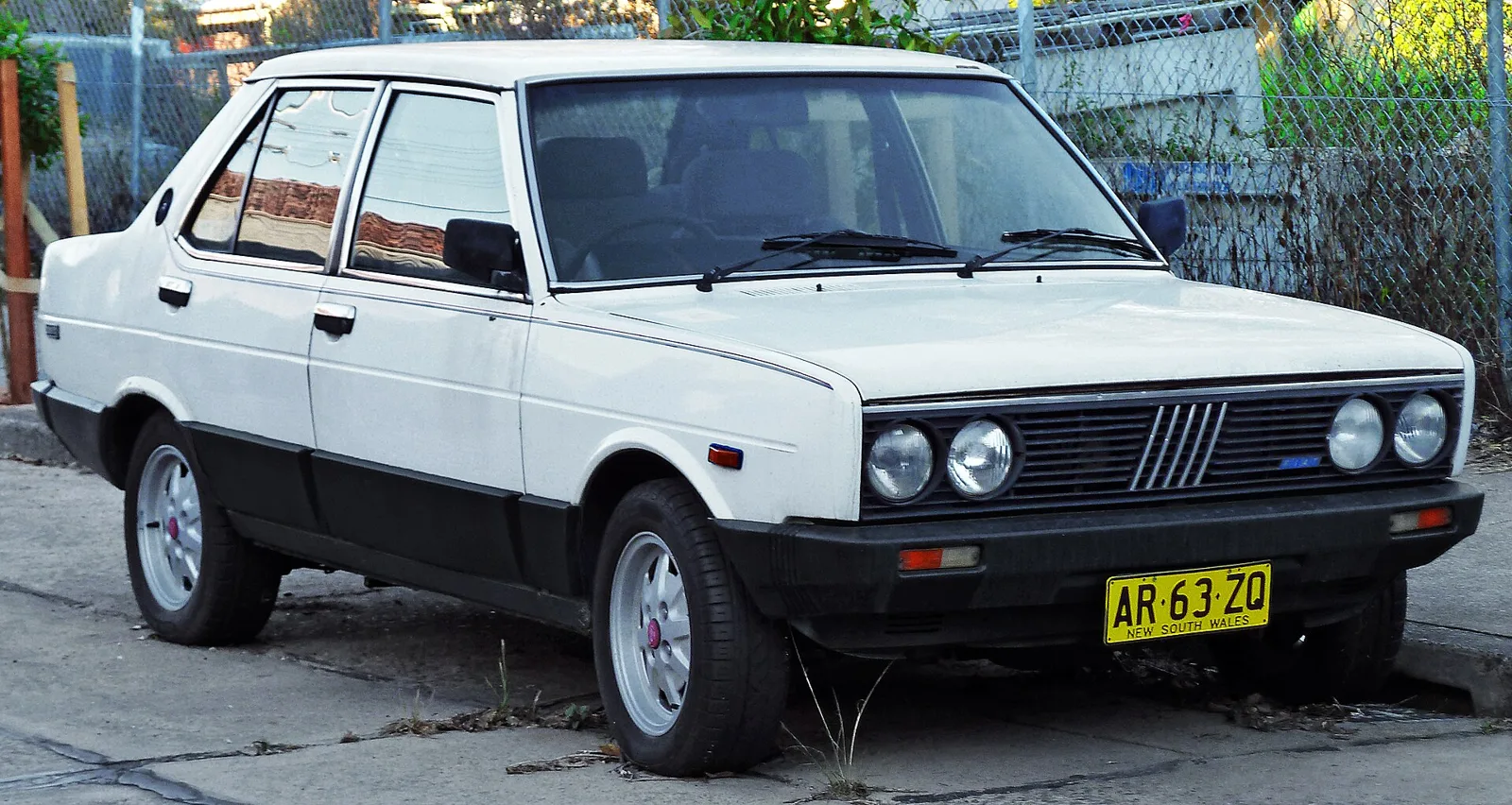
A Fiat 131 licence built in Bursa from 1977, a failed 1961 prototype and Turkey's first all-electric car company, Togg, trace how the country went from assembly to its own brand.
Turkey built its car industry on foreign licences, from the Ford Consul in 1960 to the Fiat-based Tofas Sahin in 1977, and produced 1,486,393 vehicles in 2023. The Togg T10X, an electric SUV delivered since April 2023, comes from Togg, the first all-electric car company in Turkey.
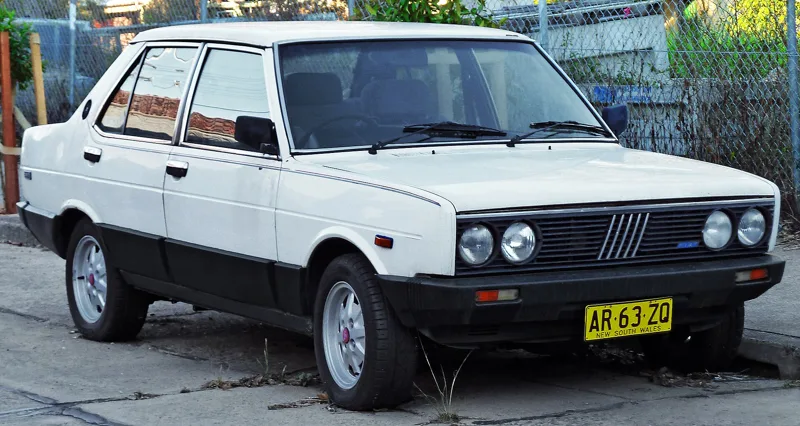
The Turkish car that most people remember started life as an Italian one. The Tofas Sahin was a Turkish version of the Fiat 131, built in Bursa from 1977 to 2002 and used as a patrol car, a taxi and a family workhorse. A newer Turkish car is the electric crossover called the Togg T10X, designed with Pininfarina and built in the same province.
Between them lie half a century of licences, a failed first prototype and a bet that Turkey could build a car of its own.
How did Turkey build a car industry?
The first attempt was American. In 1929 Ford assembled a car in Istanbul, at a rate of 48 a day, until the Great Depression ended production. Earlier, in 1925, a factory called Tayyare Otomobil Turk Anonim Sirketi, or TOMTAS, had been founded to build aircraft, automobiles and engines. In the 1950s TOE began making REO military trucks and later International Harvester trucks, and a Jeep factory at Tuzla started building Willys-Overland vehicles in 1954.
The real foundations were licences. The Otosan factory in Istanbul opened in 1959 to build Ford models, and production of the Ford Consul began there in 1960. In 1964 the BMC factory in Izmir started making Austin and Morris cars, and Turkey's Cukurova Group bought the BMC brand in 1989. The Tofas factory in Bursa opened in 1968 to build Fiats under licence, and the Oyak-Renault factory followed there in 1969.
Turkey also tried to design its own. In 1961 the state railway builder TCDD, working at the Tulomsas factory in Eskisehir, produced four prototypes of a sedan called the Devrim. It was the first Turkish car designed and built entirely at home, but it never entered production. In 1966 the Anadol, built by Otosan in Istanbul, became the first mass-produced Turkish car brand.
The Sahin was a Fiat copy that Turkey drove for a quarter of a century; the Togg comes from the first all-electric car company in Turkey.
How big is Turkey's car industry today?
Turkey produced 1,486,393 motor vehicles in 2023, placing it 13th among the world's producers. Output peaked at 1,695,731 in 2017, when it also ranked 13th, and was 1,352,648 in 2022. Most of the sector sits in the Marmara region, especially Bursa.
Cars are only part of it. TEMSA, Otokar and BMC, all Turkish, rank among the biggest makers of vans, buses and trucks anywhere. Global brands with plants include Tofas, Oyak-Renault, Hyundai Assan, Toyota Motor Manufacturing Turkey and Ford Otosan, while Mercedes-Benz and MAN build trucks and buses and Opel has built vehicles in Turkish factories. Honda, once a producer, is listed among the defunct.
The industry looks outward. Vehicles and components worth more than $35 billion are exported, and in 2017 nearly 85% of them went to Europe. By 2004 exports already ran at 518,000 vehicles annually, chiefly to EU countries. In 2019 export figures rose with sales to the Netherlands up 131% and to the United States up 55%.
It has also taken hits. In March 2009 the Automotive Industry Association said output had dropped 63% against the previous year across January and February, while exports fell 61.6%. In 2010 Turkey made 1,124,982 vehicles, which placed it seventh in Europe, with Italy, Russia, Britain, Spain, France and Germany all ahead of it.
The capacity split among passenger car makers in 2002 shows how concentrated it was: Fiat and Tofas held 34%, Oyak and Renault 31%, Hyundai and Assan 14% and Toyota 14%, with Honda at 4% and Ford and Otosan at 3%. Combined capacity for the six companies rose from 726,000 units a year in 2002 to 991,621 in 2006.
What was the Tofas Sahin?
The Tofas Sahin, Dogan and Kartal were Turkish versions of the Fiat 131, made by the Turk Otomobil Fabrikasi factory in Bursa. Dogan means falcon, kartal means eagle and sahin means hawk, so Turks informally call the family the Kus Serisi, or Bird Series. Production began in 1977, and the cars stayed on sale at home until 2002.
The first car appeared in February 1977 as the Tofas Murat 131, a near exact replica of the Italian original. At first only one engine was offered, a 1.3-litre pushrod four with a twin-barrel Solex carburettor and 70 PS SAE (51 kW) at 5,250 rpm. From 1981 the Sahin and Kartal names appeared, the Kartal being the station wagon, and a 1.6-litre engine joined with 75 PS DIN (55 kW). The 1.3 stayed on as a cheaper option, rated at 65 PS DIN (48 kW).
The luxury Dogan arrived in September 1981 with a five-speed manual gearbox, fabric upholstery and a heated rear window. From 1983 the Dogan wore large rectangular headlamps, whereas the cheaper models kept round twin units.
How did the Sahin change over its life?
A major facelift in 1988 gave the car a new front and rear reminiscent of the Fiat Regata. The Kartal wagon had a rear body developed in Turkey with a higher roof than Fiat's own 131 Panorama. A facelift in August 1994 brought a new grille, and for 1996 the range switched to overhead-camshaft engines from the Fiat Tempra: a 1.4 with 78 PS (57 kW) and a 1.6 with 86 PS (63 kW). In 1998 a two-seat panel van, the Kartal Kargo, appeared with a 600 kg (1,300 lb) payload.
The most interesting experiment was the diesel. As part of a national project responding to rising oil prices, Tofas began developing a diesel Sahin in 1985, using Fiat and Lancia's 1.9-litre engine with 73 PS SAE (54 kW). Production started in January 1988. Imported engines carried no duty, but one engine still cost more than a complete petrol Sahin, and the diesel car was priced 75 percent higher. Sales ended in October 1989 after only 820 examples, and promised local parts supplies never materialised. Many surviving cars now run locally made Isuzu engines.
The final facelift came in 2002, the year Turkish sales ended and the range became export-only, usually in kit form. In 2005 the cars gained single-point electronic fuel injection.
Why did the Sahin fade?
The car was rear-wheel drive with a longitudinal engine, MacPherson struts at the front and a live axle at the rear. Its selling points were low price, robust construction and cheap maintenance, helped by near universal popularity in the 1980s and 1990s. It also served as a standard patrol car for the General Directorate of Security and the Gendarmerie in the 1990s and early 2000s, alongside the Renault 12 Toros, until the Fiat Doblo and Ford Transit Connect replaced them.
Its weaknesses grew clearer with time. The gearbox, fuel tank and shaft tunnel left a cramped cabin, and being a mid-1970s Italian design it lacked ABS, passenger airbags and traction control. Popularity waned in the mid-1990s as modern imports flooded the market. As petrol prices soared, most were converted to LPG. The Sahin had been the de facto taxi of Turkey until it was judged unsuitable, because of the regulations that came with Turkey's EU membership talks. The Fiat Siena, built locally as the Fiat Albea, replaced it.
Where else was the Sahin built?
It travelled widely. Buyers included Romania, Libya, Tunisia and Syria, Caucasus and Central Asian markets such as Georgia, Azerbaijan, Kazakhstan, Kyrgyzstan, Turkmenistan and Uzbekistan, and also Macedonia and China. Right-hand drive models were made for Northern Cyprus.
In Egypt the state-owned Nasr company built the Sahin and its siblings in large quantities from 1991. The Kartal wagon ended in 2003, and local content reached 45% by 2006. Production moved gradually from Turkey to Egypt, and ended in 2009 when the Nasr company wound down. In Ethiopia, the Holland Car Company, formed by Trento Engineering of the Netherlands together with the Ethiopian firm Ethio-Holland, started building the car in Addis Ababa in 2006 under the name DOCC, with a 1.6-litre 1,581 cc engine. Ethiopian production halted in 2010.
What is the Togg T10X?
The T10X is a compact electric crossover SUV from Togg, formally Turkey's Automobile Joint Venture Group Inc, the country's first all-electric vehicle company. Togg began manufacturing it in 2022, and deliveries started in April 2023. It is the first of five electric models the company plans to produce by 2030.
The name is a code. The T stands for Turkey and Togg, the 10 for the compact segment (C), and the X for the SUV body type. Murat Gunak designed it with Pininfarina to Togg's brief, including a tulip motif that appears in the grille and in the stitching on the seats. Elements of Turkish culture also show in the wheels.
The president unveiled prototypes of the T10S compact sedan and the T10X on 27 December 2019 at a public event in Gebze, Kocaeli. The factory at Gemlik opened on 29 October 2022, Republic Day, after a build that began on 18 July 2020 and covered 1.2 million square metres. The first T10X off the line was painted Anatolian red.
Inside, the T10X has a 12-inch digital instrument display and a central touchscreen set on a 29-inch panoramic panel spanning the dashboard, with a second screen lower down for settings. The floating centre console carries a rotary gear selector. An artificial-intelligence infotainment system runs on Togg's Trumore digital platform and includes home automation, and a Meridian audio system is optional.
The platform was originally to be the Saab 9-3's Phoenix 1.0 architecture, which Togg acquired from NEVS in 2015, but the company later developed a new one.
How fast is the Togg T10X and how far does it go?
The rear-drive T10X has a single motor rated at 160 kW (215 hp; 218 PS), with 350 N-m (258 lb-ft) of torque, and reaches 100 km/h in 7.6 seconds. The all-wheel-drive version pairs two motors for 320 kW (429 hp; 435 PS), plus 700 N-m (516 lb-ft), and does the sprint in 4.8 seconds.
Two lithium-ion batteries are offered. The 52.4 kWh unit gives 314 km (195 mi) of range and consumes 16.7 kWh per 100 km, while the 88.5 kWh unit gives 523 km (325 mi) at 16.9 kWh per 100 km. DC charging reaches up to 180 kW, taking the battery from 20% to 80% in 28 minutes. The cells are made by Siro in Gemlik, next to the Togg plant, a subsidiary that Togg owns 50% of with the energy company Farasis Energy. The battery carries an 8-year guarantee, and Farasis says the cells will last 1 million kilometres.
Two trims are sold. The V1 comes only with the 52.4 kWh battery, while the V2 lets buyers pick either. Home-market cars are limited to 185 km/h (115 mph). Nine airbags and a driver-assistance suite that can be updated over the air are standard, including adaptive cruise control with stop-and-go, lane keeping, blind-spot assist, a surround-view camera and automatic parking.
Tofas Sahin and Togg T10X side by side
| Detail | Tofas Sahin | Togg T10X |
|---|---|---|
| Built | 1977 to 2002 in Turkey | From 2022 |
| Origin | Turkish version of the Fiat 131 | Designed by Murat Gunak and Pininfarina |
| Layout | Rear-wheel drive, front engine | Rear-drive or all-wheel-drive electric |
| Power | 70 PS SAE (51 kW) 1.3 at launch | 160 kW (215 hp; 218 PS) or 320 kW (429 hp; 435 PS) |
| Bodies | Sedan, Kartal wagon, Kargo van | Compact crossover SUV |
| Made at | Bursa, then Egypt and Ethiopia | Gemlik, in Bursa province |
What do taxes and chargers mean for Turkish buyers?
Tax shapes the choice. As of 2021 the special consumption tax on private cars is 60% for motors up to 85 kW, 150% from 85 kW to 120 kW, and 220% at 120 kW and over. A 40% import tariff applies to Chinese electric cars, against 10% in the European Union and 27.5% in the United States.
Electric cars are catching on. In 2025 close to 18% of new cars sold were electric, the fourth highest share in Europe, and more than 35,000 charging stations served the country using the CCS2 standard.
Where this goes next
Togg has said it plans five electric models by 2030, with the T10X the first. At the factory opening, the company said a four-door coupe called the C-XCoupe would arrive in 2026. Turkey also aims to produce batteries for electric motorcycles, e-scooters and lorries.