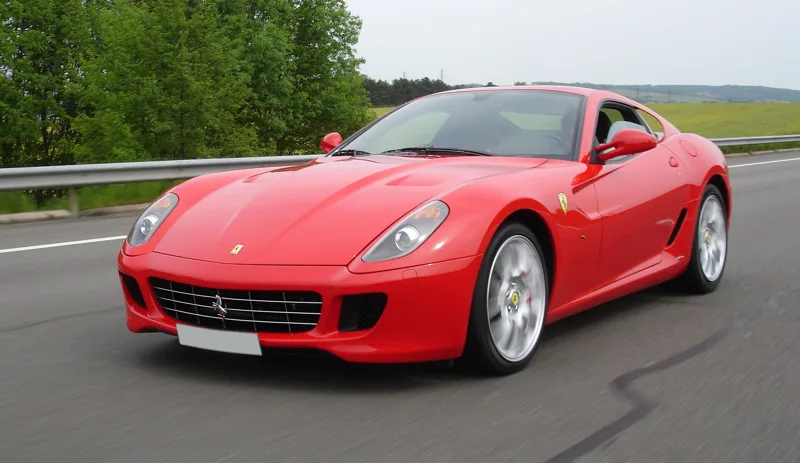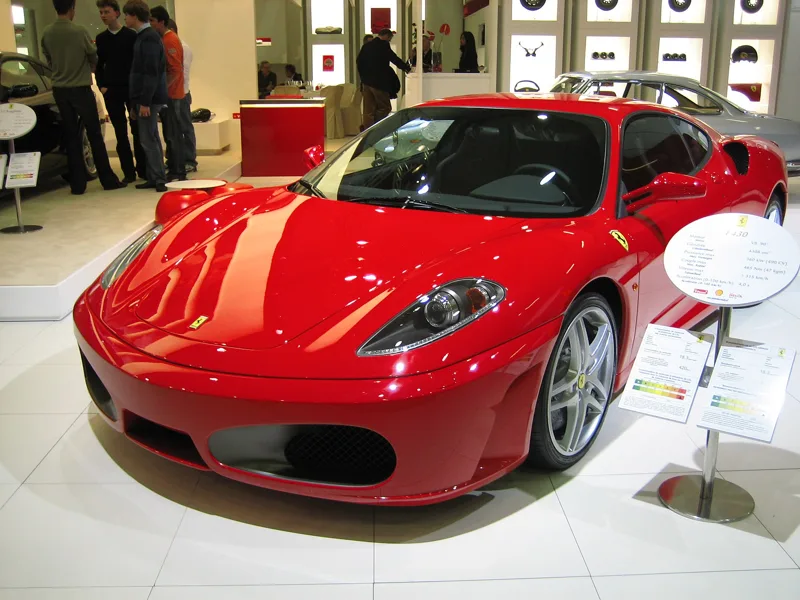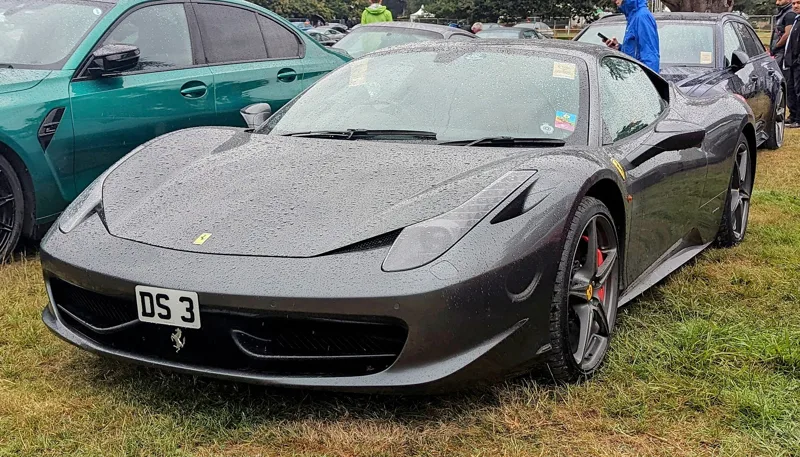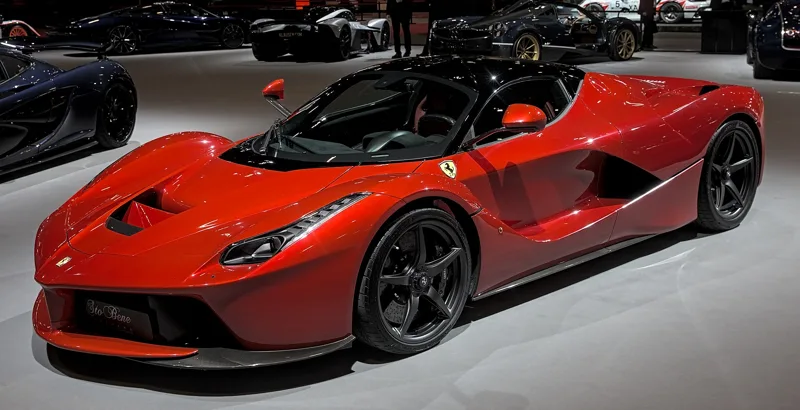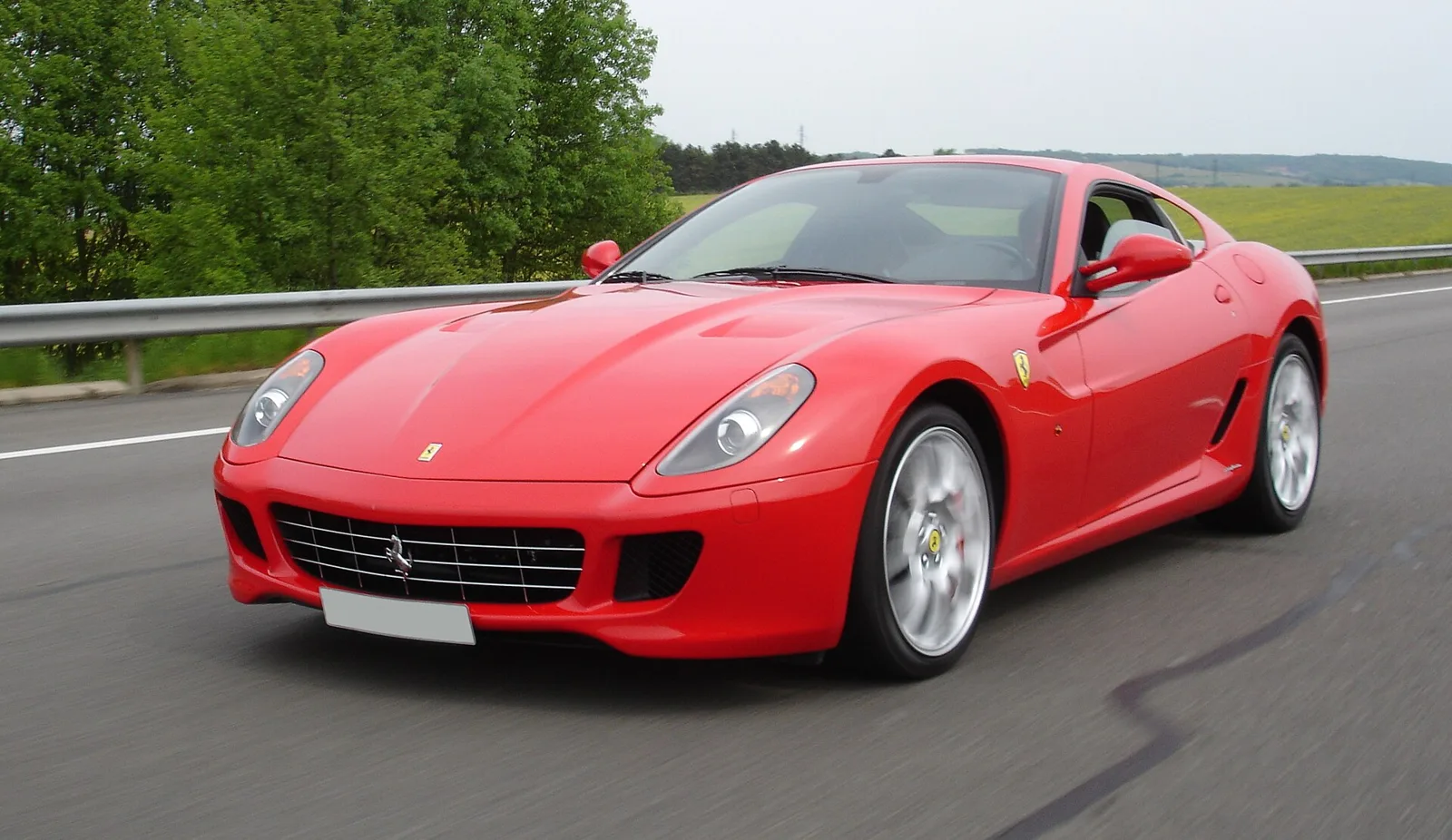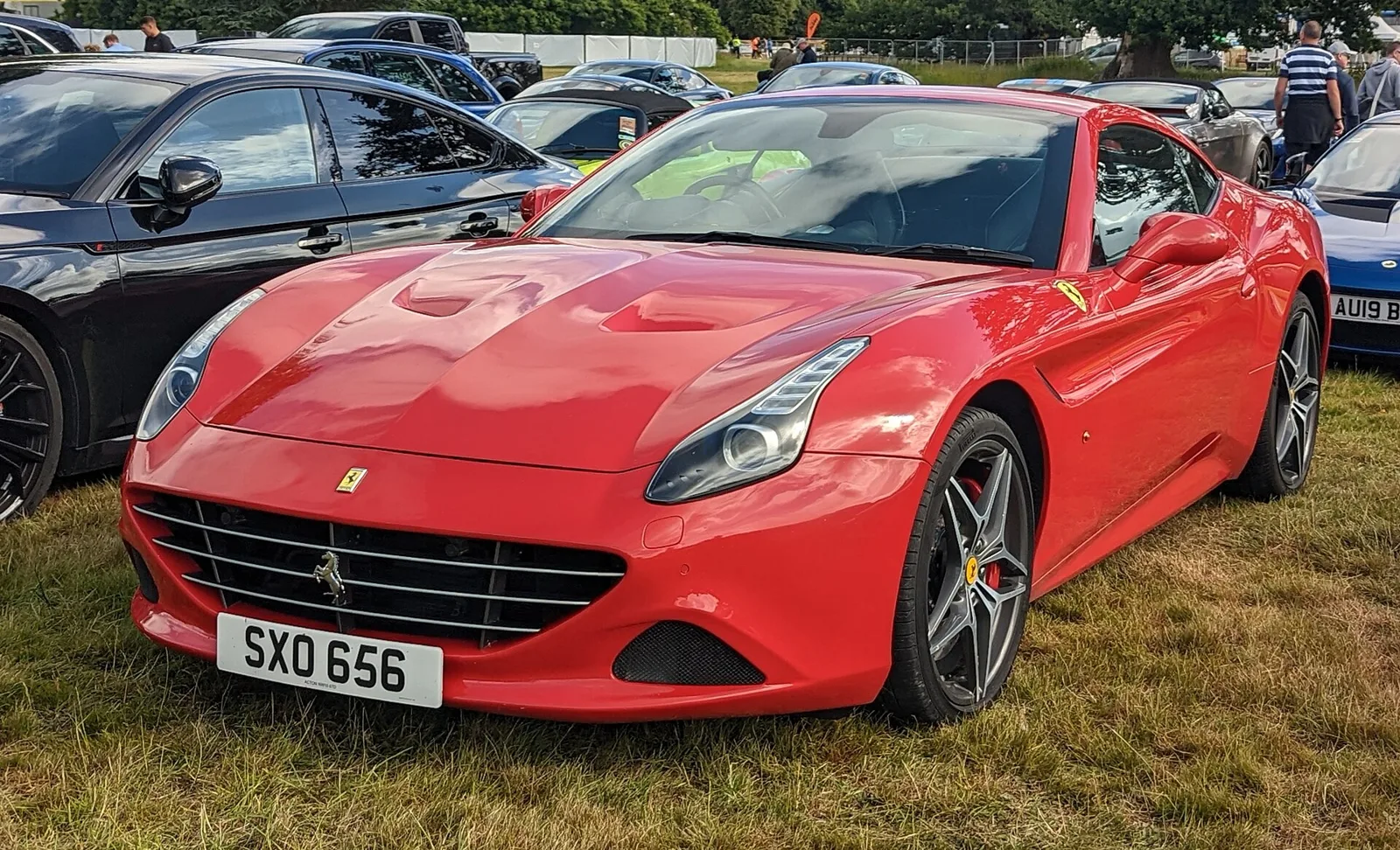
Ferrari's first front-engined V8 hard-top convertible, launched in 2008, with a lighter California 30 and a turbocharged successor before the Portofino took over in 2018.
Launched in 2008, the Ferrari California paired a front-mounted V8 with a folding hard top. A twin-turbo version followed in 2014, the Portofino replaced the model in 2018, and 17,349 vehicles were built across all variants. It remained a grand tourer throughout.
The Ferrari California was a two-door 2+2 hard-top convertible that Ferrari launched at the Paris Motor Show in October 2008. Its naturally aspirated 4,297 cc V8 sat at the front, and the model later gained a lighter California 30 and a twin-turbo California T before the Portofino replaced it in 2018. It revived a name Ferrari had used on earlier grand tourers.
Where did the California name come from?
Ferrari had used the name on earlier grand tourers before reviving it in 2008. The modern car was launched as an entry-level model, with a base price similar to that of the F430, the company's V8 flagship at the time of its introduction.
The car was introduced as a new fourth model range for Ferrari, joining the mid-engined V8 and V12 sports cars and the front-engined V12 grand tourer. Its grand touring personality was emphasised by a slightly higher ride height than its more aggressive siblings.
Pininfarina produced the design under Ken Okuyama, while Ferrari's Carrozzeria Scaglietti division designed and built the chassis. The result was a car that broke with several Ferrari traditions in a single package.
The California put a front-engined V8 and a folding metal roof into a Ferrari for the first time, and it kept that promise for a decade.
What firsts did the California introduce?
The California was the first front-engined Ferrari with a V8, and the first with a seven-speed dual-clutch transmission. It was also the first hard-top convertible with a folding metal roof and the first Ferrari with multi-link rear suspension and direct petrol injection.
Those firsts were a lot for one model to carry at once. Together they show a grand touring car being rebuilt around new hardware rather than a single headline feature added to an existing design.
It was also the first road-going Ferrari with stop/start, a system called HELE, which stands for High Emotion and Low Emission. It allowed the engine to shut off at extended idle and restart as soon as the accelerator was pressed.
How much power did the original California make?
The F136IB engine displaced 4,297 cc and used Bosch direct petrol injection. At 7,750 rpm it made 460 PS (338 kW; 453 hp), and 485 Nm (358 lbf ft) arrived at 5,000 rpm, which worked out to 79 kW (106 hp) per litre. That is an unusually high output for a naturally aspirated engine.
The engine used a wet sump lubrication system, and its sound was engineered to work with the roof both up and down. The mid-front engine and rear gearbox gave the car a weight split of 47 percent front and 53 percent rear.
Performance was quick for the period. The original car reached 100 km/h in four seconds and topped out at 310 km/h (193 mph), despite weighing 180 kg (397 lb) more than the mid-engined F430 and making 22 kW (30 PS; 30 hp) less.
How did the California handle and grip?
The car used the F1-Trac traction system, first seen on the 599 GTB Fiorano and updated for the California. Its variable power distribution to the rear wheels gave an average 20 percent acceleration gain when leaving corners, compared with traditional traction control.
Engineers logged more than 1,000 hours of wind tunnel testing on a one-third-scale model. With the top up the car achieved a drag coefficient of Cd 0.32, which reduced wind resistance noticeably for a convertible of its size.
The stop/start system was not universally liked. Many Tifosi disliked the engine switching off at a standstill, yet the HELE option brought tax advantages in some jurisdictions, which kept it on the price list.
How many Californias were built?
About 8,000 units were built between 2008 and 2012, and total production across all variants reached 17,349 vehicles. Output was 1,219 cars in 2013, 1,645 in 2014 and 2,638 in 2015, before falling to 2,247 in 2016 and about 1,600 in 2017.
The Maranello production line made about 27 cars per day. The California was built in a purpose-built facility beside the existing factory, which gave Ferrari room to grow the volume of its entry-level model.
Manual gearboxes were rare. Just three cars were built with a manual across the modern California's life from 2008 to 2017, which made the dual-clutch car the standard choice for almost every buyer.
What changed with the California 30?
Ferrari announced the California 30 on 15 February 2012. It weighed 30 kg (66 lb) less than the base car and at 7,750 rpm made 489 PS (360 kW; 483 hp). Its 0-100 km/h time was 3.8 seconds, and the manual option was dropped.
The F136IH engine produced 505 Nm at 5,000 rpm, with 75 percent of that torque available at 2,250 rpm. The chassis was re-engineered with new materials and aerospace-derived construction, and it introduced a fully modular chassis to Ferrari's road cars.
The 30's top speed was 312 km/h (194 mph). It was unveiled at the March 2012 Geneva show, and North American sales ran only for the 2013 and 2014 models.
What was the Handling Speciale package?
The Handling Speciale, or HS, package was an option developed in 2012 for the California 30, and it was sold as a no-cost option in some markets. It used Delphi MagneRide magnetorheological dampers with faster response, stiffer springs and a steering rack with a 2.3 turns lock-to-lock ratio instead of 2.5.
The package traded comfort for reduced body roll and sharper handling during aggressive driving. Spotting an HS car is simple, because it carries silver grille and vent details that the standard model lacks.
Was there a recall on the California?
Yes. In May 2012 Ferrari recalled 200 vehicles over a risk of sudden engine seizure, and 74 of them had reached North America. Owners could choose a new engine, a repaired one or a new crankshaft and bearings, and dealers handled the work under the manufacturer's instructions.
The problem came to light during a review by car critics, who found the engine could seize without warning. The fault was traced to crankshafts that had been machined incorrectly.
What did the California T bring?
Type F149M arrived in 2014 as a 2015 model, powered by a new 3,855 cc twin-turbo V8. It made 560 PS (412 kW; 553 hp) and 755 Nm at 4,750 rpm, and it reached 0-100 km/h in 3.6 seconds on its way to 315 km/h (196 mph).
The T also brought Apple CarPlay to a Ferrari road car for the first time. At Geneva, Apple named Ferrari, Mercedes-Benz and Volvo as early launch partners for CarPlay-compatible cars.
A Handling Speciale version of the T was unveiled at the March 2016 Geneva show, with stiffer springs, retuned dampers, faster shifts in Sport mode and a sport exhaust. Ferrari's 70th anniversary in 2017 brought 70 liveries to the Tailor Made programme for the T.
| Specification | Detail |
|---|---|
| Launch engine | F136IB, 4,297 cc V8, 460 PS (338 kW; 453 hp) at 7,750 rpm |
| Launch torque | 485 Nm (358 lbf ft) at 5,000 rpm |
| Launch 0-100 km/h | Four seconds |
| Launch top speed | 310 km/h (193 mph) |
| Launch weight distribution | 47 percent front, 53 percent rear |
| California 30 engine | F136IH, 489 PS (360 kW; 483 hp) at 7,750 rpm |
| California 30 torque | 505 Nm at 5,000 rpm |
| California 30 0-100 km/h | 3.8 seconds |
| California T engine | 3,855 cc twin-turbo V8, 560 PS (412 kW; 553 hp) |
| California T torque | 755 Nm at 4,750 rpm |
| California T 0-100 km/h | 3.6 seconds |
| California T top speed | 315 km/h (196 mph) |
What replaced the California?
The Portofino succeeded the California in 2018, keeping the front-engined grand touring formula alive. Across all variants, Ferrari built 17,349 California vehicles, from the original naturally aspirated V8 to the twin-turbo T. The name carried the model's grand touring character forward under a new badge.
How did the California's seating layouts work?
The California came in 2+2 and 2+ layouts. The 2+2 had two small rear seats that could only take small child seats, while the 2+ replaced them with a bench storage area that held more luggage than the seats did.
The 2+ bench came with matching leather luggage tie-down belts, which made it practical for weekend trips where luggage mattered more than rear passengers. The 2+2 kept the grand touring brief with seats that were best reserved for short journeys.
Either layout kept the front-engined balance and the hard-top roof, so the choice came down to how the owner planned to use the rear of the car.
What was the Tailor Made programme?
Through Tailor Made, buyers could collaborate with Ferrari's personal designers in Maranello on a bespoke car, taking part in each stage of the decision making. The programme was announced in late 2011, and the California 30 was among its first beneficiaries.
The California T was offered in several special editions through the programme. For Ferrari's 70th anniversary in 2017, the company offered 70 liveries inspired by past cars, including the 250 GT Berlinetta SWB and the 1963 250 GT Berlinetta Lusso.
The March 2016 Geneva show marked the first public showing of these liveries, which returned at the October 2016 Paris Motor Show.
How was the California built at Maranello?
Production took place in a dedicated building next to the Maranello works, as part of the Formula Uomo programme that began in 1997 to improve production, safety and working conditions. The plant made about 27 cars per day across the wider factory.
The new building gave the model its own assembly space while keeping it close to Ferrari's existing expertise. The plant was designed to keep assembly close to the company's core skills. Output for the whole factory averaged around 27 cars per day, which put the California's volumes in context.
Volumes moved from year to year, so the annual totals are a useful guide to demand. The highest year in the list, 2015, reached 2,638 cars before the numbers settled.
How did the California's V8 sound and feel?
The V8 was engineered to sound right with the roof up and down, because Ferrari treated the exhaust note as a core part of the experience. The wet sump lubrication system kept oil flowing under hard driving, which suited the car's sporting use.
Stop/start technology arrived with the California and later became common or mandatory in some markets. Some early owners found the restart habit odd, but the feature became a sign of how emissions rules were reshaping even the most traditional sports cars.
The car's blend of a front-mounted V8, rear transaxle gearbox and carefully tuned engine sound gave it a balance that set it apart from the mid-engined models that sat above it in the range.
Frequently asked questions
How quick was the original California?
The original car needed four seconds to reach 100 km/h and posted a maximum of 310 km/h (193 mph). Its 4,297 cc V8 made 460 PS (338 kW; 453 hp) at 7,750 rpm.
How many manual Californias were built?
Just three cars left the factory with a manual gearbox during the modern California's run from 2008 to 2017.
What was the recall about?
The May 2012 recall covered 200 cars, and 74 reached North America. The fault lay in crankshafts that were machined wrongly.
Who designed the California?
Pininfarina produced the design under Ken Okuyama, and Carrozzeria Scaglietti built the chassis. It was the first Ferrari with a folding metal roof on a hard-top convertible.