From a hand-built personal car for Edsel Ford to the Mark II, a Town Car spin-off and a 2020 finale, the Continental kept coming back.
The Lincoln Continental was a luxury car line built by Lincoln from 1939 to 2020, beginning with a one-off built for Edsel Ford. It created the personal luxury car segment and ran through ten generations, with the rear-mounted spare tire becoming its signature before production ended in October 2020.
Few American nameplates have come back as often as the Continental. It began as a hand-built personal car for a Ford president, grew into a short-lived Mark II flagship, and later became a Lincoln mainstay that finally left the lineup in 2020.
Where did the Lincoln Continental come from?
The Continental was a luxury car line produced by Lincoln, a division of Ford, from 1939 to 2020. The line is credited with starting the personal luxury car segment, which grew out of a coachbuilt personal car made for the company's president. The Continental name reflected the European styling of that original car, and the rear-mounted spare tire became its signature.
Across ten generations the Continental moved between the flagship position and a base-trim sedan. It was Lincoln's only model line from 1961 to 1976, and it was retired three times. The name was briefly dropped between 1949 and 1955, and it was retired again after 2002.
Ford introduced the Continental Mark series as a second successor in 1969, and that line ran through six generations until 1998. Lincoln's two sedans, the Continental and the MKZ, ended in 2020, leaving the brand as a crossover and SUV specialist in the United States.
Ten generations from one hand-built convertible for Edsel Ford to a 2020 finale without a full-size sedan.
How did the Edsel Ford prototype start the line?
Chief stylist Eugene T. "Bob" Gregorie designed a one-off for Edsel Ford in 1938, aimed at a vacation in March 1939. He started from the streamlined Lincoln-Zephyr and sketched a convertible with a redesigned body, and the first sketch was said to have taken about an hour.
The prototype was essentially a channelled and sectioned Zephyr convertible. It sat nearly 7 inches lower than a standard Lincoln, the running boards were removed, and the hood sat close to the fender line. The engine was a 267 cubic-inch V12 with transverse leaf springs and hydraulic drum brakes, and chrome was largely confined to the grille.
Edsel Ford reportedly telegraphed Michigan that he could sell a thousand of them. The name Continental came from its European-inspired design, and production began soon after. Most early cars were Cabriolet convertibles, and the two dozen 1939 cars and 400 built in 1940 used hand-hammered panels, with machine-pressing dies not made until 1941.
What did the first-generation Continental look like?
The Continental debuted for the 1940 model year and shared much of its body with the Zephyr through 1942. Push-button door releases replaced the older lever handles for 1941, and the car received only minor annual updates while it was in production.
For 1942 all Lincolns received squared-up fenders and a revised grille, which made the car look boxier. Civilian production was then cut short when the United States entered the Second World War. Lincoln brought the Continental back in 1946 as a derivative of the standard Lincoln, and walnut wood trim arrived inside for 1947.
Designer Bob Gregorie left the company in 1946, and 1948 was the final year of the first generation. The 1948 car was among the last cars sold by a major American maker with a V12, and the Classic Car Club of America recognises the 1939 to 1948 Continental as a Full Classic.
Why was the Continental Mark II so expensive?
The Continental returned for 1956 as a flagship under the Mark II name, which linked it to European luxury and set it apart from the similar Bentley Continental. It cost $10,000, making it the most expensive car sold by a domestic manufacturer in the United States, and it rivalled the Rolls-Royce Silver Cloud.
The Mark II used a model-specific chassis with a 126-inch wheelbase and the Lincoln Y-block V8. Every example was hand-built, with the body panels hand-sanded and finished. Its nearly flat hood and decklid were free of tailfins and pontoon fenders, and its chrome was limited to the window trim, grille and bumpers.
The spare tire returned as a styling feature, this time built into the decklid, along with a four-pointed star emblem. Only 2,996 Mark IIs were produced, including two prototype convertibles. Ford estimated it lost nearly $1000 on every car, and the model was discontinued after 1957.
How did the third-generation Continental of 1958 to 1960 perform?
The third generation was aimed at a lower price, around $6,000, which meant ending hand-building and sharing production with Lincoln at the new Wixom plant. The car competed with the Cadillac Eldorado and Imperial LeBaron, and it used a 131-inch wheelbase, the longest Ford sedan of its time.
Power came from a 430 cubic-inch MEL V8 with 375 hp in 1958, dropping to 350 hp in 1959 and 315 hp in 1960. A three-speed Turbo-Drive automatic was the only transmission. Sales more than quadrupled in 1958 after the price cut, although the Lincoln division lost over $60 million across this period.
Ford cancelled the Continental division in 1959, and the Town Car and Limousine variants arrived that year. The Town Car cost $9,208 and the Limousine $10,230, and only 214 Town Cars and 83 Limousines were built, which makes them some of the rarest Lincolns ever sold.
What made the fourth-generation Continental distinctive?
For 1961 the Lincoln range was consolidated into a single model, the Continental, and the design was styled by Elwood Engel. It used a stretched version of the Thunderbird's unibody platform with a 123-inch wheelbase, later extended to 126 inches, and it was offered only as a four-door sedan or a convertible.
Its rear doors were rear-hinged, which earned the name suicide doors, and the convertible had a power-operated top with a fabric roof stowing under the rear deck. The car gained a 2-year, 24,000-mile warranty, the first of its kind for a US-built car, and Car Life gave it an Engineering Excellence Award for 1961.
The 430 V8 grew to 462 cubic inches in 1966 and became the largest engine ever fitted to a Ford Motor Company passenger car. The 1966 model added a pillarless two-door hardtop, and the convertible continued, though it was dropped after 1967 when only 2,276 were sold that year. The 1967 convertible weighed 5,712 lb (2,591 kg).
The fourth generation also served as a presidential vehicle. The Secret Service used a 1961 Continental limousine, SS-100-X, which was rebuilt with a permanent roof and armour after the assassination of John F. Kennedy in 1963. A 1969 limousine was later used for Richard Nixon, and it had a sunroof so he could stand and greet crowds.
How did the fifth generation change the Continental?
The fifth generation arrived for 1970 after a nine-year gap, and it dropped the suicide doors for conventional front-hinged ones. It went back to body-on-frame construction, using a stretched Mercury Marquis chassis with a 127-inch wheelbase and no unique platform of its own.
The 460 V8 was the standard engine until 1977, and it was replaced by a 400 V8 for California in 1977 and as standard in 1978. Four-wheel disc brakes became available in 1975, and the 1973 car gained a 5-mph front bumper that stretched the car by nearly 5 inches.
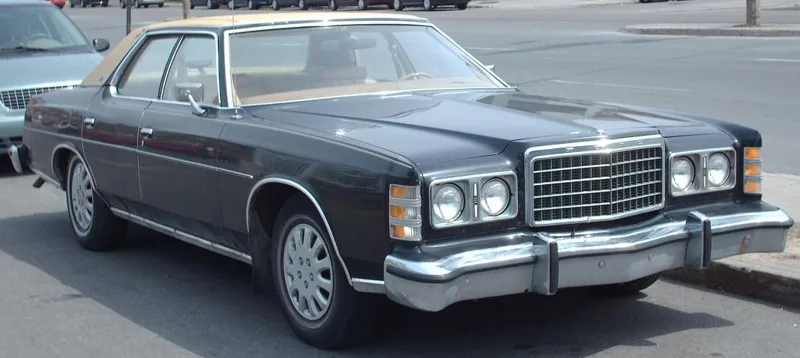
By 1977 the Continental had become the largest mass-market automobile made anywhere in the world. Special editions included the Golden Anniversary Town Car of 1971, with 1,575 built, and the Williamsburg Edition from 1977 to 1979. The Collector's Series of 1979 could reach $19,200, marking the end of the traditional large Lincoln.
Why did the sixth-generation Continental downsize in 1980?
The 1980 Continental was the first Lincoln to downsize, driven by fuel economy rules that threatened large cars. It moved to the Ford Panther platform, shared with the LTD and Marquis, and it shed 10 inches of wheelbase and 14 inches of length, losing nearly 1000 pounds in weight.
Engines were a 5.0-litre V8 with 129 hp, rounded up from its true displacement, and a 140 hp carbureted 351 Windsor as an option. The car used the new AOD four-speed overdrive transmission and electronic fuel injection, and Lincoln claimed a 38% fuel economy gain, the best year-on-year improvement in Ford history.
The sixth generation lasted only a year. It was renamed the Lincoln Town Car for 1981, and the Continental name returned in 1982 on a smaller car aimed at the Cadillac Seville.
How did the seventh and eighth generations sell?
The seventh generation arrived for 1982 on the Ford Fox platform with a 108.5-inch wheelbase, shedding 18 inches of length and over 400 pounds. It used gas-charged shock absorbers and four-wheel disc brakes, and a 3.8 L V6 with 112 hp offered the first non-V8 Lincoln engine since 1948.
A BMW-sourced turbodiesel inline-six arrived in 1984, and Lincoln sold only 1,500 of them before dropping the option after 1985. Anti-lock brakes arrived in 1985, and the fuel-injected V8 gained sequential injection in 1986 for 150 hp.
The eighth generation came in December 1987 as the first front-wheel-drive Lincoln, sharing its unibody with the Ford Taurus. It was four inches longer yet 170 pounds lighter than its predecessor, and its trunk grew from 15 to 19 cubic feet. Ford made airbags standard for both front occupants in 1989, which made it a notable safety step.
What did the ninth generation of 1995 to 2002 offer?
The ninth generation was launched on 26 December 1994 and reused the front-drive underpinnings of its predecessor. Its Modular V8 was the only production car to have that engine mounted transversely, and it made 260 hp (190 kW) with 265 lb ft of torque. The car reached 60 mph in 7.2 seconds and cost $40,750 at launch.
A 1998 facelift updated the styling, and the 1999 model received 275 hp (205 kW) and seat-mounted side airbags. Its price was set at 38,525 dollars, the same as the rear-drive Town Car. Optional packages included the RESCU satellite assistance system, a semi-active suspension and a memory profile for two drivers.
Production moved on through several special editions, including the Diamond Anniversary Edition for Lincoln's 75th anniversary in 1996 and the Collector's Edition for 2002. The final Continental came off the line at Wixom on 26 July 2002, and about 2,000 Collector's Editions were made for that year.
How did the tenth generation end the Continental?
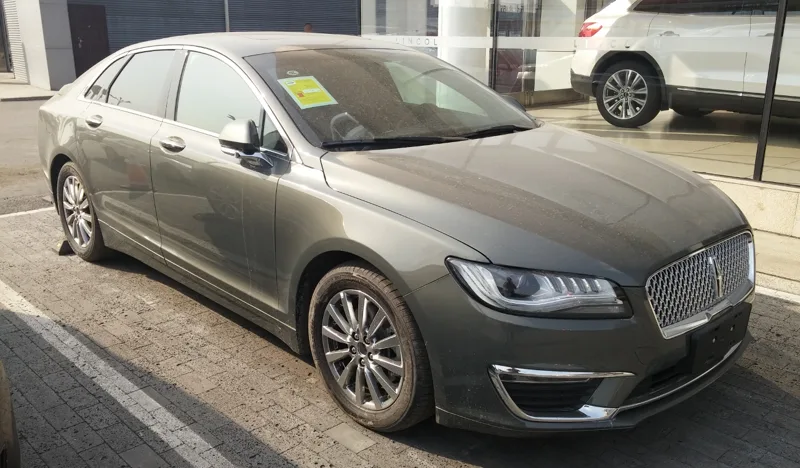
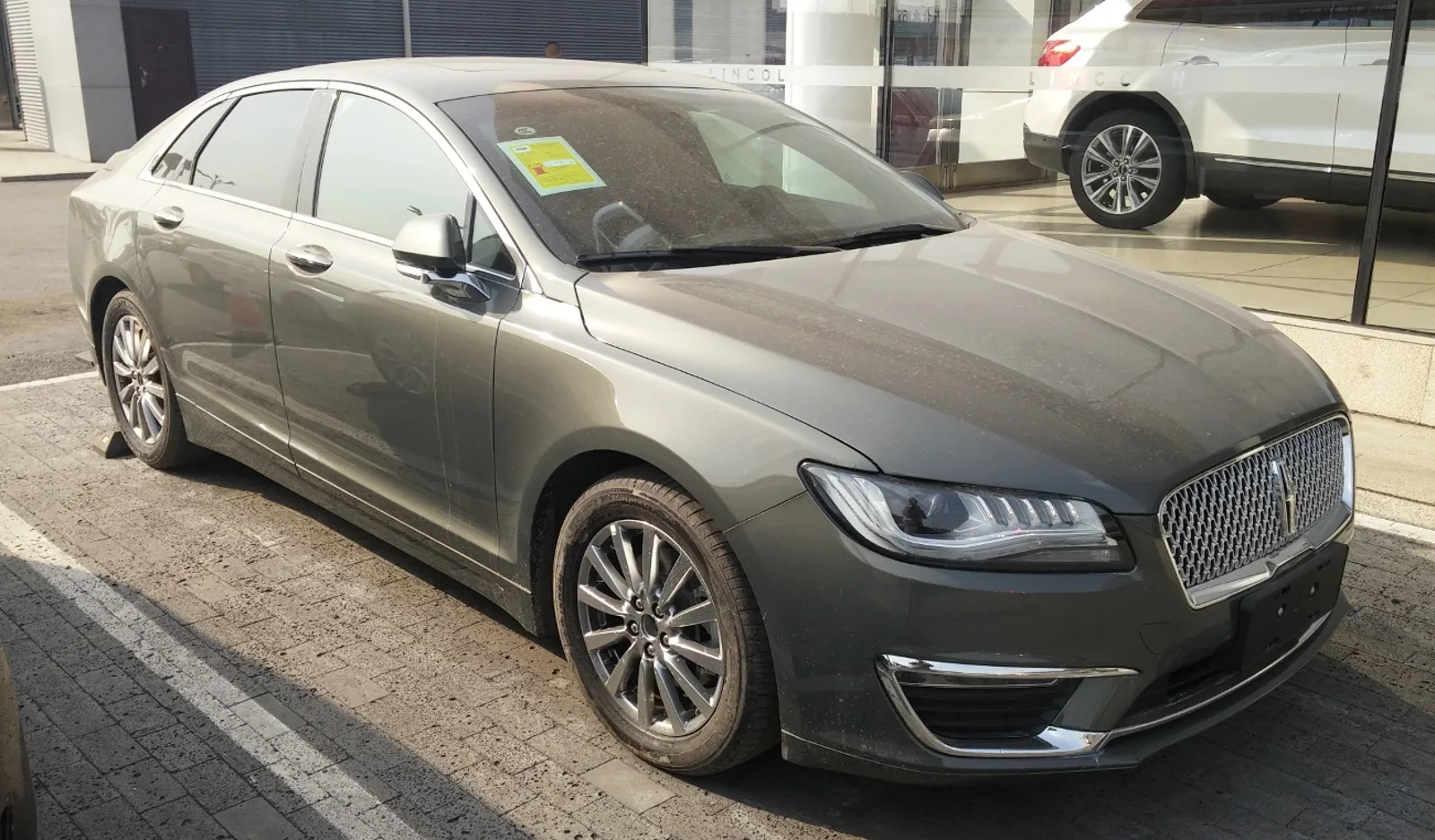
The tenth generation went on sale in the fall of 2016 after a fourteen-year hiatus. It had been previewed by a concept at the 2015 New York Auto Show and built at Ford's Flat Rock Assembly. It replaced the MKS and used an extended-wheelbase CD4 platform with a 117.9-inch wheelbase.
The standard engine was a 305 hp 3.7 L V6. A 335 hp 2.7 L twin-turbo V6 was optional, and the top engine was a 400 hp 3.0 L twin-turbo V6, all paired with a six-speed automatic. All-wheel drive was standard with the 3.0 engine, and it was optional on other versions.
Lincoln offered Premiere, Select, Reserve and Black Label trims. Black Label added special colours such as Rhapsody Blue, which was exclusive to the Continental and required close colour matching across the interior. Production of the Continental ended on 30 October 2020 without a successor in the full-size sedan segment.
The Coach Door Edition commemorated the 80th anniversary of the Edsel Ford prototype. It had rear-hinged doors fitted by Cabot Coach Builders, and 80 examples were built in the United States, with a base price above $100,000. A non-commemorative edition followed for 2020, with about 150 built.
What are the Lincoln Continental specifications?
The table below sets out the main figures for each generation of the Continental, showing how the platform, engine and size changed across the ten generations.
| Generation | Years | Key details |
|---|---|---|
| Prototype | 1939 | 267 cubic-inch V12, Lincoln-Zephyr base |
| First | 1940 to 1948 | Derived from standard Lincoln; V12 to 1948 |
| Second (Mark II) | 1956 to 1957 | 126-inch wheelbase, Y-block V8, 2,996 built |
| Third | 1958 to 1960 | 131-inch wheelbase, 430 cu in MEL V8, up to 375 hp |
| Fourth | 1961 to 1969 | 123 then 126-inch wheelbase, rear-hinged doors, convertible to 1967 |
| Fifth | 1970 to 1979 | 127-inch wheelbase, body-on-frame, 460 cu in V8 |
| Sixth | 1980 | Panther platform, 5.0 L V8 at 129 hp, AOD overdrive |
| Seventh | 1982 to 1987 | 108.5-inch wheelbase, Fox platform, 3.8 L V6 at 112 hp |
| Eighth | 1988 to 1994 | Front-wheel drive, Taurus platform, 3.8 L Essex V6 |
| Ninth | 1995 to 2002 | Modular V8 at 260 hp, Wixom built |
| Tenth | 2017 to 2020 | 117.9-inch wheelbase, 3.7 L V6 at 305 hp, up to 400 hp |
Frequently asked questions
Why does the Continental have a spare tire on the back?
The original 1939 prototype carried its spare on the rear, a styling choice that echoed European cars. The Continental name and the rear-mounted spare became linked, and most Mark series cars kept a rounded bulge to suggest one.
How much did a 1956 Continental Mark II cost?
The Mark II was priced at $10,000, the top of the domestic price range at the time. Air conditioning was the only option and cost $595.
When did the Continental stop being a sedan?
Production ended on 30 October 2020. The end of the Continental and the MKZ left Lincoln as a crossover and SUV brand in the United States.