Each began in home hi-fi, cinema or studio sound; each now has its name on a car's options list. A look at who owns whom and which makers they work with.
Bose, Harman Kardon, JBL and Burmester are audio companies whose names appear on factory sound systems in cars. Bose, Harman Kardon and JBL are American brands, two of them under Samsung-owned Harman, while Burmester is a Berlin firm working with Mercedes-Benz, Porsche, Bugatti and Ferrari.
Bose tried to sell aftermarket speakers to car owners and failed. The breakthrough came when it stopped selling to drivers and sold to a carmaker instead. Its first factory-fitted system went into a 1983 Cadillac Seville, and the idea has since spread so far that the name on a door speaker is now part of how a car is sold. Bose, Harman Kardon, JBL and Burmester each reached the dashboard by a different road.
What does a branded car sound system actually mean?
A car sound system with an audio brand on it is a package that the carmaker offers as original equipment, fitted at the factory, rather than something a driver bolts on later. The audio company develops the system, sometimes jointly with the carmaker, and the carmaker puts the name on the options list. Bose tried the other route first, selling aftermarket car speakers, and the attempt failed. Its first original-equipment installation in the Seville is the one that stuck.
That pattern runs through all four brands. Each started somewhere else, in home hi-fi, cinema or professional sound, and only later turned to the car.
Bose stopped selling speakers to drivers and sold them to a carmaker instead.
Bose: from a concert hall in the living room to the Cadillac Seville
Amar Bose founded his company in 1964 in Massachusetts with money from angel investors, among them his thesis advisor, Y. W. Lee. His interest dated from 1956, when he bought an audio system and was disappointed by its performance. The plan was a speaker design that bounced sound off the walls to recreate a concert hall. The first product, the 2201, had 22 speakers, with a good number pointing away from the listener. It failed and was discontinued within the year it launched.
The lesson Bose drew was that measuring distortion and frequency response told you little about natural sound, and that the listener's perception was the real test. The 901, introduced in 1968, used eight mid-range drivers firing at the rear wall, plus a ninth aimed at the listener. It sold immediately and stayed in the range until 2016. The same thinking explains a habit that matters to anyone comparing car systems: Bose has chosen not to publish audio specifications since a 1968 paper by its founder, which rejected numerical test data in favour of judging by ear.
Today the company is based in Framingham, Massachusetts, and its majority owner is MIT, to which Amar Bose donated non-voting shares in 2011. The university receives a cash dividend but may not sell the shares or take part in running the company. For fiscal 2021 the company reported sales of 3.2 billion dollars and about 7,000 employees.
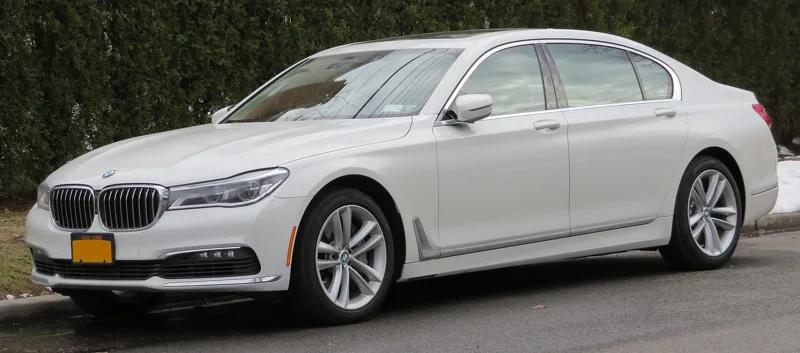
In cars, Bose has supplied audio systems to Japanese makers (Acura, Honda, Infiniti, Lexus, Mazda and Nissan), to Hyundai-Kia, to American names (Chevrolet, Ford, General Motors and Ram) and to European ones (Audi, BMW, Jaguar, Mercedes-Benz and Porsche). In 2007 its media system was given the International Telematics Award for best in-car storage solution.
Bose's active suspension, from prototype to production
Audio was not the only automotive project. In 2004 Bose unveiled a prototype active suspension that used electromagnetic linear motors in place of hydraulic or pneumatic power. The motors raised or lowered each wheel to keep the car level over bumps and potholes, working on principles similar to noise-cancelling audio devices. A prototype car was even engineered to jump an obstacle. The system was due for release in 2009 but did not appear, because the company judged it too heavy and too expensive after more than 20 years of work and 100 million dollars of spending.
The technology survived under another owner. It was reported sold to ClearMotion in November 2017, and in May 2018 five major carmakers were said to have expressed interest. In May 2025 the technology finally reached production through an investment partner of ClearMotion's, in the flagship luxury sedan of a Chinese EV start-up, the Nio ET9. ClearMotion has since moved on to a software-centred electrohydraulic system called the CM1. Bose also introduced a seat for trucks in 2010, the Bose Ride, which the company said cut seat vibration by up to 90%.
Harman Kardon: the receiver company that became a car-audio group
Sidney Harman and Bernard Kardon started their company in Westbury, New York, in 1953, each putting in 5,000 dollars. Both had left the David Bogen Company after Bogen declined to build a better audio system for American consumers. The first product was an FM tuner, and in 1954 came the Festival D-1000, billed as the first integrated hi-fi receiver, combining an FM tuner, a preamplifier and a 20-watt amplifier on a single chassis. Kardon retired in 1957.
The path was not smooth. Harman sold the company to Beatrice Foods for 100 million dollars when he took a post in the Carter administration, then bought Harman International back in 1980 for 55 million. The receiver group, which Beatrice had already sold on to a Japanese company, returned in 1985. By 1991 the group was a loose set of 21 divisions selling to separate audiences, and it lost 19.8 million dollars on sales of 587 million; after Harman merged them into five units, the next year produced a profit of 3.5 million on sales of 605 million. Harman retired in 2007 at 88.
On 11 March 2017 Samsung Electronics announced it was buying Harman for a reported 8 billion US dollars. Harman Kardon is now a brand of Harman International, a wholly owned Samsung subsidiary, and Harman as a whole is organised in three segments: Automotive, Consumer and Professional. Its brand list includes AKG, Bang and Olufsen, Infinity, JBL, Lexicon, Mark Levinson and Revel. In May 2025 it agreed to acquire a further group of consumer audio names, among them Bowers and Wilkins, Marantz, Denon and Polk Audio, as Masimo sold its consumer audio business.
The Harman Kardon name appears in cars from Alfa Romeo, BMW and Mini, Mercedes-Benz and Volkswagen, as well as Hyundai and Kia, Dodge, Subaru, Volvo and Mahindra and Mahindra. Across the wider Harman group the corporate customer list also includes Audi, Cadillac, Ford, Genesis, Lexus, Lincoln, Ram Trucks and Toyota, alongside technology firms such as Apple and Google.
JBL: from cinema horns to Fiat, Kia and Toyota
JBL traces its roots to 1927, when James Bullough Lansing and Ken Decker started the Lansing Manufacturing Company in Los Angeles, making six- and eight-inch drivers for radio sets. In 1933 the head of MGM's sound department, Douglas Shearer, set out to build his own cinema loudspeaker, and Lansing's firm made the drivers for the Shearer Horn, which won an Academy Scientific and Technical Award in 1936. Altec Service Corporation bought the company in 1941 and renamed it Altec Lansing.
After his contract expired, Lansing left and in 1946 founded the firm that would be called JBL, whose first products were a 15-inch loudspeaker and a high-frequency driver. The 15-inch D130 that followed stayed in production in some variant for the next 55 years. Lansing died in 1949 and the vice president, William Thomas, took over. The JBL brand name, with its exclamation point, was introduced in 1955.
In 1969 Thomas sold JBL to a company called Jervis, headed by Sidney Harman, which later took the name Harman International. The 1970s turned it into a household name. The L-100 was the best-selling loudspeaker model of any company at the time, with sales of more than 125,000 pairs, and a Billboard survey found that by 1977 JBL monitors outnumbered every other brand's put together in recording studios. JBL equipment was used at Woodstock in 1969 and again in 1999, and in 2002 its VerTec line array system was used for the World Cup ceremony in Seoul, the Super Bowl and the Grammys.
JBL is headquartered in Los Angeles and is a subsidiary of Harman, which Samsung Electronics owns. It makes home audio, waterproof Bluetooth speakers and professional systems as well as car audio, and its speakers are currently fitted by vehicle makers such as Fiat, Kia and Toyota.
Burmester: a Berlin preamplifier built from medical machine parts
Dieter Burmester was an Austrian-born musician and engineer who set up his company in Berlin in 1977. A faulty preamplifier started it: unable to find one that met his standards, he built his own, the 777, in July 1977 from parts of medical machines produced in his engineering office. The model name combines the year, 77, and the month, July, and that numbering carried over to later components. By 1978 Burmester Audiosysteme was established, and its chrome design that year is held by the Museum of Modern Art in New York. In 1980 it produced the 808, billed as the world's first modular preamplifier.
Dieter Burmester died in August 2015 aged 69. His widow Marianne Burmester led the company, and she stepped down as managing director on 1 January 2024 while remaining a shareholder. In 2018 Burmester employed around 100 people. All its products are developed in Berlin and built by hand, and dealers in about 50 countries on five continents sell them.
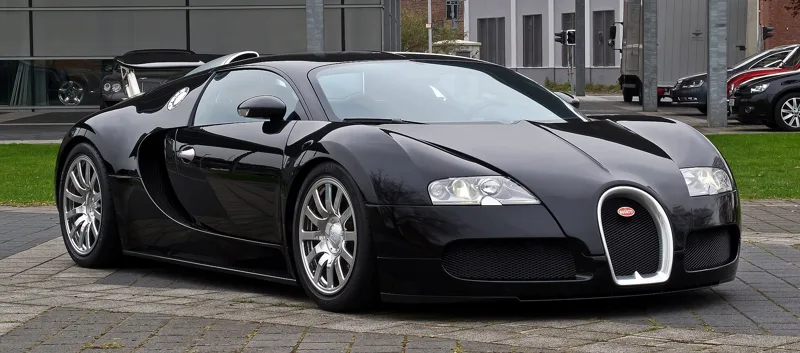
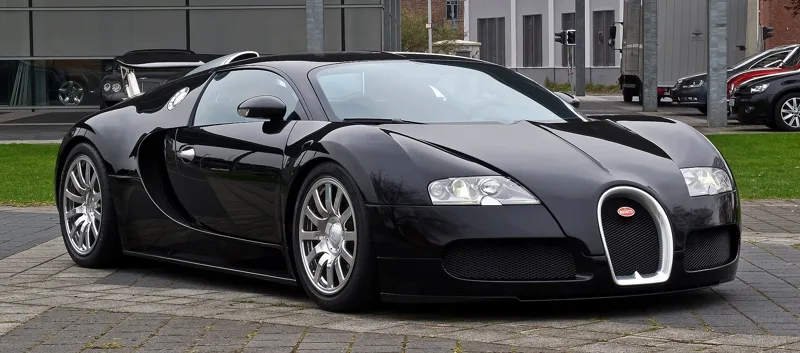
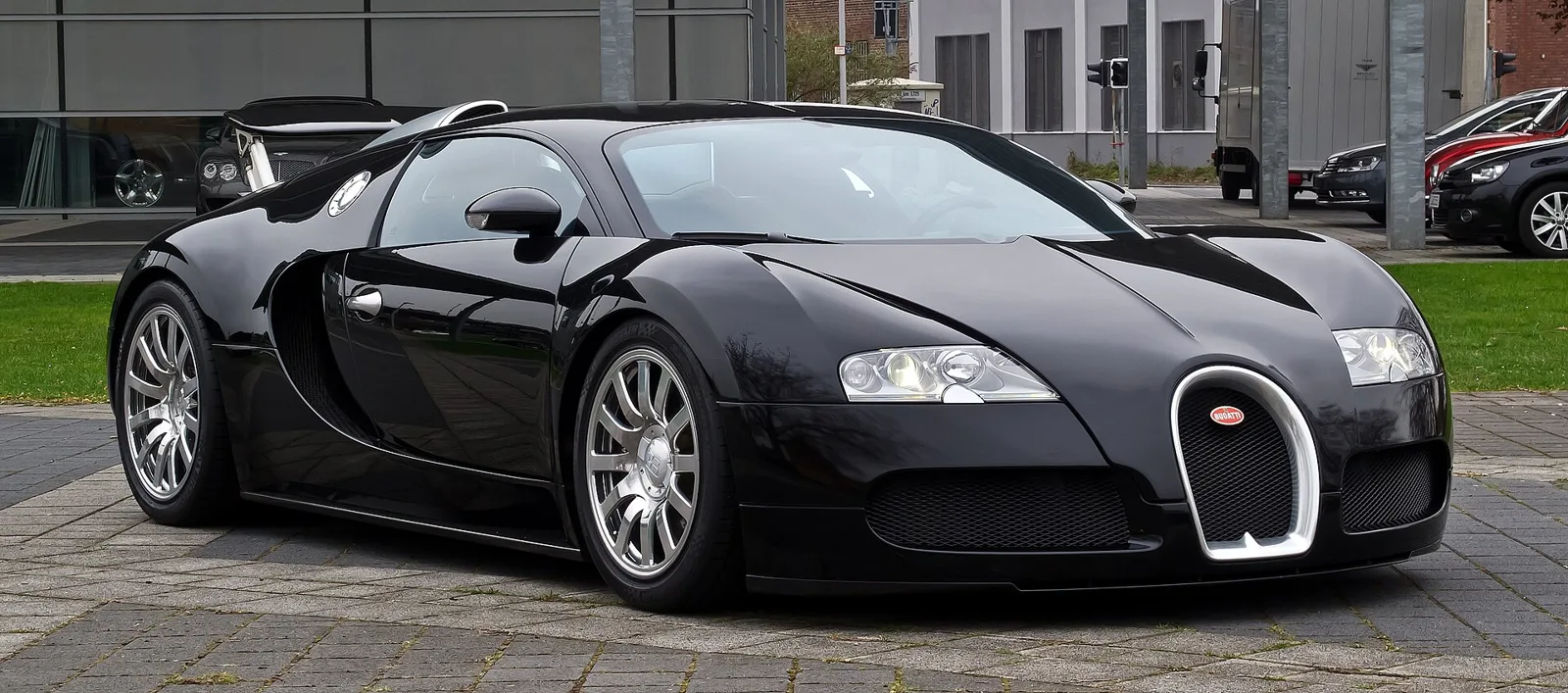
Burmester Automotive was created to develop hi-fi systems for cars. It began with a system for the Bugatti Veyron, and its partners now include Mercedes-Benz, Porsche, Bugatti and Ferrari.
How Burmester works with Porsche, Mercedes-Benz and Ferrari
The Porsche collaboration began in 2006. When the Panamera launched in 2009, a Burmester High-End Surround Sound System was available as an option. It later extended to the 911 and 718, while the Cayenne, Macan, Panamera and Taycan received the more ambitious Burmester 3D High-End Surround Sound System.
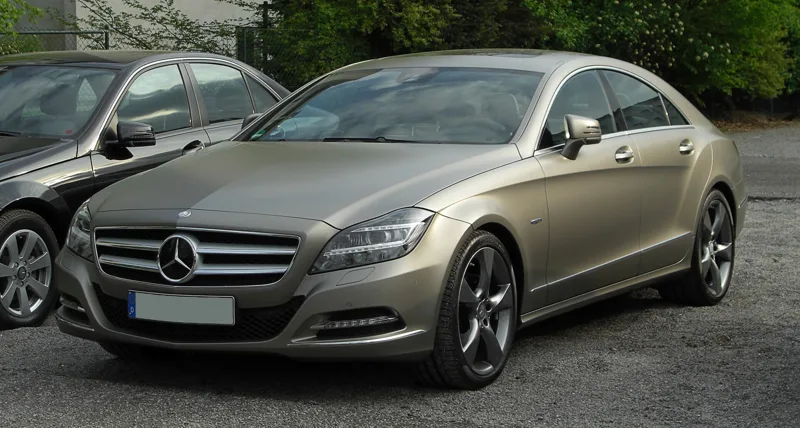
Mercedes-Benz and Burmester started a development partnership in 2009, producing two audio systems created expressly for the S-Class. Later came systems for the C, V, E and G classes, and for the Maybach S-Class and the AMG GT sports car. In late 2020 the pair released a High-End 4D Surround Sound System in the S-Class. Burmester systems in Porsches and Mercedes models offer sound presets such as Pure, Smooth and Live. The 3D mode is limited to the S-Class, the E-Class, the latest A-Class (W177) and the Panamera.
Ferrari became a customer in 2019. The Ferrari Purosangue carries Burmester's three-dimensional high-end surround system, which, according to Burmester, has 21 speakers including a subwoofer and a total output of 1,420 watts.
Four audio brands compared
| Brand | Founded | Based or started | Ownership | Car brands named |
|---|---|---|---|---|
| Bose | 1964 | Framingham, Massachusetts | Majority held by MIT through non-voting shares | Cadillac (first, 1983), Audi, BMW, Mercedes-Benz, Porsche, Honda and others |
| Harman Kardon | 1953 | Westbury, New York | Harman International, owned by Samsung Electronics | BMW, Mercedes-Benz, Mini, Volvo, Volkswagen, Subaru and others |
| JBL | 1946 | Los Angeles | Harman subsidiary, so also Samsung | Fiat, Kia, Toyota |
| Burmester | 1977 | Berlin | Family business; Marianne Burmester is a shareholder | Mercedes-Benz, Porsche, Bugatti, Ferrari |
What it means if you are choosing a car
The names overlap more than the badges suggest. JBL and Harman Kardon share an owner, so a car offering one of them is drawing on the same corporate group as the other, and the Harman group counts Mercedes-Benz and Toyota among its customers. Bose is spread across a wide list of makers, from Acura to Ram. Burmester sits at the other end, a company that employed around 100 people in 2018 and works with a handful of luxury and performance brands.
Which system you can order, and what it can do, depends on the model. Burmester's 3D mode is limited to a few cars, and Porsche's range gets different Burmester packages depending on whether it is a 911 or a Taycan. When a spec sheet lists a system by name, ask which version of it that particular model offers. Burmester gives numbers, as in the Purosangue's speaker count and wattage, while Bose has chosen for decades not to publish audio specifications at all.
Changes at ClearMotion, Harman and Burmester
Bose's active suspension has moved on from its original owner: after the 2025 production debut in the Nio ET9, ClearMotion has turned to a software-centred electrohydraulic design, the CM1. Harman agreed in May 2025 to buy a set of consumer audio brands from Masimo, and Burmester's day-to-day management changed hands at the start of 2024, with Marianne Burmester remaining a shareholder.