A launch funded by a grain shed loan, a distribution collapse, a racing website that bought its rivals and a yellow annual with a famous foreword: how four car publications grew.
Evo is a British performance car magazine, now owned by Carwow, whose Car of the Year issue has run since 1998. The Motor Trend Group is a US enthusiast media company sold to Hearst in 2024. Motorsport Network runs Motorsport.com and Autosport. Autocourse is a collectable annual covering Formula One since 1951.
Evo's three-month launch was financed from a loan meant for a grain storage shed. Harry Metcalfe, a farmer and property developer, was turned down for a business loan, so he used a 275,000 pound facility originally designated for a farm building. By the third issue the magazine was cash flow positive.
That is a long way from the corporate chess now played around the best-known car titles. Evo has passed from Dennis Publishing through Autovia to Carwow. Motor Trend Group went from Source Interlink to Warner Bros. Discovery to Hearst. Motorsport Network began by buying a racing website and went on to buy Haymarket's racing brands, while Autocourse, the Formula One annual, has had three publishers since 1975.
How did Evo magazine begin, and where did its name come from?
Evo is a British magazine for performance-car fans, with everything from hot hatches up to supercars in its pages, and it is now published by Carwow. Harry Metcalfe and the journalist John Barker started it after EMAP folded Performance Car into Car magazine in 1998. The first issue appeared in November 1998.
Metcalfe had drifted into the trade after buying the first Maserati Ghibli Cup in 1994, which brought contacts in motoring media and work on car tests for publishers. He ran the business side, while Barker, with writers Richard Meaden, David Vivian and Peter Tomalin, held a minority share. His business plan even considered selling the family holiday home in Wales.
The name arrived late. A research group proposed Roadsport Magazine, already the title of a hillclimbing journal. During a brainstorming session Metcalfe pointed out that a mobile network named Orange and a title named Red said nothing about what they did yet still evoked their markets. Flicking through Autocar, he spotted a Maserati Quattroporte Evoluzione pictured among the future cars pages and suggested Evo. It proved successful in branding, and the name stuck.
The third issue, the January 1999 Car of the Year edition, put the business in the black, with a worldwide readership of 30,000. The magazine was created as a virtual maverick car club. Stunts included buying an original Audi Quattro and driving it to Italy for the Audi TT's launch, and running a supercar pool that took in a Ferrari F40. Chris Harris, Russell Bulgin, Jethro Bovingdon and Henry Catchpole joined later.
Evo's three-month launch was financed from a loan meant for a grain storage shed.
Who has owned Evo, and how does it judge a car?
Dennis Publishing bought Evo in April 2001, when it had 40,000 readers, after Future Publishing had also approached Metcalfe. Dennis's automotive division was spun off as Autovia in 2021, and Carwow acquired Autovia in February 2024. Evo now appears 12 times a year, down from the 13 issues of its early days.
Dennis cut printing, distribution and IT costs and pushed up subscriptions and overseas licensing. It also closed the Evo Forum, which was using over half of the IT infrastructure costs without earning any revenue. Metcalfe stayed as editorial director in an automotive division that grew to include Auto Express, Octane, Land Rover Monthly, Carbuyer and DrivingElectric.
Evo's tag-line is "The thrill of driving", and it grades cars chiefly on the subjective experience at the wheel. Hard data is still collected: lap times, many of them set at Bedford Autodrome, along with cornering speeds and straight-line figures. Stuart Gallagher is the current editor, with Peter Tomalin, John Barker and Richard Meaden among his predecessors. Rowan Atkinson has appeared now and then, Jeff Daniels and Gordon Murray have also contributed, and "friends of Evo" write about their own cars, such as a Porsche Carrera GT or a Pagani Zonda. Editions are produced for Spain, India, Ukraine, Thailand, Malaysia, the Philippines, Turkey, Greece, Croatia, Singapore, Italy, France, the Czech Republic and the Middle East, each with more local content.
What is the Evo Car of the Year?
It is Evo's year-ending issue, inherited from its predecessor Performance Car. Staff take the year's top performance cars to public locations suited to hard driving, among them Scotland, Wales, France, Italy and Portugal, and most years there is a circuit test as well. A pickup scheme feeds the contest: a good first drive leads to a group test, and a strong group test to an invitation.
Evo Car of the Year winners, 1998 to 2025
| Year | Winner |
|---|---|
| 1998 | Porsche 911 Carrera 2 (996.1) |
| 1999 | Porsche 911 GT3 (996.1) |
| 2000 | Porsche 911 Turbo (996.1) |
| 2001 | Pagani Zonda C12 S |
| 2002 | Honda NSX-R |
| 2003 | Porsche 911 GT3 (996.2) |
| 2004 | Porsche 911 Carrera S |
| 2005 | Ford GT |
| 2006 | Ferrari 599 GTB Fiorano |
| 2007 | Porsche 911 GT3 RS (997.1) |
| 2008 | Nissan GT-R |
| 2009 | Lotus Evora |
| 2010 | Porsche 911 GT3 RS (997.2) |
| 2011 | Porsche 911 GT3 RS 4.0 |
| 2012 | Pagani Huayra and Lotus Exige S V6 (tie) |
| 2013 | Porsche 911 GT3 (991.1) |
| 2014 | Ferrari 458 Speciale |
| 2015 | Porsche Cayman GT4 |
| 2016 | Porsche 911 R |
| 2017 | McLaren 720S (overall) |
| 2018 | McLaren 600LT |
| 2019 | Porsche 718 Cayman GT4 |
| 2020 | BMW M2 CS |
| 2021 | BMW M5 CS |
| 2022 | Maserati MC20 |
| 2023 | Porsche 911 GT3 RS (992.1) |
| 2024 | Porsche 911 S/T |
| 2025 | Lamborghini Revuelto |
Porsche models took half of the editions. The 2012 contest produced the first tie, between the Pagani Huayra and the Lotus Exige S V6. In 2017, the only year the format changed, Evo named category winners, from the Peugeot 208 GTi supermini to the Bugatti Chiron hypercar, with the McLaren 720S winning overall.
What is the Motor Trend Group, and who owns it?
Motor Trend Group, LLC is a media company built around titles like Motor Trend and Hot Rod and based in El Segundo, California. It was formerly Source Interlink Media and then TEN: The Enthusiast Network. Warner Bros. Discovery sold it, along with most of its assets, to Hearst Communications in December 2024.
Source Interlink was a US publisher and logistics business with a leading presence in car and action-sports media. Its distribution arm collapsed in 2014. On 29 May the chief executive said it would soon cease operations after Time Inc. withdrew its business, because the distribution arm could not pay 19 million dollars owed on second-quarter sales, plus 7 million from earlier quarters. The publishing arm was rebranded TEN after shutting titles including Popular Hot Rodding, Rod and Custom, Import Tuner and Honda Tuning, with layoffs in editorial, art and production.
Video came next. In August 2015 TEN launched Motor Trend OnDemand, the first subscription video service aimed at automotive enthusiasts; chief executive Scott Dickey called the audience underserved and starved for premium video. On 3 August 2017 Discovery Communications said it would take a controlling stake in TEN and put its cable channel Velocity, which is focused on cars, into the company. The company was renamed Motor Trend Group on 10 April 2018, and Velocity was to be renamed Motor Trend later that year.
Pruning followed. In December 2019 the company said that 19 of its 22 magazines would be discontinued that month, Automobile among them. Four Wheeler ceased publication in 2023, and Roadkill ended as a magazine in 2018, with its web show due to finish in 2025. The Motor Trend+ streaming service was discontinued in 2024, with most subscribers moving to Discovery+, and Warner Bros. Discovery kept the broadcasting and streaming services when it sold the rest.
What is Motorsport Network, and which titles does it run?
Motorsport Network is a US-based media and technology business with offices in Miami and London, focused on motor racing and consumer automotive content. It dates from 2015, when it bought Motorsport.com, though another date given for that deal is 2012. In 2016 it bought the Haymarket group's racing brands, including the weekly magazine Autosport.
Autosport has been published weekly since 25 August 1950 and has covered Formula One since the championship began. It presents the Autosport Awards, held every year since 1982, and Autosport International, an exhibition at the NEC in Birmingham every January since 1991. GP Racing, originally F1 Racing, started in 1996 and by 2018 appeared in 10 languages and 14 editions.
The consumer side began with Motor1.com in July 2015. It now publishes over 100 video-led car reviews a month in 10 languages, with local editions across the US, Brazil, Argentina, Indonesia, Turkey, Hungary, Italy, Spain, France and Germany. InsideEVs, bought in February 2017, is described as the biggest independent site for electric vehicle content in America. FerrariChat.com, founded in 2000, counts over 165,000 registered owners and over 11m posts.
Motorsport Images holds more than 26 million assets, among them 14 million LAT Images photographs going back to 1895 and Giorgio Piola's technical drawings. In May 2017 the company's Global Fan Survey of Formula One drew over 200,000 respondents. James Allen became president in 2018 and Oliver Ciesla chief executive in October 2021. In June 2023 Motorsport Network Media, covering 50+ websites but not the gaming division, was acquired by GMF Capital.
What is Autocourse, and why do collectors want it?
Autocourse is a run of yearbooks on motor racing, with Formula One the main subject, from 1951 onwards. Its long run makes the books highly collectable. The first edition was a quarterly review with every article in English, French, German and Italian; the first annual followed in 1959 and the first hardback in 1961/62.
Some traditions are as familiar as the yellow title. From 1963, when Jim Clark began the practice, the newly crowned champion has written the foreword. The chain broke in 1991. Ayrton Senna refused after a row about the annual's ranking of its top ten drivers, having not been named number one the previous year despite winning the title, and Nobuhiko Kawamoto, who headed Honda's F1 engine programme, wrote it instead. The only other exception came in 2023, when Red Bull team principal Christian Horner wrote it.
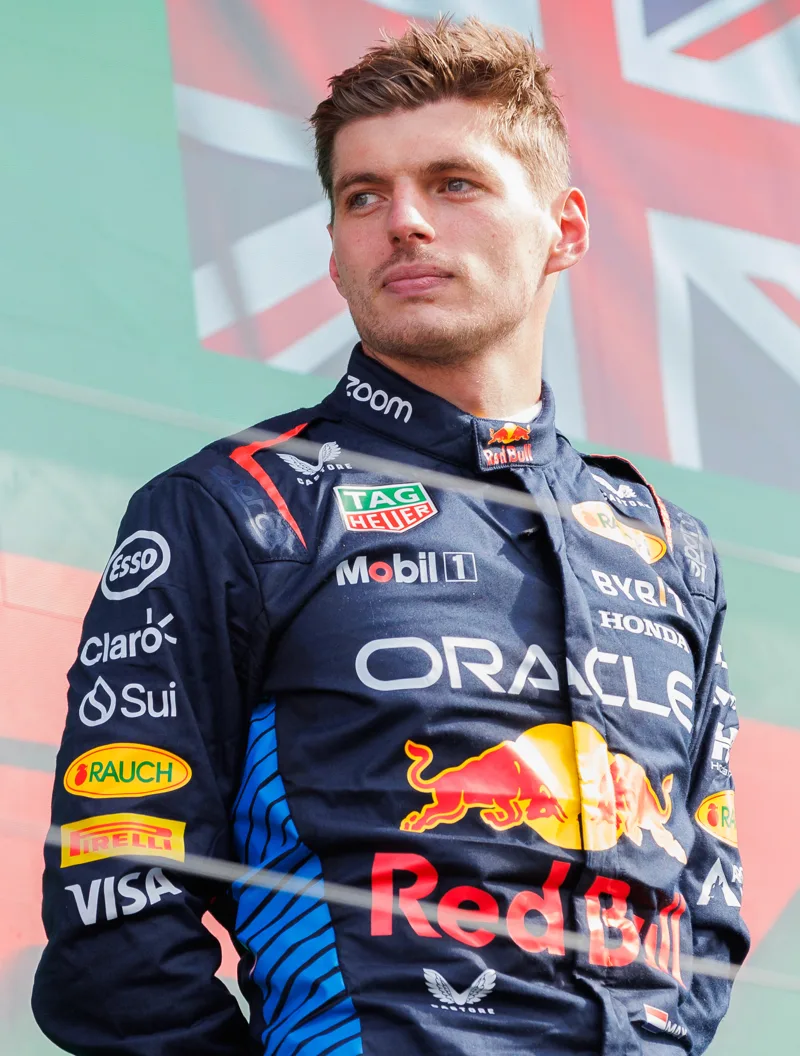
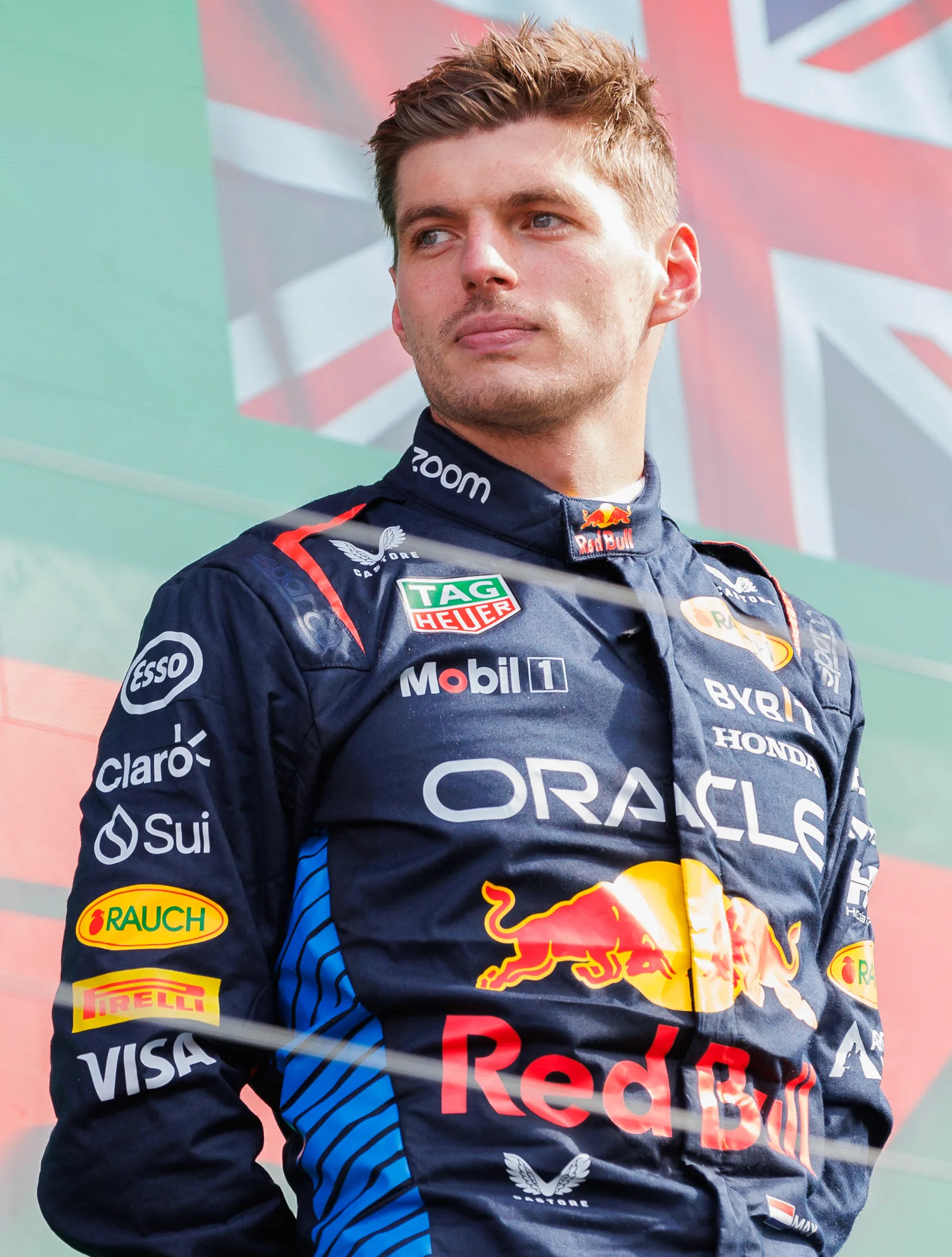
Since 1966 the editor has ranked the season's top ten Formula One drivers, weighing both how they raced and the machinery they had. The number-one list reads like a history of the sport: Jackie Stewart six times from 1968 to 1973, Alain Prost five times, Michael Schumacher eight times, including five in a row from 2000 to 2004, and Lewis Hamilton nine times, seven of them in a row from 2014. Max Verstappen has led from 2021 to 2025. In 1982 the place was left empty out of respect for Gilles Villeneuve and Didier Pironi.
Editors have included Mike Kettlewell, Maurice Hamilton and, for many years, Alan Henry; Tony Dodgins edits it today, having taken over after Henry's death. Hazleton Publishing published it from 1975, Crash Media Group bought the series in 2005 under Bryn Williams, and in late 2009 it passed to Icon Publishing, formed by Williams and Steve Small. The 50th anniversary came in 2000.
Inside, each book opens with an editor's introduction, then obituaries and features by writers such as Nigel Roebuck. The Grands Prix section is the longest, with qualifying, photos, comprehensive results and sidebars. Since 1991 the review has run team by team, with analysis, specifications, a drawing of each car and driver photographs; before that it was an analysis of the season followed by technical reviews. Junior formulae, sports cars and American racing, from NASCAR to IMSA, also get space, and current annuals run to over 300 pages. Sister titles have included Rallycourse from 1982 to 2008 and Motocourse, which has covered motorcycle road racing since 1976.
Which of these titles suits which reader?
Evo is the one for readers who want to know what a performance car feels like to drive, and its Car of the Year list doubles as a record of the cars that impressed its staff. Autocourse is a reference for anyone building a library of Formula One seasons. Motor Trend and Motorsport Network are the large, multi-platform operations, with video, news, photography and events behind their magazines.
Which of these publications are ending and which carry on?
The Roadkill web show was due to finish in 2025. The Autocourse series carries on, with a 2025 to 2026 edition published by Icon Publishing.