A 1931 coastal loop, a Donegal event worth millions to its county and a Manx rally on parliament-approved closed roads.
Three rallies from the islands of Ireland and Man: the Circuit of Ireland (1931), the Donegal International Rally (1972) and Rally Isle of Man (1963). Each runs on closed public roads, and Donegal draws about 120,000 spectators a year.
The Circuit of Ireland began in 1931 as a rally that started from several towns at once, like the Monte Carlo Rally, and within a few years became a 1089-mile loop of the Irish coastline that began and ended in Bangor, County Down. It is the third oldest rally in the world. Alongside it sit two others that grew up on the same island or its neighbour: the Donegal International Rally, a tarmac rally that by one estimate pumps more than 20 million euros a year into its county, and Rally Isle of Man, run on lanes closed by an Act of the Manx parliament. All three have survived cancellations, funding rows and, in Donegal's case, several fatal accidents.
What is the Circuit of Ireland Rally?
Ireland's Circuit is an annual international rally that dates from 1931. The Ulster Automobile Club organises it, traditionally for the Easter weekend. Its start and finish are normally in Northern Ireland, yet the long route has often wandered through big stretches of the Republic. Closed paved public roads carry most of the special stages. The most recent running was in 2025.
Circuit of Ireland history: the early years
It began life as the Ulster Motor Rally, with competitors setting off from several different starting points. After several years it became a 1089-mile circuit that followed the Irish coast and began and ended in Bangor. The rally was suspended during the Second World War, from 1939 to 1945, and again in 1948 because of fuel shortages. Cancellations also hit it in 1957, 1972, 2001 and 2007.
Circuit of Ireland, 2007 to 2013
The 2007 edition fell victim to continuing disputes between the organisers, the company that operated the event and its sponsors. The Ulster Automobile Club replaced it with a series of smaller Easter events, including the Easter International Rally, also called the Easter Stages Rally, which covered 12 special stages across Londonderry, Tyrone and Donegal.
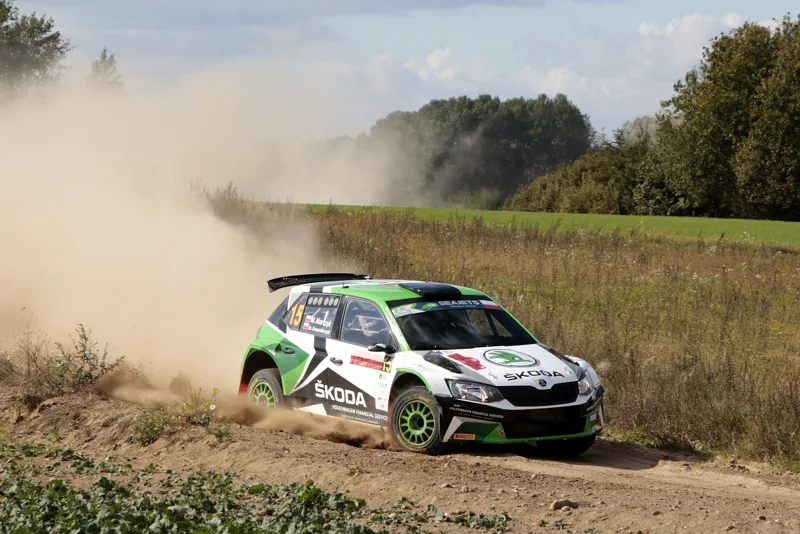
The Circuit came back on the Easter weekend of 21 to 23 March 2008. Twenty-eight teams entered, 20 special stages were run and 14 crews finished, with Eamonn Boland winning in a Subaru Impreza S12B. In 2009 the rally ran on 11 and 12 April from Banbridge, County Down, to a finish in Dundalk after 14 stages, and Eugene Donnelly won in a Skoda Fabia WRC.
In 2010 the event gained Intercontinental Rally Challenge Supporter Event status and was based in Newry on 3 and 4 April. It had 15 stages, including a 29 km (18 mi) night stage, and counted towards the Irish Tarmac Rally Championship. The win went to Derek McGarrity and co-driver James McKee in a Subaru Impreza S12B. Gareth MacHale and Brian Murphy took second in a Ford Focus RS WRC, and Alastair Fisher and Marshall Clarke third in a Mitsubishi Lancer Evo 9. In 2012 it was the third round of the Intercontinental Rally Challenge, and it also carried stages for the Irish Tarmac and Northern Ireland championships.
Late in 2012 came word that the 2013 rally would be cancelled for lack of money. It was reinstated on a smaller scale, and in the end bad weather forced its cancellation anyway.
Circuit of Ireland, 2014 to 2016: the European years
With the problems resolved, the 2014 Circuit returned to the European Rally Championship, its first appearance there since 1991. It covered 18 special stages and 230 km over two days, starting in Belfast. Finland's Esapekka Lappi dominated, winning by 1 minute 50 seconds ahead of Germany's Sepp Wiegand, a Skoda one-two. Irishman Robert Barrable was third in a Ford Fiesta R5. Declan Boyle won the National Rally in a Subaru Impreza S12B WRC.
The British teenager Chris Ingram led the ERC Junior Championship before crashing out, which handed victory to the Czech driver Jan Cerny. Ingram nonetheless collected the Colin McRae "Flat Out" Award as its youngest recipient, handed over by local hero Kris Meeke. The 2015 event hosted European and Irish Tarmac championship rounds, and in 2016 British Rally Championship rounds joined them.
Circuit of Ireland, 2017 to 2023: cancellations and comeback
Funding problems forced the cancellation of the 2017 event and raised doubts about its future. Attempts to revive it over the next two years failed.
The rally was due back in 2020, alongside the Easter Stages Rally, on the Irish Tarmac calendar. Graeme Stewart was Event Director and Nigel Hughes Clerk of the Course, and they planned 18 special stages, with an overall distance of 607.46 km (377.46 mi), of which 220.88 km (137.25 mi) would be competitive. The field was limited to 100, the entry fee was 725 pounds, and the event was also to host the Celtic Rally Trophy. But it was postponed on 13 March because of the coronavirus pandemic, and Motorsport Ireland suspended all motorsport until 1 June. The Ulster Automobile Club had secured a November date, but on 25 June it announced a cancellation, citing public health and safety. The 2021 edition was cancelled too.
After five years away, the Circuit returned on Easter weekend of 2022 as the Wastewater Solutions Circuit of Ireland Rally. Hosted by the Ulster Automobile Club and promoted by Easter Stages Ltd, it was a two-day event of 192.68 competitive kilometres over 12 stages in Mid and East Antrim, with headquarters at the Livestock Market in Ballymena. It opened the FIA Celtic Rally Trophy and counted as round three of the Irish Tarmac series.
The 2023 edition was a single-day event on 8 April, with eight stages based in Mid-Ulster. Known officially as the Milburn Concrete Circuit of Ireland Rally, it was put on jointly by the Cookstown Motor Club and the Ulster Automobile Club over 70 competitive miles, and it was another Irish Tarmac round.
The Circuit of Ireland began in 1931 as a 1089-mile loop of the Irish coast and is the third oldest rally in the world.
What is Rally Isle of Man?
Previously known as the Manx International Rally and, earlier still, the Manx Trophy Rally, Rally Isle of Man dates from 1963. It became a well-known round of the British Open Rally Championship and, until 1996, of the European Rally Championship. In 2002 it joined the Irish Tarmac Rally Championship as well as the British Rally Championship.
Mark Higgins is the most successful driver, with five wins. Tony Pond and Russell Brookes each won four times.
The rally was an annual fixture for many years, apart from a cancellation in 2011. In early September 2018 organisers announced that the year's event had been cancelled, with blame variously directed at the organisers and at two government departments, Infrastructure and Enterprise. It came back in 2022, counting towards the FIA Celtic Rally Trophy.
The Isle of Man rally stages
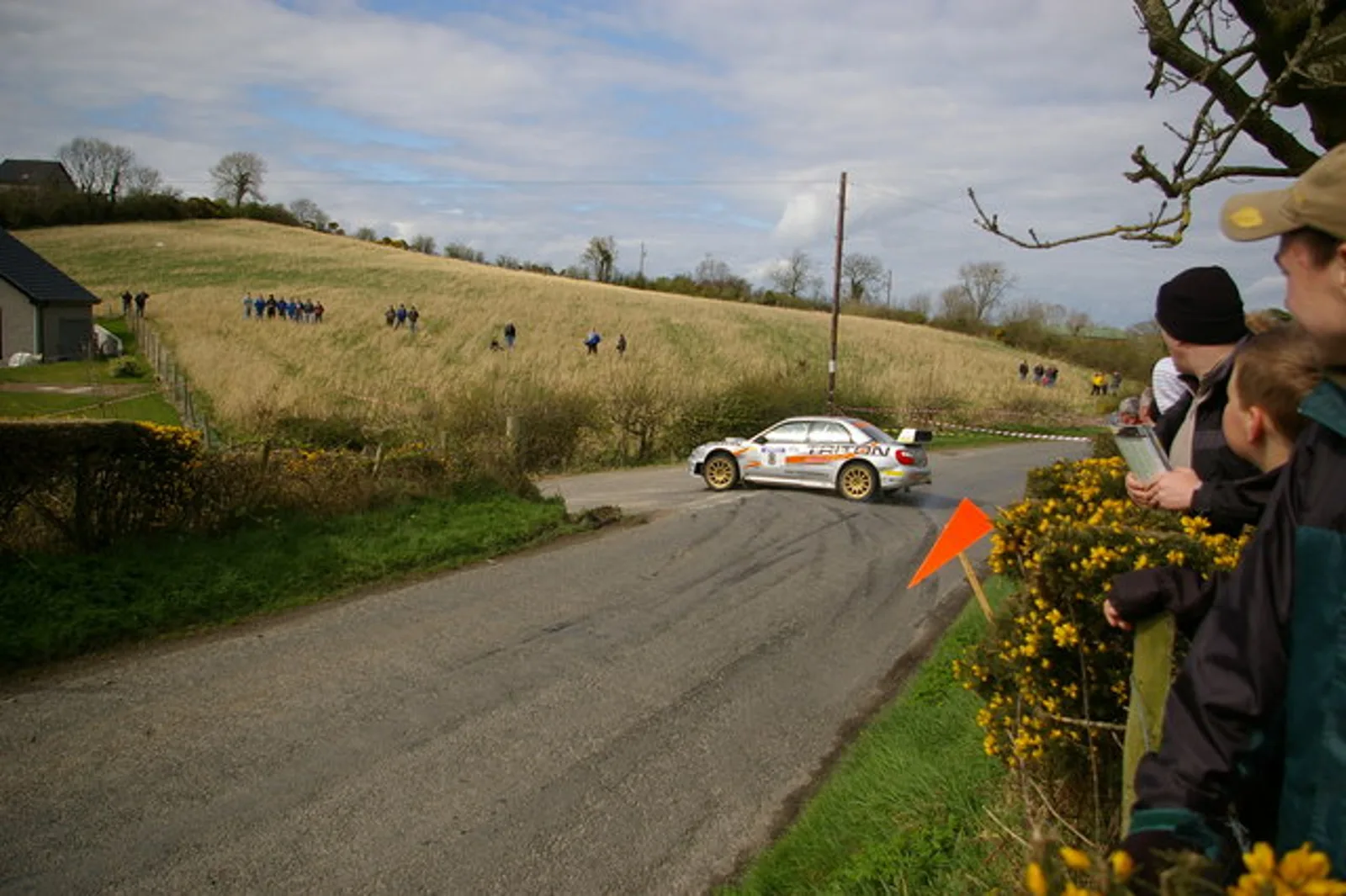
The stages are on public roads closed under an Act of Tynwald, the island's parliament. They include narrow farm lanes with high grass banks, open moorland and Monaco-style around-the-houses stages in Ramsey or Castletown. Routes change each year. In 2008 the longest stage was Milerisk at 34.54 km (21.46 miles), while the shortest included Balley Cashtal in Castletown at 2.35 km (1.46 miles) and the Villa Marina super-special in Douglas at 1.45 km (0.90 miles).
What is the Donegal International Rally?
County Donegal, in Ireland, stages the annual Donegal International Rally. It has been among the most important dates in the Irish rallying calendar since 1972 and is regarded as one of the country's most challenging rallies. The Donegal Motor Club organises it, and it begins and ends in Letterkenny. For some years now it has counted towards the Irish Tarmac Rally Championship.
Donegal Rally results and history
Cahal Curley won the first event in 1972, when the base was Downings before it moved to Letterkenny. In 1985 just one second separated the top two cars. The 2001 event was cancelled, like most that year, because of foot-and-mouth disease. That hurt the local economy, as the rally is estimated to be worth over 20 million euros a year to Donegal and attracts around 120,000 spectators.
The rally has also had to deal with fatal accidents. In 2002 two marshals, both 22, died when a car crashed into spectators on stage two, and the remaining stages were cancelled. Andrew Nesbitt was declared the winner because he led at the time, and the Motorsport Commission inspected safety at later events. In 2008 an 18-year-old spectator died at Ballyare after being hit by a competing car; the rally was abandoned for the day and then ended as a mark of respect, with Eugene Donnelly declared the winner as the leader. In June 2010 co-driver Thomas Maguire, 26, died after his car crashed on the Knockalla stage, and driver Shane Buckley was critically injured. It was the first time a competitor had been killed during the rally, and the final stage was cancelled.
The 2019 Donegal International Rally
The rally had counted towards the FIA Celtic Rally Trophy from 2016, and in 2019 it attracted wide international interest, with Ken Block among the names, bringing his Ford Escort Cosworth. Block crashed out on the first day at Special Stage 2 but returned the next day. Stage 7 on day one was cancelled as a safety measure because of heavy traffic and spectator numbers.
On 23 June, the third day, three-time and defending champion Manus Kelly crashed on the Fanad Head loop in his Hyundai i20 R5 and died. His co-driver Donall Barrett was injured and taken to hospital, and the remaining stages were cancelled. Kelly, 41, a father of five and a well-known local businessman, had won a seat on Donegal County Council barely a month earlier. The Taoiseach, Leo Varadkar, called him a "phenomenal motorsportsman". At the funeral, Declan Boyle, the 2014 champion, drove Kelly's own Subaru in front of the cortege with Kelly's son beside him, and his brothers and friends carried the coffin across the rally's finish ramp.
Donegal Rally in 2020, 2021 and 2022
The pandemic put the 2020 rally in doubt. On 12 March all motorsport was postponed, and Motorsport Ireland suspended events until 1 June, then extended the ban to 20 July. The Tarmac Rally Organisers' Association cancelled the 2020 championship on 28 April. Rumours spread on Facebook that the Donegal Rally was cancelled, and the Donegal Motor Club stepped in to say that it would go ahead on 19 to 21 June if permitted. Government guidance placed rallies in Phase 5, not before 10 August, and the restrictions ran into 2021. The association cancelled the 2021 championship on 3 February 2021, and Donegal held a virtual rally of interviews, videos of past events and social media posts on the usual dates.
The 2022 rally covered 301 km over 20 stages and counted towards both the Irish Tarmac Rally Championship and the Celtic Rally Trophy. The grid was capped at 160 competitors plus 25 historic and 25 junior entries, with a starting fee of 1,600 euros. It was labelled the biggest rally of the year in Ireland. A 62-year-old man was arrested after a competitor's car was damaged, with wires and fuel lines cut.
Donegal International Rally 2025 and 2026
The 2025 Wilton Donegal International Rally ran over three days, 20 to 22 June, as part of the Irish Tarmac Rally Championship. It consisted of 20 stages totalling 271 km. Callum Devine won for the third year in a row, just over 20 seconds clear of Meirion Evans. The former World Rally Championship driver Hayden Paddon, now the ERC champion, was a late entrant and was second overall after day one, but he retired after a roll on Special Stage 13.
In 2026, a teenage boy was killed and other spectators were injured in an incident at Trentagh on Saturday 20 June. The rest of the event was cancelled.
Shell, Topaz Energy and Joule have all sponsored the event in the past. Wilton Recycling and the Mount Errigal Hotel are the current sponsors.
Circuit of Ireland, Donegal International Rally and Rally Isle of Man compared
| Circuit of Ireland | Donegal International Rally | Rally Isle of Man | |
|---|---|---|---|
| First held | 1931 | 1972 | 1963 |
| Organiser | Ulster Automobile Club | Donegal Motor Club | Closed roads under an Act of Tynwald |
| Base | Northern Ireland, over Easter | Letterkenny, in June | Isle of Man |
| Stages | Closed paved public roads | Tarmac stages in County Donegal | Farm lanes, moorland and town stages |
| Recent form | Returned 2022 after five years | Round of the Irish Tarmac Rally Championship | Returned 2022 in the Celtic Rally Trophy |
How do the three rallies connect through the FIA Celtic Rally Trophy?
The FIA Celtic Rally Trophy is the link between these events in the 2020s. The Circuit of Ireland opened it in 2022, Rally Isle of Man rejoined as part of it that same year, and Donegal has counted towards it since 2016. The Circuit's most recent event was in 2025.