A $50 wager in 1903, a Steyr around the world in 1935, a Land Rover Defender lap of the planet in 1996 and a woman who beat Cannonball Baker's record.
Horatio Nelson Jackson made the first drive across the United States in 1903, Max Reisch rode to India and drove around the world in the 1930s, Rainer Zietlow holds Guinness-registered long-distance records, and Betty Skelton set 17 aviation and automobile records.
In May 1903 Horatio Nelson Jackson, a 31-year-old doctor with no car, almost no driving experience and no maps, accepted a $50 wager in a San Francisco club that he could drive across the United States in under 90 days. He finished in 63 days, 12 hours and 30 minutes. Three others are known for long drives and feats of their own: Max Reisch, Rainer Zietlow and Betty Skelton.
Who are Horatio Nelson Jackson, Max Reisch, Rainer Zietlow and Betty Skelton?
Jackson was a Canadian-American physician who made the first automobile crossing of the United States. Reisch was an Austrian who took a motorcycle to India and a car around the world. Zietlow is a German record-setting long-distance driver. Skelton was an American pilot who set 17 aviation and automobile records.
Four drivers, four very different machines, and a shared appetite for distances most people would not attempt.
Jackson, Reisch, Zietlow and Skelton at a glance
| Driver | Nationality | Headline feat | Machine |
|---|---|---|---|
| Horatio Nelson Jackson | Canadian-American | First drive across the United States, 1903 | Two-cylinder 20 hp Winton named the Vermont |
| Max Reisch | Austrian | First overland motorcycle journey from Europe to India, 1933; world circumnavigation by car, 1935 and 1936 | Puch 250; modified Steyr 100 |
| Rainer Zietlow | German | Seven long-distance and two altitude records registered with Guinness; around the world in six months, 1996 | Land Rover Defender 110 |
| Betty Skelton | American | Women's stock-car speed record of 105.88 mph on Daytona Beach, 1954 | Dodge sedan; Corvettes; a jet car at Bonneville |
How did Horatio Nelson Jackson win a $50 bet to drive across America?
On 18 May 1903, as a guest at San Francisco's University Club, Jackson bet $50 that a four-wheeled machine could cross the country in under 90 days. He had been a doctor in Vermont until health problems forced him to stop in 1900. He knew cars only as an enthusiast, who rejected the idea that they were a passing fad.
A young mechanic and chauffeur named Sewall K. Crocker agreed to be his companion, mechanic and backup driver. On Crocker's advice Jackson bought a slightly used Winton with a two-cylinder, 20 hp engine and named it the Vermont. They left San Francisco on 23 May carrying sleeping bags, an axe, a shovel, a telescope, a block and tackle, spare fuel cans, a Kodak camera and an arsenal of guns.
The Winton Motor Carriage Company's founder, Alexander Winton, had already failed to cross the Nevada and Utah deserts. Jackson therefore chose a more northerly line up the Sacramento Valley and onto the Oregon Trail, avoiding the highest Sierra Nevada and Rocky Mountain passes.
What went wrong on the first transcontinental car trip?
Almost everything. A tyre blew only 15 miles (24 km) out of Oakland, and the only matching spare in San Francisco went on at once. In Sacramento they replaced dim side lanterns with a big spotlight. North of the city a woman sent them 108 miles (174 km) the wrong way so her family could see a car.
Streams had to be crossed by hauling the car with the block and tackle. Jackson lost two pairs of glasses, paid a $4 toll over a rocky mountain road and wound rope around the wheels when tyres failed. At Alturas, California, they gave locals rides while waiting three days for replacements that never arrived.
On 6 June a cowboy on horseback towed the car to a ranch, and a fuel leak drained the tank. Crocker pedalled a rented bicycle 25 miles (40 km) to Burns, Oregon, and came back with 4 US gallons (15 L) that Jackson said cost him nearly twenty dollars. Three days later the Vermont ran out of oil just outside Vale.
Who was Bud the bulldog?
Bud was the third member of the party. Near Caldwell, Idaho, Jackson, who had wanted a dog since Sacramento, bought the bulldog for $15, though newspapers told varying tales of how he was acquired. With no roof or windshield on the Vermont, the alkali dust irritated the dog's eyes, so Jackson fitted him with goggles. Bud once drank bad water and fell ill but recovered.
By then the trio were celebrities, and the press turned out at every stop. Citizens at Mountain Home warned that the Oregon Trail worsened to the east, so the crew went south of the Sawtooth Mountains instead. On 16 June Jackson's coat, holding most of their money, fell off somewhere in Idaho, and he had to telegraph his wife to send funds to Cheyenne.
Between 20 and 21 June all three got lost in Wyoming and went 36 hours without food until a sheepherder fed them roast lamb and boiled corn. Before Cheyenne the wheel bearings failed, and Crocker persuaded a farmer to part with those from a mowing machine.
When did Jackson reach New York?
On 26 July 1903, 63 days, 12 hours and 30 minutes after leaving San Francisco, in the first automobile to cross the continent. They had reached Omaha on 12 July, after which a few paved roads made travel easier. The car used over 800 US gallons (3,000 L) of gasoline.
The only late mishap came just east of Buffalo, where a hidden obstacle threw Jackson, Crocker and Bud from the car. Afterwards Jackson drove on to Vermont with his wife. About 15 miles (24 km) from home the Vermont broke down again, and he ended up towing both of his brothers' cars, which had come to help and then failed too. At the door of his garage the drive chain snapped, a part that had survived the whole trip unchanged.
What happened to Jackson and the Vermont?
Jackson went on to own the Burlington Daily News, lead the Burlington Trust Company and run the radio station WCAX. In the First World War he served as an Army medical major, earning the Distinguished Service Cross for tending the wounded under fire near Montfaucon in September 1918, and he was a key organiser of the American Legion. He twice ran unsuccessfully for governor.
He was once ticketed for breaking Burlington's 6 mph (9.7 km/h) speed limit. Jackson died on 14 January 1955. In 1944 he had given the Vermont to the Smithsonian Institution, where it now sits in the National Museum of American History. Ken Burns made a PBS film about the journey, Horatio's Drive, narrated by Tom Hanks, and Ralph Nading Hill told the story in the 1964 book The Mad Doctor's Drive.
Who was Max Reisch and what did he drive?
Max Reisch (1912 to 1985) was an Austrian long-distance traveller, author and researcher. In 1933 he made the first overland motorcycle journey from Europe to India, and in 1935 and 1936 he was the first to circle the world by driving across Mainland Southeast Asia. His machines were Puch motorcycles, a modified Steyr 100 car and a motorhome he designed himself.
He trained as a building engineer, graduating in 1931, and later studied business in Vienna, taking a doctorate in 1939. The travelling began on a Puch 175 in 1930, when he crossed 12 Alpine passes, including the Stelvio, solo. In 1932 he and Alfred Schricker became the first Austrians to ride a motorbike into the Sahara.
How did Max Reisch reach India and circle the globe?
In 1933 Reisch and Herbert Tichy rode a Puch 250, fitted with equipment of Reisch's own design, through the Balkans, Anatolia, the Syrian Desert and Iran to Mumbai. They were the first motorcyclists to reach India overland from Europe.
Two years later he and Helmuth Hahmann set out in a Steyr 100 chassis that Reisch redesigned and expanded for the expedition. They were the first to cross Mainland Southeast Asia by car, travelling through Myanmar, Thailand, Laos and Vietnam to China, then completing the circumnavigation via Japan and the United States and back to Austria. He later wrote the trip up as 2 Mann und 32 PS, published in 1951 and available in English as An Incredible Journey.
He kept travelling after the war. In 1952, with Rolf Hecker, he drove the first European motorhome of his own design through Iraq and Kuwait to Riyadh, where he met King Ibn Saud. The 1955 and 1956 trip to Sinai and Egypt used an Opel Caravan with a special roof tent, nicknamed the Sinai-Moses, and in 1958 and 1961 he followed the routes of Alexander the Great and the First Crusade.
What did Max Reisch do besides travel?
From 1962 he created and sometimes guided Rotel Tours group journeys: to India through Iran and Afghanistan until 1976, across the Sahara from Tunis to Accra from 1969 until 1980, and to Iceland, Scandinavia, South Africa, Indonesia and South America between 1972 and 1981. In 1946 he helped his brother Hans found the Austrian branch of Spar in Kufstein, and in 1950 he was Central European Rally Champion.
He wrote more than 700 newspaper and magazine contributions and made over 100 radio reports. The Austrian Motor Club awarded him its Grand Gold Medal in 1954, and in 1971 he received the title Professor. His archive sits in Innsbruck, kept by his son Peter, while Obergurgl's Crosspoint Top Mountain Motorcycle Museum displays the Puch bikes, the Steyr, the motorhome and the Sinai-Moses.
Who is Rainer Zietlow?
Zietlow is a German long-distance driver and world record holder who owns the Challenge4 agency in Mannheim. Guinness World Records has registered seven of his long-distance records, along with two altitude records.
His early trips were desert crossings and a global lap. He drove a Mercedes 230 across the Sahara to Niger in 1988 and a Toyota Land Cruiser BJ 55 to Cameroon in 1990. In 1996 he took a Land Rover Defender 110 around the world in six months.
He founded Challenge4 GmbH in 2004 to plan international long-distance and record-breaking tours, and since 2005 it has run 20 successful projects. Videos of his later drives include a Dakar to Moscow record run, a Volkswagen ID.4 tour of the USA and a Touareg journey. With a few exceptions he has supported SOS Children's Villages since 2004 by handing over a donation at a village visit during each record attempt.
Why was Betty Skelton called the First Lady of Firsts?
Betty Skelton (1926 to 2011) set 17 aviation and automobile records and opened doors for women in flying, motor racing, astronautics and advertising. She was born in Pensacola, soloed at 12, held a private licence at 16 and a commercial licence at 18, and worked as a flight instructor in Tampa.
After taking up aerobatics in 1945 she became US Female Aerobatic Champion in 1948, 1949 and 1950, flying a red and white Pitts Special called Little Stinker. In 1949 a Piper Cub took her to 25,763 feet (7,853 m), a world light-plane altitude record, and she later pushed that to 29,050 feet (8,850 m). In a P-51 Mustang she reached 421.6 mph (678.5 km/h) over a 3 km course.
What land speed records did Betty Skelton set?
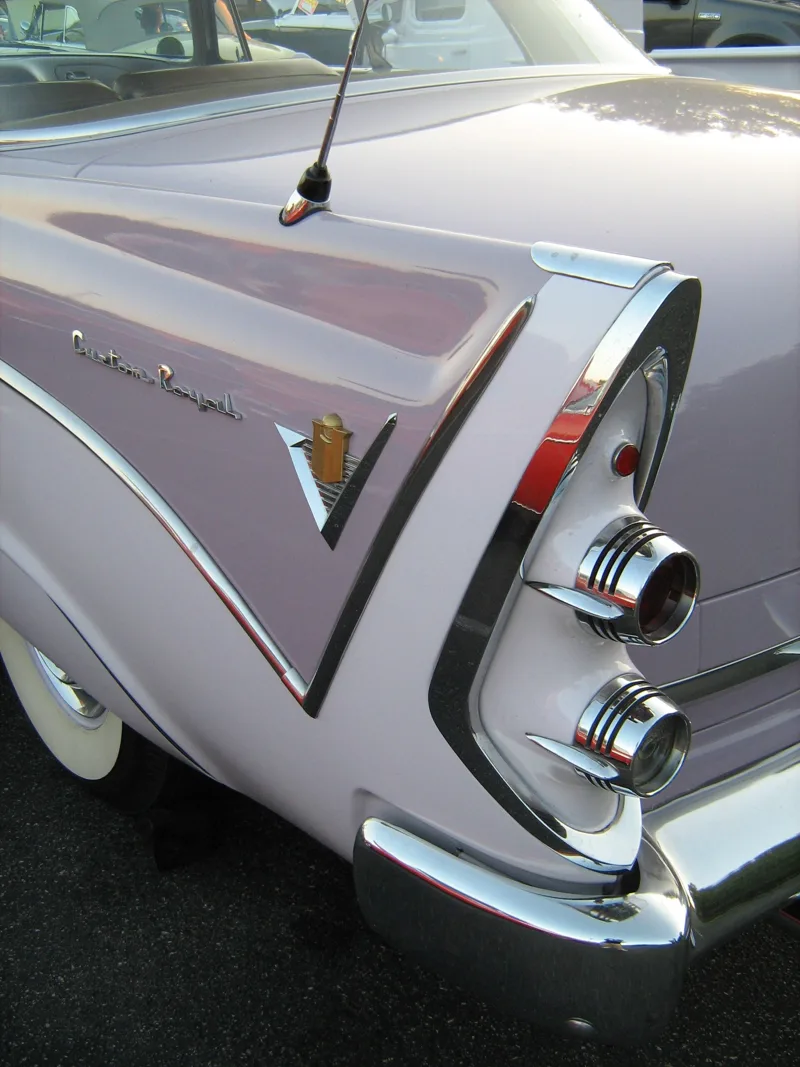
She found motor racing in February 1954 at Daytona Beach, where she was timed at 105.88 mph (170.40 km/h) in a Dodge sedan on the sand, a women's stock-car record. The Automobile Association of America gave her a racing licence, the first for a woman, and Dodge hired her as the industry's first female test driver.
She drove across the Andes, the length of Baja and, at Bonneville, was the first woman to take a jet car past 300 mph (480 km/h). She set three women's land speed records at Daytona, the last of them 156.99 mph (252.65 km/h) in 1956, and that year beat Cannonball Baker's 40-year-old New York to Los Angeles time.
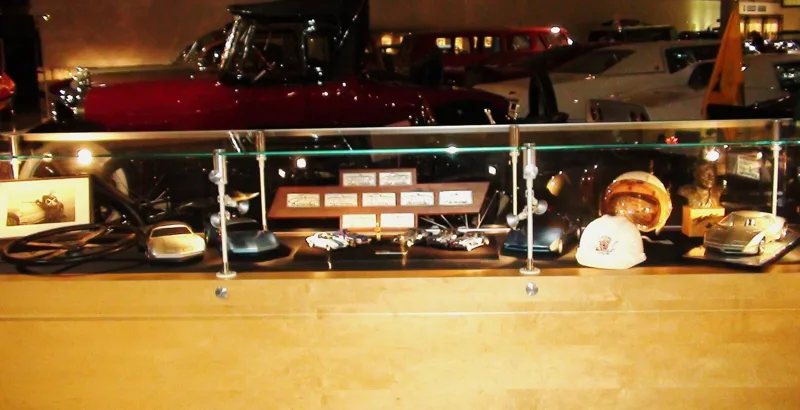
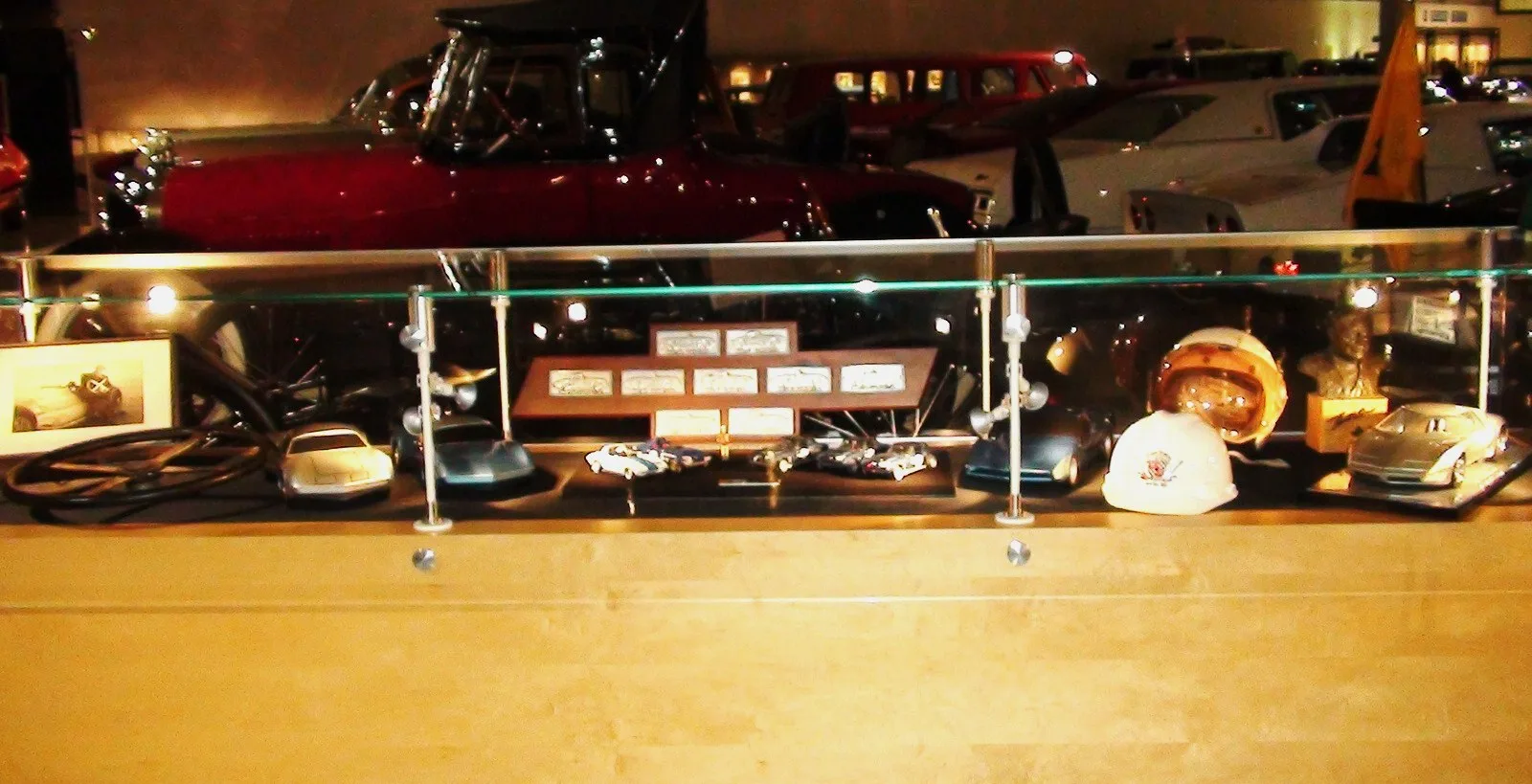
From 1956 she worked at Campbell-Ewald on General Motors advertising, as the company's first woman technical narrator at major shows and later a spokeswoman for Chevrolet. She owned ten Corvettes and drove a gold translucent one to Daytona in 1957 as NASCAR pace car. In 1959 she took the same NASA tests as the Mercury Seven astronauts, who nicknamed her 7 1/2.
She joined the NASCAR International Automotive Hall of Fame in 1983 as its first woman, followed by the Corvette Hall of Fame in 2001 and the Automotive Hall of Fame in 2025. Skelton died on 31 August 2011. Little Stinker hangs inverted at the Steven F. Udvar-Hazy Center near Washington Dulles International Airport.
Where can you see these machines today?
Jackson's Winton, the Vermont, rests in Washington, D.C., inside the National Museum of American History. Skelton's Little Stinker is at the Udvar-Hazy Center, and Reisch's motorcycles, Steyr and motorhome are in Obergurgl, in the Tyrol. Zietlow's agency, Challenge4, is based in Mannheim.