The Pajero's Dakar record, the Isuzu Trooper sold as the Holden Jackaroo, and what each model offered Australian four-wheel-drive buyers.
The Mitsubishi Pajero reached Australia in January 1983 and built a Dakar record of 12 overall wins, while Isuzu's Trooper, sold in Australia as the Holden Jackaroo, ran from 1981 to 2002. Both competed for four-wheel-drive buyers with turbodiesels, long-wheelbase wagons and steadily improving comfort.
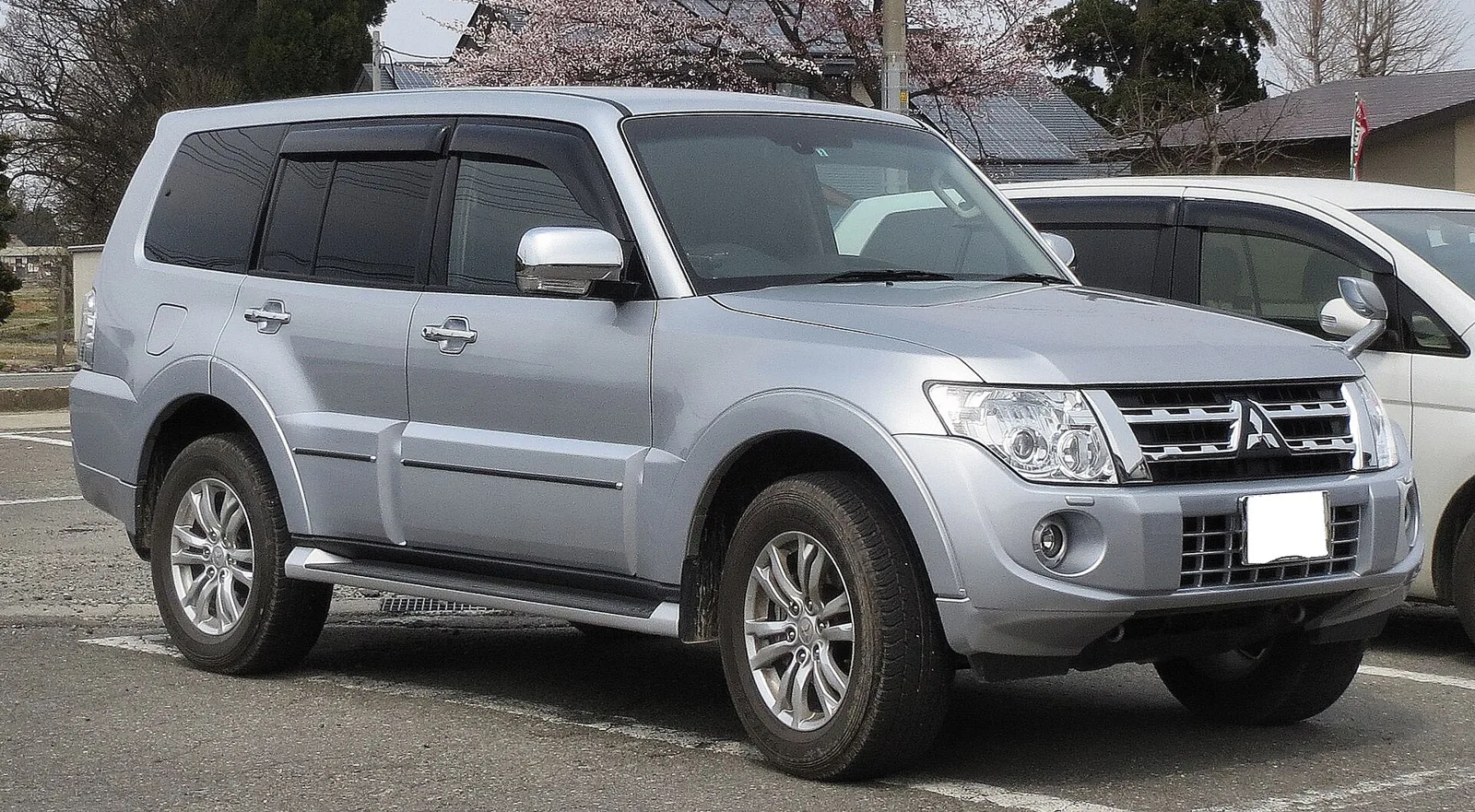
Mitsubishi entered a Pajero in the 1983 Paris-Dakar Rally and won its class, then kept collecting wins until 2007, ending with 12 overall victories that Guinness World Records recognises as the most by any manufacturer. Beside it sits Isuzu's Trooper, which Australians knew as the Holden Jackaroo.
Where did the Mitsubishi Pajero come from?
Mitsubishi traces the Pajero's ancestry to 1934 and the PX33 prototype commissioned for the Japanese Government. A first Pajero prototype appeared at the Tokyo Motor Show in November 1973, and a second, the Pajero II, followed in the late 1970s. The production version was shown at the 1981 Tokyo Motor Show and went on sale in 1982, when Mitsubishi launched it in May. It replaced the Mitsubishi Jeep Delivery Wagon.
Mitsubishi pitched it as a luxurious yet rugged and capable rival to the Range Rover and the Toyota Land Cruiser of its time. Several features were unusual for a four-wheel drive then: power steering, suspension seats, a turbocharged diesel and front double wishbones sprung by torsion bars.
The name comes from Leopardus pajeros, the Pampas cat, and it has been stretched across other models: a kei car called the Pajero Mini, mini SUVs including the Pajero Junior and Pajero iO, and the Triton-based Pajero Sport. In Spanish, pajero is a rude word, so Mitsubishi used Montero for the SUV across North America, Spain and Latin America, apart from Brazil and Jamaica. In Britain it was the Shogun, after the Japanese word for General.
Twelve overall Dakar wins and 150 stage wins gave the Pajero a record no other manufacturer had matched.
How did the first-generation Pajero grow up?
The first Pajero was a three-door, short-wheelbase model with a metal or canvas top. Engine choices started with a 2.0-litre four-cylinder and widened to a 2.6-litre four, a 3.0-litre V6 and turbocharged 2.3-litre and 2.5-litre diesels. In February 1983 came a long-wheelbase five-door, offered with a 2.0-litre turbocharged petrol engine or a 2.3-litre turbodiesel. It seated up to seven, and the third row could be folded to the sides to free luggage space or joined to the second row to make a bed.
Updates kept arriving. A four-speed automatic was added in April 1985, and the flagship Exceed model of September 1987 added two-tone paint, 15-inch alloy wheels, heated front seats, rear air conditioning and a remotely locking tailgate. In 1988 a 3.0-litre V6 became available across the range, and the 2.5-litre turbodiesel gained the first intercooler fitted to a four-wheel drive. Dodge sold a rebadged version as the Raider from 1987 to 1989, and Hyundai built the first-generation platform under licence as the Galloper from 1991 to 2003.
What did Australian buyers get? The Pajero NA to NG
Mitsubishi Australia released the first Pajero in January 1983 as a short- or long-wheelbase three-door wagon, with a 2.6-litre petrol engine or a 2.3-litre turbodiesel. Both used a five-speed manual gearbox, ventilated front discs and rear drums. A five-door high-roof long-wheelbase model followed in May 1984 with a luxury Superwagon trim and a shorter final drive to offset its extra weight. After that the cars moved through a lettered series of updates.
| Series | Date | Main changes in Australia |
|---|---|---|
| NA | January 1983 | Three-door SWB and LWB wagons; 2.6 petrol or 2.3 turbodiesel; five-speed manual |
| NB | November 1984 | Revised grille; LWB three-door dropped; diesel dropped from the three-door |
| NC | November 1985 | Optional power steering; five-door LWB gets a low roof |
| ND | October 1986 | Automatic optional on petrol Superwagon; 2.5 turbodiesel replaces the 2.3 |
| NE | October 1987 | Australian-made Astron II 2.6 petrol; larger brakes; limited-slip differential and 16-inch chrome wheels on Sports and Superwagon |
| NF | September 1988 | 3.0 V6 in the Superwagon with 105 kW (143 PS; 141 hp); rear three-link coil suspension; rear discs on V6 only |
| NG | September 1989 to April 1991 | Lockup automatic; chrome truck-style mirrors; intercooler on the 2.5 diesel from 1990 |
Power steering, automatics, bigger brakes and a V6 arrived one at a time, and the fitment of the Australian-built Astron II engine in 1987 tied the wagon to local production. The most expensive NE models carried a stereo cassette player, remote fuel filler release, oil pressure gauge, volt meter and inclinometer.
Why did the Pajero dominate the Dakar Rally?
The first appearance, in 1983, produced a class win for Andrew Cowan, with team-mate George Debussy second in class and 14th overall after more than 11,000 km. The following year two Pajeros ran, and Cowan took third. From there Mitsubishi collected podium finishes across the T2 and T3 classes until its last wins in 2007. Its tally was 12 overall victories and 150 stage wins, against 78 for Peugeot, the next best.
The T2 class is closer to showroom cars than many people assume. Entries must be production models, and permitted modifications are mostly about safety: roll cages, harnesses and bucket seats, along with navigation gear and larger fuel tanks. Older Paris-Dakar rules were looser, which allowed oddities like the 1995 Pajero Proto, with a wider track, a highly tuned engine and a custom body.
In the late 1990s Mitsubishi wanted a car built purely to win T2. It added independent rear suspension to the second-generation Dakar platform, a feature the road versions lacked, plus a modified 6G74 engine. To qualify it had to sell a road car, and that was the Pajero Evolution, of which only 2,693 were made; it is now seen as a collector's item. After 2002, rules permitted full prototypes without homologation, and Mitsubishi's Evolution entries from MR10 to MR14 used purpose-made designs, including a quad-turbo diesel and a four-litre V6 petrol engine that no customer could buy. Long-wheelbase first-generation Pajeros also entered the Camel Trophy, an event best known for Land Rover vehicles, and a limited short-wheelbase Camel Trophy Edition was sold to mark the participation.
What was the Isuzu Trooper?
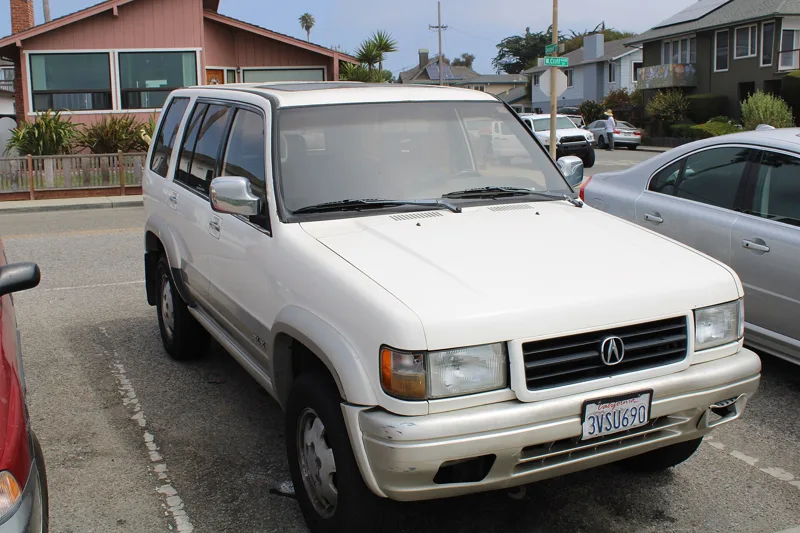
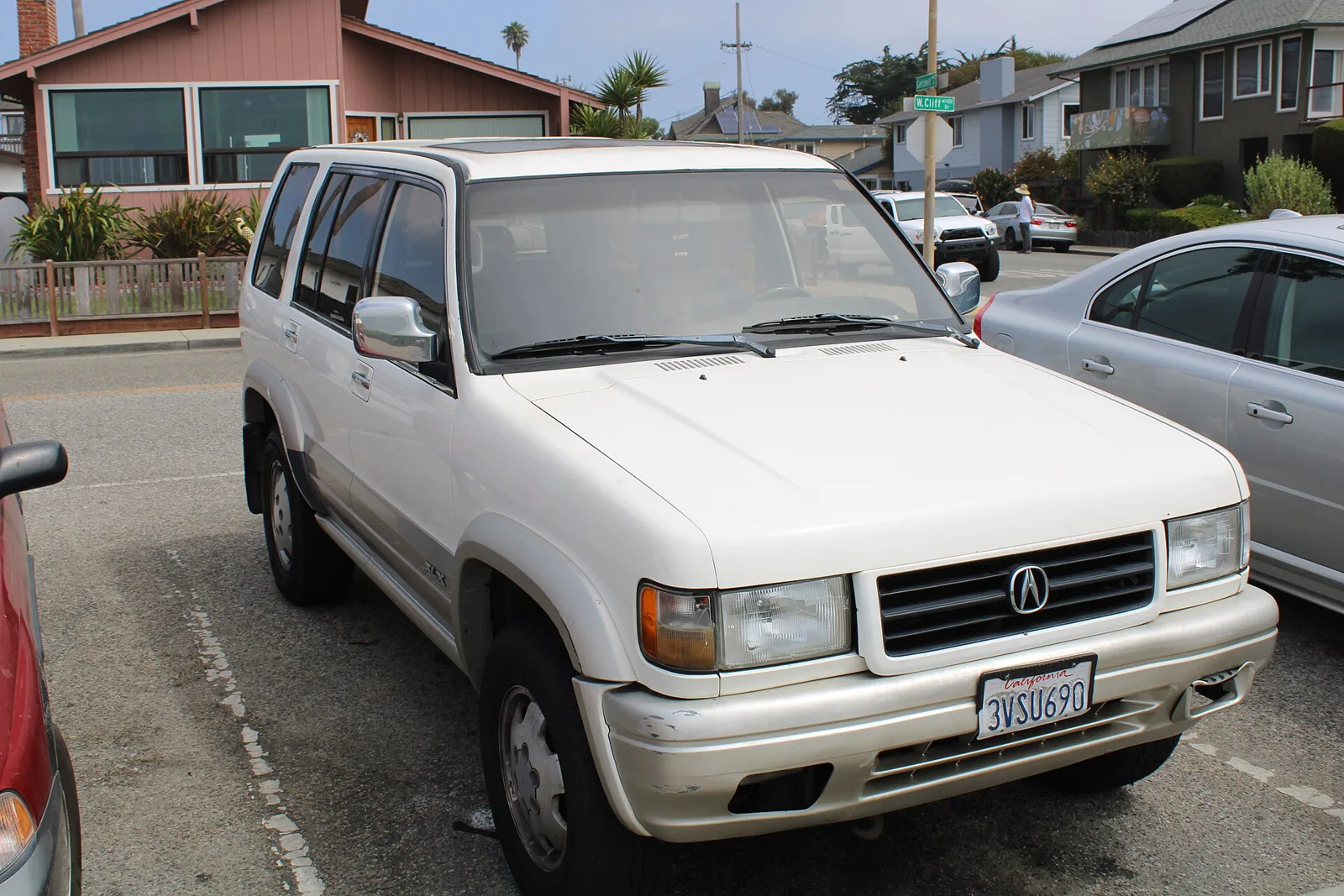
The Trooper was a mid-size SUV that Isuzu made from September 1981 to September 2002 in two generations: the first from 1981 to 1991, and the second, coded UBS, from 1991 to 2002 with a refresh in 1998. Its earliest versions rode on the first-generation Isuzu Faster pickup, sold in some markets as the Chevrolet LUV. In Japan it was the Bighorn. Elsewhere the same vehicle appeared under many names, among them the Acura SLX, Honda Horizon, Opel and Vauxhall Monterey, Subaru Bighorn, SsangYong Korando Family, Chevrolet Trooper and Holden Jackaroo.
It started with a four-cylinder engine, four-speed manual gearbox and part-time four-wheel drive, then gained air-conditioning, power windows and a V6. The 1.95-litre petrol and 2.2-litre diesel of the early cars, the latter with 73 PS (54 kW), were underpowered even by early-1980s standards for a vehicle weighing 1,678 kg (3,700 lb) empty. Things improved with the five-door body and 2.3-litre petrol engine of 1983 (97 PS; 71 kW), and from 1988 to 1991 the Trooper had a live rear axle and four-wheel disc brakes. Rivals included the Toyota Hilux Surf, the Mitsubishi Pajero and the Nissan Terrano.
The badge list is not just a footnote. In Indonesia PT Garmak Motors assembled it as the Chevrolet Trooper, and a two-wheel-drive Chevrolet Stallion appeared around 1987 with the Trooper body on a rear-wheel-drive LUV chassis. The Subaru Bighorn went on sale in November 1988 with an Irmscher finish and Isuzu's 2.8-litre turbodiesel, and stayed available until February 1992. SsangYong began licensed production the same month as the Korando Family, a name meaning Korea Can Do, selling it mainly in South Korea, Southeast Asia, parts of Europe and, to a lesser degree, South America. In Vietnam the Mekong Star 4WD, built with SsangYong diesel engines and drivetrains, reached around 30,000 units by 1997.
In the United States, a 25% tax on two-door trucks forced a naming dance: the first Troopers were two-door and were sold as the Trooper II, a name that stuck when four-door versions arrived. No Trooper I was ever formally sold.
Why was the Trooper called the Holden Jackaroo?
In Australia and New Zealand the Trooper was sold as the Holden Jackaroo. A jackaroo, in Australian usage, is a young man employed on a sheep or cattle station. New Zealand also got the standard Trooper under the Isuzu name. Under a working relationship that General Motors, Isuzu and Honda established, the Jackaroo is listed for Australia from 1998 to 2002, alongside the Honda Horizon in Japan, the Vauxhall Monterey in Britain and the Acura SLX in the United States.
The second generation, introduced in December 1991 for the 1992 model year, was larger, more powerful and more luxurious. Only a long-wheelbase five-door was offered at first, with the three-door arriving in March 1992. A 3.2-litre V6 gave 177 PS (130 kW; 175 hp), and a double overhead cam version produced 193 PS (142 kW; 190 hp). The diesel option was a 3.1-litre four-cylinder intercooled turbodiesel, the 4JG2, making 114 PS (84 kW; 112 hp) at 3,600 rpm and 260 newton metres (192 pound-feet) at 2,000 rpm. In the Jackaroo it came with a five-speed manual, manual front hubs and a part-time four-wheel-drive system with an open front differential and a limited-slip rear. The V6 could be had with a four-speed automatic and automatic-locking front hubs.
The 1998 refresh brought a new grille, bumpers, headlamps and front fenders, plus a 3.5-litre double overhead cam engine from the Isuzu and Holden Rodeo, making 160 kW (215 hp; 218 PS) in Australasian and American trim. A Borg-Warner torque-on-demand all-wheel-drive system was introduced as well. Suspension was independent with torsion bars at the front and a multilink coil-sprung rear integrated with a solid axle. The 2000 to 2002 cars added a feature called Grade Logic that downshifted automatically on steep descents to help slow the vehicle.
Pajero vs Trooper, how the two compare
Both appeared within weeks of each other in 1981, with the Trooper first in September and the Pajero at the Tokyo show a month or so later. The Pajero was positioned as a premium alternative to the Range Rover and Land Cruiser, with a long motorsport programme behind it. The Trooper's rivals included the Toyota Hilux Surf, the Pajero itself and the Nissan Terrano, and its reach was wide, because it was licensed or rebadged for many partners around the world. The Pajero has outlived it. It sold more than 3.3 million units over a 40-year run to its global discontinuation in 2021, while the Trooper ended in 2002.
What this means for someone buying a used Trooper or Pajero
For a Trooper, the second generation offered the broader choice of engines, with a seven-seat layout available outside the United States and a rear limited-slip differential optional on all models. Cargo space measured 3,340 litres (117.8 cubic feet) in the LS and S models and 3,180 litres (112.3 cubic feet) in the Limited. One safety note: in April 2004 New Zealand issued recalls for Troopers built in 1992 and 1995 after a warning from the United States National Highway Traffic Safety Administration that the accelerator can stick.
The Pajero Evolution, with its 2,693 units, has become a collector's piece. In November 2023 the Japan Automotive Hall of Fame chose the first-generation Pajero as a Historic Car for its contribution to Japanese motoring history.
Where this goes next
The Pajero name has been dormant since 2021, a five-year gap between the fourth and fifth generations. The fifth generation is due in late 2026 on a body-on-frame structure based on the sixth-generation Triton and L200 pickup, with both the heavy-duty Super-Select four-wheel-drive system and the lighter S-AWC all-wheel-drive system. The smaller Pajero Sport rides on the Triton, L200 and Strada pickup platform and shares none of the original Pajero's underpinnings.