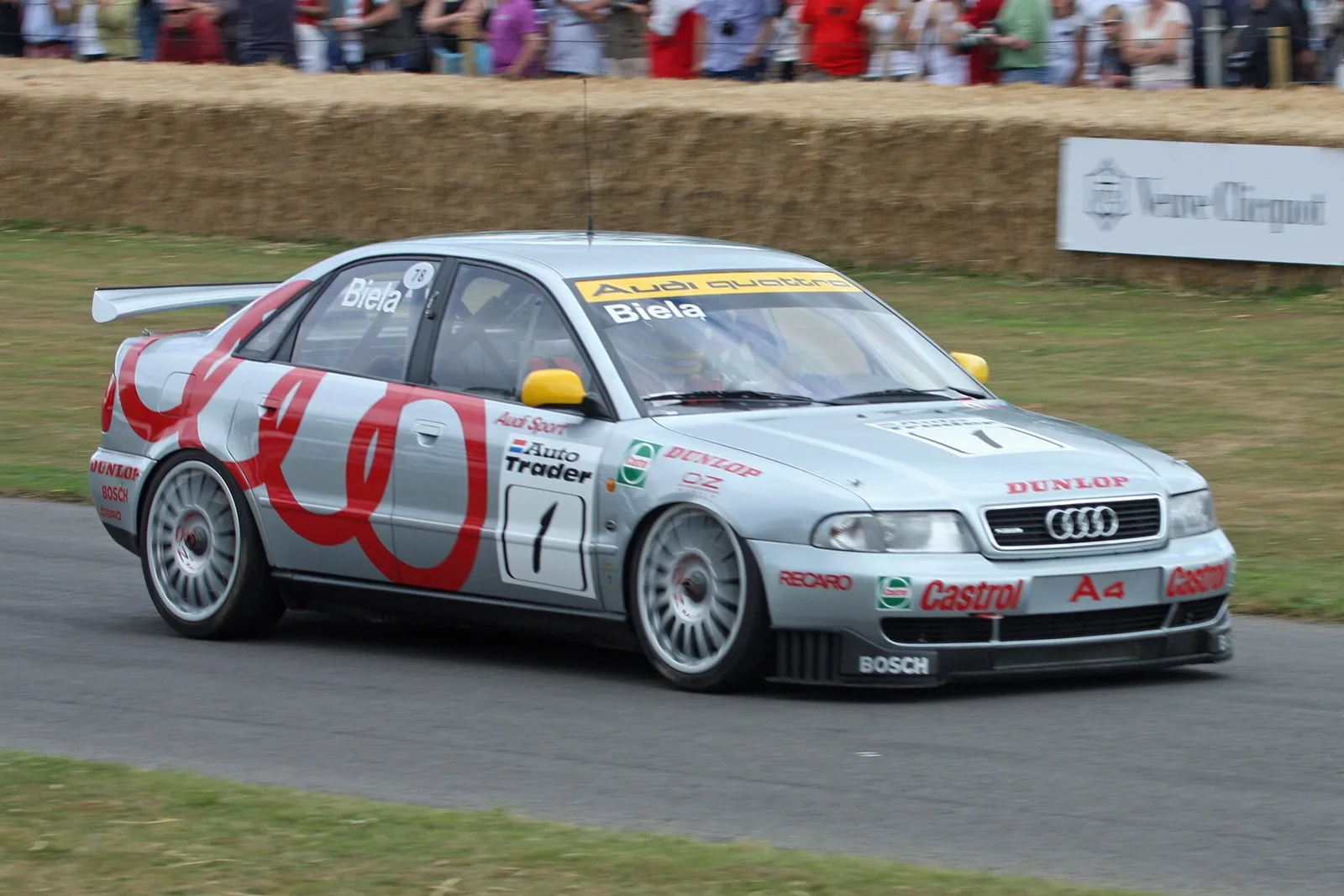
Two-litre four-door saloons took over touring car racing around the world, then priced themselves out of existence within a decade.
Super Touring was the FIA's two-litre, four-door touring car category, defined for national championships in 1993 on the back of a 1990 British formula. It replaced Group A almost everywhere, then collapsed in the late 1990s as costs rose from 60,000 to 250,000 pounds per car and works teams left.
Alfa Romeo once put a road car on sale with two spoiler extension brackets supplied unfitted, so that its racing sibling could carry bigger wings. The car was the 155 Silverstone, and the episode neatly sums up how Super Touring worked, and why it came apart.
Super Touring was a two-litre, four-door touring car category that the FIA defined for national championships in 1993, building on a British formula dating from 1990. It replaced Group A across much of the world, then collapsed in the late 1990s as bills climbed and factories left.
Where did Super Touring cars come from?
The category grew out of a two-litre formula that the British Touring Car Championship introduced in 1990. In 1993 the FIA adopted it for national touring car racing under the name Class 2, also written Class II.
The governing body ran a World Cup for the class every year from 1993 to 1995, and from 1995 it began calling the cars super tourers. Within a few seasons the formula had pushed Group A aside in almost every national touring car series, which is why championships from Britain to Japan ended up sharing one formula.
A road car sold with two unfitted spoiler brackets said more about Super Touring than any rule book.
What did the Super Touring rules require?
A Super Touring car had to be at least 4.20 metres (13.8 ft) long, have four doors and run a naturally aspirated engine of no more than two litres and no more than six cylinders. Only two wheels could be driven.
Those few lines meant a small family saloon was the smallest car that could enter. Until 1993 there had been no restriction on body size or door count at all; from that year a car had to be no smaller than the Euro NCAP Small Family Car class. Larger family cars tended to dominate anyway.
Road-car production was the other lever. To qualify, a model first needed at least 2,500 examples built. In 1995 the minimum jumped to 25,000, in a bid to counter the growing number of homologation specials.
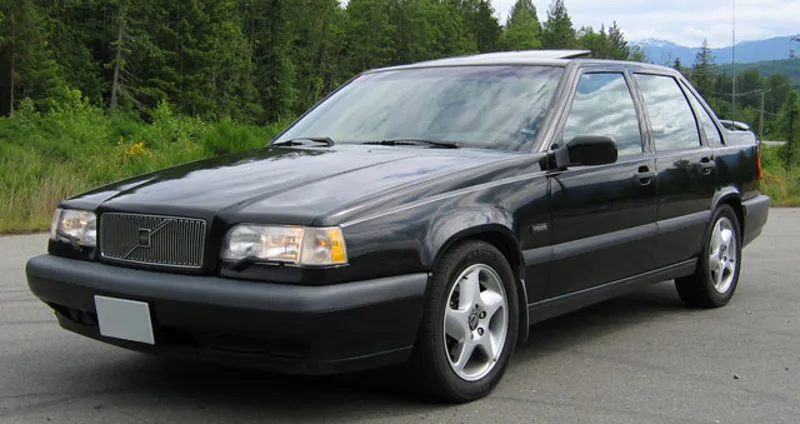
Body shape mattered more than a casual glance at the regulations would suggest. Volvo found out when it had to revert from its 850 Estate to the four-door saloon the season after the new rules bit, because the estate left it at a disadvantage.
The rules at a glance
| Area | Earlier position | Later position |
|---|---|---|
| Body and doors | No restriction on size or doors | From 1993 at least four doors, no smaller than the Euro NCAP Small Family Car class |
| Production minimum | At least 2,500 units | At least 25,000 units from 1995 |
| Aerodynamic parts | Only devices available through dealers | Non-production devices allowed, in a restricted size |
| Engine | Maximum 2 litres, up to six cylinders, naturally aspirated, two driven wheels | |
Why did homologation shape the whole era?
Because the FIA tied each racing class to a road-car production figure. A racer had to exist as a showroom car first, and the smaller the required run, the easier it was for a manufacturer to build a few special road cars to legalise a race car.
The 1969 version of the FIA rulebook shows the idea plainly. Group 1 covered series-production touring cars at 5,000 units, Group 2 touring cars at 1,000, Group 3 grand touring cars at 500 and Group 4 sports cars at just 25. When Group 4's minimum fell to 25 for the 1969 season, Porsche built a run of 25 twelve-cylinder 917s in April of that year, and Ferrari followed with the 512S in January 1970.
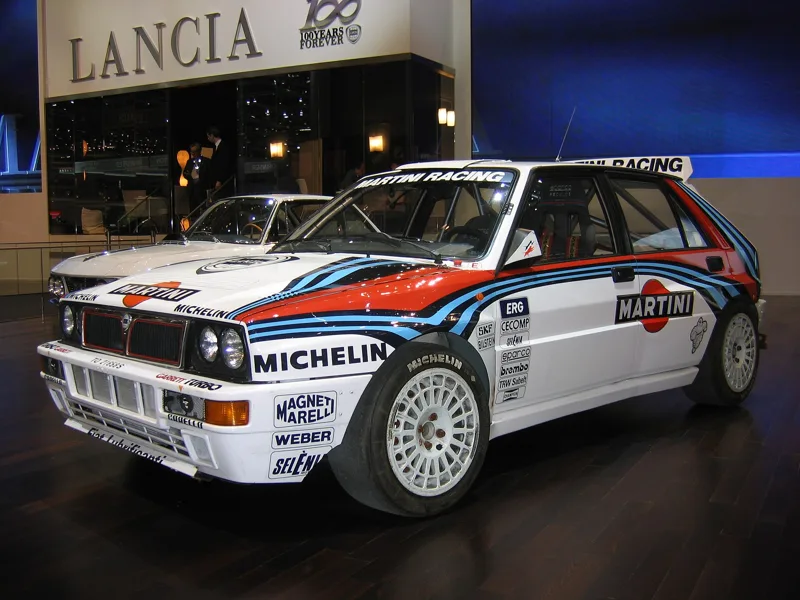
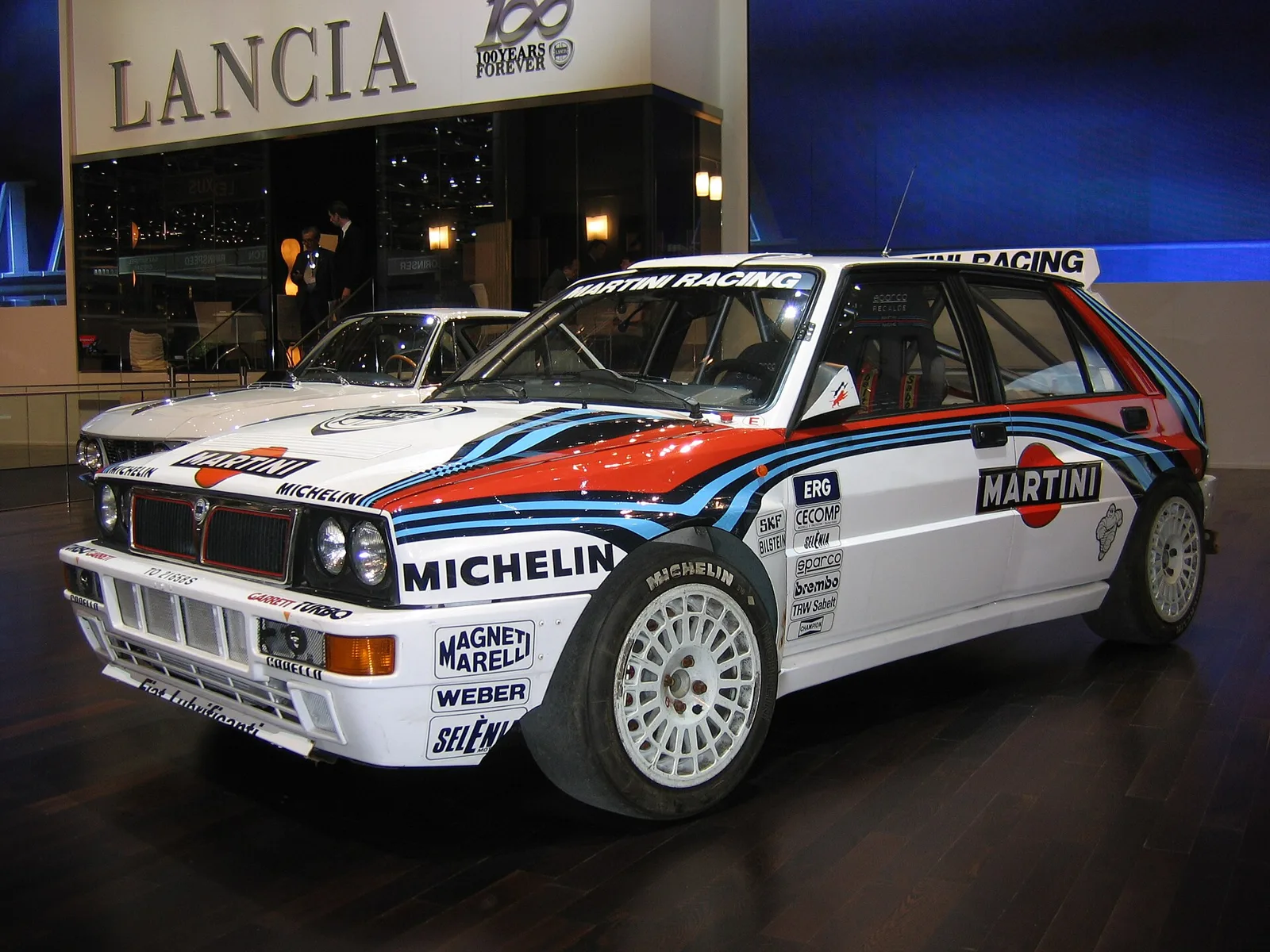
Rallying set a higher bar. Group 4 rally cars such as the Ford Escort RS1800, the Fiat 131 Abarth, the Lancia Stratos HF and the Audi Quattro needed 400 identical road cars. Super Touring's own production rules faced their first big test in the 1994 British season.
What happened with the Alfa Romeo 155 in 1994?
Alfa Romeo arrived in the 1994 BTCC with a 155 whose spoilers could be adjusted. It won the first five rounds, Ford (backed by Vauxhall) complained to the stewards, and TOCA soon ruled the aerodynamic parts illegal.
Gabriele Tarquini and Giampiero Simoni drove the cars. The front spoiler had a lower section that could be unscrewed and moved forward, so it acted like a splitter, while the rear spoiler carried a pair of extensions. The changes gave the car more downforce.
The penalty was harsh. Alfa lost the points it had scored at Snetterton and Silverstone, although an appeal later reversed that decision, and the team walked out of the Oulton Park race. Afterwards it had to run its spoilers in the retracted position used on the road version, the Alfa 155 Silverstone.
That road car existed for exactly this purpose. Only 2,500 were homologated, which cleared the way for the aero parts and a higher rev ceiling for a 1.8-litre car, and each one left the factory with the two unfitted brackets mentioned at the top of this story.
Rivals saw the loophole and used it. Renault responded with a limited-edition Laguna Airflow and BMW with a 318is, each built to let the racing version wear oversized aerodynamic aids. Renault then won the very Oulton Park race that Alfa had abandoned. Soon after, the FIA changed the regulation in every series: 25,000 production cars would be required, and only non-production aero devices of a restricted size were allowed.
Which championships ran the Super Touring formula?
Four series produced the closest racing: the British Touring Car Championship, the Japanese Touring Car Championship, Germany's Super Tourenwagen Cup and the European Super Touring Championship. Italy, France and Australia had their own versions.
Germany and Italy
The German Super Tourenwagen Cup, known as the STW, ran from 1994 to 1999. The Deutsche Tourenwagen Meisterschaft, with its 2.5-litre V6 cars, had ended in 1996, and in 2000 the Deutsche Tourenwagen Masters kept the DTM initials but returned with 4.0-litre V8 cars.
In Italy the Supertourismo category took a relaxed line on aero: teams entered extended spoilers without a single complaint. Rules also varied from series to series according to body type, which is how Volvo ended up changing cars.
Japan
The Japanese Touring Car Championship tried to rewrite the formula to suit crowds and see off rival series. In 1997 it widened the permitted body, made exhausts louder and restricted front aero, a package that let Toyota use the larger Chaser.
The plan backfired. Nissan and Honda quit at the end of that season, leaving Toyota as the only manufacturer. A new spaceframe formula in 1999 went nowhere and the championship was dropped, because the big three Japanese manufacturers were by then all running works entries in the JGTC.
France
The Championnat de France de Supertourisme kept the Super Touring name for its 3.0-litre tube-frame cars, though they bore no resemblance to the original formula.
What happened to Super Touring in Australia?
It began in 1993, when the Group A rules for the Australian Touring Car Championship were replaced by two classes: Group 3A, the Supercars formula that carried the V8 Supercars name from 1997, and Super Touring. Within a few years the two were fighting over the country's most famous race.
A new management structure and television arrangement for V8 Supercars put it in conflict with the organisers of the Bathurst 1000. When those organisers could not reach terms with V8 Supercars, they offered the race to Super Touring. Bathurst City Council and V8 Supercars then agreed a separate deal to stage their own breakaway event, the Australian 1000 Classic.
Super Touring never turned into a viable Bathurst headliner. The third and final race became a multi-category motorsport carnival, the Super Touring part was cut in half to 500 kilometres (310 mi), and the whole thing collapsed after the 1999 race. In 2000, with no rival left, the V8 Supercars event took the Bathurst 1000 name.
Why did Super Touring end?
Costs rose out of control and the factory teams left. The loosely regulated aerodynamics demanded spending comparable to a professional Formula 1 team, and the 8,500 rpm limit pushed engine builders into unusual construction to get beyond 300 horsepower.
A pair of figures shows how far things went. In 1990 a Vauxhall Cavalier racer cost 60,000 pounds to build. Late in the decade a comparable car with more advanced aero and telemetry cost 250,000 pounds, more than four times as much.
The exits followed. The Japanese series lost Nissan and Honda in 1997, the Bathurst Super Touring event died after 1999, and the German STW ended that same year.
Was Super Touring dangerous?
It suffered two fatal accidents during its long run, both in 1995: Kieth O'dor at Avus and Gregg Hansford at Phillip Island. Both drivers died from broken necks when their cars were struck side-on.
The response was swift. Soon afterwards, competition cars had to carry rollcages with integrated side impact bars, plus seats whose side restraints supported the head.
Where the Super Touring idea went next
The later World Touring Car Championship Super 2000 rules took their inspiration from Super Touring, again using production-based four-door saloons with 2.0-litre engines. The big difference was in the wheel arches. Super 2000 let teams fit wider arches even where the production car had none, so they no longer had to push the arches inwards and redesign the suspension to hold wider tyres without widening the body, which is what the Super Touring era had demanded.