The idea of charging a car without a plug is older than the car industry as we know it. How the coils work, what they cost in efficiency, and why a few centimetres matter.
Wireless EV charging passes power across an air gap between a ground coil and a coil under the car using resonant induction, commonly at 85 kHz. SAE J2954, published in 2020, allows up to 11 kW. It is less efficient than a cable, and misalignment of more than 3 cm can severely cut power transfer.
The first proposal to charge an electric car without a plug dates from 1894, when M. Hutin and M. Le-Blanc described an apparatus to power an electric vehicle by induction. Combustion engines were winning the argument at the time, and the idea sat on the shelf for decades. More than a century later it has published standards, fleet trials in several countries and a growing body of work on charging while driving.
How does inductive charging work?
Inductive charging, also called wireless or cordless charging, relies on electromagnetic induction. Alternating current runs through a coil in the transmitter and creates a magnetic field that rises and falls. A second coil nearby feels that changing field, and an alternating current is induced in it. Electronics then rectify that current into direct current, which charges a battery.
You can picture a transformer whose two halves have been pulled apart. One half sits in the ground or on the garage floor, the other under the car, and the air between them takes the place of the iron core. The wider the gap, the harder it is to hand the energy across.
For an electric car the gap is large by induction standards, so engineers use resonant inductive coupling. The system tunes its alternating current to a resonance frequency using capacitors, which makes the transmitter and receiver a matched pair of LC circuits. The frequency is picked to suit the distance and to give the best efficiency, and as of 2025 it is commonly 85 kHz. Some systems use loops of Litz wire wound around ferrite cores.
Charging wirelessly is a transformer pulled apart, with a few centimetres of air in the middle.
Why can the pad not reach further?
Wireless power in general is a short-range business. Close to a transmitter, in what engineers call the near field, the energy stays close to the transmitter, and if no receiver is present no power leaves it at all. The fields, and so the power, fall away exponentially with distance, so a receiver parked much further away than the width of the coils gets very little. Ordinary coupling works over about one coil diameter, while resonance stretches the range to as much as 10 times the coil diameter. Radio, by contrast, only needs a faint signal to arrive intact, whereas wireless power depends on how much energy is received, which is why efficiency matters so much and distance is such a tight limit.
Why 85 kHz?
High-power charging sits in the long wave range, in the tens of kilohertz, and 85 kHz is common because the regulatory limits on noise are higher there than in the neighbouring ranges. Shorter wavelengths could improve efficiency and shrink the equipment, but they are not used because they would cause radio interference worldwide. Even at 85 kHz, high power raises concerns about electromagnetic compatibility and radio interference over background noise at ranges up to 300 km (190 mi).
How much power can a pad deliver?
Low-power applications such as phones normally need less than 100 watts, and Qi devices typically work at 87 to 205 kHz. Anything above 1 kilowatt counts as high power, and that is where electric vehicles live; a few installations climb to 300 kilowatts or beyond.
The vehicle numbers in practice span a wide range:
- SAE J2954 came out in 2020 as the earliest standard aimed at cars, and it permits delivery of up to 11 kW across a pad.
- In September 2015 Bombardier showed a 3.6 kW car charger under the PRIMOVE name.
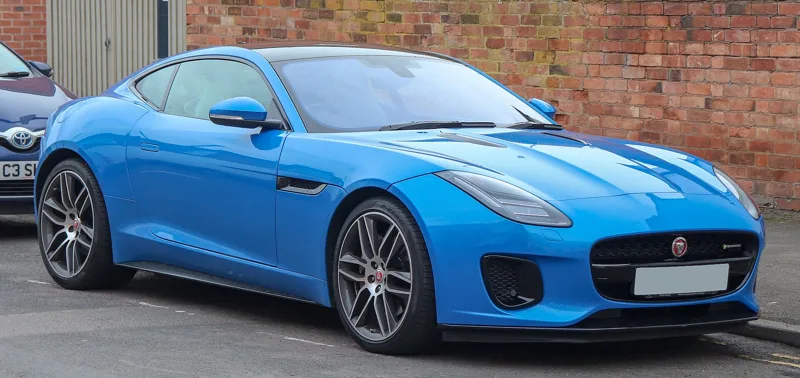
- A taxi trial in Oslo, run by Cabonline, Jaguar, Momentum Dynamics and Fortum Recharge, fitted 25 Jaguar I-Pace SUVs with pads rated at 50-75 kW.
- In 2017, Wartsila ran a year-long pilot that sent 1.6MW across a 50 cm (20 in) gap between shore and ship coils, charging an electric hybrid ferry that was in commercial service.
How efficient is wireless charging?
Less efficient than a cable, and the numbers show it. A test in 2018 found that, with the same power supplied, devices needed 15 percent longer to fill up. A 2020 amateur analysis of a Pixel 4 phone put the energy for a full wired charge at 14.26 Wh against 19.8 Wh on a wireless stand, an increase of 39%. With a generic pad and a misaligned phone, consumption reached 25.62 Wh, which was 80% higher. A phone is a long way from a car, but the pattern is the same one engineers face at higher power.
For roads, a working group set up by the French government to study electric roads judged inductive charging not yet mature as a way to charge on the move. The method, it noted, supplies the lowest power among the three electric road technologies, and truck-mounted receivers lose 20%-25% of what they are given. Research by BASt in Germany in 2025 estimated overall efficiency of 76%-81% for heavy goods transport.
Lost energy turns into heat. Waste heat is higher from inductive chargers than from wired ones, which may shorten battery life, and the concern grows at transport power levels. Trials in France in 2023 found the road itself could be damaged by heat in ordinary use, because the coils rose above 100 C (212 F).
Why do a few centimetres matter?
Charging efficiency is sensitive to misalignment sideways, lengthways and vertically. Drift beyond 3 cm (1.2 in) can cut the power transferred sharply, and trials in Norway in 2025 saw exactly that. That is a tight tolerance for a driver reversing onto a pad.
The standard builds in a safeguard: SAE J2954 sets out a method for switching the charger on only once enough alignment is detected. Some designs go further and move the coils. In one arrangement the receiver coils hang from a movable arm that lowers towards the transmitter coils, for example from the underside of a truck towards a coil on the ground.
Is it safe?
Every wireless power system has to keep people and animals clear of electromagnetic fields strong enough to injure. For cars, the sharper worry is what ends up between the pads. Metals or organisms between the ground pad and the receiver pose a fire or burn risk while the system is active. SAE International notes that wireless charging does not yet have well-established foreign object detection technology, and it proposes safety tests for it. The French working group added that health effects of inductive charging have yet to be documented.
Against that, induction has real benefits. Its connections are protected, with no exposed contacts to corrode. The circuits guard against faults such as short circuits caused by failed insulation, especially where connections are made and broken often. Without constant plugging and unplugging, the socket and the cable suffer far less wear.
The three ways to charge without a cable
| Type | What it means | Where it has appeared |
|---|---|---|
| Stationary | A car sits parked for a long spell | Home pads such as the Plugless L2, sold from 2014; the Oslo taxi trial; buses charging at route ends in Milton Keynes and Utah |
| Quasi-dynamic | A car crawls between stops, as a taxi does along a rank | Taxis idling and creeping forward along a rank |
| Dynamic | The vehicle is charged while driven on roads or highways | Standards work since the 2020s; road trials |
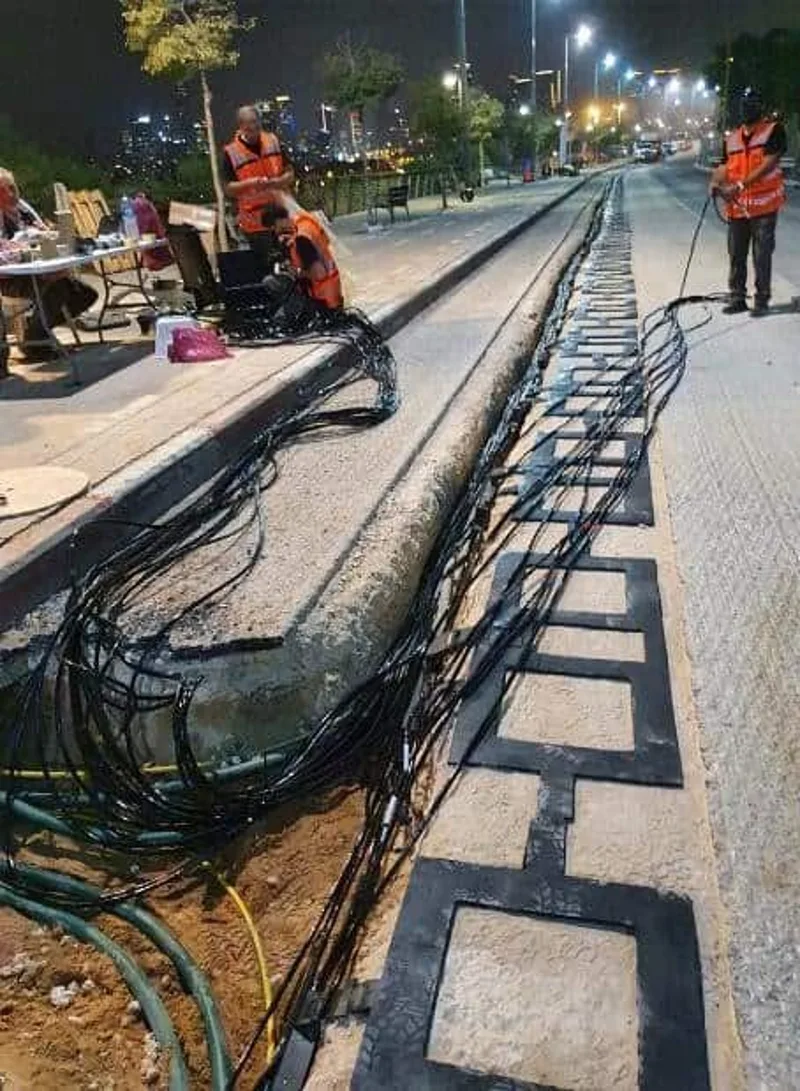
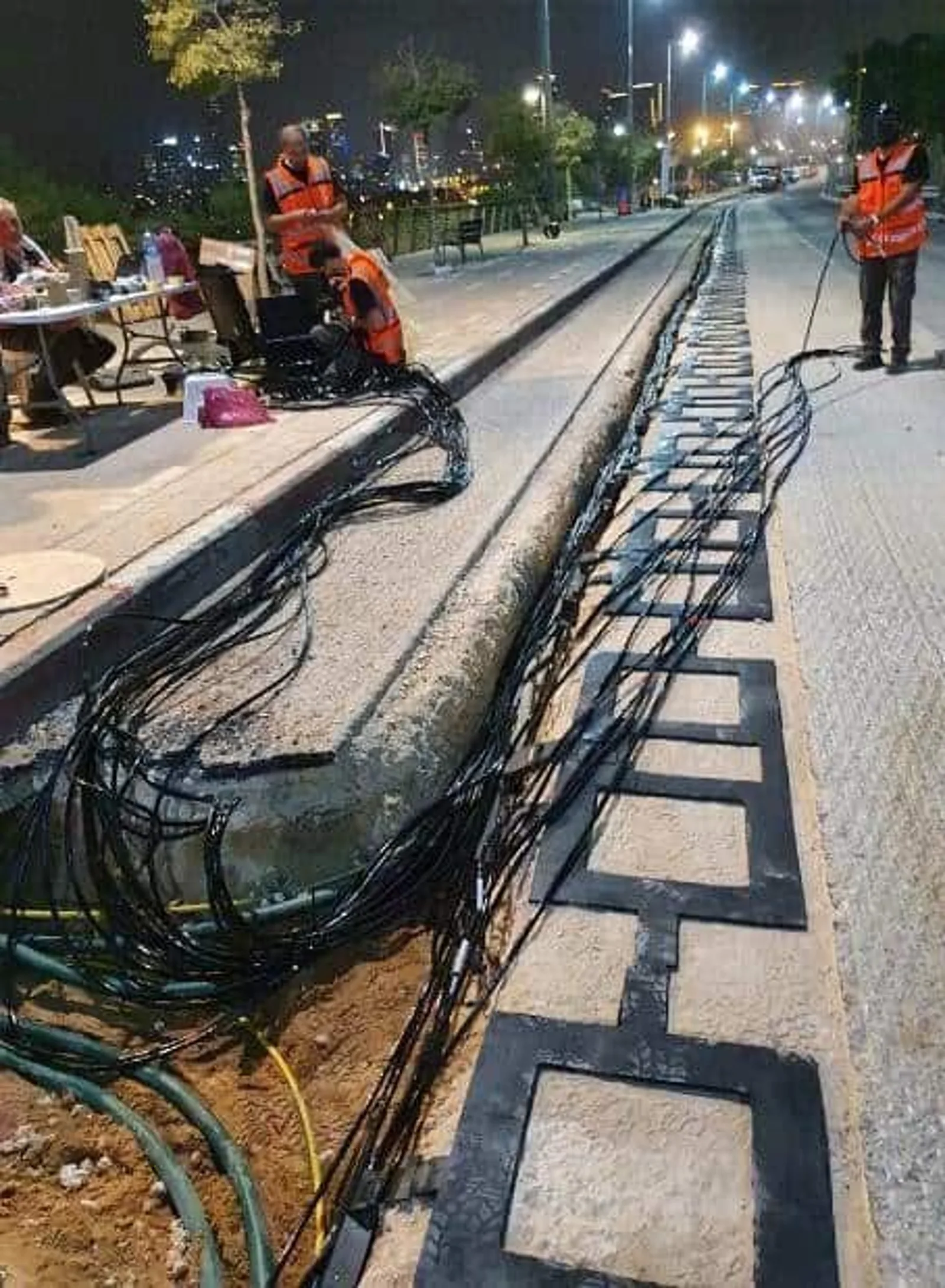
Automatic operation in roads could let vehicles run without charging stops, topping up through coils buried in the road surface. That is the promise of dynamic charging, also called dynamic wireless power transfer.
A long road from 1894
After Hutin and Le-Blanc came a 1972 proposal from Don Otto, a professor at the University of Auckland: transmitters set into the road, a receiver on the car. In 1978 Bolger, Kirsten and Ng built an electric vehicle running on induction at 180 Hz and 20 kW, and an inductive-charging bus ran in California in the 1980s. Similar work was under way in France, Germany and elsewhere in Europe.
General Motors used Magne Charge, an inductive system, on several electric vehicles around 1998. It was dropped when, in June 2001, the California Air Resources Board picked the SAE J1772-2001 conductive interface, which General Motors and Toyota also accepted.
The modern era runs through buses and fleets. Conductix-Wampfler started testing in Germany in 1997, and by 2002 the technology was in 20 buses in Turin. A Mercedes-Benz A-Class E-CELL carried it in 2008, and in 2011 the first system was sold to Google, for staff use at its Mountain View campus. That November, London's mayor Boris Johnson joined Qualcomm to announce a Shoreditch trial with 13 wireless charging points and 50 electric vehicles. Three buses in Utrecht followed in November 2012, and eight electric buses in Milton Keynes in January 2015 used charging in the road at either end of the journey. Evatran began selling the Plugless L2 to the public in 2014.
The resonance trick at the heart of it all goes back to Nikola Tesla, who after 1890 experimented with resonant inductive coupling. He never made a commercial product, but the method is now widely used in short-range wireless power.
Where do the standards stand?
In May 2010 the Consumer Electronics Association launched a group to set a baseline for interoperability, and General Motors, Toyota and Ford showed interest. Daimler's Professor Herbert Kohler, who headed future mobility there, was cautious. In 2011 he said inductive charging for electric cars was at least 15 years away and that its safety aspects still needed closer study.
SAE J2954 then arrived in 2020. Development of standards for higher-power charging and for charging while driving began in the early 2020s. SAE International started work on dynamic wireless power transfer standards in 2023, and an Electreon representative said in a December 2023 podcast that SAE, Electreon and others were working on one together. Universities and companies including Utah State, Purdue, Auckland, Vedecom, ENRX and Magment are active in the field.
Not everyone agrees on the method. IPT, now part of ENRX, builds its PRIMOVE system with inductive cables rather than coils, and regards existing coil-based standards as extremely expensive for dynamic charging.
What this means for the driver
Today, the realistic picture is a parked car on a pad at home or at a fleet depot, charging at rates up to 11 kW under the SAE standard. It saves handling a cable and the wear on a socket, and it can be automatic. The price is some extra energy lost, more heat and the need to park accurately. For taxis and buses the logic is stronger, because they stop in predictable places and can top up at every stop.
Where this goes next
In 2026, coordination began on a standard for wireless charging that lets a car feed power back to the grid. SAE Group Europe, Denso Germany and Toyota Motor Europe are involved, along with ABB, Fraunhofer, the University of Leeds and others. Work on dynamic charging standards continues, and Electreon has worked with the Michigan Department of Transportation and WiPowerOne, which grew out of the KAIST OLEV project, on a study of whether dynamic wireless inductive charging is commercially viable.