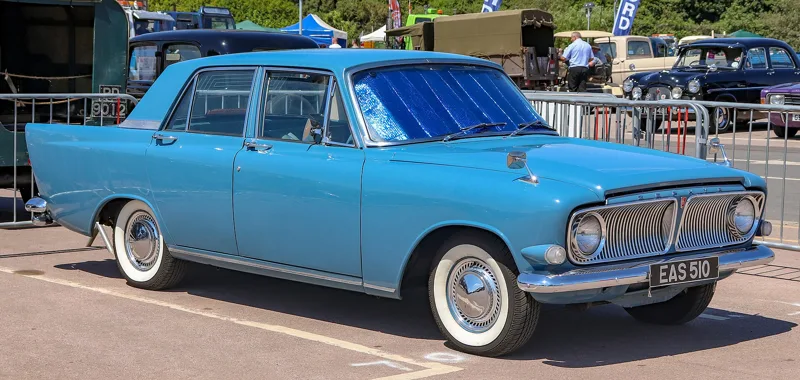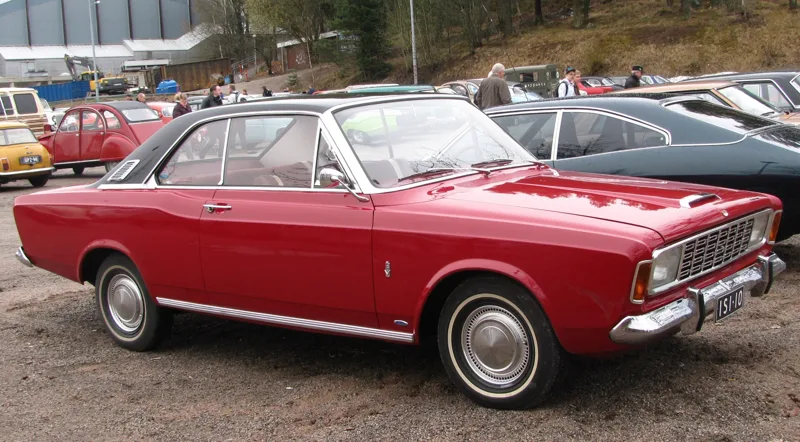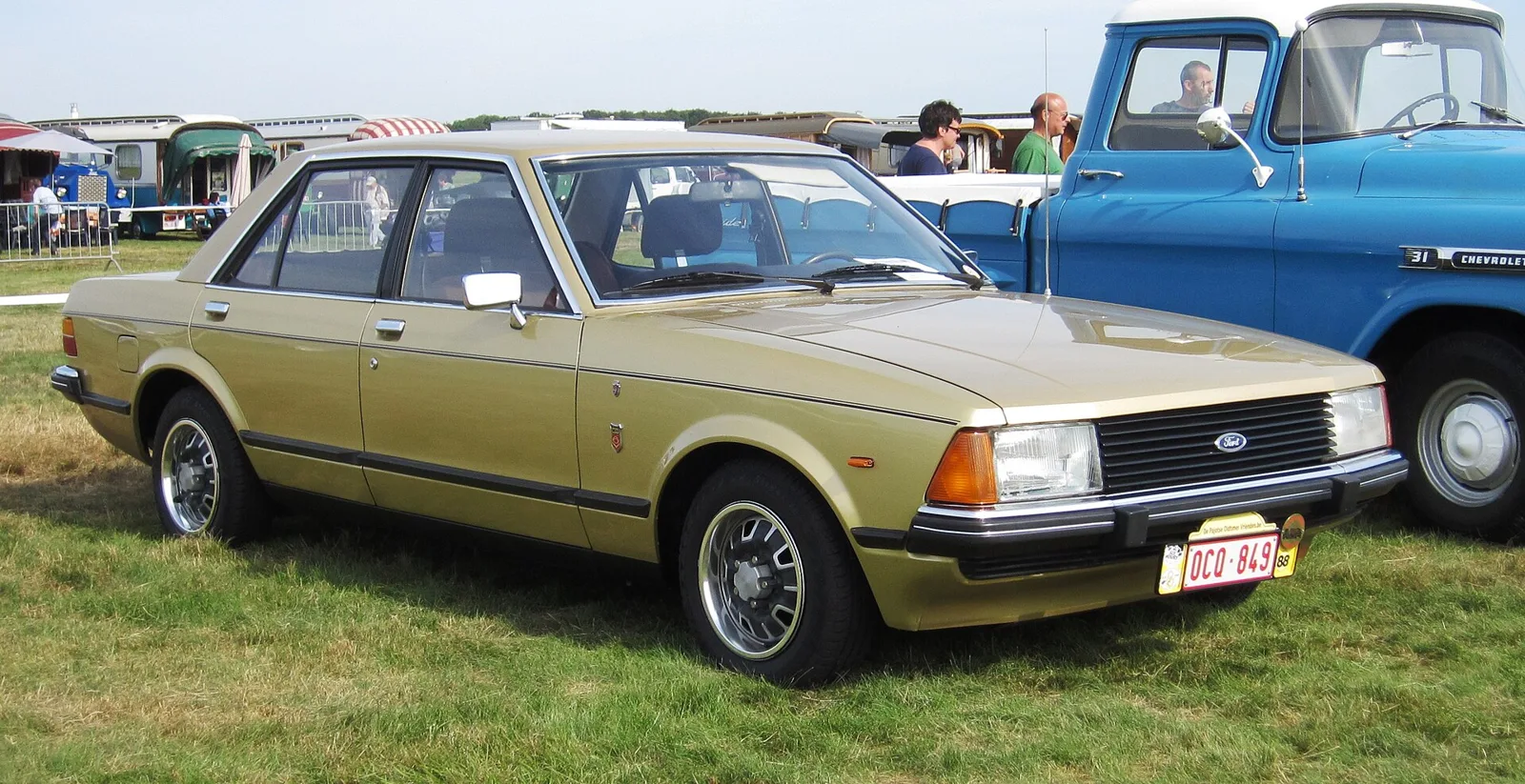
From the 1972 Mark I to the 1985 Mark III, the Granada gave Ford Europe its executive car and Britain its best-selling car in the class.
The European Ford Granada was built by Ford Europe from 1972 to 1994 in three generations. The Mark I and Mark II were built in Germany and the UK, and the Mark III was a rebadged Ford Scorpio sold in Britain.
The European Ford Granada was an executive car built by Ford Europe from 1972 until 1994. It came in three generations, and the first two were built in Germany, with early Mark I cars also assembled at Dagenham in the UK. Throughout its production run it stayed the best-selling car in its sector in Britain.
The name had an unusual history. Lower models in the first range were first sold as the Ford Consul, but a legal challenge from the Granada Group, a major British conglomerate, failed on appeal. From 1975 every car in the line carried the Granada name.
Where did the Granada come from?
The Granada launched in March 1972 as Ford's executive car, succeeding the British Ford Zephyr and the German P7-series. It completed the merging of Ford's British and German model ranges, and a Mark II followed in 1977 and a Mark III in 1985.
The Mark I was offered as a four-door saloon, a five-door estate called the Turnier and a two-door fastback coupe. Production started at Cologne and Dagenham, but from 1976 the whole run was built in Germany, which ended the car's British assembly.
The coupe was the most distinctive body. Its early 1972 and 1973 cars had coke-bottle styling, and the 1974 revision gave it straighter lines. Ford kept the coupe apart from the saloon in its styling, so the two looked like different cars from the same family.
Three generations of executive car, from Cologne and Dagenham to the Scorpio badge.
What was under the skin of the Mark I?
The Mark I carried a coil-spring independent rear suspension inherited from the Zephyr and Zodiac, with double wishbones at the front borrowed from the smaller TC Cortina and Taunus. It kept drum brakes at the rear, which set it apart from its predecessors that had rear discs.
Double wishbones replaced the MacPherson struts used on the Zephyr at the front. Ford had introduced that layout 18 months earlier on the TC Cortina and Taunus, so the Granada used front hardware that the company had already tested in production.
Tyres changed over the run as well. Some early 2.5-litre cars were fitted with crossply tyres, but most fitted 175R14 or 185R14 radials on smaller rims, and the top Mark I wore 195/70R14 Pirelli Cinturato CN36 tyres.
Which engines powered the Granada?
British Mark I cars started with a 2.0-litre Essex V4, with 2.5 and 3.0-litre Essex V6 units above it. German cars offered a 1.7-litre Taunus V4, the 3.0-litre Essex V6 and the Cologne V6 in 2.0, 2.3 and 2.6-litre sizes. The in-line Pinto four replaced the V4 in 1974.
The Cologne V6 became the mainstay of the range. In the 1976 and 1977 models, a fuel-injected version produced 150 PS (110 kW) in continental Europe, and the Mark II later used the Cologne in 2.0, 2.3 and 2.8-litre forms. Fuel injection was reserved for the top-priced 2.8-litre versions.
Diesel was a smaller part of the story. Ford fitted Indenor four-cylinder diesels in 1.9, 2.1 and 2.5-litre sizes, and it bought 1.9 and 2.1-litre XD units from Peugeot because its own commercial diesel lines had no spare capacity. The 2.1 was presented as the Granada GLD at Geneva in March 1979.
The 2.8-litre fuel-injected cars were first rated at 160bhp. The Granada 2.8 Injection that followed in most of Europe was rated at 150 bhp (112 kW), and it wore white alloy wheels with Michelin TRX tyres, along with uprated suspension and Recaro seats.
How did the Mark II change the Granada?
The Mark II, released in August 1977, was a reskin of the Mark I with new square, straight-lined panels. Inside Ford it was known as Granada 78, and it kept much of the older engineering while bringing the car into line with the company's newer design language.
Styling was led by Uwe Bahnsen. He and Joe Oros from the US Ford design team admired the Fiat 130 Coupe, a Pininfarina design by Paolo Martin. Bahnsen then asked Patrick Le Quement to produce a car that matched that elegance, and the result shared design cues with the Cortina and Taunus Mk IV and the Mk I Fiesta.
Much of the Mark I body survived. The inner door pressings carried over, and the estate grafted the Mark II nose onto the older body, retaining the same panels behind the A-pillars. Air conditioning and fuel injection on the top 2.8-litre models were the main new features under the skin.
What changed at the 1981 facelift?
The September 1981 facelift brought larger wrap-around bumpers, a three-bar body-coloured grille, a revised dashboard and restyled taillights. The two-door saloon was dropped, and variable-rate rear springs became standard across the range. Heater controls moved to a vertical layout beside the instrument cluster, making room for an optional trip computer.
Under the skin, the gearbox, clutch and brakes were revised, and the semi-trailing arm rear suspension geometry was altered. Redesigned seats improved comfort for the driver and front passenger, and higher models gained an electronic check-light system housed in an overhead console above the mirror.
Continental cars swapped the 1.7-litre V4 for a 1.6-litre Pinto, a more modern engine that was still under strain in a car of this size. The British line-up kept the 2-litre four as its entry engine, and the trip computer became an option in the dashboard layout.
What special models were sold?
Special Granadas included the limited Sapphire, finished in two-tone blue over silver, the Ghia X Executive sold only in Britain, and the black Taxi edition with a foot-operated panic button. A silver 2.8i S was also used as the car in the TV series The Sweeney.
The Ghia X Executive standardised a high-grade Connolly leather interior, along with an electric slide and tilt sunroof, electric seat adjustment, heated seats and air conditioning. These features put it above most similarly priced executive cars sold in the UK in the early 1980s.
A two-door saloon joined the range in May 1973 and cut the entry German price by 415 Marks. It was never sold in the UK, and the Mark II dropped it at the 1981 facelift. The revised coupe from 1974 was sold in Britain only in 3.0 Ghia trim.
Coleman Milne and Woodall Nicholson turned the car into limousines and hearses. The Minster was stretched 15 cm, the Dorchester ran 68 cm longer, and from autumn 1982 an estate version of the Dorchester called the Windsor was available. Only 12 examples of the four-door coupe limousine were built.
How well did the Granada sell in Britain?
Sales in Britain were strong, and in 1979 the car ranked seventh among all models, with more than 50,000 sold that year. Within its class it led the market for the whole production run, despite competition from the Leyland Princess, Rover SD1 and Vauxhall Carlton.
Taxi, fleet and police operators made the Granada a familiar sight on British roads. Many of the early diesel models went to taxi operators as well, and few of those cars survive today.
Import rules also shaped the car's story. In Spain, where Ford was restricted by import rules, the Granada and Taunus gained authorisation in 1979. Rivals accused Ford of selling below cost to lower tariffs, so the authorisation was briefly suspended before returning on condition that Ford raise the sales price by fifteen percent.
How was the Granada built outside Europe?
Hyundai assembled the Granada in South Korea from October 1978 to 1986. Production from stockpiled kits continued until December 1985, and 4,743 cars were built. The Korean version began with a 2.0-litre V6 and a two-barrel Solex carburettor, with a four-speed manual gearbox.
After the 1980 oil crisis slowed sales, the more economical 2-litre four-cylinder was also offered in Korea. Taxes were very high on imported cars with long wheelbases, so the Granada landed in an even higher tax bracket, and it competed with the Saehan Rekord and the Peugeot 604.
South Africa took a different route. Basil Green Motors built a Granada Perana V8 for sale through Ford dealers, fitted with the 302 cu in Windsor V8 that produced 255 PS (188 kW; 252 hp) and 405 Nm (299 lb ft) at 2600 rpm. Most South African Granadas used the 3.0-litre six instead.
What did the Mark III bring?
The Mark III arrived in April 1985 as a rebadged Ford Scorpio on a stretched Sierra floorpan and suspension. It was the first European volume model with antilock brakes fitted as standard across the range, and it was voted European Car of the Year in 1986.
The Granada badge covered the UK and Ireland only. Elsewhere the car was sold as the Scorpio, and in North America it was the Merkur Scorpio. On the Mark III, the Scorpio badge served as the trim designation for the top models of the range.
Engines included the familiar SOHC Pinto in 1.8-litre form, along with a fuel-injected 2-litre version. The Cologne V6 was carried over in short-lived 2.4-litre and 2.8-litre capacities, later raised to 2.9 litres, and these were not much more powerful than the 2-litre Pinto.
In 1991 Ford added the range-topping Scorpio 24-valve, with a 2.9-litre Cologne V6 reworked by Cosworth Engineering. It used quad camshafts and 24 valves to deliver 200 bhp (150 kW), and Ford said it reached 0-60 mph in 8.1 seconds.
The Mark III was the last car to carry the Granada badge in the UK and Ireland. The pan-European Scorpio replaced it in 1994, sharing its platform doors and roof. Total European sales of the Scorpio reached 95,587 units.
What are the Ford Granada Europe specifications?
The table lists the main figures across the three generations. Mark I and Mark II engines, the 2.8 Injection output, the Mark III Scorpio 24-valve and the total sales figure each appear on their own line, so every version can be compared without blending into another.
| Specification | Detail |
|---|---|
| Production years | 1972 to 1994 |
| Mark I build sites | Cologne, Germany and Dagenham, UK |
| Mark I top tyres | 195/70R14 Pirelli Cinturato CN36 |
| Mark II production | August 1977 to April 1985 |
| Mark II 2.8 Injection | 150 bhp (112 kW) |
| Mark III | April 1985 onward; UK and Ireland badge only |
| Scorpio 24-valve engine | 2.9 L Cologne V6, 200 bhp (150 kW) |
| Scorpio 24-valve sprint | 0-60 mph in 8.1 seconds |
| Scorpio 24-valve top speed | 140 mph (230 km/h) |
| Scorpio European sales | 95,587 units |
Frequently asked questions
Why was the Granada first called the Consul?
Lower models in the first range carried the Ford Consul name at launch. A trademark challenge by the Granada Group failed on appeal, so Ford kept the Granada name and, from 1975, every car in the line used it.
How quick was the Scorpio 24-valve?
The 24-valve Scorpio reached 0-60 mph in 8.1 seconds, according to Ford, and it had a top speed of 140 mph (230 km/h). Its 2.9-litre V6, reworked by Cosworth, produced 200 bhp (150 kW).
Did the Granada win any awards?
The Mark III took the European Car of the Year title in 1986. Antilock brakes were standard across the range, a first for a volume car from Europe, which helped set it apart in its class.
Was the Granada sold in South Korea?
Yes. Hyundai built the car from October 1978 to 1986, continuing with stockpiled kits until December 1985, and 4,743 Granadas were assembled in total.