A 25-point ballot, a moose test in Denmark, a jury of 102 and a US list with no instruments: how the big car of the year awards decide.
European Car of the Year (1964) uses a 60-journalist jury with 25 points each, the World Car Awards a jury of 102, International Engine of the Year ran from 1999 to 2019, and Ward's 10 Best Engines lists ten engines on sale in the US. Each defines best differently.
In 2019 the Jaguar I-Pace and the Alpine A110 finished European Car of the Year level on 250 points, something that had never happened in the award's history. The tie was settled by counting first-place votes, and the Jaguar won them 18 to 16. It was also the first time Jaguar had taken the award, and the first time a British marque had won since the Rover 3500 in 1977.
That kind of detail is why the main car of the year awards are worth reading closely. European Car of the Year, the World Car Awards, International Engine of the Year and Ward's 10 Best Engines all promise to name the best, but each defines best in its own way, with its own jury, its own rules and its own region.
How European Car of the Year works
The European Car of the Year was set up in 1964 by a group of magazines from different European countries. Today's organisers are Auto in Italy, Autocar in the United Kingdom, Autopista in Spain, Autovisie in the Netherlands, L'Automobile Magazine in France, Stern in Germany and Vi Bilagare in Sweden. The voting jury consists of motoring journalists, and from 2024 it has 60 members from 23 countries. France, Germany, Italy, Spain and Great Britain have six each, Austria, the Netherlands, Sweden and Switzerland three each, Belgium, Hungary, Poland and Portugal two each, and the remaining ten countries one apiece. Representation follows the size of a country's car market and car manufacturing industry. Romania regained a juror in August 2024, after almost 20 years, in Florin Micu.
There are no classes. The stated aim is a single, decisive winner from among every competing car. To qualify, a car must be a new model released in the previous twelve months, on sale in at least five European countries, with expected sales of 5,000 a year. It does not have to be European. Jurors mark cars on design, comfort and safety, then economy, handling, performance and functionality, before environmental requirements, driver satisfaction and price. Technical innovation and value for money also count for a lot.
The voting itself is more mechanical than most readers expect. A simple vote produces a shortlist of seven cars. In the final round each juror has 25 points to share out. At least five cars must receive points, no car may get more than ten, and no two cars can share top marks. Voting is open, and every juror publishes the reasoning behind their distribution.
The Jaguar I-Pace and Alpine A110 tied on 250 points in 2019, and 18 first-place votes to 16 settled it.
The Tannistest in Denmark
Every year since 1977 the jury has met in late September at the Hotel Tannishus in Tversted, Denmark, and driven most of the eligible cars. The event is known as the Tannistest. Besides public roads, the jurors can run a moose test at Sindal Airport.
Who has won the European Car of the Year award
British makers took the first two titles: the Rover 2000 in 1964 and the Austin 1800 in 1965. The Renault 16 gave France its first win for 1966, and in 1968 the NSU Ro 80, one of the first production cars with a rotary engine, beat Fiat's 125. Peugeot's first victory came with the 504 in 1969. Sports cars seldom feature, yet the Porsche 928 took the 1978 award.
The brand totals show where the voting has leaned: Fiat has nine wins, Renault eight, Peugeot six, Ford and Opel/Vauxhall five each, Volkswagen four, and Citroen and Toyota three each. Fiat became the first maker to win five times in 1989 with the Tipo. A non-European brand first won in 1993, when the British-built Nissan Micra took the prize, and a Japanese-built car first won in 2000 with the Toyota Yaris. The Toyota Prius hybrid won in 2005.
Only five cars have won more than once: the Renault Clio (1991 and 2006), the Volkswagen Golf (1992 and 2013), the Opel/Vauxhall Astra (1985 and 2016), the Toyota Yaris (2000 and 2021) and the Renault Scenic (1997 and 2024). The Scenic's second win was as the battery electric Scenic E-Tech, a crossover, where the 1997 winner was a combustion-engined MPV.
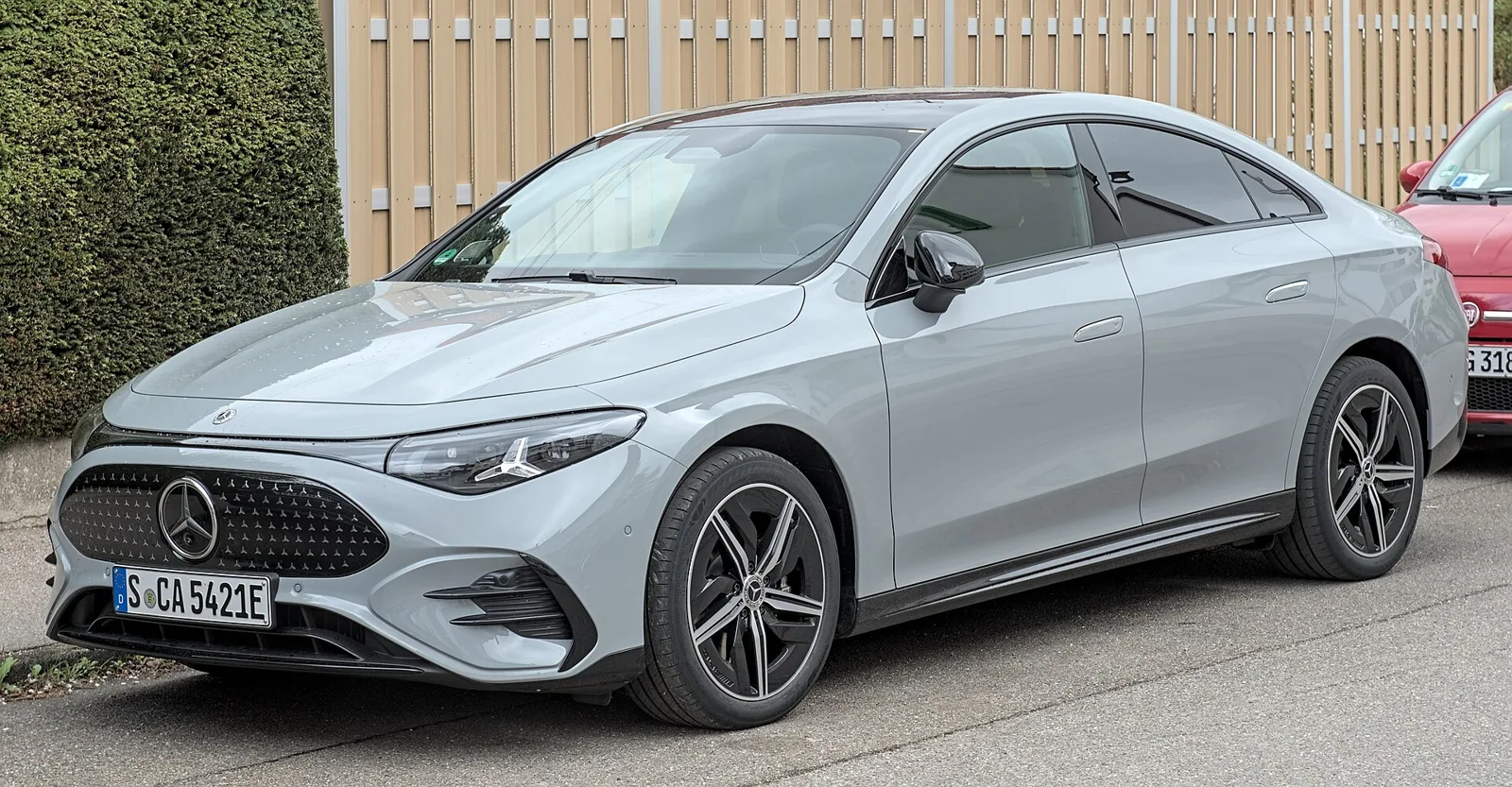
Electric cars arrived in 2011, when the Nissan Leaf became the first electrically powered winner, followed a year later by the Opel/Vauxhall Ampera, sold as the Chevrolet Volt in the United States. The Peugeot 3008 was the first SUV to win, in 2017. The Volvo XC40 made Volvo the first Swedish winner in 2018. The Kia EV6 gave a Korean maker its first win in 2022, and the Jeep Avenger gave Jeep its first in 2023. The Renault 5 E-Tech won in 2025, and the Mercedes-Benz CLA took the 2026 award, announced on 9 January 2026.
The size of a win varies enormously. The Peugeot 405 beat the field by 212 points in 1988, the biggest gap in the contest's history, and the Volkswagen Golf VII repeated the feat in 2013. In 2010 the Volkswagen Polo won by only 10 points. It was the top choice of 25 jurors, although only 3 of the 60 gave it maximum points.
The venue has changed too. The Peugeot 208 won in 2020 at a Geneva Motor Show that was cancelled because of the pandemic and a Swiss limit on gatherings of more than 1,000 people. The 2021 announcement was not made in Geneva for the first time in ten years, and the same happened in the next two years. The 2024 award was the last at Geneva before the show was cancelled indefinitely, and the 2025 result was announced at the Brussels Motor Show.
Close finishes and surprise winners
The history of the award is full of narrow calls. In 1967 the Fiat 124 won more than twice as many votes as its nearest rival, the BMW 1600, but a year later Fiat's 125 lost out to the NSU Ro 80. In 1975 the Citroen CX won while its maker was being taken over by Peugeot, and it beat a strongly praised Volkswagen Golf. The 1981 Ford Escort III, the first of its line with front-wheel drive or a hatchback, saw off British Leyland's Austin Metro and the Fiat Panda. The Renault 9 won in 1982 ahead of the better-regarded Opel Ascona C and Volkswagen Polo II.
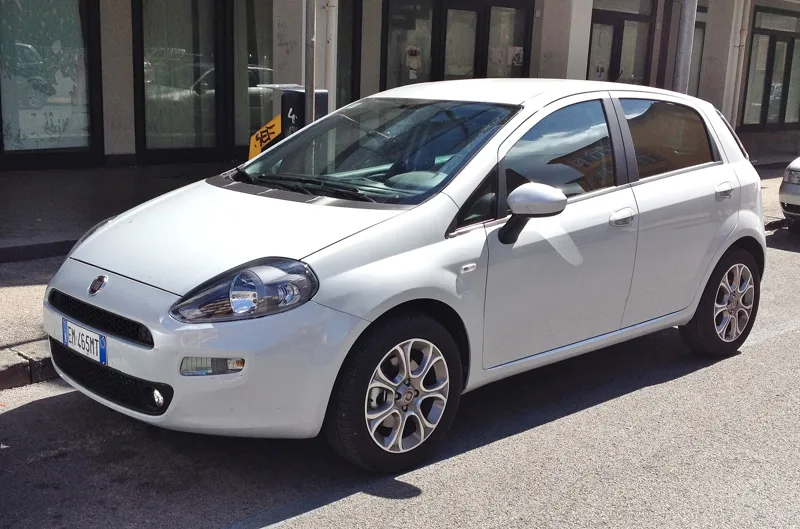
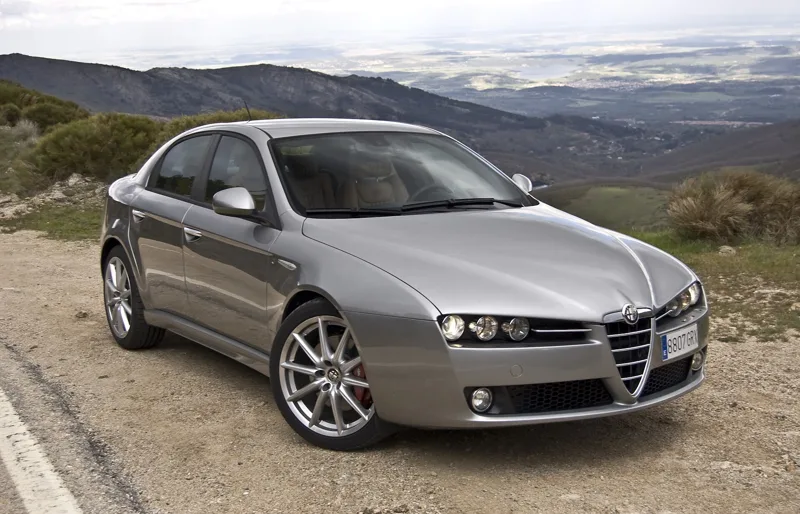
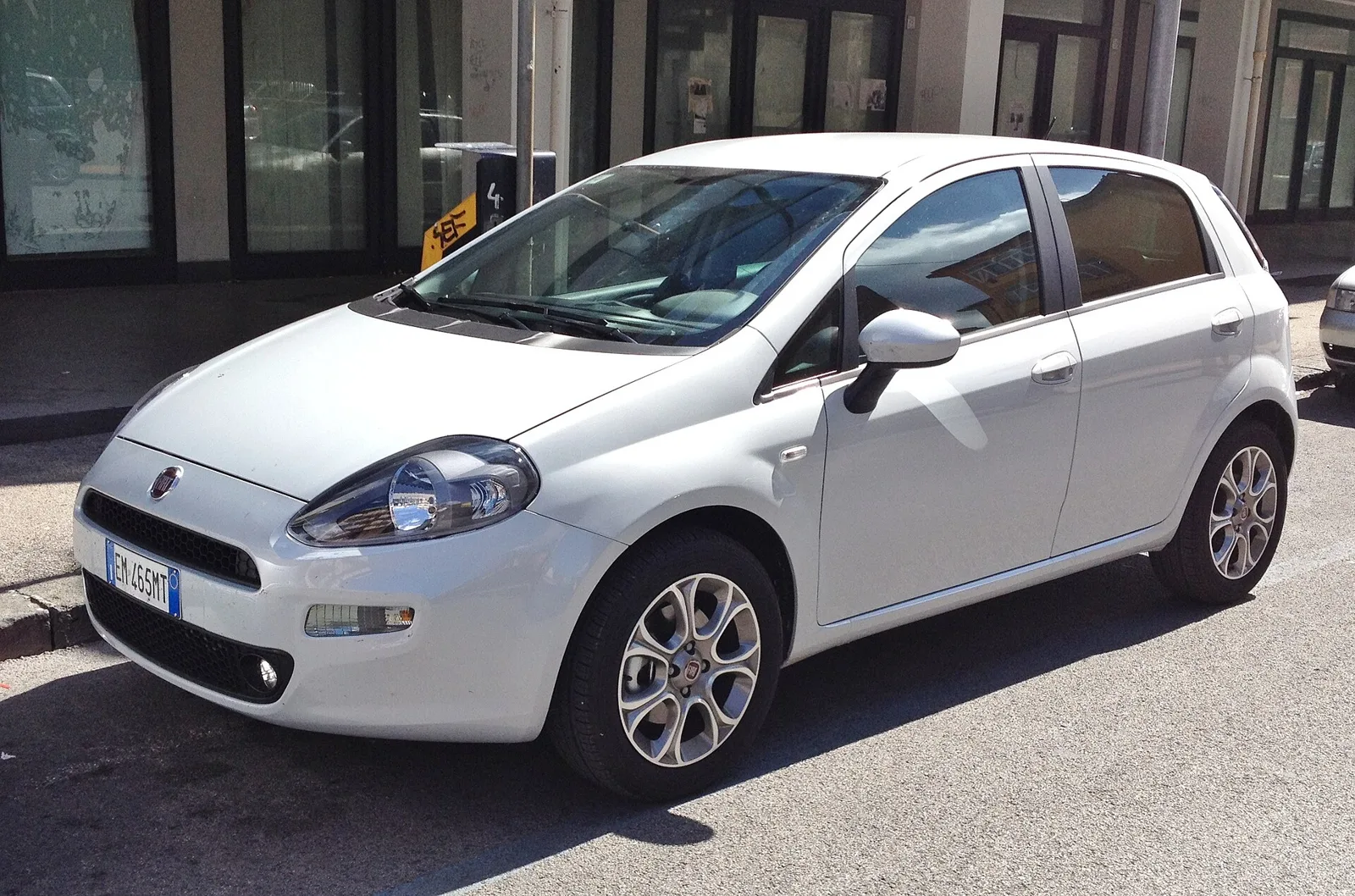
Supermini fans got their moments too. The 1984 Fiat Uno finished slightly ahead of the Peugeot 205, and the Nissan Micra topped the Fiat Cinquecento and Renault Safrane in 1993. In 1996 the Fiat Bravo and Brava pipped the stylish Peugeot 406. The Fiat 500 won in 2008 as a retro-styled take on a small car first launched 50 years earlier. Ford's winners include the Escort III, the Mondeo in 1994 and the Focus in 1999, and the Alfa Romeo 156 and 147 won in 1998 and 2001.
The World Car Awards and their jury of 102
The World Car Awards, also called World Car of the Year, use a jury of 102 journalists from 30 countries. A car has to be sold in at least two major markets on two separate continents before 30 March of the award year. Inaugurated in 2003 and officially launched in January 2004, the contest is run by a not-for-profit association under a Steering Committee.
It began as a single award, as many continental and national prizes do. Since 2006 there have also been awards for performance, green cars and design, and in April 2013 a luxury design award was added. Entrants in the performance, urban, electric and design categories can also contend for the overall title, depending on their type and price.
The shortlist drama is part of the appeal. In 2005, ten finalists were cut to three, the Audi A6, Porsche 911 and Volvo S40/V50, and the winner emerged at the Toronto show. After that the announcements moved to the New York International Auto Show. The 2006 trio was the BMW 3 Series, Mazda MX-5 and Porsche Cayman. In 2011 it was the Nissan Leaf, Audi A8 and BMW 5 Series, in 2013 four cars made the cut, the Subaru BRZ/Toyota GT-86 and Porsche Boxster alongside the Mercedes-Benz A-Class and Volkswagen Golf, and in 2019 the Volvo S60/V60, Jaguar I-Pace and Audi e-tron went through. For 2026 the finalists named were the BMW iX3, Hyundai Palisade and Nissan Leaf.
International Engine of the Year
The International Engine of the Year judged both combustion engines and electric motors, using a panel of automotive journalists from around the world. UKi Media and Events' Automotive Magazines organised it. It began in 1999 and the last competition was held in 2019. The 2020 edition was delayed by COVID-19 and never scheduled.
Panellists relied on subjective driving impressions and technical knowledge, taking into account fuel economy, noise, smoothness, performance and driveability.
Ward's 10 Best Engines
Ward's 10 Best Engines is an annual list of ten engines available in the US market, chosen by the magazine Wards AutoWorld. It started in 1994 for model year 1995 and has appeared every year since, published at the end of the preceding year. An engine must be in a regular-production vehicle on sale in the US by the first quarter of the year.
Until the 2020 competition there was also a price ceiling on the vehicle carrying the engine. It rose gradually from US$50,000 for the 1995 list to US$65,000 for the 2020 list, and it was dropped after the 2020 winners were announced. Over a two-month testing period the magazine's editors judge each engine in everyday driving, with no instrumented testing. The assessment weighs power and torque, noise, vibration and harshness, technical relevance and basic comparative numbers, and every engine competes against all the others. For the 2020 competition the list was renamed Ward's 10 Best Engines and Propulsion Systems.
Car of the year awards side by side
| Award | Started | Who decides | Scope | Status |
|---|---|---|---|---|
| European Car of the Year | 1964 | 60 journalists from 23 countries (from 2024) | New cars on sale in at least five European countries | 2026 winner: Mercedes-Benz CLA |
| World Car Awards | 2003 (launched January 2004) | 102 journalists from 30 countries | Cars sold in two major markets on two continents | 2026 finalists named |
| International Engine of the Year | 1999 | Panel of journalists | Combustion engines and electric motors | Last held in 2019 |
| Ward's 10 Best Engines | 1994 (model year 1995) | Wards AutoWorld editors | Ten engines on sale in the US | Price cap removed after 2020 |
What has changed for each award lately?
For Ward's 10 Best Engines, the price limit that applied from the 1995 list to the 2020 list has been eliminated for future competitions, and the list now carries the Propulsion Systems name. European Car of the Year announced its 2026 winner, the Mercedes-Benz CLA, on 9 January 2026, after Geneva stopped hosting the reveal and Brussels took over for 2025. International Engine of the Year has had no competition since 2019, and its 2020 edition was never scheduled.