From radiator caps that doubled as temperature gauges to a secret love affair in bronze, and the pedestrian rules that took the mascot off most cars.
Hood ornaments grew out of radiator caps that sat outside the bonnet and became a way for makers and owners to show off. Pedestrian-safety rules, from the US in 1968 and Europe in 1974, removed fixed ones. Rolls-Royce kept its Spirit of Ecstasy by mounting it on a spring that retracts on impact.
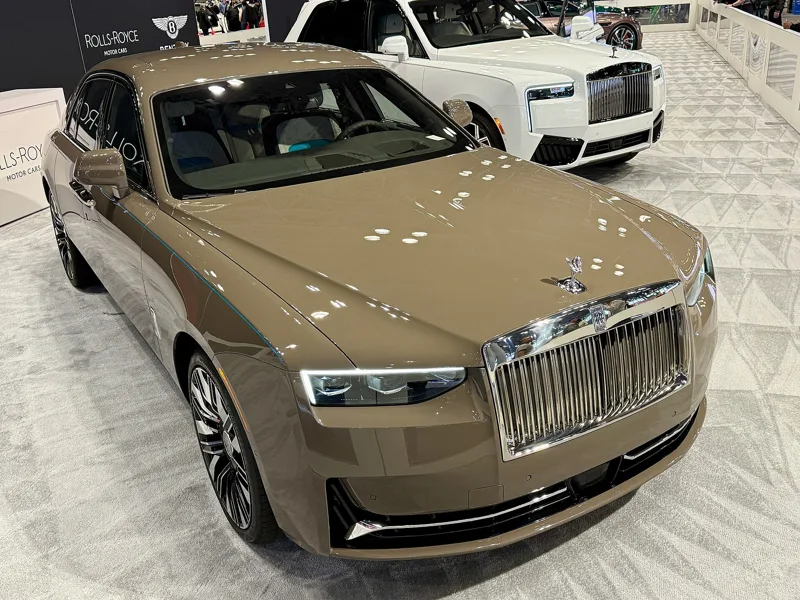
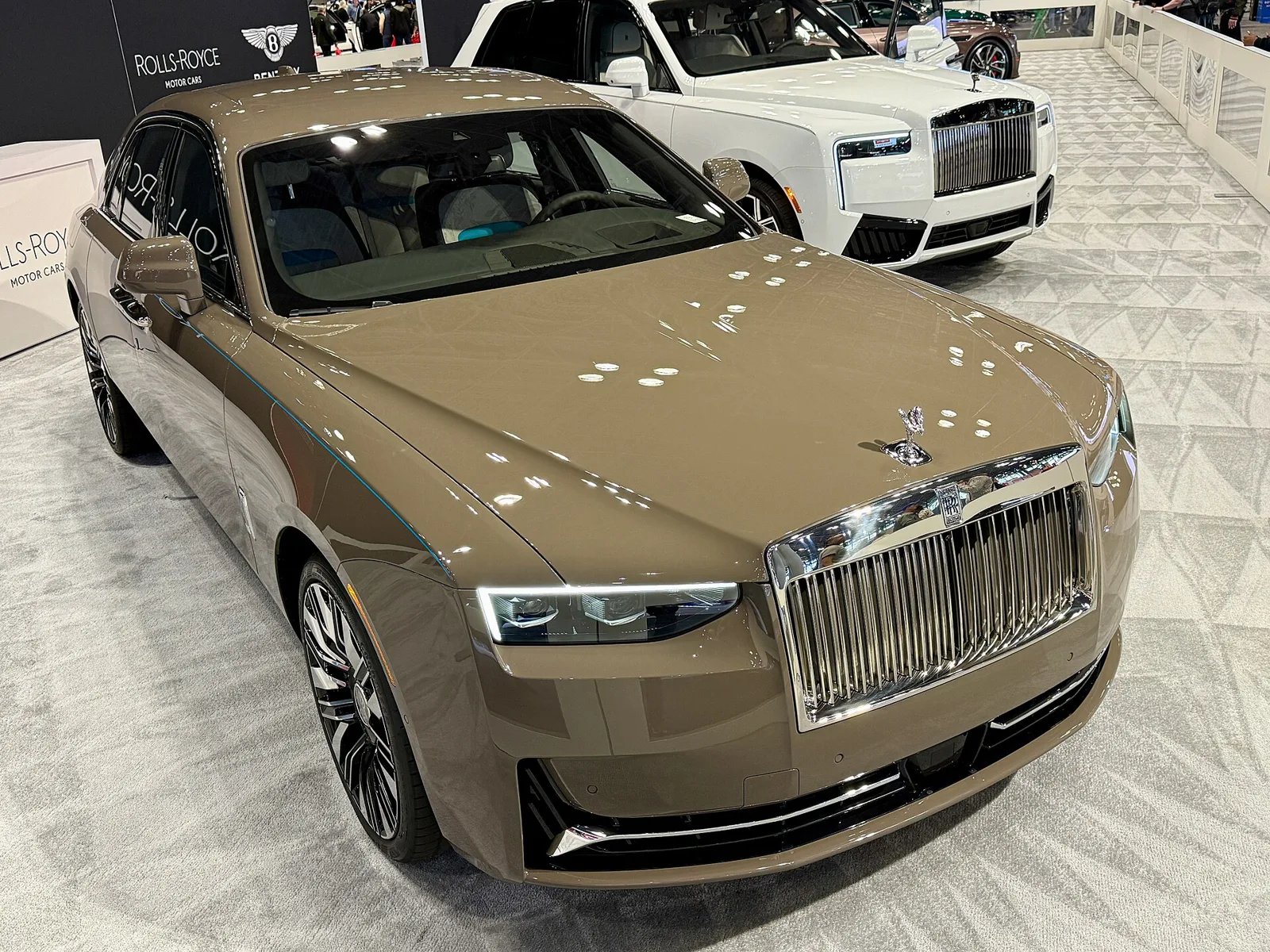
The mascot on a modern Rolls-Royce is built to vanish. Its Spirit of Ecstasy rides on a spring that retracts into the radiator shell the instant something hits her, and she sinks out of sight when the car is switched off.
Where did the hood ornament come from?
A hood ornament, or bonnet mascot, is a crafted model that stands for a car company, much like a badge, at the front centre of the bonnet. One author of a book on cars for young readers traces the idea to the sun-crested falcon on the chariot of the pharaoh Tutankhamun, meant to bring good luck. Cars took up the habit almost from the start.
The practical origin was less romantic. On early cars the radiator cap sat outside the bonnet, on top of the grille, and it doubled as a guide to engine coolant temperature. In 1912 the Boyce MotoMeter Company received a patent for a cap with a thermometer the driver could read, fed by a sensor that tracked the temperature of the vapour above the water instead of the water itself. That mattered because many early engines had no water pump and used thermo-syphon circulation, the system found in the Ford Model T.
An exposed cap in the middle of the car's face was an invitation. It became a focal point for personalisation, and makers and owners soon filled it with animals, mythological figures and company logos.
The radiator cap began as a gauge, became a sculpture, and ended up as a safety problem.
Why did every maker want one?
Ornaments were popular through the 1920s, 1930s, 1940s and 1950s, and they helped to tell one car from another. Boyce supplied corporate logos and mascots to car, truck, tractor, boat, aeroplane and motorcycle makers, plus clubs and other organisations that wanted custom caps for their members. At one point in the mid-1920s it had over 300 such customers, and in 1927 it employed 1,800 people in six countries. With hundreds of motor vehicle makers before 1929, demand for custom emblems was large.
A whole accessory trade grew up for owners who wanted to add a mascot as an expression of their love of the car or of their individuality. Sculptors such as Bazin, Paillet, Sykes, Renevey and Lejeune made detailed miniatures. Most of the suppliers disappeared, and Louis Lejeune Ltd. of England alone survived. In France, Rene Lalique made the best-known glass mascots, and the Lalique company is another rare survivor of that motoring era.
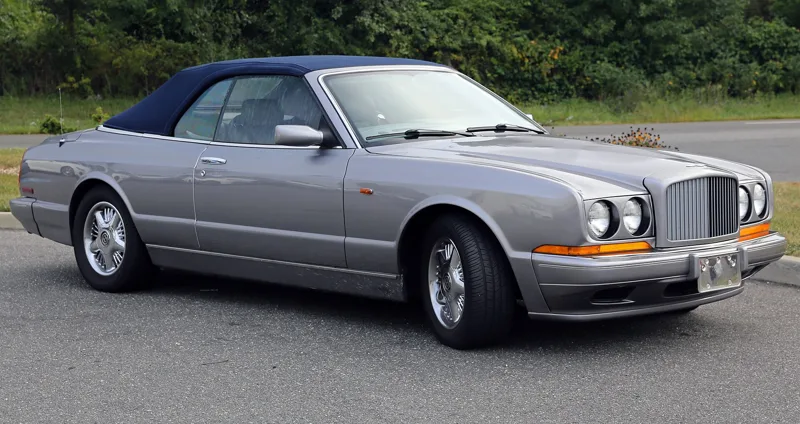
Advertisers pushed the idea hard. During the 1920s, Mercedes-Benz advertisements presented the star on its radiator as the emblem of the oldest car works on earth and as luxury's ultimate sign. Examples elsewhere included the archer on Pierce-Arrow cars, the winged letter B on Bentleys, the leaping jaguar, the Peugeot lion, the stork on Hispano-Suiza and the rocket on Oldsmobile.
Art, vanity and a flying lady
Richard Teague, styling vice president at American Motors, called hood ornaments objets d'art. After the Second World War, Nash commissioned artist George Petty to design ornaments with female figures, and Petty's daughter posed for the Flying Lady that decorated the 1950 Airflyte models of the Ambassador and Statesman, a marketing coup for the firm. Nash fitted four versions over ten years before it moved to ornaments that were not in human form.
Materials ran from cast brass, zinc or bronze with chrome plating to silver or nickel when chrome was unavailable, and also to plastic, bakelite and coloured glass. The 1950 Ford Custom DeLuxe had one moulded in Plexiglas. Some held a bulb, and Pontiac lit its Indian head until 1955, when a flying V replaced it. Children even took the golden lion crests from the bonnets of 1950 Fords to decorate hats, belts or bicycles, so Ford offered a free miniature crest to every child who wrote to ask for one.
What turned the ornament into a hazard?
Projecting decorative designs on the bonnet increase the risk of injury to pedestrians in a collision, and regulators acted. Rules that reached the United States with the 1968 model year ended fixed stand-up ornaments and spinner wheel protrusions. Later versions used flexible, spring-loaded mounts, designed to fold without breaking on impact, as on the 1973 Ford Thunderbird, the 1974 AMC Ambassador and the 1986 Jeep Wagoneer.
Europe followed. Since 1974, all new cars in the European Union have had to conform to a directive on vehicle exterior projections. Aftermarket owners can buy breakaway nylon fixings that comply with EC Directive 74/483. Today the ornament has moved down from the bonnet to the grille in many cases, and is regularly criticised as overwrought and harmful to aerodynamics.
How do the rules compare?
| Where | When | What changed |
|---|---|---|
| United States | 1968 model year | Fixed stand-up ornaments and spinner wheel protrusions disappear |
| United States | 1973 to 1986 | Spring-loaded designs fold on impact: Thunderbird, Ambassador, Wagoneer |
| European Union | Since 1974 | All new cars meet a directive on exterior projections |
| Rolls-Royce | Today | Mascot retracts if struck with more than 98 newtons (22 pounds-force) |
Who was the Spirit of Ecstasy?
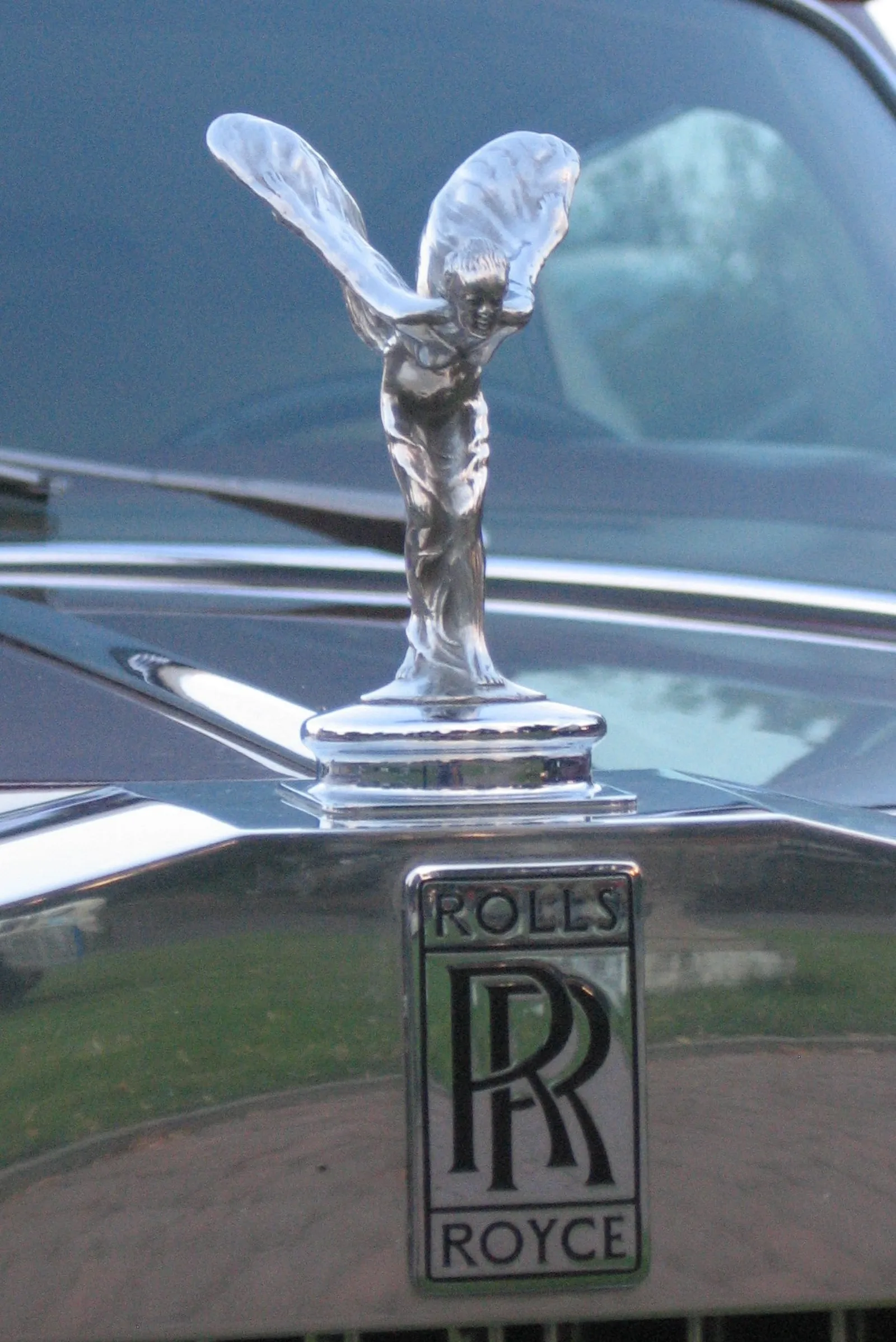
On a Rolls-Royce she is a woman leaning forward, arms flung back and upward, with cloth streaming from her arms to her back in the manner of wings. The first Rolls-Royce cars carried only the company emblem. A mascot arrived because of a private commission.
The Whisper
The 2nd Baron Montagu of Beaulieu, John, asked his friend and protege, the sculptor Charles Robinson Sykes, for a private mascot to ride on his 1909 Silver Ghost. The model Sykes picked was Eleanor Velasco Thornton. She worked as his secretary, and he fell in love with her in 1902, but her modest social and economic standing, and Montagu's marriage to Lady Cecil Kerr in 1889, kept the affair hidden from all but friends for more than a decade.
Sykes made a figurine of her in fluttering robes with a forefinger against her lips, which stood for that secret. It was named The Whisper. Only three or four castings were made, and just two are believed to survive; one is on show at the National Motor Museum in Beaulieu.
From private mascot to marque emblem
By 1910, personal mascots had become fashionable, and Rolls-Royce noticed that some owners were fitting inappropriate ones. Managing director Claude Johnson asked Sykes for something more dignified and graceful, to be generic to the marque. His brief called for the spirit of Rolls-Royce: speed with silence, absence of vibration and the mysterious harnessing of great energy. Sykes was pointed towards Nike, the mythical figure admired in the Louvre, but he preferred a more feminine figure and again thought of Thornton. He modified The Whisper and named the first version The Spirit of Speed.
Royce, who was ill at the time, was not convinced. He felt it blocked the driver's sightline and seldom drove a car that wore one. Even so, Sykes presented the Spirit of Ecstasy to the company in February 1911, signed on the plinth with dates such as "6.2.11". The inscription went on appearing until 1951, including after the company brought the casting in-house in 1948.
The mascot was listed as an optional extra but was fitted to almost all cars and became standard in the early 1920s. Silver plating was used from 1911 to 1914, after which nickel or chrome alloy was used to discourage thieves. A gold-plated version won the competition for the most apposite mascot in Paris in 1920. Eleanor Thornton did not live to see it become standard: on 30 December 1915 the SS Persia was torpedoed south of Crete, and she was lost. Montagu, travelling with her, survived several days adrift on a life raft.
How has the Spirit of Ecstasy changed?
The design has had eleven main variations. Lower coachwork forced the mascot to shrink over time, and in the 1930s Sykes made a kneeling version for the new sports saloons, giving drivers a clearer view of the road. Unveiled on 26 January 1934, it was used in 1934 to 1939 and again from 1946 to 1956, after which a smaller standing version returned.
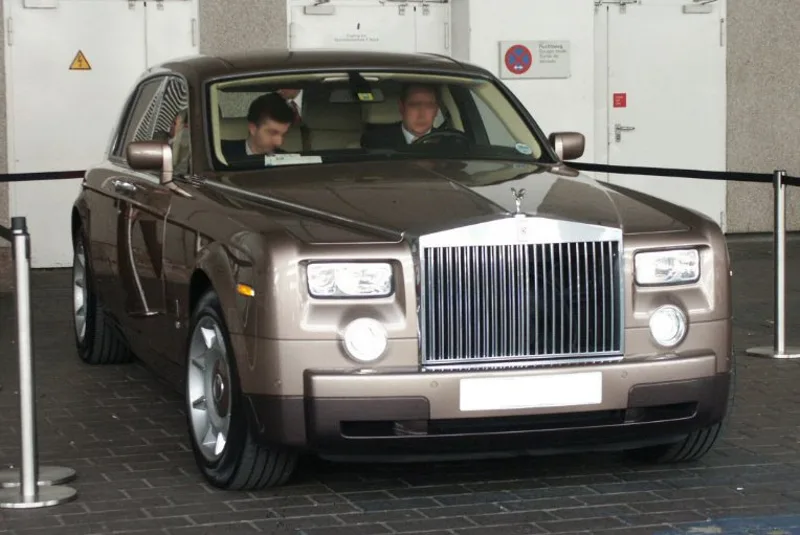
The modern figure, from the 2003 Phantom onward, is 3 inches (7.6 cm) tall and sits on a spring-loaded mechanism that retracts her into the radiator shell if she is struck from any direction. A button in the cabin raises or lowers her, and she can do so automatically as the car is locked and unlocked. She is made of polished stainless steel, with 24-carat gold plating or illuminated frosted crystal as optional extras. Aftermarket versions include matte black paint and diamonds, and the company itself made one as a Faberge Egg.
The Spectre redesign
When the all-electric Spectre was revealed, it brought a new figure, 111 years after the design was first registered as intellectual property in 1911. She stands 82.7 mm tall against 100 mm for her predecessor, with one leg forward and her body tucked low. Her robes are reshaped to be more aerodynamic and realistic, and the new version, digitally sculpted, is set to appear on all future models.
Who owns the Spirit of Ecstasy?
The statuette sat at the centre of a corporate dispute. In 1998, Vickers put Rolls-Royce Motors up for sale. BMW, already a supplier of engines and parts, bid 340 million pounds, but Volkswagen won with 430 million pounds. The ownership documents, however, left the Rolls-Royce name and logo with the aero-engine maker, Rolls-Royce plc, which licensed them to BMW for 40 million pounds. Volkswagen held the Spirit of Ecstasy and the grille shape.
Since BMW could end its engine supply on 12 months' notice, and Volkswagen could not re-engineer the cars in time, the two companies negotiated. Volkswagen sold BMW the Spirit of Ecstasy and grille trademarks, and BMW kept supplying engines until 2003. Rolls-Royce Motor Cars Limited has been the exclusive maker of Rolls-Royce cars since 2003, working from its Goodwood plant in West Sussex.
Can a hood ornament be protected in law?
Copyright is cheaper than patenting a design, but it covers an ornament only to the extent that its sculptural features can be identified separately from, and exist independently of, the practical article. On that test, the Rolls-Royce figure could stand as a free sculpture, while most other distinctive ornaments could not.
Others in the industry defended the ornament on practical grounds. Teague restored one on the top-of-the-line AMC Ambassador for the good feeling it gives owners, or at least as a reminder of the money spent. Dick Macadam, a chief stylist at Chrysler, argued that an ornament gives the driver an aiming point for centring the car, possibly making handling easier and safer. Brand identification remains essential as makers try to tell similar SUVs, saloons and pick-ups apart, and the Mercedes-Benz three-pointed star in a circle is still carried on its sedans and wagons.