From a Citroen assembly deal in 1965 to more than 1.3 million vehicles a year, how SAIPA and Iran Khodro built Iran's car industry through revolution, war and sanctions.
Iran's car industry is dominated by Iran Khodro and SAIPA, which made 94% of domestic output in 2001. SAIPA began in 1965 assembling Citroens under licence. Iran was the 13th largest automaker in the world in 2024, producing more than 1.3 million vehicles.
Two companies, Iran Khodro and SAIPA, made 94% of the cars built in Iran in 2001, and the rest of the field barely registers. Iran has one of the largest car industries in Asia, and it was built in large part by invitation: in the 1960s the country asked Western firms to come and show it how.
The story since then covers a revolution, a war, waves of sanctions, a stop-start privatisation and a licence deal that began with a French two-cylinder runabout and ended with a gazelle.
How big is the Iran car industry?
Iran ranks 13th among the world's automakers as of 2024, building more than 1.3 million vehicles a year. The car industry is the country's third most active industry after oil and gas. One estimate credits it with 10% of GDP and 4% of the workforce, or 700,000 people. The sector directly employs about 500,000 people, roughly 2.3% of the workforce.
The output curve has been wild. Under Mohammad Reza Shah Pahlavi annual production reached up to 200,000 units. After the 1979 revolution it fell sharply, weighed down by the Iran-Iraq War and by sanctions from abroad. From the early 2000s it grew fast, passing 1 million in 2007/2008. In 2009 Iran came fifth for growth in car production, level with China, Taiwan, Romania and India. Between 1998 and 2008 output rose by 445%. Then came a collapse: according to OICA, production dropped to under 750,000 cars and commercial vehicles in 2013.
Passenger cars make up about 75% of local output, and pickups come second at around 15%. Iranian manufacturers also build four-wheel-drive vehicles, trucks, buses and minibuses. By 2010 there were more than 11 million vehicles in the country, mostly made or assembled locally, and by 2008 the country had nearly 100 passenger cars per 1,000 residents.
Two companies built 94% of Iran's cars in 2001, and one of them began as a licence to assemble Citroens.
How did Iran build a domestic car industry?
In the 1960s Iran lacked the technical know-how to make cars, so it invited Western firms to start a domestic industry. It has since developed the ability to design and assemble cars on its own, and a new car factory has been built in Kashan. Across the five major Iranian automakers, the average operating margin slipped by one point in 2011, from 13% to 12%.
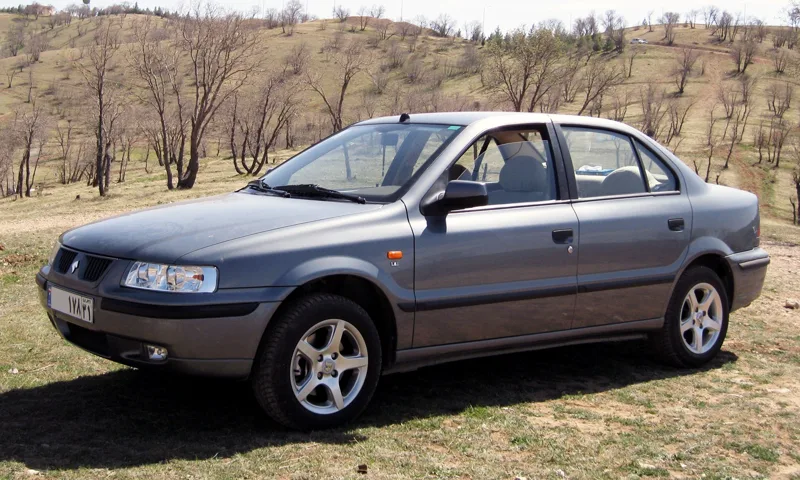
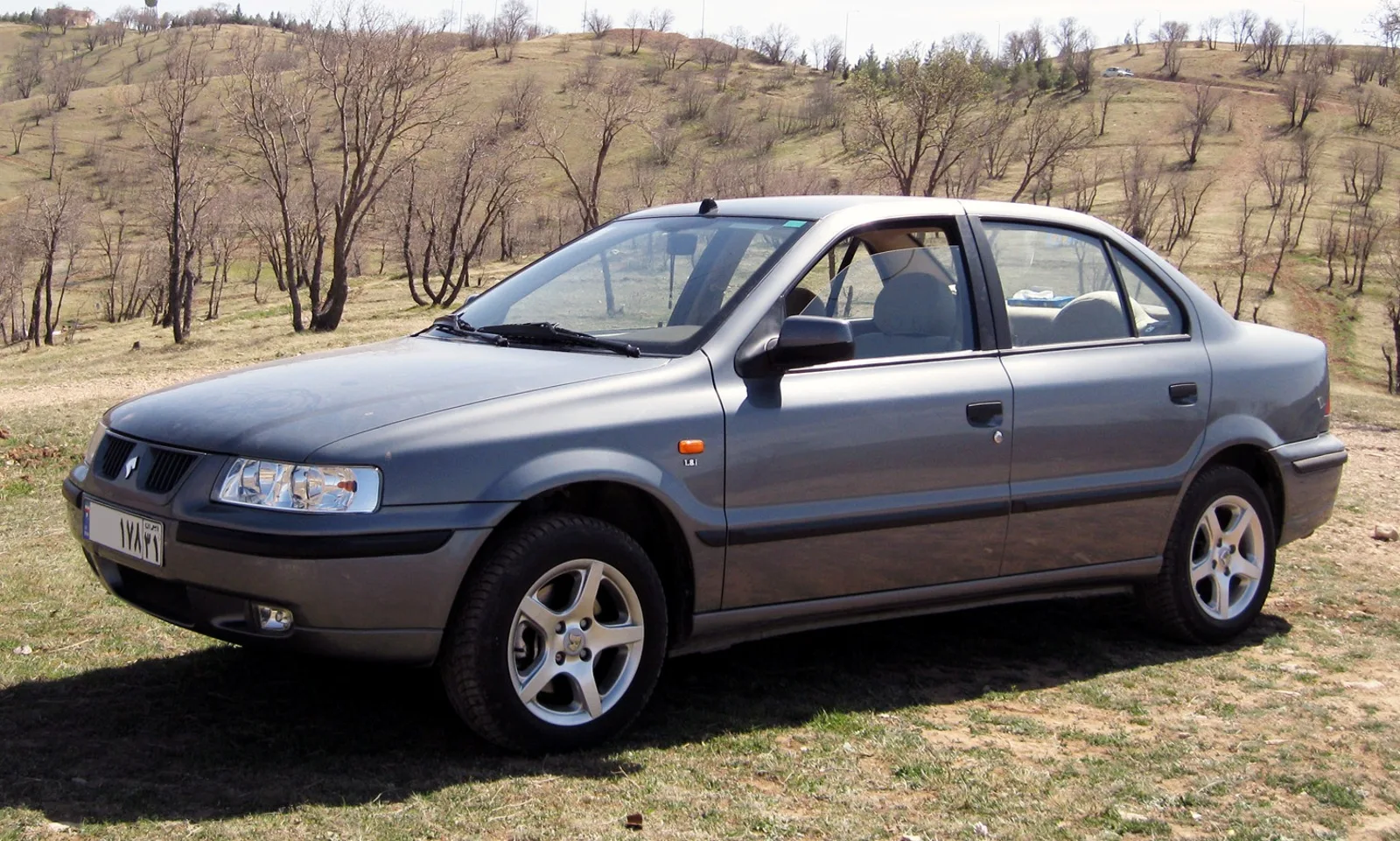
The Paykan, made by Iran Khodro, was the country's most widespread car brand until the Samand replaced it in 2005. In 2001 there were 13 public and private automakers in Iran. Iran Khodro was the larger of the two giants, with 61% of the market, while SAIPA contributed 33% of total production that year. By 2008 the Industrial Development and Renovation Organisation reported the order reversed, with SAIPA at 54% and Iran Khodro at 46%. In 2001 all the other makers combined, including Bahman Group, Kerman Motors, Kish Khodro and Shahab Khodro, produced only 6%.
Iran Khodro ranks among Asia's largest car manufacturers and has set up joint ventures with foreign partners across four continents. Its diesel arm, Iran Khodro Diesel, holds more than 70% of bus, truck and van production.
Ownership has stayed political. The carmakers are listed on the stock exchange, yet the government held about 40% of both companies. In July 2010 it sold a further 18% of each for about $2 billion in total, bringing its stake down to about 20%. In August the Iranian Privatization Organization cancelled both deals. Analysts believe discontent over the prices was the likely reason. Unofficial estimates suggest the industry owes Iranian banks as much as 100 trillion rials ($4 billion).
How did SAIPA grow from Citroen assembly to a national maker?
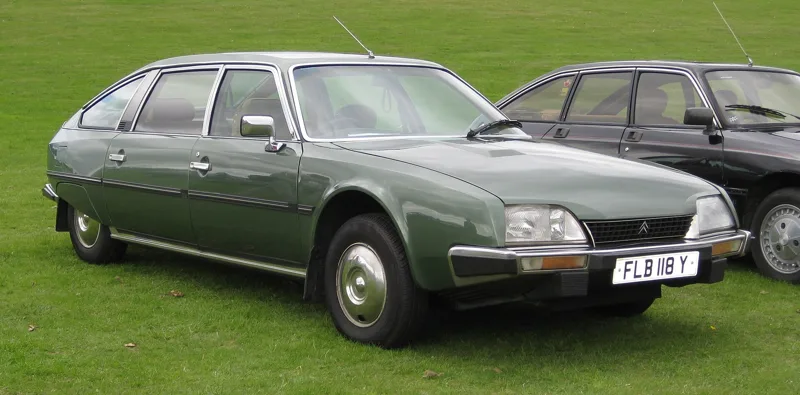
SAIPA, headquartered in Tehran, began in 1965 as SAIPAC, an acronym for an Iranian company formed to produce Citroens. Iranian owners held 75% of it, and its job was to assemble Citroens under licence. When Citroen withdrew in 1975 it became SAIPA. Its main subsidiaries are Saipa Diesel, Pars Khodro and Zamyad.
The first product, in 1968, was Citroen's two-cylinder Dyane, sold in Iran as the Jyane. SAIPA built 120,000 of them. Variants followed: a glazed panel van, a pickup, and the Baby-Brousse, a rustic little buggy with a metal body built from 1970 to 1979. In 1975 SAIPA began making licensed copies of the first Renault 5 and, later, the Renault 21. Citroen production ended in 1980.
A pickup came next. The Z24 pickup, built from 1986 to 1998, was the Nissan Junior built under licence and fitted with a 2.4-litre engine. SAIPA absorbed the Zamyad company in 1998 and Zamyad then took on the Z24, which has carried the Zamyad name since 2003. Renault 5 production ended in 1994, when Pars Khodro took over the lines, and the 21 was discontinued in 1997.
The big change was Korean. A relationship with Kia began in 1993, and production of the Kia Pride followed. SAIPA sold it as the Saba, a saloon, and the Nasim, a hatchback. The liftback Saipa 141, a five-door based on the Saba and somewhat longer than the Nasim, joined at the 2001 Tehran Motor Show. The Pride series carried 97% local content. SAIPA also built the Citroen Xantia under licence from 2001 to late 2010, and assembled previous-generation Kia Rio sedans from imported parts from May 2005 until it lost the licence in late 2012.
Its own designs arrived in the 2000s. The 701 Caravan minivan launched in 2000 and was facelifted in 2003. The 132 debuted in 2007, the 111 in 2009, and the SAIPA National Engine 231 in November 2008.
The most ambitious was the Tiba, shown in December 2008 as the Miniator and later renamed after the Persian word for gazelle. It had a 1,500 cc four-cylinder petrol engine with 80 PS (59 kW) and ABS, averaged about 7 litres per 100 kilometres, and was priced at under 100 million rials (US$10,000) at launch. It was designed in Iran with the services of some 122 local manufacturers. SAIPA planned 15,000 for 2009 and then up to 200,000 a year from a new subsidiary, Kashan SAIPA, with the Tiba expected to replace the Kia Pride.
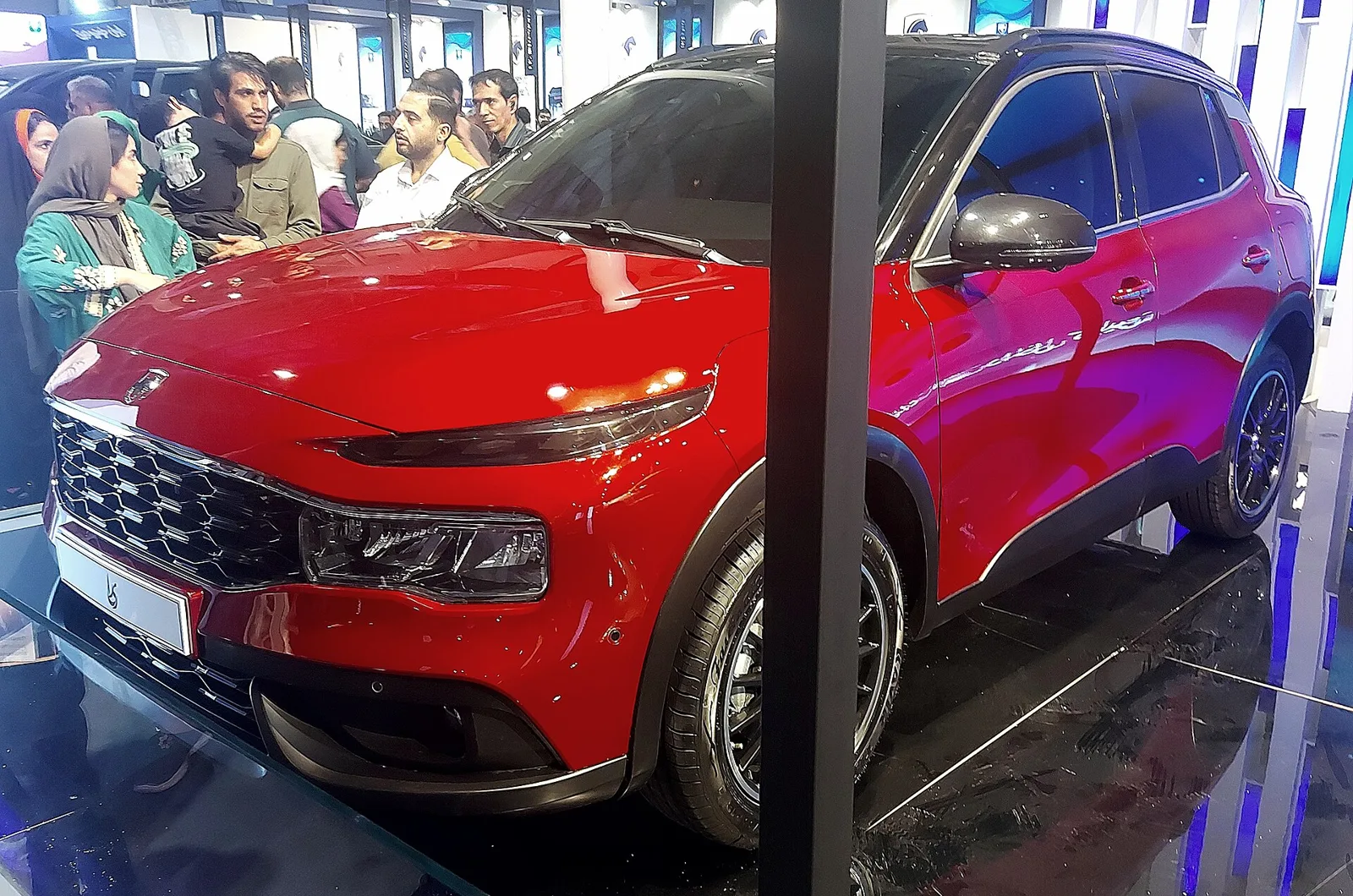
A pickup version of the Pride, the 151, appeared in 2012, and in 2015 the company began producing cars derived from Chinese manufacturers. In 2019 the press reported that an African firm would assemble the Quik in Rosslyn, South Africa, badged as the Mureza Prim8, and that SAIPA hoped to start production in Zimbabwe in the following years.
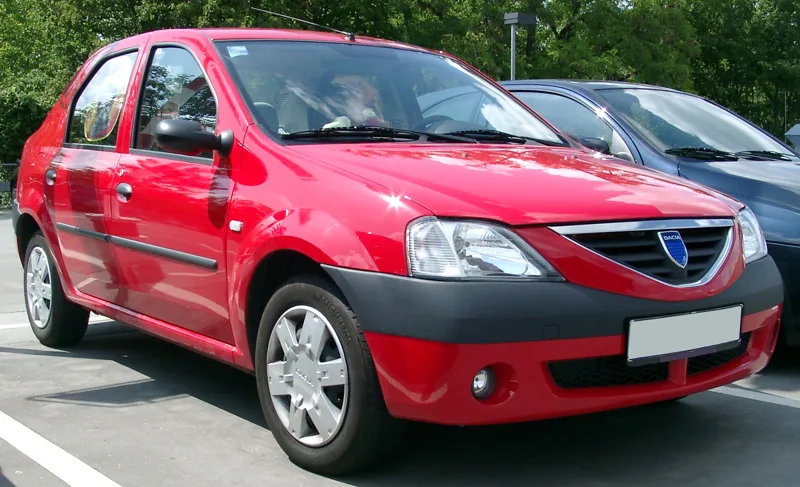
SAIPA bought 51% of Pars Khodro in 2000, when it made the Citroen C5. Since 2018 Pars Khodro has mainly assembled Chinese models. Another product is the SAIPA Renault Pars Tondar, an updated local version of the first-generation Dacia Logan, originally called the Renault Tondar 90, which drew more than 100,000 orders within a week of going on sale in March 2007.
Who else makes Iranian cars?
Iran has more than 25 automakers producing light and heavy vehicles, many in joint ventures with foreign companies including Dongfeng and Chery of China, Peugeot and Citroen of France, Volkswagen, Nissan, Toyota, Kia and Proton of Malaysia. Renault, BMW, Mercedes-Benz, Daewoo and Hyundai established their presence after 1991.
One notable deal came in August 2007, when Chery and Iran Khodro agreed a venture worth US$370m to build cars for West and South Asian markets at Babol. Chery was to hold 30%, Iran Khodro 49%, and a Canadian front company called Solitac the remaining 21%.
Buses are a separate market. Iran needs some 4,000 a year for domestic transport, and has produced buses since the 1970s, including German Mercedes and MAN and Swedish Scania and Volvo designs that it exported across Asia.
What do sanctions and imported parts do to Iranian cars?
Most cars in Iran are built under licence from foreign manufacturers, which leaves the industry dependent on imports of critical parts: pistons, cylinder heads, valves, starters, alternators, airbags and computer chips such as engine control units and sensors. As of 2015, 60% of the spare parts sold in Iran were imported. Media reports say the Revolutionary Guards (IRGC) are working with the industry, including 32 domestic parts makers, to close those gaps.
The vulnerability showed in 2012 and 2013. Sanctions on spare parts from Peugeot and Renault cut car production by as much as 40% in 2012, and in July 2013 US sanctions stopped Iranian companies importing the parts domestic cars rely on. Iran lost its place as the region's top vehicle manufacturer to Turkey. Output recovered somewhat in 2014 after the Geneva interim agreement.
When sanctions eased the flow reversed. Renault imported more than 93,000 cars, built and in kit form, in 2016, and by one measure PSA covered 30% of the Iranian market and Renault 5%. Since 2016, close to 40 foreign automakers, among them Peugeot, Mercedes and Toyota, have reportedly weighed using Iran as an export base for the region.
Local supply is deep. The parts industry has approximately 1200 companies running 15,000 factories, split between suppliers to carmakers and replacement-parts firms. Sapco is the purchasing arm of Iran Khodro, and Sazeh Gostar serves SAIPA. Ten tyre plants make 240,000 tons a year, enough for 70% of domestic demand. Since 2020 Iranian makers have also produced immobilisers, engine control units, oxygen sensors, powered seats and steering, injectors and airbags, plus a six-speed automatic transmission.
How do Iran Khodro and SAIPA compare?
| Detail | Iran Khodro | SAIPA |
|---|---|---|
| Share of 2001 output | 61% | 33% |
| Share of 2008 output (IDRO) | 46% | 54% |
| Best-known cars | Paykan, replaced in 2005 by the Samand | Jyane, Saba, Nasim, Tiba |
| Subsidiaries | Iran Khodro Diesel, over 70% of bus, truck and van output | Saipa Diesel, Pars Khodro, Zamyad |
| Purchasing arm | Sapco | Sazeh Gostar |
| Foreign links | Joint ventures on four continents; Chery venture at Babol | Citroen, Renault, Nissan and Kia licences |
What is it like to buy and run a car in Iran?
Petrol is cheap because the government fixes its price, and that makes everyday transport inexpensive. There are two pricing schemes, subsidised and unsubsidised, and each month qualified owners get an allocation of subsidised litres, with taxis receiving significantly more. The downsides are a large draw on public finances, wasteful consumption, air pollution and smuggling: around 1.8 billion litres of fuel products worth about $1 billion leave the country illegally each year, heading to Turkey, Pakistan and Afghanistan.
Gas has taken on a larger role. In 2008, 60% of passenger cars made in Iran ran on natural gas or were dual-fuel, and the remaining 40% ran on regular petrol. Payment habits have changed too. Buyers once paid cash up front; today more than half of new cars are sold through finance companies or lease purchase schemes.
Quality and age remain issues. Slow deliveries, weak after-sales service and low quality in some models have been cited as problems, and in 2009 more than half the vehicles on the road were over 10 years old. The authorities aim to remove some 200,000 outmoded vehicles each year, and demand in 2007 stood at 1.5 million vehicles, more than local producers could supply.
Safety is a worry. Iran ranks 23rd worldwide for traffic deaths per 100,000 people, at a rate of 24.3, and officials blame the toll on excessive speed, unsafe cars, flouted traffic rules and weak emergency services. Motorcycles add to the picture: by 2010 there were more than 8 million, with 1,500 new registrations a day, and they account for 30% of air pollution in Tehran.
Where this goes next
Research is aimed mostly at the home market. Projects cover newly designed diesel, petrol and dedicated compressed natural gas engines, as well as hybrid and electric cars aimed at the Iranian market of the future, and nanotechnology for items such as anti-scratch paint and maintenance-free air filters. As of 2016 Iran had no known research project in autonomous cars.
On the trade side, in July 2024 Iran began letting in used cars from Japan, South Korea and Europe, limited to one vehicle per citizen national ID card number. And on 1 October 2026 the US Department of the Treasury added several Iranian entities, SAIPA among them, to its sanctions list.