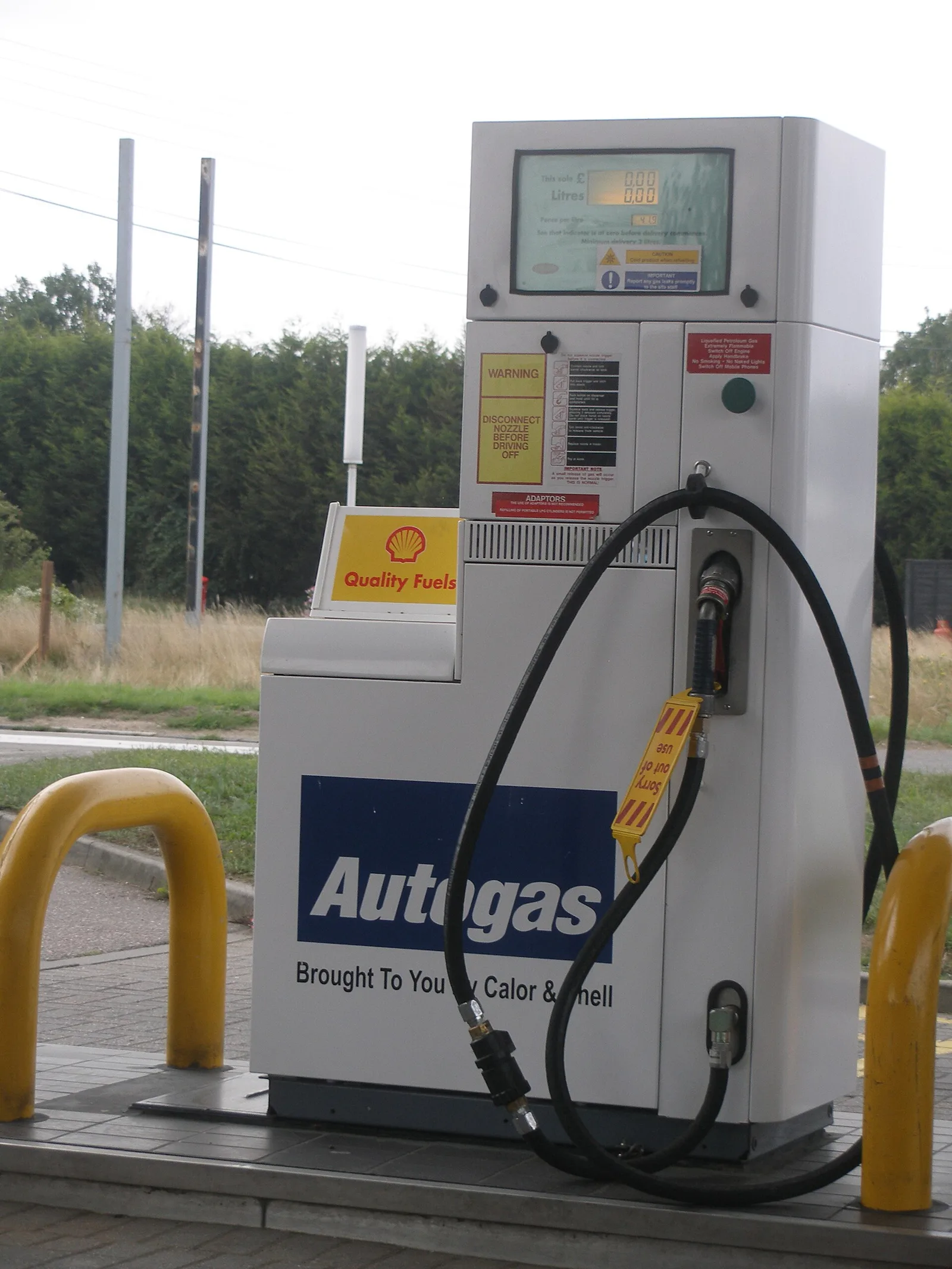
Cheaper at the pump, cleaner in the exhaust and weaker per litre: what LPG gives and takes, and how tax and stations decide whether it pays.
LPG, or autogas, is a propane and butane fuel that costs less per litre than petrol in many places and cuts CO2 by around 15%. It holds less energy per litre, so consumption is higher. In Australia excise, hybrids and the end of local car production shrank its use.
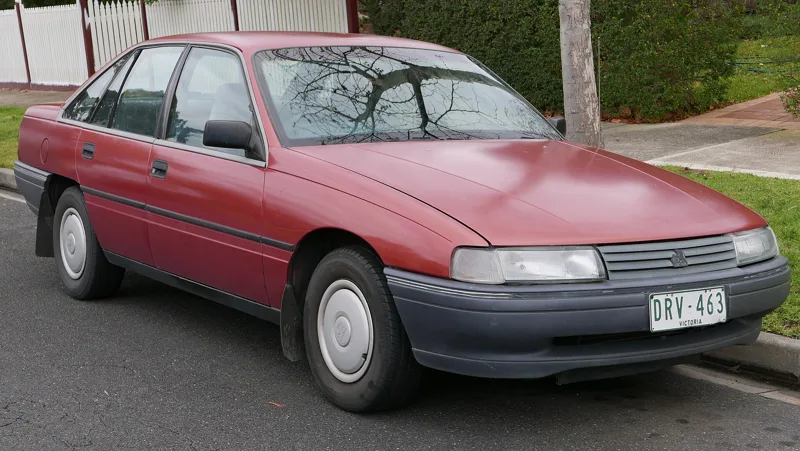
Between 2013 and 2018 the number of LPG and dual-fuel vehicles on Australian roads fell by 34.2%, a loss of 161,191 cars. In the same five years registered electric vehicles grew by 159.2%, to only 8,334. A fuel that was once less than half the price of petrol at the pump was being abandoned.
That tension is what makes the petrol versus LPG question interesting.
What is autogas?
Autogas is liquefied petroleum gas, or LPG, used as fuel in the internal combustion engines of vehicles. The fuel blends propane with butane, and the mix changes with the seasons in the northern hemisphere, with more propane in winter and more butane in summer. LPG comes from refining crude oil or from extracting it out of natural gas, and a little over three fifths of it is taken from natural gas.
The name changes by country. UK drivers treat LPG and autogas as synonyms, and in Australia and the Netherlands LPG is the usual word. In the United States the fuel is called propane, and the Propane Education and Research Council promoted the term Propane Autogas in 2010. Italy and France say GPL, and Spain says GLP. Because petrol is sometimes just called gas, a speaker in one country can easily confuse a listener from another.
Engines running on gas are not new: Samuel Brown was working on them in London by 1823. Hanover had an autogas station by 1935, and trucks made a trial run between Moscow and Leningrad that year. Wider use came in the 1970s, especially for taxis in Bangkok, Istanbul, Italy and the Netherlands, and for buses.
Because LPG is a gas that is stored as a liquid under pressure, a powerful odorant, ethanethiol, is added so leaks can be detected. The European standard for the fuel is EN 589, while in the United States the HD-5 grade, which limits propylene to 5%, serves as the autogas specification.
A cheaper litre only wins if the car burns few extra litres, the tax stays friendly and the stations stay open.
Is LPG cheaper than petrol to run?
Where the price per litre is low enough, yes, and that price gap is the single reason people converted. In Australia in February 2010, LPG cost roughly A$0.59 to A$0.75 a litre in urban areas, against A$1.10 to A$1.35 for unleaded and A$1.15 to A$1.30 for diesel. In Armenia it costs less than half as much as petrol and about 40% less than diesel. In Algeria, where the government fixes fuel prices, it is set at 61% of the diesel price.
In Canada, where it is known as auto propane, the fuel undercuts gasoline and diesel by about 40% in many cities, and it is exempt from federal excise tax. Belgium, as of June 2019, priced a litre of autogas at around a third of a litre of diesel, which attracts cross-border refuelling from France, where LPG is far dearer.
The price per litre is only half the sum. LPG holds less energy in each litre, so the equivalent fuel consumption is higher, and many governments tax it less than petrol to offset that. In many European countries, though, an annual levy on LPG cars, far heavier than the one on petrol cars, claws the break back. Belgium is a clear case: its LPG cars pay a higher road tax than petrol cars to make up for lost fuel tax revenue, though new ones enjoy a lower registration tax.
How much energy and range does LPG give up?
The key number is energy per litre. One account puts LPG at about 26 MJ per litre, lower than petrol or fuel oil, because LPG is far less dense: about 0.5 to 0.58 kg per litre, against 0.71 to 0.77 for petrol. Another puts the gross energy of autogas between 25.5 MJ per litre for propane alone and 28.7 MJ per litre for butane alone. Petrol, on a lower heating value basis, carries 33.6 MJ per litre.
Weight tells the opposite story. By mass, LPG holds more energy than petrol because of a higher hydrogen-to-carbon ratio. The accounts differ on the size of the gap, though. One gives LPG 46.1 MJ per kg and premium petrol 43.5 MJ per kg, while the entry on petrol itself quotes around 46.7 MJ per kg for gasoline. Either way, the practical effect for a driver is the same: a tank of liquid LPG holds less energy than a tank of petrol the same size, so the same trip burns more litres, and the car goes a shorter distance per litre.
Does LPG give more or less power?
On a petrol-tuned engine, a bit less. Run in an engine built around petrol, with its typical 10:1 compression ratio, a high-octane fuel such as LPG gives lower overall power. Tune the engine for LPG with a higher ratio, typically 12:1, and the output improves. The reason is that higher octane allows a higher compression ratio without knocking, which gives higher cylinder temperatures and better efficiency.
The octane figure itself is generous. One account puts autogas at between 90 and 110, and another at 102 to 108 RON depending on local specifications.
How the gas reaches the engine matters as well. Holden Special Vehicles used technology from Orbital Autogas Systems that puts the fuel into the engine as a liquid rather than a vapour, for efficiency. All the locally made Ford LPG models in Australia used liquid-injected LPG and produced 3 kW more than the petrol equivalent. Ford Australia offered an LPG-only Falcon, the E-Gas, from 2000, and Holden's Commodore range was offered as a dedicated LPG vehicle from 2011, fitted with an aluminium tank where the petrol tank would normally sit.
Is LPG cleaner than petrol?
By the accepted figures, yes. Burning autogas rather than petrol lowers CO2 and other exhaust emissions by about 15%. Burning a litre of petrol releases 2.3 kg of CO2. The equivalent amount of autogas, which is 1.33 litres because the fuel is less dense, produces 2 kg. Carbon monoxide is 30% lower and nitrogen oxides are reduced by 50%.
The fuel burns without soot and with very little sulfur, and it is not toxic or corrosive, and it contains no tetraethyllead. Two studies of LPG mixed with fuel oil found less smoke and lower fuel consumption but more hydrocarbon emissions, and they were split on carbon monoxide.
| Measure | Petrol | LPG (autogas) |
|---|---|---|
| Density | 0.71 to 0.77 kg/L | About 0.5 to 0.58 kg/L |
| Energy per litre | 33.6 MJ/L | About 26 MJ/L |
| CO2 for the same energy | 2.3 kg per litre | 2 kg per 1.33 litres |
| Carbon monoxide | Baseline | 30% lower |
| Nitrogen oxides | Baseline | 50% lower |
| Octane | Measured by octane rating | 90 to 110, or 102 to 108 RON |
| Tuned compression ratio | Typically 10:1 | Typically 12:1 |
What are the common LPG car problems?
Valves are the first concern. Petrol and diesel lubricate the upper cylinder better than LPG does, so engines that have not been suitably modified are more prone to valve wear. Not every engine suits the fuel, and the good ones are those designed or prepared for it.
The second concern is finding a pump. In remote areas and places where demand is low, drivers may have to plan journeys around the stations that reliably stock it. That is the reason many systems keep a parallel petrol arrangement, allowing either fuel to be used at any time.
The third is safety, which comes from physics. Gaseous LPG is heavier than air, unlike natural gas, so it flows along floors and settles in low places such as basements. Two dangers follow: an explosion if the mixture lies within its explosive limits and meets an ignition source, and suffocation if the gas displaces air. Storage vessels are typically filled to 80 to 85% of their capacity to leave room for thermal expansion.
What does an LPG conversion involve?
Conversion kits can turn a petrol vehicle into a dual-fuel car that uses both fuels. Petrol-engined cars, trucks and buses that did not leave the factory with LPG can usually accept third-party systems. Many modern common-rail diesels also respond well to LPG as a supplementary fuel.
A good many manufacturers sold bi-fuel models that run equally well on both fuels, among them Citroen, Fiat, Ford, Hyundai, General Motors (including Holden, Opel and Vauxhall), Peugeot, Renault, Skoda, Toyota and Volvo, and more recently Volkswagen. Toyota built LPG-only engines in its 1970s M, R and Y families.
Australia backed conversion with a subsidy. From 2006, private motorists could claim A$2,000 for converting an existing vehicle, or A$1,000 for buying a new one built to run on autogas. The subsidy did not apply to business vehicles or those over 3,500 kilograms gross mass, and Western Australia added a further A$1,000 under its own long-running scheme.
Why has LPG faded in Australia?
Several things moved at once. The local factories that fitted LPG as an option closed: Mitsubishi stopped in 2008, Ford in 2016 and Holden in 2017. More motorists bought hybrid-electric cars. And from 2011 the government began charging excise on a fuel that had been excise-free.
The excise was phased in. Starting from 2.5 cents a litre in 2011, it climbed to 12.5 cents a litre by 2015, while the excise on petrol stayed at 38 cents per litre. The subsidy offset some of that change. The result for owners was a smaller price advantage and fewer outlets: LPG refuelling locations numbered under 2,900 in 2018, against 3,500 some years before.
Where does LPG still make sense?
Worldwide, autogas ranks fourth among automotive fuels, with about 27.8 million of 1.47 billion passenger cars running on it, under 2% of the market, according to one account. Another places propane third among motor fuels and estimates over 24.9 million vehicles in 2013. The accounts disagree on the rank, but not on the scale. About half of all autogas passenger cars are in five markets: Turkey, Russia, South Korea, Poland and Ukraine.
Europe tells two stories. In Bulgaria, autogas made up 14% of fuel use in 2003, three times the 1999 figure, and 90% of minibuses and taxis could run on it. Nearly all of the vehicles were third-party conversions, with around 195,000 vehicles and 1,500 stations. Belgium shows the reverse: use fell sharply after conversion subsidies ended in 2003, from an estimated 93,000 vehicles to 33,482 cars in 2010 and 22,265 in 2012, before a rise of about 14% since. Even with excise-free fuel at a third of the diesel price, it has never again reached its 1990s level, and since 2013 Opel has been the only seller of brand-new factory-fitted LPG cars there.
Canada followed a similar arc. A CA$400 conversion grant started in 1981 and ended in 1985, and conversions reached about 200,000 in the early 1990s. Demand fell with cheap gasoline, then rose again after 2010 as the fuel's price edge returned and technology improved.
Is LPG worth it today?
The facts point to three variables. The first is the price gap per litre, which must be wide enough to cover the higher consumption. The second is tax, since excise and annual vehicle taxes can erase the advantage, as they did in parts of Europe and in Australia after 2011. The third is how many stations are nearby, because a shrinking network can turn a cheap fuel into a nuisance. Where the pump price gap is wide, as in Armenia, LPG has thrived. Where subsidies ended, diesel was favoured or excise arrived, as in Belgium and Australia, it has declined even when the fuel itself remained cheap.