Roof lights and radios, rear decks and landau bars, partitions and long wheelbases: how three working body styles are specified and which cars fill them around the world.
Police cars, hearses and limousines are mostly ordinary cars modified for a job. Police cars gain livery, lights, sirens and radios; hearses gain a coffin compartment on a longer chassis, usually Cadillac in North America; limousines gain a driver partition and extra wheelbase.
The first police car was electric, cost US$2,400 and could manage 16 mph (26 km/h). Akron, Ohio, put it on the road in 1899, and its first assignment was to collect a drunken man from the junction of Main and Exchange streets. A century and more later, the police car, the hearse and the limousine are three of the most specialised things a car can become, each rebuilt around a job that an ordinary saloon cannot do.
What makes a police car different from an ordinary car?
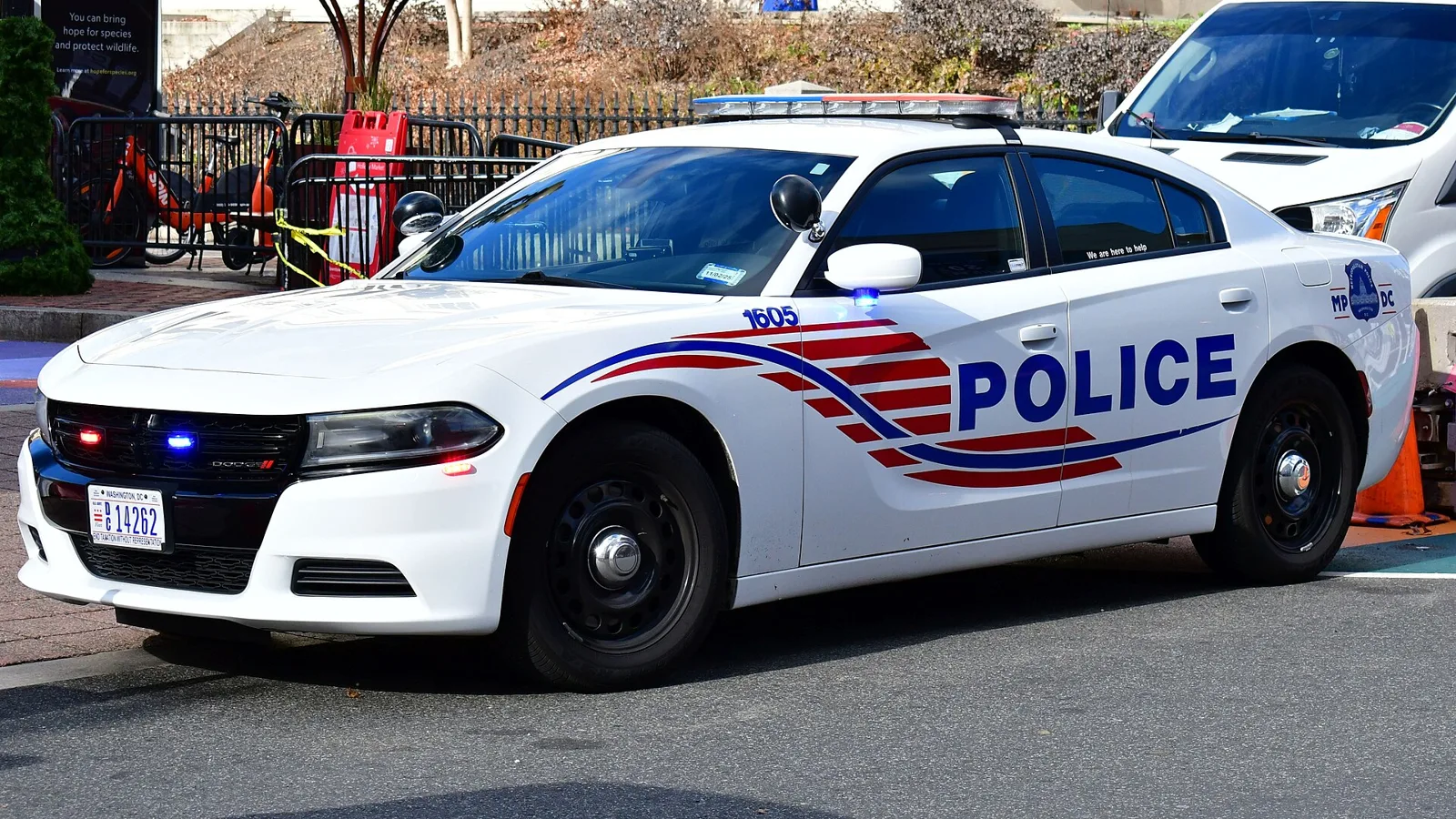
Police use cars to patrol a beat, race to incidents and carry or briefly hold suspects. To do that job the car gets livery markings, a siren and emergency lights, normally red, blue or a mix of both. The cabin fills with radios, weaponry and assorted emergency gear.
Underneath, it is nearly always a civilian car. Almost every police car starts life as a model sold to the public and is then altered, although a few are custom police designs for special purposes.
American police loyalty to one brand began with the 1932 Ford, the first mass-marketed car with a V8, the flathead. Low-priced, it became popular with American police, and that loyalty carried into the 21st century. From the 1940s the Big Three began making specialised police cars, and these grew into dedicated fleet lines such as the Ford Police Interceptor and the Chevrolet 9C1.
The vast majority of police cars are modified versions of civilian-market automobiles.
How did the car change policing?
Cars did not simply replace boots, they rewired police tactics. In Britain the change is credited to Captain Athelstan Popkess, Chief Constable of Nottingham City Police from 1930 to 1959. His Mechanised Division used two-way radio between command and cars, and it moved the force away from the Victorian foot-patrol beat towards car-based reactive response.
Popkess laid car patrol sectors over foot beats and used cars to collect foot patrol officers when a crime was reported. After the Second World War, rising car ownership took police into suburbs and along highways, vehicle crime and evasion in cars increased, and officers were issued more equipment, until a vehicle became close to essential for modern law enforcement.
What types of police car are there?
The fleet is far wider than the marked patrol car. Depending on the force, the class of vehicle, the country and the terrain, some types may be merged into all-rounders or may not exist at all. A traffic or highway patrol car tends to be a relatively high-performance model, since it must catch fast-moving vehicles, though some forces simply use patrol models with radar speed guns.
Unmarked cars have no markings or obvious roof lights and serve everything from patrol and traffic enforcement to stings and detective work. Some are identical to marked cars minus the livery, while others are common civilian models with lights in the grille or hidden away. Japanese unmarked cars, for example, can have retractable beacons in the roof.
The phrase undercover car is often used for these, but wrongly. An unmarked car still has police equipment, lights and sirens, whereas an undercover car lacks them entirely and is essentially a civilian vehicle used to avoid detection.
Ghost cars, also called stealth or semi-marked cars, sit between the two. Their graphics are either close to the body colour or reflective, so they are hard to see unless lit or viewed at an angle. They are often used for traffic enforcement, or in places where unmarked cars are banned or restricted, since the markings may still legally count.
Police car types at a glance
| Type | Typical vehicle | Purpose |
|---|---|---|
| Patrol car | Marked car with roof lights and siren | Standard patrol and calls |
| Traffic car | Relatively high-performance car, radar speed guns | Enforcing traffic laws on highways |
| Unmarked car | Civilian model, hidden lights | Patrol, stings, detective work |
| Utility vehicle | All-wheel drive SUV, pickup, van or ute | Towing, off-road work, support |
| Police dog vehicle | Patrol car or SUV, pickup or van with a cage | Carrying police dogs |
| Armoured vehicle | Four-wheeled armoured truck | Moving tactical units, riot control |
Is that unmarked car really the police?
Because unmarked cars look so much like ordinary ones, there is worry about people impersonating police. Some officers tell drivers they are not obliged to stop in a lonely spot and may carry on to a safer place first.
In the United Kingdom, officers must be in uniform to make traffic stops. Motorists can ask to see the officer's warrant card and identification, or call an emergency or non-emergency number to confirm that the police unit is genuine. Unmarked cars usually carry ordinary civilian number plates, although American federal agencies may use either government or regular plates.
Other police cars are not there to stop anyone at all. Decoy cars are retired older models, modified civilian cars, demonstration vehicles or even life-sized cutouts, parked to deter speeding without an officer present. In Britain, liveried decoys may sit on fuel station forecourts to deter drivers who fill up and drive off without paying. The Virginia General Assembly looked at a 2005 bill that would have made it compulsory to park retired police cars in highway medians, moving them around to keep the effect fresh.
What else do police fleets include?
Support vehicles are mostly all-wheel drive SUVs, pickups, vans or utes with cargo space, used to tow trailers, equipment and police boats, to work off-road or to deal with animal control. Dog units carry a cage in the boot or rear seats, sometimes in the front passenger seat, and almost always have markings noting that a dog is on board.
Surveillance cars, usually SUVs, vans or trucks, may be marked, unmarked or disguised, and use CCTV, hidden cameras or even aerial platforms. Some serve as bait cars to catch thieves. Armoured vehicles are configured like military light utility vehicles but lack mounted weapons, and mobile command centres are trucks that act as a command post or temporary police station. Bomb disposal vehicles are vans or trucks with a containment chamber and ramps for robots, and they are generally not explosive-resistant.
Armed police vehicles are very rare, reserved for wartime or places where organised crime or insurgency is common. Iraqi Police were given technicals during the Iraq War. In 2022 Ukraine's National Police fielded armed vehicles of their own, among them the STREIT Group Spartan and a BMW 6 Series modified to carry a machine gun.
Where does the word hearse come from?
The word reached English by way of French herse, which came from the Latin for a harrow. The original hearse was a wooden or metal frame standing over the coffin, with spikes to hold burning candles that looked like the teeth of a harrow. From about 1650 the word came to mean the vehicle that carries the dead to the grave.
The vehicle itself went through several stages. Hearses were hand-drawn first, then horse-drawn as decoration and weight increased. Electric motorised hearses reached the United States in the early 1900s, and petrol-powered ones followed from 1907. Their high cost slowed uptake, but they were widely accepted by the 1920s. Since then the vast majority have been built on larger, more powerful car chassis, keeping the front end, possibly including the front doors, with custom bodywork behind to hold the coffin.
Rail once played a part. Sydney and London both had special rail lines or funeral cars to reach remote cemeteries, and Chicago ran three funeral trolley cars over its elevated tracks, with funeral bureau schedules that sometimes reached three or four funeral trains a week. Some enthusiasts are carried by motorcycle hearses, either a sidecar for the casket or urn or a trike carrying it behind the rider.
Which cars become hearses around the world?
Hearses are usually built on more luxurious brands, but the choice varies sharply by country. In North America, the vast majority have been Cadillacs since the 1930s, with Lincolns less often. Cadillac offered a Commercial Chassis, built on the long-wheelbase Fleetwood limousine frame but stretched and reinforced to carry extra weight. Its rear section sat well below the passenger-car frame, which dropped the rear deck and made loading easier.
Coachbuilders received these as unfinished cars and completed them. From the late 1990s most funeral cars were made from altered Cadillac sedans. General Motors dropped the XTS chassis in late 2019, so any new Cadillac hearse is to sit on the XT5 SUV chassis, and the S&S Coach Company now builds some models on the XT6 platform.
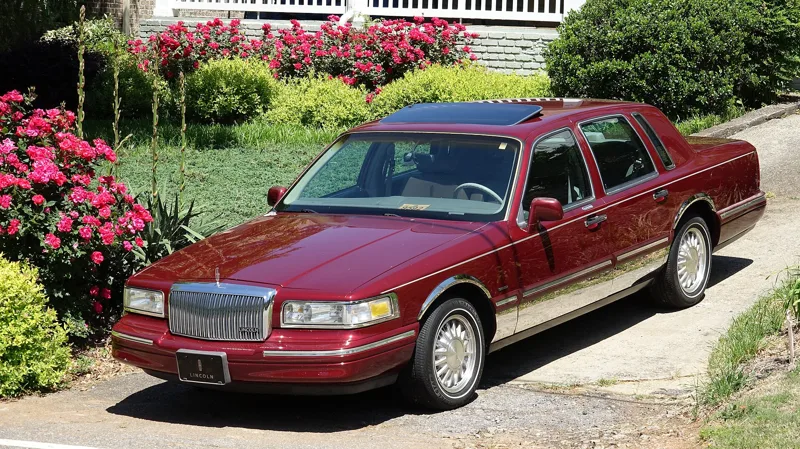
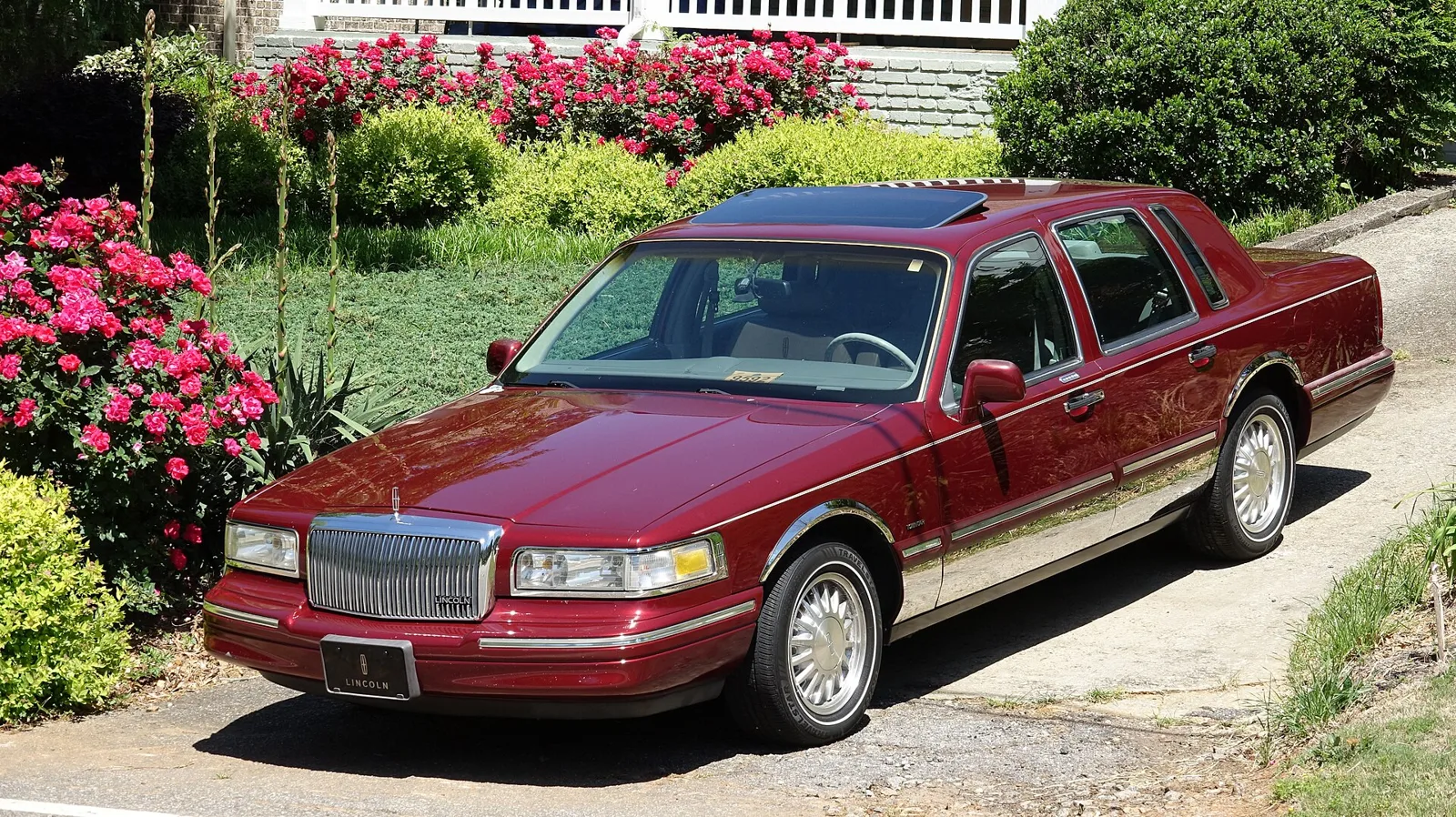
Ford's fleet division sold a Lincoln Town Car hearse package strictly to coachbuilders. It came without a rear seat, rear trim, rear window or decklid, and had upgraded suspension, brakes, charging system and tyres. The Lincoln MKT replaced the Town Car, and was itself discontinued, as was the Continental after a short run.
Hearse bases by region
| Region | Typical base |
|---|---|
| United States and Canada | Cadillac, less often Lincoln |
| Europe | Mostly Mercedes-Benz, also Jaguar, Ford, Opel, Vauxhall and Volvo |
| Japan | Nissan Stagea, Toyota Celsior, Nissan Cima, plus Lincoln Town Car and Cadillac DeVille conversions |
| Hong Kong | Isuzu, Volkswagen and Ford light goods vehicles |
| Singapore | Toyota Hiace, Nissan Urvan, Mercedes-Benz Vito; Mitsubishi Fuso Canter and Isuzu Elf lorry chassis for traditional hearses |
What does a Japanese hearse look like?
Japan has two styles of hearse, called reikyusha. The foreign style resembles an American hearse. The Japanese style has its rear modelled on a small ornate Buddhist temple, which means extensive surgery: the rear roof is cut away behind the windscreen, the rear interior stripped out and a wooden temple structure built on the empty cavity, often wider than the vehicle underneath.
Ornament varies by region. Nagoya style decorates both halves of the body, Kansai style is relatively modest and unpainted, and Kanazawa style has a red body with gilded ornaments, while most other styles have black bodies. Tokyo style, found elsewhere in Japan, has painted or gilded ornaments on the upper half.
Foreign-style cars reflect a preference for smaller caskets, linked to cremation, so the rear quarter panels need less alteration. Bases include the Nissan Stagea wagon and executive sedans such as the Toyota Celsior and Nissan Cima, while the Lincoln Town Car and Cadillac DeVille, otherwise uncommon in Japan, are often converted in both styles.
How long do hearses last, and who collects them?
A hearse leads a light, sedate life, so many last for decades, and some still work at 30 years old or more. An expensive custom vehicle can stand unused for most of the week, so funeral homes often rent one or draw on a shared pool. Until the 1970s hearses often doubled as ambulances, known as combination cars, particularly in small towns, until stricter federal specifications ended them after 1979.
There are enthusiasts who own and drive retired hearses, and several hearse clubs. The 1959 Cadillac Miller-Meteor is regarded as one of the most desirable, thanks to its ornate styling and film appearances, notably as the Ecto-1 ambulance in the 1984 film Ghostbusters. Neil Young's first car was a hearse for hauling his early band's gear, and Sam the Sham carried his equipment in a 1952 Packard hearse.
A recent royal example was a Land Rover Defender in military green that Prince Philip helped design, used to carry his coffin at Windsor Castle in April 2021.
What exactly is a limousine?
A limousine is a big luxury car driven by a chauffeur, with a screen between the front and the passengers that opens by hand or at the press of a button. Add a very long wheelbase to a luxury sedan and you have a stretch limousine. In several countries, including the United States, Britain, Japan and Australia, the word also stretches to any pre-booked hire car with a driver, and airport shuttles often go by the name even when they are minivans.
The name comes from Limousin, a region of France, but how it reached the car is uncertain. One idea points to a carriage hood resembling the raised hood of the cloaks shepherds wore there. Another says early chauffeurs wore Limousin-style cloaks in an open driver's compartment, and the name was passed to the car whose permanent roof projected over the chauffeur.
In 1916 the US Society of Automobile Engineers defined it as an enclosed car for three to five people, with the driver sitting outside. In Great Britain the limousine de-ville left the driver exposed to the weather, while the limousine-landaulet had a roof panel over the rear seat that could be removed or folded. In the US the berline gave the driver a fully enclosed seat, and the brougham gave the driver no roof at all.
How did the stretch limousine begin?
The stretch limousine is credited to Armbruster of Fort Smith, Arkansas, a company founded in 1887 to build and repair horse-drawn vehicles. In the early 1920s it built a long, multi-door vehicle for Jordan Bus Lines, one of the earliest stretch limousines, and it went on to make about twenty a year until the Second World War began.
Armbruster's own name for them was auto-coaches. They seated 12 and served hotels, taxis, airlines, corporations and tour firms. They also carried the bandleaders Glenn Miller and Benny Goodman, their musicians and their instruments, which earned them the nickname big band buses. The company also custom-built unibody limousines, including 1969 AMC Ambassadors.
Modern limousines have a partition with an openable glass section and an intercom, plus long wheelbases and occasional seats facing forward or backward, called jump seats in the US. Many nations also run state cars: the first American president to ride in a car was William McKinley, in a steam Locomobile in 1899, and the United States Presidential State Car is now the official car of the president.
Where this goes next
The American limousine trade has been shrinking. Stretch limousines made up one percent of US limousine company offerings in 2023, down from about ten percent in 2013. The causes cited are the Great Recession, the arrival of ride-sharing apps and a crisis of confidence after a fatal stretch limousine crash at Schoharie, New York, in 2018. Customers who once hired limousines also began choosing black SUVs as a quieter way to travel.
Novelty limousines keep a lighter tradition alive, with stretched Trabants, Volkswagen Beetles, Fiat Pandas and Citroen 2CVs, and a few Corvettes, Ferraris and Mini Coopers lengthened to carry up to 10 passengers.