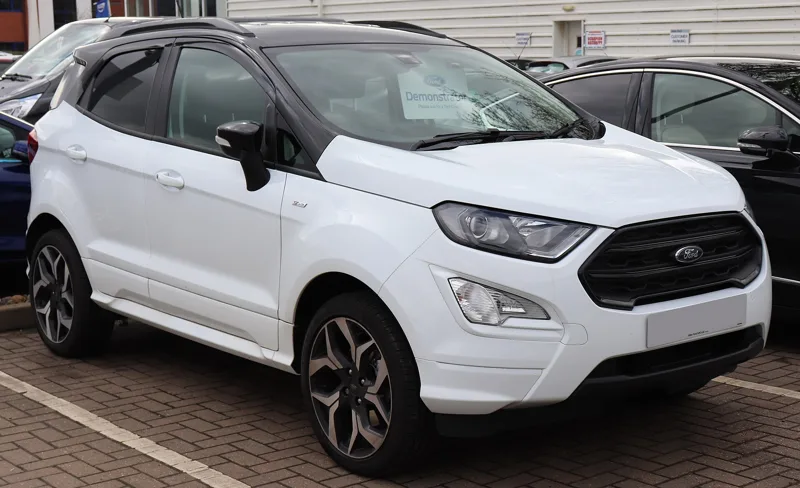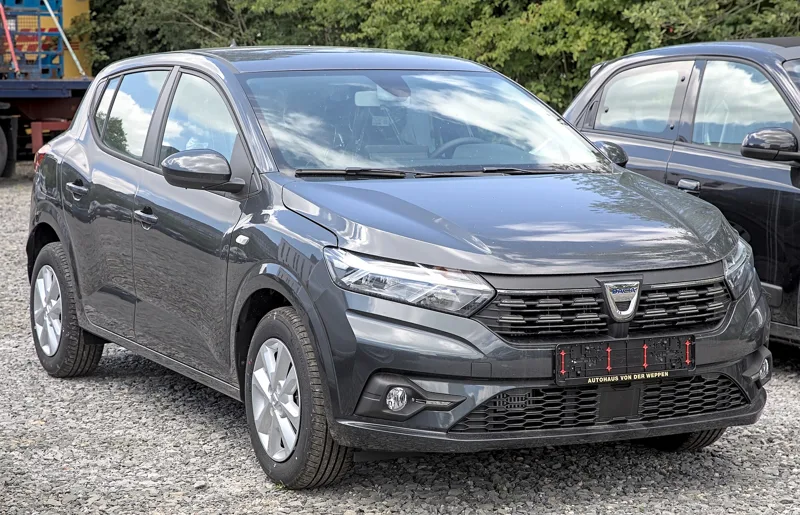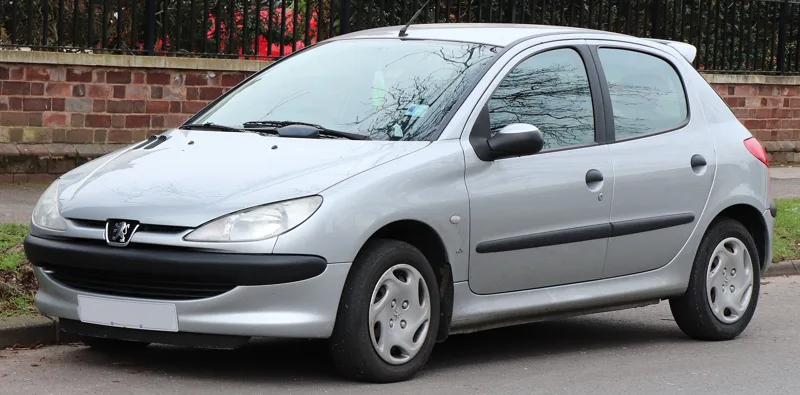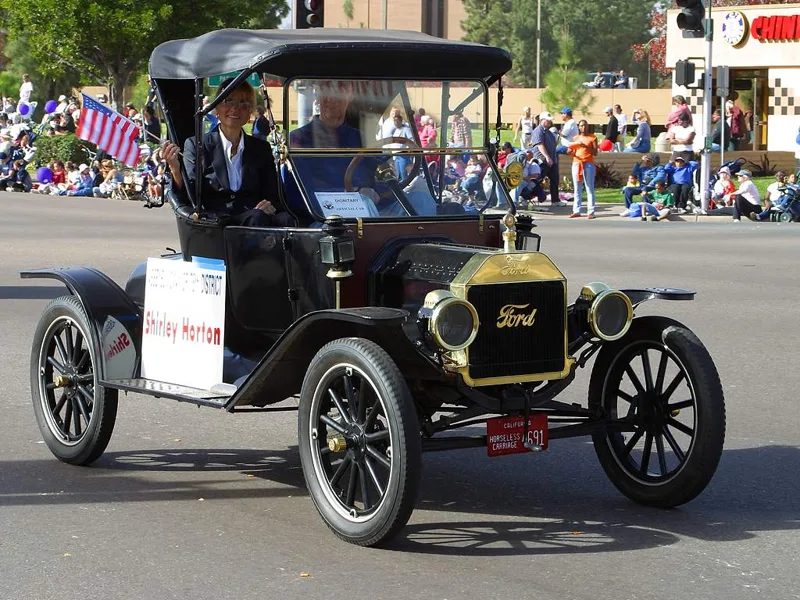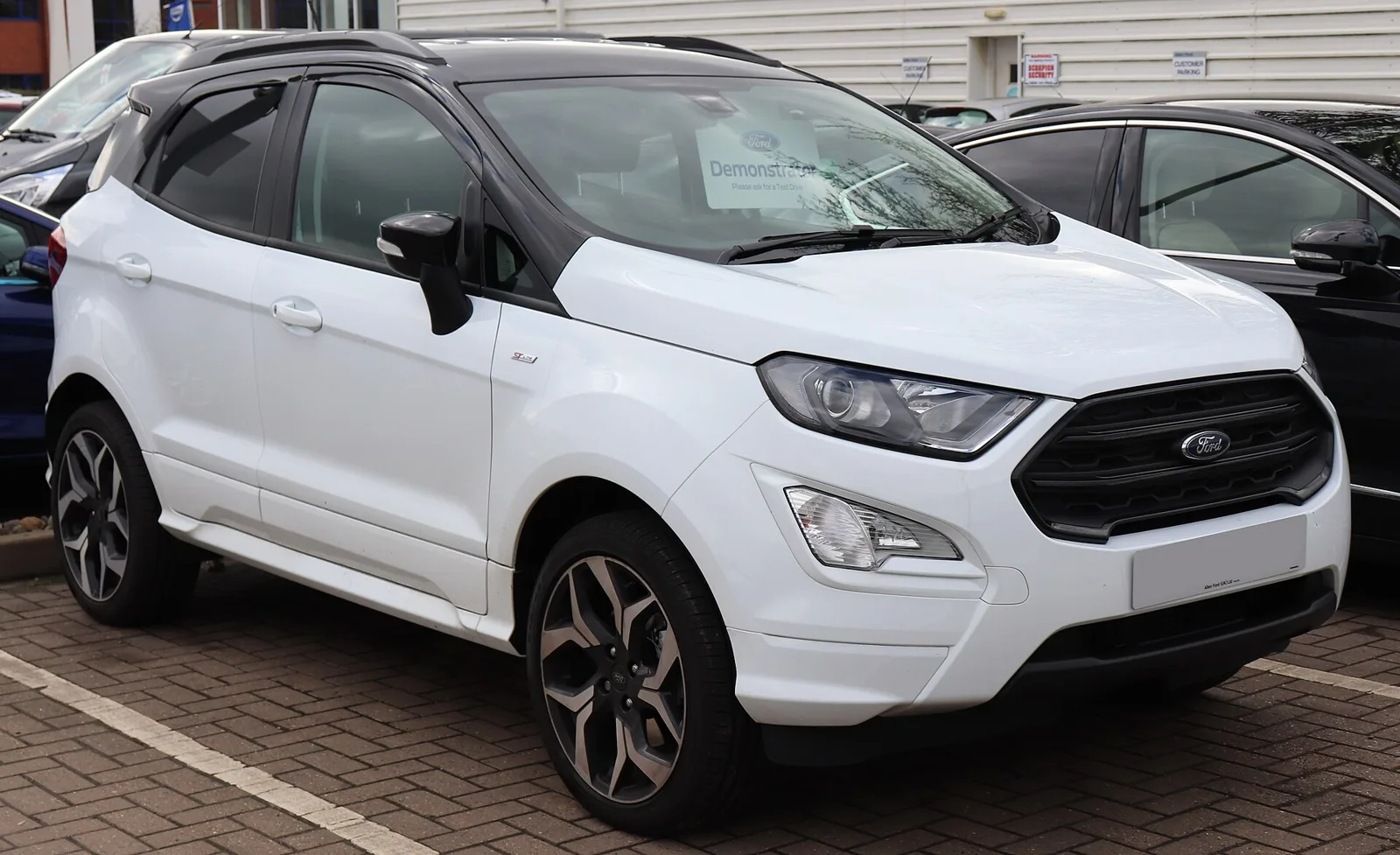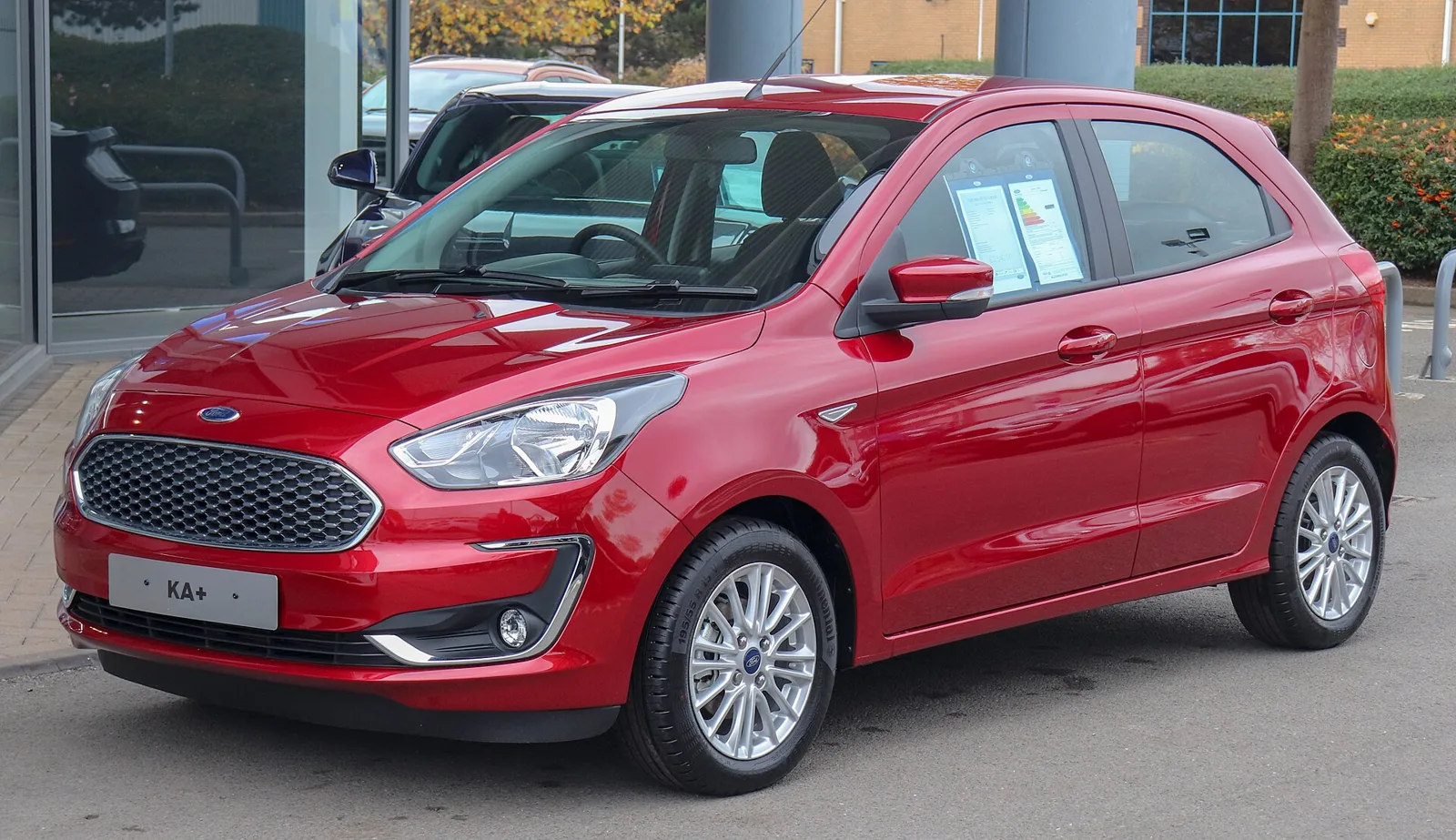
A Fiesta-based city car in 1996, a Fiat-built second generation in 2008 and a Brazilian-developed subcompact in 2014, sold for 25 years across several continents.
Ford built the Ka from 1996 to 2021 in three generations. The first was a Fiesta-based city car with roadster and sporty variants, the second was built by Fiat in Poland, and the third, developed in Brazil, became a subcompact sold in India, Mexico, South Africa and Europe as the Ka+.
The Ford Ka was a small car built by Ford Motor Company from 1996 to 2021 across three generations. The first two were city cars, while the third was a subcompact sold on several continents. Its story runs from a Fiesta-based hatchback to a Fiat-built second generation and then a Brazilian-developed car.
When was the Ford Ka launched?
The first Ka appeared on September 11, 1996, as an inexpensive extra model in Ford's range. The second generation arrived in 2008, and the production version of the third generation followed in July 2014.
European sales of the Ka ended in 2020, and production in Brazil stopped in 2021. Between those dates the car was sold in Latin America, Australia, New Zealand, India, South Africa, Mexico, Argentina and Poland.
The first generation was developed under the BE146 code and built on an existing production line, which kept new-model investment costs down.
A Fiesta-based city car that became three generations of Ford's smallest model, from Valencia to Camacari.
How is the Ka name pronounced?
The Ka name has three possible pronunciations, using a long or short a, or with the letters spoken separately. Ford's press office used all three over the years, but according to Auto Trader, Ford's top brass gave the correct version as Ka as in cat.
How was the first-generation Ka designed?
The first Ka was developed under the BE146 code and based on the Mark 3 Ford Fiesta platform, but it had a completely different exterior. Its design borrowed from Ghia's Saetta show car, a roadster designed by Filippo Sapino, and it was built on the Fiesta production line in Almussafes, Valencia.
The chief programme engineer was Kevin O'Neill, while the designer was Chris Svensson of Sunderland. Svensson had drawn a similar-shaped car while studying at the Royal College of Art in 1992.
The New Edge design was overseen by Jack Telnack and executed by Claude Lobo. Its unusual look provoked mixed reactions when the car was first shown to the public.
The bumpers and wheel arches were moulded as large single pieces, which made the car tougher and simpler to fix after minor knocks. Building it on the existing Fiesta line kept investment in the new model low.
What engine did the first Ka use, and how did it drive?
The first Ka used a 1,300 cc Endura-E engine, an overhead-valve four-cylinder taken from the Valencia unit that powered earlier Fiesta generations. Although old-fashioned, it provided enough torque for relaxed driving, and the motoring press praised its handling.
Richard Parry-Jones supervised the suspension and steering settings, which allowed hard cornering and high levels of grip. The Ka was lauded for its handling, like its sister cars the Fiesta and Puma.
The Endura-E was based on the older Kent design, which dated back to the 1960s. It was replaced in 2002 by the overhead-cam Duratec engine, with claims of better fuel efficiency and refinement.
The 998 cc Brazilian version produced 77.2 Nm of torque at 4000 rpm. The 1,297 cc version made 60 hp at 5000 rpm and 104.0 Nm at 3500 rpm, with a 74 mm bore.
What equipment and options did the first Ka offer?
At launch the Ka came as a single model with several options, including air conditioning, power steering, a height-adjustable driver's seat, a passenger airbag, central locking and power windows. Anti-lock braking was an option only, and it did not arrive until January 1997.
For the first three years all models had black plastic bumpers, which carried a stabiliser against UV degradation and could not take paint. Body-coloured bumpers arrived in 1999 with different mouldings.
UK trim levels included the base Ka, the Ka2 and the Ka3, which were later replaced by the Ka Collection and the LuxuryKa. The Luxury version had a Quickclear heated windscreen, leather seats and standard air conditioning.
How well did the Ka sell in the UK?
In Britain the Ka led its class for several years, commanding around a fifth of the city-car market. Ford sold 17,000 cars there in 2006, and the car was highly profitable despite its low price.
UK buyers could pick the Studio, Style, Style Climate and Zetec Climate trims. In 2005 the Sublime model arrived with a special leather interior, and it was built in very small numbers.
The UK also saw a Ka Van for BT Group, with a flat plywood floor, a rubber overmat and white-ply covers in place of rear windows.
What were the StreetKa and SportKa?
In 2003 the Ka range was diversified with the SportKa, which had a sporty body kit, a wider track, stiffened suspension and 16-inch alloy wheels. The StreetKa was a convertible launched at the Paris Motor Show, and both cars used a 1.6-litre 95 PS Duratec engine.
The StreetKa was launched with the help of Kylie Minogue and was designed and built by Pininfarina in Italy. Pininfarina produced 37,076 of them between 2003 and 2005, and every example carries sill plates inscribed Pininfarina.
The StreetKa came in basic and luxury forms. The luxury version had leather seats, heated seats, a Thatcham approved alarm and Ford's PATS immobiliser.
The SportKa was promoted with a campaign called The Ka's Evil Twin, which denounced the Ka's traditionally cute image.
Did the Ka's advertising cause controversy?
Yes. In September 2003 Ogilvy and Mather created two internet adverts for the SportKa that drew complaints about their content. One showed a car popping its bonnet to bash a pigeon, and the other, leaked in April 2004, showed a sunroof closing on a cat.
Ford refused to take down the pigeon advert despite complaints from the Royal Pigeon Racing Association. It apologised for the cat advert, saying neither Ford nor the agency had sanctioned it.
Was the Ka ever a rally car?
In a sense, yes. A Ford Ka rally championship was created in 1998 and became one of the most popular junior rally series in the UK and Ireland. The rally car was built by Ford's Boreham works in Essex, which supplied a complete build service.
The Rally Ka was designed as an entry-level vehicle for the British Mintex rally championship. The Ka championship had four cars at its debut event in 1997, and 15 competitors took part in 1998.
Performance upgrades were limited to a rally-spec engine control unit, a camshaft and an extractor exhaust that lifted power to 80 hp (60 kW). Competitors could also fit uprated driveshafts, a limited-slip differential and Proflex coil-over struts.
Luke Pinder took the 2007 BRC Silverstone Tyre 1400 title in a Ford Ka prepared by Chris Birkbeck. A separate EnduroKA series for Mk1 1300 cc cars ran in the UK between 2002 and 2008.
Where was the Ka sold outside Europe?
The Ka reached Australia in October 1999 but sold poorly, with fewer than 2,000 cars a year. It was also sold in New Zealand from 1999 to 2004, where it was replaced by the newer Fiesta.
The Australian car lacked an automatic transmission, which many Australian buyers preferred. Its failure there was partly down to that gap, and the model was on the market until 2002.
The Latin American Ka matched the European car until 2001, but it had very short manual gearing, the only transmission available. Soundproofing was removed gradually from 2000 to cut costs, and a 2001 midcycle facelift moved the rear number plate to the boot lid.
What was the second-generation Ka?
The second generation arrived in 2008, when Fiat built the European Ka at its Tychy plant in Poland alongside the Fiat 500, Panda and Lancia Ypsilon. It was based on the Fiat 500 architecture, with shock absorption revised for better ride quality.
Production started on 18 July 2008 and ended on 20 May 2016. The engines were a 1.2-litre petrol with 69 PS (51 kW) and 102 N-m, and a 1.3-litre TDCi diesel with 75 PS (55 kW; 74 hp) and 145 N-m.
The electrically assisted steering made the car lighter to use, and both engines emitted under 120 g/km of CO2. The car earned four stars overall in Euro NCAP testing, with standard front airbags, ABS and an immobiliser.
The Ka's screen debut came in Quantum of Solace, the 22nd James Bond film, and the car was shown at the October 2008 Paris Motor Show. Three Individual packs, Tattoo, Grand Prix and Digital, added special interior and exterior details, and Tattoo was replaced by Metal in 2011.
The Latin American market received a different second-generation car, developed as B402 and based on the first-generation chassis. It had 123 prototypes, 5,145 engineering tests and 430,000 km of durability testing.
The Brazilian Ka arrived in December 2007 and reached showrooms in January 2008 as a 2009 model. Its boot grew from 186 litres to 263 litres, and it was offered with 1.0-litre and 1.6-litre Zetec Rocam flex-fuel engines.
What was the third-generation Ka?
The third generation was developed by Ford Brazil and based on Ford's global B platform, which it shared with the Fiesta. It appeared as a production car in July 2014 in hatchback and sedan forms, and it carried Ford's Kinetic 2.0 design theme.
The hatchback became five-door only and was 266 mm longer than the previous European model, with a wheelbase 190 mm longer. The sedan came in two lengths: the longer Ka+ for Brazil at 4,254 mm and the shorter Aspire for India at 3,995 mm.
Indian versions used a 1.2-litre petrol with 65 kW (88 PS) and 112 N-m, a 1.5-litre diesel with 74 kW (100 PS) and 215 N-m, or a 1.5-litre petrol with 82 kW (112 PS) and 136 N-m. The 1.5 petrol was paired with Ford's six-speed PowerShift automatic.
Equipment included MyKey, MyDock and SYNC systems, steering-mounted controls, automatic climate control, keyless entry, electronic stability control and up to six airbags. The car was built in Camacari in Brazil until January 13, 2021, and in Sanand in India.
The new Ka launched in Mexico in September 2015 and in South Africa a month later. Argentina followed in March 2016, and Europe received the Ka+ in June 2016 as a budget B-segment car.
How did the Ka+ perform in safety tests?
The Ka+ was tested by Latin NCAP and Euro NCAP across several versions, with results ranging from zero stars to four. The European car scored three stars overall in Euro NCAP tests in March 2017, while the most basic Latin American model earned four stars for adults in 2015.
The 2015 Latin American car had two standard front airbags and anti-lock braking with electronic brakeforce distribution. In a frontal impact, the driver's head and chest received adequate protection, while the passenger's knee area received marginal protection.
A 2017 Latin NCAP 2.0 test of a Ka+ with two airbags and no stability control scored zero stars for adults and three for toddlers. The updated model tested in 2018 scored three stars for adults and four for toddlers.
Euro NCAP rated the European Ka+ at 73 per cent for adults, 61 per cent for children, 57 per cent for pedestrians and 29 per cent for safety assist. Testers criticised the lack of rear seatbelt pretensioners, load limiters and autonomous braking.
A Latin NCAP 3.0 test in 2020 gave a Ka+ with two airbags and a driver pretensioner zero stars.
What are the Ford Ka specifications?
The table lists the core figures for the three generations, with the Latin American and Indian versions marked where they differ from the European car. Figures are shown in metric first, with horsepower or imperial values in brackets.
| Specification | Detail |
|---|---|
| Production | 1996 to 2021 |
| First launch | 11 September 1996 |
| First-generation engine | 1,300 cc Endura-E overhead valve four-cylinder |
| 1,297 cc output | 60 hp at 5000 rpm, 104.0 Nm at 3500 rpm |
| Second-generation petrol | 1.2-litre, 69 PS (51 kW), 102 N-m |
| Second-generation diesel | 1.3-litre TDCi, 75 PS (55 kW; 74 hp), 145 N-m |
| Latin American boot | 263 litres, up from 186 litres |
| Third-generation Ka+ length | 4,254 mm |
| Indian Aspire length | 3,995 mm |
| Third-generation hatchback | 266 mm longer than the previous European model |
| Euro NCAP (Ka+, 2017) | Three stars |
| Final production | Camacari, Brazil, January 13, 2021 |
Frequently asked questions
Did the Ka have an automatic gearbox?
Not in its first generation, and the lack of one was part of the reason for its poor sales in Australia, where buyers preferred automatics. The Latin American model's only transmission was a manual with very short gearing. The third generation offered a six-speed PowerShift automatic on its 1.5-litre petrol in India.
Who built the StreetKa, and what roof did it have?
The StreetKa was built in Italy by Pininfarina, and its build quality was far superior to the standard three-door Ka, with better rustproofing. Its roof was a manually folding soft top, and a detachable hardtop was available as an option on the Winter Edition.
What changed on the Latin American Ka in 2001?
The main visible change was at the rear, where the number plate moved from the bumper to the boot lid and the rear lights were made much taller. The car otherwise stayed close to the European version.
How was the Ka related to the Fiesta?
The first Ka was based on the Mark 3 Fiesta platform and was built on the Fiesta line in Almussafes. The third generation shared Ford's global B platform with the Fiesta supermini, which kept the two cars close in engineering.